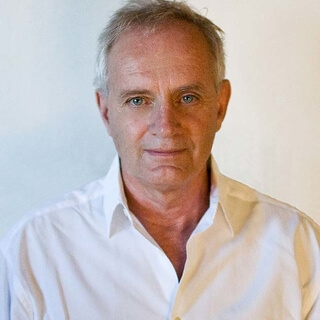
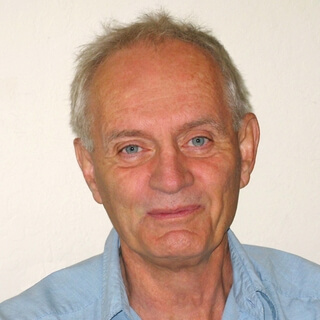
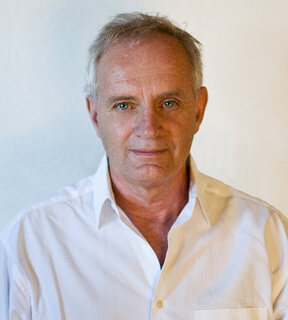
I would like to just introduce Dale.
Dale is the founder and executive director of the Living Dying Project.
He is a pioneer in the conscious dying movement and he has worked directly with thousands of people with life threatening illnesses and their families for over 30 years.
In 1981,
Dale founded the first residential facility for people who wish to die consciously in the United States.
The Dying Center.
He has taught and lectured extensively on the topics of spiritual support for those with life threatening illnesses,
On caregiving as a spiritual practice,
And on healing at the edge,
The edge of illness,
Of death,
Of loss,
And of crisis.
Dale has a B.
S.
From UC Berkeley and a Ph.
D.
From Stanford University.
He is the co-author of Journey of Awakening,
A meditator's guidebook,
Bantam Books,
And has taught meditation for the past 35 years.
He has intensively immersed himself in the practices of devotion,
Meditation,
And contemplative prayer for over 40 years,
Studying with many of the greatest masters of the last century.
He has also taught with Ram Dass,
Steven Levine,
Joan Halifax,
Jack Cornfield,
Joseph Goldstein,
Reverend Wayne Moeller,
And many others.
His life's work and passion has been and continues to be healing of our individual and collective relationships with death and also using our mortality as an inspiration for spiritual awakening.
Thank you,
Dale,
For being here.
What is conscious dying?
We haven't really talked about that too much yet this weekend.
And as I mentioned in the very beginning when we were giving our intentions for the weekend,
I implied that I wasn't so interested in conscious dying nearly so much as in conscious living.
In fact,
The longer I do this work,
The less it seems that it's about dying,
But it's about healing,
Becoming whole.
And since we've all just eaten that wonderful breakfast,
I thought it might be nice to spend just a couple of minutes before we plunge into me talking,
Talking,
Talking,
And come here in a more embodied way.
So I would encourage you to find a comfortable sitting position.
Let me even ask,
How many of you have not meditated before?
Nobody admits it.
Okay.
In Buddhism,
There are what are called the four mind-turning truths,
The truths that turn our mind to the Dharma,
To the truth.
The first of these is that you will die,
But you don't know when.
If we really know that,
I mean we know that intellectually,
But if you really know that,
How does that affect the way we're relating to acorns on the roof?
How does that affect the way you're hearing my voice right now?
How does that affect the quality of heart,
Of attention that you bring to this next moment?
The second mind-turning truth is that life is precious.
This is the only moment in which you or I can awaken.
This moment.
In fact,
Having a human birth in which we have the strong enough body and the open enough heart,
Clear enough mind to come together and even talk about conscious dying and live in a society that allows us to do this and we're not worried about our children starving to death or being oppressed by the regime is a rare human blessing.
Life is precious.
This moment is precious.
The third mind-turning truth is that there is karma.
Everything you do,
Think or say has an effect.
The fourth mind-turning truth is that there is dukkha,
Unsatisfactoriness,
When we act with clinging,
With grasping,
With fear.
So if we take these four mind-turning truths and gather them together like you would gather a bouquet of beautiful,
Beautiful flowers,
What does that tell us about how we would like to live?
About how we would like to live in this moment and these two hours we're going to be talking about very interesting ideas.
When we make this time not about something,
Not about collecting interesting information,
But about conscious dying,
That each of us dying,
We trust this time together,
We trust the safe space that we have created together so that we're each doing this inner work of surrendering,
Loving,
Dying into the moment.
Walt Whitman said,
Sometimes touching another human being is almost more than I can bear.
You have experienced that.
I have experienced that.
But so often it's easy to fall back into that place of,
Isn't it a nice day?
Listen to those acorns.
How about those giants?
Whatever it is that keeps us in the surface of our minds,
That's an easy place to go.
Last night Jim was talking about ego death.
And when we begin to talk about conscious dying,
And if you ask yourself what you think about conscious dying,
What is conscious dying to you?
I'm not going to do a quiz.
There's enough people in the room that would take a long time.
But just ask yourself,
What do you think is conscious dying?
Or the corollary question is,
What do you think is conscious living?
What is being conscious to you?
And I would like to suggest that there are levels of being conscious.
So that the first level is being aware.
We're here in the room.
We're hearing,
We're looking,
We're feeling what's going on in our body.
From the standpoint of the mind,
It's much like Buddhist meditation.
We're aware of what's arising in the present.
Sometimes it's pleasant,
Sometimes not so much.
And we hope that when we're dying,
The mind will be calm,
The body won't be in too much distress.
From the standpoint of the heart,
The first level of being conscious is admitting our yearning.
We're all yearning for something.
We're all yearning to be united with that which is unspeakable.
It's given many names.
You know those names.
You've read Rumi poems and Hafiz poems.
From the standpoint of the body,
Being here together means being grounded and being centered in your body.
So let's take a hypothetical little girl who's just been born.
If her birth goes relatively well,
The first thing she learns for the first couple years of her life is becoming grounded,
Beginning to trust the possibility of being dependent upon the mother,
The mother earth that supports when she crawls,
When she walks.
You take the next step,
The earth is going to be there.
And her mother is not going to drop her.
That she can relax into being grounded.
At around the age of two,
The terrible twos begin and this dependent little girl begins to evolve into somebody who's becoming autonomous and independent.
And ideally becoming centered in what the Japanese call the hara,
The belly center down below the navel.
The Chinese call the dan tien.
The reason I'm bringing this up is that all these wonderful Eastern practices that I would guess almost everybody in this room have explored are beginning from the standpoint of assuming that you're grounded and centered.
We live in a society that does not only not promote grounded and centered,
But it actively distracts from being present.
And particularly if there is any emotional or mental difficulty,
Almost everybody has their energy run up in their heads.
How can I figure this out?
What can I do here?
I have a PhD in understanding of going up in my head and analyzing things.
I used to be a mathematician.
This almost did me in.
So can we begin to trust this process of in our hearts,
In our minds,
And particularly in our bodies,
Dropping down into the dark deep,
Being grounded,
Being centered,
Being present in a way that will eventually then begin to support the heart being open in these wonderful ways of dissolving and becoming the vast sky-like spaciousness which is our nature.
But until we have this foundation,
I call it invocation stage of awareness in the mind,
Yearning in the heart,
Being grounded and centered in the body,
Until we've created this foundation,
The heart will only be open when it feels safe,
When the environment is being supportive.
So if you're in a relationship,
Isn't it loving,
Isn't it wonderful,
And then your partner says or does something that isn't quite the way you would like,
And all of a sudden your heart closes or his or her heart closes and there's no connection anymore.
So if we're depending on the environment to be a certain way for our heart to be open,
Good luck.
When you are dying,
It might very well be that you are in an automobile that is spinning out of control and seated next to you in this car is the person you love the most who is screaming in terror.
When you are dying,
It might be that you're lying on the floor of CVS pharmacy and strangers are ripping your shirt off and pounding on your chest.
When you are dying,
Your bloodstream might be so full of morphine that you can barely focus your mind.
So if we have not begun to practice now being present in this incredibly supportive,
Beautiful environment that we've created here together over the last few days,
Then it could be much,
Much more difficult when that time comes.
Again and again,
As the director of the Living Dying Project,
People come to me and they say,
I've never done any spiritual practice and I only have a few months to live.
I want to become spiritual now.
And that's a very difficult time to begin.
At the same time,
The most beautiful Americans I've ever met are with very few exceptions,
People who are almost dead.
So I do this work not because I'm Mother Teresa in drag,
But because it gives me the opportunity to be with people who are willing,
Profoundly willing to be who they are beyond body and personality.
During this talk,
I'm going to talk about two different levels of practice.
There are dualistic practices to open our hearts,
To connect,
But there is also non-dual,
Non-practice and that place of resting in spaciousness,
Of realizing that right now in this moment,
In this room,
We are all fully enlightened beings.
There is nothing for any of us to accomplish in order to die well,
Other than to surrender into who we are.
It's not about changing our mind states from this one to a better one.
It's not about becoming more concentrated or more loving or more clever or gathering more information.
What is it that does die?
Our bodies die,
Our minds die.
My friend Stephen Levine wrote a book,
Who Dies?
Which is kind of the same question as what is conscious dying?
Now,
Right now,
If you move your arm,
You can be aware of that sense of movement.
Your body is an object of awareness.
And if I say,
Think about an elephant or don't think about an elephant,
The elephant in your mind is an object of awareness.
So the body and the mind are objects that we can pay attention to.
What is the subject?
What is it in us that is constant from moment to moment to moment?
We look around the room,
Older,
Younger,
Bigger,
Smaller,
More hair,
Less hair,
Male,
Female.
In that dimension,
You will die and I will die.
Can we look around the room with a slightly different set of eyes and see that which does not die?
But even more importantly,
Can we look inside at our own experience and see that which is constant from moment to moment?
Can we begin to see,
Be with,
Taste this quality of consciousness or aliveness or presence or awareness or love with a capital L that pervades each moment?
So that regardless of the content,
Happy,
Sad,
Well,
Ill,
Living,
Dying,
That thread of consciousness continues through each moment of experience.
And the world's mystical traditions say that that is what does not die.
So that one can adopt the 75%-25% rule.
The 25% of your attention is based on the content of experience.
You're hearing my voice.
We can hear the hum of the refrigerator.
You feel your body moving.
You can see me waving my arms around.
But 75% of your attention is not really inward so much as being with the nature of experience,
The relationship with experience,
Rather than the content of experience.
One of my meditation teachers,
Sokhni Rinpoche,
Said when he sees Westerners,
He feels how their eyes are being pulled out into the world,
That everyone is leaning out.
And he encourages people to lean back in.
It feels like you're leaning backwards.
But actually,
You're not leaning backwards.
You're straight up and down.
But because you're so used to leaning out,
That being straight feels like you're falling inward.
So what we're talking about is not an inwardness that's pushing away the world.
It's not like gazing at your navel in some metaphorical sense.
But it's being with that unchanging quality of radiance,
Of light,
Of love that permeates each moment.
And whether we come to this through meditation,
Through a near-death experience,
Through raising twins,
Through having your friend die,
Consciousness doesn't care.
Consciousness is in absolutely no rush for you or I to get free.
The function of consciousness is to grow and change.
And if it takes you getting cancer to do that,
Well,
That's the way consciousness does it then.
Now,
I would hope that neither you nor I have had to get cancer or have your friend die to begin to awaken.
Right now,
My brother has stage four pancreatic cancer.
I had prostate cancer a few years ago.
And interestingly enough,
Even though I had been working with people with cancer for so many years,
There's always some quality in the back of my mind where I thought,
They have cancer,
I don't.
I'm a little bit stronger than they are.
They didn't do it quite well enough.
And then I got cancer.
So that there was this unexamined place where I was really not realizing I might die at any moment.
Roger Ebert,
The film critic who died of a rather difficult cancer,
As you may know,
Was writing an article about how cancer had changed his life.
And he wrote,
As I am typing this sentence,
I do not know that I will be alive to type the period at the end of this sentence.
So when I said before,
We're all going to die,
But we don't know when,
I'll bet you assume you'd be alive at the end of this talk.
Maybe on the drive home there would be an accident.
But suppose we didn't know that it might be the end of this next sentence,
That it might be this next breath.
You breathe in,
You breathe out,
You breathe in,
You breathe out,
And there's never another in-breath.
So each out-breath is your last breath.
It's dying.
It's letting go.
Letting go of breath,
Letting go of life,
Letting go of any possible clinging.
And each in-breath you're being born,
The first in-breath you have ever taken,
Being that alive.
So after this first stage of consciousness,
Of becoming aware in the mind,
Grounded and centered in the body,
Admitting the yearning of the heart,
Invoking from the heart,
The next stage that begins to evolve rather naturally from the first is the stage of compassion.
Compassion is the open heart meeting suffering.
In a way,
Compassion is the center of the spiritual path.
Compassion is the transition from dualistic to non-dualistic.
Compassion can be spelled in two ways.
Compassion can be spelled small com or capital com dot dot dot.
So small com means I am feeling compassion for my suffering or your suffering.
In most Eastern traditional practices,
Compassion is taught for the suffering other person.
In the West,
One of our primary tasks is to learn compassion for ourselves.
His Holiness the Dalai Lama on his third visit to America said,
Now I'm beginning to understand and it makes me very sad.
You Americans don't like yourselves.
So when we begin our spiritual undertaking of dissolving our identification with ego structure and beginning to identify with true nature,
The unchanging sky-like nature of heart-mind,
And we don't like ourselves.
One could see that and guess that not too far down that road there's going to be all kinds of psychological,
Emotional problems arising.
Because we're trying to get rid of,
We're trying to transcend the places that we don't really like ourselves.
When I work with people who are dying or people in my meditation groups,
We spend a lot of time learning to get grounded and centered,
Learning to go back to the very beginning of practice.
I have people in my groups who have been meditating for over 30 years and still use meditation as a way of avoiding feeling what it is that's going on.
The way I like to use meditation is to uncover what feels really,
Really bad and work with that.
To get rid of it,
To realize that is the gift that is exactly pointing at what one needs to love in order to be able to live and die well.
I'll use my own example.
At the age of nine months old,
My earliest memory was putting a hairpin in an electrical outlet.
I was crawling across the floor feeling like I'm one of the best crawlers in the whole planet.
This feels so great.
The sun was coming in from the right.
My father was shaving in the bathroom in one of those t-shirts that don't have sleeves.
My mother was rustling around in the bedroom.
I picked this thing up off the ground and there was these two holes in one.
I thought non-verbally,
Isn't this the coolest thing?
Those two things go in those two things.
It's a perfect fit.
I put it in there and it knocked me across the room.
Then about three years later,
My mother determined I was old enough to make my own toast.
She was downstairs doing the laundry and the toast got stuck in the toaster.
I put the fork in the toaster.
It was plugged into the electrical circuit in the house.
I started screaming.
I couldn't let go.
She came running upstairs and about 30 seconds later,
Was able to unplug the toaster.
Shortly thereafter,
I started stuttering.
My brain got a little fried,
I think,
In the process.
I didn't think too much more about that.
I ended up going to graduate school,
Got involved in meditation and psychodrama and all those things that happened at the end of the 1960s.
Eventually began to notice that when I would go to a meditation retreat,
Through force of will,
I could calm my mind down,
Have wonderful meditation experiences.
Some of my teachers praised me.
They put me in special rooms so I could be really,
Really quiet.
When the retreat was done,
A day later,
I was 99.
9% as neurotic as the day the retreat had started because I was not uprooting something that had been causing me a lot of suffering.
In a certain kind of body-based therapy I got involved with,
I began to notice that a lot of these thoughts I was having were planning thoughts to avoid the next shock.
Being a good Buddhist,
I was looking at there's a thought,
Be aware of that.
There's another thought,
Be aware of that.
There's another thought,
Be aware of that.
Without really noticing,
There was a part of me that was terrified I was going to get shocked again.
Not electrically,
But that the world,
I had some worldview that the world was not a safe place.
That at any moment by following my curiosity and my joy,
I could get almost dead.
Now,
You haven't been shocked more than likely.
You have your own childhood,
Whatever that happened to you.
Around those qualities,
You develop your own personality that is perfectly designed to help you avoid your deepest fear.
You've developed it just in the perfect way for you.
What I began to do then was begin to do compassion practice for that scared place in me,
That scared adult,
That scared three-year-old,
That scared nine-month-old.
All of a sudden,
Literally within the matter of a few days,
That place began to relax.
It had been crying for embrace for so very,
Very long.
Now,
Imagine if I were dying and that place were still completely intact.
If I were dying and I was still afraid of the great big shock in the sky.
That would limit to some extent the willingness of my heart to surrender to this process of the unknown.
What is compassion?
I would like to suggest that we misunderstand compassion to a rather unfortunate degree here in the West.
Compassion is the ability to keep the heart open in the presence of suffering.
Stephen Levine poetically says,
Compassion is the ability to keep your heart open in hell.
The mind creates the abyss,
The heart crosses it.
Srinisargadatta Maharaj.
Okay,
So why don't we define compassion?
Compassion is certain defining qualities.
Compassion has the quality of being connected.
Compassion has the quality of a warm heart.
Connected heart,
A warm heart,
And what's called a spacious heart.
And by spacious,
We mean it's not full of I.
It's a heart that has enough room for the suffering of the whole universe.
So that you can do a practice of just as you're going about your day,
Is your heart connected?
Is your heart warm?
Is your heart spacious?
So it's said that the belly,
As I was mentioning before,
The belly supports the heart.
If we are centered,
If we're an autonomous being,
Then we are able to keep our hearts open.
What would you guess is the energetic quality of keeping the heart open that's kind of parallel to being grounded and centered that allows you to be present?
What quality,
What energetic talent did this little girl learn to be able to have an open heart,
A compassionate heart?
Anybody care to guess?
Courage?
Pardon?
Courage?
That would come along for the ride,
But that's really not quite what I'm looking for.
She learned to have appropriate boundaries.
So when suffering arises,
There are three possibilities.
An overly rigid boundary,
I don't want to feel that.
When my brother was diagnosed with stage four pancreatic cancer,
He was informed of this by Kaiser in an after hours email.
The oncologist,
Rather than wanting to talk to him,
Sent him an email at a point when my brother could not respond to anybody and say,
Is this really what you're meaning here?
Okay.
Overly rigid boundaries.
I'm not saying this to criticize the doctor.
This doctor probably had no training in working with human suffering.
Right?
This doctor was trained to be an oncologist.
Possibility number two,
Suffering arises,
Overly permeable boundaries.
Oh my God,
What a catastrophe.
Your problem is my problem.
What are we going to do here?
The overly concerned codependent social worker.
Hope I haven't offended too many people here in the room.
The third possibility is suffering arises.
Suffering arises.
I'm not pushing it away.
I'm not getting lost in it,
But I'm able to keep my heart open in relationship to that suffering.
What's called the near enemy of compassion is pity.
Pity looks a lot like compassion,
But we're feeling sorry for that other person.
His Holiness the Dalai Lama says that another quality of compassion is the ability to equalize and switch yourself with another person.
So if I think that I'm better or worse than the panhandler at the traffic intersection or I'm better or worse than some teacher who's so wise,
Then in that moment,
Compassion becomes impossible.
I had the great good fortune to be with the Dalai Lama before he became well known.
No Nobel Peace Prize yet.
I was in a room with him with maybe three or four of my friends in Bodhgaya,
India.
In Bodhgaya,
It's a very poor town,
A place where the Buddha achieved enlightenment.
There are around 20 or 30 starving dogs,
Wild dogs that are running around Bodhgaya.
The open sores in their body,
They're so thin you can see every rib.
The local people say,
Please don't feed these dogs.
It perpetuates their suffering.
Let them die.
Now I,
Being a softie,
Would buy day old bread and go behind the building and feed the dogs.
But there we were at the Dalai Lama who,
According to the Tibetans,
Is the incarnation of Chin Rezi,
The god of compassion.
He is the incarnation of compassion on this plane.
So we were talking to him about compassion.
And he said,
Well,
I'm the Dalai Lama.
I'm the head of the Tibetan religion and the Tibetan state.
He was both at those days.
Now he's not.
Now he's just the head of the religion.
I'm the head of the Tibetan religion and the Tibetan state.
Which is greater,
Me,
The Dalai Lama,
Or those 20 starving dogs here in Bodhgaya?
And one of my friends,
Being a very good straight man,
Said,
Well,
You're the Dalai Lama.
You're much greater than they are.
And he said,
No.
I am one.
They are many.
They are much greater than I.
And at first I thought,
This is just a teaching trick.
He's just trying to make a point.
But as I sat with those words and they soaked into me,
I could feel that he lived that.
That he actually believed that he was equal to one of those starving dogs in Bodhgaya.
And I just got my PhD from Stanford.
I'm thinking,
Wait a minute.
I'm better than one of those dogs.
And that was really a teaching.
One dog and one Dale,
Two sentient beings there.
So different at a certain fundamental level.
And if I don't have that fundamental understanding,
My heart is closed.
In Buddhism,
For these wholesome qualities like compassion and loving kindness,
There's what's called the near enemy and the far enemy.
So the near enemy of compassion is pity.
The far enemy is cruelty.
What would you think is the near enemy of loving kindness?
What looks like loving kindness,
You see somebody doing it,
You could think it's loving kindness,
But it's not loving kindness.
Self-sacrificing?
Sympathy?
Attachment.
Think about falling in love with somebody,
If anybody can remember that.
Think about falling in love.
True love expects nothing in return.
You just love.
But often we love because we want the person to love us,
Or we want to feel not so lonely,
Or fill in the blank,
All kinds of reasons.
And very often our loving relationships are a very confusing mixture of love and attachment.
And to begin to distinguish the difference between a moment of feeling love when the heart is open and free,
And another moment when you're wanting something.
Joseph Goldstein tells a wonderful story.
He's a wonderful Vipassana teacher.
He was teaching a Vipassana retreat.
And he was taking a break,
Walking down a country road outside of the retreat facility.
There was a yard with a big angry dog in the front yard without a fence around the yard,
And the dog was like angrily barking at him.
And Joseph thought,
Well,
I will send the dog loving kindness so he will let me pass.
So he generated all this loving kindness,
And the dog ran over and bit him.
And he realized that he was really not sending the dog loving kindness.
He was sending the dog,
Don't bite me.
Which is a very different thing.
So once again,
Here is a practice.
Is our love expecting nothing in return?
Or do we want people to like us?
Do we want to make money?
Do we want to feel not so lonely?
Do we want to have a better reputation?
What exactly is going on as it looks like we're being a loving person?
I was in India,
Once again,
Right after getting out of Stanford.
I was in Benaras.
There are a lot of beggars because it's very auspicious to donate to beggars when you're on pilgrimage.
Benaras is a place where people go to die because when you die in Benaras,
Shiva comes and as you're taking your last breath,
Shiva whispers Ram in your ear as you die.
So at the main bathing got,
There's a string of several hundred beggars lined up seated on the ground.
And I decided that I would be a good guy and I changed some bills into a whole pocket full of coins and was walking down the row giving each person a coin in their begging bowl.
To set the stage,
Suppose that this was the most crowded square mile on the planet,
Wall to wall people,
110 degrees,
Very noisy,
Very dusty,
Cobblestone street.
And I came upon a young woman who stopped me.
She was there begging and she was on a wooden platform about two and a half feet by two and a half feet with maybe three inch wheels on the bottom.
And she was a leper who had no hands and no feet.
She had rusty tin cans shoved on the stumps of her wrists.
And to her chest was strapped with filthy rags,
A tiny,
Tiny baby.
I saw this,
My mind snapped.
And I started thinking,
Who could have conceived a child with this person?
What were they thinking?
What's going to happen to this baby?
And instead of giving her a coin or a bunch of coins,
I reached in my other pocket,
Took out a relatively large bill,
Currency note,
And put it in her bowl.
She looked at the bowl.
She looked up at me.
Her expression began to change.
She for some reason started to look a little bit angry.
She looked back at the money.
She looked at me and then she knocked the bowl.
The money went flying.
She picked the bowl up with her tin can stumps,
Put it on her cart and angrily propelled herself away.
End of the story.
I was standing there.
What happened?
Would I be embarrassed?
What is going on here?
And I didn't really quite know what had happened.
But as I thought about it,
I realized that I had given her money out of pity.
And she could probably not afford to take money from somebody who felt sorry for her.
She would rather give up a day's worth of coins than take money from me.
It was even only maybe a year later that I figured out what I needed to have done in that moment.
What do you think I should have done in that moment?
What did I need to do?
You didn't sign your marriage.
Thanks for giving it to me.
Well,
I mean,
Before she did the whole thing.
She opened her eyes.
Thank you.
What I needed to do was have compassion for the place in me that was so frightened.
Before I could do anything with her,
I had to become aware,
Get grounded and centered,
Be there with,
I'm a scared three-year-old who just got shocked.
It was that baby that scared me.
That that baby represented in my psyche the uncertainty of this world and it frightened me.
So until I could be with that baby and open my heart to the fear in me,
There was no way I could have a connected relationship with her.
Rumi has this wonderful quote,
Grief is the garden of compassion.
Grief is the garden of compassion.
What could that mean?
A garden is something where wonderful,
Productive things grow.
And grief is any negative emotion arising in response to separation.
It's not just the stereotypical definition where I feel sad because somebody died or a relationship ended or I lost one of my identities.
But if you get angry,
That's a grief reaction because you're separate from who you're angry at.
If you're afraid,
That's a grief reaction because you're separate from something.
So another way of talking about the spiritual path is learning to transmute the feelings of separation and grief to the feelings of connection and compassion.
Transmuting our grief into compassion.
Transmuting our separation into connectedness.
The Dalai Lama said,
If you want others to be happy,
Practice compassion.
If you want to be happy,
Practice compassion.
Think of how simple your life would be if each action were motivated by compassion,
Not do they like me?
Am I getting enough?
Is this working?
But what is the compassionate thing to do?
When we look at compassion in that kind of broader sense,
Compassion isn't always being nice.
Compassion can be very tough.
Compassion can be ruthless.
Compassion is really very daring.
It's the work of a warrior.
Compassion means leaning into the most unbearable emotions that we experience in ourselves and see around us.
It's very easy to have compassion for the person who's been raped.
Can we have compassion for the person who raped?
It's very easy to have compassion for the oppressed.
How about the oppressor?
It's very easy to have compassion for yourself when you're really having a hard time.
Can you have compassion for yourself when you're mean?
When you're angry?
When you're hateful?
When you're cowardly?
Thomas Merton said,
Love and prayer are learned in the hour when prayer becomes impossible and the heart turns to stone.
Right now I'm saying these very sweet things,
Maybe not so hard to have your heart open,
But in that moment where your heart feels like a rock and you have no idea how to come back to that moist,
Sweet,
Fragrant,
Juicy place,
That's where we learn to pray.
That's where we learn to open our hearts.
So the next stage after we've gone into compassion,
As I said before,
One of the defining qualities of compassion is spaciousness.
So as the heart becomes spacious enough,
Compassion then is spelled with a capital C.
It's not like I am being compassionate,
It's I am compassion.
That is my nature.
And as compassion becomes our nature,
Then that's which we invoked in the beginning from the yearning of our heart is revealed to be who we are.
The Buddha,
The Christ,
The mother that we love is not in any sense separate from the true nature of your own being,
Of your own heart.
The stage of empowerment,
The stage of Tibetan Buddhism,
If you will.
And for those of you who know much about Buddhism,
We're really going through the three yanas here of Hinayana,
Awareness and vocation,
Mahayana,
Compassion,
Vajrayana,
Empowerment,
That Buddhism developed historically in a way that shows in a very instructive way the development along the path and the awakening of the heart.
But the final stage in all practices is nondual non-practice.
In Tibetan Buddhism it's called Dzogchen or Mahamudra or Mahātā.
In Hinduism it's called Advaita-Vedanta.
It's the stage of realizing that we are not our bodies,
Our minds,
The content of our experience,
Those are objects,
We are awareness itself.
And that the deep practice,
The instant practice is becoming aware of awareness itself.
Becoming aware of that which does not die.
Let's look at the word love.
I love you.
Dualistic.
I'm me,
You're you,
I like a lot of stuff about you,
I love you.
But eventually it becomes revealed as we go through this process of purification that we are love.
That is our nature.
There are really defining qualities to the awakened mind.
One of them is this quality of spaciousness,
Of no self.
Another one is clarity,
Complete clarity,
In each moment fully.
And the last is the awakening of compassion and activity arising out of love.
So there's clarity,
There's compassion,
There's spaciousness.
And in any moment when your mind is not completely spacious,
Your mind is not completely compassionate,
When there is some lack of clarity,
Then we're not resting in non-duality.
This place where,
As Jim was talking about last night,
We die before we die.
How far back to the beginning do you have to go to get back on your horse again?
If you get caught by a minor thought or experience,
Maybe you can just go back to empowerment and realize,
I am Chin Rezi,
I am the Divine Mother.
Maybe you can't do that.
Maybe you're caught a little bit more and you have to have compassion for that place in yourself that got caught.
Maybe you can't even do that.
Maybe you have to go back to the beginning and get grounded and centered and be aware of the way you feel.
Maybe you can't even do that and you have to go back to motivation,
Those mind-turning truths.
What do you want in this life?
Right now I'm stuck.
I don't know how to get out of this,
But what I really want is to be free.
Now the irony though is that you cannot ever become free.
I cannot ever become free.
I cannot die completely,
Nor can you.
Because as long as there is an I,
We can't die freely.
I cannot awaken.
One can awaken from I.
And when we awaken from I,
Then dying can happen fully.
But as long as we think there is an I to improve and we want to buy a self-improvement book,
As long as we think there is an I that we can compare to other I's,
Then dying is going to be a bit problematic.
Now the reason that these mystical traditions put so much emphasis on dying is because they all say that right now we are the light,
We are enlightened.
But we are so identified with our separateness.
We are so identified with our bodies and our personalities.
And as we are dying,
That separateness is inextricably being ripped away from us.
And what remains then is what does not die,
Which is here already.
Often in spiritual practice,
We talk about working with the difficult stuff.
How can I have compassion for the place where I suffer or where you suffer?
But there is an equal parallel,
But in some ways more difficult spiritual path of learning to bear the light,
Learning to bear the love.
The Tibetans say that as you die,
The light appears.
But it is as bright as a thousand suns.
So imagine that you didn't have any sunscreen and it was as bright as a thousand suns.
That's pretty darn bright.
Can we begin to learn to bear how beautiful,
How light-filled we are in the midst of all the stuff of personality,
Limitation of body,
The rather bizarre time in history in which we are living?
All of that stuff is here,
No doubt about it.
But can we keep surrendering back into that nondual light?
We are these two-fold beings.
We are human beings who suffer,
Who age,
Who die.
Our friends die.
We strive for things.
We're happy,
We're sad.
But there is this other part of us that is untouched by that.
We see that in ways that we've talked about already during this symposium through various kinds of meditation experiences,
Maybe during childbirth,
Maybe any number of ways you can experience that.
But can we begin to have our lives contextualized in that wisdom?
But yeah,
Right now I'm angry,
Right now I'm sad,
But there is also this part of me that is untouched by that,
This part of me that does not die.
I'd like to talk a little bit about physical pain.
There are certain practices like the Abhareth and Poha that you can bring to the bedside of people who are dying.
I could tell you about what happens after you die,
If you'd like.
But before we go on,
I've thrown a lot of material out.
Are there comments,
Questions,
Or jokes?
Please.
I think we have a problem with helper's disease in this country.
And serving someone and helping someone are very different.
And when you help someone,
You think that someone is helpless and you're giving them a hand up.
And you have a sense of satisfaction when you help someone.
When you serve them,
You have a feeling of gratitude for being able to do this.
So when I was watching everyone yesterday watching the films,
The wonderful home funerals,
I saw some people really crying and everything.
And I said,
Well,
You just hold these people thinking that you're human.
Good for you.
You're going through this.
You're doing it.
And then there are other people on the other issues profiling,
And you don't get that overwhelming.
You go with compassion.
You go,
This comes with.
And you go in and get as close as you can to their pain.
You did die then there.
But it seems as though,
For me personally,
I'm just so proud of them for being human and going through this and doing this and this mad,
Wild,
Wondrous thing.
So the helper's disease is very odd to me here.
Because if you want to be,
You know,
And it is pervasive in the society is to help,
Help,
Help,
Help rather than serve.
Because sometimes when you serve someone,
Nothing happens.
And we're so driven to start adding to their effort.
Does this surprise you in any sense?
Not in this society.
Okay.
Nor I.
So the world's religions have at the beginning stage of practice things like the yamas and the nyamas,
The Ten Commandments,
Don't do things that create duality.
Don't lie,
Don't kill,
Don't steal,
Don't commit adultery.
Because usually when you're doing those things,
There's you and the person you're killing or stealing from or whatever it is.
And helping can very easily create helper and helpee.
And in the intermediate and more advanced stages of practice,
The idea is moving from duality into non-duality.
Before the British came to India,
There's no word for thank you.
Because if I've got it and you need it,
Of course it goes from me to you.
Why wouldn't it?
And for you to just then thank me creates a giver and a receiver,
Which is drawing us back into duality,
Which is a less interesting level of consciousness in a certain way.
And people are very attracted to things that take us out of duality.
It's not a coincidence that alcohol is called spirits.
Like if you get drunk enough,
You're in non-duality for a little while.
It's not a very wise way to define that state.
Your body pays a lot of price for that and probably all your friends do too.
So we're attracted to things that take us there.
As I train people to work with the dying and the living dying project,
I am very clear to say that we're doing this as work on ourselves,
Not to help people.
You are doing caregiving as a spiritual practice.
And to the extent that you're getting caught in helping somebody,
You're better off by being aware of yourself,
The 75%,
25% thing,
By you doing your own work.
And in doing that,
The other person will be served.
Yeah,
Being grounded,
Being centered,
Letting that open the heart,
Then trusting from the spaciousness of the heart what kind of relationship is naturally elicited from this person who may be suffering.
So yeah,
I'm very interested.
After the meditation yesterday,
I was finding myself wanting to hear what's next.
So I'm all for hearing about Chapter 2.
Okay,
We'll probably get to that.
Yes?
I have a practice of giving to almost anybody that asks me for money.
I need money.
I always have change in me.
Change?
Oh.
I was thinking.
.
.
And it's become a little unclear to what point I'm doing the thought of compassion for whether I'm doing that.
Well in India,
They have these tourist hotels,
And in front of the tourist hotels are women with deformed babies.
And you come out of the hotel and they start pulling on your shirt.
They say,
Sab sab paisa paisa.
And if you give them money,
It perpetuates a system where mobs buy babies into deformed them and give them to these mob women who then stand in front of the hotels.
And we were told,
Don't give money to the kids.
There's not an easy answer here that you have to trust what your feeling is.
I mean,
I live in Marin.
It's the wealthiest county in California.
She was overweight people of any county in California.
And still,
You go over to Target or something and at the stoplight,
There's a guy with a sign,
Vet,
You know,
And he's clearly living outdoors.
Every time I am parked by somebody who I could actually give them a few bucks,
I just get down on my belly and ask,
What does this feel like?
Not giving out of guilt,
Not giving out of should,
But in this particular moment,
Compassion is not a one directional event.
It's an omnidirectional experience.
It's not like I'm having compassion for you.
It's compassion for you,
For me,
And for the whole universe.
Okay?
Here's another example.
I go to the bedside of somebody who's approaching death and they say to me,
I want to die.
Please help me die.
I'm ready to die.
And I'm centered.
I'm in my heart.
And as they say this,
Something in me feels off.
My belly gets a little tight.
I start saying,
Well,
Why do you want to die?
And they say,
Well,
I'm such a burden on my relatives who are taking care of me.
So then I call the relatives into the room and say,
How do you feel about taking care of your mother,
Your spouse,
Your cousin here?
And they say,
It is such a privilege.
We love doing this.
We're so glad that she's still alive so we can be with her during this time.
And she said,
Well,
I didn't know that.
I don't really want to die,
But I just didn't want to be a burden on you.
So if all I was believing was the words,
It would be a very confusing situation because often people are too afraid to admit what they're feeling.
Then I go into the next person's room and he's saying,
I don't want to die.
I really want to stay alive.
Help me stay alive.
And something feels funny in my stomach.
And he's ready to die and his body wants to die,
But he's got a worldview that dying's not OK.
So his mind,
That's just the top layer of his mind is saying,
No,
No,
No,
I don't want to die.
But everything else about him is ready to die.
But if I was just listening to his words once again,
It would be very confusing.
I have to make a really complicated decision about something.
I just try to drop down on my belly,
Get really centered,
Which we haven't explored very much here today.
There's a wonderful,
Extremely difficult book called Hara,
H-A-R-A by Carl Fried Graf Durkheim,
One of those German Buddhist guys who write very long Germanic sentences that get translated into English in intensely patriarchal language.
But it's one of the few books that changed my life because I realized that with all this meditation I was doing,
I was trying to get up above my problems rather than drop down into the place from which they were arising into the dark deep.
Just between you and me,
When I go to meditation centers,
My sense is that most people there are more neurotic than the people you meet on the sidewalk.
And that's why they're pursuing spiritual practices because they're trying to escape the world in a certain way.
It's not going to work.
Your personality comes along wherever you go.
So consequently,
To learn to become embodied.
I'm really big on embodiment.
The body doesn't lie.
The mind is so seductive and manipulative.
Don't trust it.
Don't believe a thing you think.
Let's even go back another level here.
How does the mind operate?
There's something called the working mind.
Very useful tool.
What do I need to buy at the grocery store?
What should I bring when I go up to that symposium in Harbin?
But then there's the thinking mind,
The ego's mind.
And the ego has one job,
To survive.
And the ego has a really difficult job because it doesn't exist.
So it's trying to survive,
It doesn't exist,
And it's giving you kind of bad messages a lot of the times.
First of all,
There's a lot of just distracting thoughts.
Descartes said,
I think,
Therefore I am.
We don't believe that,
But the ego does.
So as long as the thoughts are coming,
The ego is being reified.
But even beyond that,
The superego and various voices in the ego are always trying to get you to believe that you are separate,
You are real,
In a very uninteresting lower level of consciousness kind of way.
The ego is really afraid of dying.
It's not only afraid of your physical dying,
But it's afraid of the part of you that is moving toward,
Dissolving into,
And becoming identified with your true nature,
Which does not die.
So thinking mind,
Working mind,
The ego is not the enemy.
Like we're not talking here about suppressing the ego or suppressing the mind.
Ram Dass says this great line,
It's one of my favorite of all of his quotes,
If you're a son of a bitch and you get enlightened,
You'll be an enlightened son of a bitch.
It's not that the personality goes away.
We just don't care anymore.
I'm as neurotic as I was 20 years ago,
But I don't care.
It doesn't cause me suffering.
It's just what my personality is doing,
But that's not who I am.
So when I'm dying,
If I'm neurotic,
Okay,
Fine.
That's not a problem.
I don't have to get you to like me or the doctor to like me or something.
I'm kind of comfortable being neurotic,
Dale.
See how charming that is?
Okay.
Any more remarks about that?
Other questions back there?
Is that Betsy?
Yeah.
I would say that in the question that Nandini raised is one of the,
And maybe you can talk a little bit about this,
But one of the friends of one of the near enemies is virtue,
Is the idea of offering money or offering food or offering care or doing whatever because that gives us a little sense of being virtuous or of obligation.
Okay.
That we're obligated to do these things if we're in a better condition.
Before we do that,
I'd like to just pause.
I feel like we're getting,
We started out in this really deep together place and we're kind of,
Me too.
You can tell when I start getting excited about my wonderful ideas,
Right?
I'm so clever.
And the energy starts moving up.
I get excited.
It gives everybody else permission to get interested and excited.
Drop back down.
Drop back down into your belly.
As you breathe in,
Let the in-breath be easy and natural.
You don't have to particularly get into a meditative posture.
This is something you can do when you're eating your lunch or yelling at me or whatever you want to do,
But let the out-breath be full and feel it right down below your navel,
A few inches below your navel,
A few inches inside the front of your body.
And see if you can change this process from being aware of your belly as an object of awareness to this being your center of gravity,
That you're letting your identity,
Who you see yourself to be,
Drop down into your belly.
You're hearing the sound of my voice from your belly.
It's not like you're up in your head paying attention to your belly,
But who you are is at your center.
You are centered.
You are centered.
If you have a hard time being centered,
Take a few grounding breaths.
As you breathe out,
Drop down into the earth.
Feel the earth beneath you supporting you.
Some people like to visualize.
Some people like to feel two different types,
Whatever you are.
You go run with that.
I like to feel rather than to visualize.
But being centered and grounded so that your body,
Particularly your lower body,
Is like a mountain.
Emotions,
Thoughts can come.
It does not throw us off.
I was teaching a meditation with Steven Levine down in Yucca Valley.
There's a major earthquake during the middle of a meditation.
Half the people ran out of the room and the other half sat there.
It was a great Rorschach test.
Okay.
I'm not saying one is right and one is wrong.
Okay.
So watch how during the remainder of our time together,
Things interest your mind so much that you abandon yourself.
Isn't this interesting?
I'm going to jump up into my mind.
Is there any piece of information more precious than being centered?
We sell ourselves away so cheaply and we live in a culture that really perpetuates,
Encourages that.
Every time you participate in the popular media,
You're getting in bed with somebody who's professionally trained to seduce you.
Lust,
Fear,
Anger,
All the things that you go to a scary movie,
A romantic movie,
A horror movie,
Whatever,
Whatever kind of movie you like to go to.
Can you be present?
I'm not saying don't enjoy the movie.
This is a great movie we're in here together,
But at least be here together.
For sure.
Well,
I'm just thinking of asking a question.
Okay,
What's that about?
Well,
It's more just if you wouldn't mind speaking to two things that I guess go together.
One being from your heart versus your head,
And then with that just unconditional love.
Okay,
That reminded me there was a question from Betsy over there that I completely avoided.
Let me get back to that.
Betsy was saying,
Virtue,
Can that be a trap too?
Is that basically what you were saying?
Yeah,
That's sort of one of those subtle little,
You know,
Enemies.
So once again,
There are levels of practice.
And for a beginning person who's got a very busy mind and has kind of confused about things,
Doing virtuous things is a great way to begin to purify.
Instead of being greedy,
You say,
I'm going to donate,
I'm going to be virtuous,
I'm going to be a good person.
But eventually,
So I was being a virtuous person when I was giving money to the leper and Banaras.
But was I really being virtuous?
It was coming from a place of guilt,
A place of fear in a certain way.
So that as one practice deepens,
Instead of just following the five this and the ten that,
Do this,
Don't do that,
You begin to trust acting from your heart and from your belly.
So the way I try to interact with the world is if I feel my heart,
I'm willing to do almost anything.
I'm willing to really call people out and be honest.
I mean,
In our society,
There's this notion of being a friend.
And usually a friend is somebody,
I'll like you and you'll like me and we won't rock the boat too much.
We won't really call each other out too much.
We'll get along and we'll have this mutual admiration society.
But to find somebody who's a true friend,
Who's really willing to be completely honest and loving with you is a kind of a rare event for most people.
So that we're good at saying yes with an open heart and no with a closed heart.
Can you learn to say no with an open heart?
Can you say,
I don't really think what you're doing there is a very dharmic thing to do,
But in no way am I closing my heart to you as I'm saying this.
Maybe just speaking a little bit about unconditional love or love from your heart versus your head.
I'm a little bit or none.
Well,
As I said before,
Both love and compassion can be spelled with small letters and capital letters.
And our nature is love.
So that without really being too explicit here,
There are different channels to get to non-dwelling.
There's a channel of the body,
Grounded,
Centered,
Appropriate boundaries.
There's the channel of the heart.
There's the channel of the mind,
Which is primarily the Buddhist and psychotherapeutic channel.
So if we go through this channel of the heart,
When we get to the end,
There's a feeling of love or presence with a capital L.
If we go through the channel of the body,
At the end there's a feeling of fundamental aliveness of consciousness in all,
Not only in our own body,
But in all creation.
If we go through the channel of the mind,
There's a feeling at the end of what could be called silence or stillness,
Out of which all sound and activity arises.
It's not silence in that you don't hear anything anymore,
But it's like silence with a capital S.
Okay.
So,
Unconditional love is our true nature.
I've had the great blessing to be around maybe a dozen or two dozen people who were fully enlightened beings.
And they manifested in very,
Very different kinds of ways.
Some of them were very fierce,
Some of them were very sweet,
But the different ways they acted were always coming from the place that they wanted me to be free.
Because that was why I was coming to them.
Some people came to them because they wanted their son to pass a test in college,
Or they wanted another child or something.
And I was coming saying,
Look,
I'm really a mess,
I want to be free here.
So that their unconditional love was expressed as compassion for the way I was suffering.
As long as you feel there is an I who is loving somebody else,
Then that's great,
That's a lovely thing to do.
But there's still an I there who is limiting the size of the tube through which the love in your heart is flowing.
And whenever anybody has any kind of emotional turbulence,
It's because the amount of energy flowing through the tube is so much and the tube is so small.
If you turn on a faucet a little bit,
The water comes out smoothly.
If you turn it on all the way,
Often it gets all bubbly and the water gets all turbulent.
Because you're trying to put so much energy,
So much fluid through a smaller tube.
And in fact,
Our hearts are infinite,
Which is the great blessing of being around somebody who has an infinite heart.
You see that this is possible,
This is who we are.
I would just suggest that you trust who you are.
And I see that in you,
That you have this infinite heart,
You don't believe it yet.
Mayher Baba,
A great Indian saint said,
Love is contagious,
Those who haven't got it,
Catch it from those who do.
You can read all the books in the world that you want,
But until you are really around people who are able to love in that way,
It's a great idea,
But it's very difficult to manifest.
Anything,
Any wisdom or beauty or love you see coming through me has come from the people that I have had the grace to be around.
We're all doing a direct transmission.
I'm not saying because I'm pointing this way and you're all pointing the other way that I'm special.
We're all doing that.
And all the love that you have received in your life is coming through you.
Other remarks or questions?
Let me say a couple more things then.
A number of years ago,
Eckhart Tolle was on Oprah.
And I forget the number,
But six or nine million people started tuning into his webcasts about non-duality.
And Eckhart Tolle is a remarkable guy who is a pure expression of who he's saying he is.
He's a wonderful teacher.
And I would guess that 99.
9% of the people turning into those podcasts were not able to rest in non-duality because they had not gone through these initiations that we're talking about here.
Becoming aware,
Grounded and centered,
Stage one.
Compassion,
Compassion for self and others,
Stage two.
Being empowered,
Stage three.
In Tibetan Buddhism,
Before you are given the non-dual teachings,
You're asked to do a million mantras and 100,
000 full prostrations with forehead to the ground.
And in doing these 100,
000 prostrations,
You develop some compassion,
You develop some humility.
You say a million mantras,
Your mind begins to quiet down.
There's a slow process of purification.
Eckhart Tolle did not go through a slow process of purification.
He had a nervous breakdown.
Shera Yuber put a gun to her head.
Byron Katie had a complete nervous breakdown.
So if you want to have a complete nervous breakdown or almost kill yourself,
That is a quicker way to do this.
But it's a little dangerous.
And the slow path of purification is often one to be more sought for those of us who aren't quite so impatient.
The other thing is,
I just like to talk about how to deal with a passion from these various stages of development we've been talking about.
A passion arises.
I like this word,
A passion.
In Buddhism,
A passion is a bad thing,
Like anger,
Lust,
Greed,
Something like that.
So a passion arises from the standpoint of invocation or vipassana or awareness practice.
You become aware of the passion and you replace it with something wholesome.
You replace hatred with loving kindness.
And then as you develop in your practice,
You're at the compassion stage,
A passion arises and you then transform the passion through having compassion for she or he who is having the passion.
And then you get to the empowerment stage where you begin to realize you are the deity.
And the passion arises and you instantaneously transmute it into its wholesome analog.
So for instance,
Anger can be transmuted into discriminating wisdom.
There's a Tibetan deity called Manjushri who's holding a sword,
The sword of discriminating wisdom and he brings down the sword and on one side of the sword is wisdom and on the other side is ignorance.
So it's the same energy of anger as wisdom.
You just transmute it like that.
But finally we get to non-duality.
Anger is just anger.
The beloved can only be everything.
Whiskey is just as much God as chamomile tea,
Thank God.
Okay,
Lust is just as much God as loving kindness.
But to get to that stage,
It's very important to go through some of these other stages along the way.
I mean there are people who jump into this more tantric non-dual thing at the end and get in all kinds of trouble.
We look at our culture,
There are people who get all this power because they're political figures,
Sports figures,
Entertainment figures,
Tons of money and power but they haven't gone through the purifications of awareness and compassion.
What happens to them?
They end up often not very happy and making a big mess.
I mean some people have good enough karma that they can deal with that but often not.
Let me mention a few practices that one could do at the bedside of someone who is dying to help them die more consciously.
There's a practice called the Ah Breath.
How many people know about the Ah Breath?
Okay,
Not too many.
It is described on,
In fact let me give myself a plug,
The Living Dying Project has a wonderful website,
Livingdying.
Org.
There's literature on the back table that has the website and the phone number plastered all over it.
There's a lot of practices,
Audio files,
Guided meditations by me,
Text files of Stephen Levine,
Pain meditations.
We're trying to make it the go-to site on the web for people who want conscious support for them.
Okay,
The Ah Breath is described on the website and the Ah Breath is,
It's a Tibetan practice for helping lay people without a lot of meditation experience to die consciously.
It is a very simple practice.
There's the person who is the designated patient we'll call her or him and there is the designated helper and the patient is lying there so the helper can visually see the person breathing,
Watching the abdomen or chest rising and falling.
If the person is really agitated you could do some initial relaxation instructions,
Usually that's not needed.
The practice is so profoundly simple.
When the patient breathes out you say,
Ah,
That's it.
And every time the person breathes out you make the ah sound.
The ah sound is the C syllable of the open heart.
In Rudolf Steiner's Eurythmie the gesture that goes with ah is throwing your arms open.
If you try to say ah and close your arms,
Ah doesn't feel right.
Ah is the letting go.
So as the person is letting go of the breath you are encouraging to let go,
Let go,
Big let go.
It is often astounding how quickly someone can go into a very profoundly spacious openness by having someone ah them for 20 to 40 minutes say.
I'm sorry?
It works well with babies.
Works well with babies.
If you're in a relationship and you're talking about our relationship more than you would like do the ah breath with your partner.
It's not about dying,
It's about learning to go beyond personality,
To go into profound spaciousness.
Let me just,
Yes please.
So you're making the ah sound,
Not the patient.
Yeah,
I will ask for a volunteer and we'll do it for just two minutes.
But not right now.
But you can lie there if you'd like.
Okay.
So let me just give you a few little warnings.
Often the person's respiration rate will ah decrease from a normal of 12 to 20 times a minute down to four or three,
Even two times a minute they get so relaxed.
Somebody has a severe cardiac condition,
Maybe you don't want them to drop dead there.
If somebody is approaching death and they're doing what's called chain stokes breathing or they have some kind of lung condition,
Maybe you can't do this practice.
It can be done with somebody in a coma as long as you can see them breathing.
Let me give you two warning anecdotes.
I was teaching this once at Naropa University in Boulder,
Colorado.
Big room full of people,
Seemed to be going well and all of a sudden one young woman started with the most heart wrenching sobs.
Her partner became concerned.
I came over and said,
Just put your arm on,
Put your hand on her arm,
Hold her,
Stop saying the ah and we'll talk about it when this is all done.
And in fact,
Sometimes people say can I touch the person when we're doing it?
Do not touch the person,
It brings them back to the body.
This is much bigger than the body.
And can the person do the ah breath themselves?
You can say the ah mantra,
But it's very different when somebody's doing it for you.
It's almost like they're breathing for you.
So when this woman calmed down a bit,
I questioned her what was going on.
She was in her mid-20s and when she had been a young girl 20 years before,
She had been sexually assaulted and partly smothered.
And this was the first time in 20 years she had felt permission to take a full breath.
So all of this repressed emotion came out,
Which ah was a great thing,
But for the person who was her partner,
It was a bit concerning.
So be aware that if somebody deeply relaxes,
Deeply held material can come out.
And even taking this a step further,
When we're doing this belly breathing,
Dropping down into the center,
The center is where we repress unresolved grief and emotions.
So that when we're becoming centered,
It's like taking the lid off of the pressure cooker and emotions can start bubbling up,
Which is a very good thing.
We're not meditating to get super calm and to be great meditators,
We're meditating to heal.
And by inhabiting the belly,
We're beginning to live with the places in ourselves that we have been avoiding.
And not only to be aware of them,
But to embrace them.
The other story that happened,
I was teaching this up in the wilds of northern Ontario somewhere at a friend's place.
They had a growth center up there.
It was a smaller group.
It seemed to go really well when he started sobbing.
And at the end,
How did it go for everybody?
And one guy said,
Everybody was saying it was great,
It was great.
One guy said,
I had a really hard time.
I said,
Well,
What happened?
He said,
Well,
My partner said ah on the out-breath for a while.
And then she skipped the breath and started doing it on the in-breath.
And she left for a while and then she went back to the out-breath.
Then she went back to the in-breath and I got so upset.
And I said,
Well,
Do you know your partner?
And he said,
Yeah,
She's my ex-wife.
So the idea is you have to be selfless enough to meditate on somebody else's breath.
And they had a little passive aggressive thing going on there that didn't really work out too well.
OK.
So now we have a volunteer.
Thr<|nl|><|translate|> ®Athing Am song Aum.
Aum.
Aum.
Aum.
Aum.
Aum.
Aum.
Aum.
Aum.
Aum.
I think we'll stop there.
I think we're just beginning to slightly relax.
Our brave volunteer is in a rather tricky position of probably being a bit self-conscious of watching the room full of people watch or breathe,
Which might slow the process down.
But often,
I mean,
I do this in groups and often there's an odd number of odd people in the room.
And so I end up being one of the dyads when we do it so that everybody gets a partner.
So I get odd.
And it often surprises me how quickly I go into this profound meditative non-dual state.
So I would suggest that if you're ever going to do this with somebody who's actually dying,
That you do it beforehand with somebody,
You practice with somebody so that the first time you're doing it isn't like,
OK,
What am I doing here?
But you find a friend,
A partner,
And just do this practice.
It's not only for the dying.
It's really a practice of guiding someone into non-duality,
Often in a very supportive and rather quick way.
To me,
The idea is letting go of breath,
The non-active part of breath,
You're making the letting go sound so that there is some kind of kinesthetic railroad ride into spaciousness,
If you will,
That each time the person is letting go of breath,
You're saying,
Let go.
So you can just do the ah like you're a parrot and you can do ah,
Ah,
Ah.
But to the extent you put your inner ah,
You put your love and compassion into the sound,
Obviously,
So much the better.
If the person is breathing really,
Really,
Really slowly,
You don't have to hold your breath and turn blue.
You can take a breath in between there.
If the breath is really,
Really,
Really long,
You don't have to make the ah out to the whole extent of the out-breath.
Just do it in a very natural way.
Okay,
The other practice I would like to talk,
Yeah?
This may not be the right time,
But you've had a lot of experience sitting by people at the end of,
As a giant touch,
You said don't touch them because you don't want to give them any,
Or you don't want them to be even embodied,
You want them to.
.
.
No,
I was only talking about that in terms of the ah breath.
Just the ah breath.
Just for the ah breath,
To not be touching people,
Because the ah breath is kind of practice for dying.
It's practice for going into spaciousness.
And when you're touching somebody,
It keeps drawing them back into duality,
The I'm touching you kind of thing.
If somebody's frightened,
You can touch them.
When a person is actively dying,
I tend not to touch people then.
I mean,
If they're really right at the very,
Very,
Very end.
There's another practice called Pohwa,
P-H-O-W-A.
Sogyal Rinpoche has a wonderful book called The Tibetan Book of Living and Dying,
In which he talks about Pohwa.
And just very briefly,
Pohwa is,
Once again,
Somebody is dying,
And if they're conscious enough,
You can guide them to do this themselves.
If they're not,
You can do it for them,
And you can do this for them for seven weeks,
49 days after they've died.
And if you know which deity is the most appropriate deity for them,
Let's just suppose they love Jesus.
So you would picture Jesus.
Once again,
There are really two kinds of people.
People like to visualize.
People like to feel things.
So you just experiment which works for you and which works for your clients,
If you will.
So you visualize or feel Christ coming into the room with the person you're doing the practice for,
Or that you're encouraging them to feel this themselves.
Now,
You can just paint a pretty picture in your mind,
Oh,
There's Christ,
Or you can begin to feel the awe,
The wonder,
The love.
What would it feel like to actually have Christ show up into the room?
What would that feel like?
How remarkable that would be.
How wonderful that would be.
Christ comes into the room,
And Christ is made out of golden light.
And in fact,
Christ is made out of golden light.
He is a radiant being.
And out of his heart shoots a ray of golden light into the body of your client,
Your friend here,
That purifies her of any remaining obscurations.
So that her body then becomes a body made of golden light.
That her substance and Christ's substance is exactly the same substance.
And if we think about this,
That's the way things actually are.
We're not pretending something that isn't already the case.
We are made out of that substance.
And then very gradually,
The body of Christ and the body of this client merge into one body.
They become one with Christ.
They become one with the Buddha.
They become one with the mother.
They become one with a generic being of light.
Whatever is appropriate.
And then very gradually,
That being dissolves into spaciousness.
Now,
Poha is traditionally much more complex than that,
With moving energy through different channels and doing all kinds of stuff.
But for Westerners,
This part works fine.
What I'd like to do in closing is tell you what happens after you die.
And you might say,
How the hell do you think you know about this?
Is anybody feeling that?
The two people that brought me here,
The only two people that raised their hands.
Okay.
What is that about?
My benefactors,
What about that?
I've been around some very great beings who said some wonderful things about life that all have turned out to be true.
So I'm kind of trusting what they said about dying is also true.
I've been around an awful lot of dying people.
And I have,
Through meditation and other ways,
Gone very deeply beyond the self.
This is my impression.
All the world's religions pretty much agree with this.
There are a lot of cultural differences.
There are a lot of differences having to do with time and space.
But the basic story is pretty much the same.
The first thing I'd like to talk about is the near-death experience.
The near-death experience,
There is a great deal of consistent literature about what people experience.
Their consciousness leaves their body.
It hovers around their body for a short period of time.
And they feel a profound sense of integrity and wholeness.
So much so that if they had just been in a horrible automobile accident and the emergency first responders were treating this as a big problem,
They were kind of saying,
Why is everybody so upset about this?
They weren't feeling any sense of emergency at all.
Maybe they've been blind all of their life.
They can now see what's going on.
Maybe somebody dies in the operating room on the third floor of the hospital,
And for some reason their consciousness is drawn up to room 523,
Where there's somebody in a coma who says to them,
What the doctors don't understand is that this is what's going on in my body.
You've got to tell them.
So then the consciousness goes back into the operating room.
The person awakens and says,
You've got to go to room 523 because it's the gallbladder.
It's not the pancreas.
And they're like,
Whatever,
Something like that.
And sure enough,
That's exactly what the doctors needed to find out.
What we are assuming in this discussion is that consciousness survives death.
If you don't believe consciousness survives death,
Just take this as an interesting fairy tale.
Consciousness survives death.
There's a sense of wholeness and integrity.
Consciousness hangs around the body for a short period of time.
And then it is attracted toward this ineffable,
Incredibly beautiful light.
Sometimes there's a tunnel.
Sometimes there are friendly guides of people that you used to know,
Or old departed grandparents or something.
Sometimes not.
There's always this light.
The person comes up to the light.
And for reasons that this sophisticated group we can call karma realizes that it's not time to fully merge into the light.
The person comes back into their body.
They awaken and say,
I had this remarkable experience.
I'm no longer afraid of dying.
And you don't need to be either.
Death is completely safe.
Now,
There's a little bit of a trick here,
A little bit of a potential misunderstanding.
The consciousness that experienced near death is so safe was conscious that it was not identified with the body and the personality.
And then the consciousness comes back into the body and personality and says that death is safe.
There is nothing less safe to your body and personality than death.
So it is safe fundamentally because this other dimension,
Who you truly are,
Does not die.
Consciousness does not die.
So now let's talk about what happens when somebody actually dies.
First part is the same consciousness leaves the body,
It hovers around the body.
And depending on how facile this person is with moving their consciousness around,
This amount of time varies.
If somebody is really evolved,
They can go through this thing really quickly.
If somebody is not,
It might take a much longer time.
Consciousness hangs around the body.
But now it merges into the light.
Why is this light so profoundly attractive?
This light is so profoundly attractive because it is our true nature.
It is who we are.
It's coming home.
It's we're seeing who we were all along,
But we couldn't see it because of the density of earth plane experience.
We are that light right now.
We will see nothing that is not here in this moment.
But it is revealed.
So one of the first things that happens after you die is you become enlightened.
The light is as bright as a thousand suns.
And if you have not practiced in your life bearing the radiance of who you are,
Who I am,
Who we are as one,
The light will be too bright.
Now I'm not giving some New Age Fire and Brimstone sermon here saying if you don't meditate a lot,
You're going to get a B- and dying.
That is not really the point.
The point is though that as well as looking at the places that bind us,
The places where we are wounded,
Can we learn to be loved?
Can not I love you,
But love,
Be love,
Be compassion,
Be space,
Be that radiance.
So that when it actually is fully revealed in that moment,
It is one more moment of radiance.
It is one more moment of love.
And to the extent we can rest there,
We are done.
So that these traditions say that this moment,
This time shortly following physical death,
We're talking about dying here in two ways.
Physical death,
Brain and heart stop,
Takes about half a minute maybe.
Spiritual dying process begins a few days before you physically die if you're dying gradually,
And it continues after you physically die.
Here we're talking about the spiritual dying process.
You've merged into the light.
The light is too bright.
But if it's not too bright,
You can just rest there and you're done.
No more psychotherapy,
No more body work,
No more half lotus position until your knees are aching.
You're done.
Now some people,
Bodhisattvas,
Cling to a teaching ego.
They don't want to be done.
They want to come back because they're still suffering in the world.
Many of us come back because not just the teaching ego,
But because we're still caught.
This moment right after death is the most opportune moment in an extended lifetime in which to see who you truly are.
Because all of a sudden you don't have a body and a personality anymore.
You're just the light.
Those gross attachments to body and personality are being ripped away.
And what is left?
What is left is consciousness.
If we can stay there,
We can stay there.
If you can't just stay there,
If you still have hopes,
Fears,
And desires that you're identified with,
They will begin to arise.
And now here is the second best chance to deal with that stuff.
So let's give a couple of slightly humorous and hopefully instructive examples.
You've died.
You don't have a body.
But you're still afraid for your body.
Fear for your body is one of the most deeply embedded psychological qualities that each of us has.
You've died.
You have no body.
And all of a sudden in the light,
You've just been enlightened,
You've just been enlightened.
And all of a sudden behind you,
You hear the most angry,
Ferocious,
Growling wild animal that you know wants to eat you up.
Now this animal doesn't exist,
But that fear is still part of who you think you are.
So in that moment where that fear arises in you,
Do you unconsciously compulsively contract?
And anything you do compulsively and unconsciously creates further karma.
You've created further karma in the after death state.
Or do you realize that's just fear?
I can just let that go right through me and you're done.
There you've saved three lifetimes of body work.
Boom,
Just comes and goes.
Example number two.
You've died.
And there's some part of your psychological makeup where you still feel that you're inadequate.
That if you had the perfect partner,
If I could find the perfect partner,
I would be better off.
I would be more fulfilled.
So there I am.
I've died.
And trotting before me is there she is.
The perfect person emotionally,
Intellectually,
Sexually,
Financially,
Spiritually,
In every way.
And she is so perfect because she is the projection of my desire system.
She is the projection of my needs.
Do I realize she's just a projection of my mind?
Or do I say,
I go trotting over and say,
I'm really kind of busy dying right now,
But I really like your phone number.
So that when I'm done with this,
I can,
You and I can hook up in the way that I've always been hoping for.
OK,
So this is kind of humorous,
But you can,
You see a guy walking down the sidewalk in front of you,
An attractive woman is going the other way.
He almost breaks his neck turning.
That's going to make it a little bit harder for him to die.
Every time he does that unconsciously.
The first person I worked with who was dying,
His name was Chris.
Stephen Levine dragged me to Chris's house.
He said,
Here you should be with this guy.
And I was kind of really,
Oh,
Kind of scared.
But I got to know Chris.
He was mid to late 20s.
He was a radio engineer from the Canadian Broadcasting Company for some reason.
Had moved from Santa Cruz to,
I mean,
From Toronto to Santa Cruz without knowing why.
He was dying of leukemia.
Because in his late 20s,
Mid 20s,
He was feeling very frustrated by his lack of a sexual identity.
He could barely get out of bed.
So he was not really a sexual being anymore.
He was always talking about this.
Well,
Anyway,
I was with Chris the night before he died.
He died at about nine or ten in the morning.
And I drew the graveyard shift,
No pun intended.
I was with Chris through the night.
And he had been in a light comatose state for a day or two.
He was moving a little bit.
He had grown a little bit.
But he really hadn't said anything or done anything very coherent for a little while.
And I'm sitting there meditating.
And all of a sudden I hear a rustling and I look.
And Chris is looking up at the ceiling with a look of ecstasy on his face,
A look of rapture.
And I think,
Well,
Maybe he's dying.
And the heavenly hosts have come to greet him.
And I say,
Chris,
Chris,
What are you seeing?
And he said,
Beautiful women wherever I look.
And those were the last words that man ever spoke.
So as he was dying,
Six hours later,
Stephen Levine,
Who was there at that point,
Said,
Chris,
If you happen to see beautiful women as you're dying,
Realize they're only a projection of your mind.
You can let go of that.
Trust the wisdom and the love that you have cultivated in a lifetime.
Trust that you can let go and let go into the light.
And it felt like those words of Stephen's went right deeply into Chris's heart.
Sometimes you talk to somebody,
You can feel how the words kind of bounce off of them.
And sometimes they go in an inch.
And sometimes the words go right into somebody.
Now,
I don't know,
But it really seemed like these words were deeply assimilated and that Chris died very,
Very fully.
If you are told that somebody has just died or you're there when somebody you know has died and you know how they might happen to get caught,
You might give them some advice.
When my Aunt Hannah,
My favorite auntie,
Died,
I said,
Hannah,
If you happen to see a pile of dust in some corner of the tunnel of light,
You do not have to stop and clean it up.
You just keep on going,
Girl.
You just don't worry about cleaning up your kitchen floor anymore.
The Tibetans say there's even a third possibility where you weren't able to bear the full radiance of the light,
That you got stuck in some of these arising projections.
But now you're feeling frustrated because you didn't take advantage of either of the first two fully.
So that through your relationship with the frustration,
Which is the hardest still,
But easier than being embodied,
You have this third opportunity by being frustrated by saying,
Well,
Who's frustrated?
I'm dead.
Why be frustrated in that moment?
Then you can fully awake.
And even the Christians before the Catholic Church really got a hold of all this stuff,
They had guides to the dying called in Latin the ars merendi.
And even still in the Bible,
There are at least two references to reincarnation,
If you look carefully enough,
Where Christ healed a young blind boy,
And he asked his disciples,
Why did I?
I don't.
He said he healed him not because of his sins or his parents' sins,
But in the previous time he had done something that had caused him to have this blindness.
And there's something in the Old Testament about Elijah used to be Elias or vice versa.
I've talked about it in kind of a Tibetan language here,
A Buddhist language,
But really you go to shamanic traditions,
Early Christian traditions,
Hindu traditions,
They're saying pretty much the same thing,
That the way you live will really determine the way you die,
And the way you die determines what happens next.
And if what happens next is heaven and hell or reincarnation or Shirley MacLean,
Doesn't really make too much difference,
Because that's just metaphysics.
What we're focusing on here is what we can do in this lifetime to be more fully alive,
To be consciously living,
So that when it becomes time to die we can be consciously dying,
And avail ourselves of this profound spiritual opportunity to awaken.
Okay,
So it's a little bit past the hour.
I will bring this to a close.
I will be here through lunch.
I know some people have to leave.
Some of my dear friends have to leave.
I bid you safe journey.
I'm perfectly willing to continue discussion,
But at this point I'm going to turn off the recording device.