Welcome.
My name is Chantelle Walker and I am a registered psychologist in Alberta and Saskatchewan,
Canada.
I look forward to sharing with you this body scan meditation.
Please enjoy.
So taking some time,
Getting yourself into a relaxed and alert position.
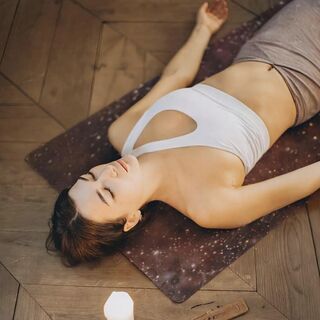
You can either be sitting up or lying down,
Whatever makes the most sense to you.
Now bring attention to the body and the points of contact it is making with whatever surface you're lying or sitting on.
Noticing pressure and also where the body is not in contact with the surface you're resting on.
Taking a few moments now to bring attention to your entire body,
The front body,
The back body,
The sides and everywhere in between.
Perhaps noticing if there's a feeling of tension or calm,
Restlessness or maybe even agitation.
And the invitation is to simply notice,
To register in your consciousness,
The body as it is in this moment,
Without needing to change anything.
Now gently bringing attention to the breath in the body,
Seeing if you can be aware of where the sensations of breathing are most prominent.
Perhaps noticing the warmness of the air as you breathe in through the nostrils and the coolness as you breathe out.
Perhaps you're noticing the sensation of breathing in the mouth,
The throat or the rising and falling of the chest or the belly as it expands and deflates.
Allowing the breath to do what it does naturally.
Simply be with your breath as best you can without manipulating it or changing it or getting it out of your being with the physical sensations of the breath just as they are.
Breathing in,
Breathing out,
Being right here,
Right now,
In this moment.
Now on the out breath,
Letting go of this primary attention on breathing in and breathing out.
And on the in breath,
Gently shifting your attention to the back,
Top and sides of your head.
Allowing your attention to freely float in this area.
Detecting and being with physical sensations that present themselves.
Try not to interfere with sensations as you attend to the back,
Sides and top of your head.
But rather bringing attention to specific sensations as they make themselves known to you and getting curious about them.
Sensations may present themselves as be as warm or coolness of the air,
There could be tingling,
Moisture and if you experience no sensations or numbness,
Seeing if you can be fully present and experience that as you explore the back,
Sides and top of the head.
And on the out breath,
Releasing the focus of attention from the head and on the in breath,
Bringing attention to the face,
From the forehead to the chin and from ear to ear.
Allowing your attention to move around the face,
Experiencing any sensations that arise and bringing attention to that area as best you can.
Becoming curious about sensations as they emerge and explore them.
Attending to the chin,
The lips,
Inside the mouth,
Your tongue,
The cheeks,
The eyes and the eyebrows,
The ears on both sides of your head.
And the forehead,
Letting whatever sensations arise and noticing them,
Whether they come,
Whether they persist,
Whether they fluctuate or go away.
Letting your attention linger,
Noticing sensations of this,
They change if they do change.
Some people find it helpful to very softly label the area of the face they're attending to from moment to moment.
Perhaps quietly naming the areas.
You may find that this can help you focus on and attract sensations.
And in this case,
You may quietly label the nose,
Cheek,
Lips,
Ear to ear.
If you find this helpful,
Please feel free to use this technique and if not,
Drop it.
Being with sensations that there's,
They arise.
Allow your attention to penetrate these areas in detail.
Noticing perhaps the shape of the sensation,
Where it begins and where it ends,
The edges,
Any movement within the sensations.
Noticing if sensations are restricted to the skin or moving around deeper in the body.
So really becoming curious about each sensation just as it is with whatever is arising in this moment as you examine the face.
And now on the out breath,
Gently moving the attention away from the face and on the inhalation,
Directing your attention to the neck and throat.
Allowing the attention to hover in this region of the body,
The front,
The back and the sides of the neck.
Noticing any sensations that well up and giving them your full and undivided attention.
Perhaps noticing where the neck is and where the neck is not in contact with the surface you're resting on.
And if it's helpful to use the labeling technique,
Feel free to do so as you attend to the neck.
And it goes without saying that from time to time the attention will be pulled away by thoughts arising,
Perhaps into the past,
The future,
Fantasy,
Into worry or judgment or critical thoughts.
Or your attention may also be hijacked by other sensations elsewhere in the body.
If this happens,
Gently and kindly escorting your attention back to the body,
Where in this moment we're paying attention to the focus of the neck and the throat.
Now on your exhalation,
Guiding the attention away from the neck and on the in-breath,
Establishing your attention on the shoulders,
The shoulder joint,
Top,
Front and back of the shoulders.
Focusing on any sensations large or small that are arising.
And if any sensation becomes particularly intense,
See if you can attend to the sensation by exploring or opening up to the sensation rather than resisting or fighting them as you attend to the front,
Sides and backs of the shoulders.
Letting your attention move deeply into the shoulder joints.
Working as best you can to opening up and being with sensations just as they are,
Perhaps breathing with sensations.
Now on the exhalation,
Letting go of this focus on the shoulders and on the inhalation,
Moving the attention down the right arm to the right hand.
Exploring the right hand and its position where it is in relation to the body.
Attending to any sensations that crop up.
Exploring the hand in its entirety.
There may be tingling,
Pressure,
Numbness or warmth.
Observing as best as you can the quality of the contours of these sensations that arise in the hand.
And again,
If attention is pulled away by thoughts or another sensation in the body,
See if you can let these be in the background and return to the current object of this meditation,
Which at this moment is the right hand.
Exploring the front of the hand,
The palm,
The fingers and thumb,
The back of the hand,
Its shape,
The backs of the fingers and the nails.
Taking in the entirety of the right hand of whatever sensations are showing.
And on the exhalation,
Letting go of this attention to the right hand and on the inhalation,
Moving attention to explore the wrist joint,
The forearm,
Front and back,
The elbow joint and upper arm.
Exploring deeply into the joints as well as the front,
Back and sides of the right arm.
Noticing its position and perhaps noticing where it is or is not in contact with the body.
Sensations might be due to clothing as it touches the skin or the arms as they make contact with the surface you're resting on.
There may also be more subtle sensations below the level of the skin.
As best you can,
Study these sensations with curiosity.
If more than one sensation comes up,
Feel free to attend to the one that really piques your curiosity and attention.
Exhaling now and releasing this attention to the right arm and on the inhalation,
Moving the attention across the chest of the left arm,
Allowing it to travel down to the left hand.
Attending to any sensation that arises.
Exploring the left hand in its entirety,
Its shape and curve,
Its position.
There may be moisture,
Dryness,
Coolness or warmth.
And getting really curious about the qualities of these sensations,
Exploring them as they arise in the left hand.
Checking out the front of the hand,
The palm,
The creases of the fingers and thumb,
The back of the hand,
Its shape,
The back of the fingers,
The fingernails.
And on the exhalation,
Letting go of this attention to the right hand and on the inhalation,
Moving attention to explore the wrist joint,
The forearms and back of the elbow joint,
The upper arm of the left side.
Exploring deeply into the joints as well as the front and back and sides of the arm,
Noting the position,
Where it is and is not in contact with the body.
Perhaps you're aware of clothing or air upon the skin.
And whenever the attention moves,
You know what to do with gentleness and kindness.
Return to the object of meditation,
Which in this moment happens to be the sensations that arise in the left arm.
Now on the exhalation,
Moving the attention from the arm and on the inhalation,
Bringing your attention as best you can to the upper back and observing this area,
Both the right and the left side.
There may be sensations of pressure,
Temperature as you explore the shoulder blades,
The muscles,
The spine.
Observing and investigating each sensation without having to change anything,
Exploring each sensation in its entirety,
Getting really curious about whether or not it is static,
Whether it changes or moves.
Directing attention now to the men and lower back and drawing attention to any sensations that come up and exploring them in detail.
The lower back particularly is a region that presents for many of us challenging sensations.
If these are present as best as you can,
Open up to these,
Leaning into them,
Allowing whatever sensations to arise to follow their course as you bring curiosity and kindness to this experience.
Now moving the attention on the exhalation from the back body and on the inhalation,
Shifting around to the sides of the body and coming to rest it on the chest as it rises and falls.
There may be sensations made by the clothing against your skin as your chest moves with each breath.
You may even be aware of the subtle sensations of your beating heart.
Letting your attention fully penetrate into each sensation as it rises,
Allowing it to do whatever it does,
Observing moment to moment as you examine the chest and the ribs.
Now moving the focus of attention to the abdomen,
Attending to the belly as it rises and falls with each breath in and out.
At the moment we're trying to observe whatever sensations are arising in the abdomen without thinking about them.
Instead,
Noticing the sensations.
Perhaps there's tightening of clothing,
There may be coolness or warmth,
There may be the sensation of hunger or ease.
Now releasing the attention on the out-breath from the abdomen and bringing it to the area of the pelvis,
The fronts and sides and back,
Including the organs of reproduction and elimination.
Investigating any sensations that call for your attention in this region of the body.
And as sensations show up,
Moving in,
Getting curious and investigating these as best you can,
Being with each sensation.
Now gently letting go of the pelvic region on the out-breath and shifting your attention right up into the right hip,
Joint and thigh.
Exploring the top sides and back of the thigh,
Noting pressure,
The sensation of clothing,
Position of the leg.
And again,
Sensations will make themselves known as tingling,
Pulsing.
These sensations could be static,
There may be movement to the sensations,
Be coolness or warmth.
Getting to know now the right knee and kneecap and its position.
Investigating the calf,
Shin and ankle joint.
Really getting to know the right leg and any sensations that present themselves,
Exploring them to the best of your ability.
Being present as best you can with whatever is arising in the moment.
Waiting patiently for sensations to attract your attention and giving them center stage.
If labeling helps you focus on the sensation in the body parts,
Feel free to use it.
Perhaps silently saying to yourself,
Knee,
Shin,
Ankle.
If you decide to use this technique,
See if the label can be very soft.
Of course,
When the attention is taken away into thought and elsewhere in the body,
You know what to do.
Coming back to the object of meditation without story or without judgment,
In a way that acknowledges that getting lost in thought is perfectly normal.
It's just what our minds do.
And just recognizing that this is part of the practice.
Whenever you bring yourself back to the attention,
Which on this moment is the right leg,
You are practicing mindfulness.
And now on the out-breath,
Releasing the attention to the legs and on the in-breath,
Allowing a special kind of attention to move into the right foot,
The top of the foot,
The toes,
The toenails,
The sole and the heel.
Resting here as best you can,
Attending to the foot,
Focusing on sensations as they make themselves known.
And then exploring,
Investigating them fully.
Studying the shape,
Size,
Qualities such as moisture,
Dryness,
Tingling,
Pulsing,
Even numbness.
Attending to the foot moment by moment.
Now moving the attention from the foot on the out-breath and on the inhalation,
Directing the attention to travel up the leg,
Across the pelvis and into the left hip joint.
Exploring any sensations here,
Allowing the attention to include the thigh.
Exploring the top,
Sides and back of the thigh.
Noting pressure,
Other sensations such as tension or ease.
Perhaps noticing the sensation of clothing,
The position of the leg.
Deeply exploring the left knee and kneecap and its position.
Moving lower in the leg and investigating the calf,
Shin,
And moving deeply into the ankle joint to explore it.
Really getting to know the left leg and any sensations that present themselves,
Exploring these,
Getting curious about them.
Being present as best you can without whatever is arising,
Without judgment,
With kindness and curiosity.
Waiting patiently for sensations to attract your attention and then giving them their due.
Getting to know them as you explore the left leg.
And now on the out-breath,
Releasing this attention to the left leg and ankle and inhaling and coming to really investigate the left foot,
The top of the foot,
The sides of the foot,
The toe and the nails.
Attending to the shape and points of contact,
Including the sole and the heel of your foot in your exploration.
Resting here as best you can,
Attending to all of the left foot,
Focusing on sensations as they make themselves known.
And on the exhalation,
Letting go of attending to the foot and on the in-breath,
Moving the attention along the back of the body.
The back of the heels,
Calves,
Thighs,
Buttocks,
Spine,
The lower,
Middle and upper back.
Breathing in and out and noticing tension,
Pain,
Discomfort,
Vibration,
Ease,
Whatever is present.
Resting in this exploration,
The scan of the entire back body.
Continuing to move your attention along the back of the arms,
Shoulders,
Neck and head.
Attending to the back of the head and the scalp.
Noting any sensations that well up in this moment.
And as sensations come and go,
See if you can gently move from location to location,
Lingering for a moment and attending to one sensation,
Exploring it and moving on.
Now bringing attention to include the entire front of the body,
The face,
Neck,
Shoulders,
Chest,
Arms,
Hands,
Torso,
Pelvis,
Legs and feet.
So that you are now attending to the body as a whole and letting the attention travel until a sensation tugs your attention.
Checking in with the sensation and then moving down the entire front body all the way to the feet.
Now once again becoming aware of the physical sensations of the breath as it enters and leaves the body.
Attending to things just as they are in each moment.
So being awake to experience as it unfolds in this moment and in every moment.
Reminding yourself as you go throughout your day that this state of clarity is available to you at any time.
Simply by bringing your attention to the breath or the body.
And a few moments will end this practice and the invitation is to bring the sense of ease and calm with you for the remainder of your day.
When you're ready,
Slowly opening your eyes if your eyes have been closed.
I'd just like to take this time to thank you for joining me in this practice.