Hi,
Hello,
How are you?
Welcome to In My Head,
A new series of talks that I'm going to be giving on Insight Timer,
Specifically related to mental health and emotional well-being.
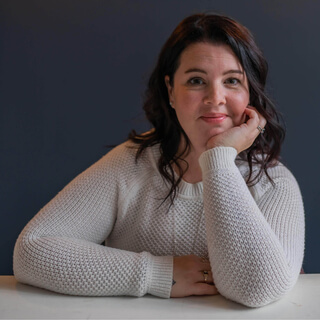
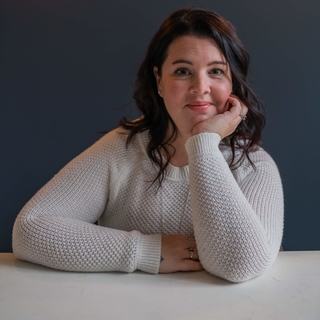
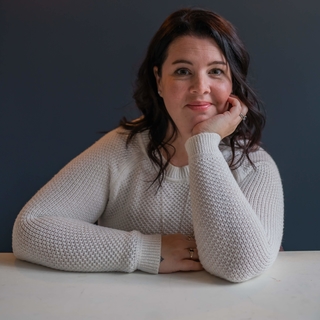
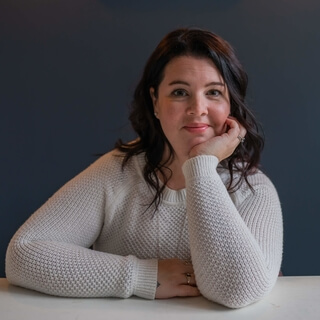
My name is Shanna Moyer.
I'm a mental health counselor,
An ADHD management specialist,
And a trauma support specialist based out of London,
Ontario.
I'm also a human who exists with late-diagnosed ADHD,
And I'm a parent of two neuro-spicy ADHDers.
I know a thing or two about how the brain works,
Why we are the way we are,
And how the world just has not been created with neurodiverse humans in mind.
So my hope with this new series of lectures here at Insight Timer is that you will take away one little sliver,
One nugget,
Every single time,
That helps you understand your brain and helps you embrace who you are.
On today's episode,
I wanted to tackle the topic of what is the merit of getting diagnosed late in life?
Did you know that the average age of a woman getting diagnosed with ADHD is 35?
It seems insane.
People who have existed for 35 years,
But largely their symptoms are internalized.
Therefore,
Female-presenting human beings are often misdiagnosed with anxiety or depression disorders instead of ADHD.
I have so many people who come into my practice later in life,
In their 30s,
40s,
And 50s,
Asking for guidance,
Asking,
What if I got diagnosed now?
What would change?
My question back to them is,
Well,
What is your motivation for wanting diagnosis?
Why is it that you are seeking a diagnosis now when you've been existing this long without one?
Then we look at the different types of motivation.
Are you looking for systems of support or are you looking for validation?
Going and getting a diagnosis of ADHD,
Whether it's inattentive,
Combined,
Or hyperactive late in life,
Will lead you down a road that opens a lot of doors.
If you think about a child getting diagnosed with ADHD when they're 6 to 17 years old,
They're in school.
They may need accommodations,
Individual education plans,
Different types of technology within a school setting to make sure that they're able to be successful in their studies.
Thinking about an adult,
When you have come out of a school setting,
When you are in a workforce or maybe being an entrepreneur because your brain has these incredible,
Fantastic,
And creative ideas that just never seem to stop flowing,
What is the merit of getting diagnosed?
Well,
The same doors can open.
You're an entrepreneur that has so many ideas that it's really hard to narrow in on the one that actually is going to be impactful and influential for your life.
We're also conditioned by society to believe that once we go through educational systems,
We are to choose one career and that is it for our life.
We ADHDers know that that's not true.
We get to choose our own destiny and we get to follow our passion wherever that road takes us.
It might be a short-lived hobby that we're hyper fixated on for six months or so and then all of the craft materials get left in a bin off to the side,
But we are in charge of what we want to do.
Getting a diagnosis late in life,
I myself got one when I was 40 years old and I sought out a diagnosis primarily because I wanted to understand how my brain works.
I wanted to stop forcing myself into systems that it simply wasn't designed for.
Stop using paper planners and wasting my money.
Stop buying things impulsively.
Stop making plans that I really don't want to commit to,
But my dopamine was low when I said yes.
I wanted to understand myself better and I wanted to seek out new systems that would help me be more organized and more focused.
So what I did,
And this is the same thing that I recommend all of my clients do,
Take the adult ADHD self-report scale,
The ASR SB 1.
1,
As well as the Vanderbilt ADHD diagnostic rating scale.
The Vanderbilt ADHD diagnostic rating scale is a test.
These are both the same tests that any psychiatrist,
Doctor,
Developmental pediatrician will use with children and adults,
But the Vanderbilt one specifically is designed for people under the age of 17.
So I tell my clients,
Think about your high school experience.
I myself really struggled with math.
I can remember so clearly,
I think it was grade 11 math class,
I ended up dropping it halfway through because we got to trigonometry and letters and numbers plus squiggly lines just made absolutely no sense to me.
Even with a math tutor,
My brain just does not work in numbers.
My brain works in art and color and music and deep conversation.
It was more of a history,
Geography,
Fine art brain than it ever will be a math brain.
And if I had have taken the Vanderbilt scale back then,
It would have been clear as day that yes,
I am a daydreamer.
Yes,
I have all of these different ideas and plans and poems in my head,
But they just don't translate very well when I have to be subjected to trigonometry and algebra and physics and chemistry.
The Vanderbilt scales would have given me an opportunity to augment my studies and work with my strengths instead of putting myself into these situations.
I previously wanted to be a marine biologist studying the behavior of dolphins.
There is no way my brain would have been able to do that if I continued to be undiagnosed.
Had I been diagnosed and properly medicated and properly had the supports within the school system,
I very much believe in integrative care.
Had I had access to those supports back in high school,
Perhaps being a marine biologist would have been something I could have achieved.
I am very happily not.
I am very happily in this position where I get to use my personal and professional experience within the realm of mental and emotional well-being to help other people.
I always believe that there is purpose in the path that we walk on.
There is purpose in my trauma.
There is purpose in my neurodiversity.
And that's to bring tools to all of you to say there is purpose and validation and importance on a late diagnosis.
There's also a massive grieving period that happens when we get a diagnosis and that's perfectly reasonable and absolutely okay.
Sometimes we need to reflect on our growing up and nurture that inner child and say,
Hey kiddo,
It's okay that you didn't get trigonometry.
Your brain just isn't designed for it.
But remember how you dominated in color theory and art history?
Remember that position paper that you wrote in US history,
Problems of US history in your undergrad?
That was amazing and that's why you got top marks because you hyper focused and used the superpower of your ADHD.
It's not all bad.
I recently had to tell my 14 year old who's going to be starting ADHD management soon that you're not broken.
You just have ADHD.
So instead of forcing your brain to do things that it simply cannot,
Why don't we work with your brain and provide it support so that it can function?
Late diagnosis has just as much validity as early diagnosis and once you're done the grieving process,
You can start living your life.
You can start celebrating the things that you're really interested in.
Go to all of the concerts.
Last year I think I went to 12 concerts and they filled my brain with so much dopamine and so much joy that I was able to feel alive again.
Working with my brain now as a diagnosed adult is such a different experience.
I very mindfully carve out time in my schedule for decompression.
I only take one-on-one clients on Tuesdays and Thursdays.
I only teach on Mondays and Thursdays.
I don't work past a certain time of the day.
I know when my burnout happens now and how to prepare for it.
I can cultivate this life in such a more mindful and intentional way that works with my brain instead of against my brain.
Late diagnosis can have a lot of hurdles.
There's still a lot of gatekeeping that happens within the mental health community,
But it all starts by taking a couple of those screening tools,
The same ones that a psychiatrist,
Doctor,
Or developmental pediatrician would use for diagnosis.
Take them and see what your results are,
And if it lends to an ADHD diagnosis,
Print off the results page.
Write down on the page all of your symptoms,
Things that you struggle with,
And things that you are incredible at.
Take that to a doctor's appointment and ask that that be scanned into your chart.
Start the conversation and ask for a proper referral to someone who can diagnose you.
There is so much coming home that happens after a diagnosis.
Yes,
There is grief,
And yes,
There is unraveling,
And all of those things that you have to kind of put back together after you've been diagnosed,
But life on the other side of diagnosis has these beautiful doors that are left wide open for you to walk through.
There are resources,
There's support,
There are tools,
There's medication,
There's integrative care,
All of these things that you wouldn't have access to unless you had a diagnosis.
Maybe you just want the validation like I did to know,
Yes,
This is how your brain works.
To know that maybe you weren't such a failure or a daydreamer back in high school when you weren't paying attention to the science teacher,
Yet you were making doodles and notes all around the margins of your pages.
Maybe the validation is enough,
And that has value in and of itself.
No matter what you choose for you,
You are the co-creator.
You are the authority over you and your brain.
So if seeking validation,
If seeking support and tools and resources is something that you are interested in,
Start the conversation with your doctor or your mental health care professional.
Do the screening tools and know that you're not broken.
You just have ADHD.