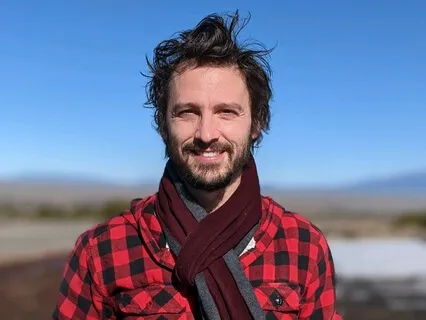
Welcome back for this third episode with Dr.
Simon Cox,
My friend and colleague from the Ph.
D.
Program at Rice University's Department of Religion and co-founder of the Okanagan Valley Wudong Kung Fu School.
He's back today to tell us all about the Taoist subtle body.
If you missed Simon's two previous appearances,
He also talked with us about the Buddhist subtle body and his experiences as a kid from Houston,
Texas exploring Asia in search of esoteric lore.
This time we're talking about Taoist teachings on the subtle body and descriptions of the death process,
And along the way we'll touch on,
Among other things,
The way Taoism was nearly wiped out in China's Cultural Revolution,
Similarities between Tibetan and Chinese descriptions of shooting your consciousness from the crown of the head at the time of death,
And Simon's recommendations for folks who want to meditate in his tradition.
If you'd like to learn more about Simon,
See amazing photos from his time in China,
And join his mailing list to hear about all the cool stuff he's offering.
See the show notes for a link to his website.
Welcome to Letting Grow,
The podcast about one of the spiritual journey's most difficult and courageous moments,
Letting go of who we think we should be so we can grow into who we most deeply are.
I'm your host,
Claire Villareal,
And I appreciate your joining me today.
I feel like I learned so much from our conversation about Buddhist maps of the subtle body and the way they kind of inform Buddhist teachings about the death process.
I'm super curious to hear about Taoist or maybe Chinese?
I mean,
I don't know what the right terminology even is to ask,
But about those kinds of subtle body maps and the fact that there are two,
There's not just one,
There's many.
So I feel like that's a huge topic,
But wherever you'd like to dive in,
We can start there.
Okay,
Um,
Yeah,
Yeah,
The plurality is like,
For someone like,
Historically-minded like me,
That's like a big problem.
It's like I'm trying to like find where everything comes from,
How everything fits together,
And it's,
That's one of the beautiful things about the Tibetan tradition,
Is that basically the Tibetan importation of Buddhism was simultaneous with the importation of literacy,
And the importation of what we think of as the kind of conventional trappings of like a state.
And so,
And it was all interiorly sponsored.
It was very systematic and centralized.
And then if you look at China,
The situation is like as different as you could possibly get.
Buddhism kind of just like trickles in.
Some through the north,
You have people like Persian translators bringing texts in Sanskrit and Gandhari translating them into Chinese,
And then you have people coming up from the south from like Sumatra,
And you have all these different waves,
And it's totally kind of anarchical.
And it takes hundreds of years before a kind of like Chinese Buddhist tradition really arises kind of on its own terms.
And the same thing goes for these kind of maps of the body.
Buddhism didn't bring the idea of like inner channels or occult physiology to China,
That stuff way predated the first importations of Buddhism.
But Buddhism certainly kind of contributed to those discourses.
Do you know,
Does anyone know what the roots of these kind of subtle body physiologies or anatomies would be in China?
Yeah,
So to speak with a bit of boldness that is simultaneously a bit of naivete,
Which is kind of,
You have to have this when you're going all the way back to like the bronze or even into the Stone Age.
It seems like these sorts of understandings of the body really came out of kind of shamanic theories of sympathy between the body and the cosmos.
So this idea of kind of like channels and flows in the body is really like the theoretical foundation between behind like rain dances,
Essentially,
Which were one of the major occupations of ancient Chinese shamans like pre-Shang dynasty.
So you do a bunch of movements,
You do some dancing,
And kind of you get sweating,
The energy gets flowing in your body.
And at the same time,
The energy gets flowing in the heavens,
And then the rains kind of come down.
So the sweat is analogous to the rain?
Yeah.
Wow.
That makes a lot of sense.
I mean,
You see something really similar,
Like in the Kalachakra Tantra,
For instance.
So like in Tibetan systems,
Where they definitely present the flows of the energy within the body as being tied to the flows of the energy within the universe.
And to me,
I mean,
These sorts of ideas of a subtle body are so widespread,
It just makes sense that they would grow out of something really ancient and really,
You know,
Like every culture has its own indigenous shamanic tradition,
As far as we can tell.
So that it kind of makes sense,
But it's also just really cool to hear that confirmed,
Or you know,
As much as anyone can confirm it.
Yeah,
Yeah,
That's another part of the historical problem is that it like on this,
On this kind of like shamanic theory about body cosmos sympathy,
Is like absolutely ubiquitous.
You find it among like sub-Saharan African cultures,
You find it in Australia,
It's just absolutely everywhere.
So as an historian,
You're like,
Well,
Where does this come from?
There's it's kind of comes from some time out of mind,
You know.
But things like like in China is a great case study in this because we have this whole history from pre-writing all the way into like highly literate civilization.
Basically it kind of like during around the time of Christ,
Which is when these kind of channel systems are really laid down very,
Very lucidly in classical Chinese,
And primarily in the text,
The Huangdian aging,
The kind of yellow emperor's inner classic.
Wow,
It just it makes me think about,
You know,
The rise of sort of classical tantra in India and Buddhist tantras,
And it would have been a comparable timeframe.
I have so many questions.
So I guess the next like relevant question would be,
It sounds like Taoist or I need a backup.
I tend to think of like non-Buddhist Chinese mysticism as Taoist.
Is that even correct?
Is it correct to talk about,
You know,
The types of subtle body paradigms that you studied in martial arts in a martial arts context?
Is it even right to talk about them as Taoist?
Like is that just a later label that we're giving them?
Tell me,
Doctor.
I think it's like a little a little of both.
So so I think we have to use the term Taoist.
It's a totally useful term.
But you know,
We can we can be very postmodern,
Post-colonial and completely deconstructed if we want.
But I think that the kind of cost benefit analysis of of doing that doesn't it doesn't really pay off in this case.
So no one's really being harmed by your use of the term Taoism,
Despite the fact that the term Taoism was coined in French in the 1830s.
So it is a quite late term,
But it really does correspond to a generally understood phenomenon in Chinese history that they call Tao Jiao or Tao Jia.
There's kind of different terms for different currents that coalesce into what we think of as a Taoist tradition.
So and so absolutely,
A kind of pre-Buddhist unique form of Taoist mysticism arose that was then entered into conversation with Buddhism at a very early date.
And by the Tang dynasty in the kind of high medieval period formed very interesting,
Wild forms of syncretic,
Buddho Taoist mystical discourses that are very,
Very kind of very groovy.
You're combining like reading the Tao Te Ching,
But through a kind of Nagarjuna lens.
And there's this really cool stuff that goes on.
But yeah,
Everyone would agree that there's a Chinese mystical tradition and that it is,
I think,
Taoist,
Pretty much.
And so when we talk about subtle physiologies,
They aren't uniquely Taoist because there is a kind of Chinese medical tradition that's not just a subsidiary of Taoism.
It's kind of its own thing.
But it has this very,
Very much like in Tibetan Tantra,
There is this kind of weird,
Intricate relationship between tantric understandings of the body and medical understandings of the body.
And the same thing happens all throughout Chinese history.
There's the kind of medical guys and the Taoist mystics,
And they're kind of bouncing off each other.
So interesting.
It kind of makes sense,
You know,
Because whether you're talking like,
Whatever your understanding of the body is,
If you're looking to transform your experience of the body,
I mean,
That can be tantric-like practices,
Or it could be medicine.
Like they're both,
It makes sense that both would be drawing on the same kind of well of wisdom about what happens in the body.
That's really fascinating.
So we're up to kind of like the common era now.
And it sounds like over the course of China's reception of Buddhism,
There was this like syncretism and this sort of intermingling.
Where does martial arts play into this?
I mean,
Is it already something that's very much under the umbrella of martial arts?
Or are these very separate at this time?
They're not separate at all.
And so this is another thing like frustrating for the historian approaching Chinese culture.
None of these things are silent off from one another.
From a very early date,
Martial arts is very much part of these kind of discourses about what we might think of as magic and occultism and metaphysics,
All these modern terms.
You can find kind of ancient Chinese analogs for them that are,
You know,
Roughly similar.
And Taoism is implicated in all of this stuff from the very beginning.
Or just sorry,
Martial arts is.
So yeah,
I mean,
That's a whole other line of inquiry that I'd be thrilled to get into.
So what exactly is your curiosity about how martial arts fits into all this?
It's largely personal.
As someone who loves martial arts.
But also,
From the perspective of Tibetan Buddhism,
There you clearly have the spiritual practice and the medicinal practice with a subtle body.
But I'm not aware of anything.
I mean,
You hear some rumors about like Tibetan martial arts and stuff,
But I am not really aware of any concrete evidence for a Tibetan tradition of martial arts that integrates them.
So it just is really fascinating to hear that in the Chinese context,
There is this whole like third category of thing that you could do with a subtle body.
Yeah,
Yeah,
The sort of,
You've read enough Tibetan history to know that Tibetan martial arts surely like existed because there's so much warfare.
Yeah,
They fought a lot.
Yeah.
And so the thing that is unique about China,
Though,
That lends it to this kind of inquiry and analysis is,
Um,
So I guess,
Do you know about the history of Capoeira in Brazil?
Like how it.
.
.
No,
Not really.
It kind of arose,
It was a martial art kind of disguised as a form of dancing because it was the African slaves were there and they kind of had to hide that they were actually cultivating like fighting methods,
You know?
Yeah.
So that is very analogous to what happened multiple times throughout Chinese history.
Interesting.
So China also very martial society from a very early date.
But they have these kind of like intermittent periods of foreign rule.
So particularly after the Mongolians,
Mongols conquered China,
Kublai Khan and the Yuan dynasty,
Martial arts was essentially outlawed.
You couldn't openly practice it.
But it was such a kind of part of Chinese culture that they had to keep doing it.
And so the only place that it was acceptable to do it was in the theater.
And so you develop these kind of like martial theatrical traditions.
And it's really out of this time that the whole idea of like eagle claw,
Or snake style,
Or drunken style comes about because you have these kind of like,
Basically theatrical stars.
And this guy,
He's really,
Really excellent at moving like a snake.
And so then,
You know,
The Mongolians are eventually kind of fall in the Ming dynasty or rise and so on and so forth.
But this idea that there are like these individual styles,
And they have lineages and stuff like that,
This lives on.
And now,
Of course,
This is like,
You know,
This is essential to things like Kung Fu Panda and all,
You know,
All Kung Fu movies and stuff like that.
But it's because of that,
That the Chinese martial tradition really lends itself to this kind of historical vision and analysis because things like this was founded by this guy,
It's this style,
This is its characteristics are kind of nailed down and important.
And different understandings of occult physiology are then kind of involved with this stuff.
And this always this actually becomes a huge threat to the Chinese state on multiple occasions,
Because Chinese dynasties usually fall for like one of two reasons.
One is foreign invasions.
And the second one is like peasant rebellions that usually have some sort of millenarian rhetoric about the coming of a new age,
And are often like involved with kind of talismanic magic and occult physiologies are a part of that different understandings of your body.
Like in the Boxer Rebellion,
There were practices that they did,
That were what we would think of as Qigong today,
Qigong,
Again,
Another term that really wasn't coined until the 1930s,
But can generally refer to a whole body of Chinese practices that go back thousands of years.
Qigong practices that make your body totally immune,
Give you kind of a diamond body.
They even use this term out of Buddhism,
The Vajra body,
The Jingang-ti.
Is that a good starting point,
I guess?
Yeah,
Definitely.
Yeah.
I mean,
It makes me understand a little better why,
Like the Communist government nowadays will crack down on Falun Gong so hard.
Yeah.
I mean,
If it's the whole history of China echoing in their ears as they see people like out there doing Qigong,
Like,
Oh my god,
The Qigong is back.
Absolutely.
Yeah.
I mean,
It was so Qigong was it wasn't like outlawed during the kind of after the revolution or during the Cultural Revolution or any of that,
But it wasn't like,
You know,
Encouraged.
But after Deng Xiaoping took over after Mao Zedong in 1979,
He did this Gagakai Fang kind of opening up and liberalization of Chinese society.
And after that Qigong,
There was a huge explosion of Qigong.
Everyone was doing Qigong all over China,
The 80s.
It was a wild time.
It's called the Qigong Zhe,
Qigong fever.
And a scholar from Hong Kong,
David Palmer,
Has written an excellent book,
Qigong Fever.
I think it was his dissertation that he turned into a book.
But yeah,
It just like gets totally wild.
Everyone's doing Qigong.
But things get like a little crazy,
A little out of hand.
Charismatic leaders kind of rise up and they're like,
I'm going to bring in the new Qigong age.
And yeah,
That's when the CCP really cracked down because they heard this echo of dynasties past,
You know,
Who didn't kind of nip this stuff in the bud.
Wow,
I had no idea the subtle body was involved in like current Communist Party politics.
Yeah,
Absolutely.
What is it not involved in though?
Wow,
It's so fascinating.
It sounds like there's this proliferation of different systems,
Different understandings of the subtle body.
It would be skipping ahead a lot.
And I want to ask you later,
You know,
More about how you got here.
But I guess to skip ahead to nowadays,
Like your time studying these practices,
And really diving into the textual tradition too behind the subtle body practices.
What did you find?
What did you train?
Did you discover the,
I mean,
I guess you kind of know the answer,
But did you discover like one system of subtle body practices that you found preferable to others?
Yeah,
So I guess this is a story I kind of tell in my forthcoming book on subtle body.
Yeah,
I mean,
My interest in this stuff right started just as a kid in the 80s.
Everyone's exposed to this stuff.
It's everywhere.
You know,
Double Dragon,
Batman,
Comic books,
And kind of these cartoon series.
We all watch the X-Men.
Everyone is,
They have these weird powers and these weird things happen with their bodies.
You're just kind of,
And Jedi,
Of course,
You know,
Naturally.
And so,
You know,
From a young age and also exposed to these media,
I realized that the kind of martial arts was really the place to go to like explore these different kind of ways of cultivating your body.
And so through my martial arts training,
Eventually,
I kind of like wandered into a ninjutsu school.
And that place kind of striking vital points was a very important part of the martial art.
And we got these two subtle body maps,
Essentially,
From the late 19th century,
That teach you these different points on the body that have these different kind of esoteric names and interpretations.
And I just thought this was the coolest thing in the world.
And I went to Japan to study that stuff a few times in high school.
Yeah,
And then in college,
I kind of continued this study in a weirder way.
I was a classics major.
And so I was really interested in how these things showed up,
Particularly like in Homer.
I don't really get into this in my book.
But if you've ever read the Iliad,
It's full of people just like really kind of gory detail of bodies doing things.
And there's all these different ways they talk about the body.
There's your spirit kind of manifesting from your chest or manifesting from your belly or your lungs.
And there's like,
These are kind of different aspects of your psyche coming out of these different organs.
And I thought this is so cool.
And it seemed like some stuff I'd read about in Chinese sources.
So anyway,
I made my way to China after undergrad.
I was in a great hurry to go on some epic Oriental expedition.
And ended up spending six years there studying Taoism in a quasi monastic context.
And it was there that I thought I'd really get to like the kind of like,
Logos classicus of the subtle body,
It seemed like all roads kind of led back to China.
And so I explored the medical tradition,
Medical texts,
I read those with my master actually in China.
And then we also the kind of pinnacle of the sect in which I was studying was inner alchemy,
Which is a kind of form of,
You could say yoga.
That's not strictly correct.
But I think that it's analogous to what people think of as yoga,
Particularly like Tibetan yoga.
There I do think there were historical connections,
Deep,
Deep historical connections between people doing things like Tummo,
Inner heat practice,
And these cultivation of the true fire,
Chu Zheng Huo in Chinese.
I mean,
There's the same people doing the same things at the same time,
Literally in what are today the same provinces in China,
But some are doing it in Tibet,
And some are doing it Chinese,
Like there's obviously connections here.
But these are always considered very esoteric practices.
So we don't have a great historical record of people saying,
Oh,
I did this.
And I did that.
So it's hard to access for the historian.
And just to make clear,
That would be because you shouldn't write about it.
Like if it's esoteric,
You don't go shouting about it.
So there would be no historical record.
Yes,
Yeah,
Exactly.
Yeah,
This was pre Instagram.
So you don't advertise to the world every yogic thing you're doing.
Yes.
And once again,
Those who know don't tell and those who tell don't know.
Yeah.
Even with Instagram,
I think.
Yeah.
Hard for people in our age to understand,
I think now that everything is shared,
You know,
Just an innate response.
But yeah,
These things were absolutely not shared.
And even to the present day,
And this is one of the things that I found kind of difficult about the Taoist tradition,
Because I was really exploring the literary sources of this stuff.
And they were very vague,
So vague,
But still all very,
Not in agreement.
All of these different lineages of inner alchemy,
Everyone had their own way of doing things.
And even through the kind of clouds of obfuscation that are kind of trying to hide the secrets from non-initiates,
You can see that there are pretty fundamental disagreements between these different lineages of alchemy.
So yeah,
I kind of studied in this one lineage and learned all the practices,
And I still do them in that stuff.
But it's by no means like the definitive Taoist path.
There is no definitive Taoist path,
Unfortunately.
And I once heard a scholar of Taoism at a conference say that even what we think of as Taoism wouldn't really exist if it weren't for the periodic efforts of the Emperor,
Essentially.
So every few hundred years,
An Emperor would come along and be like,
This Taoism thing's a real mess.
Let's get it together.
What books are Taoist?
What do you guys do?
What do you stand for?
And then a bunch of people would come to the Capitol and kind of put it all together,
And then it would just start spinning out of control again for a few hundred years.
So that's Taoism.
That just feels appropriate for Taoism.
Yeah,
It's true.
They're anarchists,
Man.
Wow.
Exactly.
I mean,
If it sits still too long,
How could it be the Tao?
So I guess the next topic I'd like to dive into,
And it feels like we're at a good point for diving here,
Is so what is the subtle body?
What is the description that you're most versed in or that your school is offering?
Because you mentioned last time it's very different from a Buddhist sense of the subtle body with channels and whatnot.
So what is it?
How would you describe just like the physiology of the subtle body in this context?
Hi,
Insight Timer Meditator.
Thanks for listening to this episode.
Please take a moment and follow me here on the app.
And if you'd like to connect with a community of weird and wonderful folks who are also interested in rebirth and meditation,
Check out my instructor profile.
You'll find a link to a page with more resources,
Including a community newsletter signup form so you can join our live free video calls.
Now let's get back to the good stuff.
Like I mentioned,
So it's actually in the early Han Dynasty,
Between 200 BC and the kind of year zero,
That the kind of medical vision of the subtle body is really elucidated in high detail,
Written down and kind of codified in a way that hasn't changed very significantly in the Chinese medical tradition over the past 2000 years in the Huangdi Nejing,
The Yellow Emperor's inner classic.
And that is the model that most Taoist lineages kind of go off of.
In one way or another,
It's the model of channels.
So there's kind of 12 major channels that correspond with different organs and they're active at different parts of the day.
There's like your gallbladder channel is operative,
Or kind of the Qi is going through your gallbladder channel between 11pm and 1am.
And then from 1 to 3,
It's going through your liver channel.
And then from 3 to 5,
It's going through your lungs.
And then 5 to 7,
It's going through your large intestine.
And so all of these channels link up and form a circuit through your whole body.
So over the course of 24 hours,
The Qi flows through each of these meridians and the meridians each correspond with a different organ.
And so your Yang meridians,
They flow up and they go up,
Generally the outside of your body,
Outside of your arms,
Up your back.
And your Yin meridians,
They flow down and go down the front of your body and going down the inside of your arms.
That's kind of how the body is conceived of.
And this is where it gets a little bit weird when we're talking about these kind of epistemological things because that's kind of how your mind is conceived of as well.
You have kind of different spirits that live in these different organs.
And depending on what time of day it is and what organ is most active,
Certain spirits will kind of take primacy over others.
And so this has pretty big implications for your different types of internal cultivation.
Like when the liver is active,
You want to do,
You do liver stuff.
And when the liver is most passive,
You kind of just like let it chill out.
It gets way,
Way,
Way,
Way complicated because all of these,
There's also elemental relationships between the different organs that the,
There's kind of these five elements,
Metal,
Water,
Wood,
Fire and earth.
And they correspond with like metal is in your lungs,
Water is in your kidneys,
Wood is in your liver,
Fire is your heart,
And to earth is your spleen.
And so,
You know,
Water,
Water will put out fire,
But it will help a tree grow.
You know,
If you leave metal out overnight,
Water will kind of like condense on it.
So metal kind of gives rise to water.
But water will,
But metal will chop down a tree,
You know,
This guy,
So on and so forth.
So there are all these complex relationships and you're doing things using kind of visualization and your imagination and the flow of energy in your body to kind of harmonize the relationships between your organs.
So that's,
That's just,
That's like step one.
That's a,
You have to have very harmonious organ relationships before you even begin the inner alchemical practice.
But that process takes like a year or more usually.
Yeah.
To harmonize the different organ systems together?
Yeah,
Depending on how out of whack you are.
So there's also kind of herbal regimens you can take and there's these different Qigong practices and seated meditations visualizations.
There's a whole litany of stuff and there's even magic,
You can write talismans.
There's one of the great things about Daoism is it's kind of something for everyone.
There's even like sleep practices and sexual practices.
So you can kind of pick your poison,
You know.
That's amazing.
I guess I'm realizing just hearing you describe this,
How much I've kind of internalized the Tibetan system.
Because it's hard to imagine,
You know,
In the Tibetan system there's like a central channel that runs from basically the center of your abdomen up to the crown of your head.
There's a channel on either side of that that kind of runs parallel to it.
So like there's almost a sense that,
You know,
That there's like a just a location for these different energies in a way.
And I mean I'm sure that there are systems that talk about,
You know,
The energy flowing differently.
I've actually like intentionally not read a lot about Buddhist Tantra in case I want to practice the tantras.
But yeah,
The idea that there will be different channels and then the qi flows through those different channels at different times of day,
It just sounds like a very different way of conceptualizing like the body and the energy and how it flows through it.
I don't even have a question.
I just am trying to wrap my head around it.
Yeah,
I think it is.
It's a radically different understanding actually.
And I think oftentimes these are kind of like just collapsed in together in the sort of like,
You know,
Harmonizing spirit of kind of New Age syncretism.
But if you really dig into these systems that they're totally divergent,
As different as Chinese medicine is from like medieval Galenic medicine in Europe,
Or from a kind of like Freudian steam engine understanding of the body and psyche,
Or from even contemporary biomedical models where we're using words like stem cells or quantum this or that,
You know.
Yeah,
It's just so fascinating that you could have these different systems articulating something similar that our body is like a home for energy that circulates through it,
But then to articulate it in such different ways.
And then to have really,
You know,
Detailed practices that seem to work for people but are built on completely different models.
That's just really cool.
Yeah.
I'm curious to hear,
I know you might not be able to share it because see above you don't put everything on Instagram.
Like what kind of practices would y'all do in this training to cultivate your energy system?
Yeah,
So within our lineage,
There's a big,
The big divergence in different sects of inner alchemy is what you start with first.
Do you start with cultivating the mind?
And because then the mind will then kind of go down and harmonize the body?
Or do you make the body okay,
And then once your body's fine,
Your mind will kind of naturally be placid and harmonious.
And so our lineage was one of the ones where we start in the body,
And that the mind comes later.
So we started with what's just called in Chinese Jin Zuo,
Which is kind of placid sitting,
Tranquil sitting.
We did this for years.
Like our master literally taught us how to sit and didn't say anything else for three years.
Wow.
Yeah.
So yeah,
He taught us the sitting posture.
We learned the basic kind of energetic map.
Very,
Very basic,
Even more basic than what I just told you.
And he said,
Just focus on meditating into your lower abdomen,
Your Dante and the elixir field.
And then we had meditation an hour a day every night for three years.
And only after that did he begin teaching us these practices of moving energy through the body and stuff like that.
But I mean,
That sounds kind of boring or torturous or whatever.
And it is kind of in the beginning because if you haven't done much meditation and you just jump in and try to sit for an hour,
It's like it's impossible.
You're scratching your head and you're moving,
You stretch your legs out.
And so that was a cool thing in our school.
It was okay.
It was okay to stretch your legs out.
If you start getting numb,
Just stretch your legs out,
Massage them a little bit.
But then as you can go back to sitting.
And by the end of about a year,
All of us could sit for an hour and sit comfortably.
And so the idea in our lineage,
Supposedly you're supposed to be able to sit for four hours completely still and not feel disturbed at all in any way.
And then your energies are settled enough that you can actually start,
Your kind of sensitivity is subtle enough that you can actually start moving these subtle energies in your body.
Wow.
But different people have different maladies.
Everyone's coming from a different place.
And we would use pulse diagnosis kind of from the Chinese medical tradition to see what was the condition of your kidneys and your heart,
Because these are the two main ones you're using.
Kidneys are water,
Heart is fire.
And so Sifu would say most foreigners have kidney deficiencies.
And so he basically gave us these different recipes for kind of herbal drinks we would have.
Goji berries were a huge part of it because they're great for your kidneys.
So yeah,
We did this kind of combination of daily and daily Qigong practices,
An hour of just completely still sitting.
And then these kind of herbal regimens combined with getting good sleep.
I'm just struck like hearing the whole set of practices that goes around this,
You know,
How different that is from most like introductions to meditation or Qigong or whatever here in the West,
Where people are like,
I have five minutes a day.
What can I do?
Yeah,
And then there's just like this expectation of,
You know,
Well,
Magic is going to happen if I do 20 minutes a day.
And y'all spent what,
Three years?
Just settling enough to do the main practice.
Yeah,
Yeah,
Just to even be able to start.
Yeah.
So that's why I still don't really have any idea how to really teach this stuff in the West.
I teach Taiji,
I teach Qigong,
And that stuff works really well.
And people just thrive and they love it,
You know.
But our seated meditation,
The inner alchemy,
I really don't know how to even start,
You know?
Has anybody expressed interest yet among your Western students and like trying to go down that path?
Not really.
Well,
I think it's my fault,
Though,
Because I'll tell them,
I'll be like,
Oh,
Yeah,
This is how we started it,
You know?
And then they're like,
Oh,
Okay,
Never mind.
But I don't think it's hopeless.
I think,
Yeah,
Some sort of translation can happen that's genuine and,
You know,
And helpful.
So I don't know,
I spend a lot of time trying to figure it out,
You know?
Yeah,
Yeah.
Well,
It's not something I can take on right now.
But man,
I'm making aspirations that maybe someday I can start that path of training too,
Because that'd be really cool.
Well,
I guess this leads into another topic that I wanted to ask you about today,
Which is,
You know,
I'm sure that some of the people listening to this are going to be like,
That sounds awesome.
I love Qigong.
I think there is this little body,
But I can't really feel it.
Maybe how do I practice to be able to be more attuned or to cultivate my subtle body?
What would you say for people who don't necessarily have an hour a day for several years to get started?
Like,
What would be something people can do that's safe,
That's relatively effective,
And that maybe fits into a modern lifestyle reasonably well?
Yeah,
I mean,
I think last year,
Meditation apps were the most well selling apps,
Right?
Yeah,
I wouldn't doubt it.
Yeah.
So I don't have a lot of experience with these meditation apps.
But I think really any kind of meditation or Qigong thing,
Where you're just simply focusing your mind inside your body,
And just having a little bit of stillness,
And this kind of interrogation of your own experience.
This is the foundation,
And this is hugely important and something that we really are kind of everything is pulling us away from doing this right now.
So the basic theory behind this inner alchemical stuff that this is maybe semi-secret,
But it's okay,
I can talk about it,
Is that the kind of your eyes,
The physiology behind vision is based on fire.
And so your liver creates fire in addition to your heart.
And basically the liver fire kind of goes up and comes out your eyes and shoots out and kind of bounces off stuff like sonar and kind of comes back in and brings in images.
And so when you're looking at things,
You're sending out your liver qi and this fire and it's kind of bouncing off stuff.
And the meditation that you do is a kind of inversion of this process.
So you just kind of close your eyes or partially close them off and just kind of half closed in most Taoist meditation traditions.
And then you do Neiguan,
You looking inside and just focus your mind somewhere in your body.
Usually you're kind of four finger widths below your navel and a little bit inside your body.
This is called your lower elixir field.
You start there and you just focus your mind there.
And then that's redirecting this fire.
Now the fire is going inside your body and it's kind of like cooking,
Cooking things.
And eventually this cooking gives rise to good feelings in the body.
And so when everything in the world is,
When there are literally people out there who are trying to take a slice of your attention and monetizing it.
So this kind of fire you're shooting up through the eyes,
That's worth money now to people like Mark Zuckerberg.
So meditation is kind of an act of resistance in this sort of culture where no one's taking a slice.
It's a full dividend from that fire when you're doing meditation and just focusing anywhere on in your body.
And there's all these energetic meditations where you're tracing all these different pre-prescribed lines through your body.
But my master always said that no matter what lines you're tracing through the body,
Those are kind of like training wheels because when you're really good with these energetic practices,
It doesn't matter where the meridian is,
What the line is.
You can move the energy there.
And so people would have pain,
For example,
If you have pain in your shoulders or in your knees or something like that,
You can just focus on bringing that pain and bringing it right back into your lower belly.
That's like a,
I'm not giving specific instructions on meditation,
But saying what to look for or focus on,
I guess,
In any kind of meditation because this sort of mentality can be incorporated into any practice you do,
Any app you download.
Yeah.
That's wonderful.
Bringing it,
It feels very real too because I feel like there's a lot of people who are like,
Oh,
Do this one movement.
It contains these,
You know,
It gives you all these different benefits.
And I mean,
I'm sure that's true,
But just to hear you should do this first for me is really valuable.
You know,
That it's not like,
Oh,
You're just slogging away on some like really basic thing.
Like,
No,
You're actually building the tools that you're going to use.
Like if you don't have these tools,
You can pretend that you're doing the practices,
But it's not necessarily as effective.
Yeah.
Yeah,
I guess there's a similar kind of vision in Tibetan traditions,
Right?
You start with the Shamatha and there's a kind of just stopping is where you began,
Right?
Yeah,
Shamatha is calm,
Abiding meditation,
Just learning to like focus your mind on an object and notice when it falls off your chosen object.
Yeah,
So definitely there's,
You know,
Just a foundation that you kind of have to have of attention before you can really do anything else with the mind.
And you know,
To kind of,
An idea that resonates for me and what you're saying is also that a lot of these so-called like basic or introductory practices in Tibetan Buddhism are also practices that can help you at the time of death.
Like some of the most esoteric teachings in the tradition are about how to go through the bardo states of death and rebirth.
But you know,
Like I was really struck rereading Mind Beyond Death by Dzogchen Poulneb Rinpoche this most recent time that I read it,
How often he mentions things like Shamatha,
Calm abiding meditation,
Vipassana,
Like special insight meditation,
Like things that we tend to think of as basic and then you move on from there.
Like I've been really struck how they can provide a foundation for anything,
For anything,
Like for life,
For death,
For rebirth.
And it's just really cool to hear from this other tradition as well.
Like,
I mean,
No matter what somebody is interested in,
They can put in the time to learning how to settle their mind and that's going to pay big dividends no matter what they do next with it.
Yeah,
Yeah,
Absolutely.
Yeah,
Like I was saying,
I mean,
This is since it's absolutely foundational in these Taoist practices,
It's,
It lays at the foundation of so many things,
Including,
Like,
You know,
What happens when you die,
Which,
Unfortunately,
In Taoism,
That's not as rigorously elucidated as it is in the Tibetan,
You know,
Thanatological tradition,
Which I think is really unparalleled.
I think the Tibetan descriptions of the kind of process and physiology of the dissolution of the body at death are,
I've never seen anything like that anywhere else in the world.
That's really special,
You know.
Wow,
You're someone who studied much more broadly like these things and I have.
So that's interesting to hear.
Sometimes I think they may have gone a little too far in codified and maybe gotten the details a little too refined,
But it certainly is an amazing map just to have some idea of what could happen.
Yeah,
Well,
Yeah,
I guess maybe for a nerd like me,
It really I'm like,
Wow,
This is so rigorous and sophisticated.
And oh,
Man,
It's wonderful,
You know.
But yeah,
It's a little bit overbearing in detail,
Perhaps.
I mean,
The Tibetan tradition kind of tends to be that way.
Like they tend to,
I think,
Kind of overdo the details sometimes.
But if you train in that level of detail,
Then it'll pay off,
You know,
Even if the experience doesn't 100% match like the map that you've internalized.
But having said that,
What does the Taoist tradition say about the death process?
I've been thinking about this because you kind of mentioned in an email that we talked about this.
And I can't really,
I don't really know.
There's a kind of general understanding,
But there's no,
So far as I am aware of,
And of course,
The Taoist tradition is vast.
About 1% of the Taoist canon has been translated into any European language.
This is massive compendium,
And I've,
You know,
Leafed through it for a decade now,
But still,
I'm a total neophyte.
There's like the kind of thanatological genre exists in Tibetan literature.
It never really arises as such in a Chinese or Taoist context.
Interesting.
And so there are very elaborate,
Anyone who's ever been to a Chinese funeral,
Can tell you that it's an extremely elaborate process that has tons of kind of just lore kind of baked into it about theories about the soul and this kind of what happens after death.
But there's never,
It doesn't really become the subject of like the kind of like highfalutin intellectuals in the way that it does in the Tibetan tradition.
But the basic gist of it is that we have a kind of,
So I talked about how there are all these different souls in the body.
But the main ones that pertain to the afterlife live actually in the lungs.
They're called the poi souls,
Often translated as white souls,
Because the character is white next to the character for ghost.
That's how you write the character in Chinese.
And then in your liver,
You have the cloud souls or huun,
Which have the character for cloud written next to the character for ghost.
And so when you die,
The lung souls go down into the earth and are kind of absorbed and recycled,
Just like in a kind of like a Richard Dawkins theory of what happens to you after you die.
And then the huun,
But the cloud souls,
They go up to heaven,
And they live on.
And this and they become shen,
Which means like a kind of sort of deity,
God or spirit.
These are the spirits that your kind of children and their grandchildren will worship.
And if you're a normal person,
Your spirit will kind of live up there for seven generations,
And then it'll dissolve and completely return to the Tao.
And so a lot of the Taoist practices for inner alchemy were actually ways of kind of getting around this unfortunate kind of eventual dissolution.
And so what you're actually doing after you harmonize all of your organs is taking all of their energies and kind of using them to fashion an embryo inside your body,
A little baby of pure light.
And this little baby,
You nurture it and you feed it through specific breathing techniques.
Antarespiration is one of them,
Very secret thing.
And the baby grows and grows and grows.
And eventually,
It kind of grows enough that you can shoot it out your head.
And you can do spirit travel in this little baby body.
And this baby is what you eventually shoot out your head when you die.
And the baby will you live on in the kind of immortal body of the infant.
Wow.
Is that like a form of enlightenment,
If you're able to kind of shoot this body out of your head at the time of death?
There's not really a word for enlightenment in Chinese.
But I guess this is an issue I guess I take generally with the word enlightenment.
I have yet to find really a word for like,
Enlightenment as we use it in like any in Chinese or Sanskrit or Tibetan.
But yeah,
The closest thing to enlightenment,
This is one of the ways they think of it in this creating the spirit immortal.
It's seen as analogous to forms of Buddhist enlightenment in like the Chan tradition,
For example.
Interesting.
I'm curious,
You know,
Like,
For me,
I use the word enlightenment because a lot of people are familiar with it.
I think awakening is probably more,
It's a better translation for,
You know,
Sanskrit and Tibetan ideas,
But also,
It just conveys,
I think,
More the sense of what's happening.
Like what would you say is the right translation for the ideal,
You know,
For that goal of living on?
Yeah,
I think I think awakening is a better translation,
I guess.
But yeah,
I'm just being a pedantic,
You know,
Etymologist here.
I mean,
There is there's a pedantic side to it.
But I think it's also maybe telling that like,
Translators chose that term enlightenment partly because it evokes the European Enlightenment and you know,
The scientific,
You know,
Revolution that happened.
And I'm not a huge fan of those overtones,
Honestly.
I mean,
I see where it's,
It's a moment that has a lot of cachet in modern Western culture,
But I think there's more to it than just like a rational,
You know,
Oh,
I've woken up out of like,
Misunderstanding things.
Well,
No,
It's embodied too.
Right.
I looked into this recently.
And yeah,
The word enlightenment,
The kind of use of it for refer to Buddhism and the use of it to refer to the European movement with,
You know,
Kant and Hume and all those guys,
Those those meanings are simultaneous.
It's not like there's the European Enlightenment and then people use it to refer to Buddhism.
The use of those terms shows up exactly at the same time.
So it's really popularized in the 1786 essay by Emmanuel Kant,
Foss ist auf Klarung,
What is enlightenment?
And then that word kind of enters French Lumiere and English enlightenment,
But it really isn't until like the second half of the 19th century that people even start using it or referring to the Enlightenment,
The way that we do today as a kind of movement in European intellectual history.
And at the exact same time,
You have like the theosophists and cultists talking about Buddhist Enlightenment.
So there is this kind of like,
Heads tails relationship between these two ways that it's used in the West.
And yeah,
As I've said,
I've searched for a word in Sanskrit,
But is that doesn't really have the same connotations.
Awakening is much more accurate,
You know,
And Tibetan as well and Chinese,
Once again,
And Japanese,
Which just kind of uses the Chinese terminology.
But anyway,
Sorry,
Tangent.
No,
That's fine.
I never realized that maybe there's a sense in which,
You know,
These Asian understandings of awakening maybe also influenced the reception in Western,
You know,
Intellectual history of like the idea of an enlightenment here too.
Right.
Yeah,
That's fascinating.
That's so complicated.
To get back to sort of what happens at the time of death,
So you've mentioned two different souls,
One that lives in the lungs and kind of goes down into the earth and dissipates,
One that goes up into was it from the liver,
It goes up into the heavens?
Mm hmm.
Are there other souls that have other destinies at the time of death?
Not really.
So this is one of those things.
So I talked about in the,
Oftentimes you say in the lungs,
There are actually seven souls,
And in the liver,
There are three souls.
But after death,
It's not like you have three spirits that go up,
It's just kind of one.
And it's the seven souls can kind of like dissolve,
But sometimes you usually just talk about it in the terms of like singular.
So there's this kind of like non-specificity that really starts to kick in when you really start to interrogate what happens after you die in the Chinese sources.
And so yeah,
There are other souls in your kidneys and in your spleen and the shen in your heart.
But those usually,
They don't really factor into the kind of general understandings of what happens when you die.
But this isn't to say that these discourses don't exist.
There are Tibetan,
Or sorry,
Kind of Chinese medical people involved in different traditions.
A lot of this stuff was kind of scrubbed from traditional Chinese medicine,
Which was kind of like a scientized Chinese medical tradition meant to be able to kind of like hold its own against Western science.
So they removed a lot of the spooky stuff from it.
But there are some people that still practice like classical Chinese medicine.
And if you go to any like small town in China,
It's not like your kind of California TCM you'll find there.
It's folk medicine that has all these different kind of local variants cooked into it.
And that was everywhere where I was living.
That's so fascinating.
Yeah.
So is there any sort of like body of instruction on preparing for the time of death?
Or is it just sort of like,
If you're living right,
You'll die right?
Yeah,
I've never seen,
For example,
In the Tibetan tradition,
There's this very popular technique called POA.
And there's like,
You know,
Everyone kind of has an idea of what happens when you die and what you should do.
Yeah.
In China,
I never saw,
I never encountered texts like this.
And I didn't really encounter general understandings like this either.
It was only in the alchemical texts that people talk about how you fashion this little vehicle for your consciousness that can,
You know,
Kind of take off and leave your fleshy body behind.
Yeah,
That's so fascinating.
Because as you know,
Like POA,
Which you just mentioned,
It's a,
It means transference.
So it's the way to basically shoot your consciousness out of your body at the time of death.
At which point it kind of dissolves into your llamo or it makes it to a Buddha realm,
Like it gives you the best possible opportunity for your next life.
And to hear the same kind of almost a physical description,
Like you shoot this out the top of your head,
Which is exactly what you do in POA.
That's really interesting.
Hmm,
Kind of makes me think maybe there's something to it.
Yeah,
I mean,
Like,
When you start looking at this stuff,
The links are so obvious.
Like these guys are obviously doing the same things.
But like,
Where's,
Where are the texts?
Where are the documents that I can actually make this historical claim and not just,
You know,
Be some kind of like,
New age guy being like,
Oh,
It's all the same,
Bro,
You know?
Yeah,
Exactly.
I kind of came into grad school with a similar aspiration.
And I realized pretty quickly,
It was just the sheer number of languages I would have to learn from scratch would be too much to do that.
So yeah,
I hope some other scholar out there takes up this cause and figures it out or they or that you do it.
Life is long.
Maybe you've got time,
Simon.
Yeah,
Life is long.
But I mean,
I think that the documents aren't really there.
Like a lot of the kind of smoking gun stuff in Tibet that really gives us very detailed elucidations of these practices date from the 19th century,
You know,
From this non secondary environment.
People really opened up and started writing about really secret stuff.
For more on Simon and his kung fu and Taoist offerings,
Check out his website,
Openhagenvaluodong.
Com.
You can find a link in the show notes.
It really took the Cultural Revolution to nearly completely destroy Taoism.
And you just had a handful of like centenarians living in caves in the 1980s who were like,
Okay,
I'll,
You know,
Write about this stuff and I'll teach people.
That's what it took to really crack these lineages open.
You mentioned the non sectarian movement in Tibet in the 19th century,
The Rime movement.
And you know,
Part of the motivation for the Lamas who were gathering texts back then too was it was a time of civil war.
And they had this real sense that unless they collected texts from these very small lineages,
You know,
The transmissions could be lost.
And then it just happened to be,
You know,
50 years,
Well,
50 to 100 years before,
You know,
Tibet had its own sort of Cultural Revolution with China.
So the timing worked out well.
But yeah,
It's,
It's interesting to think about the relationship between trauma and people being willing to share these amazing teachings.
Well,
Yeah,
And as,
As Americans,
We stand in a strange place with relationship to this stuff,
Right?
I never would have been able to learn these practices from my lineage.
No way.
Um,
If the Cultural Revolution hadn't almost destroyed Taoism.
It's like,
There's this very,
It's strange.
I don't really know how to feel about any of this,
You know?
Yeah,
I totally can relate to that.
I mean,
Especially like,
As a Westerner and as a woman,
The kind of access that is open to me.
Tibetan women don't have that.
And,
You know,
If Tibet hadn't hadn't had the recent history it has,
There's no way I'd have that access either.
Right.
Kind of makes me feel like I need to do,
I need to like,
Treat this with,
You know,
Reverence and care and try and do my best for understanding it really.
Yeah,
Maybe that's the best we can do is to feel humbled by it and feel a responsibility to,
To the lineages.
Yeah,
That's all I've come up with.
Well,
Oh my god,
Thank you so much.
This has been such a rich conversation and I feel like I've,
I've learned a lot about a topic that I don't trust most sources on.
Like,
You know,
It's just,
For me as a non-expert,
It's really hard to know if I'm reading about Taoism and alchemy and especially inner alchemy.
It's hard to know if you're kind of getting something authentic or not.
So this was really helpful.
Thank you.
Great.
Thanks,
Claire.
Thanks for coming along for today's exploration of the process of letting grow.
Thank you.