Aloha.
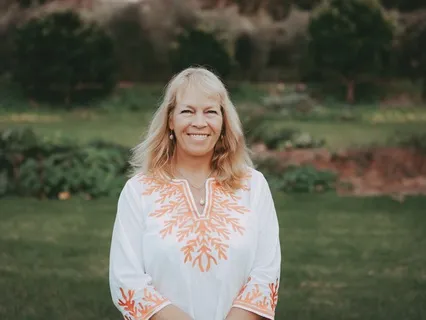
My name is Kate Belafiore.
Welcome to Introduction to Mindfulness.
In this session,
I will give a broad overview of mindfulness.
I describe mindfulness as being aware of the body in this present ever-changing moment and seeing things as they are without judgment.
Mindfulness is composed of two parts.
The wisdom practices are designed to train the mind to be calm and concentrated.
The compassion practices are designed to open the heart and extend kindness and unconditional friendliness to ourselves,
Those around us,
And all beings.
Learning to do a simple mindfulness practice is pretty easy and not very time-consuming.
Keeping a regular practice allows us to respond appropriately to situations that come up in our everyday lives rather than reacting from old habits and beliefs and allows us to spend more time in our natural state of joy and happiness.
Let's look again at my description of mindfulness.
Being aware of the body in this present ever-changing moment and seeing things as they are without judgment.
Mindfulness always starts with being aware of the body,
Which can be helped by pausing and focusing on the breath,
Body sensations,
Or sounds.
While we are in our thinking mind,
We might be remembering something that happened in the past or worrying about or planning something in the future.
Awareness of the body brings us into the present moment.
Practicing returning to the present moment through awareness of the breath during meditation makes it easier to be in the present moment in everyday life.
The next part is that nothing stays the same.
Everything from thoughts to feelings to objects in the physical world arises,
Stays for a while,
And disappears.
Focusing on the fact that thoughts,
Emotions,
And body sensations arise,
Stay,
And go away during our meditation practice makes it easier to realize that just because we are angry,
Anxious,
Or sad in this moment does not mean that we need to be that way in the next moment.
If we stop telling ourselves the story of whatever it was that caused us to feel anger,
Anxiety,
Or sadness,
Neuroscientists have discovered that these emotions fade within about 90 seconds.
Seeing things as they are means that we can drop the beliefs that things never go our way or people always treat us that way.
Instead,
Experience this situation,
This person that is actually happening right now,
And see if those beliefs are true or more likely just habits or beliefs we have developed over time.
And finally we have without judgment.
The heart opening practices encourage us to feel kindness and unconditional friendliness toward ourselves and toward everyone,
And this can be a real game changer in how we see the world and our place in it.
One type of suffering is wishing things are different than they are.
Notice that we are experiencing physical discomfort during our sitting meditation and just sitting still with it,
Not reacting immediately,
And then determining that the itch has gone away,
That we are okay with feeling the tickle of a hair on our face,
Or that indeed we need to make a small adjustment so that our posture supports us better,
Is building a new habit that will serve us out in the world.
We get into a new habit of seeing things as they are during our meditation practice and we can take action in a wiser,
More compassionate way.
Let me give a dramatized example of my self-talk without and with meditation.
When I grow lazy in my meditation practice,
Meaning I haven't meditated in a couple of weeks,
I am more easily irritated by everything,
Especially by having to wait in lines.
My internal monologue sounds something like this.
Ugh,
Now there's a line.
If my neighbor hadn't stopped to talk story about that thing that happened last month,
When I took out the stupid trash,
Which I just emptied yesterday,
But somebody put all those boxes in there and didn't even break them down,
I would have gotten here when they opened like I had planned,
And I wouldn't have to stand here in this annoying line.
Okay,
Sorry if that was too intense.
Maybe you tend to have anxiety or sadness and your mind chatter sounds much different.
Mine usually goes to some version of anger.
Anyway,
When I am regular in my meditation practice,
I am much more easygoing.
I see the trash needs to go out and I just take it out.
I see my neighbor and I ask,
How's it going?
And when they start to answer,
I turn my body physically toward them and give them my full attention and really listen to what is happening in their lives with genuine interest.
I know that it's likely that I'll have to wait in line,
So either bring a book or pass the time with other people in the same line.
The situations don't change,
But how I feel about them and how I approach them is radically different.
When I get caught up in laziness or in the false belief that I'm too busy for a regular meditation practice,
I often feel contracted,
Irritated,
And wishing everyone would just leave me alone so I can get stuff done.
When my meditation practice is flowing,
I most often feel expansive,
Calm,
And mellow.
Happy to see whoever comes across my path and I still get all the stuff done.
There are lots of benefits to a regular meditation practice.
Clinical studies talk about better sleep,
Lowering resting heart rate and blood pressure,
Managing symptoms of diseases and pain.
Those are all true and good,
But there are other benefits that are harder to study in a clinic like understanding the nature of the mind,
Cultivating compassion,
And understanding our shared human experience.
These benefits come with continued practice and reveal themselves over time.
I mentioned earlier that suffering,
The way I will sometimes use it in my talks during this introductory course,
Is wishing things were different than they are.
By recognizing and allowing things to be as they are,
We relieve this suffering.
There's plenty of unhappiness,
Anxiety,
Anger,
And sorrow in the world.
When we meditate regularly,
It supports us in meeting both the pain and suffering of the world without taking it on.
We stand on firm ground and extend a branch to the person sinking in quicksand and calmly instruct them how to get out,
Offering encouragement.
It isn't really helpful if we jump in there and both get stuck.
When we maintain our center and see things as they are,
Wisdom naturally arises and it is possible to find a place of peace right inside of you and respond to what is with appropriate and compassionate action.
While I was on silent retreat at Spirit Rock,
I learned this teaching from one of Thich Nhat Hanh's nuns.
I care,
And by this caring,
May your suffering be eased.
Being compassionate and moved to appropriate action is not necessarily about fixing all that is wrong in the world.
Simply adding kindness and compassion to the universal consciousness,
Rather than adding worry and despair,
Is truly helpful.
Mindfulness can help us to be the drop of calm,
Centered awareness that ripples out to those near and far.
I'll end with a quote that I love from Mayor Bavo.
The scope of selfless service is not limited to great gestures,
Heroic acts,
And huge donations to public institutions.
They also serve who express their love in little things,
A word that gives courage to a broken heart,
Or a smile that brings hope in the midst of gloom,
Has as much claim to be regarded as service as difficult sacrifices and heroic self-denials.
A glance that wipes out bitterness from the heart is also service,
Although there may be no thought of service in it.
When taken by themselves,
All these things seem to be small,
But life is made up of such small things.
If these small things were ignored,
Life would be not only unbeautiful,
But unbearable.
Namaste.