Welcome.
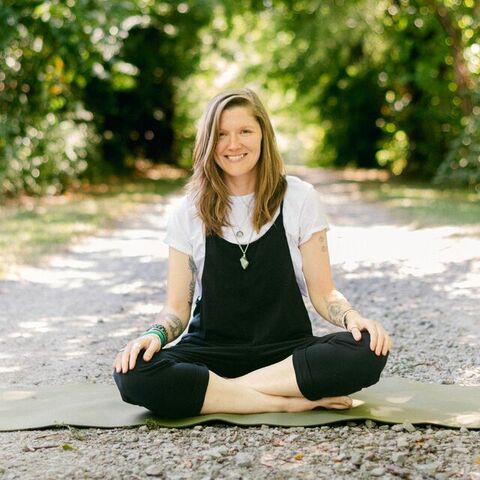
My name is Caitlin Bright and this is a guided meditation for first responders to help make the transition from work to home.
In my clinical work with first responders,
It is often the case that due to the intensity of the work they do,
It's challenging for them to turn off work brain,
If you will,
And make the transition back into their daily life.
The work of a first responder,
As you know,
Whether that be law enforcement,
Fire,
EMS,
Dispatch,
Or emergency medicine,
Requires you to be in fight or flight mode for much or all of your shift.
This meditation is designed to help your mind and body shift back into rest mode so you can go home and more easily transition into the next part of your day.
Whether that be to sleep,
Engage with your family,
Or perhaps work at your other job if you have one.
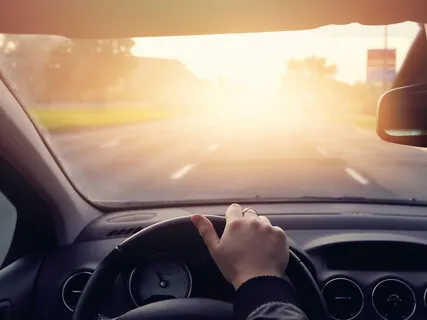
This meditation is intended to be listened to during your commute home from work,
Whether you drive,
Ride a bike,
Or take public transportation.
You might also listen to this in the parking lot at work before you leave,
Or even stop somewhere in your commute home to listen.
Obviously,
It is important to be able to stay present if you're driving,
So just being mindful that if you're finding it difficult to listen to the meditation and attend to driving at the same time,
Allowing yourself to listen when you arrive home.
So before we help you to move away from thinking about work,
You might take a moment here to briefly let yourself think about the shift that you just had.
Often,
Especially if it was a busy shift,
You might not even have had time to think about or process the events of the workday.
If you had a particularly difficult run or event,
It may feel too distressing right now to think over the events of your shift,
In which case you can feel free to skip this part of the practice and allow yourself to be distracted for the next minute or two.
If you choose to participate,
We won't go into any great depth here,
But if you like,
For the next minute or so,
Just allow your mind to think through the events that took place over the last 8,
12,
Or 24 hours at work.
When you're ready,
We'll start the process of transitioning away from the workday.
First,
Let's take a moment here to notice any feelings or body sensations that you noticed leaving work or that came up as you were thinking through the events of your shift.
If you can,
Try not to judge these feelings or body sensations as good or bad.
Just taking note,
Noticing perhaps if you feel somewhat anxious or energized,
If your breathing feels shallow,
If your heart is beating faster than your typical resting state,
Or perhaps you notice that you're not feeling much at all.
Maybe you're feeling very tired.
Maybe even feeling a little numb.
You might also feel fairly neutral or content,
Just noting what's showing up for you now.
At this point,
If you like,
We'll take just three deep breaths together.
We'll do some breathing together throughout the practice,
So know that there's no right or wrong way to do this,
But if it's helpful,
It can be relaxing for the body for the exhale to be as long or a bit longer than the inhale.
So we'll take a breath here together,
Breathing in and out,
Inhaling and exhaling.
And last in and release.
Now,
We'll take a few moments to think about the very last part of your workday,
Focusing on the part of the day where you're wrapping up your work duties and leaving the responsibilities of your job behind.
This might have been when you hung your gear back up,
When you restocked the truck for the next shift,
When you took your uniform or scrubs off and put on your regular clothes,
When you took your headset off and walked away from your desk,
Maybe when you gave report to the oncoming shift.
Whatever that routine is for you,
Take a moment here to think through the steps that you took to transition from being on shift to off shift.
And at this point,
If there are any thoughts lingering about your shift,
See if you can allow them to stay at work just as you left your gear,
Uniform or other equipment there.
Knowing that you've done everything you could do,
Your coworkers have taken over and it's time to go home.
If you like,
We'll take another deep breath in here,
Breathing in and out.
Now that we've made the full transition to moving away from work,
We'll take a moment to notice the environment that you're in now,
Noticing some of the sights around you,
Perhaps the landscape that you're passing by.
If you can see it,
The color of the sky right now.
Then noticing where you're connected to the space that you're in.
So maybe noticing the feel of your back against the seat that you're in,
Your feet on the floor,
Perhaps your hands on the steering wheel if you're driving.
Shifting your attention to noticing any sounds in the environment.
So maybe the sound of the road noise,
Or the faint sound of others talking if you're using public transportation.
Now noticing any scents in your environment.
Taking a breath in here and noting either a particular smell or the absence of a smell.
And lastly,
Taking note of any taste in your mouth,
Or again the absence of a taste.
Feeling free to add a taste here by taking a sip of your beverage if you have one.
When you're ready,
We'll take another deep breath in here,
Inhaling and exhaling.
Now that you're perhaps somewhat more present in your environment,
Let's take a moment here to notice any cues for the absence of danger.
Often it is the job of a first responder to anticipate and notice cues for danger or threat.
We're going to challenge the mind here to instead notice any cues for the absence of danger.
So noting anything in your environment that communicates to you that there are no immediate threats of danger.
Perhaps it's simply that you're alone in your car.
It's quiet.
You've got clean clothes on.
Or maybe simply that the temperature is comfortable.
Just taking a moment here to notice any cues for the absence of danger.
If you like,
We'll take another deep breath in together,
Breathing in and out.
And lastly,
We'll take a moment to visualize what is coming next in your day.
So we're not necessarily going to visualize your to-do list here,
But rather just walking yourself through what you can anticipate when you arrive home.
Perhaps the familiar smell of your home as you walk through the door.
If you live with family members,
What you can anticipate about your interactions with them when you arrive.
Or maybe thinking through your routine when you get home.
Taking off your shoes.
Taking a shower.
Whatever that routine might look like.
You might also give yourself a moment here to think about the cues for the absence of danger in your home.
The things about your home,
The people that you live with,
Or even the pets that you have that might communicate to you that there are no immediate threats of danger.
So that may be that your home is warm and comfortable.
That your spouse or family member gives you a welcoming hug when you arrive.
That you can lock the door behind you.
That you have food to eat.
Or even that your dog greets you when you get there.
Whatever it might be,
Taking a moment here to think about the cues for the absence of danger in your home.
And when you're ready,
We'll take one last deep breath in here together at the end of our practice.
Inhaling.
And exhaling.
I hope that you found this guided meditation helpful and that you can arrive at home feeling calmer and ready to move forward with your day.
Thank you so much for joining me.