Hello and thanks for joining me.
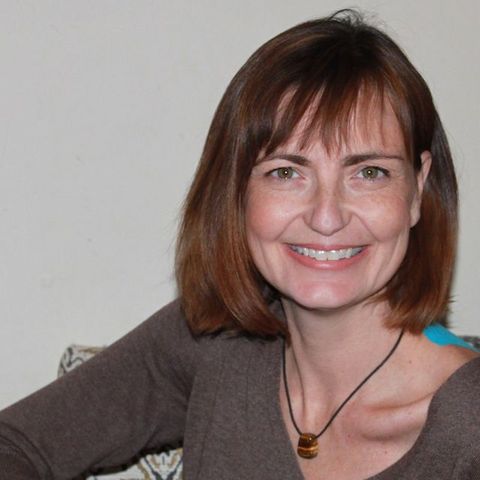
My name is Barbara Brooks and I'm a certified health and life coach.
I'm also a consumer researcher,
A mother of two sons,
And for the last nine years I've been a widow.
I lost my husband to cancer,
But before he passed away I was his primary caregiver.
And during that time I was working full time,
I was actually facing some health challenges of my own,
And I was juggling the care of the boys who at that time they were about four and six then.
And this is the third part of a series I'm presenting that focuses on caregivers.
And I want to give some context here and say that when I say caregiver I mean it broadly.
You could be someone caring for your children,
You could be caring for a spouse or a partner,
Or you could be caring for your own parents.
No matter who you're caring for,
And I start these the same way,
I'm sure you will agree that it is an intense,
Unpredictable,
Tiring experience both physically and mentally.
I'm thinking back to that time and I remember that feeling of jumping into action.
It was that crisis mode and my husband needed help and I had always thought of myself as a good helper.
And actually throughout my life I'd relished being a giver,
Being the one to make the handmade Christmas gifts for everyone,
Being the one to remember all the birthdays,
Being the thoughtful one.
So falling into the caregiver role was something that suited me.
The issue is,
And I bet some of you listening will agree,
That caregiving has the power to become almost a black hole of giving.
The boundaries start to blur and the giving part can become too much,
It can take too much from us.
I was also the kind of person who never wanted to receive.
I felt a kind of twisted pride that I was someone who didn't accept help,
Who,
You know,
I didn't want to be the recipient.
I didn't want to be on the receiving end of things.
And this was really my habit.
And even in the thick of caring for my late husband,
My initial knee-jerk reaction was,
Oh no,
No thanks,
Or I've got it covered,
Or I don't need anything.
You know,
I can so remember that it just was something that would blurt out of my mouth without any thought.
I was really fortunate to study at the Health Coach Institute and it was during a presentation with one of the founders,
Her name is Stacey Morgenstern,
That she brought up the topic of giving and receiving.
And just for some background,
This was in the context,
Most people who were drawn to the coaching practice are natural givers.
But I think the same thing can be said about caregivers.
So even if it's not,
You know,
Even your natural way of being a giver,
I think the act of caregiving really puts you in that giving state of mind.
And I thought,
You know,
I can almost picture it as a tap,
A water tap on full blast.
It's all about the giving.
But what Stacey Morgenstern was presenting was that giving is not like that tap.
It's not one way.
Rather,
You can think of giving and receiving as a circle or as a cycle.
You need the giver and the receiver for it to work,
Working in this circle.
And I have such a distinct memory of what she said next and more specifically,
How I reacted to it.
She was making the point that receiving is equally important.
And if you aren't receiving,
You're actually denying the giver or I guess the potential giver the gift of giving.
You're denying them that positive experience that they're trying to get from giving.
And I know that makes common sense,
But I honestly had never thought of it that way.
I was taking pride in not receiving.
And here I was actually denying someone else the pleasure of giving.
And I bring this up in the context of caregiving because I believe you have people around you,
Much like I did,
Who see you struggling,
Who see the effort you're putting in.
And they want to give to you.
They want to help you.
And my intention in this talk is to remind you that receiving is not selfish.
Instead,
It's actually allowing someone else to enjoy the experience of giving.
So thinking of it in this way and thinking how equally important giving and receiving are.
And this notion of giving and receiving as a circle brings to mind a great quote by Maya Angelou.
When we give cheerfully and accept gratefully,
Everyone is blessed.
Now,
I'm speaking from personal experience here.
This isn't something that you can change overnight,
Especially if you're like me and you're a lifetime giver.
Speaking of giving,
In my coaching practice,
I like to give homework.
But don't worry,
It's something manageable,
I promise.
I really want to invite you to try on what receiving feels like so you can get more comfortable with it.
So the next time someone gives you a compliment,
I want you to accept it.
And what I mean by this is you don't have to instantly give a compliment back.
I really want you to try to hold off doing that for this experiment.
Just allow yourself to really absorb the compliment.
And remember,
You're allowing the person who is giving the compliment the chance to feel your appreciation,
To feel you receiving it.
And back to you and your role as caregiver,
I'd love for you to start and notice your response when others offer to help.
Do you automatically deflect like I did?
Is this your habit?
Think of giving and receiving as a circle.
And my hope for you is that you will rethink receiving just like I did.
Thanks so much for tuning in.