Hi,
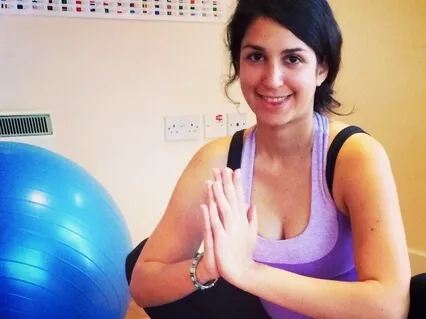
This is Kayla,
And today we are going to be doing a visualization exercise.
So I'm going to be leading you through a yoga practice,
But you are just going to lie on your back the whole time,
So you're not going to actually move,
But you're going to do your best to imagine yourself moving and imagine what it would feel like if you were actually going through the poses.
So doing a visualization exercise can be helpful in a lot of different scenarios.
So I work with people living with chronic illnesses,
So the most common scenario is that you're just having a bad day and you don't have the energy to do a yoga practice that would require moving.
But you can also use this visualization to help you get to the next level,
So if you've been doing a very gentle yoga practice and you're not ready to move to a bit of a more challenging practice because you're afraid for a regression,
Doing a visualization of a more challenging practice can help prime your muscles so that you can eventually get to that level.
It can also be helpful if you just need a day off and want to let your muscles relax,
And this is something that professional athletes have been doing for a long time.
If they need a day off training,
They visualize themselves still going through their training and it helps them stay in shape both mentally and physically for when they go back.
So as we go through this,
We'll do a few check-ins throughout the practice to make sure that we're not actually moving.
Sometimes it's hard to visualize doing something without actually doing it.
It's going to be very tempting to move in some of the poses,
So we'll check in to make sure that we're not moving or tensing the muscles.
The goal is just to have your body completely relaxed and let your mind do all the work.
So to begin,
Find a comfortable place to lie on your back,
On the mat,
On the floor,
Or just on your bed.
And let's start by taking a few deep breaths.
Breathing and exhaling through the nose if possible.
And noticing what your breath does naturally,
Do you breathe deeply into the belly or are you breathing into the chest?
And if you are breathing in the chest,
On your next inhalation,
See if you can push that breath down all the way into your diaphragm so that the belly rises as you inhale and deflates as you exhale.
And just letting your entire body relax,
Being completely supported by the ground or the bed.
And perhaps doing a quick scan of the body,
Bringing the attention down to the tips of your toes and noticing if there are any sensations in the feet or the ankles,
Moving that attention up through the legs,
Through the calves and the knees,
The thighs,
Noticing if there are any sensations there,
Good or bad,
It doesn't matter,
Just noticing what it feels like.
Moving up through the hips,
The pelvis,
The hands and the arms,
Drawing the attention through the torso,
Front and back,
Up to the shoulders and the neck,
A place where a lot of people carry tension.
And if you do have tension,
They are not trying to get rid of it,
Just noticing that it's there.
And then bringing that focus to the head and the face.
And then bringing the awareness just over the entire body.
Here's how you feel now after that short first exercise and visualization of moving the focus through the body.
And now without actually moving at all,
On the next inhale,
Imagine that you're reaching your hands over your head to come into a full body stretch,
Pointing the toes,
Maybe wriggling around a bit,
Whatever would make you feel nice and long and loose.
And then again without moving,
Imagine that you're rolling onto your side and pushing up to come onto your hands and knees in table pose.
And then as you inhale,
Lifting up the hips,
Letting the belly drop,
Looking forwards,
Exhale,
Tucking the hips under,
Arching the spine,
Letting the head and neck drop down.
Inhale,
Lifting the hips,
Looking forwards.
Exhale,
Dropping the tailbone and dropping the head.
Continue to imagine doing this based on your own breath right now.
Inhale,
Looking forwards and exhale,
Letting the head drop.
Imagine what this feels like to your spine if you are actually doing the movements.
Feeling how it feels to let the breath dictate the movement.
And on the next exhale,
Coming back to table to a neutral spine,
And come into child's pose.
So there's a couple ways you can do this.
The first way is to bring the feet together,
Knees a little bit wider than hip width,
And then walking the hands forward until your head rests on the mat.
If that's not so comfortable for you,
Walk the hands back up and bring both the feet and the knees together,
So kneeling down low,
Resting your forehead on the mat,
And letting your hands come beside the thighs,
So arms reaching backwards.
So choosing whichever version of the pose is more comfortable.
Just imagine yourself in that pose,
Stretching at the spine,
Stretching at the hips,
Releasing the head and the neck.
And taking a couple more deep breaths before we move into some flows.
On the next inhalation,
Imagine coming up back to the hands and knees,
Tucking the toes under,
And lifting up the hips,
The legs move towards straightening,
Hips moving up towards the ceiling,
And heels moving down towards the mat.
There's no need for them to touch the mat,
I know mine don't,
But they're moving in that direction so the whole back of the leg is being stretched out,
Pressing through the hands and the arms,
Straightening the spine.
Just enjoying this down dog,
Imagining being in this down dog for a couple of breaths.
And then slowly starting to walk the feet forwards,
Coming into a forward bend,
Letting the arms hang loose,
Maybe swing them in small circles,
Shaking the head,
Yes and no,
Letting the upper body loosen up a bit.
And feeling that nice long stretch along the back of the legs.
And when you're ready,
Placing the hands on the hips,
And slowly rolling up to a standing position,
One vertebrae at a time,
Head coming up last,
Moving nice and slowly.
And then letting the hands fall to your sides,
Standing up nice and tall.
If you're lying down flat right now,
Just imagine someone's just flipped you to be vertical.
Taking a few breaths here in standing position.
To many people just standing doesn't seem like a very high energy pose,
But just imagine all the muscles you're using in your feet and your legs,
In the abdomen and core,
In the arms and the neck,
In the lower back and the shoulders.
Really just standing,
If you're living with a chronic illness,
You know how difficult it can be.
But for everybody,
It's really using a lot of muscles and can be quite an energizing or high energy deep pose to stand in.
You may be imagining rolling the neck or the head from side to side,
Loosening up the neck,
Doing a few rolls with the shoulders,
Backwards and then forwards.
And now let's get ready to move.
Inhale imagining the arms floating up overhead,
And exhale rolling forward into a forward bend.
Inhale lengthening the spine coming halfway up.
Now stepping back into a plank position,
Lowering the knees down onto the ground,
And then with control lowering the entire torso onto the ground.
Inhale coming into cobra pose,
Lifting the head and the chest,
And then exhale pressing back into a down dog.
Again,
Really just imagining those hips lifting up and the heels moving down,
Stretching the backs of the legs.
Starting to find some ease in this pose.
And then on the next inhale bend the knees as you imagine stepping forward between the hands,
Lengthening the spine to look forward,
And then exhale coming into a forward fold.
Inhale placing the hands on the hips to roll slowly back up to standing.
And then taking a couple breaths,
Great job.
In the traditional flower sun salute as you come back up to standing,
You would again float the arms up over the head and then bring them down to the side.
So you can feel free to do that or to imagine doing that for the next two flows.
The reason I tell people to put the hands on the hips is because if you suffer from vertigo or if you have an illness such as POTS where it's hard to go from sitting to standing or bending forward to coming up,
Placing the hands on the hips can help stabilize you and balance you as you come up to standing.
So you can choose if you want to float the arms overhead,
But I'm going to keep giving the cue of having the hands on the hips.
And now let's get ready to flow again,
Finding that nice strong standing position.
Inhale floating the arms overhead and exhale folding forwards.
Inhale lengthening the spine coming halfway up.
Inhale stepping back into a plank position,
Lowering the knees and then lowering yourself all the way down onto the mat with control.
Inhale opening up the chest in cobra pose and exhale downward facing dog.
Putting some focus on the arms this time,
Spreading the fingers out wide,
Imagining that the weight is equal in each finger,
Pressing back with the hands and arms which will move the shoulder blades away from the ears.
Then on the next inhale bending the knees,
Stepping between the hands looking forwards and exhale folding down into a forward fold.
Placing the hands on the hips as you inhale and slowly come back up to standing,
Taking a couple breaths here.
We're going to do one more flow with some solute B.
So inhale floating the hands overhead,
Exhale coming to a forward fold,
Inhale coming halfway up lengthening the spine,
Exhale stepping back into plank position.
Bring the knees and the torso down onto the mat,
Inhale coming up into cobra and exhale finding down dog.
Inhale stepping forwards with your right foot and planting your left foot on a 45 degree angle.
If your leg doesn't want to move that way then just coming into a high lunge and slowly coming upright raising the arms overhead.
Taking a couple inhales here and exhales,
A couple breaths,
Not just inhales.
And then on the next exhale imagine bringing the hands back down onto the mat,
Stepping into plank position,
Lowering all the way down to the mat,
Inhale finding cobra and exhale finding downward dog.
Inhale stepping forward with the left foot,
Planting the right foot at a 45 degree angle or just in a runner's lunge and then slowly coming into an upright position,
Lifting the arms overhead,
Taking a couple breaths in this pose,
It's called warrior one.
So the muscles in the legs and the core and the arms are all engaged here.
And then exhale bringing the hands back down to the mat,
Stepping into a plank position,
Lowering all the way down,
Inhale coming up into cobra and then exhale we're going to come back into child's pose so remembering which version of the pose you found more comfortable last time.
And coming into here,
This one's going to take a lot of energy so just resting up for a few breaths in child's pose.
And now's a good time to check in with your body.
Notice if you've been tensing any muscles or just tempted to move or use those muscles as I've been giving the cues.
And notice how you're finding the practice so far,
We're a little more than halfway through.
So we're going to come back into child's pose.
And then on the next inhale coming up from child's pose and making your way into a seated position,
Placing both legs straight out in front of you.
And imagining that you're sitting up nice and tall and then exhale folding forwards over the legs.
Keeping the spine nice and long here,
It doesn't matter how far forward,
You can bend.
I know I cannot go very far in this pose,
My hamstrings are very tight.
It's most important to just keep the spine long and engage the upper thigh muscles.
I once had a teacher who in this pose would always say that a grin on your chin is more important than your chin on your shin.
So I really loved that,
Enjoying the practice rather than trying to force your body to some impossible standard of flexibility.
Just enjoying how you think this would feel or how you know that it feels when you're in this pose.
And then on the next inhale coming back up to seated.
And coming into a cross-legged position,
We'll do a little twist.
So placing the left hand on the right knee and the right hand behind the back,
Inhale sitting up nice and tall,
Exhale looking over the right shoulder,
Twisting the spine.
With each inhale lengthening the spine and with each exhale twisting a little bit further.
Taking one more inhale and then exhale coming back to center,
Taking a breath here.
And then let's twist to the opposite side.
Start bringing the right hand to the left knee and the left hand behind you,
Inhale sitting up nice and tall,
Exhale looking over the left shoulder.
With each inhale sitting up a little bit taller and each exhale twisting a tiny bit deeper.
Cinetch.
And on the next inhale,
Coming back to center,
And then just walking your hands straight out in front of you,
As far as you feel a stretch in the hips or until your head reaches the floor.
Just stretching out one or both hips here.
If you know that your head wouldn't reach the floor,
Imagine you've got a pillow or a block there.
So you can just completely release in this pose.
Relax.
And then when you're ready,
Slowly walking the hands back up to seated and then continuing that momentum to come down to lie on the back.
Keeping the feet planted on the floor.
And the feet should be quite close to the hips,
So imagine you can touch them with your hands.
We're going to come into bridge pose.
So inhale,
Pressing through the feet and the legs,
Lifting the hips and the lower back and the middle back up off the ground.
If you know that your back's a bit sore or not quite strong enough to do this pose,
Imagine you've got a block or a couple pillows piled under you to support the back in its lift.
And if you're in full bridge pose,
You can bring the hands together under your back,
Clasping them together underneath you and rolling the shoulders under.
This will just help open up the chest and the shoulders a bit more in this pose.
And then releasing the hands and slowly rolling the spine back down onto the ground.
Bringing the knees into the chest and giving yourself a hug.
Maybe rocking from side to side or making little circles with the legs or just staying still,
Whatever feels nice.
And then finding a spot,
Imagine you're finding a spot on the wall and swinging your legs up onto the wall,
Resting them there.
It doesn't matter if your legs are straight or a bit bent.
It doesn't matter how close you are to the wall.
Just resting there.
And then imagine putting one hand on your chest and one hand on your belly.
And imagine what it would feel like to feel the air moving underneath those hands as you breathe in and out.
Okay.
Continuing nice,
Deep,
Slow breaths here.
This pose is great for activating the parasympathetic nervous system,
Which is the rest and digest.
Great to do before bed or anytime you just really want to relieve the stress of your day or relax.
Okay.
And then imagine bringing the legs down off the wall,
Shimmying back to the original position you had on the bed or the mat and bringing the soles of the feet together as close or as far away from the torso as feels comfortable for you as it gives a nice stretch to the inner thighs and hips.
And sending the breath to the part of the body that feels tense.
So in this pose,
It's probably going to be somewhere in the inner thigh and hip,
Maybe in the shoulders as well or the back.
Just imagining sending breath to that area.
Now with each exhale,
Imagining a tiny little bit of that tension leaving the body.
And then straightening the legs back out,
Coming back to Shavasana,
Our corpse pose,
Lying in a comfortable position.
I'm taking some nice deep breaths here,
Noticing if it became easier over the course of the visualization to breathe deeply.
Or maybe it became more difficult.
Not judging,
Just noticing what the visualization felt like for you.
And before we end,
Let's do another quick scan of the body,
Starting at the toes,
Moving through the feet,
The ankles,
All the way up the legs,
Noticing any sensations that you have in the lower half of the body.
And then moving up through the torso,
The neck,
The head and the shoulders.
And then noticing any sensations that you may have in the upper half of the body.
The goal is not to judge them as good or bad,
Or not to try and make them stay or go away,
But just to give your body some attention and notice what it's telling you and how it's feeling.
Noticing if you feel any different than the start of the practice when we did this visualization.
Now that we're finished,
You can stay lying down or move into a seated position.
Namaste.
Thank you so much for joining me for this visualization.
And just take a minute now to reflect on how you found it,
If you struggled with imagining what it would feel like to be actually doing the poses,
If there are any surprises during the practice,
If it was hard not to move,
Or if it was easy not to move and pleasant to not have to worry about if you could physically do it or not,
But just imagining doing it.
And notice if it does feel in your body like you have actually done exercise,
Do you feel like you stretched or used your muscles?
Or does it just feel like you've been lying down for half hour?
Good to notice.
And again,
The goal is not to say if it's good or bad.
The goal is just to really notice and pay attention and find what feels good for you and what could work for you.
So thank you so much for joining me for this visualization.
I hope you found it helpful and as a good alternate to something you can do when you just don't have the energy to do a practice.
I know I get the question a lot,
How can you manage days when you really have no energy to do anything?
So I hope this can be a useful tool for you if you are having a day like that where you just cannot get out of bed and you just have very limited energy or time to do any sort of exercise.
So I hope you enjoyed it.
Thank you very much.
Namaste.
Have a great day.