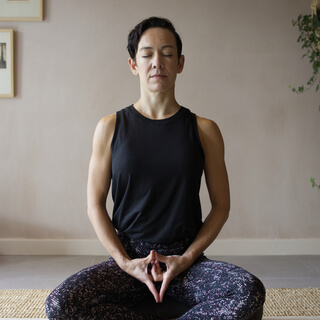
Hello,
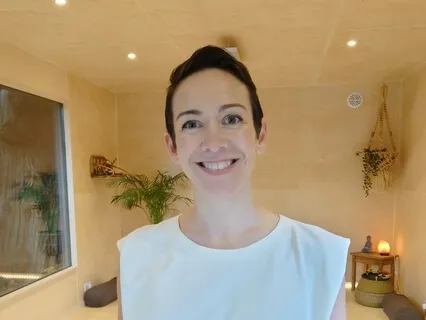
I'm Alice.
We'll be doing bramari breathing or humming bee breathing today.
And in this breathing technique,
We breathe slowly in and out through the nose.
The inhale is quiet,
But on the exhale we create a humming sound as our vocal cords vibrate.
It sounds like this.
This simple breathing practice originates from the tradition of yoga.
It's been used for centuries to promote calm and balance in the autonomic nervous system,
Which regulates the automatic functions of the body,
Such as breathing,
Heart rate,
Digestion and immune function.
The sound made with this breath is a little like a humming bee,
And it helps us to breathe well by creating resistance so that we engage the diaphragm,
Our main breathing muscle located below the lungs.
We move away from fast,
Shallow breathing high in the chest towards optimal breathing,
Which is low in the body and slow.
The other healing element of this humming bee breath is that the humming and nose breathing increases levels of nitric oxide in our body.
Nitric oxide is antiviral and a vasodilator,
Meaning it relaxes the airway muscles,
Making it easier to breathe,
Increasing oxygen delivery to our lungs and blood.
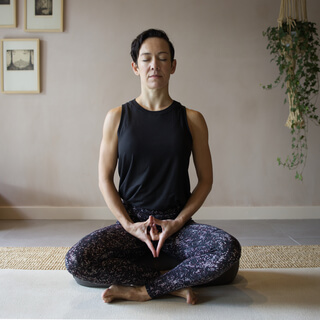
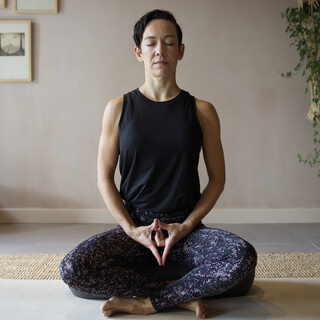
So settling yourself in a comfy position,
Perhaps you're seated in a chair with your feet on the floor,
Or you're laying down with your spine long and supported or in any position you find it easiest to breathe in.
Closing your eyes or lowering your gaze now.
And we'll begin by noticing our natural breathing.
Notice if you're breathing high into your chest or lower into your belly.
If you're breathing through your mouth,
Gently close it now and breathe just through your nose.
Breathing through your nose is key.
Notice your tongue softly behind your top front teeth.
See if you can breathe as smoothly as possible,
Evening out your inhale and exhale to the same length.
Feel your breathing slow down as you take steady and calm breaths in and out of your nose,
Making the breaths as quiet and as comfortable as possible.
Belly and lower ribs very gently rising on the inhale and falling on the exhale.
Chest as calm as possible.
And I'll be breathing with you as we move through some rounds of humming bee breath.
But please feel free to breathe at your own pace.
So we'll do this first round eight times.
Inhale through the nose and exhale while humming.
When you're ready,
Breathing in.
Mmmm.
Mmmm.
Mmmm.
Mmmm.
Mmmm.
Mmmm.
Mmmm.
Mmmm.
Mmmmmmmmmm.
Hit the like button int chjingiupa d Rudra sa rto.
Mmm.
Mmm.
Mmm.
Mmm.
Mmm.
Mmm.
And now return to normal nasal breathing and notice how your body and mind feel.
Do you feel any calmer?
Any steadier?
Perhaps you feel exactly the same and that's okay too.
And in a moment or two we'll come back to do another eight rounds of Bhumari breath.
Breathing in.
Mmm.
Mmm.
Mmm.
Mmm.
Mmm.
Mmm.
Mmm.
Mmm.
Mmm.
Mmm.
Mmm.
Mmm.
And gently returning to normal nasal breathing again.
That's a really positive sign that you've moved your nervous system towards a calm and healing parasympathetic state.