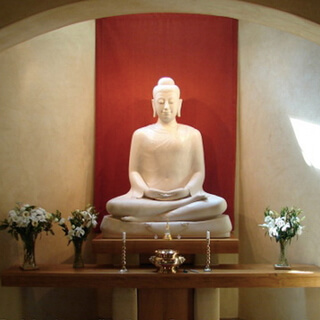
From his own experience the Buddha recognized one could,
A human being is capable of abiding in a peaceful,
Agreeable state or crudely one's language gets around this experience,
The release,
The ending of suffering,
Realization in nirvana,
Deathless,
Unconditioned and so on.
This is possible,
Not just for him but he felt it was something other people could also experience.
So it's a really pretty encouraging idea that fundamentally we could be pretty happy on the basis even in this very mottled world existence.
Once it mottled with light and shade,
Pain and pleasure,
Agreements and disagreements,
Conflicts,
Differentiations,
Dualisms,
Comparisons,
Clashing,
Supremacy,
Inferiority,
Birth,
Death,
Within all that.
So this is the encouragement of the Buddha,
We do recognize it's going to take a bit of depth of practice to come through all this human experience,
Seemingly inevitable human experience.
The Buddha himself passed away 80 years old apparently of colic and dysentery,
Dying at the root of a tree.
It's not a pretty messy,
Uncomfortable way to pass away,
Emaciated,
If you've ever had any of these problems.
Living outside,
No nice clean hospital or anything.
Still,
Even in that condition,
Asking people for questions,
On his last dying breath still able to rally the resources of mind and the compassion to seek the welfare of others and then passing away,
The citta entering into samadhi and going through different levels of samadhi and then releasing.
So pretty phenomenal presentation of both of a decrepit body,
Sick,
Aging,
Painful and a magnificent citta rising through that and releasing through that.
As we know,
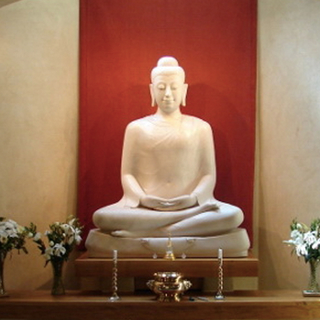
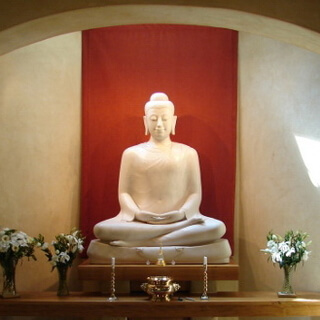
We're extremely fortunate to have not just an image exemplar but also a teacher who spent many,
Many years laying down exercises,
Instructions,
Visions,
Perspectives that we could make use of.
One of these fundamental themes is called Upadana,
Clinging.
Pretty fundamental theme,
Clinging,
Upadana,
Bonding to or landing upon and feeding upon.
So it's just like a phenomenon,
A psychological phenomenon that is influenced,
That seems deeply rooted.
And why is it deeply rooted?
Because the citta seeks security,
Permanent stability to get some orientation.
So in this sensory world,
Where am I?
What am I supposed to be?
What am I supposed to do?
Is all this dualistic stuff coming,
Right and wrong,
Up and down,
Pain,
Pleasure?
Where do I find the lasting piece that's going to be able to handle all this stuff?
I can't be two pieces,
So I've got to be the one piece that can handle all these dualistic experiences.
What's the right,
You know,
What do I bond to to get that sense of firmness and stability that I need in order to feel free from this tension and anguish and confusion?
So it bonds,
But it bonds much more like a primary reaction than a careful,
Mediated,
Negotiated,
Entering into something.
To enter into the deathless is called the secure.
To enter into the deathless is considered the secure,
The peaceful,
The island,
The refuge.
So definitely this very word security is placed there as one of the epithets for Nibbana,
Ending of suffering and then this sense of the secure.
So entering the deathless or releasing into the property of deathlessness or the Nibbana element.
It's a phrase like this.
The nature of language,
You know,
We always assume that these things must be somehow material or some entity or another,
Because that's the way the language goes.
We just place that as metaphor,
Entering into the deathless,
But the sense is that,
You know,
One or descending into the deathless or the sense that there can be this sense of security that the citta can find.
So it's torment and it's desperation and its restlessness ceases.
Because of this,
Till that is sensed,
Realized,
Then the citta will always,
Because there's such fundamental need,
Will always cling to something to give a sense of orientation and security.
And it's through realizing the limitations of that process and through so by realizing not just the limitations of that,
But there's an alternative,
You know,
That the citta can go to that this liberation,
This release from clinging is possible.
In other words,
As the Buddha said,
If you know,
There's no point teaching suffering unless you teach there's a way out of it.
There's no point teaching clinging until you also can say there's a way out of it.
Because if you don't have any alternatives,
What are you going to do?
Cling and then just feel miserable about it or doomed or deny it.
But there is an alternative.
And it's through the proper fruition,
Fulfillment of the citta in itself,
Heart in itself,
Awareness in itself,
Where it doesn't need that anymore,
More secure without it.
This is pretty reflex rather than decision.
You just like you don't decide to not fall over.
You just,
You know,
You kind of your body holds it up,
Hold yourself,
Hold you up.
It's nature.
And similarly,
You know,
If you're panicking,
Then you your body does grip.
You can't tell it not to.
But if you give it some assurance and steadiness and comfort,
Then it will release the grip.
So we always have to really look at this concept not as some moral slur.
You shouldn't cling or some,
You know,
Some indictment.
Stop clinging right now.
It's not only for his fault.
It's not a personal flaw.
It's a fundamental reflex that has to be met with sympathy,
Care,
Attention and providing alternatives so that release is possible.
The Buddha did acknowledge that other teachers did teach the ending of clinging.
But he said they see they see the sense of how clinging goes on in terms of sense pleasure,
Whether obvious sense pleasures,
Taste,
Touch,
Sight and so forth flavors.
But also even one might say even the intellectual pleasure,
There's a certain,
You know,
High rush of energy when we experience pleasure.
So the jitta feels strong and fruitful and rich and unbounded in that experience temporarily.
The rush of it,
Sense pleasure,
Experience that rushing and how free and untangled that in that moment that experience can be.
And then,
Of course,
What occurs is that clinging,
This experience is very much one of about to get it.
So clinging actually never really accomplishes.
It's about to get it.
And as soon as you've got it,
The experience of that run of energy falters and declines.
Suddenly,
Well,
You can't because it's the rush is craving,
And you can't crave what you've got.
So once you have it,
You can't crave it.
And once you don't crave it,
Don't get that rush of energy about to get something because you've got it.
And this clinging then in a way,
Although it's the natural result of craving the rush to get hold of.
In fact,
It nullifies craving because as soon as you've got hold of it,
Then so what?
So then the craving starts with something else.
Craving and clinging,
Though they work together,
They also contradict each other.
Craving says,
Well,
When you get this,
You'll feel great.
Clinging says,
Now I've got it,
So what?
I just got this and I'd like a new one or more of the same or different flavor.
So just comprehending this,
One begins to see,
Analyze,
Understand the process of what supports craving and what supports clinging is craving.
And the result of clinging is a certain sense of I am this,
I have this,
I've got this.
And then I need something else.
Need to shift,
Change.
Because we can fluctuate between the different senses we might find once we've eaten something,
That's finished that.
But it'd be nice to have a drink and then after that maybe read something and then go and have a chat with somebody and then go for a walk and look at something.
So you just kind of keep running through the sense base options.
So as one fades out,
The next one pops in to take up the same theme.
So just to realize,
To see through this,
You begin to not so much judge it but understand the process.
This craving depends upon basing it on feeling,
On the sense,
Completely that rises,
Sense contact.
Therefore craving springs up or dependent upon that craving springs up,
Clinging comes in,
Clinging comes in,
A sense of I am this,
I've got this,
A certain finality occurs which is unsatisfactory.
Therefore,
So it goes on.
So you can understand this and it's good to really look at how that's happening so you get not just sort of personal profiles of whether you're addicted to bananas or something like that but just to understand the mechanics of it.
Well,
The process of it occurring and so the jitta sees this and sees the limitations of that but in that sense of stepping back to review the whole process,
There's a sense of truthfulness.
And we begin to get a quality feel,
A sense of awareness of that and abiding in that and responding to our hungers and disappointments with from that perspective,
Kindly cooling,
Soothing quality.
The jitta begins to provide its own resources of heart to add a response to this conflict of the sense realm.
So we shift into much more into the immaterial or the fine material.
It is often the mode of in various ways that's followed by different spiritual dispensations.
But many of them find themselves kind of like blaming the sense world,
Which isn't really the,
You know,
It's not the perpetrator,
The perpetrator is craving.
The taste is just there.
It doesn't say crave me.
Bananas don't dress up to make themselves more attractive.
You know,
Human beings have to doll them up to make them look better.
Bananas are quite happy if you leave them alone.
They don't mind,
You know,
Being attractive but,
You know,
We present them in nice,
You know,
Displays so they look great.
And themselves,
They're just what they are and their sights and flavors are just what they are.
But this projecting of craving injects certain glow or lustre to qualities that they don't innately possess.
And so you do this sense contact thing with anything,
You know,
Visual objects,
Human bodies,
You know,
Which if you look at the outside,
The skin or the form can look quite,
You know,
Human beings are very good at creating artifices to make this physical form seemingly an object of desire.
It's really quite amazing because you just realize you,
You know,
You pull back some skin and it's no good news under there.
You wonder how do we make this thing attractive because it's really,
You know,
One of the more inclined to being unattractive.
If you actually contemplate the majority of it,
It's more primarily,
You know,
Something that doesn't scintillate craving,
You know,
Sinews and,
You know,
Mucus and sweat and stuff.
But,
You know,
People have very skin covers it all.
It's nice and smooth and shapely,
Attractive shapes and forms and it suggests a lot,
Suggests,
You know,
Something really nice inside one of these if you get hold of them.
It works and it does what it's supposed to do,
Which is get you humans born.
But there's immense amount of heartbreak and abuse goes on just because of this feature,
You know,
Rape and violation and all the kind of horrors of that.
And of course,
The heartbreak either in the decline of the physical appearance or the loss of the loved one,
You know,
Losing a limb or something or,
You know,
Disfigured in some way by an accident,
Which is bodies are pretty fragile things.
So in seeing the limitations of these,
Then one does much more inclined towards step back,
Step back.
You can feel the flutter of craving and you step back from following it and that craving pass through and keep your awareness open and around that.
And this is probably the big learning thing that we can make use of the sense,
Sense fields because it's pretty obvious,
Really.
It's not subtle.
And so just at this level,
If one cultivates,
You don't have to be that refined degree of attention,
Just steady and understand these energies.
And why the somatic experience is so helpful because you can't really deny the rush or the surge of that occurs when in sense,
Sense desire.
And there's another very important sign or that you begin to,
You can begin to acknowledge how this experience of clean shrinks,
Shrinks you.
You're pretty open,
Expanded,
And then the banana came along and your world suddenly shrunk to four inches wide and your visions narrowed down to that,
You know,
You can feel this contraction occurs in the somatic domain.
It's like tensing to get to hold and it's trembling and then the constriction,
The limitation of what prior to that might have been pretty open and steady and sort of mildly fluctuating,
Rippling,
But pretty expanded.
And then an object of desire plops into one's consciousness and there's a sort of sudden tremble and a shift and a riveting of attention.
And then one feels much more restricted,
Narrowed,
Gripped,
Gripped by that.
How does this feel?
Now,
You know,
If there's enough tanha in the system,
The experience of the juice of tanha could feel so rich and warming that the constrictedness of the clinging doesn't really matter in a kind of hypnotized state.
But of course,
Once you,
The tanha stops,
Once you've got what you got,
You're in this constricted state and the joy of potential gratification has ceased.
Then you're left with this rather constricted state of being.
So it results in this what's called becoming,
One has become,
You know,
A fixed finite object or fixed finite condition dependent upon this particular phenomenon,
Sense object that is no longer even giving that much delight.
So we get a lot of possessions in our lives of items that at one time might have been,
You know,
Objects of joy.
So you know,
Well,
It's really wonderful.
I just put it right there.
That's great.
And then it's stuck there.
And then,
Oh,
This is great.
Look at that.
Really wonderful.
I just put that there.
And when you come to move house,
I don't know why it's cluttered to get here.
Stop.
Of course,
It's not quite as simple as that because some things are,
You know,
So and so gave me this,
This is very,
You know,
Resonant with particular impressions.
But the fixity of it all,
How one gets so anchored and eventually confined by stuff that no longer gives rise to brightness and joy.
And that confined state as the jitter takes on this confined state as it becomes normalized to the confined state,
Then how will normalize the confined state?
This then is security because it normalizes to a confined state seems secure.
So we have our houses or our properties or whatever.
And then,
Right,
I'm fairly secure because on some levels one is in a confined state.
Then,
Of course,
One is then has to keep the whole thing clean,
Tidy,
Working.
It's always breaking down.
And burger alarms and fire alarms and tornado alarms and hurricane alarms and,
You know,
Anti this and anti that and flame retardant and insect repellent and annihilate everything else in the universe that gets anywhere near me.
This is really the best way to get through this life.
Yeah,
But yeah,
But I need to.
Yeah,
But no,
You know,
You just got normalized around that.
So what happens?
And just make take the opportunity just put that aside and step out.
This is quite an interesting practice just to get things and put them in boxes and just shove them out somewhere and find,
Yeah,
You can be without that.
You can be without that.
And then,
Although,
And you feel kind of more spacious,
There's less to have to do.
Look after.
And the jitter then normalizes to a more spacious state.
And then we cling cling to that.
So then I don't want to be in some boxy little house.
And then again,
You start to realize,
Wait a minute,
Something more subtle going on.
It's not just,
You know,
The craving for the hit of pleasure,
Which is sense places and deeper crave,
Which is the craving to be a sort of a certain stable state.
Or becoming.
This is another form of clinging one clings to becoming.
So in that previous example,
One can sense several I really like it when I'm just out living under a tree.
It's spacious retreat center.
There's stuff going on a little more spacious than one jitter normalizes to that state and then finds every finds itself objecting to being in more confined circumstances.
And another level might say,
You know,
When we enter into Samadhi,
Then you jitter me normalized to being pretty spacious and being able to move really slowly and soft bell rings.
So free.
If you feel like it,
Next few minutes,
Maybe you'd like to orient towards standing up nice and soft,
But no pressure.
You go outside,
Come on,
Move along,
Hurry up,
Bang,
Ding,
Ding,
Ding,
Ding,
Time,
Get on the train,
Get going.
You got normalized to a life's kind of open,
Spacious,
Calm through state.
And then you became that.
And then when the opposite set of factors come in,
One is extremely agitated and disturbed.
So this is the problem of becoming or existence,
Which involves a certain identity starts to fall around what one is normalized in.
So characteristically,
What we do is we create systems and customs to preserve our ideal,
Our optimal state.
Remember,
There's no kind of moral blame around this.
It's no evil sin.
It's just this is what happens.
I do this.
I've done this.
I work through it because life doesn't allow me to have my optimal state.
Whatever that is,
I've given up on it.
You know,
The idea there could be.
But there's a very powerful seductive myth because certainly some states one does in,
You know,
One's jitter feels more enjoyment in than other conditions.
So that's something to really start reviewing because basically it always comes down to the Buddhist path is you're going to suffer or not suffer.
You know,
And you have a choice.
Now,
You don't really have a choice over change.
Things are going to change.
You don't have any choice over that in any on any level of condition phenomena with its,
You know,
Samadhi,
Other people,
Sense contact,
Impingement.
It's going to shift and change.
So,
You know,
But what is possible,
You can't stop that happening.
You could stop suffering.
And this suffering is caused by favoring and opposing.
And these are,
Again,
You know,
Pretty fundamental characteristics of our jitter.
And why should it not be that way?
And is it stupid or what?
Or is it just that it's something to be very attentive to and careful around?
As these set up,
These two energies,
Favoring and opposing,
Set up particular currents that if followed sweep one into becoming.
Becoming is an apparent fixity of jitter that doesn't quite last.
We became pretty spacious and open for quite a while and then it changed into something else.
We can't find a territory to map out.
You can move on to like nomads and then the skill that begins to be induced,
More or less because of the stress and suffering of holding on is a skill of letting go.
Customarily,
What occurs with people as they attempt the alternative is they generate systems and structures,
Systems and customs.
So the energies of favoring and opposing will tend to follow particular set themes and one is how do I get into and get more of and really stabilize into this for this experience where I feel pretty good.
This is called the power tanha.
The other one is how do I get out of this experience,
Which I definitely do not want to be associated with whatsoever.
This is called vipa vatana,
The craving for nonbeing or non-existence or non-manifestation in an area of discomfort on any level,
Physical,
Psychological,
Emotional,
Social responsibilities and so forth.
These two views,
Becoming and nonbecoming,
As they are rather cryptically referred to,
Bhava,
Becoming,
Vipa,
Nonbecoming,
Become sacralized into the ultimate becoming would be to become one with God,
For example.
This is the blissful loving being one could merge into or look after me when I pass away or look after me.
If you become one with God,
What about the cosmic oneness or the Tao or something like that?
That would be really,
You know,
I don't have gone off old guys with beards.
What about a nice comfy Tao to live in?
Neutral,
No gender to it.
That suits me.
I'll have that.
And then there's just the blissful oneness.
If we don't want to go too mystical,
Blissful oneness.
That inclination,
Because one hasn't quite got it yet,
But still there's a possibility that that could happen,
The blissful oneness.
And again,
The Buddha said,
Well,
You know,
You're imagining something you haven't directly experienced.
You're conceiving of something you haven't directly experienced.
Whether it's there or not,
You're at the moment,
You're conceiving it.
You're not directly experiencing it.
So switch from conceiving into directly experiencing and what you directly experience.
You know,
Change,
Changeability and you realize the urge towards the one is really craving again on a sublime level.
And so now if you relinquish the craving,
If that could fade out,
This is you come into the inconceivable,
Which is inconceivable,
Unconditioned,
Nibbana and so on.
So these Vibhava is to,
So even some of the language we use like deathless is a sense of something seemingly continual that I could abide in.
This very much,
You know,
Encourages the becoming view.
Nibbana,
On the other hand,
Is the dying away or the cessation.
This very tends to encourage the Vibhava view.
And generally even in Buddhist circles,
You see there's a certain amount of argument between people who favor things that sound a bit like becoming.
Like there is the unconditioned,
The realization of Nibbana.
And then that kind of gets one's becoming antennae twitching.
And then there's the elimination,
Cessation of all this massive suffering that gets one's Vibhava tentacles kind of strobing.
And so the Buddha said,
Well,
All you got to know is that pulsing and throbbing that occurs.
It's Tanha.
If you could just relax that,
You wouldn't need to have these concepts being so provocative.
The path,
Then what you want to call it,
If you want to call it anything,
He said,
I,
He didn't call it.
He said,
Yes,
There is this,
There is this,
Where the suffering ends and the craving ends and the clinging ends.
But classically,
We tend to find ourselves kind of crystallizing around what's called Sila Vata,
Sila Vata.
Sila,
As we know,
Morality,
Vata,
Duty.
So it's repeated.
In the broader sense,
Sila means things,
Means rights and wrongs.
And Vata means that which you do customarily.
So systems,
Customs and these rights and wrong things,
Of course,
Go beyond what we would normally call ethics into protocols,
Down to refined social etiquette.
And right and wrong carry huge tonalities of fear and righteousness.
If you follow them to the ultimate extent,
Being right is pretty painful if you really follow it through,
Because if you're right,
You've got this sense of quite contracted,
Tight,
Holding the line against the forces of evil.
You know,
The pure,
This is it.
I'm not going to succumb to this other,
You know,
Slovenly,
Rude,
Chaotic state.
I'm going to be right.
And we tend to look down around this lofty tower of righteousness.
That's a pretty uncomfortable state to be in,
Being right.
If you find yourself getting right,
You contemplate it,
You feel your sense of hardening and contracting to righteousness.
Being wrong is not much fun either,
As you probably know.
Collapsing under the weight of sin,
Guilt,
Failure,
Incompetence,
Dimwitted,
Stupid,
Lazy,
You know,
We've done that one too.
So being wrong is not great and then being right is not great either.
So maybe those words should be just,
You know,
Gently erased over suitable,
Not quite suitable,
Appropriate,
Fits better than this at this particular time.
Or this is our community agreement at this particular time and we might change in a week or two.
So it's just a sense of negotiating rather than getting fixated on the right time,
You know,
Right and then exactly right and really,
Really absolutely precisely right,
Sorted out to make it all right for everyone.
So it's nice and square and clean and tidy and straight lines everywhere.
You cannot move without a straight line.
Signs on the wall tell you exactly which direction you should clean a toilet bowl in to get it just the right way.
And anything else,
You know,
The forces of blame will descend upon you either from others or from yourself.
Well,
This is,
You know,
Could we just ease up a little bit?
Like tolerance and well,
You know,
It doesn't quite get,
Nothing really gets exactly right.
We'll just,
You know,
Have good intention and try to keep refining one's awareness to make it more sensitive.
So instead of getting more rigid and narrow,
The proper,
You know,
Contemplation on that is to just get more sensitive in oneself,
More attuned to what feels about suitable.
And generally the theme is the wider the span,
The better it gets.
The more it can come out of being just suitable for me and what's suitable for us two or us five or us twenty or us seven billion.
The wider the span,
The better it gets and the less self there is in it,
Less of this constricted entity holding it all together.
And this is so just contemplating,
You know,
Rights and wrongs and even the repeated,
The familiarity that customs bring.
Do it this way every day,
Every day,
Eight o'clock,
Every day at ten o'clock,
Every Tuesday.
I know where I am because it's Tuesday,
It's eight o'clock Tuesday,
I know where I am.
Dead,
You know.
There's a sort of familiar numbing effect that can occur with that,
Which acts as a ground.
Admittedly,
These systems and customs definitely give one a ground.
But it's a very much a conditioned ground that tends towards not being as solid and comfortable as one would imagine it to be.
And it begins to exclude things that don't fit into the system or the customs,
Other people,
Other creatures and even aspects of myself.
Which like sometimes to be a bit woolly and shaggy and bouncy and irreverent and all that.
And how do I cope with that?
Do I start just doing censorship on that or denial or just a little bit more tolerant and open?
And maybe that quality of openness would allow some of these energies just to find a place where they're received and accepted and allowed to be here.
And maybe they would then settle of their own accord rather than being told to be right and behave.
And so particularly we begin to witness this or these results or these practices in the somatic field.
Well,
We might very well have a good idea of posture.
It should be like this.
And you start to feel your body,
Your body saying,
Oh,
Come on,
Please don't keep pushing me around.
I'll get as upright as I can and we'll work on it.
And then maybe after months or years,
You're finding it's kind of it's found itself.
It's grown into something.
It's developed.
Things have released,
Qualities released and you found a much more accurate way to see it.
I'll stand or walk through really entering into the semantic domain and realizing as soon as you go in there with an I am going to sort it out,
Then you already already what's been created is a is a division and dominance.
The supremacy model has been injected into the somatic field and it doesn't respond well to that.
It begins to divide and then divide chaotic,
Unsettled,
Rebellious,
Contracted,
Disconnected,
Unhappy.
And then the moves come up,
The emotions come up.
They start finding objects to feel unhappy about,
Not necessarily in the body,
But in her or in him or the thing that happened yesterday or the way this place is set up.
Because when my somatic field is not happy,
My emotions are not happy,
Then I start noticing things around me to get that to that will actually confirm that unhappiness.
She just seeks to normalize,
To find an orientation.
So be it.
So he orients around being unhappy and justifies and creates the statistics to prove it.
We're pretty good at that.
Just as we're good at making,
You know,
Bodies look like they're really fantastic things made out of diaphanous tissue and marshmallow or whatever your flavor is.
We're pretty good at the jitta will assemble for us all the reasons to be unhappy in the world around us.
All of it to be left out or to feel offended,
To feel badly treated.
Because it so seeks to orient to find normality,
It will orient around pain if need be,
Rather than have no orientation.
This is what we're up against in terms of becoming.
Because it seeks orientation.
Now,
If there's a nice,
Easy somatic field to orient around,
It's a well,
This takes less.
I'll sit in this.
This takes less effort than establishing in my mind all these things that I can find fault with and should be this way,
Shouldn't be that way.
Or in myself,
I can fall with shouldn't be this way,
Shouldn't be that way.
Or in the past should never have done that.
I was treated badly or in the future.
I will be treated badly.
I will be left out.
I will be ignored.
My life is miserable.
So,
Rather than having one's energy just crystallizing these worlds,
So that based upon becoming and clinging,
There is the continuation of a consciousness that's injected with those very qualities of suffering and stress.
This is what we're up against.
We can perpetuate,
We can be reborn as our worry phenomenon with no effort at all.
We can be reborn with our self-aversion program perfectly intact.
No problem.
Jitta's got it down.
We can be reborn with our,
I'm the one who never fits,
Nobody likes me.
We can keep that one going,
Easy,
Easy peasy.
No problem.
Jitta would do that for us.
Because once it's found an orientation,
It's able to perpetuate that.
This,
What one has become,
Become stabilized,
Normalized,
Becomes the basis for further existence,
Jati.
And this,
Clearly this is often understood to me after this body has passed away.
But as we all recognize,
You don't have to wait that long.
You can be reborn moment after moment.
That's what the future is called.
That's our idea of the future is really the energy of becoming,
Crystallizing a virtual reality with all the jitta's features established in it.
In that reality which isn't even here.
And in that reality which isn't here,
We call the future.
There's my worry,
There's my doubt,
There's my feeling of inadequacy,
There's my craving,
There's my if only.
They're all ready to roll and they're already happening because they've not been resolved here.
No.
And so rather than creating systems and structures that somehow weave us through that perilous domain that we've already created,
What about witnessing this reflexive,
Compelling clinging which structures our lives in terms of future and past and Monday and next week and was and should be.
And say,
Where is that?
What is that?
And we might begin to recognize,
Oh,
This is anxious.
I've got every reason to be anxious.
Of course.
Understandable.
But come into your body,
You feel the tension,
The contractedness,
Lots of energy around the face,
The head,
Locking.
You don't need this.
This is not going to help you in the future.
Is it?
This is not going to help you in the future.
It doesn't help you in the present.
It's not going to help in the future.
Just leave all those topics to one side and just work on this.
On unifying your own inner body and getting the jitta to pick up that sign.
And then you begin to see,
You begin to realize,
Future?
What?
What future?
I just deal with it the way I always do.
I'll get by.
I'll deal with it.
I know reality.
I know I don't need that much.
I know how to hold myself,
How to bear with difficult feeling,
How to manage uncertainty and how to keep this domain,
This intimate domain free from suffering and stress.
That's what I'll do,
Because that's all I can do.
And this is massively empowering.
And we'll see.
Because,
You know,
Eventually that's all we can do,
Isn't it?
We can really be certain of,
You know,
As you recognize once you go into the systematic domain,
Your airline gets canceled,
The flight gets canceled.
What happened to that?
You know,
You build your house and a tornado comes through.
What happened to that?
You invest a load of money,
The currency goes belly up,
Slumps or the insurance company goes bankrupt.
What happened to that?
As people find out,
You know,
You got a nice job and then suddenly,
Sorry,
We're closing it down and shutting down because there's cheaper labor in Bolivia.
What happened to that?
Gone.
You know,
So those systems and structures that we generated to create the security make one fundamentally insecure because you're putting all your energies into territory that is never really going to be that under your authority,
Under your sway,
Whereas your own embodied mind can be and will be for your welfare in the present and in the future.
And it realigns your perspectives.
Of course,
This doesn't mean that we don't use systems and structures,
Systems and customs.
The proper term for this hindrance is called silapata paramaasa.
Paramaasa means a kind of fondling or like,
You know,
An unhealthy consuming,
Getting fascinated by.
So then we try to use systems and customs that will help to sustain our clarity and awareness in here and now.
And you realize the wider your spread,
The wider you can maintain that quality of clarity and awareness and groundedness in this strange sensory domain,
Then the more assured it's going to be.
You can recognize as you come into that,
There's all these things that get your antennae twitching,
Your pleasure pain,
Buttons going,
Your agreeable disagreeable,
Your right and wrong things going.
You're going to start,
You know,
Getting activated.
There's that,
There's that,
There's that.
And here is the release from that.
Ah,
Something is being understood.
Not just intellectually,
But felt directly known.
Of course,
The final piece of clinging,
Which is really sits underneath it all is called the clinging to the notion of self.
Such a primary orientation and indeed a necessary orientation.
In the progressive path,
It said one should care for oneself,
One should rely upon oneself,
One should cultivate accomplishment in terms of self.
You become someone of reliable values,
Someone who people can count upon.
A person of self respect,
A person of virtue and so forth,
So that within that you can begin to review.
Wait a minute.
These qualities such as virtue,
Honesty,
Their qualities.
They're not a person,
Their qualities.
It's great gain for me that I've been blessed that these qualities have risen in this consciousness.
It's great gain for me that these qualities have arisen in this conscious experience.
To benefit from that.
So the jitta instead of gripping them,
Feels contented,
Grateful,
Open to that.
Blessed by that.
Discerning as it clearly is.
These are factors.
And they've arisen depend upon causes and conditions such as the Buddha.
This body,
Good karma,
Teacher,
So forth.
Practice,
Practice,
Practice.
Therefore,
Let me continue in that.
Let us jitta keep inclining towards things,
These things and release its sense of I am this,
I'm no longer that.
Keep practicing with these qualities and these qualities themselves will replace the notion that one has to identify with anything.
Why bother to do that?
What's the point of that?
What's the value of that?
What's the point of identifying with that?
Why not let just it happen?
Practice,
Practice.
Because if there's identification with it,
Then there's a sense of I was this,
I am this,
What will I be?
And this is suffering.
How will I develop?
This is suffering.
What will my future destination be?
This is suffering.
Have I realized the 19th stage of this yet?
Maybe not.
Maybe I will.
Have I become an Arahant or a Sotapanna or half a Sotapanna or a Sotapanna now and then?
Kind of falling,
Lapsing and never.
Why do that?
Why do that?
You know,
Why do you have to need to have an identity around these things?
Because the Jitta seeks orientation.
That's why.
Could it not instead orient towards I am great,
There is gratitude,
There is contentment,
There is ease,
There is the wisdom to discern.
This is suffering.
This is where it ends.
This is what brings it around.
It's not adequate.
And to leave the identity open,
Unnecessary,
Not filled in on any level.
So there's that constant open,
Open space through which these factors can play.
And these factors,
As it said,
Where they meet,
Where they merge in the deathless,
That is with a confluence of these Indriyas and the light of the factors where they meet and merge,
Where there's no clinging,
They meet and merge,
They consummate in the deathless when the identity experience has been understood as a source of unnecessary suffering.
And there is an alternative to that.
We give up future,
We give up past,
We give up self,
We give up other.
These are not necessary.
These are not,
These are incomprances.
These are structures that only have very limited usefulness in terms of our own intimate practice.
All we need to know is this is the arising of skillful,
Unskillful.
This is the fruition of the skillful.
This is the decline of the unskillful.
This is the ending of suffering.
And this is the cause for it to arise.
That's your orientation,
Chitta.
That's the thing you needed to find your grounding,
Just that.
This is where you should find your stability and your security and your confidence.
I encourage you,
Please go ahead,
Go forth,
Go forth,
Go forth.
Don't hang back.
So any kind of localization,
Any kind of experience of contraction,
This must be understood.
I will.