Do you all know the Buddha's teaching on loving kindness,
On metta?
To the kids,
Do you know metta?
What does it mean?
Loving kindness is the intention of unconditional,
Non-judgmental goodwill to all beings without distinction,
Without making a difference.
It's just wishing them well.
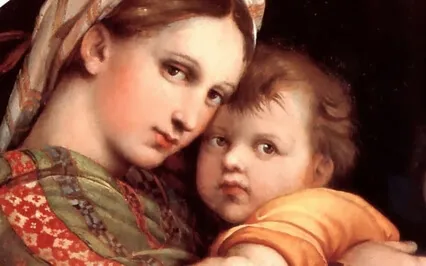
Like when you meet a little baby like Siddhi,
Quite naturally,
One wishes them that they go up to be strong,
Healthy,
Beautiful,
Intelligent,
Successful,
That they have a long life,
That they are appreciated.
Simply wishing well,
Sympathy,
Good intentions.
As a very,
Very known teaching,
Probably one of the most popular passages in the Pali Canon,
The metta sutta,
Sometimes also known as kadaniya metta sutta,
Is regularly chanted as one of the pavitas,
One of the pivot chants,
Kadaniya mata kosileina yantang santang padang abhisameche.
And we have got quite a beautiful English rendering,
Which we are chanting here,
For example,
Every Sunday afternoon,
If you are still here at 3pm,
We will be chanting that.
This is what should be done by one who is skilled in goodness.
And I can strongly recommend it.
The traditional one in Pali is actually my preference,
Because I can understand the Pali like getting the teaching completely original,
Basically almost the way the Buddha has spoken it himself.
We are so close,
Fortunately.
On the other hand,
If you don't speak Pali,
You may prefer the English one.
It can be easily downloaded from the website at Amaraavati.
And we also have our afternoon chanting available on our podcast.
And it's a great one for little babies,
Little kids like Siddhi,
To play as a lullaby,
When she gets some dhamma,
Even while she is sung to sleep.
SOKI NOVA KEMI NOHANTU SAPPE SATA PAVANTU SOKITATA In gladness and in safety,
May all beings be at ease.
This is kind of the heart of that sutta,
Because that is what we wish to everyone.
In gladness and in safety,
May all beings be at ease.
And the emphasis is on all beings,
Because it's not so difficult to wish well to one being,
Particularly to one being who we really like and who are kind and friendly to us.
But in order to make it an upper manya we have,
To make it a limitless dwelling place for the mind,
We have to break down all barriers,
All limitations,
All restrictions.
And we have to be able to extend wishing well,
Goodwill,
To everyone without any distinction.
For example,
Not only humans,
But also animals.
Or do you find it easier to have loving kindness to humans or to animals?
Some find animals easier and the human can be difficult sometimes.
Do you find it easier to feel loving kindness to a koala?
Or do you find it easier to feel loving kindness to a cane toad?
But the cane toad is also a being,
Isn't it?
This is how you can check whether our loving kindness is getting closer to the quality of upper manya,
Of boundless,
Limitless,
Unrestricted.
And if you can have the same warm,
Fluffy feeling in your heart that you have to a cute,
Fluffy koala to a cane toad,
Then we can notice that our loving kindness is progressing.
Recently I saw our white wallaby again.
We have a white wallaby at Dhamma Giri?
Seto.
Seto is a Pali word for white.
He isn't really an albino,
He doesn't have red eyes and he has a few little patches of color,
But basically rather white.
Of course he came in because he's after the girls,
After the female wallabies.
I find it quite easy to have loving kindness to our white wallaby Seto.
But how about a cockroach?
When you see a cockroach,
Can you immediately think,
May you be happy,
May you be well,
May you live a long time,
May you have enough to eat?
They're not exactly cute,
But they're quite amazing.
I think they're the fastest runners relative to their size.
I can't remember that for sure,
But I read it somewhere,
Relative to their size.
I think nothing can run as fast as some cockroaches.
They can eat almost anything,
Including other dead cockroaches,
Their own excrement.
I think they can recycle it five times.
They may be able to survive the nuclear war.
If it's supposed to be a real boundless,
Limitless,
Unrestricted loving kindness,
Then it has to include cockroaches.
About snakes,
Do you find it easy to feel loving kindness for snakes?
Adran Moneo was a great snake fan as a kid.
His mother,
She would sometimes collect them.
She would just go to a national park and she would catch some for me,
When it was not good enough to catch one myself.
This is a kind mother,
Isn't it?
Catching snakes for the little kid to play with.
Of course,
The snakes in the Vienna forest in Wienerwald are not really poisonous.
It is an important distinction.
What is the very first thing,
If you encounter a snake,
Suddenly you step on a snake or you even get bitten by a snake,
What is the very first thing you do?
What is it?
The snake,
They had to poison the snake to go into.
You mean the antivenom,
Getting the antivenom.
That is correct,
That is urgent,
Getting medical attention,
But there is still one thing you do beforehand.
A loving kindness.
One of the parvettas the Buddha has given us to the monks,
On occasion of one monk getting bitten by a snake and dying.
The Buddha said that this monk for sure has not fully pervaded the four royal clans of snakes with loving kindness,
Because if he had done that,
If he had fully pervaded all the four different groups of snakes with unconditional loving kindness,
He would not have died being bitten.
It is quite a strong promise.
Then he gave us the khanda-pavitta.
Miropa kehime mettang mettangi na pati me.
That is basically my loving kindness to the bound snakes,
My loving kindness to the adders,
My loving kindness to the vipers,
And so on,
And to all beings.
Because if the moment,
Even if you get bitten,
If you establish loving kindness in your heart,
First of all your whole blood pressure and circulation and heartbeat will be much more relaxed,
And that is already better.
If you get angry and you get very worked up,
Your poison will spread more quickly.
But of course you can also get medical attention.
It is not mutually exclusive.
But additionally to all the medical attention and getting the antivenom quickly,
The very first response is loving kindness.
And sometimes they are actually kind enough that they bite you,
But they don't inject poison.
It can actually happen.
A snake bites,
But the poison wasn't injected.
And if you have loving kindness,
It also reduces chances that it bites the second time.
And if you have loving kindness before the snake bites,
It may help that you don't get bitten at all.
But most people have an immediate response of fear and anger and aggression,
Which is a negative one.
There is a famous great disciple of the Buddha.
You may know that the Buddha has given us outstanding disciples in all four categories.
That is the monks,
The nuns,
And the male and female lay disciples.
And in each category the Buddha has gotten quite a few with outstanding qualities so that we can emulate them.
And who was the foremost female lay disciple in practicing loving kindness?
Queen Samaavati.
Queen Samaavati,
Exactly.
She was the foremost.
She has an amazing story.
She came from a very wealthy,
Rich,
Private banker family,
So in a billionaire background.
But then there was a severe pandemic,
And in order to escape that,
The father and mother,
The rich banker and his wife,
They were escaping the hometown.
And they finally arrived in a different town where he wanted to stay with his friend,
The rich banker,
In that different town.
They didn't manage to meet him anymore.
And first the father died,
And then the mother died,
And then she was just left as an orphan.
But already at that time she was so calm when she went to some food distribution which they had to get the food for her two parents.
The first time she asked for three people,
And then her father died,
And then the next day,
Because her mother was sick,
She went to the food distribution and then she asked for two portions.
And then the next day her mother died and then she went alone.
And the guy who was doing the food distribution made this cynical remark and he said,
Finally you've figured out how big your stomach is,
Because he thought she was just taking three portions for herself.
She was also feminine,
And she just very calmly explained that the first day there were three,
And then her father died,
Then her mother,
And now she is alone so she needs only one portion.
And she already from her past life,
Parmed me and calmed her,
And she was already so calm that she didn't get angry,
Although she just lost both parents and he made a sneering remark about that.
And then the guy organizing the food distribution was so impressed that he immediately adopted her,
Because obviously she was now an orphan,
Didn't have anyone in a foreign city.
And usually you can imagine that the food distribution,
India,
In a famine,
There was a huge chaos usually,
And the people would be fighting to get the food.
And as she was now being adopted,
She felt,
Now what can I do to support my adopted father?
I want to help him,
He's obviously so kind to me,
How can I contribute?
And then she offered to help with the food distribution and organizing it.
She must have been already in the early teens or something.
And because of her loving kindness,
Within a couple of days,
And also her smartness,
The food distribution became completely orderly,
Disciplined,
And the fighting stopped.
Because if people have strong loving kindness,
It can warp on others,
It warps off.
Just like when we are angry,
You may have noticed that other people often respond with anger.
If we yell at people,
It's not unusual that they're yelling back.
But whenever we practice unconditional goodwill,
Then others may calm down,
They may also be more gentle.
So suddenly there was no longer chaos,
There was no longer screaming,
There was no more fighting,
And just a very orderly line,
And she made sure that everyone would get as much food as there was available.
And then one of the ministers of the king was coming out and was checking the food distribution,
Because it was always a pain in the back,
Because there was so much chaos.
And he couldn't believe,
And he saw that suddenly it's all smooth,
They're just cruising,
No more panic,
No more fighting.
And he inquired,
How is that possible?
And then the food distributor explained that it's his new adopted daughter.
And then the minister of the king was so impressed that he suggested that he will adopt her.
So she is already getting up in the hierarchy quite a bit,
From being an orphan,
Having just lost both parents,
And having lost the whole fortune from the family,
Being in a foreign town,
And their friend had also died from the disease,
And now she's already being adopted by one of the ministers of the king.
And of course in a short time later,
A few years later,
The king meets her,
And he however doesn't think about adoption,
But he offers to marry her.
So she gets married to the king now,
And she's the queen of that country.
King Odena.
Yes,
From King Odena.
However,
King Odena already had another G5,
Apart from the 500 other wives,
Those days he often had the Great Harbin.
And the other wife was exceedingly beautiful with model looks,
But with a very black heart.
She didn't have a good heart,
She was not interested in any spiritual practice,
She was just into money and power,
But very beautiful looking.
And because Queen Samavati,
Due to her great matter,
Was so popular,
That the king started to like her better.
So the evil queen,
What was her name?
Margandiya.
So the evil queen Margandiya got jealous and was plotting how to get rid of Samavati.
And usually the king would change around which of his wives he would stay with,
In which wife's womb,
And when he was scheduled to stay with Queen Samavati,
The evil queen Margandiya she smuggled a snake into the musical instrument,
Because the queens would often play beautiful music for the king.
And at the same time she would always go to the king and try to top in Samavati and would claim that she doesn't really love you and she wants to kill you,
And she is against you and she hates you and she is only pretending.
But the king couldn't imagine that because she had so much loving kindness.
But now when he was in her chambers and she started playing for him,
Suddenly the poisonous snake came out of the instrument and washed towards the king.
And the king got really angry and he thought,
It's actually true what Margandiya is saying,
She really wants to kill me.
And he grabbed one of the big bows,
An ancient India that was considered possibly the most dangerous weapon,
And all the kathiyas from the warrior caste where the kings belonged to,
And they would train with this big bow,
Which is taller than a person,
And they could shoot over a hundred meters and hit the bull's eye a hundred meter distance.
And he would grab one of those and would aim at Queen Samavati at her heart,
Taking revenge and killing her.
What did Queen Samavati do?
What was she the foremost in?
Exactly.
She radiated loving kindness.
May you be well,
May you be happy,
May you live long,
Healthy and happily,
May you be filled with loving kindness,
May you be free from anger.
So even when her husband,
In a fit of rage,
Was aiming the war bow and the arrow right at her heart,
Even then she was just radiating loving kindness.
And they say when the king shot,
It couldn't hit her,
It didn't hurt her.
The arrow just dropped down and couldn't do any damage to her.
That was one of the events why she is considered the foremost disciple in loving kindness.
I'm not sure how it's going in your marriage.
Whether your spouse has ever aimed an Indian war bow at you.
Probably not.
But has it maybe happened that your spouse has shot some arrow of poisonous words into your heart?
Because there's obviously not a metaphorical meaning.
Most spouses don't use real arrows,
But sometimes the white set hitting little bird or little sentence that can also go deep like an arrow into the heart.
Has anyone experienced that?
So next time,
If your spouse is aiming one of these verbal arrows at you,
What do you do?
Loving kindness,
Exactly.
May you be well,
May you be happy,
May you live long,
Healthy and happily,
May you be free from anger,
May your heart be suffused with loving kindness.
And what happens?
The arrow can't hurt you,
Can't harm you.
Whatever words they are calling you,
Whatever insight or whatever weakness they are putting the needle in,
That can't hurt you,
It can't harm you.
It can be like Veen Samavati.
The Yeketri,
Pāṇa,
Bhūtati,
Tassava,
Tava,
Rāva,
Anavai,
Sesa,
Whatever living beings,
Absolutely all,
Whether they are weak or strong,
Tassava,
Tava,
Rāva,
Anashakable,
Movable,
Unmovable,
We can interpret that as weak or strong,
We can in a profound sense also maybe say really unshakable,
Only the enlightened abhahans,
So whether they are spiritually highly evolved or whether they are without any spiritual progress,
Whether they are mighty or whether they are powerless,
Whether they are shakable or imperturbable,
Anavasesa,
Without leaving anyone out,
All beings are included.
Dīkāva,
Yemahantava,
Machima,
Rāseka,
Anukātula,
Whether big or small,
Long or short,
Gigantic or tiny,
Anukātula,
Anu is like an atom,
Even microscopic,
Doesn't matter.
The biggest one is Arahu Asorinda,
Who is swallowing the moon,
Is considered the biggest in terms of physical size,
Whether a blue whale or an elephant,
Whether a tiny sandfly or a midge,
We include everyone.
I'm not sure whether Vai was a living being,
Honestly,
I'm not quite sure how far it goes down and where the line is drawn there.
Bhutava,
Sambha,
Vesiva,
And those who have already been born,
Or those who are seeking rebirth,
Or in the process of becoming,
Like possibly the two people we were sharing methods with,
The rebirth may not yet have happened,
And they are in transition,
They are in transit,
It's actually quite touching that the Buddha even points out that they are included in all loving kindness,
To make sure that absolutely no one is missing out,
The ones who are still alive,
The ones who are born,
But even any in the transition,
Or even unborn children.
There is also a part of Sambha-vesi,
Still seeking rebirth,
Still being in the stage of pregnancy,
Gestation,
Everyone included,
No one left out.
Gita-dure,
Vasanti-avidure,
Those who are close by,
Our loved ones,
Our friends,
Our mates at school,
Our mates at work,
Extended family,
Joint family,
Our spiritual friends and fellow Dhamma-farers,
But also the people who live in South America,
Or in the polar regions in Siberia,
And not only on the planet Earth.
If there is anyone on Venus or on Mars,
Yes,
They are not quite sure,
Probably not on Venus or Mars,
But maybe on a different planet,
In a different solar system,
If there is anyone,
We include them,
Throughout the whole universe,
The whole galaxies.
These are the two directions where we can make our loving-kindness limitless,
Or the two dimensions,
The one spatially.
You just imagine,
Once you have this emotion,
This feeling of loving-kindness in your heart,
You imagine that you radiate it out in all directions,
Above,
Below,
Front,
Back,
To the sides,
Intermediate,
And so you just spatially extend your loving-kindness,
So that no one is left out wherever they are located.
The other way of making it limitless is by including everyone,
Whether kids or adults,
Whether boys or girls,
Whether Sri Lankan or Vietnamese,
Whether Chinese or German,
Whether,
What else have we got,
Austrian or Kiwi,
Whether Aussie or Bangladeshi,
Whether Myanmar,
I think we have covered everyone here now,
Or Bolivian,
It doesn't matter,
Whatever the ways,
Caucasian or Black or Indian or Middle East,
Whatever you want to define ways,
It doesn't matter in the end anyhow,
Because everyone is included in the loving-kindness.
Not only our species,
But what ads have we got?
So we have loving-kindness to all humans,
We have loving-kindness to all animals,
Including cane toads and cockroaches,
What other classes of beings do we want to include,
Additionally to humans and animals?
Damn,
I know that you know that.
I thought that you probably would know,
But maybe any of the kids,
What ads have we got?
Humans,
Animals,
Is there any other class of beings we want to include?
What ads have we got?
There are two we can see easily,
That's the one we know,
Because we can see as a human being with your normal eyes,
We can usually see humans and we can see animals,
But there is also an invisible being.
Can you see Nanda?
Can you see him?
I can't see him now anymore,
That doesn't mean he doesn't exist.
So what are the beings other than human and animal?
Spirits,
For example.
No,
Spirits.
And we include them,
Whether they are hungry ghosts or whether they are higher and more sophisticated spirits.
No,
Invisible beings are included.
How about angels?
Have you ever seen an angel?
Now we may not be able to see them,
Some people can feel them.
Just last week there was this mother with a young girl,
She was only ten years old,
And when I asked,
Have you ever seen a deva,
She said yes.
I said,
Oh that's interesting,
Seriously.
I talked a little bit,
But she said she can usually more like feel them.
Sometimes it's like a feeling of a very benign presence.
But if some people have psychic power they may be able to see an angel,
They are very very beautiful.
And partly we call them devas,
The closest in English to what we would call in English an angel.
They don't necessarily have wings,
They are often represented with wings,
But this is just to indicate that they can move through the air.
They come in many classes,
They can go very high,
And the highest classes now have what is called the bahmas.
The bahmas are angels that don't have a physical body anymore,
They are just like a laser light show.
Their body is almost like a beautiful light appearance,
Like an incredible laser show,
There is no more physical body.
And the even higher ones,
They only have the mental rapture and bliss and peace.
So we should include all spirits,
All ghosts,
All devas,
All angels,
All invisible beings and all loving kindness.
Same with religions.
Did the Buddha teach we should have loving kindness only to Buddhists?
What did he teach?
We have loving kindness to whatever religion the person belongs to.
Someone is a Christian,
We practice loving kindness,
If they are Buddhist,
Loving kindness.
If they are Muslim,
Atheist,
Catholic,
Jewish,
Indigenous religion,
Hindu,
Confucianism,
Satanist,
We still have loving kindness,
May they let go of all evil.
So it doesn't make any difference.
Like a mother loves the child.
Does your wife love little Siddhi?
Does she love her dearly?
This is how you should love all beings,
With that dedication that your wife has to her little daughter.
That is what we should have,
All of us,
To all beings.
Just like a mother loves her child to the extent that she would give her life for her only child,
So we should develop loving kindness to all beings.
What do you think,
Henry?
Is that a good thing,
Loving kindness?
It also feels good,
I forgot mentioning that.
If you develop loving kindness,
It's not just for the others.
We are ourself,
The first beneficiary.
Just like anger feels really awful in it.
Do you sometimes get upset or angry?
Does it feel nice?
Not really,
No?
But loving kindness feels really good.
This is why it's called the dwelling place of an angel.
According to the Buddha,
If it's developed on the level of full samadhi,
It can protect you from poison and weapons and fire.
It protects you from dying with a confused mind.
You will die very peacefully.
You will sleep without bad dreams.
You don't suffer from sleeplessness.
You fall asleep like a baby.
You wake up with a smile in your face.
You are popular and loved by human beings,
By non-human beings.
You look beautiful.