Get ready for a dose of contagious willpower.
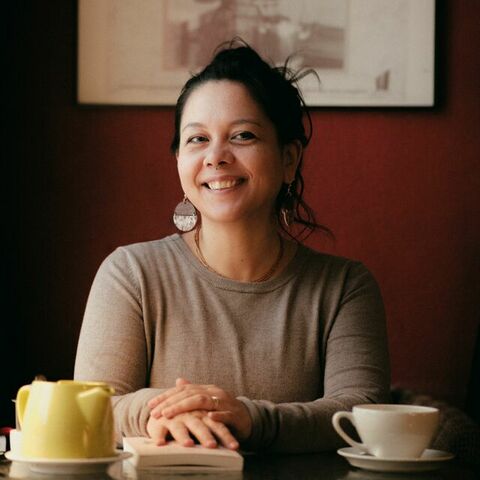
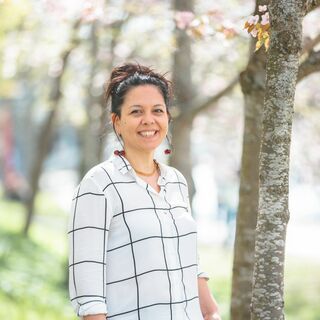
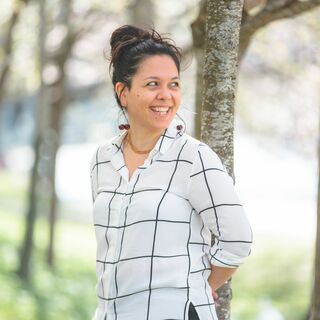
Today I'm speaking with Krishangi,
One of the founder of the award-winning yoga magazine Ananda.
We will speak about her amazing life and how she simultaneously embraces,
Integrates and transcends disability.
Hello Yogi!
Welcome to my podcast.
I'm Aiko and on this show we explore ways to put spiritual theory into sustainable practice.
Welcome,
Krishangi.
I'm very happy to have you here.
I'm very honored you accepted my invitation.
Thank you.
Thank you.
And would you like to introduce yourself for those who don't know you a little bit?
Hi,
I'm Kaisa Maria Krishangi Leka.
I'm a comics artist and an adventurer.
I do bike trips and paddling trips together with my partner Christopher and we create and publish comics and graphic novels together.
I also do a little bit of graphic design.
I teach a little bit.
I'm a kind of a typical freelancer that I always have a lot of stuff going on.
And I've also been doing yoga and meditation for over 20 years actually.
Time goes by quickly and I feel like a beginner but it's actually been quite a while.
And what's your relationship with yoga?
Yeah,
Yoga came into my life in 1998 in the form of bhakti yoga.
I was never looking for anything like that.
I wasn't interested in religion or spirituality or anything like that.
But I did feel that there was something lacking in my life and I thought it was sort of like one of these things that the society tries to push on us like having a career,
Being successful materially.
I remember actually telling someone that I wanted to be rich and famous.
Those were my actual desires.
So I wasn't like the inquisitive type who goes out looking for spiritual truths.
But I was feeling very intensely that something was lacking.
I wasn't happy with my life.
So when I got to know the devotees,
When I got to know bhakti yogis,
I kind of quickly realized that these might be the answers that I've been looking for.
Or that I wasn't consciously looking for but this might be the solution to the intense feeling of dissatisfaction that I had with my life and with having been a good daughter and a good student.
Getting good grades at school and so on but still feeling very empty inside.
I think I also was sort of claiming to be an atheist but what I actually was was really angry at God because of my disability.
Because I had malformed feet and I felt that it was so unfair that I would have to suffer from having a malformed body while others were seemingly perfectly happy and healthy.
And of course the older you get the more you realize that everyone has their own burden to carry.
Everyone has their own problems and that perfectly happy and healthy person that I imagined seeing all around me doesn't really exist.
But at that time I felt like I was being punished for no reason and becoming familiar with yoga philosophy and the concepts of karma and reincarnation made a huge difference for me.
It felt like my world that had felt so scary and chaotic and dark suddenly started to make sense.
It started to feel like there's a meaning to all of this and there's a system of justice behind it all.
And that to me was an extremely comforting thought so that was kind of the starting point for me on my yoga path.
Finding those answers to the questions that I hadn't really dared to openly ask.
That's very beautiful to hear.
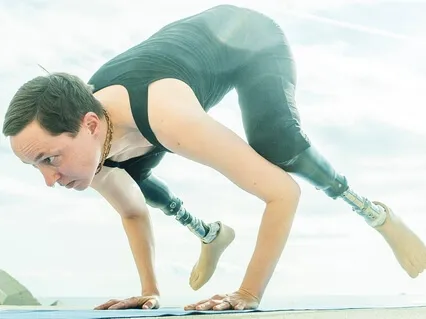
And the reason I wanted to interview you is that although you have now prosthetic legs you're like 100 or 1000 times more physically active than myself.
And you do difficult yoga asanas,
You have fight around the world from the North Pole to California.
You paddle across Russia.
So I'm wondering where you get your power,
Where you get your inspiration and all this.
You know I often see people totally healthy and still you know maybe they stay in front of the TV.
They watch the world from the big square in front of them.
And you also manage to make your hobby,
Your daily life practically with your comics and your job.
So I would like if you can elaborate more on this.
Let's see where to start.
I've always been super into reading and I always thought kind of myself as the kind of a person who reads about other people's adventures and the kind of a person who sits at home and has a big pile of books.
But at the same time I've always been really curious about the world and I think it's the curiosity that's been driving me in many ways kind of pushing me forward to try out different things.
And I'm endlessly curious to see new places and meet new people and bike travel,
Cycling across the US like we did a few years ago from New York to San Francisco.
San Francisco is the perfect opportunity to meet people.
You never meet as many people as you do on a cycling trip and you never really see people at their best the same way as you do on a cycling trip.
Because people admire cyclists but they also feel bad for us.
They also feel sorry for us like cycling in the heat and the rain.
So they invite us over to their house or they offer to buy us lunch or whatever and we've met with so much generosity over the years that I feel like bike travel really is one of those things that if you try it you might really get hooked on it.
It's such a wonderful way of seeing the world through completely different eyes than you would when you travel just sort of paying people for buying different goods or services.
And there's always money involved in those transactions.
And we also host bike travelers in our homes so it's a completely different thing.
It's this mutual generosity and I strongly feel that when you give things to people,
When you do good deeds,
That it always balances itself out.
Those good deeds will lead to other good deeds and in the end somehow it will come back to you but that's not the way that I think about it in that moment.
But I feel that with these small acts of kindness we can really change the world.
That we can create a ripple effect.
And on the cycling trips and paddling trips as well,
I've really seen the kindness of strangers in a way that's so inspiring.
That's one of the things that really keeps me going.
At the same time I guess getting the prosthetics for me,
That was back in 2002 so it's been a long time already that I've had them.
That was a big improvement for me,
Like a big upgrade from my old feet.
So I've also been excited to try them out to see what the limits are of what I can do with prosthetics.
And I haven't really bumped into a lot of limits to be honest.
In a lot of ways if you have a passion then usually if you have a good prosthetician they can figure out a way for you to do your thing.
I guess I have a sort of obsession of doing things in the right way which has also been a challenge for me in asana practice because I used to do ashtanga yoga and it's very systematic and strict and there's a system.
And I love systems,
I have the kind of brain that enjoys having rules to follow and instead of just doing what I feel like,
Following a strict system is what makes me feel safe somehow.
But I was constantly feeling like I wasn't able to do things the right way and that's something that I struggled with,
With ashtanga yoga.
Currently I'm doing vinyasa practice which has a lot of the same intensity as the ashtanga practice but it's sort of more flexible in terms of different bodies and I really found a balance there where I can challenge myself.
And at the same time the system isn't quite as rigid as in ashtanga.
But that's kind of challenging myself,
That's always been something that I've somehow really enjoyed.
I saw a picture on Instagram where you were doing vakasana.
Wow.
Oh yeah,
I never thought I could do that.
But one of the really great things about the pandemic,
I kind of feel bad even saying this because the pandemic has been so hard on so many people.
But for me personally it was an opportunity to really focus on my spiritual practice,
On my meditation and yoga practice.
And one of the benefits has been that I've gotten to know more yogis internationally and I found a teacher online who really sort of gets me and we somehow kind of have the same kind of mindset and the same kind of body as well in some ways.
I mean she doesn't have prosthetics but her practice always feels like very balanced to me,
You know,
Because we kind of have the same sort of.
.
.
The same type of.
.
.
Yeah,
Yeah,
Something like that.
So she's been able to inspire me to try these things that I never thought I could do with prosthetics.
Yeah,
I want to mention her name because she's such a great teacher.
It's Laurie Pagliaroni.
She's in Rhode Island in the US but she also teaches online.
And with Laurie I've really been able to discover new aspects of asana practice and in that way I've been able to,
Like I said,
Sort of find a suitable level of challenge for my mind.
Because I wanted to find a physical practice that's a little bit more favorable for my meditation practice than just going to the gym,
You know.
And I love like a tough spinning class with loud music but if you look at like the instructions that are given for meditation practice in the scripture or that I've gotten from my teacher,
Bhakti Yoga teacher Swami Tripurari,
That kind of super intense,
Super loud,
Competitive type of exercise isn't maybe the most beneficial thing for meditation.
And I've kind of struggled with trying to sort of balance,
You know,
These different personality traits that I have.
That I have that need for,
You know,
For the meditation I feel that it really is a practice that keeps me balanced and keeps me grounded and helps me,
You know,
Avoid slipping into that anguished,
Depressed mood that I was in before starting to practice.
But at the same time I have that like curiosity and that like mind that seeks out challenges and I feel that asana practice can be a good way for a person like me to find balance,
Balance for the mind.
I've also started studying pranayama a little bit and incorporating that into my meditation practice as a way of controlling the mind and trying to sort of have a more,
How to say,
Focused and like a meditation practice that's kind of more like those yogis you would read about,
You know,
Sitting by a river,
Meditating under a tree,
Kind of trying to create that kind of a mindset that I'm not kind of running around and kind of like half meditating,
You know,
While putting together a shopping list in my mind.
But,
You know,
Actually sitting down in a more purposeful way,
A more focused way and pranayama has really helped me in that sort of incorporating these breathing exercises into the meditation.
So I feel like in a way,
You know,
I started practicing meditation in 98 and I feel I really started in 2003 when I became initiated by my teacher.
But these last couple of years,
I feel like I've finally sort of been able to go a little bit deeper.
And when I say this,
I kind of,
I'm afraid that I'm sort of in this bubble that's going to burst at any moment.
You know how when you think that things are going so great,
You're probably just about to step off the cliff.
But I really felt lately that even though the practice kind of goes up and down,
I've felt like I've been able to sort of take it a little bit further by being more critical of the things that I do when I'm not meditating or when I'm not doing asana.
You know,
When I'm off the mat,
I need to look at those things and whether they're favorable or unfavorable.
Yeah,
That's very,
Very much where you see if the yoga is working,
You know,
If you can really bring the yoga from the mat off of the mat,
So to speak.
Yeah.
And you're also one of the founder of Ananda Yoga Journal.
Is that correct in Finland?
Yeah,
Yeah,
We founded it many years ago in 2005,
I think,
And that was around the time when I had also started doing a little bit of asana practice myself.
And we wanted to talk about different types of yoga and also about bhakti yoga to present it to people in a way that's easily approachable and sort of as a yoga path that could really be beneficial for so many people.
Yeah,
Because a lot of times traditionally,
I think that bhakti yoga has kind of been considered something that's a practice that's very intense and kind of takes up your whole life and you have to kind of give up everything in order to practice bhakti.
But I've been really happy sort of to see the change over the years when I've been practicing of how more and more people are approaching bhakti and sort of incorporating it into their everyday life.
And I've never been a monastic myself,
So I think that people can maybe even see me and see an example of a person who has their own home,
Has a job,
Has kind of their own life,
But at the same time also has bhakti as a big part of that life.
And as a huge resource,
As sort of this foundation that everything is based on.
So I might not be singing and dancing on the streets.
I mean,
Who knows?
Maybe I might.
I am really into song meditation,
So maybe one day I will,
But the way that I like to sort of talk about bhakti to people is through my work,
Through our books,
And also just trying to sort of be the kind of a person that people feel that they can confide in or that they can approach if they need something.
Just overall trying to develop that service attitude that if someone needs help,
They know that I'll be there for them.
And I mean,
Not like some kind of a weird strategy to spread an ideology,
But because service is such an integral part of what bhakti is all about,
I like to sort of try to kind of think about relationships like that.
How can I help someone?
How can I be of use to others?
Yeah.
And the best way I think is sharing,
Right?
Yeah.
Yeah.
And someone might look at me and look at my feet and think that I've had a difficult life because I have prosthetics and I mean,
I have a pretty serious disability,
But I don't really feel like I've had much difficulties,
To be honest.
I don't know that this would have been a great obstacle for me.
I've had a really good life and I've really been able to express myself and been really privileged in many ways.
And in the end,
I think someone might look at me and feel sorry for me and I might look at them and feel sorry for them.
But they're like,
I look at someone who has small children and I think that that's got to be hard,
You know,
The lack of sleep and the lack of time and they barely have any time for any kind of spiritual practice.
And maybe that person will feel differently.
Maybe they'll feel that it's a great opportunity to be less self-centered by serving the child.
So in some ways,
You know,
Your mind is your greatest obstacle and the way you see your situation,
Although I mean,
I don't want to say that there wouldn't be suffering.
I don't want to minimize someone's suffering because there are a lot of people who really are in a difficult situation and have a lot of obstacles,
But I don't feel like I'm one of them,
Even though my feet look a little bit different than most people's.
And I also want to sort of emphasize that I feel that yoga and meditation is for everyone,
You know,
And feet come and go.
My feet,
Especially in a really,
In the,
In a literal,
They literally come and go.
They get changed if you switched out a few years,
Every few years,
But what stays is our,
You know,
Our heart and our mind and we can,
We don't need feet or hands to do yoga.
We don't even need ears or a tongue.
We can meditate in our mind and we can,
You know,
Concentrate on,
On the holy names.
Like I do mantra meditation and a mantra you can do in your head.
Even if you have nothing and you don't,
You don't need to have any money or,
You know,
Really necessarily even need to have special time to set aside,
Anyone can,
Can do it anywhere at any time.
And that's what's so,
So awesome.
I think about bhakti yoga that,
That it's really genuine for everyone.
Yeah,
That's very beautiful.
So what kind of tips or suggestion you have for people who,
You know,
Who struggle with their life and they maybe try to,
To make yoga part of their life,
But they have difficulties.
Because I see you,
You really made yoga part of your life as you say,
You know,
It's not that you separate the two things,
Like you have your life on one side and maybe you go for a holiday in some ashram or something,
Then you're practicing for that time.
No,
You,
You really make it all complete.
So which kind of practical suggestion you have for those people who struggle to do that?
Well,
I feel it's taken me a long time as well to be able to really integrate those things so that it's not something that I do when I'm on holiday or when I have the time,
But,
But to really have it as the foundation and to,
To make it a priority that,
That my spiritual practice is the first thing I do.
And then I'll do other things if there's time and not vice versa,
That even like having that mental sort of,
That mindset that this is the most important thing.
I mean,
Try that,
Try it out.
Try like playing with that idea that what is the most important thing for you?
And what if,
If meditation or yoga really was the most important thing and how would you,
How would you build your days around it if it was as important as eating,
As important as breathing?
I mean,
Someone said that we never forget to eat,
But we might forget to do our practice.
And so that,
And that to me was like a big realization that,
That it should be as natural and as sort of essential as eating.
Yeah.
And of course in bhakti we can also connect eating to our practice,
Which is another wonderful thing about bhakti that it can be present in so many everyday things when we cook in a specific way and,
And eat like sanctified food.
But I also found this great quote recently from the author Doris Lessing concerning finding the,
Finding inspiration and finding the right time and so on.
And she said,
Whatever you're meant to do,
Do it now.
The conditions are always impossible.
So the right time will never come.
You'll never,
Everything will never be in the right place for you to,
You know,
Start doing yoga or go on that big trip or start a new career or do art or whatever it is that you're dreaming of doing.
If you're,
If you sit around waiting for,
You know,
The magical inspiration for the right moment when,
When you know the conditions will all be favorable,
It'll never come.
You just have to go.
You just have to like whatever,
Whatever it is you want to do,
Even if it's like,
Even if you end up doing it really imperfectly,
Really not like,
Like that,
You know,
Perfect picture that you had in your head.
But even doing it in some way,
Even a little part of it will,
You know,
Give you such a feeling of,
Of satisfaction,
Such a feeling of having actually fulfilled something instead of just thinking about it and talking about it.
That that'll,
That'll help you then take the next step and the next step.
You don't,
We,
We didn't start by cycling across a continent.
We started by cycling to the next town from where we live.
And it was a one night trip.
We cycled back the following day,
But that already gave me the sense of accomplishment.
That was already the longest stretch that I had ever biked in two days.
And,
And then we took it further and further and further.
And I mean,
Who knows where we'll end up,
But,
But if,
If kind of even doing something small will give you that,
Will make you feel like,
Like you see your opportunities in a completely different way.
So I think a lot of times people have this kind of an all or nothing attitude.
Yeah.
Whether it is like an exercise or spiritual practice or yoga or whatever,
If I can't practice two hours every day,
I won't do anything because I've sailed.
And that's really such a pity because I think that if there's something that I've noticed over the years is that if you can find like a sustainable level that you can keep up,
Be as small as this might,
As it might,
But just like something,
Do something every day in order to,
To,
You know,
Reach that,
That dream of yours.
And slowly you'll get there,
But you,
But if you do something,
You know,
Full time,
You probably won't be able to keep it up because it'll be,
You're probably going to be pushing yourself too hard.
Like if you want to run a marathon,
You're not going to start by running a marathon.
You're going to start by going for a walk and then half walking,
Half running and so on.
But a lot of times I think people also look at spiritual practice kind of as if it was a marathon that they tried to run on the first day.
I tried meditation,
But I didn't get these incredible spiritual experiences.
So it wasn't for me.
So I quit.
And like,
Would you quit running like that if you,
If you didn't,
Weren't able to run a marathon after a week or a month or even a year,
People might train for years for a marathon.
So,
So I think it's super important to,
To,
You know,
Bring that same kind of attitude to spiritual practice as well,
That this is a long term pro project.
And you find a level that you can keep up and then you gradually,
It'll grow organically.
But,
But you don't push yourself like the same way.
You don't want to push yourself with running or you'll just end up with bad knees.
Yeah.
Thank you.
Thank you very much.
I really appreciated this conversation and I really like and to see how you,
How you make up your life.
As I said,
You're a very inspiring person for me.
So thank you again for coming to the show.
Thank you so much.
Thank you.
I hope this episode fulfills its purpose of inspiring you.
If you like it,
Feel free to share it.
Give a review or a rating.
Subscribe.
And if you have any questions,
Please get in touch at aikoyoga reiki.
Com.
Namaste.