Do you remember Mark Hosak from one of my first episodes?
He was talking about the principles of Reiki.
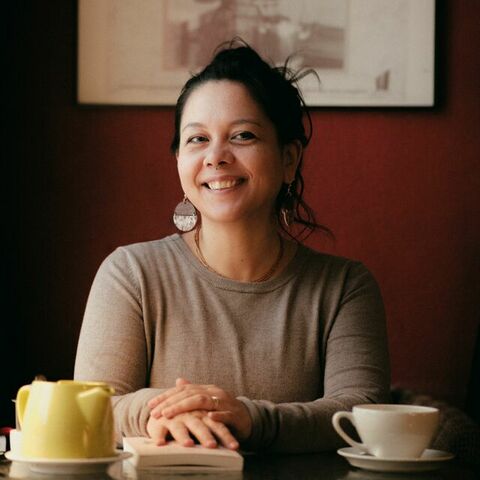
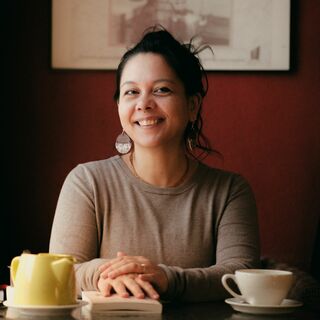
Today I'm talking with his partner Aileen and himself and they will tell us how they brought spiritual theory into sustainable practice.
Hello Yogi!
Welcome to my podcast.
I'm Aiko and on this show we explore ways to put spiritual theory into sustainable practice.
Okay,
Welcome Aileen and Mark to this show.
I'm so happy and really,
Really honored that you're both here.
Some of you might know Mark Hosak from a previous episode we did about Reiki and Aileen,
She's his partner and she's also a Reiki practitioner.
I would like to ask you Aileen if you can say something about your story,
About your past,
How you got here.
Yes,
Of course.
Thank you so much Aiko for the invitation and my story about Reiki and spirituality.
When I was a young girl,
I was very interested in a lot of things,
History,
Archaeology and also spirituality.
One day when I was 11 years old,
I discovered a book about magic and then I went to the bookstore and I told the man there I want to buy this book.
He was a bit surprised and said,
Are you sure?
Maybe you should talk about this with your parents.
It was a very,
Very funny situation and for many years then I was interested in meditation and I was a lot in the forest because I lived in a house in the near of the forest and it was very beautiful there.
I had a very good contact with animals.
I like animals very much and nature.
But one day it was the situation like now I am a teenage girl,
I'm nearly an adult and this time with meditation and spirituality it's over because I would like to study at university.
I thought that it would be difficult to go to university and then I decided to leave this aspect of my life behind me for nearly 10 years.
Then I had a kind of life crisis and started to meditate again.
Two years ago I had a very difficult operation where I had a near-death experience and then after this I discovered my life in a new way because I was so thankful to be alive.
I was always interested in Reiki and my parents also know Reiki practitioners but for some reason there was never contact.
I thought it would be nice now to learn Reiki to help myself and then I discovered a manual which was written by Mark.
I was so surprised and so enthusiastic because I thought this is what I ever dreamed for a man who comes from university and has a doctor degree but who is very spiritual.
I decided to meet him and then he had a seminar and after the seminar he saw that I had pain in the shoulders and he asked me,
Do you want Reiki?
I said yes and it was a very nice experience.
It's really hard to describe because I knew energy healing before but not Reiki and it was completely different from everything else I had ever felt.
When he put his hands on my shoulder I could feel Reiki as warm and really beautiful and like opening my heart,
Like falling in love.
It was really an extremely spiritual experience and I was really relaxed but it's not that I fall asleep.
We talked a bit about Qigong and meditation and such things and after this experience for nearly one week I felt the Reiki power in me and it was like discovering a new superpower.
I sat at home and thought what's with my hands?
They are different now and the energy in my body has changed.
I was a bit sad that after six days it was gone.
From one moment to another it was not there anymore.
Then I decided that I want more to learn about Reiki.
I had my first initiation with Mark and it helped me a lot because after this operation my problem was not entirely gone.
It came back and I was in a very bad condition and the medicine couldn't help me because they said we cannot make another operation because we are not sure that you survive.
The risk is too high for us and for you and so we are sorry but we don't know exactly what to do now.
So I had Reiki and I helped myself and Mark helped me a lot and in several months we had very good results because Mark had some meditations which are a combination of Reiki and the medicine Buddha.
I practiced that over and over again and then the pain was gone.
It was really nice because my life quality now is so different from before and I am so happy that I decided to become a Reiki teacher because I think Reiki is so wonderful for every person in the world.
That's super beautiful to hear and also you were very lucky to find Mark because he's a very good one.
It's not that all the teachers are like that.
Oh,
Thank you.
It's true.
Also the book you wrote,
I didn't read because it's in German but you talked about it in the last episode and it's so interesting and powerful how you express the Reiki power and healing.
So it's very nice to hear that.
And what inspired me a lot from both of you is that you live your life around Reiki and spirituality.
You do also Qigong and meditation.
So you don't do these things as a hobby or on the side but it's the center of your day.
So I would like to ask you both how you do that and how can you keep it always alive without forgetting also that you are living material life too but it's always there,
Your spirituality.
Would you like to start?
Yes,
One very important part for me is what I call the formal practice every day.
And this is meditation,
Practicing Reiki and Qigong.
And I experimented a lot and I came to the result that it is best if you have a time when you do it every day.
Because if you don't have this time and if you don't have a schedule then it is sometimes difficult because of course there are much things you have to do in daily life.
And also if spirituality is the center of your life there are also a lot of other things around,
Also at work.
And so it is for me very important that I know I have this schedule and I know in the morning I start with for example Reiki and then comes meditation.
And this helps a lot so you can make a plan.
And some months ago I had a time when I was a bit frustrated because I thought there are so many things on my list and I can't fulfill them every day.
And then I thought maybe this is too much because there is also the part of work which has nothing to do with spirituality and there is also my family and they need me too.
And then I remembered that in Shingon Buddhism there are a lot of practices which have a specific time.
They say okay this meditation you do for 41 days or for 108 days and then I decided I can switch meditation sometimes and can say yes now I have one meditation for the next 41 days and then I will do another meditation every morning.
And I think this is good to be realistic about things you can do every day because then you also have more the effect if you are thinking oh no I have to do this meditation and then I did not do my Shingon practice yesterday and oh no.
Then this is not good because then you are in a kind of spiritual stress and it's not good for open up your heart.
And now I have a routine which gives me a lot of energy and power and I can always say yes and next month then I will make other practices.
And I think this is a very good thing especially also for people who don't work with spirituality.
They don't have time to train two or four hours a day and I think this is good if you are realistic and kind to yourself and make a schedule.
Thank you.
Thank you for sharing that.
Okay.
Then I tell you something about spirituality in my daily life.
I would like to go a little back to the past.
I think it's about 25 years ago I was for three years in Japan and university studying Buddhist art history and rituals and training martial arts.
And this time I knew I will be here for this certain time and then this time is finished.
So it's important to do all my best in this time because this time in Japan will never come back and I have to do everything I can to have a lot from it.
And then I was thinking and planning how I could do this and one part was a research for university in Buddhist temples.
So I went to different temples and asked them whether I can participate in the rituals and then they were very friendly and said yes,
Yes you can and you can make your notes.
But we will start at five o'clock in the morning or some temples at half past four in the morning.
And it doesn't matter whether we have summer or winter or whatever,
It's always the same time and you can come there and just be with us.
And then I got up very early in the morning and visiting this temple and participated in this ritual.
So I was just watching those monks and writing everything down what was possible.
And there I saw that those monks have a special schedule in their life and they do something always at the same time.
And if I compare this with today then I also feel it's good to do some things always at the same time.
Because when I say yes I want to do reiki and this meditation and this training today but before I do this and this and this and this and this,
Then it might be possible that in the end of the day I will not have done all of my training I wanted to do.
And then there is a very strange effect that when I want to start with the training that there might be an inner voice that says,
Oh that's a good idea but before you do this you could do something else.
And it is very important to answer this voice to say no now I do the meditation and what you like to do is also very important I will do it afterwards.
So if you listen to the voice and you obey to the voice then you always have a reason to do it later and then the chance is gone to do it because there's something else and the day is over.
So it is a good idea to do it on certain times.
So in the morning when I wake up one of the first things I do is,
Oh yes I have my hands and I can give myself reiki.
And at the moment since about six months I use seven special power reiki positions for waking up and vitalize myself.
I have invented them last year and they will also follow an email course when I translate it to English.
Now it's still on German that everybody can learn this.
And this is so cool,
So nice that it helps me to wake up and bring myself into a great enthusiasm for the day.
And often we do it also together.
And then when I go on in the day for example I make some tai chi training and this and that.
And I have my,
Of course I have my material life where I have to earn money or to be there for my tigers and all those things.
I say tigers because they are not real cats so I have a reason to say this.
And I think they are very spiritual.
If they are something like an energy or a ghost or a spiritual being they see it and sometimes they run after it and try to catch it and so on.
So special spiritual my spiritual temple tigers.
And they help me to live my spiritual life because I always do something I don't expect and this makes it especially spiritual.
And then there's one thing.
So I have a lot of things to do.
For example recently switching the whole business online is a great job because it looks so easy.
You take your mobile phone and then you just talk in it and make your podcast and your videos and your Instagram and so on.
And I tried everything of this.
But yes you can do it like this and I failed with it.
So I had to learn a lot about it how everything is working and I'm still learning.
So there's a lot to do beside my normal work.
What is giving classes in Reiki,
In shamanism,
In Qigong,
In meditation and martial arts and everything.
So it's a bunch of things and then I have this as well.
So it's like there's something like a time lag to do all the spiritual things even though my work is about spiritual things because I teach spiritual teachings.
And of course I don't only want to teach it in the seminar and then the rest of the day or the rest of the week I do something else that's really real.
So I want of course I want a combination and then I remember you see the historical Buddha and he was living the first 20 years of his life in the palace of his father who was a king.
And then he was seven or eight years doing his meditation in astatism without eating and everything.
And he recognized after almost 30 years that the one way just having a life of joy without spirituality and the other way almost starving and astatism and everything.
Both do not lead to enlightenment.
And then he walked the way in the middle.
And there we have in Germany we have something like a joke.
So why is the Buddha running against the tree?
Because he was walking the middle path.
And then but with this there's some kind of a truth because he found the Bodhi tree and so the tree of enlightenment where he received his enlightenment and there are different teachings.
One Buddhist teaching says he was doing it on his own and then the tantric Buddhist teaching says he was not alone he was doing it together with a wife and this would also be one part of the middle path.
So I don't think spirituality in daily life is astatism with almost starving and no sex and everything.
I think it's good to have a good combination.
And in this combination I always think whatever I do where can I do my training doing what I'm doing.
And there's also a funny story something like we say in German we call it a Zen joke so it comes from Zen Buddhism.
And there is one there are two novices,
Two new students in a temple,
In a Zen temple,
In a monastery and they talk to each other how about smoking and meditation.
And then they don't know what to do and then they ask their master monk.
And then they say you and me we both ask the master monk and tomorrow we meet here again and talk about it.
And then they met again and one of the two students had a lot of bruises and a blue eye and he was looking really bad and the other was just looking normal.
And then the one who had just felt well asked the other one what have you done you really look like you have been beaten up.
And then he said yes I have been beaten up because I asked the monk whether I may smoke a cigarette while I'm meditating and then he has beaten me up.
But you also wanted to ask him why haven't you been beaten up.
Yeah I don't know.
I just asked him whether I am allowed to meditate while I'm smoking and then he was just smiling.
So there's a difference whether for example you do meditation and then you are with your mind somewhere else or you do your daily work and then you are with your mind in the meditation.
So and this is also something you can see in the Japanese temples for example when you go to a temple before you learn the rituals and everything you have to clean the floor and you don't use the tools we have like a stick with something wet on the top.
No they go with this wet towel on the floor and run through the halls and this is really it's you need a lot of energy for this and it's really exhausting.
And the next step you have to clean the whole temple garden of everything what is lying around from the leaves of the tree and whatever.
So you have to work the whole time and then sometimes people ask why do I have to do this work.
I wanted to learn meditating.
And this is the point here because the thing is good to meditate while you do this work that you see that whatever you do is meditation.
And this I didn't understand for a long time.
This I first understood in the martial art training of Ninjutsu at my former teacher Tabuchi Sensei in Japan because he told me I give you two hours private lesson here and then you shall train for more than 20 hours a day.
Everything what I have teaching you and then I was wondering how can I do it.
I have to go from Kyoto to Osaka.
It was everything from house to house.
Two hours by train and everything and then the whole way back.
So how can I train?
Then I have to go to university.
I have to do this and this and this.
And then he has shown me for the first thing you walk around you shall train how to walk.
And then I said I can walk.
And then he said you can walk like you have learned it but actually you cannot walk because you are not you have no conscious mind about the walking.
And then he said you make always very big steps.
And this means that you want to go fast from one point to the other.
And when you go from one point to your destination in big steps then you will know nothing about it what is on the way.
So the goal is the way and not reaching the goal.
Same with the cigarette and the meditation.
By the way I'm not smoking.
But anyway and then he said make small steps.
And if you make small steps you feel more from the ground and it will be very difficult and you learn martial arts.
And if you learn how to make a lot of small steps it will not be possible that you will lose a fight.
This was the first thing.
Then we went on the subway and then you held your hands up not to fall down and he said do it only with a little finger and the next finger the ring finger.
And I asked why that because these two fingers are connected to the hara the belly here under the navel.
And then so if you use this like when you use a sword maybe you have seen this that the index fingers they don't touch the sword.
And this is a connection to the martial art.
Then you're connected to your hara and you're in the middle and this is meditation while you are in the subway.
And you train this.
If you do it with a thumb and the index finger then it's connected to the beat steps and this power will end.
The other one will never end because there you are connected with the ground and you get power from everywhere for example.
And then he told me you carry a rucksack and a rucksack is not good for your back.
You could carry it in your hand and also use your small finger and the ring finger and make a training like this.
And then he told me when you brush your teeth you could train the horse stance that you go with your legs farther from a part and then stand deep for example.
And when you have done this for a while you can start moving your hips like a belly dance or something.
Then you will become flexible and so on.
And he told me a lot of things where I will be able to train the whole day.
And today when I'm for example in the kitchen and making some breakfast,
Making some eggs for eating and a smoothie or something,
Then it's like that I move in those martial art moves.
Or that I train to have my back straightened and that I give Reiki in the food.
And then she was wondering why the food is delicious.
It might be one thing but somehow there is something special.
And you know my cooking now for about one and a half years.
And last week I told her my secret that I give all my love and Reiki inside.
And there might be the difference.
So it might be different whether you have an angry mother who is cooking,
I don't want cooking in there,
This is your food.
Or you do it with love and light and energy and everything.
Or another thing is we have an altar for shamanism and Buddhism and there we bring some offerings.
For example incense or a candle.
And then we say to the spirit,
This is my incense for you.
This is my offering for you.
Have a nice time with it.
With the smoke or with whatever,
Some other offerings and so on.
And then we had the idea we could do this with ourselves.
So when I make a tea and give it to her,
Then I say this is my tea for you.
And then she is doing this with me.
And then we feel this is completely different from here's your tea.
The tea is waiting in the kitchen,
You can take it or whatever.
It's so different.
So there it is possible to bring spirituality into daily life that we honor ourselves and each other like they are spirits.
And this is another thing.
So it's possible to bring,
To do all the daily things with a spiritual context.
Instead of I have so little time,
I have no time for meditation or whatever.
And even if it would be true that on one day we don't have the time for meditation,
They are still the same 24 hours.
So it's still possible to combine the normal daily life with the spiritual contents.
And this means we almost do 24 hours a day our spiritual life.
And this is life.
And this is the path of the middle.
Yeah,
That's what I can say about it.
Yeah,
This is amazing and so useful,
You know,
Because if you always put your mind there,
Then somehow you bring it with you.
Like spirituality,
Like you said,
As a training.
If someone wants to become strong with a lot of muscle,
He's going to go to the gym.
He can just look at pictures and think,
Oh,
I want his muscles.
Oh,
How can I get them?
You go and train.
So it's very,
Very beautiful.
And it was nice to hear your experience in Japan.
And I would like to ask you if you can a little bit elaborate maybe in the shamanism,
Because it's also very interesting.
I don't know much about,
But I'm very interested in how you connect these two different practices.
And also,
Elin,
She also does Qigong and how you connect all the different kind of practice together.
Okay.
Yes,
Yes.
That's a very good question,
Because sometimes people say you have to do one thing and there's nothing else you are allowed to do,
Because if you do something else,
Then you don't do it right.
It's only possible to focus in one life on one thing.
And so I think they are maybe 80% they are right,
But there are 20% they don't see.
And the thing what they don't see is that even if I practice shamanism,
Qigong,
Martial arts,
Also different martial arts,
There's the same story.
Reiki,
Did I forget anything?
Qigong?
Yes.
And I also,
Actually,
Usually I don't talk about it,
But actually I also like yoga.
And many people say you must not combine yoga with Qigong and this and this and this.
But my opinion is somehow different.
And now I tell you why.
So we start with shamanism.
So there are a lot of kinds,
Styles and ways how to do shamanism and traditions and whatever.
And the shamanism I do is wolf shamanism.
It's not so very famous.
Some part of the wolf shamanism I practice is from Africa.
And one part of the wolf shamanism I practice is from Africa.
So now you think,
Japan.
What did I say?
Japan.
One is Japan and one is Africa.
So usually you could think they were not fixed together.
But I have studied in university East Asian history of arts.
And there you study the art history of China,
Of Japan,
Of Korea.
This is the main and then everything what is around.
Because,
For example,
Buddhism came from India.
So I have to study some part of Indology and about those traditions like Brahmanism and Hinduism and Buddhism and how it spread.
And what of this came,
For example,
To Japan and to China and how it was combined with Taoism or Indigenious practices from Japan.
And during this,
And this is not only this is only one part and it is Asian art history.
You learn.
So religion is one part.
And then within religion,
You have paintings,
You have sculpture.
You have ritual artifacts,
But not only religion.
You also have paintings of any other kinds of literature and calligraphy and seals and ceramics and a lot of things.
And so that would be possible to say,
No,
You have to focus on one thing,
For example,
Only Japanese art in the 19th century.
Yeah,
That's possible to do.
But that's not East Asian history of art.
So when you have your master's examination,
It's like this.
When I had my examinations,
We had a library and we had a diatec.
This means you have a library of slides,
Of dia,
Of small slides,
Of pictures.
And then the professor went into there and they had 60,
000 pictures from the time 10,
000 years ago until today of all kinds of art in China,
Japan and Korea.
And then he takes about 40 pictures and then he shows me them.
And I have to say,
This is the painter Ni-san of the 12th century.
He had 1143.
And this is,
Oh,
Yes,
This is a monk from Japan.
And this sculpture is so special because it's actually not a sculpture made by wood.
This is a mummy.
Yeah.
And or whatever.
Yeah.
And you have to do this and you have to say the date and everything and all those connections.
So I was trained to see more than one thing.
And there I have seen that,
Say,
In Japan,
They have a syncretism,
For example,
Of Taoism,
Of Buddhism,
Of Shinto.
And Shinto is also syncretism.
And then they have also their own shamanism and their folk magic.
And they combine it and they have no problem with it.
And there is not a separation.
If you are in this Buddhist school,
You must not do this.
Maybe this is something here in the Western world we have,
But they don't think like this.
So we come back to shamanism,
Japan and Africa.
So what I know is,
For example,
Egypt is Africa.
Yeah.
And in Egypt we have a sun god Ra.
And if I go from Egypt,
From Africa to India,
I have a third chakra.
And the third chakra has a bija,
This means a seed syllable inside,
And it's a ram.
Yes.
And it's also the ra.
If you leave the point at the top away,
Then it's the pronunciation ra.
I wrote my PhD about this,
So I know a little about the details.
And I think it's very interesting that the sedam ra is for the third chakra that has to do with the sun here in the middle of your body.
And that the sun god ra in Egypt has the same pronunciation.
And then we have a sun god Surya in India.
That sounds very similar.
And if I compare the old Egypt spirituality with India and also with Japan,
They have a sun goddess there and also the sun Buddha and everything.
There I see some connections.
And I think this has something to do with history.
I'm very sure about this.
And another thing is,
You have the Japanese language.
And the pronunciation of the Japanese language is the same pronunciation than the Finnish language.
But the grammar from the Japanese language comes from the Turkestan grammar.
And this is some very different places.
And it makes a triangle to Japan.
So there are connections we cannot see at once.
And if I compare the shamanism,
The wolf shamanism for example from Japan,
And I compare this with the wolf shamanism of Africa.
And somebody might say now there are no wolves in Africa,
But they have good charcals.
And they found the same DNA with the real wolf.
So there is a connection.
And actually they have one,
But they say something else to it because it's looking different.
But the Japanese wolf does not look like our European wolf.
It looks more like a fox.
And this is why Western people think that in the Shinto shrines,
When they see these orange spirits,
They are all a fox.
But actually they are wolves.
And so I practice this shamanism.
And there we use,
For example,
We have an altar with offerings,
Candles and incense.
And they also like a sucker or rum and such offerings.
And a bowl of rice or a carrot.
And they are vegetarian.
Very interesting.
And this is,
If I compare this altar work from shamanism and Buddhism,
I say the more I look into it,
The more there are similarities.
So I ask myself,
What is there before?
The shamanism or the Buddhism?
I would say shamanism is earlier.
Well,
This is,
Everybody knows,
I guess.
And because Buddhism,
We have two and a half thousand years now.
And the historical Buddha who,
I don't know,
Invented Buddhism,
Or is the founder of Buddhism,
He learned,
Of course,
Brahmanism.
And there are so many influences.
And in Brahmanism,
We also have shamanism again and so on.
And same with Taoist practices,
What we have in Reiki.
So Reiki is an energy healing method with Buddhist symbols and with,
Today you could say Qigong practices.
All Taoist practices.
It's also syncretism.
So there we see,
And we have also shamanic parts inside.
Look at this.
Mikao Usui,
The founder of Reiki,
Went into a forest in the mountains of Kurama and did some meditations where you find today a small hut.
And this is a Shinto shrine.
And a few hundred meters away there's a Kurama temple and this is Buddhist.
And in the Buddhist temple you find again a hall,
Not for a Buddhist being,
But for the founder of shamanism in Japan.
His name is Maoson.
And there are dragons everywhere,
Like here,
Who are the protectors of Buddhism.
But actually the whole area,
The whole Kurama mountains is a shamanic power spot for dragons.
So they have the combination.
And he went in the mountains and he was doing some meditations in the mountains and some practices from shamanism,
From Shugendo.
This is Japanese mountain magic,
You could say.
And all this combination.
And then you find the combination in the Reiki healing method.
This means the chokure symbol is a Shinto symbol from Japanese shamanism.
Shinto means the way of the gods.
Then we have the seihiki.
It comes from the bija tree.
This is from Brahmanism or tantric Buddhism.
Then we have the honsha zishonan for distant healing.
This is a Buddhist sentence,
But this Buddhist sentence of Chinese words is combined with the Taoist method.
So we have this combination in the Reiki healing method.
And this is why I look into also some over the edge of my plate where I eat from,
What is behind it,
And make my research.
And I say,
Okay,
There are different starting points to go for this as a shaman way,
And this is a Buddhist way,
And within the Buddhist I could do the vipassana meditation,
Or I could do some Mahayana practices,
Or Tibetan Buddhism,
Or whatever.
And then there is the Taoism.
Today it's called Qigong or Feng Shui,
Or acupuncture.
And acupuncture is also a shamanic practice if I look at it.
And Feng Shui is also the Taoist shamanic practice.
And Qigong,
The word does not exist longer than 70 years because it's a new invention of everything what they are doing with energy.
And this is also shamanism.
So an acupuncture doctor is doing Chinese shamanism,
But he doesn't want to hear the word shamanism or magic because,
No,
No,
This is all science.
This is very funny.
So we have those roots,
And we cannot say the roots are not there.
And if we look at the roots,
Then we find the connection.
So the starting point might be different,
But the goal is always the same.
And I see,
I find something I need in shamanism I don't find in the other things,
And so on.
And this means I can practice everything.
One thing what happens then is if I practice all those things,
That one could say,
But then you will reach your goal,
For example,
Of enlightenment.
Not so fast because you don't have the time to do everything so much.
And this is actually right,
But this is not the point for me.
For me it's not the point to reach enlightenment or being a higher raising master or whatever.
For me the point is very simple.
I want to help everybody and myself with those methods,
And I don't mind whether I'm fast on the way or not.
I just do it.
And it's working.
If it wouldn't work,
I wouldn't be here.
Very easy.
It's always so beautiful to hear from you.
You can really put so much into it.
I'm very,
Very happy.
And maybe next time we can also talk about this common goal that you just mentioned now,
But we can keep it for another episode.
And do you want to say maybe anything,
Eileen,
About your way to connect everything?
Because your experience,
Like you shared before,
Your life really brought you to a point where you understood,
Okay,
That's the direction.
So how you connect your Qigong and meditation together.
Yes,
I started in my twenties again with meditation.
And because I thought,
Yes,
I am a student of a university and I don't do esoteric things.
I just meditate.
And this is what the managers do.
And yes,
That's good.
That's right.
And then I did this for some time.
And then I became more open again and I remembered my childhood.
And then I had a time in my life when I experimented really a lot with yoga and Qigong and Tai Chi and different styles.
And then with energy healing.
And it was really,
Yes,
This and that.
But I always did research before.
So I asked the teachers and said,
Yes,
I'm practicing this and that.
Is it possible to combine this because you can't combine everything?
And then they said,
Okay,
If you do this yoga style and not another yoga style,
Then it's possible you do this in the evening and our Qigong practice.
It's good to do it in the morning because you have a lot of energy and then you can do this.
And this was my way to combine these things.
And then when I practiced more,
Then I thought there must be connections between,
For example,
Reiki and Qigong.
And then very many teachers said,
No,
You cannot say it is something different.
Yes,
There are connections,
But you can't mix it up and be careful.
And yes,
Why do you have so much questions?
Please,
Can you not just do what your teacher says and don't think so much?
This is not university.
This is a spiritual school and so on.
And yes,
For someone who is so curious like me,
I am a historian with all my heart.
And so I always want to know the history between things.
And I also wanted to know the history between spiritual traditions.
And I had a lot of problems with that for a long time.
And then it became better when I met Mark because we have the same opinion.
And I could learn a lot from him and his research he did.
And then the connections became clearer.
And this was very helpful,
Not just for the historian in me who likes theory,
But also for the spiritual practice,
Because then I developed a deeper understanding in the moment when I realized that Reiki and meditation and Qigong are not separate things.
That you can say yes,
I can say,
Okay,
Here is Reiki and this has nothing to do with Qigong and meditation.
And I only look at this and then I put it away and I take Qigong and this has also nothing to do with other spiritual traditions.
I could practice more intensive and better and it helped me to be really open for this and also with the experiences.
Because if you separate these methods and traditions,
Then it is like make a cut.
And I think also in our mind and consciousness there are also cuts.
And I think it is not good if you are on a kind of spiritual journey.
It is good to be open and to be curious and to want to know things.
And so this really helped me and also shamanism was something I really didn't know something about it before I met Mark.
And I just said,
Let's try.
I did not know.
And I just said,
Yes,
I want to hear something about it.
And I had no ideas or that I said yes.
I researched a lot before and now I will look what does the teacher say and what are my notices say.
I just came in and said,
Yes,
I want to hear something about it.
I am just open to hear about it.
And then the connections to Reiki and Qigong,
It was really fascinating and it is also now fascinating.
And yes,
I think it is good to be open for this and to look at the history of things.
Because the history tells us a lot and it helps us to understand the traditions and also all this forms cultures and spiritual ways of life.
And then we can also know something about ourselves.
And I think this is very important.
I think that history is a very spiritual thing.
Yeah.
The why,
You know,
To always ask why.
I totally agree and I always want to know why I'm doing something.
So,
Yeah,
I thank you both very,
Very,
Very much.
I was very happy.
You're welcome.
And as usual,
Fascinating.
I learn always new things.
Thank you.
And we see each other again,
For sure.
OK,
Very nice.
Thank you very much.
Thank you so much.
Awesome.
Very nice with you.
It's a great pleasure.
Thank you so much.
Thank you.
I hope this episode fulfills its purpose of inspiring you.
If you like it,
Feel free to share it,
Give a review or a rating,
Subscribe.
And if you have any questions,
Please get in touch at IcoYogaDeiKi.
Com.
Namaste.