No mud,
No lotus.
The practice of mindful breathing and particularly mindful belly breathing is really helpful to practice with strong emotion,
Probably needs to be practiced when you're not feeling strong emotion,
When you're reasonably calm in order to remember to use it when the storm of the emotion is rising.
If possible then you can sit or lie and start mindful belly breathing,
Kind of weathering the storm.
So relatively deep mindful belly breathing helps us drop out of our head,
Drop out of the storyline and into the body,
Your attentions down there at the level of your navel.
Going back to the emotion as a storm metaphor,
The storyline might be the top of the trees and the branches and leaves swaying back and forth violently with the wind.
Bringing your attention to the belly rising and falling is like being more in the solid trunk of the tree and perhaps even the roots in the earth.
And in fact for those that find the breathing not so easy then having that feeling of gravity of being rooted in the earth can have a similar effect as the breathing.
So just a little bit of guidance on the belly breathing now.
You might choose whether you want to lie on your back with your knees bent or straight.
And this is perhaps helpful if you've not done belly breathing before,
It can be a bit easier to notice.
But otherwise sitting upright,
Spine tall but relaxed,
Shoulders soft and placing one hand gently on your belly and if you like you might put the other on your chest.
Closing your eyes if you wish,
Noticing the support of the ground or chair beneath you,
Notice the effect of gravity.
No effort needed.
And start with just noticing your natural breath.
Where do you feel it the most,
The chest or the belly or both perhaps?
And now inviting the breath deeper down into the belly.
As you inhale let your belly rise into your hand and as you exhale let it soften back down.
If it helps you might even imagine a soft balloon in your belly and with each inhale the balloon gently fills and expands and with each exhale it slowly deflates soft and smooth.
Inhale belly rises,
Balloon fills,
Exhale belly falls,
Balloon softens.
If you like letting that go now and returning to your natural breath or you can continue going while I say a few more words and this is inspired by Thich Nhat Hanh.
So he says as we do this belly breathing,
Perhaps with our strong emotion,
We want to keep alive the kind of insight that hopefully we might already have that I am more,
I am much more than my emotions.
I am form,
Feelings,
Perceptions,
Mental formations,
Consciousness.
I am much more than one emotion.
Emotion is something that comes,
Stays for a while and then goes away.
I don't have to die just because of one emotion.
I know I can handle an emotion with a practice of mindful deep belly breathing.
I've survived emotions before.
And mindfulness can also be translated as remembering,
As recollection so can you recollect I am not only my emotion or perhaps even I am not my emotion,
I am more than my emotion.
I can handle my emotion with the practice of mindful belly breathing.
And perhaps if you haven't been doing this for long,
Remember that it is a practice,
We do need to practice something like the mindful belly breathing for it to come easily when it's needed.
I have already survived many strong emotion storms.
And we can practice using mindful belly breathing to help us relax our body,
Soothe,
Calm our feelings,
Our emotions.
And with this energy of mindfulness recognising our emotional pain and calming and grounding with our belly breathing and the insight into impermanence,
Can we even perhaps smile gently at our pain?
Like a loving parent holding a troubled baby gently smiling and soothing the baby.
If you know how to smile at your emotional pain,
You're not going to be overwhelmed by it.
Hello,
My little anger.
I know you were there.
I'll take good care of you.
This is smiling at your anger.
Smiling at it means you're aware of it.
And really importantly,
This is not about trying to suppress it to run away from it.
When the energy of mindfulness gets strong enough,
We can be without anger,
Or our irritation,
Or our fear,
Or our loneliness.
And after practicing for some time,
We get to know we can actually transform the emotional pain.
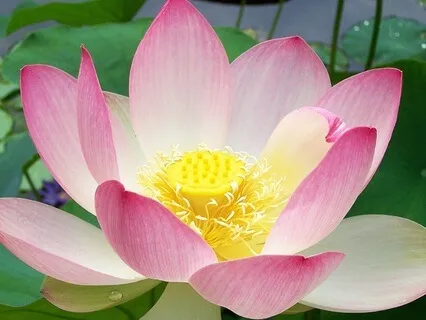
And you may have heard of the metaphor of no mud,
No lotus.
And this is not always easy.
But Thich Nhat Hanh says there's a deep connection between suffering and happiness.
And doing this practice over and over,
We learn on a heart level,
That suffering plays a really important role in creating happiness.
Like the role of the mud in creating the lotus flower.
We need the pain and suffering as mud,
Compost,
Raw materials in order to create happiness.
And we know that there's already enough suffering happening there.
We don't have to create more,
No.
But how do we learn how to make use of the suffering,
The mud,
In order to create lotus flowers,
Joy,
Wisdom,
Compassion?
It's an art,
The art of suffering,
The art of happiness.
And if there's no suffering,
Then perhaps there's no happiness either.
Because happiness is made of suffering.
So perhaps constantly trying to run from suffering and constantly seeking happiness,
Although human nature is not so wise,
It's actually impossible to run away from suffering,
Even though most of us are trying to do that most of the time.
So can we learn how to make good use of suffering?
And here's the kicker.
If you know how to suffer,
You suffer much less.
Direct quote from Thich Nhat Hanh,
If you know how to suffer,
You suffer much less.
And then you know how to make good use of suffering to create happiness.
Pema Chodron says,
In our attempt to get happy,
We run away from discomfort.
The irony is that happiness comes from realising there is both discomfort in human life and there is joy in human life.
So this new definition of happiness perhaps.
And you know what,
If there was a possibility of living with no pain,
There would be no way to cultivate understanding and compassion.
By contacting suffering,
Getting in touch with suffering,
And looking deeply into the nature of suffering,
Deep understanding can arise.
When you look,
When you listen to your suffering with mindfulness,
And hold it with care and calm,
You'll come to understand the nature of the roots of suffering.
And understanding suffering naturally gives birth to the energy of compassion.
And it is compassion,
This wonderful quality,
That once born begins to heal.
To heal yourself,
And perhaps even to heal the world.
So perhaps just allowing those words to be there within.
And you might like to do a little bit more belly breathing now.
Changing position if you like.
Noticing the support of the ground beneath you,
The effect of gravity.
Noticing your breath.
And inviting that deeper breath down into the belly.
Again you might have one hand on your belly and the other over your heart.
And as you inhale,
Let your belly rise into your hand.
And as you exhale,
Let it soften back down.
And perhaps the hand on your chest,
You can see if you can keep that chest reasonably still as you inhale.
So that all that breath is like that balloon in the belly.
So with the next inhale,
The balloon in the belly gently fills and expands.
And with the exhale it slowly deflates,
Soft and smooth.
Inhale,
Belly rises,
Balloon fills.
Exhale,
Belly falls,
Balloon softens.
Letting the practice go now and just noticing how you feel.
And perhaps before finishing the practice,
You might just have a gentle intention about next time you feel any emotion.
It doesn't have to be a strong emotion.
You might even try this belly breathing.
And remember some of Thich Nhat Hanh's beautiful guidance.
Thank you.