Hi there,
Welcome to this meditation on bringing patience to impatience.
Saint Augustine from the 14th century said,
The reward of patience is patience.
So this meditation we're going to see if we can bring patience to ourselves first.
To our impatience,
To our irritability,
To when we're annoyed,
To our irk,
To our miffed self.
And just a little warning,
Be careful if you're the kind of person who always tends to put others needs first,
Not to use this a way of reinforcing unhelpful dynamics and patterns.
So let's begin,
Just becoming present,
Allow the eyes to close or be downcast.
Just noticing as you gradually arrive and settle into your chosen posture,
Which could be sitting,
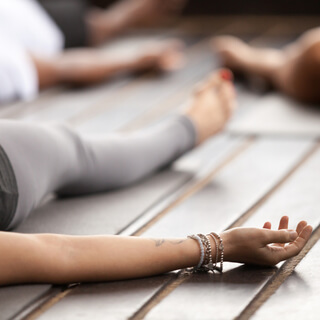
Lying down or standing.
Noticing the contact of the surface that you're on and the effect of gravity.
Perhaps even asking gravity to receive anything that you don't really need right now.
And notice that while I've been speaking you've been breathing,
So no need to do anything special with the breath at all,
Just simply noticing with a real lightness you are breathing.
Notice the breath coming in and out.
This is not thinking about the breath or analyzing it,
Imagining it or visualizing it,
It's actually noticing the felt sense,
What the breath feels like in the body.
Perhaps in the nostrils or the chest or abdomen rising and falling.
Like in all mindfulness meditation,
Thoughts are not the enemy,
They're simply a part of meditation.
As you notice thinking,
Can you really kindly and affectionately acknowledge that.
Allow the thoughts to be in the background and bringing a gentle attention back to the breath.
Perhaps you might even allow the breath to lap the heart,
A bit like waves lap the beach.
Perhaps allowing that breath to tenderize the heart,
To enable it to be as as spacious and relaxed as it can.
You might even like to put a hand on your heart and keep it there during the practice to remind yourself of this.
Now bringing up the situation that you have in mind or a person,
Perhaps the situation of being criticized or condescended or complained about and see can you drop under the storyline and really get in touch with the rawness of the sensation in the body that comes with this situation.
The rawness,
The energy of the impatience,
The irritation,
The annoyance.
So this is a key part of this practice and may take a little while because we don't want to be harshly blocking the storyline.
We want to acknowledge the storyline but over and over again drop into the sensations in the body that are under these thoughts.
To truly cultivate this patience we need to develop tolerance.
To truly develop tolerance we need to develop our ability to stay with that rawness,
That restlessness,
That kind of urge to get ground under our feet to resolve the situation.
We practice staying with the raw pain,
The raw emotion with our spacious open heart.
And here's a question to contemplate.
It may or may not be applicable to your particular situation.
The question is has going into battle over who is right or wrong eased the pain or intensified the pain?
So you ask this question.
Keep connecting with the rawness of the pain.
You don't need to think of the answer.
You can just stay with the rawness of the pain and see if an answer emerges.
And in the same way you might drop the question in,
When I feel like this does defending myself ease the pain or intensify?
Does defending my point of view,
My rightness,
The other's wrongness help?
A gentle inquiry might lead to yes it does help in the short term right?
And this is not to shame yourself,
It's a gentle inquiry.
You may need to stay with the feeling in the body of really strong urges to act.
And perhaps those strong urges are the wise mindful action that emerges from all this.
Please know this is not asking anyone to be a doormat.
This is not excusing bad behavior.
But if you can do this meditation,
This practice,
Your wise mindfulness may naturally come up with the best words or actions in this situation.
Touching in again with the rawness of the pain.
Bringing the situation back to mind if you need to do so,
So you can really feel it.
Giving yourself full permission to feel it.
And please know that this is a human emotion.
Impatience,
Irritation,
Annoyance,
These are human emotions.
You are not alone.
We all feel the vulnerability,
The pain,
The restlessness,
The groundlessness and most of us use our thoughts to try and problem-solve this horrible feeling.
So human.
And this bit might or might not apply to your situation but ask yourself could it be that the other in this situation said what they said,
Did what they did,
Coming out of the same kind of feeling of vulnerability and pain and restlessness.
Perhaps I can put myself in their shoes and see how their buttons may have been pushed.
They have been reactive.
They have been human.
You may even contemplate perhaps all humans are as vulnerable and thin-skinned as I am.
Asking any of these questions,
These reflections with a lot of compassion and kindness for yourself and your human imperfection.
And a reminder again,
To cultivate patience we need to develop tolerance.
To develop tolerance we need to develop our ability to stay with the rawness,
The pain,
The urges to speak or act.
Staying with the raw pain,
The raw emotion as best we can with our spacious open heart.
For some of us it may be helpful to see if we can choose to reframe this situation,
To work with this as a path of learning,
A path of awakening perhaps.
And my goodness the world will never run out of lessons.
Keep coming back to the situation to bring up the body sensations,
To contact the rawness of the pain.
You don't have to like it and the less you like it the more grist for the meal there is,
The more you have to practice with.
But can you hold it with that spacious heart,
Not white-knuckling it through,
Holding it with such kindness,
Such gentleness towards this this humanness.
Another reflective question to drop in.
When I'm impatient like this,
Hurt like this,
Irked like this,
What are the thoughts that I have?
Thoughts of defending,
Attacking.
No need to get lost in the storyline,
Just noticing them from a little bit of distance and asking yourself with so much compassion,
Does it really help these thoughts?
Does it really ease the pain?
And yeah perhaps it does briefly but does this help us in the long term?
Does it help us learn lessons?
Awaken?
Seeing if you can be really honest with this even if it's a kind of grudging acceptance.
Contacting the rawness of the pain,
Developing that tolerance,
Lots of space and acceptance of exactly what you are feeling because you are feeling it.
Perhaps as we get towards the end of the meditation you can really drop under the storyline and know it as pure sensation in the body.
And here's a little bit of an advanced invitation.
Can you ask that sensation to stay longer?
As long as it will stay,
As long as it needs to in order to teach you patience and tolerance.
Only doing this if you can do it with the utmost kindness.
Staying for a little while now in your experience,
Noticing any shifts from the start to the end of the meditation.
Perhaps really bringing some appreciation to yourself that you're willing to spend this time doing this practice.
And knowing it's not a failure to come back to the practice either guided or unguided,
Over and over again.
Thank you.