We're talking about environment and human consciousness.
And I'm here to talk to you about what really ancient people in one part of the world,
India,
Which was really a subcontinent at that time.
It was not just the present India,
But a good part of Southeast Asia.
And the people there were thinking,
Imagining,
And then documenting.
And as we all know and we can celebrate,
And we heard from the various lectures today by John,
Sean,
Elizabeth,
And others,
That this understanding is not unique to one people,
But it is definitely unique to one type of people.
The type of people who are aware of their own power.
And the type of people who know that with power comes responsibility.
I'm here to tell you that the sages of India,
Who are known as Rishis,
As you know,
Found it important to convey to us that we are powerful beings and this is a powerful universe.
It's magical.
And how you think,
How you be,
Will morph and shape shift this universe.
And hence,
What kind of medicine would these people give to us?
They gave us Ayurveda.
Ayur comes from the Sanskrit word Ayush,
Which means life,
And Veda means knowledge,
Not technology.
And it is interesting,
And as Leslie mentioned,
That Ayurveda is more known actually for our biology today as a complementary system of medicine or as an alternative system of medicine.
And there is a huge fraternity of Ayurvedic doctors out there who are very proud to be offering solutions where mainstream medicine cannot provide that,
Or at least in support or collaboration or sometimes with exclusive ability to deliver results.
And I'm very happy that Ayurveda can do that.
But because I come from a traditional family,
A family that taught me the Veda,
The Rig Veda,
I studied the Upanishads,
The Yoga Sutras,
The Yoga from Bhagavad Gita and Ayurveda,
I didn't see this.
I didn't have the luxury to think that I can just fix disease and let my planet ail.
I could not do that.
Vasudhayava kutumbakam,
We are one family.
Ekam satviprahava hudavadanti,
There is but one truth,
As Sean was mentioning.
There is but one truth.
And great pundits can see it and call it by different names,
But that truth is one.
And may we receive it in our own hearts.
So when it was my time,
Leslie,
To bring Ayurveda to California,
I actually benefited from California's craziness to teach my fellow Indians,
Wake up and wake up to your heritage.
We have a responsibility with this power.
So I begin this great discussion that is ongoing.
And I add my part to this common fire that has been lit right here,
This yajna.
And I'm going to say,
Swaha,
Let me add what I can from India,
Because we need that also from South America and Africa and England and Wales,
Everywhere.
Because this is our situation.
And the Veda told me clearly,
If you have a problem,
Then you have the solution.
Bottom line.
So therefore,
Ayurveda,
Thousands of years ago,
We're looking at a text called Cherak Samhita from second to third century BCE.
But this text was not an original text.
It was redacted from several texts that came before it.
So we're looking actually at a 5,
000-year-old tradition,
But we are so fortunate that at some point it became documented in the form of scriptures known as Shastra or Grantha.
And here's the best news.
You can buy them now on Amazon.
Com.
So therefore,
In this scriptures,
So ancient a period that we can't even conceive of it,
Apparently,
They were having similar conferences.
In fact,
Cherak Samhita begins,
Leslie,
With a conference of the Rishis on the footwells of the Himalayas.
And the entire text is really the dialogue between conference participants.
The highest minds and the highest responsible minds were talking.
And they didn't just talk about the fungus in the toenail and the cancer in the gall bladder and the psychotic syndromes that we humans can create for others and ourselves.
But it talked about environmental perils.
And then beautifully,
Ayurved went on to teach us about what we can do,
The hope,
The joy,
The solution.
So very easily they said that indeed the living creatures and this sentient planet were entirely connected and I'm afraid your human behavior is going to have consequences.
Oh,
Little me,
I can just go hide.
I can justify it by my caste,
Color,
Clan,
Religion.
No,
No,
No.
Your behavior is impacting everything,
Said the Veda.
And I'm reading to you verbatim from the Cherak Samhita translated in English.
The root cause of the derangement of seasons is loss of dharma or ethical behavior.
If dharma is lost over time,
The seasons will get disrupted,
Rivers will become violent and change course,
Meteorites will appear frequently,
Earthquakes will shake the terrain and in the natural and human created mayhem,
The natural and human created mayhem,
Diseases will thrive and multiply and cause mass scale destruction of all living beings.
And if these kind of warnings were being issued by the Rishis in two to three BC in a written text,
Then perhaps this has been something that we have to look at.
This is why there were those wall paintings.
This is why we have those sacred sites.
This is why we're all been collectively doing it.
And this was Ayurveda's way of documenting its concern.
And further,
And because of loss of dharma,
Gradually it does not rain on time.
Daha,
In California,
We all know about that.
Or at all.
Or there is abnormal rainfall.
Winds do not blow properly.
The land is altered.
Water reservoirs get dried up.
And the herbs or medicines giving up their natural properties acquire morbidity.
Then epidemics break out due to polluted contacts and edibles.
So even our food becomes destroyed.
But they are connecting all of this to human dharma.
And this is where my talk is proceeding.
So therefore,
Then the Charak talks about,
The Samhita talks about self-serving exploitative actions when we human beings forget an original responsibility.
We forget who we are.
We are spiritual beings,
First of all.
And that we have received earth.
We're passing through.
And we cannot only have a consumer mentality.
We have to have a benefactor mentality.
We have guarded interest by great care.
And we need to look after it.
When we forget that,
We upset everything.
So the question was,
How does this happen?
And the Ayurveda tradition,
A great medicine,
Was also concerned about our disease ultimately.
But they said,
Look,
We can fix you with so many herbs and so many foods.
We can write you so many dietary prescriptions.
But if your planet is ailing,
It is suffering,
Your mother earth is weeping,
Then those plants and foods are poisonous too.
So you cannot escape your self-created garbage bin bottom line.
And I think that's where we are.
And how does this happen?
Well,
As is above,
So is below.
Yatha pin danda tatha brahmanda.
This was an ancient saying in the Veda.
And so that cleared it bottom line.
That really can apart,
Afford to have the illusion of being separate from the whole.
And then the part can behave in as much selfishness and self-indulgence as it wants.
But ultimately,
It comes back to us.
So this is a very core teaching of the Veda,
Which then became actually practically implemented in its medicine.
What is philosophy in the Veda in Upanishads becomes practical teaching and principles to live by in Ayurveda,
Which was the common man's Veda.
The common man did not study the Rig Veda or the Tharva Veda or the Upanishads.
I mean,
Are you kidding?
The Sanskrit was so tough.
That could they study Ayurveda?
Yes.
Could they understand it?
Yes.
The mothers knew it.
The grandmother's council knew it in every village.
And they said so,
That you are part of this all.
And so a very special consciousness is born.
And that consciousness has a Sanskrit word.
And with your permission,
I'd like to introduce it.
Every language has its own word.
And Brahman is not the name of an anthropomorphic god or a king or a prince or a caste.
It really actually comes from a root word,
Bhriya,
Which means big.
And this bigness is infinity.
This bigness is boundless.
It is inexhaustible.
And this Brahman is known as the ultimate reality.
In fact,
This ultimate reality is underneath the animate as well as the inanimate.
That means rivers,
Rocks,
And mountains,
As well as the squirrel,
The blade of grass,
And the animal.
All of them are ultimately expressions,
Phenomena,
The material expressions,
One living,
One nonliving.
But the word that was given was Brahman.
And it is a word from quantum physics.
If I would say so,
And not from social understanding,
From a quantum understanding,
Quantum science rather to be more accurate.
And this Brahman is actually ourself,
The deep presence within.
And a technical word was introduced here known as atma.
And atma is defined as,
Aap anoti iti sarvam atma,
Which means that which is boundless is your true nature.
So it's really that.
And so if that is you,
And if that consciousness is outside you,
Then tell me,
Where does the buck stop?
And how weak are you?
And how victim are you?
And how much can you just move away from your responsibility and say,
Well,
I recycle?
Fine.
But perhaps then we have to become an activist and make sure everybody recycles.
Or we have to make sure that we even make up for those who don't recycle an example,
Because we are really one.
So it's operating from that principle.
Another interesting concept as I move towards what Ayurveda was teaching was,
They talked about what is an absolute reality,
Which is known as satyam or truth,
But it's a capital T truth.
It's not the truth of Hindus and Buddhists and Muslims and Christians.
It's the ultimate truth of all beings.
It is even the truth of beings on other planets,
Beings between life and death,
This whole phenomena that is known as satyam.
And mithya is that which has a reality,
But it is only temporary.
It is an apparent reality.
For example,
This clay pot,
It does exist and it does have a lifetime while you have it.
But when it breaks down,
It goes back to clay.
So between the two,
The clay is satyam or truth.
And the clay pot has a temporary reality in space and time.
And therefore it is known as mithya or maya,
An illusion,
A dream,
A story.
It has an existence,
But then really does it really qualify as absolute existence?
That is a question.
And these are principles,
Dear friends,
That I am just presenting to you one by one.
Bear with me because I am building a case for what Ayurveda was trying to tell us.
What does it teach me?
What does it imbibe me with?
So it is saying to you that yes,
You have a matter body.
Yes,
You have an environment.
You have a depleted ozone layer.
You have soil that is disturbed.
You have everything that is disturbed.
But ultimately it has only a qualified reality.
It is mithya.
Whereas you are satyam.
And therefore you at every moment in time and space have the capacity to be constantly shaping this universe.
Each one of us right now is giving back an endowment to this universe from what has been endowed within us.
What is the collective energy known as the Tao and other things in other systems of philosophy and thought,
Which were synergistically happening at the same time and beautifully put into a stream of thought in Ayurveda.
So if I am that,
If I am that,
Aham brahmasmi,
If I am Brahman,
If all is Brahman,
And this world is something that is coming from matter and I can change it,
Then the power comes back to me.
This is an important understanding.
And therefore I live in an interconnected web of conscious existence.
There is this tree that is true and it is matter that is true and its quality life,
Structure,
Longevity,
Green leaves,
Health,
Etc.
Is all changing nature of this tree,
Yet the consciousness that is breathing through this tree and mine is the same.
And it is the consciousness which is of a higher order of reality,
Bottom line.
And if this consciousness is my true self,
Then I actually have a lot of power towards the environment.
But at the same time,
If I choose to be ignorant of it,
Disdainful of it,
Skeptical of it,
Or plain right,
Obstructive to it,
Then I can just give it away.
And I can become oppositional.
And I can blame the finger at the first world or the more industrialized nations or I can claim to be the know-all from spiritual perspective.
And yet really I am not part of that invitation to be a sparkling divine aspect of that conscious web.
You know,
I am always a part of it,
But I can be unmindfully a part of it or I can be mindfully a part of it.
I really believe that dialogue such as this one between interdisciplinary speakers and a wonderful talented audience allows us to become more mindful and appreciative of this web,
Which is being illumined through different sciences,
Philosophies,
And point of views.
And coming back to this web as we go deeper into Ayurveda's teaching of environment,
It says well at the mind level,
This consciousness does something funny.
It does something crazy.
That's our favorite word today that I took from Leslie because I like that word because it's our own craziness that we have to own and somewhat take back to an extent.
So therefore,
Let's look at these three basic vibrations.
Many of you may already be aware of it.
I may be just preaching to the choir here,
But it is sattva,
Rajas,
And tamas.
Tamas is the vibration of movement and tamas is the opposite of inertia and sattva is the vibration of balance.
So at a human level,
The same huge metaphysical beyond comprehension Brahmana,
Pure consciousness becomes defined in the form of three modes and that mode is happening with us all the time.
When we are listening intently,
Intelligently,
Maybe sattva is dominant.
When we start getting agitated,
We start thinking of other things that take our attention away,
Rajas gets dominated.
And when we start falling asleep in spite of our best intentions,
Tamas becomes dominant.
Now interestingly,
Ayurveda talks about four yugas or epochs and many,
Many ancient nations have talked about this,
This beautiful,
This mythical almost era in which humanity dwelt and everything was sattvic,
Everything was beautiful,
Everybody was responsible.
There was no dissociation from our mother nature and prakriti.
We were one and that was known as satyuga.
And then you have dvapar yuga and treta yuga through which you have increasing tamas and rajas,
Destructive,
Dull,
Static energies,
Holding energies,
Fighting energies,
Challenging energies.
And finally we are in the epoch right now known as kali yuga.
And in kali yuga all I can say is let's just pray,
Let's pray for the planet because right now it's mayhem and somebody did bring up,
I don't remember who,
About the competitive model.
It's not a collaborative model anymore.
Even in the field of environmentalism,
We said that first,
We're doing more.
But that was not the case with the original people.
The original people always saw the sage in each other and that was why they said namaste,
I bow to the divine in you.
And therefore,
Currently if we believe we have more satva,
We are the harmony keepers,
The wisdom keepers,
We are the people who are going to awaken our students,
Then we have even more responsibility to live it,
Believe it,
Teach it,
Talk about it and collaborate with other scientists and social scientists who are talking about this.
Because what's happening is that in our minds,
Rajas and tamas is more dominant.
And as this rajas and tamas is more dominant,
You can understand that the individual mind is known as vayashti,
Each individual mind is impacting the collective mind known as samashti.
And the individual microcosm,
Pindanda,
Is very powerfully influencing the collective macrocosm,
Pindanda.
If that is the case,
Then your thought may be polluting the planet as much as your plastic.
Before the war outside that we get to hear about in CNN,
What about the war that was breeding in our minds?
Perhaps we have reached a point of existence for humanity where self-realization or enlightenment or awakening is not even an option.
I feel that sometimes for my own self.
When I start getting physical pain in my body,
I can't blame no one but myself or my stress thoughts.
And I have to sit down and I have to come into a state of alignment and everything calms down.
I noticed that in my own life,
That I had to be responsible for me and that me was then,
Somebody beautifully said,
A V map.
So there's just beautiful teachings going on here,
Just reverberating and harmonizing what the ancient people,
The middle people,
The modern people and the futuristic people will say because truth is one.
If truth is not one,
It cannot be truth.
If truth is yours and mine.
If truth is up for negotiation,
It is not a truth.
It's a rumor.
It's a gossip.
Do not believe it.
That is why satyam belongs to all people.
This planet belongs to all of us and we take responsibility.
And so to promote satva as another wonderful speaker,
Elizabeth spoke,
Developing mindfulness,
Calmness,
Meditation,
This is all what promotes satva.
So when we are teaching satva along with environmental management and science and the crisis,
When we talk about it,
The crisis can easily eject us into a rajas and tamas.
Rajas would be the fight mode and tamas would be the flight mode and satva would be,
I take responsibility mode.
I'm going to sober up.
I'm going to clean up my own stuff and then I know that I'm making a difference.
And that is why I just didn't teach metaphysically or philosophically how to address the environment issue with our consciousness,
But it did actually tell us about air quality,
Water quality,
Soil quality and even time management,
Etc.
But it's a beautiful quadrant,
These four things of time,
Soil,
Water and air,
But I won't go into the class of that because this is not a class on how to not have air pollution with Ayurveda.
We can do that class some other time.
But the point here is that while giving us these very real time tools,
Just like in science of environment,
We can have how to have good clean river water,
How to recycle.
While we have all of those very tangible teachings,
More importantly,
There was the teaching of unrighteousness,
Adharma and righteousness,
Dharma.
Dharma is the way that we human beings who are sentient,
Who are conscious,
Who are self-aware agree to be and behave and interact with the rest of the planet and other beings and creatures.
Bottom line,
Because we have a choice,
So therefore we have to agree to a tacit pact of that we would behave responsibly like grownups.
That's the bottom line.
We definitely have a great endowment in the form of a very advanced body and an advanced mind,
But then we also have to somewhere accept that,
Take ownership.
And because otherwise the unrighteousness or the adharma that breathes from a mind that is full of turbulence,
Agitation,
Depression,
Anger,
That kind of a mind,
It will by force take away the dharma.
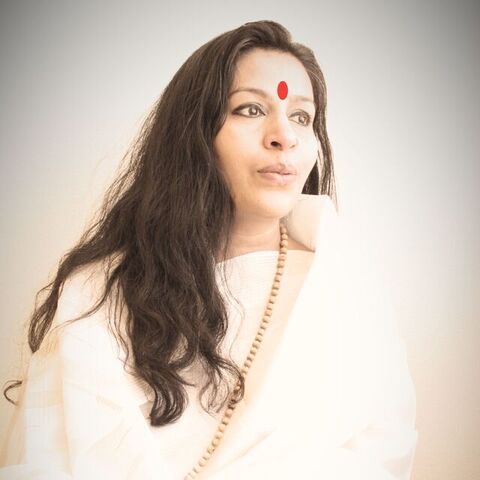
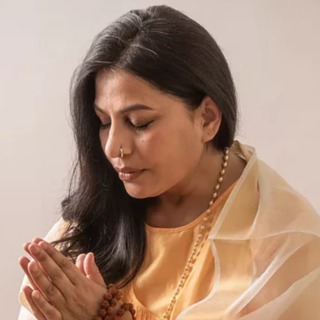
And so therefore this image I chose because it really gives the image of a contemplative person all by yourself.
This is not about the other.
This is about you and this planet and why are you here?
And then as a spiritual teacher,
I also like the karmic questions of who are you?
Who are you?
Why are you here?
You just opened your eyes and here it was,
This beauty,
This wonder.
And then we got busy eating it,
Right?
Seeing it,
Touching it with all our five senses,
Consuming it.
But then the consumption became a craving and then the craving became an obsession and the obsession became an entitlement.
But sometimes when we just stand by the beach,
Maybe we go to Big Sur and just sit there quietly,
Everything falls away.
The dream falls away.
The self-deception falls away and responsibility is born from within.
Why?
Because responsibilities are true nature.
We are truly caring people.
We're not bad people.
We are truly divine people.
We just got lost because somebody else was lost,
We got lost.
But if we just separate ourselves from that,
That certain space,
We rarely wake up to who we are.
We awaken.
We don't awake by our eyes,
But we awaken to the story of our mind and to the story of consumption that Ayurveda didn't want me to have.
I didn't see that.
And that is why it has been talking about,
Ayurveda has been talking about ethics,
Dharma,
And human consciousness.
And so every story I saw in newspapers,
Magazines,
KQED,
Wherever I went,
Whichever part of the world I went,
I just kept going back to the lessons the early people had taught me or I was ready to receive them.
And then I saw the war and the destruction.
And then I came across another quote.
It's not just the natural environment,
But the social environment too.
And here's a quote from Charak Samhita.
Likewise,
Adharma is also the cause of the destruction of the community by weapons.
This is sobering.
Thousands of years ago,
It attacks us to talk about weapons of mass destruction.
These communities and their leaders who have excessively increased greed,
Anger,
Attachment,
And conceit,
Disregarding the weak,
The other,
Attack each other or their enemies,
Or are attacked by their enemies,
Resulting in loss of themselves,
Their kinsmen,
And enemies.
This is a book on medicine.
I read this thought in the medical college in India.
And yet it is talking about the destruction that war can breed.
So war or at least unexamined wars,
Small battles,
Petty battles,
Big battles,
The hold for weapons.
I think these were sobering versus waking up humanity to what are we doing?
What are we doing?
Where are we heading?
And what are we fighting for?
So these were some questions that Ayurveda raises for all of us to contemplate.
And so therefore,
This beautiful understanding between the microcosm and the macrocosm.
And I chose this photo of the child because the child does represent somewhat of an innocent state of play.
We are here to play.
We are here to enjoy,
Play,
And then say,
OK,
I'm not playing anymore.
That's all.
We're not here to deplete,
Destroy,
And consume without consequences.
So what does Ayurveda teach us then?
Ayurveda teaches us the path of dharma.
And the first dharma it says is that behave like family to all living beings,
Not just to humans,
But to all living beings.
And so the vision of oneness was very critical in Ayurveda.
Truthfulness,
Benevolence.
And you can see all of these,
Charity,
Generosity,
And even self-study,
What we are doing here,
Enlightening our minds.
This is important practice.
We need to do this.
We should not just be thinking that we have our degrees and certificates or we're done,
Because we are constantly educating the ignorant part of ourselves.
We're constantly enlightening ourselves to our highest potential.
So Ayurveda says that the path of dharma is really important so that we start behaving from a place of oneness.
Lastly,
The Ayurved tradition or the Vedic tradition of which Ayurveda is a part,
The Upanishadic tradition,
Prescribes a duty or a response.
The duty word should not scare us.
It's a responsibility-based consciousness versus a rights-based consciousness.
So when that happens,
They said one mega responsibility for all of us is Brahma Yajna,
Which is we protect and show respect to the wisdom bearing ancestors,
To the institutes,
To the ancient traditions,
To not let them die out,
To document them,
To sit with their elders before they die and really learn from them.
I had gone to a conference in UCLA and I met this woman,
This amazing professor who told us about how the ancestors from Victoria,
BC,
That area of the first people,
Their medicine,
They were all in their 90s and they were dying out.
So what she did from her university was that she brought young students to apprentice with these older ancestors so that they could pass on their knowledge before they died.
Now she's got a great endowment from several governments.
So this is what's called as Brahma Yajna,
Learning from the people who have the memory,
Who have the paintings,
Who have the V maps,
Who talk about Brahman and the Tao,
And they don't just talk about small things and a doggy dog world.
When I came to this country,
I heard within the first week,
Oh,
Shunyata,
Doggy dog world.
You'll have to figure yourself out in this field of Ayurveda.
You're already late.
It's very competitive.
Like,
What late and what I'm here now.
And in this now,
I'm who I am.
And my mission and my vision was recognized by people.
And why would they recognize me?
Because they also live that mission.
We will always find collective voices if we believe in ourselves.
Pitrayachana is somewhere we are responsible for our ancestors,
Our parents,
Aunties and uncles.
But then also other human beings,
Manushe Yajna.
And Bhoothi Yajna,
It's very exciting.
It's all about living beings,
Including animals and plants.
Oh,
Did you forget them in your spirituality,
Sitting with your chant and mala and your beautiful shawl and felt really special and you even went to the Ganges in India and Benares,
You know,
On a Benares Agra tour.
No,
That's not enough.
Did you take care of all living beings?
And finally,
Deva Yajna.
Deva means God.
But it's not God,
God.
It means natural forces,
Air,
Wind,
Fire,
Rock,
River,
Pebble.
Everything is important.
So these five Yajnas became my duty.
And this duty brings me here to stand in front of you.
And you can see that when you have a dharmic consciousness that is,
You know,
Moving through this and this,
Where is the room to destroy the environment?
So what we actually need is to step back,
Dr.
Elizabeth,
And create an education model that teaches us oneness.
Consciousness,
You have to come to institutes which are rare and remote like this one and others.
But really,
Consciousness should be in our high school curriculum.
We should be learning about oneness.
And that oneness includes our oneness with the planet.
And then we will truly understand,
Because this is what Cherak says,
When one thinks of oneself as one with the universe,
There should be a vid,
And vice versa.
The universe lives in me.
And has the vision of great truth oneness and the small truth separation.
They exist.
These are two realities.
But they don't mute each other out.
They exist.
Then one's security based on knowledge is not affected.
You know,
One is truly abundant.
And in such a case with unity consciousness,
One begins to feel,
You know,
Heal our environment right away.
And we truly embrace our power.
I began this class with a discussion on power.
I truly believe that when we,
Anywhere there is any,
When I am a vaidya,
I'm a healer,
And I have worked with the dying people,
The most dying people,
And infertile women who wanted children,
And people who thought they were schizophrenics,
But they were actually on the verge of awakening.
You know,
I've seen the gamut.
You know,
When you're a healer,
You tell the universe,
I'm ready for it all.
And everywhere I saw somewhere a giving away of power.
So I have my conclusion as a spiritual teacher has been that we as individuals and as a collective entity have to recognize how truly powerful we are,
And how carefully we have to use this power and use it in such a way that is both,
You know,
You can make a list of things we have to do,
But there is also a list of things we want to think,
We want to vibrate,
And we want to be with.
Because with that state,
You know,
This spiritual vision,
We become deeply respectful beings.
And so my teacher,
Baba,
He was an ancient being.
He sat on his cot.
He healed his entire neighborhood.
People from all over the world came,
All over,
In India,
We talk in hyperbole.
So we say all over the world.
But it was like,
You know,
Many states and many villages.
People came to him.
He did not have a website.
He did not have a Facebook page.
Nothing.
He just lived this truth.
And he cared.
He cared about even the small little weed growing in his compound saying,
It is only weed to those who don't know its usage.
So therefore,
This kind of mentality brings to us what we need.
We begin healing ourselves,
Our family,
Our community,
And our planet.
And there is still hope.
And I end with this beautiful prayer from the Upanishad.
Om.
Deo ho shanti antariksha shanti.
Prithavi shanti.
Rapa ha shanti.
Osadaya ha shanti.
Vanas pataya ha shanti.
Vishve deva.
Vrindavanam.
Vrindavanam.
Vrindavanam.
Vrindavanam.
Vrindavanam.
Vrindavanam.
Vrindavanam.
Vrindavanam.
I love Mother,
She is so delicate.
And she is so How can I offer anybody but peace?
Why can't I just be peaceful?
And if I just stop acting out through my hands and legs,
Through my mouth,
Through my genitals,
Just irresponsibly,
That is what we humans do.
We litter the planet with our population.
There's a recent book out which is talking about how humanity is taking over.
Who is that by?
Williams,
Dr.
Williams.
How humanity has taken over the planet with our population explosion.
What are we doing?
And so this beautiful hymn from the Veda says,
Let me offer peace.
And do you know,
I was surprised growing up in India and reading the Veda that I didn't find any words like romance or love in the Veda.
But the word that I kept finding was peace.
And later,
As a married woman,
If any of you are married here,
You may realize or have significant others,
That the best way we can have love or offer love to our partner is by offering them peace.
Would you agree?
And when I began to offer peace,
I began to receive peace,
Reap peace,
Cultivate peace,
And that peace grew new things within me.
So I invite all of us,
As just an ambassador of this very simple science,
Lesser known in the world for its philosophy,
But more for its medicine,
To enjoy this vision too and see how it really gels with this collective vision that's growing here.
Thank you,
Leslie,
For recognizing the philosophy teachings by our brief encounters.
Because one of my efforts ongoing as somewhat of a lone voice in Ayurveda of this kind is that actually we have to stop depleting the herbs.
93% of Ayurveda herbs are endangered today.
But the government of India continues to promote export for money.
People continue to write prescriptions.
And medical universities continue to teach a prescriptive model of Ayurveda.
And part of my environmental ethics is that I have started clinics,
Two clinics in the Bay Area,
That are herb free.
And the only herb people can have is when they grow them.
That's the bottom line.
So we teach how to grow them.
Then we teach you how to use them a year later,
When you've grown them.
And people thought I was,
Same word,
Crazy.
But you have to be crazy,
I think,
Today.
Bottom line.
So that's my last words for you.
Thank you.
I'm not very sure how to close this.
Thank you.
Thank you.