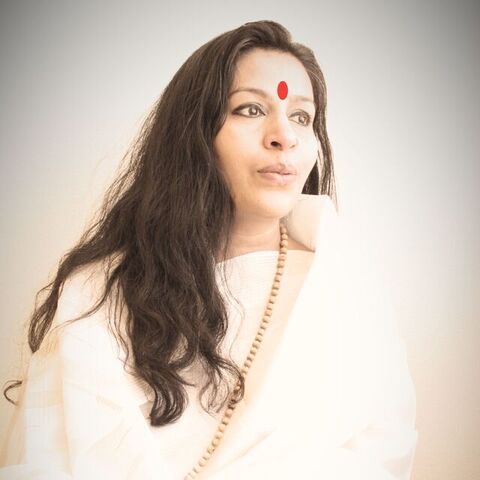
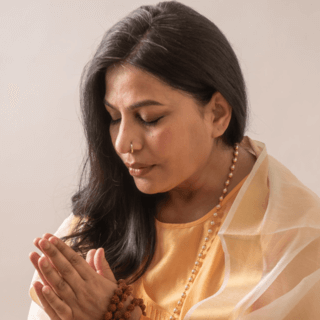
We request as a keynote speaker,
She is going to talk about Ayurveda teaching the path of self-realization.
Thank you.
Let us take a moment to be silent.
Let us become centered to receive information from the ancient Ayurvedic tradition,
From the scriptures of Charak and Sushritaha.
Let us also in this silence,
It blesses us,
Remember the victims of the Nepal earthquake and send them and their families blessings and grace to recover from this tragedy.
Namaste.
My name is Shunya and I would like to speak to you about a very special understanding of consciousness in the Ayurvedic tradition.
And I will be teaching you from what I have learned from my Guru Baba Ayodhya Nathinayodhya.
And what is clearly there in the Ayurvedic tradition.
And to be able to make my presentation,
I will stay within the Ayurvedic tradition only and only connect with its sister sciences,
Veda,
Vedanta and Yoga and not go outside this paradigm because it is not required.
And I would like to remember that whatever I am teaching is coming from a great ancient Guru parampara.
So I would like to begin with offering obeisance to my lineage.
Asmadaacharya Paryanthaam Vande Guru Paramparaam The ancient Gurukulams of India in which the Rishis Charak and Sushruta and Vagbhatacharya,
Bhava Mishra and others who we devotedly study and seek knowledge and wisdom from,
Studied in ancient Gurukulams.
And these Gurukulams were ancient laboratories and they were fascinated with only one and one aspect of their existence which was how to become immortal.
And this immortality was not just a case of how to live longer,
Strapped in the bed,
Somehow extending and prolonging the body's age.
Because the Rishis were clearly able to observe and determine that even the star's age decaying is a natural aspect of existence and in fact it is necessary.
It is only when everything is shed and lost in fall and winter can there be spring again.
So there was no desire in the quest for immortality to necessarily jump out of the paradigm of life and death.
But really it was a quest for what parts of me are mortal and what aspect of me is immortal.
And I want to connect to this immortal aspect of me because truly same as in this universe there is mortality,
Evidence everywhere,
There is death happening everywhere,
But yet there is such a resurgence and such a continuity and such a message of immortality that it cannot be denied and I shall find it within me.
And this quest,
This fascination was not just in the Ayurveda Guru Kulams which were also teaching Yoga Vedanta and the Vedas,
But it was a cultural spiritual fascination of the Indian subcontinent.
And I want to say Indian subcontinent because this fascination was not limited to the geographical boundaries of the current India.
And in this fascination the immortal tattva,
The amrit tattva was taught in everything,
Be it music,
Be it art,
Be it temple making,
Be it alchemy,
Be it any endeavor of the human pursuit,
Even theater,
The Natashastra,
The shastra,
The scripture of theater teaches us how to become immortal as a result of theater.
Where at the end of the conclusion of a play the audience recognizes its dharmic obligations and the actors experience their inner immortality,
A state of self realization.
So therefore this was a cultural revolution.
This was not an isolated quest of few people in a laboratory just decades away from the anti-aging,
Anti-dying pill.
I had come across on the internet how there are some people who believe that really it is just a matter of discovering that technology that will keep us alive forever.
And I thought for what?
To regurgitate heartburn and stick some enemas up to have a clear bowel movement?
Why would I want to extend this body and why would not I want a brand new body?
But what I would want is to remain connected to that eternal aspect of me,
That which is studying Ayurveda today and this knowledge will carry forward.
Each one of you who I have met who is not from India necessarily but is a powerful speaker,
Teacher orator,
Leader of Ayurveda is surely not encountering Ayurveda in your first janma.
This is clearly the continuation of work that your soul undertook over many lifetimes because you are a continuous body and you better get those certificates from Dr.
Shekhar because this will continue.
Dr.
Halpern.
So this photo here was on my laptop and it's easy to use here.
This is a ritual of sun worship called Sandhya Vandanam which is a daily dinacharya,
A spiritual routine just like you have an Ayurveda dinacharya,
There is a Vedic dinacharya which helps you in the elevation of your consciousness and we go to the Surya and what do we chant to the Surya?
What do we say to the sun?
Look what the Rishis said.
They said,
Hiraṇyamayen pātreṇa satyasyāpi hitam mukham tatvampoṣannapāvaradu satyadharmāye viṣṭaye.
Oh sun,
Please don't show me your gross beauty.
I have seen it enough.
I have seen your sunshine,
Your blister,
Your lustre,
Your gorgeousness.
Remove that golden orb because I want to reach the immortal truth there.
What is that truth?
Satyena tapatera vi,
Which is that satyam?
That is the word in Veda for truth,
That superseding truth,
The truth that goes beyond maya and your negotiated truths.
That transcendental truth satyam tapatera vi because of which the sun is shining,
Because of which you are shining.
Dhāryante pratavihi because of which this earth is held in its orbit.
Vāyavavanti because of which this vāyu flows everywhere and in and out of me.
Sarvam satyay pratishtitam that truth which upholds all of us,
Each one of us,
That I want to know.
This is the chant of the rishis.
Their quest was deeper.
It went beyond what was obvious to the senses.
It went looking and inquiring into that and those absolute principles which uphold the immortal existence of all of us.
We all now know and quantum physics is now confirming what the Vedas have been talking about in terms of disappearing and emerging universes,
Cyclical universe.
I heard on KQED by this very honest scientist who said he really borrowed it from the Bhagavad Gita and thank God his brother was in the ISKCON movement so he heard all about Bhagavad Gita and the Upanishads.
There on NPR he was mentioning how this great fury of the universe really came from the Upanishads.
And the Big Bang is also,
But the Hiranyagarbha concept of this bursting of this golden seed and then we have the vibrating universe.
Ultimately they found the string theory and then we connect it to the spandan of the particles.
That is all that is happening because when it is a particle,
When it is a wave,
Is it really there or is it,
Is the universe coming and going based on our subjective state of consciousness.
This is all the debate in the highest houses of modern science.
Well this was the daily fair and thinking and philosophy of the ancient temples of wisdom in India.
So to this Guru Parampara and to this immortal fascination with immortality and therefore to the quest of consciousness which transcends body and mind,
I dedicate this presentation.
I remember this moment sitting with my own Guru Baba Yodhya Nath and his father Shanti Prakash and their many generations of teaching the Upanishads,
Teaching the yoga as described by the Upanishads and in the Bhagavad Gita and by the works of Shankracharya and the teachings of Ayurveda from the pure tradition which need not borrow or ride on any emerging technology or theory,
But standing on its own beautiful two feet,
Ever young and ever here to help us.
And to those moments of study in that Parampara,
I dedicate this presentation to.
So we heard some wonderful teachers,
Teachers about the Purusha yesterday and so I thought it would be great to talk about what does Ayurveda really speak about the Purusha.
And so the Purusha as in this woman or the little puppies,
They are all Purushas and it is an aggregate of the Panchmabhutas,
Matter,
And then there is consciousness or Chetanandhatu.
Conscious alone also known as Sakshi Chaitanyam,
Chetanandhatu,
Chaitanyam is also Purusha alone.
So therefore what we learn from Charak Samhita is that the subject matter of Ayurveda,
The patient as well as the healer,
All living beings are really Purushas.
So there is a consciousness that we cannot deny.
We Ayurvedic profession does not deal with corpses,
Thank you very much,
Because it is only Panchmabhutas no consciousness.
Our jurisdiction begins when this Panchmabhuta Pinda has Chetana in it,
Inspiring it and living it and livening it.
So therefore we have to understand that consciousness is an intrinsic aspect of the Ayurvedic medical tradition.
It is the first and only tradition that unequivocally in the first chapter in the Sutras itself in just its verse 24 clarifies that the subject matter is not just matter,
But it is consciousness.
So this is something to say about the modern emerging fields of consciousness and the ancient traditional arriving upon this truth.
There are research institutes being now housed in modern institutes of education researching consciousness in medicine.
I really would like to prepare a panel,
A presentation,
A paper,
A conference fully focused upon Ayurveda's contribution to consciousness.
And I applaud Dr.
Shekhar and his team in Apana to give this theme to this conference.
And this is one of the reasons I flew all the way from California because,
Hey Dr.
Shekhar,
That's my favorite topic.
So let us discuss about the unlimited self versus the limited self.
So as you can see here,
So I've been happily moving along the,
This is the sun worship.
This is the purusha.
This is an actual photo of a woman and who was abandoned on the streets and she's being looked after by some work we are doing in India to provide primary care to these abandoned aged women with Ayurveda.
But then I really found it wonderful that this purusha chose to take in these newborn puppies whose mother died while delivering them.
So we were wondering who's looking after who.
So I felt really,
I felt really indebted to her.
Now let's look at the unlimited self.
Do you know that the ancient Charak tradition actually in its first chapter of Sutrasthan talks about the body and mind being locations of disorders.
This is exact language from the translation.
But the supreme self is devoid of all abnormalities.
It is also an original consciousness.
If you have studied Shankaracharya's Dhridhishtha Viveka,
As many of you have studied Vedant here,
You very well know the concept of original consciousness and borrowed consciousness.
So original consciousness is,
For example,
When we look at the sun,
Then sun is an original source of light,
Whereas the moon and the earth are reflected sources of light.
So therefore whatever light we see on the moon,
It's beautiful,
It's romantic,
It evokes emotions,
Hey,
It even affects our mind,
But it's not ultimately a reality.
It's not a satyam because it is a reflected light.
Same way on earth,
Day and night is even a reflection.
So therefore in the same way,
The light of chaitanyam,
Consciousness,
Is in one supreme self within us and its consciousness gets reflected on the mind,
Making it the monkey mind,
Making it the mind that we all have to tame and discipline.
It doesn't even have its own light.
And then you have the body,
Which is moving and talking and animated,
But again it is borrowed consciousness because the original consciousness,
The chaitanyam,
Is the supreme self.
It's also nitya,
Whereas the body and the mind are anitya,
They are temporal,
They have a beginning in time and an end in time,
But there is one aspect of ourselves which is absolute,
It is beyond space-time dimension,
That is consciousness.
And finally it is the sakshi,
It is the sakshi chaitanyam.
What does this chaitanyam do?
Does it just hang around within us?
What does it do?
It's the witness.
It is the witness of your waking moments,
Your dream moments,
Even your deep sleep moments.
Only the witness knows you deep slept,
So there was no dream,
But it knows,
Oh I slept deeply,
I had no dreams.
Who reports this?
The witness.
So therefore,
This seer,
It is the sakshi.
So it is sakshi,
It is nitya,
It is the original source of consciousness,
And the best news for all of us in this huge world dealing with health and diseases,
It is devoid of abnormalities.
So wake up everybody,
The real self in you is always healthy.
Sorry for all of those who nurture your victimhood and your long list of diseases and you have this whole identity around it,
Because the fact of the matter is,
Here's what I have to say to you,
Drop it.
You can use Ayurveda and you can use yoga to bring relief to the body and the mind,
But you will be successful only so far as you're aligned with,
Are you struggling to bring this relief to body and mind,
Or are you merely sharing your intrinsic health with body and mind?
So it's a paradigm choice,
Which choice are you on?
Are you aligned with disease consciousness or the health consciousness?
There is absolute health is your inheritance,
Absolute health is your truth,
And that is the nature of consciousness in Ayurveda,
As taught to us by our grand teacher Rishi Charakacharya.
So the Vedic ideal of the self then,
If this self is eternal,
Nitya,
It's all-knowing,
It's a witness,
And this,
I mean,
You can just study about the self,
You see,
So we are just keeping it limited to one shloka,
And this is not the only shloka in Ayurveda.
I just chose one,
But there is definitely this idea,
And the ideal is,
Atmayiva atmana tushta.
Tushta means fulfillment,
Tushta means completion.
So Atmayiva atmana tushta,
I shall be fulfilled with my own self.
So really,
If that's the ideal,
Then all the neediness,
Greediness,
Dependency,
Powerlessness that we experience,
It's a sharp contrast to what we are entitled to.
It's almost like your parent or grandparent wrote you a will,
And you were to inherit a lot of treasure,
But you were out there roaming here and there so your attorney could contact you,
And you were scratching for dollars and rupees or wherever you were,
You know,
In Rishikesh or in Las Vegas or some Burning Man or some place.
The point here is that there was an inheritance waiting for you.
There is an inheritance and a promise that you are complete,
And this,
My dears,
Is not from some new age manual teaching you,
Your inner self is complete and your outer self.
No,
No,
This is Ayurved,
Five thousand year old tradition.
And so one of my desires in pointing out to you and connecting my presentation with the text of Ayurved is,
Because I am a classical Ayurved revivalist,
I believe that we can stay complete and satisfied within this tradition,
Not from the sentimental love of Ayurved,
Not from some fundamentalist approach that this is it.
Because I have,
You know,
Great respect for other traditions and heritages,
But I believe there is room and scope for really first strengthening who we are,
Who we are,
And really knowing our science,
And we can deliberate and understand this science when we study the text,
And we make those connections.
And then we realize that what is considered new is really traditional,
And we have it right here in unequivocal terms declared by our Acharyas from the old tradition.
So do we meet this ideal of the Atma Tushta,
You know,
Atmaiva Atmanha Tushta ideal?
Do we meet it?
What do you think?
Yes or no?
You do?
I'd like to meet you.
But most of us,
Humanity is not able to meet its ideal.
I think you'll agree.
There is a lot of gap between what is possible and what is happening.
So therefore,
Let us move forward to understanding the disease of Samsara.
So Samsara is a word that I am adding here for you to come to the point that I want to make.
So Samsara literally means the world.
The world is diseased.
The world is like this.
The world is full of microbes.
The world is full of,
You know,
The viruses.
The world is full of destructive negative people.
The world is full of this and that.
And we can go on and on about it,
But the Vedic tradition says,
Sorry,
You have to clarify which world.
Because there are actually two worlds.
There is a world that we create in our own minds,
And there is the objective world that is here,
Right here.
There is an objective world and a subjective world.
The objective world is known as Brahma Srishti,
Created by Brahma,
Vishnu,
And whatever be our understanding of the emergence of the world,
Whether we are Jew,
Hindu,
Buddhist,
We have our own emergence theories.
But we all have full creative rights and trademarks to the worlds we are creating right here in our own minds.
Jeeva Srishti,
I created my world.
Thank you very much.
This Jeeva Srishti and this Brahma Srishti,
Or the subjective world and objective world,
Have a very interesting relationship.
The objective world,
As in it is hot or very cold,
Is a dry climate or moist climate.
Are the people friendly or not friendly?
Is there food or is there no food?
Is it all pleasant and beautiful in the valley of Nepal?
Or is there now earthquake and shattering difficulty?
It is all objective.
It's all happening outside us.
But different people are responding to it differently,
As Dr.
Halpon had also clarified yesterday.
You respond differently based upon the world you carry.
So they are interfacing.
And therefore that one world,
The subjective world,
Is seen by those many billion worlds are existing here.
One acts as a stimulus,
The other acts as a response.
Now,
Let's,
We all know the outer world.
Like right now we are in New Jersey,
In Edison,
And there's a certain temperature,
A climate.
Mostly Ayurved lovers are here and my uncle and auntie just walked in and I can see this world right now.
Right?
But let's look at our internal worlds and let's look at its common ingredients.
And I love how our Vedic tradition loves to the numbers of three and five.
It makes it super easy to be scholars in the Vedic tradition.
So the three main ingredients of the Jiva Srishti,
The individual world,
Is the first one is called Raghaha.
Can you say that?
Raghaha.
Raghaha means attraction.
We all feel attracted towards animate or inanimate objects,
Situations,
Right?
We feel this attraction,
This desire,
This attraction.
But even before we feel the desire,
There's this unexplainable attraction.
Attraction,
Which is experienced through our five senses.
Our five senses,
They are attracted.
And therefore,
The next,
Because we may or may not meet that attraction,
The next experience,
Even though we may choose to act it out and pretend that we have like really taken a sannyasa from the world because we could not get what we wanted.
So now I've chosen the spiritual path.
But the fact of the matter is we feel grief.
Shaukaha.
And this deep grief is a grief of like inability,
Hopelessness,
Isolation,
Alienation,
And I didn't matter.
And I got passed over.
And from this grief comes new paradigms and new decisions to say,
I'm going to make it happen.
I will negotiate.
I will bargain.
I will wipe my tears.
I'll have plastic surgery.
I'll do what it takes.
But I am going to create the world and own it.
And that is called moha.
Moha.
We have entered a full blown delusion.
If we went to a psychiatrist,
They would not know necessarily the spiritual moha.
This is not pathology in terms of psychological pathology.
And you're walking around and you're obviously having schizophrenia or disorientation and you're not in your normal state of affairs.
A moha half blown person may be having PhDs and accomplishments and establishing institutions and you know,
Even leading nonprofits,
Becoming gurus,
Leading gurus,
All kinds of like very logical,
Consequential cause and effect behavior must be undertaken.
But underneath that is the grief and underneath that is some attraction.
Are you following?
So these three are what are here.
So what happens is that because of this,
Because of this,
We are very stuck.
We are very,
Very stuck because we are.
This is what creates bondage.
This is bondage.
Bandha.
So I want to explain to you the word moksha.
The word moksha is the word used in Ayurveda.
So I want to stick to the Ayurvedic word.
You know,
There is a Buddhist word called Nirvana.
There is a Christian word called salvation.
Okay,
So we don't want to use these words just because they have different historical,
Cultural,
Philosophical,
Educational,
Technical expectations around words.
Words have to be used carefully.
So why did Charak use the word moksha?
This has to be understood.
Okay,
They say that the goal of your spiritual life and your health,
You need physiological health,
Biological health,
Psychological health,
But then you need moksha for permanent spiritual health.
What is that moksha?
And most people then started creating from this new order of teachers or understandings that moksha is some out of body experience.
It's like some ultimate state.
If you Google on moksha,
You'll find people in lotus position,
Electrified or electrocuted.
I'm like,
I don't think I want that moksha.
I'd rather have moksha sitting on my sofa at home eating khichdi or something or playing with my dog.
So that's not very cool moksha.
Then there were some people who said,
Well,
For moksha,
You have to renounce everything.
You have to go up the Himalayas.
Well,
My teacher told me that the Himalayas is right here in this world.
You got to be on top of it.
That's your Himalaya in your state of mind.
If you run away to the Himalaya,
You can go there and if you're not eaten by the animals,
You can come back.
But you know,
When you're by yourself,
You can really be in a state of delusion that I've arrived.
You know,
You really need to be with your kids to pull you down and tell you what a useless dad or mom you are.
Check.
I have a 20 year old.
You have to be,
You know,
With your own life partner,
Spouse.
I better yet,
In-law.
To really give you a reality check.
And that's when you need,
You know,
Your moksha moment.
Right.
So what is this moksha?
Why did Charakacharya connect our self,
Our consciousness with moksha?
So before I go to the next slide,
I just want to say this that,
Well,
When we are caught up in that inner world of grief,
Attraction,
Grief,
Delusion to manage all of that and cover it up and put a nice little packaging,
When we're caught up in that,
We're actually under bondage.
So this is called samsara.
Now how we each respond,
You know,
Is our inner samsara or dreaded or something like that.
So my responses,
Oh,
Well,
Okay,
So bondage versus freedom.
When we are in bondage of our mind,
We are compelled by these inner characters of our mental world,
Then the samsara in the mind acts up and we are in bondage.
When we see through it,
Then we are in a state of moksha.
So for example,
We once we become aware of it and into the mind's natural propensities and tendencies to have raga,
To have shoka and to have mohaha.
Instead,
If we use the mind as an equipment to make right choices and to respond appropriately,
Then we are in a state of moksha.
So therefore,
I have this slide here.
One concept of moksha is I am emotionally free.
This is moksha in the Vedic tradition.
The moksha is such a supreme state of health,
Such a remarkable state of choice that one can have,
Which one would not have if one was unclear about the concept of samsara.
So the Vedas have told us,
The Vedic tradition says,
Look human being,
Animals lead a conditioned life,
But you have a very special privilege because you have choice.
Exercise that choice.
I can choose to go this way,
I can not choose to go this way or I can completely choose another path.
And this kartum akartum anithavara kartum paradigm is only given to human beings,
But not to all human beings because many human beings make choices that destroy them,
That destroy their health,
That destroy society.
So true choice exists only in a mind that is free from its own unexamined emotional content.
This is a revolutionary understanding of moksha,
But I didn't just create it and make it up.
This is from our shastra,
This is from Ayurveda tradition,
Completely tracing back to the Upanishads.
And therefore you have to understand that freedom from samsara,
Not this outer world which many people undertook,
I'll take freedom from this world and I will go off to the Himalayas.
That doesn't work because then a new kind of world will be in the Himalayas,
You know,
The spider that comes and other things.
Now my teacher also was in the Himalayas,
So I'm not belittling these pilgrimages and vision quests that people take in different spiritual eras of their life,
But what I'm trying to just say is that leaving this objective world is not the solution and not the recommendation.
Staying in this world,
But becoming free from this world is called moksha.
And therefore moksha is the kshaya of moha,
The kshaya,
The destruction of delusion is called moksha.
And this moksha is called the highest state of health in Ayurveda.
So really actually psychological health of such a high magnitude that one is not only not sick,
But one is actually free.
One is in a state of self-actualized decision making.
One is flowing.
One is not bondage by one's own content.
One is not interrupting one's own sly journey.
That is a state of spiritual health because now it is the higher supreme self which is guiding us and not this burdened,
Grief-ridden,
Delusion-filled and attraction-saturated mind,
No matter how nice a spin we put on it,
Until we have reached the state of moksha and until we have delivered ourselves from our own mind,
We really do not have qualifications for moksha.
So therefore agnanam samsarakaranam,
Gnanam moksha karanam.
Agnanam means ignorance of self and gnanam is the technical word for knowledge of self.
And Charak himself has asked us to receive gnanam from the guru,
From the teacher of Upanishadic Vedantic nature so that we begin to understand that we actually have a supreme self and actually our mind,
Let's not kill that poor mind,
The mind,
What is that shloka?
Manushyayavam manushyayam karanam bandhamoksha yo.
This mind alone can become my enemy or it can become my friend.
It becomes our friend when we become aware of its scripting and we start exercising the choice,
A deliberate deliberation,
Choice of deliberation,
Contemplation and retracting our steps or changing them.
So then that mind becomes our friend,
Otherwise it is an enemy when we are merely following our attractions of the senses,
Then we have grief and then we have delusions.
I'll give an example.
We have attraction so we jump into some relationship or situation,
Then it doesn't work out the way we want it,
Then we have grief and then we try to do what we can,
We live a dysfunctional co-dependent relationship because that's our delusion that somehow we will fix it.
Are you understanding?
And now such a mind no matter how much you balance your doshas and gunas,
Ultimately you will,
The doshas and the gunas,
Balance doshas and gunas will make you very receptive to the knowledge which says that by the way you are not meant to be living this enslaved victim life,
Walking on eggshells,
Trying to hold on to a relationship.
I sometimes tell my students,
God get over it.
You did not take so many janmas to be born as a human being,
To be co-dependently like washing dishes.
Wash dishes like a free master,
Then you wash it away.
But if you are washing because your husband doesn't like it,
No,
No,
No,
Or your wife doesn't like it so I'm going to go do this.
It's like you know,
This slavery and the rishi is taught as the first lesson in self-actualized freedom and from freedom you wash the dishes and you cook the food and you change the nappies and you do what you do but from a place of freedom,
From a safe space of moksha and not from an obligation to an inner samsara.
But we are unaware of this and we blame the world.
Many people you know you will meet in India,
You will meet them and you meet them in the train etc.
And this is what happened.
He got disillusioned with my family so I'm leaving for Rishikesh.
So watch out in Rishikesh,
It's full of all the disillusioned people from the rest of India.
And they will be wearing saffron robes so you might think they have it but they don't have it because they haven't really looked at their deeper place.
And of course,
I mean they are great gurus and teachers who live in Rishikesh.
You have to understand my sense of humor,
You have to get to know me more.
I am joking,
I don't like or dislike people,
I love Rishikesh,
Every year I go to Rishikesh.
You figure out why,
Okay.
So ultimately therefore Ayurveda is a moksha shastra.
It teaches us about moksha.
It is teaching us such an excellence in psychological health.
Such a freedom that comes from a healthy mind that this mind connects to its absolute master which is pure consciousness,
Which is chetanam,
Which is without any limitations,
Which is eternal.
And therefore hence you start writing a whole new life script.
It teaches us very direct steps.
When it teaches us how to balance doshas,
It has taught us the first and the last lesson in medical health for the body.
There is nothing more required after that.
It is so complete.
Each one of us who is a practitioner,
Doctor,
Teacher here knows how we have been the last resort for people who are dying or suffering or having chronic conditions.
And we as practitioners with our conviction in the doshas end suffering to their body.
Through the knowledge of the gunas,
Sattva,
Rajas,
Tamas,
We bring great help to the mind.
And then through the knowledge of samsaraha versus moksha,
We teach people to end existential suffering and really begin living,
Really dancing the dance of life,
Really truly the self-actualized flight.
Because if a bird doesn't fly,
Then it didn't live it.
And if we human beings didn't make our own life with boldness and freedom,
Then we were slaves of our mind or the society and rishis feel that is ill health.
How many times I have found people who have lived their entire life for others.
And they are the most pathetic people.
Because they lived a life for others not from a place of gift,
But from a place of they didn't have a choice.
So they called it,
I live for you and I live for you and then they send you emails to remind you how they live for us.
But the point is that they were really needing a class of vedanta,
Ayurveda and yoga.
When you try to break away from the samsaraha,
It kind of gets crazy on you.
Perfect.
Okay,
Awesome.
So shasinath iti trayate shastram.
So we just said that Ayurveda is a moksha,
Shastra.
We use the word shastra and I would like to just deliberate upon it.
What is shastra?
Actually you cannot find a translation for this word like you can't find the translation for karma and dharma,
Right?
These words like you need a paragraph.
If somebody casually says to you,
So what's dharma?
Oh well,
You got like 20 minutes.
So it's like we're dealing with really complex stuff here.
So shastra comes from three,
Shas and tra,
These two words etymologically.
And sha means to command and then to enlighten and tra means to protect.
So shastra is that body of knowledge which commands,
Then enlightens and ultimately protects.
Ayurveda is a shastra.
Yoga is a shastra.
Vedanta is a shastra.
We base our teachings on those texts and traditions which have been unchanged over a very vast period of time.
They don't belong to one body of people in one geographical location,
One caste,
One religion or any such thing.
They are universal.
They work for all beings,
Animals,
Trees,
Humans.
And they only have our interest in mind but watch out,
They begin with a commandment.
So when you go to your Ayurvedic doctor and Ayurvedic doctor says no more cold water,
You drink hot water.
Then you say but why?
Just follow this,
Tell me in a week.
Right?
You're just like just do this for a week,
Keep a journal to keep them happy and engaged.
Keep a journal.
Actually you're giving them the truth,
Right?
Drink hot water.
In spring they're sniffling away,
They're coming with their little smoothie and you want to just throw that smoothie away.
But you can't do that so you're being all like proper protocol and you're like well what I'd recommend and you're using all that nice language to sound really formal.
And then you recommend them hot water but you command.
And if they come back and if they keep coming back then you're kind to them and you enlighten to them about Agni and Doshas,
Right?
You don't have the time to give them a PhD on the first day.
They need to come back so it enlightens you afterwards when you study it.
As a commandment,
Patience benefit.
Enlightenment,
Students benefit.
And protection,
Humanity and all living creatures benefit.
So Ayurvedic,
That Shastra people,
Before you integrate it,
Dilute it and modify it,
Think about it again.
It's a very ancient science.
I plea for you to preserve it.
I plea for you to really study it.
It could be that our ancient rishis were scientists.
You see what happened was that in the west there was a divide between the church and science.
And when the church was ruling,
Science could be nowhere.
So they had to do a renaissance.
They had to really push the church down to be scientists.
And the scientific identity is now tied around being secular,
Liberal,
No church.
But in India,
A thousand Galileo's could still be walking around with their heads.
Writing all they want to.
Science and spirituality were always together in India.
And these rishis created a unique laboratory and a unique test tube.
And burdened in it the system of Ayurved which is a medical science that crosses all frontiers.
Mind,
Body,
Senses,
Psychology,
Quantum,
Post-life,
Embryology,
Genitology,
Toxicology,
You name it,
Surgery.
We need to look at this before we quickly take pieces of it and,
You know,
Just sell it off or diminish it.
This is my plea.
And I just use this plea on every platform I can.
I was somebody,
I grew up in a changing India.
An India that was more focused in attracting you to the western world.
And I had my attractions and then my grief and then my delusions.
Check,
Check,
Check.
I'm back.
I want this to be at least given its space to speak its truth.
It doesn't have to be the most dominating science.
But it needs its truth.
It needs its place.
So this is what I would say about Shastra.
And so as I talk about you,
We are now going to,
For the next 15-20 minutes,
Explore some core concepts from the Shastra of Ayurveda which commands enlightenment and ultimately protects and stay within the Ayurveda Shastra to explain to you how consciousness is supported,
How we are supported through Ayurveda tradition to really connect with that supreme self within us which,
Though the body and mind are undergoing disease,
Is always healthy,
Which though the body and mind need come up and down with consciousness,
But it's always conscious and it is a witness.
So let us look at that.
It's the concept of the Aishanas.
So the concept here is that if we are a continuous being,
Then deeds continuously travel with us.
These deeds are called karma and then they have their repercussion seeds.
And they travel with us in the form of Aishanas,
Also known as Samskaras,
And they are all within us.
And it was Ayurveda which showed us that actually we have biological,
Physiological-rooted Vasanas and Samskaras.
We have the Dhanashana,
Materially rooted consciousness,
And we have Paralokashana,
Spiritually rooted consciousness.
What does this mean?
So when we are in the Pranashana,
Each one of us has a biologically rooted consciousness.
Consciousness allows for the biological manifestation of the human existence,
And in a positive sense we want Aarogyam,
Good health.
Most of us here must be having a really healthy manifestation of Pranashana because of which we want Aarogyam.
But on its negative end,
It leads to Dehavasana where we just refuse to accept aging.
We continue to want to look young.
We cry with every wrinkle.
We undergo massive surgeries to arrest the march of time.
Or we flaunt the body too much,
And our whole existence is rooted around the body.
At that time I can look at my patient and I can say that their biological,
Physiological-rooted consciousness is here,
And they are very obsessed with the body in a positive sense or a negative sense.
So this is a diagnostic that we can make.
I had a patient who came to me and said,
Quickly,
I'm 60 but I've told my boyfriend I'm 40,
And I'll be talking to you about periods,
Though I'm menopause.
So the whole session was contrived to convey to the boyfriend that she still has her moon cycles.
What she needed was a visit with her psychologist or counselor,
And come to terms with her aging process.
And at that time I didn't really have a platform where I could say,
Lady,
You need to punish her,
Then I'll give it to you free.
Because though you want to pay me a fee,
You are the poorest,
Saddest human being on earth.
I'll donate you this knowledge.
So I didn't have that,
And I said,
Ma'am,
I'm really uncomfortable.
So I didn't go anywhere,
And she looked at me and left.
So anyway,
Some of those memories.
So that's praneshna badarogam.
Each one of us,
We fall sick,
We get cancer,
Like this doesn't seem right.
We don't agree.
We don't agree.
I have so many people who come to me because they have cancer,
And I say,
Well,
Cancer is just one word.
Now let's look at imbalance,
Imbalance,
And that's a healthier,
Freeing word.
Let's talk about that.
And if it's all about don't get boxed in,
Let's look at Ayurvedic paradigm.
So whenever we fall sick,
We feel like something is not right,
Right?
Because your deep-rooted consciousness says health.
Health is my natural state.
Ill health doesn't feel right.
Nobody says,
At last I'm sick.
Thank God.
Nobody says that.
Nobody.
Because it's not natural.
Then we have dhanesana,
Materially rooted consciousness.
In its healthy aspect,
It leads you to rajyam.
Rajyam is a Sanskrit word which means power,
Strength,
Success,
Money,
Abundance,
Contacts.
On a negative end,
It leads to loka vasana.
One becomes crazy,
Manipulating,
Taking negative recourses to build an empire.
And rajyam is the healthy empire.
And so when students have come up to me and said,
Now that I've studied two-month course in Ayurveda,
I have decided I will quit my job and sit at your feet.
And I'm like,
Okay.
So let's talk.
This doesn't sound normal to me.
Because you've got your,
You're improving your health.
When you've made it big,
When you've earned that money,
When you've achieved what you have achieved,
Then when you let go of it,
You've let go of something to sit at my feet.
If you are sitting here,
I'll have to feed you khichdi.
So this is not a sitting.
Achieve,
Make.
Because people deny it.
No,
No,
I don't want anything.
But actually it's there.
And then it hits you like a sniper snake,
You know,
When other people achieve.
So recently I had a student who said to me,
I've been studying the Vedas,
Hinduism,
This,
That.
Now I've come to you.
I feel very good.
You know what,
What kind of a bad teacher I am.
I made him open a hotel,
Become its manager.
I told him to have three chains and then I'll take him on as a student.
Because now I'm going to test you.
Make that happen.
Or at least try making it happen.
Because it's within you.
Human birds build nests.
Humans build empires.
And ethically.
And if you don't build it,
There's some part of your consciousness that you're not being honest about.
And that's why everybody who dropped out of college,
School,
Work,
Doesn't do their honest workload,
They're not very healthy.
They're depressed.
So you have to be active.
And Ayurveda teaches us that.
Ayurveda teaches us that.
These are lessons in positive psychology.
The final one is Paraloka Ishana,
Which is about,
You know,
Spiritually rooted consciousness.
Paraloka,
What afterwards?
We start looking at Dharma,
We start looking at how we can change our lives to become more functional in society.
We tend to find a teacher or a book,
Or we go off on a pilgrimage,
Or suddenly a sunrise or a sunset that we had been seeing for so many years brings tears to our eyes.
What has happened to me?
There are some people who have come to me and said,
You know,
My family sent me here because I cry too much now.
I say,
Okay,
You're just in your third phase of consciousness.
Okay.
You know,
Do you belong to a church?
Do you belong to a.
.
.
Where can I connect you?
With something higher.
And that will give you peace of mind.
Then we have the concept of Brahmacharya,
These ashramas,
They are mentioned in Ayurveda.
The Brahmacharya ashram is exploring the self through the Shastra,
Ideally.
Grahastha is engaging the self,
The higher self.
So you lose yourself.
When you engage,
You lose yourself.
The Vanaprastha is disengaging yourself.
And the Samadhi,
Or the final ashrama stage,
Is mentioned to,
Like,
You know,
Self-realize or realize this self.
So even these ashramas are really journeys of consciousness,
The same consciousness with the body and mind,
Traveling through earth.
And how do you do this?
So sometimes I have students who come in the second stage of life and they've totally missed the first one.
So they don't know the self.
So when they come in the second one,
We kind of have to do an intensive of Brahmacharya and Grahastha ashrama with them.
So then when they come to my Gurukulam,
They are in Brahmacharya ashram.
And Brahmacharya doesn't mean sexual abstinence.
Let me make it very clear to you here.
And it is not a class on it,
But Brahmacharya means the ataran of Brahman,
The ataran of the supreme self.
So Brahmacharya has been wrongly explained by some schools of thought.
Brahmacharya means when you really lead a spiritually disciplined,
Healthy,
Natural life with Dhinacharya,
Ritucharya,
Rules of sex,
Sleep,
Aahar,
Vihar,
And also knowledge through satsang.
So then when,
So they have,
So they come to me engaged,
Lost in conversations with their relatives,
Spouses,
Partners,
Past,
Present,
Future.
So I teach them to explore self.
Some of them come in their vanaprastha.
They're still engaged,
So I tell them to disengage and the consciousness becomes healthier and healthier.
For the healing,
Last two concepts,
Again,
Again highlighting purely from the Ayurveda Shastra tradition,
Which is so complete and teaches the world its best lessons in physiological,
Psychological,
And spiritual health,
And so advanced that people like me today,
Who are basically cynical by nature,
Skeptic by nature,
Bow to it and are totally,
Have become its fan and ambassador.
So there is something called freedom,
There's something called fulfillment.
We all know about artha,
Kama,
Dharma,
Moksha,
Again the word moksha.
These four goals have been taught in Ayurveda,
But why?
When we memorize for tests we say artha,
Dama,
Karma,
Moksha,
And we just write them,
Four goals of Ayurveda,
Da da da da da da da.
But the teacher has to explain why.
So this goes,
Artha is again survival,
Prosperity,
Kama is pleasure,
Relational.
Dharma is about values which make us human.
Each one of us wants to sometimes donate or share or be kind.
It's an intrinsic value.
We can't say we don't get anything from it.
We get a value.
It's a dharmic point that we get and it makes us feel good.
And finally we have moksha.
Now according to artha,
Kama,
Dharma,
Ayurveda tradition,
The Vedic tradition,
The Gurukulam tradition,
Artha,
Kama,
Dharma will fulfill you,
Only.
But fulfillment is not freedom.
You can fulfill yourself with money,
Artha,
And goods,
And luxury items,
And a boat maybe,
Recommend a boat.
But dharma,
You can fulfill yourself with all kinds of relations,
Pleasures,
Entertainment,
Broadway,
Be on its mailing list,
Do all those kind of fun things.
But after a while,
You'll feel like the third one.
You know,
I've watched enough broadway,
I've gone on enough luxury cruises,
Maybe I should do something for the world.
Great,
Come on in,
Come to the other side,
You're evolving.
So now you start doing dharma and it's really genuine,
Go for it.
But even after dharma,
A lot of people say thank you and it's genuine,
I feel genuine,
But I'm not still there.
But you're really fulfilled,
But you're not free.
And again,
Freedom requires moksha,
To be free at the samsara within.
So,
Due to lack of time,
I'm not going to go into the shlokas here,
Because I was going to sing them and chant them,
And give a scholar some microphone and a flicker,
Then they go for it.
But the fact of the matter is that weapons,
Scripture,
And water depend on the recipient for consequent merits and demerits.
So the vayda should purify his or her own consciousness,
Pragya,
For treatment of patients.
Pragya is an important word,
Pragya here means,
Refers to our inner state of consciousness.
It's not exactly intellect,
As translated,
And again,
It's not wrong,
It's in the ballpark,
It's just this issue of translating Sanskrit words,
Sanskrit idioms,
Sanskrit thinking into one word,
And so intellect comes in handy.
But pragya is really the state of the consciousness.
And when this pragya becomes full of natural understanding,
We call it rithambhara pragya.
When it becomes filled with satyam truth,
We say sat pragya,
You know satyam,
It's a pragya that is being guided by satyam and rita.
So these are very high concepts.
So it's how beautiful that Charak would say that if you put water in a dirty vessel,
Or a weapon in a rusted vessel,
Then that weapon and the water will also get corroded or polluted.
And in the same way,
If the student's consciousness is still caught up,
Engaged in money,
Relations,
And you try and teach them all these high Upanishadic teachings and Ayurveda,
Who knows what they'll do with it,
Right?
And who knows where it will go or whether it will go very far.
And hence,
Look at the focus of the state of pragya,
Or consciousness in the recipient.
So therefore,
The eating of certain foods and certain lifestyle and compulsory reading of certain Ayurvedic Vedic Shastra based text becomes important for the refinement of the vessel that we have.
We all know this.
I'm not going to go through this whole list,
But I just wanted to show you that we have three types of chikitsa,
Physiological,
Psychological,
And spiritual.
And because the spiritual chikitsa deals directly with interruptions or difficulties in experience of the self,
There is actually therapeutic measures,
Which includes chants,
Herbs,
Gems,
Sacred ass gifts,
Falling at the feet of guru and gods,
Pilgrimage,
Etc.
This is given right there in the shloka in Charak Samhita.
And it is true that sometimes when people are really stuck and lost and confused,
And then they'll say,
You know,
I went for a vision quest,
Or I went to the Niles.
It doesn't always have to be India related,
You know.
Or I spent time in the Amazon forest,
And I've come back.
I'm a tree now.
I feel it in a good way.
They're just so rooted now.
And this is what happens.
So really,
If you look at it,
It's not just about some black magic fasting.
But you know,
Say you're fasting,
Okay,
Versus just gorging your body with everything you see.
And the sankalpa to fast,
To purify yourself,
To eat less,
To surrender to someone with knowledge,
All of these are really paradigm shifts in the state of consciousness in the mind.
So it is like ultimately a deliberation upon there is some higher power,
There is potentially something that is beyond me,
And I'm going to now start touching it through the various doors and windows,
Provided here by Charak Acharya,
Not by Shunya.
So to wind up,
These are just photos.
What are the sattvic tools to support the evolution of consciousness?
We have the satsang.
Sat means from satyam.
Sangha means being with.
But satsang in the Vedic tradition is not with a human being.
Satsang is not with a teacher.
Satsang is with shastra.
So the shastra comes as the interface between the teacher and the student.
In the modern world,
Satsang has come to darshan,
Which means I go,
I gaze at somebody spiritually evolved,
And I come back after chai and samosa,
Selling on the side.
But satsang means study of evolved,
Universal,
Truth-bearing,
Transmitting scriptures.
And in that sense,
Some of our Ayurveda institutes are giving constant satsang.
Sattvic vichara,
It's very necessary to make room for it.
Sattvic ahara,
Food,
Offering it to some divine form,
Whatever we worship.
Sattvic vihara,
All kinds of foods,
Puja,
Altars.
And sadhavitta,
It teaches us how we are one with the entire universe.
Sarvabhuta hita ses charaka,
May all beings be happy,
Etc.
And there and thus goes forward the interweaving of the evolution of consciousness in Ayurveda.
And the spiritually healthy,
Who has the evolved consciousness,
We notice that they start being this,
There's a centrifugal force and a centripetal force.
So there is one force that pulls in and the other force pushes out.
So when we are not consciously evolved in our consciousness,
What does that mean?
What that means is that our mind is full of samsaraha,
You know,
Attraction,
Grief,
Delusions.
So we are not in touch with our own consciousness.
We don't have to get it from somewhere.
We just have to touch it.
We have to participate with it.
We have to own it as our,
Oh,
I have a higher self within me,
Which is not a victim,
Which is not needy,
And which is also not so sick.
So when we are in touch with that,
We actually become true caregivers.
We become true healers at that level.
We truly become providers,
Benefactors,
Mother,
Father,
Elder figures,
Big sister,
Big brothers.
Because now we are in touch with,
As Shekharji was talking about,
An inner battery.
Then you are in touch with your inner soul battery.
And to not use the word soul,
I would like to say chaitanya to our own consciousness.
We are connecting with that.
The eternal sun,
My body,
My mind need to borrow.
But I have a sun inside me.
And there is a teaching in the Upanishad which says that this inner sun has the brilliance of a thousand suns.
Just sit with that.
You have the brilliance of a thousand suns in you.
We all talk about,
Oh,
You know,
Your brain has so much capacity.
Do you know you are only using 0.
1% of it?
We are like,
Oh,
Really?
I am only using 0.
001% of it.
We all love to have all these conversations.
But we Vedic people,
We say,
Do you know you have a brilliance of a thousand suns inside you?
And you really think you need to turn on this?
You really need to borrow light from another?
So just think about it.
It happened to me.
I felt like I needed to borrow it everywhere.
Fortunately,
I didn't go through that phase very long.
Otherwise,
God helped me.
I really hope I get this power point.
Anyway,
So,
Sarve bhavantu sukhina,
Sarve santu niramaya,
Sarve badrani paschantu makas chit tukkha bhagavit.
These are the teachings of the Rishis who say,
Not just me,
My family,
My caste,
My village,
People who look like me,
Who pray to the same God,
Be happy.
May all beings be happy.
Not just humans,
But across the wombs,
Plant and animal.
May all be niramaya,
All be free of disease of what?
Body,
Mind and soul.
So these kind of thinkings come when we touch ourselves,
And that is what the Rishis did.
My proclamation is,
We keep saying,
Who are the Rishis?
Who are the Rishis?
Well,
The Rishis kind of were in touch with their self,
Their consciousness,
The higher paradigm within them.
Modern positive psychology movement,
Other philosophies,
Other religions also,
Which make worthy contributions.
This is just a contribution highlighting Ayurveda.
It doesn't say there are not other contributions.
So there also,
There is definitely a string of many traditions and cultures found something abiding.
But Ayurveda made a science out of it.
And I'm making a presentation based on that exact science.
And so therefore,
What happens is,
Instead of needing,
We become a giver.
Instead of being dependent,
We truly become independent.
Instead of being a,
You know,
Person who quickly loses hope,
We become somebody who goes through the ups and downs of life.
But then once we are connected with the self,
We become a giver of hope and live by that hope.
So,
To complete.
Cherak,
A great psychologist.
Some people say,
When I die,
I'd like to meet my grandmother.
I'd like to meet Cherak.
Shuddhu Satvasya Yashuddha Satya Buddhi Pravartate Yaya Bhinatyati Balamaha Maha Moha Maham Tamaha Moha Mayam Tamaha Sarvabhava Subhavagnyo Yaya Bhavati Nihit Praha Yogam Yaya Sadhyate Sankhya Sampadhyate Yaya Yaya Nopatya Hankaaram Nopaste Kaaranam Yaya Yaya Nalambate Kimchit Sarvam Samnyasya Te Yaya Yati Brahma Nitya Manjaram Shantamavyayam Vidya Siddhirma Tirmedha Pragya Gnanam Chasamata These are the concluding words and I will conclude my statement.
Pure and true knowledge comes forth from the purified mind in which tamas,
Great darkness,
Very strong,
Consisting of great ignorance of the self,
Maha moha,
Great moha,
Great delusion,
Is dispelled when we have forgotten who we really are.
By knowing the true nature of all beings,
Which is the same self,
One becomes free from all attractions.
What is to pull and what is to push when we are all one?
Yoga is accomplished and Sankhya is attained.
One does not get attached,
Affected by ego,
Nor does one get attached to the cause of miseries,
Which is ego,
By not holding anything,
But merely just letting it go.
Brahman,
The eternal,
The unchangeable,
Blissful,
Indestructible,
Is attained.
And Brahman is another word for satyam,
The eternal truth,
The self.
That which is known by the synonyms of vidya,
Siddhi,
Mati,
Meda,
And pragya,
And gnanam.
So with this I end.
I hope that I accomplished two things.
Three,
One,
I accomplished within you the imparting of the hope that I experienced for myself and all humanity.
As long as Ayurveda is shining the light on us,
And as long as all of us good natured folks preserve it in the way we best can in our languages,
Traditions,
Institutions,
And that ultimately we give credit to this great tradition,
Keep reviving it,
Upholding it,
Strengthening it,
Then humanity has a way back to something miraculous that the rishis did.
So you need hope in Ayurveda.
Number two,
Have hope in yourself.
Become aware of your inner power,
Which is pure consciousness.
And know that this inner consciousness is same in all,
So become more forgiving,
More adapting,
More nurturing,
And more playful in your interactions.
And finally,
I just want to end with saying that I believe that we deserve this knowledge.
Gatherings such as this one.
Schools all over America,
California,
India.
The fraternity,
The global Ayurveda fraternity,
Each one of you I bow to you.
Each one of you is very important in making a landmark contribution in this science,
Which is facing a new challenge today.
First we had the challenge of the Mughals and the Britishers,
And now we have the challenge of defining ourselves in a world that demands evidences.
While we would like to give evidences,
Let us have collective pride in what we are,
Because some of the things that Ayurveda talks about is beyond gross matter,
And it is beyond evidences of a certain paradigm.
And so at least while we carry on those conversations with curious people from other fraternities,
Let us continue to enjoy Charaksushra Tavagbhata.
Let us continue to live in that beautiful knowledge.
Let us continue to attend such conferences,
And let us continue to hold each other's hand.
So with this I thank you all.
I want to say that this is the first time that my uncle and aunt are here.
Thank you.
And they are my mama,
Mommy,
My mother's brother and his wife,
And they have seen me as a monkey and as a crazy one,
And they have seen me with the samsara swollen up,
And they see me here and I know they have tears in their eyes.
So it's all about you and all of you.
Thank you very much.