Good evening everybody,
It's good to be here.
It's good to see people wearing Halloween costumes.
I hope the one I'm wearing isn't too distracting.
This is actually the second,
One of two Care Bear costumes that I have and I think this is the tender heart bear.
And in the tradition,
At least my own personal tradition,
Of Dharma talks given in the vicinity of Halloween,
I've opted to talk about Angulimala tonight.
I feel like Angulimala,
His story is the closest,
One of the closest things we have in the Buddhist scriptures to spooky Dharma,
At least begins a little bit like a horror film.
Now,
The tale of Angulimala is in the Majjhima Nikaya,
The middle length discourses,
86,
If you feel so inclined to look it up later.
And so there's the tale as it is in the suttas and then there's explanations about the tale that exist and commentaries about the sutta.
And then there's just kind of the mythic ways in which his tale has been told over the last couple millennia.
I'm gonna weave some of those together.
So this story takes place at the time of the Buddha.
Angulimala lived at the same time as the Buddha,
But he wasn't always known as Angulimala.
In fact,
When he was born,
His parents threw a horoscope.
They had some sort of ritual in which they were able to determine or try to determine what the future held for their child.
And the horoscope for the newborn son was what they called the robber constellation.
And this meant that the child was in some sense destined to be a criminal,
Destined for violence.
And I'm not sure how many people believe in destiny in this sense,
But I think it's useful to,
At the very least,
Recognize that when we take birth now and back in the Buddha's time,
That there are conditions of birth and there are conditions of birth,
Cultural,
Geographic,
Socioeconomic,
Familial,
That can make people more or less predisposed to particular lives,
Particular types of education,
And in this child in the story's case,
Towards a life of crime.
And so there are people born in particular constellations,
Even if we don't want to think of them in astrological terms.
And so this child was born to this robber constellation.
And of course,
The parents didn't want their child to become a robber or a criminal or a murderer or anything like that.
And so first thing they did was name him something that might push him in a different direction.
And so he was named Ahimsika.
And you may be familiar with this word ahimsa,
Which is nonviolence,
Non-harming.
And so ahimsika means harmless one.
And Ahimsika was a promising child,
Promising teenager,
A promising young man.
He went to school,
He was smart,
He was athletic,
He was strong.
And he studied under this particular teacher,
May have been a guru of some sort.
And he was kind of a shining star.
So much so that fellow students grew jealous of him,
They grew envious of him,
They grew to resent the attention that he received from the teacher.
And the story goes that these fellow students lied about Ahimsika,
Started rumors about him in order to cause the teacher to not trust him.
And eventually these rumors and these lies worked.
And the teacher became convinced that Ahimsika was actually trying to usurp him,
To take over.
And so this teacher got this idea,
A way to try to drive Ahimsika away.
And this idea was that he would ask Ahimsika to collect 1,
000 right pinky fingers.
And that this is what would be necessary as part of a science or part of a ritual in order to establish him as having completed his studies.
Now different people interpret this ask from the teacher in different ways.
Perhaps it was just a cruel request,
Or perhaps the teacher thought that it was so outlandish that Ahimsika would refuse to do it,
But that's not what happened.
Ahimsika decided to perform this task for the teacher.
And so he started to rob and murder people.
And when he would claim a victim,
He would take off their finger,
The right pinky finger,
And string them into a garland that he'd wear around his neck.
And this is when he became known in the countryside where he was performing these evil deeds,
He became known as Anguli Mala.
You might be familiar with the word mala.
It's kind of like those necklaces that people sometimes use for prayer or meditation.
Buddhists wear them sometimes.
And so Anguli,
Finger,
Mala,
Necklace or garland,
He became known as,
Because he wore that necklace of fingers.
And there were those conditions of his birth that predicted that he would become this.
And I think it's worth pointing out that though he did become what the conditions may have predicted for him,
It happened,
It was aroused through the jealousy,
Anger,
Resentment,
And harmful deeds of others.
It didn't happen in a vacuum.
It didn't happen on its own.
And of course,
Anguli Mala was responsible for the harm he was causing,
And this harm,
This harmful life was initiated and aroused by the harm of others.
And so eventually,
In this path towards a thousand fingers,
Anguli Mala has collected 999 thousands of fingers.
The countryside is terrified of him.
King Pasenadi,
The local king,
Starts to gather an army to go find him.
We could think of these as the cops.
The cops are getting ready to send out a contingent to find him.
Ahimsaka's mother has recognized that her son hasn't been seen in a long time and intuitively understands that this character known as Anguli Mala is likely her son,
Ahimsaka.
And so she sets out to find him.
And so we have the state and its desire to punish after Anguli Mala.
Then we have his mother,
The family,
And her desire to care for him after Anguli Mala.
And the Buddha who is residing with the sangha nearby comes to recognize that Anguli Mala is nearby.
And through discernment,
He also recognizes that Anguli Mala has the capacity for awakening.
He has the spark,
He has the preconditions that would allow for it.
And the Buddha also sees the army on its way and sees the mother on her way and realizes that Anguli Mala may in fact kill his own mother to collect this 1,
000th finger.
And so he departs to find Anguli Mala.
The mother gets to the forest first and Anguli Mala sees her.
And he recognizes that it's his mother.
But he's so caught up in the habitual patterns of harm,
The greed for recognition with the teacher,
The hate towards his victims.
But he says,
Okay,
Whatever.
I guess I'm going to have to kill my own mother.
And so he begins to follow her in the forest and that's when the Buddha arrives.
I imagine him inserting himself some place in the forest between Anguli Mala and his mother.
And kind of like a hound or a dog or something on prey,
Anguli Mala diverts his attention from his mother and focuses on the monk,
Doesn't know it's the Buddha yet,
And decides,
Okay,
Well,
This guy's closer so I can go kill him instead.
And so Anguli Mala starts to chase after this monk that he sees.
And for some reason,
No matter how fast he runs after the monk and despite the fact the monk appears to be just walking at a normal slow pace,
Anguli Mala cannot catch up to him.
He cannot catch up to him.
And this is from the Sutta.
Anguli Mala stopped and called out,
Stop recluse,
Stop recluse.
And the Buddha says,
I have stopped,
Anguli Mala,
You stop too.
Then the bandit Anguli Mala thought these recluses,
Sons of the Sakyans speak truth,
They assert truth.
But though this recluse is still walking,
He says,
I have stopped.
And so there's a disruption happening here.
It might even be one of the earlier versions of like a Zen koan.
As the Buddha is walking and saying he has stopped and Anguli Mala has stopped to yell at the Buddha,
But the Buddha says he has not stopped.
So there's like some confusion.
There's a disruption in the thought pattern.
There's a disruption in his pursuit of the Buddha.
And I think that's important here.
There's some degree of skillfulness in the way that the Buddha approached Anguli Mala.
And Anguli Mala says to the Buddha,
What are you talking about basically?
And the Buddha replies,
Anguli Mala,
I have stopped forever.
I abstain from violence towards living beings,
But you have no restraint towards living beings.
That is why I have stopped and you have not.
And then Anguli Mala thinks to himself,
At long last this recluse,
A venerated sage has come to this great forest for my sake.
And I think this is an important moment too.
It's a different type of disruption.
The I have stopped,
You have not stopped disrupted the thought process,
The habit formation that was playing out for Anguli Mala.
And in this moment,
Anguli Mala recognizes that he's the Buddha and that he has come for him.
He has come specifically for him.
That the Buddha's presence is an act of compassion.
And this is the second disruption.
That his ill will,
That his anger was met with compassion.
And so he says,
Having heard your stanza teaching me the Dhamma,
I will indeed renounce evil forever.
And so saying,
The bandit took his stored sword and weapons and flung them in a gaping chasms pit.
The bandit worshiped the sublime one's feet and then and there asked for the going forth.
The enlightened one,
The great sage of compassion,
The teacher of the world with all its gods addressed Anguli Mala with these words,
Come Bhikkhu.
And that was how he became a Bhikkhu.
And that's the moment,
Not only that Anguli Mala became a monk,
But in becoming a monk,
He took the precepts.
He threw down his weapons,
Literally and symbolically.
He threw down his weapons and started again.
King Pasenadi eventually arrives with his army.
And knowing that the Buddha is nearby and that this Anguli Mala,
This bandit,
This criminal,
This murderer is loose in the forest,
The king goes to warn the Buddha.
And the Buddha says to the king,
What if this terrible bandit,
This terrible criminal,
This collector of fingers were to lay down his weapons and take up the holy life?
And the king says,
Well,
I would honor him and provide the requisites,
Food,
Shelter,
Clothing,
Medicine.
And so the Buddha kind of holds his arm out and points.
And I like to imagine like sitting beneath a tree nearby,
This Anguli Mala,
Head shaved,
Beard shaved,
Wearing robes.
The Buddha extends his arm out towards this character and says,
This,
My king,
Is Anguli Mala.
And the king has fear.
And the Buddha says,
There's nothing to fear.
And the king walks over to Anguli Mala and questions him and asks him about his family and realizes that he is in fact the murderer and follows through on his promise and says that he would like to support him and offer requisites.
And Anguli Mala essentially turns him down and says,
I don't need them.
And the king goes on about his way.
And now Anguli Mala is a part of the Sangha.
And the commentaries talk about this period of time a little bit in more detail.
And one thing they say is that Anguli Mala had a difficult time on his alms round,
Right?
When the monks would go out in the morning to get their food and the community would feed them.
They still knew who he was.
And so he had a very difficult time getting food.
He had a very difficult time accepting Dana.
And another thing that's going on during this stretch of time is that Anguli Mala's meditation practice wasn't going so well.
He would go to the forest to meditate and he would be plagued with images of the limbs moving of the people he was preparing to kill.
He heard their voices calling out,
Asking for mercy.
And so in his inability to accept alms or get alms from the community,
He was still reaping the karma of the people the karmic consequences of his past life even though he had started again.
An external worldly karma.
And in his inability to meditate and sit with himself,
The shame and the regret and the remorse,
The fact that he still identified inside as a murderer.
This degree of self-loathing,
This was the internal karma.
And it's a lesson in the importance of ethics for our meditation practice.
And so while he was out on alms round,
Anguli Mala passed by a pregnant woman,
Woman who was giving birth,
Who was in a great deal of pain.
And he saw the suffering of her.
He saw the suffering of the world.
He felt the sense of care and compassion for her.
Oh my,
How much does the world suffer?
And the commentaries tell us that this was the first thought of love or compassion that had arisen in his mind.
And he goes to the Buddha and says,
I saw this woman,
She was suffering,
She's having birth pangs.
And the Buddha says,
Hey,
Why don't you go offer her a blessing?
Say to this woman,
And this is from the Sutta,
Sister,
Since I was born,
I do not recall that I have ever intentionally deprived a living being of life.
By this truth,
May you be well and may your infant be well.
And Anguli Mala replies,
Venerable sir,
Wouldn't I be telling a deliberate lie for I have intentionally deprived many living beings of life?
And this is pointing towards the fact that he still saw himself as the person who had killed.
And the Buddha replies,
Then Anguli Mala,
Go into savatthi and say to that woman,
Since I was born with noble birth,
I do not recall that I have ever intentionally deprived a living being of life.
By this truth,
May you be well and may your infant be well.
Since I was born with noble birth,
Since starting again,
Since taking the precepts,
Anguli Mala had not harmed,
Had not taken a living being.
And so he went into the village to this pregnant woman,
And he offered that blessing and offered that act of truth.
And in doing so,
Different forms of healing happened.
There's healing in the woman and the infant,
There is healing in the community that witnessed the blessing and its outcome.
Then there is healing in Anguli Mala's heart.
A certain type of confidence that comes with recognizing that one has taken noble birth.
And this is the power of truth-telling.
And this is the power of starting over.
And after this,
Anguli Mala was able to take up a meditation object.
In some way,
Some degree of forgiveness from some of the people in the community who witnessed this blessing,
Softened his heart enough.
In some way,
This act of having performed the blessing loosened the identification with his former self.
And Anguli Mala finds awakening.
Done was what had to be done.
It was at this time then that Anguli Mala truly shed the moniker Anguli Mala and became the embodiment of his original birth name of Ahimsika,
The harmless one.
And so he's an awakened being,
Enlightened,
Gentle,
Kind,
Compassionate,
And clearly knowing.
But not everybody in the community forgave him.
And though he started to get alms on alms round,
There were people there who still had anger for him.
They were still selfing him,
Even if he had no longer,
Even if he no longer selfed himself.
And so on one occasion he went into the village for alms and he was beaten.
His alms bowl was broken,
His robes were torn.
This is from the Sutta.
Someone threw a clod and hit the venerable Anguli Mala's body.
Someone else threw a stick and hit his body and someone else threw a pot shirt and hit his body.
Then with blood running from his cut head,
With his bowl broken and with his outer robe torn,
The venerable Anguli Mala went to the blessed one.
Bear it,
Brahman.
Bear it,
Says the Buddha.
You are experiencing here and now the results of deeds because of which you might have been tortured in hell for many years,
For many hundreds of years,
For many thousands of years.
Now remember,
Anguli Mala is awakened.
And so though his physical body was being abused,
His mental equanimity was undisturbed.
But social,
Bodily,
External karma may continue on despite having started again.
They may continue on and they may continue to impact despite having been awakened.
And that's because the conditions that transformed Ahimsika into Anguli Mala in the first place,
Whether we want to think of those as the birth conditions or the conditions that aroused his violence in the first place,
Those conditions still remained in the world.
The world was still burning.
It was still burning with hatred.
It was still burning with greed.
So we may not be adding fuel to the fire of the world,
But the world nonetheless continues to burn.
And so when the Buddha says,
You're experiencing in the here and now what may have taken many lifetimes to pay off in karmic debt,
If you will,
Is pointing towards this idea that there are three karmas.
There's the karma of this life,
There's the karma of the next life,
And then there are karma of many future lives.
And that with this awakening of Anguli Mala,
There still remained the karma of this life.
And we cannot take it personally.
No matter how many times I personally have started over,
No matter how much of a commitment I have made to non-harming,
Toward leading a different life,
I'm still occasionally called a felon.
A criminal,
An addict,
A cheater.
The world still burns,
And I cannot take it personally.
There's not much more said about Anguli Mala's life in the sangha after this incident of being asked to bear the fire of the world.
There's a poem.
There's a poem Anguli Mala wrote that I'd like to close with tonight.
Who once did live in negligence and then is negligent no more?
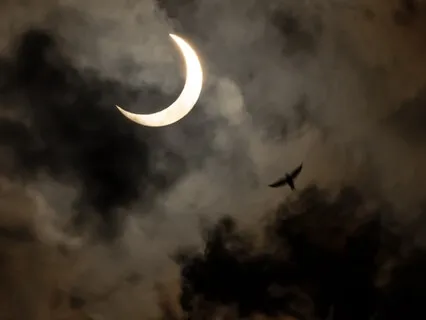
He illuminates the world like the moon freed from a cloud.
Who checks the evil deeds he did by doing wholesome deeds instead?
He illuminates this world like the moon freed from a cloud.
The youthful bhikkhu who devotes his efforts to the Buddha's teaching,
He illuminates this world like the moon freed from a cloud.
Conduit-makers guide the water.
Fletchers straighten out the arrow shaft.
Carpenters straighten out the timber.
But wise men seek to tame themselves.
There are some that tame with beatings,
Some with goads,
And some with whips.
But I was tamed by such a one who has no rod nor weapon.
Harmless is the name I bear,
Though I was dangerous in the past.
The name I bear today is true.
I hurt no living being at all.
And though I once lived as a bandit known to all as Finger Garland,
One whom the great flood of greed,
Hatred,
Delusion swept along,
I went for refuge to the Buddha.
And though I once was bloody-handed with the name of Finger Garland,
See the refuge I have found.
The bond of being has been cut.
While I did many deeds that lead to rebirth in the evil realms,
Yet their result has reached me now.
And so I eat free from debt.
So there's this notion that before awakening,
When monks or nuns would go into the countryside and get their alms round,
And they'd get their food,
That the country would be feeding them using the inheritance of the Buddha.
But that once one has awakened,
One is fed by the inheritance of one's own awakening.
And so Angulimala returned to Ahimsika,
Eats free from debt.
May we all eat free from debt.