This session is part of the 21 day breathwork challenge.
If this is the first time tuning in and you'd like to start at day one,
If you follow my profile Inge Volsink,
You can find all the available previous sessions there.
You can also find all the other tracks in the playlist,
The 21 day breathwork challenge.
Are you ready?
Let's begin.
Hi,
Welcome to today's practice session where the same safety rules apply as in the previous session.
Today we practice Bhastrika Pranayama.
In Sanskrit the word Bhastrika means bellows to emit a loud deep sound.
Bhastrika Pranayama is a fast breath practice with sound.
It is quite similar to Kapalabhati in force and use of the supporting breathing muscles.
Yet the inhale is not passive,
It is active.
And in most versions of Bhastrika,
Inhale and exhale are of equal length.
So where Kapalabhati emphasizes the exhale,
Bhastrika has equal emphasis on inhale and exhale.
Bhastrika also goes slightly faster than Kapalabhati,
Making this a more advanced and stressful exercise.
So if any of the previously mentioned contraindications apply to you,
Be careful,
Take it easy and start with just one or two rounds.
Active exhalations are performed like in Kapalabhati,
But to quicken the pace,
We immediately release the pull of the abdominal muscles after the sound of the exhalation.
Because we release the core muscles more quickly,
The diaphragm has more space to inhale fully.
The purpose of Bhastrika Pranayama is to increase the flow of air coming into the body,
Producing more inner heat and activation of the sympathetic nervous system,
While also training the breathing muscles.
Although Bhastrika is a fast and forceful practice,
We don't want to overdo it.
The nostrils should not get sucked in with the inhalation.
The air should create a sound as it passes through the nostrils,
But this sound should not be a heavy sound.
Bhastrika sounds like this.
Bhastrika is forceful yet controlled.
Like in Kapalabhati,
Your body shouldn't jerk during the practice.
Only the lungs,
The diaphragm,
The abdomen and the ribs move.
The shoulder blades are relaxed to allow full inhales to reach the back body as well.
If you're ready to begin,
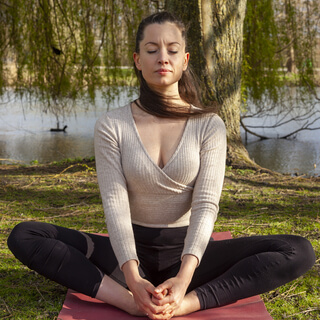
Sit in a comfortable seated position.
Make sure your spine is straight and your head rests right above your sits bones.
Chest is open,
Collarbones are wide,
Shoulders are relaxed.
Place your hands on your knees and gently close your eyes.
Take a few deep breaths,
Really filling the lungs to their entire capacity and emptying them out completely.
Inhale deeply and with control and then breathe out quickly and forcefully through the nose.
Inhale relaxed with equal length and then pull the deep core and intercostals to push out the air forcefully.
Release the pull immediately after the sound of your exhale.
You will feel the inhale happen naturally once you release the core.
Just like with Kapalabhati,
We will start slow and build up from there.
Let's do a slow round of 10 breaths.
We inhale deeply and with control,
Expanding belly and releasing the pelvic floor and we exhale fully and forcefully pull the core in and the pelvic floor up.
Try to find a rhythm,
Deep and equal inhales and exhales.
Use the full capacity of your breath.
We will now practice three to five rounds and I will guide you through building up the pace.
If you are new to this practice,
Start with one or two rounds.
If you've done this before and none of the contraindications apply to you,
Build up to as long as you feel reasonably comfortable.
Some tingling and activation is normal to feel.
If you feel anxious beyond your control,
Slow down and lengthen your exhales.
Are you ready?
Let's begin.
Take a few regular breaths and focus on the parachute of your belly.
Engage the belly on the exhale and release it on the inhale.
If you want,
Engage your Bandhas.
Inhale deeply for round one.
Out,
In,
Out,
In,
Out,
In,
Out,
In.
Out,
In,
Out,
In,
Out,
In,
Out,
In,
Out,
In,
Out,
In.
And sigh out.
Slowly inhale.
Relax yourself.
This was round one.
Remember that you are in control of this practice.
You can stop at any time.
You are the pilot.
You can land this plane by lengthening your exhales.
Take a few more regular breaths before we start round two.
Inhale for round two.
Out,
In,
Out,
In,
Out,
In,
Out,
In,
Out,
In,
Out,
In,
Out,
In,
Out,
In,
Out,
In,
Out,
In.
And sigh out.
Out,
In,
Out,
In,
Out,
In,
Out,
In,
Out,
In,
Out,
In,
Out,
In,
Out,
In,
Out,
In,
Out,
In,
Out,
In,
Out,
In,
Out,
In,
Out,
In,
Out,
In,
Out,
In,
Out,
In,
Out,
In,
Out,
In,
Out,
In,
Out,
In,
Out,
In,
Out,
In,
Out,
In,
Out,
In,
Out,
In,
Out,
In,
Out,
In,
Out,
In,
Out,
In,
Out,
In,
Out,
In,
Out,
In,
Out,
In,
Out,
In,
Out,
In,
Out,
In,
Out,
In,
Out,
In,
Out,
In,
Out,
In,
Out,
In,
Out,
In,
Out,
In,
Out,
In,
Out,
In,
Out,
In,
Out,
In,
Out,
In,
Out,
In,
Out,
In,
Out,
In,
Out,
In,
Out,
In,
Out,
In,
Out Now start to feel as sensations like tingling or intense focus.
This is a completely normal physiological response.
It will slowly release again as your breathing becomes slower.
Lengthen your exhales relative to your inhales to calm yourself down.
Take a few regular breaths and inhale for round three.
Out,
In,
Out,
In,
Out,
In,
Out,
In,
Out,
In,
Out,
In,
Out,
In,
Out,
In,
Out,
In,
Out,
In,
Out,
In,
Out,
In,
Out,
In,
Out,
In,
Out,
In,
Out,
In,
Out,
In,
Out,
In,
Out,
In,
Out,
In,
Out,
In,
Out,
In,
Out,
In,
Out,
In,
Out,
In,
Out,
In,
Out,
In,
Out,
In,
Out,
In,
Out,
In,
Out,
In,
Out,
In,
Out,
In,
Out,
In,
Out,
In,
Out,
In,
Out,
In,
Out,
In,
Out,
In,
Out,
In,
Out,
In,
Out,
In,
Out,
In,
Out,
In,
Out,
In,
Out,
In,
Out,
In,
Out,
In,
Out,
In,
Out,
In,
Out,
In,
Out,
In,
Out,
In,
Out,
In,
Out,
In,
Out If this is your first time practicing or if you suffer from any condition you can skip to the end of the practice.
If you feel in control and psychologically comfortable with the level of physiological activation and you have practiced several times,
We can go to round 4 and 5.
In round 4 and 5,
Halfway through our rounds,
I will speed up the practice to double speed.
We will do two rounds of 20 breaths.
The first 10 breaths are slow and the second 10 breaths are double speed.
Inhale for round 4.
Out,
In,
Out,
In,
Out,
In,
Out,
In,
Out,
In,
Out,
In,
Out,
In,
Out,
In,
Out,
In,
Out,
In,
Out,
In,
Out,
In,
Out,
In,
Out,
In,
Out,
In,
Out,
In,
Out,
In,
Out,
In,
Out,
In,
Out,
In,
Out,
In,
Out,
In,
Out,
In,
Out,
In,
Out,
In,
Out,
In,
Out,
In,
Out,
In,
Out,
In,
Out,
In,
Out,
In,
Out,
In,
Out,
In,
Out,
In,
Out,
In,
Out,
In,
Out,
In,
Out,
In,
Out,
In,
Out,
In,
Out,
In,
Out,
In,
Out,
In,
Out,
In,
Out,
In,
Out,
In,
Out,
In,
Out,
In,
Out,
In,
Out,
In,
Out,
In,
Out,
In,
Out,
In,
Out,
In,
Out,
In,
Out Sigh it out.
Slowly inhale and relax yourself.
Open your mouth for a really long sigh.
One more.
Inhale for round five.
Out,
In,
Out,
In,
Out,
In,
Out,
In,
Out,
In,
Out,
In,
Out,
In,
Out,
In,
Out,
In,
Out,
In,
Out,
In,
Out,
In,
Out,
In,
Out,
In,
Out,
In,
Out,
In,
Out,
In,
Out,
In,
Out,
In,
Out,
In,
Out,
In,
Out,
In,
Out,
In,
Out,
In,
Out,
In,
Out,
In,
Out,
In,
Out,
In,
Out,
In,
Out,
In,
Out,
In,
Out,
In,
Out,
In,
Out,
In,
Out,
In,
Out,
In,
Out,
In,
Out,
In,
Out,
In,
Out,
In,
Out,
In,
Out,
In,
Out,
In,
Out,
In,
Out,
In,
Out,
In,
Out,
In,
Out,
In,
Out,
In,
Out,
In,
Out,
In,
Out,
In,
Out,
In,
Out Sigh it out.
Slowly inhale and relax yourself.
Take your time allowing your breath to naturally calm down.
Focus on lengthening your exhales relatively to your inhales.
Notice the beating of your heart.
Notice how it responds to fast and slow breathing.
You are able to shift your heart's power just by breathing fast and slow.
You are the pilot of your stress and relaxation response.
Slowly bring your senses into your awareness.
Listen to the sounds around you.
Open your eyes and look at the scene in front of you.
Notice light.
Notice color.
Thank you for allowing me to guide you on this journey towards greater alertness and improved resilience.
In our next session,
We will talk about holding your breath as a technique to calm yourself down after fast breath work,
Exercise,
Stress,
Or anxiety.
As always,
If you enjoyed this particular practice or are enjoying the breathing journey you are on,
Please leave your insights,
Your experiences,
And your feedback in the review section.
Have a lovely rest of your day.