Welcome,
I'm Coach Christine,
And this is a special bedtime story for you.
I'm delighted to share a beloved Swiss fairy tale called The Wonderful Alpine Horn.
My Nono was Swiss,
And although he never told me this particular story,
He loved sharing tales with me.
As a young girl,
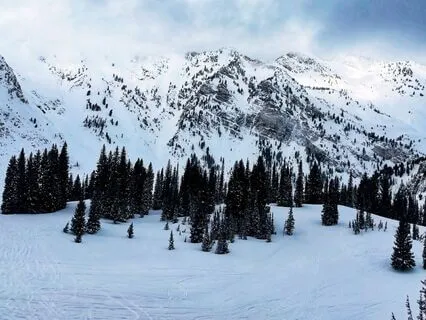
I visited Switzerland and heard the beautiful tones of the alpine horns echoing through the mountains,
And this tale brings back those magical memories and the enchanting beauty of the Swiss Alps.
So find a comfortable spot,
Close your eyes,
And let yourself be transported to a world of wonder and tranquility.
The Wonderful Alpine Horn.
When the little boys and girls who read these Swiss fairy tales grow up to be big and travel in Switzerland,
They will enjoy the alpine horn.
Nearly every shepherd lad in the mountains knows how to blow it.
It is made of wood and it's about half as long as an ordinary broom.
Its butt or heavy end rests on the ground.
When a man blows a long blast,
The sound,
At first when one is too near,
Does not seem to be very pleasing,
For distance lends enchantment to the sound.
But wait for a moment and listen.
Far off across the valley,
The strains are caught up and sent back from the tops of the high mountains.
Then it sounds as if a great choir of angels had come down from heaven to sing glory to God and to bring greetings to all souls.
Nowhere in the world is there such a sweet music made by echoes.
Sometimes there is a double set of echoes,
Like one rainbow inside of another.
Then it takes one to the place of thinking of a choir that sing a second time after the first heavenly chorus has ceased.
How the Swiss people first received the alpine horn as a gift from the fairies is told in a story of a faithful shepherd boy named Perod.
He had to work hard all day intending the cows grazed on the high mountain pasture,
Which the natives called the Alps.
But when foreign people speak of the Alps,
They mean the ranges of mountains themselves.
In winter,
These level stretches of ground are covered with snow and ice.
But by the month of June,
It is warm enough for the grass and flowers to grow.
Then the cowboys and cheesemakers go up with their cattle.
At night,
Perod,
Having milked the cows,
Skimmed the cream off the milk,
Hung the great cauldron over the fire,
And made the cheese.
By this time,
That is,
Well into the late hours,
Perod almost tired to death.
After calling goodnight to Luquette,
His sweetheart,
Who lived across the valley,
And hearing her greeting and answer,
He climbed up the ladder into the loft and lay down on his bed.
This was the only pile of straw,
But he was asleep almost the very moment he touched it,
For he was a healthy lad,
And the mountain air was better than medicine.
It was especially good for sound sleep,
And he knew he must get up early at sunrise to lead the cows and goats out to pasture.
Then all the day a concert of tinkling bells began.
But this night,
Instead of slumber,
Without once waking until the dawn,
Perod closed his eyes for only about three hours when he heard a crackling sound,
Which woke him up.
At first he thought the wind was blowing hard enough to rip off some of the bark strips from the roof of the chalet,
And was tumbling down some heavy stones laid on to keep them in place.
But when he saw the reflection on the walls and the ceilings of a bright fire,
He crawled quickly out of bed.
Then he peered down and through the cracks in the board floor to see what was going on.
Three men were around the fire.
One,
The biggest fellow of the three,
Was hanging up the cauldron on the hooks.
The second piled on more wood,
While the others warmed their hands in the bright blaze.
The three men were all different in appearance.
The one from the other,
In a queer-looking lot they were.
The tremendously tall man seemed to be a giant in weight and size.
His sleeves were rolled up,
Showing that his arms were sunburned until they were very dark.
When he lifted up the cauldron to hang it up or take it down,
His muscles stood out like whip cords.
But the man sitting on the milking stool at the right-hand side of the fireplace was entirely different,
Being smaller and with white skin and golden hair.
He had a long horn,
Which rested on the floor beside him.
The man on the left-hand side of the fireplace appeared to be a woodman or hunter.
At least he seemed to be used to the forest.
Though it was pitch-dark night,
He knew where the wood lay,
Piled up under the eaves of the chalet,
For when the fire burned he went outdoors and returned with an armload of twigs.
Then he piled the wood,
And the fire blazed and crackled and roared,
Until the boy in the loft thought the hut would be burned up too.
Yet he trembled at the strange sight.
He was brave.
He resolved not to be quiet if the big men tried to steal his cheese,
Which was to be food for the family during the winter.
Just as he was wondering whether his sisters and old daddy would have enough to eat during the long cold winter of the eight months that was soon coming,
When snow and ice covered the fields,
He saw a curious thing happen.
Sweet music began,
Such as had never met his ears before,
Since he was in the cradle and his mother sang to him.
It was the man with the golden hair who seemed to be the real gentleman of the party.
He it was who made the music.
He first handed something to the giant who dropped it into the cauldron.
Then with his horn he disappeared through the door.
When outside he lifted the instrument to his lips and blew a blast.
Perraud was so interested in watching the giant that he paid little attention to the man outside,
Or to the sound he had made,
For he saw the hunter take a bottle out of his pocket and hand it over to the biggest fellow,
Who stood at the cauldron over the fire.
This would pour the liquid,
Which seemed to be blood red,
Into a big iron pot.
Then with a ladle as big as a shovel and as long as a gun,
He stirred vigorously.
Then three beakers or cups were set upon the table.
By this time the golden-haired man outside had finished his blast of music,
Which seemed to flow across the valleys,
Down into the defiles,
Over the pastures and through the wood.
It grew sweeter and sweeter as it swelled on the gentle night breeze,
Until all the mountains seemed to have awakened,
Turned into living angels and lifted up their voices.
The sweet strain ended with a prolonged sad note,
As if melancholy had fallen on the musicians,
And then it ceased.
A strange thing happened.
All the cows and goats woke from their sleep,
And one from all directions could hear the tinkling of their neck bells all over the pastures.
Far and near,
The poor creatures thought it was time to get up and be milked,
But they were puzzled to find it was yet dark.
In fact,
They were all still quite sleepy and very slow to move.
Something even far more wonderful happened next.
Paran,
After hearing the horn blow,
Thought the music had ceased when suddenly it all seemed to come back in a vastly greater volume.
The sound was multiplied,
As if a thousand echoes had blended into one,
And all of heaven had joined the melody.
Paran was entranced.
He even closed his eyes,
Lest he might,
By looking down at the strange men,
Lose some of what seemed to him a choir of angels singing.
When the last strain had ceased,
He opened his eyes.
The golden-haired musician had re-entered the chalet and resumed his seat,
Sitting down again on the milk stool at the right of the fire,
While the hunter rearranged three glass goblets on the rough wooden table from which Paran ate his meals.
All three of the strangers then solemnly watched the cauldron as the liquid boiled,
Just as cream does when cheese is to be made.
The big man stirred up his huge ladle.
At a particular moment,
The giant lifted the cauldron and emptied out the contents into three glass vessels,
To the amazement of Paran.
They are issued from the same vessel,
Three very different colors.
In the first glass,
Filled to the brim,
The draught was red as blood,
And it foamed to the top,
As drops flying out on the board left crimson stains.
Giving a tap on the cauldron with the big ladle,
The tall man let flow into the second glass,
What seemed to be the same liquid,
But this time it was green as grass,
Hissing hot and bubbling.
Another loud ladle tap on the cauldron,
And out flowed a stream as cold as snow water,
And as white as the edelweiss flower.
The liquid rested in the goblet as quiet as milk,
But seemed to be frosty on the top.
Now the giant-like fellow,
Shaking his huge ladle in his right hand and putting his left on the side of his mouth,
Shouted with a voice of thunder,
Come down,
You boy,
And make your choice of one of these three.
Each has a glorious gift to him who drinks.
Come quick,
For it will soon be daylight.
Perraud knew he was discovered,
But he was a brave boy.
If his legs trembled,
His heart was big.
Moreover,
The golden-haired man gave him a nod and winked his eye to encourage the lad.
So Perraud at once climbed down and stood before the table,
On which there were three chalices.
Drink,
Young friend,
Said the giant,
From any of these,
But know that in the red liquid is a gift to the Swiss men.
Drain this cup,
And then you will have strength like me.
And at that,
He bent his arm to show his mighty muscles.
You will be able to conquer the strongest man or the fiercest beast.
Besides,
I give you a hundred fat cows,
Each of which will yield much milk,
Rich in butter.
Drain this cup,
And according to my promise,
You will see the kind tomorrow.
Then the hunter spoke.
Better drink from my goblet.
After this green draft,
You will have all the gold you want in heaps of coins,
And then you can marry and still easily support your old father and mother.
So saying,
He tossed handfuls of gold pieces on the floor,
Piling them up until they reached the lad's knees.
Perraud opened his eyes wide in astonishment,
For here was not just a promise in words,
But the actual thing that he could see for himself.
He was just about to stretch both his hands and drink the green liquid when the golden-haired man,
Speaking gently to Perraud,
Said,
I cannot promise you either cows or coins,
But if you drink the liquid in the white goblet,
You will be able to use this horn.
Make music in the mountains and call your cows as I have done.
Thus your flocks and your herds also will share with you my gift.
Not a minute did Perraud wait to decide.
I care more for music than for money or strength,
He said,
And lifting the glass,
He put it to his lips and drained the cup dry.
What was it,
And how did it taste,
You ask?
It was what the cows gave him every day,
Pure,
Fresh milk,
But cold as a glacier water.
Good,
Cried the man with the golden hair,
Any other choice would have meant death.
Here is the horn,
Blow it tomorrow and see what will happen.
As if lifted up on wings to his straw bed,
But holding on to his horn,
Perraud heard the door shut and bang as the three men went out,
Two of them scowling.
Then the fire cooled to ashes and he fell asleep and dreamed of a time when he should lead his bride to the altar,
His lovely sweetheart,
Luquette,
To be married and the two should have a chateau and a home of their own.
Awakening at the first moment when the rosy light of the sun made the face of the mountains blush,
Even while the valleys below were still in darkness and long before his sisters in the village far away had awakened,
He rushed out to the edge of the pasture.
Then he drew in a man's breath,
Filled his lungs and putting his lips to the mouthpiece of the horn blew a long blast.
He listened eagerly for the far off echoes,
A pleasant double surprise awaited him.
All over the pastures,
In the chalets of the high plateau and along the mountain slopes,
Even down to the valleys,
There was heard at once the tinkling of goat bells,
Cow bells,
And the sound even of what hung in the metal collars of donkeys and horses until the chorus of bell music was wonderful.
Very fine,
But is that all?
Thought Perraud.
Another simple surprise from across the great ravine or chasm outrushed his lovely beloved Luquette,
Hastily throwing a wrap around her shoulders.
She stood in bare feet and threw a kiss to Perraud and shouted to him her joy.
Now came the crowning wonder from the high peaks,
Miles distant,
And now rosy red with the day spring came back the music.
It multiplied in echoes as if all of the snow ranges of the Alps were singing pure,
Sweet,
Prolonged.
The boy thought of what he had heard in church,
That at creation the morning stars sang together and so it seemed now to him.
Through many centuries and to this day,
To call the cows together,
To make the goats look up,
And to turn homeward,
To seek shelter of the night,
For men's evening prayer and chant of thanksgiving,
For the signals of deference against enemies,
For the beginning of the festival dance,
Or to sound the wedding joy.
The alpine horn is the delight of the Swiss,
Is like a carry-on of the Belgic folk,
The chimes of Normandy,
The tower music of Holland,
Or the bagpipes of the Highlander.
In a foreign land,
In dreams,
In its memories it tells a home,
Sweet home.