THE ENCHANTED APRIL by Elizabeth von Arnhem Chapter 1 It began in a woman's club in London on a February afternoon,
An uncomfortable club,
And a miserable afternoon,
When Mrs.
Wilkins,
Who had come down from Hampstead to shop and had lunched at her club,
Took up the times from the table in the smoking-room,
And running her listless eyes down the agony column,
Saw this.
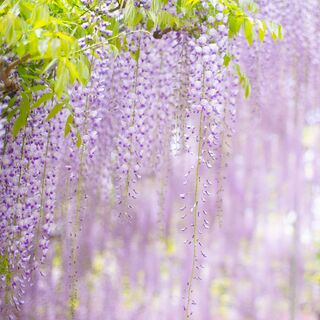
To those who appreciate wisteria and sunshine.
Small,
Medieval castle,
On the shores of the Mediterranean,
To be let furnished for the month of April.
Necessary servants remain.
Z.
Box 1000.
The Times.
That was its conception,
Yet,
As in the case of many another,
The conceiver was unaware of it at the moment.
So entirely unaware was Mrs.
Wilkins that her April for that year had then and there been settled for her,
That she dropped the newspaper with a gesture,
That was both irritated and resigned,
And went over to the window and stared drearily out at the dripping street.
Not for her were medieval castles,
Even those that are especially described as small,
Not for her the shores in April of the Mediterranean and the wisteria and sunshine.
Such delights were only for the rich.
Yet the advertisement had been addressed to persons who appreciate these things,
So that it had been,
Anyhow,
Addressed too,
To her,
For she certainly appreciated them,
More than anybody knew,
More than she had ever been told.
But she was poor.
In the whole world she possessed of her very own only ninety pounds,
Saved from year to year,
Put carefully,
Pound by pound,
Out of her dress allowance.
She had scraped this sum together at the suggestion of her husband as a shield and refuge against a rainy day.
Her dress allowance,
Given her by her father,
Was one hundred pounds a year,
So that Mrs.
Wilkins' clothes were what her husband,
Urging her to save,
Called modest and becoming,
And her acquaintance to each other.
When they spoke of her at all,
Which was seldom,
For she was very negligible,
Called a perfect sight.
Mr.
Wilkins,
A solicitor,
Encouraged thrift,
Except that branch of it which got into his food.
He did not call that thrift,
He called it bad housekeeping.
But for the thrift which,
Like moth,
Penetrated into Mrs.
Wilkins' clothes and spoiled them,
He had much praise.
You never know,
He said,
When there will be a rainy day,
And you may be very glad to find that you have a nest egg.
Indeed,
We both may.
Looking out of the window into Shaftesbury Avenue,
Hers was an economical club,
But convenient for Hampstead,
Where she lived,
And for schoolbreads,
Where she shopped.
Mrs.
Wilkins,
Having stood there for some time,
Very drearily,
Her mind's eye on the Mediterranean in April,
And the wisteria,
And the enviable opportunities of the rich,
While her bodily eye watched with really extremely horrible sooty rain falling steadily on the hurrying umbrellas and splashing omnibuses,
Suddenly wondered whether perhaps this was not the rainy day Mellush,
Mellush was Mr.
Wilkins,
Had so often encouraged her to prepare for,
And whether to get out of such a climate and into the small medieval castle wasn't perhaps what Providence had all along intended her to do with her savings.
Part of her savings,
Of course,
Perhaps quite a small part.
The castle,
Being medieval,
Might also be dilapidated,
And dilapidations were surely cheap.
She wouldn't in the least mind a few of them,
Because you didn't pay for dilapidations which were already there.
On the contrary,
By reducing the price you had to pay,
They really paid you,
But what nonsense to think of it!
She turned away from the window with the same gesture of mingled irritation and resignation with which she had laid down the times,
And crossed the room towards the door with the intention of getting her Macintosh and umbrella,
And fighting her way into one of the overcrowded omnibuses and going to Shawbreads on her way home,
And buying some soles for Mellush's dinner.
Mellush was difficult with fish and liked only sole,
Except salmon,
Which she beheld when she beheld Mrs Arbuthnot,
A woman she knew by sight as also living in Hampstead and belonging to the club,
Sitting at the table in the middle of the room on which the newspapers and magazines were kept,
Absorbed in her return in the first page of the Times.
Mrs Wilkins had never yet spoken to Mr Arbuthnot,
Who belonged to one of the various church sets,
And who analysed,
Classified,
Divided and registered the poor,
Whereas she and Mellush,
When they did go out,
Went to the parties of Impressionist painters,
Of whom in Hampstead there were many.
Mellush had a sister who had married one of them and lived up on the Heath,
And because of this alliance Mrs Wilkins was drawn into a circle which was highly unnatural to her,
And she had learned to dread pictures.
She had to say things about them,
And she didn't know what to say.
She used to murmur,
Marvellous,
And feel that was not enough,
But nobody minded,
Nobody listened,
Nobody took any notice of Mrs Wilkins.
She was the kind of person who was not noticed at parties.
Her clothes,
Infested by thrift,
Made her practically invisible.
Her face was non-arresting,
Her conversation was reluctant,
She was shy,
And if one's clothes and face and conversation are all negligible,
Thought Mrs Wilkins,
Who recognised her disabilities,
What,
At parties,
Is there left for one?
Also she was always with Wilkins,
That clean-shaven,
Fine-looking man,
Who gave a party merely by coming to it,
A great air.
Wilkins was very respectable.
He was known to be highly thought of by his senior partners.
His sister's circle admired him.
He pronounced adequately intelligent judgements on art and artists.
He was pithy,
He was prudent,
He never said a word too much,
Nor,
On the other hand,
Did he ever say a word too little.
He produced the impression of keeping copies of everything he said.
And he was so obviously reliable that it often happened that people who met him at these parties became discontented with their own solicitors,
And after a period of restlessness,
Extricated themselves and went to Wilkins.
Naturally,
Mrs Wilkins was blotted out.
She,
Said his sister,
With something herself of the judicial,
The digested,
And the final in her manner,
Should stay at home.
But Wilkins could not leave his wife at home,
He was a family solicitor,
And all such have wives and show them.
With his in the week he went to parties,
And with his on Sundays he went to church.
Being still fairly young,
He was thirty-nine,
And ambitious of old ladies,
Of whom he had not yet acquired in his practice a sufficient number,
He could not afford to miss church,
And it was there that Mrs Wilkins became familiar,
Though never through words,
With Mrs Arbuthnot.
She saw her marshalling the children of the poor into pews.
She would come in at the head of the procession from the Sunday school exactly five minutes before the choir,
And get her boys and girls neatly fitted into their allotted seats,
And down on their little knees with their preliminary prayer,
And up again on their feet,
Just as,
To the swelling organ,
The vestry door opened,
And the choir and clergy,
Big with the litanies and commandments they were presently to roll out,
Emerged.
She had a sad face,
Yet she was evidently efficient.
The combination used to make Mrs Wilkins wonder,
For she had been told by Melosh on days when she had only been able to get place,
That if one were efficient,
One couldn't be depressed,
And if one does one's job well,
One becomes automatically bright and brisk.
About Mrs Arbuthnot there was nothing bright and brisk,
Though much in her way with the Sunday school children that was automatic,
But when Mrs Wilkins,
Turning from the window,
Caught sight of her in the club,
She was not being automatic at all,
But was looking fixedly at one portion of the first page of the Times,
Holding the paper quite still,
Her eyes not moving,
She was just staring,
And her face,
As usual,
Was the face of a patient and disappointed Madonna.
Obeying an impulse,
She wondered at,
Even while obeying it,
Mrs Wilkins,
The shy and the reluctant,
Instead of proceeding as she had intended to,
The cloakroom,
And from thence to Shawbreds in search of Melosh's fish,
Stopped at the table and sat down exactly opposite Mrs Arbuthnot,
To whom she had never yet spoken in her life.
It was one of those long,
Narrow,
Refractory tables,
So that they were quite close to each other.
Mrs Arbuthnot,
However,
Did not look up.
She continued to gaze,
With eyes that seemed to be dreaming,
At only one spot of the Times.
Mrs Wilkins watched her for a minute,
Trying to screw up courage to speak to her.
She wanted to ask her if she had seen the advertisement.
She did not know why she wanted to ask her this,
But she wanted to.
How stupid not to be able to speak to her.
She looked so kind.
She looked so unhappy.
Why couldn't two unhappy people refresh each other on their way through this dusty business of life by a little talk,
Real,
Natural talk,
About what they felt,
What they would have liked,
What they still tried to hope?
And she could not help thinking that Mrs Arbuthnot,
Too,
Was reading that very same advertisement.
Her eyes were on the very part of the paper.
Was she,
Too,
Picturing what it would be like?
The colour,
The fragrance,
The light,
The soft lapping of the sea among little hot rocks.
Colour,
Fragrance,
Light,
Sea,
Instead of Shaftesbury Avenue,
And the wet omnibuses,
And the fish department at Shawbreads,
And the tune to Hampstead,
And dinner,
And tomorrow the same,
And the day after the same,
And always the same.
Suddenly Mrs Wilkins found herself leaning across the table.
Are you reading about the medieval castle and the wisteria?
She heard herself asking.
Naturally Mrs Arbuthnot was surprised,
But she was not half so much surprised as Mrs Wilkins was at herself for asking.
Mrs Arbuthnot had not yet,
To her knowledge,
Set eyes on the shabby length loosely put together figure sitting opposite her,
With its small speckled face and big grey eyes almost disappearing under a smashed down wet weather hat,
And she gazed at her a moment without answering.
She was reading about the medieval castle and the wisteria,
Or rather had read about it ten minutes before,
And since then had been lost in dreams of light,
Of colour,
Of fragrance,
Of the soft lapping of the sea among little hot rocks.
Why do you ask me that?
She said in her grave voice,
For her training of and by the poor had made her grave and patient.
Mrs Wilkins flushed and looked excessively shy and frightened.
Oh,
Only because I saw it too,
And I thought perhaps,
I thought somehow,
She stammered,
Whereupon Mrs Arbuthnot,
Her mind being used to getting people into lists and divisions from habits considered,
As she gazed thoughtfully at Mrs Wilkins under what heading supposing she had to classify her,
She could most properly be put.
And you know by sight,
Went on Mrs Wilkins,
Who,
Like all the shy,
Once she had started,
Plunged on,
Frightening herself to more and more speech by the sheer sound of what she had said in last in her ears,
Every Sunday I see you,
Every Sunday in church.
In church?
Echoed Mrs Arbuthnot.
And it seems such a wonderful thing,
This advertisement about the wisteria,
And Mrs Wilkins,
Who must have been at least thirty,
Broke off and wriggled in her chair with a movement of an awkward and embarrassed schoolgirl.
It seems so wonderful,
She went on in a kind of burst,
And it's such a miserable day.
And then she sat looking at Mrs Arbuthnot with the eyes of an imprisoned dog.
This poor thing,
Thought Mrs Arbuthnot,
Whose life was spent in helping and alleviating,
Needs advice.
She accordingly prepared herself patiently to give it.
If you see me in church,
She said kindly and attentively,
I suppose you live in Hampstead too?
Oh yes,
Said Mrs Wilkins,
And she repeated,
Her head on its long thin drooping neck,
A little of its recollection of Hampstead,
Bowed her.
Oh yes,
Where?
Asked Mrs Arbuthnot,
Who,
When advice was needed,
Naturally first proceeded to collect the facts.
But Mrs Wilkins,
Laying her hands softly and caressingly on the part of the times where the advertisement was,
As though the mere printed words of it were precious,
Only said,
Perhaps that's why this seems so wonderful.
No,
I think that's wonderful anyhow,
Said Mrs Arbuthnot,
Forgetting facts and fainting sighing.
Then you were reading it?
Yes,
Said Mrs Arbuthnot,
Her eyes going dreamy again.
Wouldn't it be wonderful,
Murmured Mrs Wilkins.
Wonderful,
Said Mrs Arbuthnot,
Her face,
Which had lit up,
Faded into patience again.
Very wonderful,
She said,
But it's no use wasting one's time thinking of such things.
Oh,
But it is,
Was Mrs Wilkins' quick,
Surprising reply.
Surprising,
Because it was so much unlike the rest of her,
The characterless coat,
Skirt,
The crumpled hat,
The undecided wisp of hair straggling out,
And just the considering of them is worthwhile in itself.
Such a change from Hampstead,
And sometimes I believe,
I really do believe,
If one considers hard enough one gets these things.
Mrs Arbuthnot observed her patiently.
In what category would she,
Supposing she had to,
Put her?
Perhaps,
She said,
Leaning forward a little,
You will tell me your name,
If we are to be friends.
She smiled her grave smile,
As I hope we are,
We had better begin at the beginning.
Oh yes,
How kind of you,
I'm Mrs Wilkins,
Said Mrs Wilkins.
I don't expect,
She added,
Flushing as Mrs Arbuthnot said nothing,
That it conveys anything to you.
Sometimes it doesn't convey anything to me either,
But,
She looked around with a movement of seeking help,
I am Mrs Wilkins.
She did not like her name.
It was a mean,
Small name,
With a kind of fascist twist,
As though she was about its end like an upward curve of a pug-dog's tail.
But there it was,
However.
There was no doing anything with it.
Wilkins she was,
And Wilkins she would remain.
And though her husband encouraged her to give it all occasions as Mrs Mellosh Wilkins,
She only did that when she was within earshot.
For she thought Mellosh made Wilkins worse,
Emphasising it in the way Chatsworth on the gates post of the villa emphasises the villa.
When first she suggested she should add Mellosh,
She had objected for the above reason.
And after a pause Mellosh was much too prudent to speak,
Except after a pause,
During which observation he said,
Much displeased.
But I am not a villa,
And looked at her as if he who looks,
Who hopes,
For perhaps the hundredth time,
That he may not have married a fool.
Of course he was not a villa,
Mrs Wilkins assured him.
She had never supposed he was.
She had not dreamed of meaning,
She was only just thinking.
The more she explained,
The more earnest became Mellosh's hope,
Familiar to him by this time,
For he had then been husband for two years,
That he might not by any chance have married a fool,
And they had a prolonged quarrel.
If that can be called a quarrel which is conducted with dignified silence on one side and earnest apology on the other,
As to whether or no Mrs Wilkins had intended to suggest that Mr Wilkins was a villa.
I believe,
She had thought,
When it was at last over,
It took a long while.
That anybody would quarrel about anything when they've not left off being together for a single day or two whole years.
What we both need is a holiday.
My husband went on Mrs Wilkins to Mrs Arbuthnot,
Trying to throw some light on herself,
Is a solicitor.
He,
She cast about for something she could say of Mellosh,
And found he's very handsome.
Well,
Said Mrs Arbuthnot kindly,
That must be a great pleasure to you.
Why,
Asked Mrs Wilkins,
Because,
Said Mrs Arbuthnot,
A little taken aback,
For constant intercourse with the poor had accustomed her to have her pronouncements accepted without question,
Because beauty,
Handsomeness,
Is a gift like any other,
And if it is properly used,
She trailed off into silence.
Mrs Wilkins' great grey eyes were fixed on her,
And it seemed suddenly to Mrs Arbuthnot that perhaps she was becoming crystallised into a habit of exposition,
And of exposition after the manner of nursemaids.
Through having an audience that couldn't but agree,
That would be afraid,
If it wished to interrupt,
That didn't know that was,
In fact,
At her mercy.
But Mrs Wilkins was not listening,
For just then,
Absurd as it seems,
A picture had flashed across her brain,
And there were two figures in it,
Sitting together under a great trailing wisteria that stretched across the branches of a tree she didn't know,
It was herself and Mrs Arbuthnot,
She saw them,
She saw them,
And behind them,
Bright in sunshine,
Were old grey walls,
The medieval castle,
She saw it,
There they were.
She therefore stared at Mrs Arbuthnot,
And did not hear a word she said,
And Mrs Arbuthnot stared too at Mrs Wilkins,
Arrested by the expression on her face,
Which was swept by the excitement of what she saw,
And was luminous and tremulous,
Under it as water in sunlight,
When it's ruffled by a gust of wind.
At this moment,
If she had been at a party,
Mrs Wilkins would have looked at her with interest.
They stared at each other,
Mrs Arbuthnot surprised,
Inquiringly,
Mrs Wilkins,
With the eyes of someone who has had a revelation,
Of course,
That was how it could be done,
She herself,
She by herself.
She couldn't afford it,
And wouldn't be able,
Even if she could afford it,
To go there all alone,
But she and Mrs Arbuthnot together,
She leaned across the table.
Why don't we try and get it?
She whispered.
Mrs Arbuthnot became even more wide-eyed.
Get it?
She repeated.
Yes,
Said Mrs Wilkins,
Still as though she were afraid of being overheard,
Not just sit here and say how wonderful,
And then go home to Hampstead,
Without having put a finger.
Just go home,
As usual,
And see about the dinner and the fish,
Just as we've been doing for years and years,
And will go on doing for years and years.
In fact,
Said Mrs Wilkins,
Flushing to the roots of her hair,
For the sound of what she was saying,
Of what was coming pouring out,
Frightened her,
And yet she couldn't stop.
I see no end to it,
There is no end to it.
So that there ought to be a break,
There ought to be intervals in everybody's interests.
Why,
It wouldn't really be unselfish to go away and be happy for a little,
Because we would come back so much nicer.
You see,
After a bit everyone needs a holiday.
But how do you mean,
Get it?
Asked Mrs Arbuthnot.
Take it,
Said Mrs Wilkins,
Take it,
Rent it,
Hire it,
Have it.
But do you mean you and I?
Yes,
Between us,
Share,
Then it would only be half the cost.
You look so,
You look exactly as if you wanted it,
Just as much as I do.
As if you ought to have a rest,
Have something happy happen to you.
Why,
But we don't even know each other.
But just think how well it would be if we were to get away together for a month,
And I've saved for a rainy day,
And I expect so have you.
And this is a rainy day,
Look at it.
She's unbalanced,
Thought Mrs Arbuthnot,
Yet she felt strangely stirred.
Think of getting away for a whole month from everything,
To heaven.
She shouldn't say things like that,
Thought Mrs Arbuthnot.
The vicar,
Yet she felt strangely stirred.
It would indeed be wonderful to have a rest,
A cessation.
Her habit,
However,
Steadied her again,
And years of intercourse with the poor made her stay,
And with the slight though sympathetic superiority of the explainer.
But then,
You see,
Heaven isn't somewhere else,
It is here and now,
We are told so.
She became very earnest,
Just as she did when trying patiently to help an enlightened poor.
Heaven is within us,
She said in her gentle,
Low voice.
We are told that on the very highest authority,
And you know the lines about the kindred points,
Don't you?
Oh yes,
I know them,
Interrupted Mrs Wilkins impatiently.
The kindred points of heaven and home,
Continued Mrs Arbuthnot,
Who was used to finishing her sentence.
Heaven is in our home.
It isn't,
Said Mrs Wilkins,
Again surprisingly.
Mrs Arbuthnot was taken aback,
Then she said gently,
Oh,
But it is.
It is there if we choose,
If we make it.
I do choose,
And I do make it,
And it isn't,
Said Mrs Wilkins.
Then Mrs Arbuthnot was silent,
For she too sometimes had doubts about homes.
She sat and looked uneasily at Mrs Wilkins,
Feeling more and more the urgent need of getting her classified.
If she could only classify Mrs Wilkins,
Get her safely under her proper heading,
She felt that she would herself regain her balance.
For she did seem very strangely to be slipping all to one side.
For neither had she had a holiday for years,
And the advertisement,
When she saw it,
Had set her dreaming,
And Mrs Wilkins' excitement about it was infectious.
And she had the sensation,
As she listened to her impetuous,
Odd talk,
And watched her lit-up face,
That she was being stirred out of sleep.
Clearly Mrs Wilkins was unbalanced,
But Mrs Arbuthnot had met unbalanced before.
Indeed,
She was always meeting them,
And they had no effect on her own stability at all,
Whereas this one was making her feel quite wobbly,
Quite as though she would be off and away,
Away from her compass points of God,
Husband,
Home,
Duty.
She didn't feel as if Mrs Wilkins intended Mr Wilkins to come too.
And just for once be happy would be both good and desirable,
Which of course it wasn't,
Which certainly of course it wasn't.
She also had a nest egg,
Invested gradually in the post office savings bank,
But to suppose that she would ever forget her duty to the extent of drawing it out and spending it on herself was surely absurd.
Surely she couldn't.
She wouldn't ever do such a thing.
Surely she wouldn't.
She couldn't ever forget the poor,
Forget the misery and sickness as completely as that.
No doubt a trip to Italy would be extraordinarily delightful,
But there were as many delightful things one would like to do,
And what was strength given to one for except to help one not to do them?
Steadfast at the points of the compass to Mrs Arbuthnot were the great four facts of life,
God,
Husband,
Home,
Duty.
She'd gone to sleep on these facts years ago,
After a period of much misery,
Her head resting on them as on a pillow,
And she had a great dread of being awakened out of so simple an untroublesome a condition.
Therefore it was that she searched with earnestness for a heading under which to put Mrs Wilkins,
And in this way illumine and steady her own mind.
And sitting there,
Looking at her uneasily under her last remark,
And feeling herself becoming more and more unbalanced and infected,
She decided pro tem,
As the vicar said at the meetings,
To put her under the heading nerves.
It was just possible that she ought to go straight into the category hysteria,
Which was often only the antechamber to lunacy,
But Mrs Arbuthnot had learned not to hurry people into their final categories,
Having on more than one occasion discovered with dismay that she had made a mistake,
And how difficult it had been to get them out again,
And how crushed she'd been with the most terrible remorse.
Yes,
Nerves.
Probably she had no regular work for others,
Thought Mrs Arbuthnot,
No work that would take her outside herself.
Evidently she was rudderless,
Blown about by gusts,
By impulses.
Nerves was almost certainly her category,
Or would quite soon,
If nobody helped her.
Poor little thing,
Thought Mrs Arbuthnot,
Her own balance returning hand in hand with her compassion,
And unable,
Because of the table,
To see the length of Mrs Wilkins' legs.
All she saw was her small,
Eager,
Shy face,
And her thin shoulders,
And the look of childish longing in her eyes for something that she was sure was going to make her happy.
No,
Such things didn't make people happy,
Such fleeting things.
Mrs Arbuthnot had learned in her long life with Frederick,
He was her husband,
And she married him at twenty,
And was now thirty-three,
Were alone true joys to be found.
They are to be found,
She now knew,
Only in daily,
In hourly,
Living for others,
They are to be found only,
Hadn't she,
Over and over again,
Taken her disappointments and discouragements there,
And come away comforted at the feet of God.
Frederick had been the kind of husband whose wife betakes herself early to the feet of God,
For from him to them had been a short,
Though painful,
Step.
It seemed short to her in retrospect,
But it had really taken the whole of the first year of their marriage,
And every inch of the way had been a struggle,
And every inch of it was strained.
She felt at the time with her heart's blood.
All that was over now.
She had long since found peace,
And Frederick,
From her passionately loved bridegroom,
From her worshipped young husband,
Had become second only to God on her list of duties and forbearances.
There he hung,
The second in importance,
A bloodless thing,
Bled white by her prayers,
For years she'd been able to make happy only by forgetting happiness.
She wanted to stay like that,
She wanted to shut out everything that would remind her of beautiful things that might set her off again,
Longing,
Desiring.
I'd like so much to be friends,
She said earnestly.
Won't you come and see me,
Or let me come to you sometimes?
Whenever you feel as though you want to talk,
I'll give you my address,
She searched in her handbag,
And then you won't forget,
And she found a card and held it out.
Mrs.
Wilkins ignored the card.
It's so funny,
Said Mrs.
Wilkins,
Just as if she'd not heard her,
But I see us both,
You and me,
This April in the medieval castle.
Mrs.
Arbuthnot relapsed into uneasiness.
Do you?
She said,
Making an effort to stay balanced under the visionary gaze of the shining grey eyes.
Do you?
Don't you ever see things in a kind of flash before they happen?
Asked Mrs.
Wilkins.
Never,
Said Mrs.
Arbuthnot.
She tried to smile,
She tried to smile the sympathetic yet wise and tolerant smile with which she was accustomed to listen to the necessary biased and incomplete views of the poor.
She didn't succeed.
The smile trembled out.
Of course,
She said in a low voice,
Almost as if she were afraid the vicar and the savings bank were listening.
It would be most beautiful,
Most beautiful.
Even if it were wrong,
Said Mrs.
Wilkins,
It would only be a month.
That,
Began Mrs.
Arbuthnot,
Quite clear as to the reprehensibleness of such a point of view.
But Mrs.
Wilkins stopped her before she could finish.
Anyhow,
Said Mrs.
Wilkins,
Stopping her,
I'm sure it's wrong to go on being good for too long till one gets miserable and I can see you've been good for years and years because you look so unhappy.
Mrs.
Arbuthnot opened her mouth to protest.
And I,
I've done nothing but duties,
Things for other people ever since I was a girl and I don't believe anybody loves me a bit,
A bit,
A bit and I long,
Oh I long for something else,
Something else.
Was she going to cry?
Mrs.
Arbuthnot became acutely uncomfortable and sympathetic.
She hoped she wasn't going to cry,
Not there,
Not in that unfriendly room with strangers coming and going.
But Mrs.
Wilkins,
After tugging agitatedly at the handkerchief that wouldn't come out of her pocket,
Did succeed at last in merely apparently blowing her nose with it and then blinking her eyes very quickly once or twice,
Looked at Mrs.
Arbuthnot with a quivering air of a half humbled,
Half frightened apology and smiled.
Will you believe,
She whispered,
Trying to steady her mouth,
Evidently dreadfully ashamed of herself,
That I've never spoken to anyone before in my life like this.
I can't think,
I simply don't know what's come over me.
It's the advertisement,
Said Mrs.
Arbuthnot,
Nodding gravely.
Yes,
Said Mrs.
Wilkins,
Dabbing furtively at her eyes and us being so… She blew her nose again a little,
Miserable.