Preparing yourself and your environment for a 10-minute abdominal breathing practice,
Checking that your environment will ensure you are undisturbed for the next 10 minutes or so,
And checking that the body is warm and comfortable.
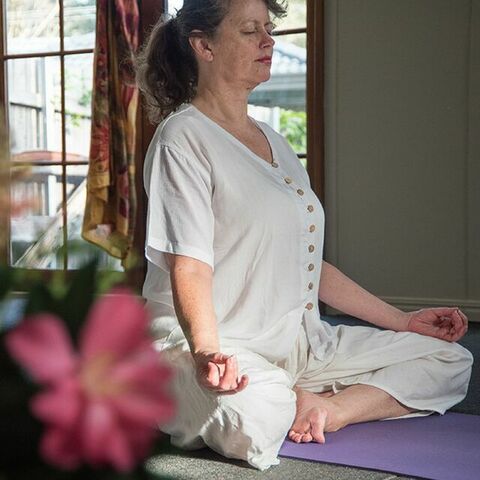
You can either be seated or lying down,
Whatever suits you.
And place your hands on your belly,
Just so that the fingertips are touching,
Closing the eyes and checking for comfort,
Warmth.
Becoming aware of the surface beneath the body,
All the different textures.
Become aware of the natural breath,
Begin watching the natural breath as it moves in and out of the body.
Notice how the breath is traveling,
Where you're breathing from,
When we're a little stressed or anxious,
We tend to breathe more from the chest.
When we're a little more relaxed,
The breath tends to come from the belly.
Noticing how the natural breath is traveling can help you to understand how you're feeling in this moment.
And then taking the breath and the awareness into the belly to begin abdominal breathing.
On the in breath,
Feel the belly expand,
Feeling the fingers moving away from each other as the belly expands away from the spine.
Then on the out breath,
Feel the belly floating back towards the spine as the fingertips come towards each other once more.
Feeling the belly moving with the breath,
Expanding on the inhalation,
Contracting on the exhalation.
Checking that it's only the belly that's moving and the chest is still.
By leaving the right hand on the belly and placing the left hand on the chest.
Once you've confirmed that the breath is focused in the belly,
Only the belly is moving.
Bring the left hand back to the belly once again.
Again introducing a gentle abdominal contraction at the end of the out breath.
Just to squeeze the last bits of air from the lungs and massage the abdomen a little bit more.
On the inhalation,
Belly expands away from the spine.
And on the exhalation,
Belly comes back towards the spine.
And at the end of the out breath,
Just draw the navel a little further in towards the spine,
Resisting the urge to push the belly in with the hands.
Continuing to breathe in this way.
With your relaxation breath,
Massaging the vagus nerve that runs from the back of the abdomen all the way up into the brain and stimulating an instant relaxation response in the body-mind.
This is a relaxation technique you can use anytime,
Anywhere.
No one even need know that you're doing it.
It can also help you to get to sleep at night as well.
Now begin counting the length of the in breath and the out breath.
It's quite likely they'll be different lengths.
Just notice this.
Now gently begin moving the breath into a one-to-one ratio,
Making the in breath and the out breath the same length.
Now it's this one-to-one ratio that's most important.
So it doesn't matter if the breath isn't terribly long at this point.
This will come with practice over time.
Most important thing is that the in breath and the out breath are the same length and the breath stays comfortable.
Begin counting the breath backwards from ten to zero as you breathe in this way.
Continuing to breathe in and out of the belly at a one-to-one ratio,
So in breath and out breath same length.
And if the awareness begins to wander off,
Okay.
Just draw it back to the practice,
Trying not to let a single breath or a single part of the breath go by unnoticed.
And at the end of the next exhalation,
Release the practice,
Letting the breath become natural once again.
And again,
Notice the characteristics of this natural breath.
Notice if there's any change in where the breath is coming from.
This relaxation breath technique of observing the breath initially,
Engaging the abdominal breath and then observing the breath on completion gives you an understanding of the effects of this relaxation breath.
We continue to breathe in the chest,
It continues to make us stressed and anxious.
As soon as we begin to notice the breath moving in this way and take it into the belly,
It can trigger a relaxation response in the body,
The parasympathetic nervous system is engaged once again.
Beginning to feel the body again,
Feeling the surface beneath the body,
Position in which you placed your body.
Listening for outside sounds as you prepare to engage with the day once again.
And preparing to move once again,
Wriggling fingers and toes.
And when you're ready,
Opening your eyes,
Have a big stretch.
Practice of abdominal breathing is now complete.