And preparing now for a short meditation practice,
Anta-amone stages one and two.
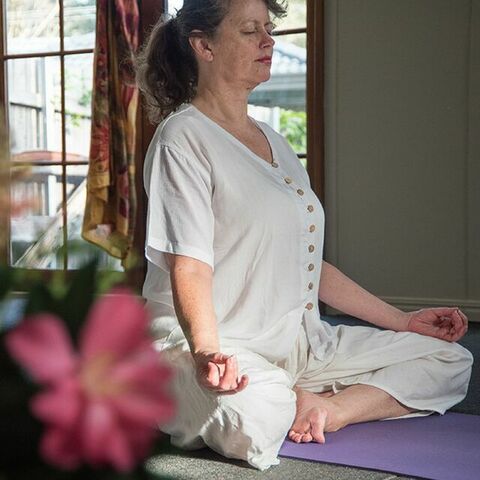
So finding yourself a comfortable seated meditation posture,
Comfortable position for your body.
You can be sitting in a chair if you want to,
Leaning against a wall or some cushions,
You can be sitting on the floor.
Whatever feels comfortable for you,
Comfort is the most important thing.
So it doesn't matter if you're not looking like a yogi,
Meditating,
It's absolutely fine.
Might like to place your hands in a mudra,
This can help with your focus and turning the awareness within.
Once you feel that you're comfortable,
Close the eyes,
Lower the gaze if you prefer,
And begin feeling your posture from the inside out.
Just becoming aware of how you've placed your body.
Notice the contact points between the body and the surface that it's touching.
And feeling an equal weight distribution on the left and the right sides.
Balance and symmetry.
So the limbs are an equal distance from the spine.
Become aware of the natural breath.
Beginning to follow the natural breath as it moves in and out of the body,
Witnessing that breath.
So becoming the watcher of the breath,
Rather than the breather.
And the next inhalation,
Allow yourself to take a long,
Slow,
Deep breath in.
Let it go with a sigh.
And twice more.
Lifting through the spine from the tailbone to the top of the neck on the in-breath,
And relaxing into that upright position on the out-breath,
Softening the body around that central core.
And once more.
And then,
And then letting the breath become natural once again.
Begin visualising the body sitting in this position as though looking in a mirror from the outside in.
Begin by seeing the body from the front side.
Seeing the features of the face,
The clothing,
The hands in the mudra.
Moving the awareness around to the right side of the body,
So visualising the body from the right.
See the right side of the face,
Right shoulder,
Right leg.
And then,
Moving the left leg.
Moving the awareness around to the left side.
Seeing the silhouette of the body from the left.
And then body from behind,
The back of the body,
The hair and the clothing.
Now visualising as though looking down from above,
See the top of the head,
Tops of the shoulders,
The arms and the legs in this position.
Now,
Challenging the mind to do the impossible,
Visualising the body in three dimensions,
Sitting in this position.
So seeing it from all sides at once.
And then bring the awareness within once again.
Move the awareness to the ears,
Beginning to engage with outside sounds entering the ears.
Begin witnessing the sounds around the body,
Picking up a sound,
Dropping it,
Moving to the next sound.
There's no need to decide if the sound is pleasant or unpleasant,
Or the source of the sound.
As the awareness becomes more finely tuned to the listening process,
Begin noticing more subtle sounds.
Drawing the awareness away from sound,
And focusing on the sense of touch.
Imagining that the body is an island in a sea of touch.
Begin feeling all the sensations around the shoreline.
Again witnessing each sensation in turn.
Notice it,
Drop it,
Move to the next sensation.
Begin noticing the more subtle sensations.
Now moving the awareness to the sense of smell.
Beginning to notice all the smells entering the nostrils.
Being the witness to these smells,
That impartial observer.
No engagement,
No judgement.
And moving the awareness to the sense of taste.
Exploring the tastes in the mouth.
Again without naming or classifying,
Or judging the pleasantness or otherwise.
Removing the senses now in the awareness to Chitrakash,
The space in front of the closed eyes.
This is known as the movie screen of the mind.
Becoming aware of the thoughts,
Shapes,
Colours,
Anything that appears into this space.
Allow the thoughts to come and go,
As though observing clouds passing.
No need to interact with the thoughts.
No engagement,
No judgement.
And no suppression,
Let them come and go.
There's no right or wrong.
There are no thoughts,
Observe that too.
And if the awareness becomes lost in the thoughts,
Becoming engaged in the thinking process,
Just become aware of that.
And offer it back to the witness,
Watching the thoughts pass by without engagement.
And bringing the awareness back into the body once again.
Becoming aware of the body sitting in this position.
Becoming aware of the contact points between the body and the surfaces that it's touching.
So in the awareness to the natural breath.
Again witnessing the breath moving in and out of the body.
Noticing how subtle the breath has become during the practice.
Barely moving the body.
Consciously begin deepening the breath.
Noticing how this activates the body-mind on a very subtle level.
Again moving the awareness out into the environment around your body.
Engaging once again with outside sounds and energies.
Preparing to end the practice and continue on with your day or evening.
Preparing to move the body,
Wriggle fingers and toes.
Opening the eyes.
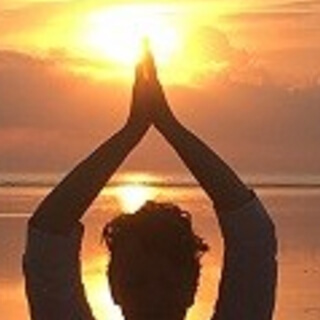
Bring the hands to prayer position.
Namaste.
Haryong Tatsad.
Practice of Anto Mon stages 1 and 2 is now complete.