I'd like to introduce to you today something called Shambhavi Mudra,
Which is a yoga technique that translates to the eyebrow center gazing technique.
Mudras are anything that is usually a certain combination of a way that you place the hands or a certain configuration of body moving in particular ways to produce the desired results.
So Mudra also translates to seal or gesture.
So Shambhavi Mudra is the practice of really turning awareness inwards and drawing awareness to the inner space and the inner sanctum,
Withdrawing from the senses.
And the loudest sense,
The one that we're probably most in tune with,
At least in the Western world,
Is that of the eyes,
Where a very eye-centric culture caught up in appearance and the way that we look and the way that other things look.
And if it looks appealing,
We want it.
And it's a matter of just really being drawn towards the eyes,
Or just constantly drawing us outwards and away from ourselves and our inner space.
And all the senses do that to a degree.
But I think that there's really something to be said for the eyes in particular.
So this technique is about withdrawing from the physical eyes and tuning into your spiritual eye.
So in so many of the traditions,
There's something that's considered the single eye or the spiritual eye in the Bible.
I forget what passage now,
I'll put it in the comments,
But there's the passage of,
If thy eye be single,
The whole being will be filled with light.
And the same thing in the yogic tradition,
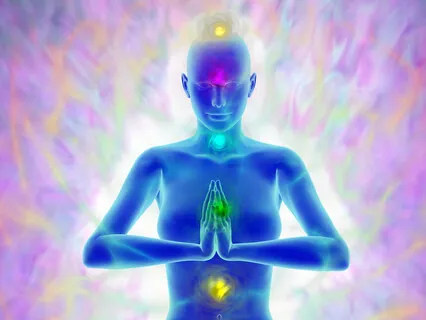
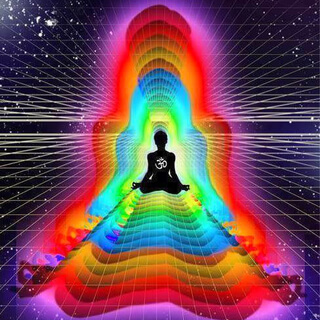
When we turn our awareness into the ajna,
Or the third eye chakra,
Which is located in the eyebrows,
Sort of either between the eyebrows or maybe turned up ever so slightly,
It's considered the space of intuition and spiritual awakening and really just our sense of spiritual discernment and upliftment.
So this technique is really meant to turn awareness into that place and activate it.
What's also interesting to note is that Descartes,
The father of I think therefore I am and so much of Western philosophical dualistic thought,
Considered the pituitary gland the seat of the soul and the body.
And it's really interesting that Eastern tradition also considers the ajna or the third eye chakra or that same space to be a space of spiritual purpose and spiritual upliftment.
In non-dualism,
There's not necessarily considered to be a soul.
It's more the whole being is imbibed with spiritual vortexes and energy and all of that.
So here we kind of see the meeting of East and West.
And all of these ancient people were clearly onto something.
So this this mudra is mentioned in the yogic text of the Karnada Samhita.
And it just essentially involves gazing at the eyebrow center.
It's considered one of the most important mudras for meditation because it helps transcend the mind and just aids in the practitioners reaching higher states of awareness and consciousness.
So it says in the Karnada Samhita that it helps one to reach the state of samadhi,
Which to me makes sense.
The eyes have a direct connection to the mind.
So if you can focus the eyes into a single point,
Then the mind is more likely to locate and just sort of settle into a single point of focus as well.
You might notice that when your eyes are moving,
The mind is more active.
So when you fix the eyes,
The mind also settles down and thoughts just kind of get to land and become a little bit more grounded and just peaceful,
Peace-filled.
The Karnada Samhita declares that the one who masters Shambhavi Mudra becomes equal to Lord Shiva,
Vishnu,
And Brahma.
You know,
I'll just list the benefits again in the description,
But it's nice that it's not just a spiritual practice.
It's also noted to strengthen the eye muscles.
So if you wear glasses or have weakness in the eyes,
It could help you with that too.
So let's get to the good part.
The technique itself is a matter of lifting the eyebrows.
So go ahead,
Get nice and comfortable,
Whether you're seated or laying down or standing,
Wherever you are in time and space.
And just try closing the eyes and sort of softening the muscles around the eyes.
And then very gently drawing the eyebrows up towards the hairline.
So you're just lifting up through the brow and try shrugging your eyebrows a few times.
So do that,
Notice any difference between when the eyebrows are lifted and when they're just kind of in their normal position.
And what you might notice is that there is a little bit more light that's ushered in when you lift the eyebrows.
So with the eyebrows lifted,
I invite you to ever so slightly just draw your gaze up between the eyes or up between the eyebrows,
Up towards the forehead.
Relaxing the rest of the muscles in the face and just lifting,
Centering.
So not lifting and turning the eyes inward so much that you give yourself a headache.
Just ever so slightly lifting.
And I invite you to sit for about five to ten rounds of breath and really just focus into that point and notice any differences,
Notice any shapes behind the eyelids,
Any textures or colors or movement of light.
Okay.
So just noticing,
Noticing from eyes,
The rest of the body,
Any shift of presence or sensation.
Likewise noticing any subtle shift in the mind.
And a practice that you might include in Shambhavi Mudra,
Though it can be used in any meditation practice,
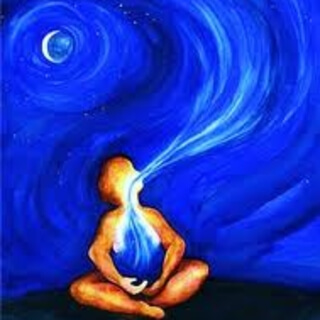
Is that of linking the breath into third eye.
So maybe you inhale and breathe in,
Like draw the breath in the third eye.
Inhale expanding out.
Taking a few rounds of breath with that practice,
Breathing in and out from that single point.
Another practice you might draw your inhale and your awareness down from the very crown of the head,
The Sahasrana chakra.
So inhaling,
Drawing it down into Ajna,
Into third eye.
Just sort of pausing,
Letting your breath and your awareness just sort of swim around in that place.
And as you exhale releasing,
Again radiating out from that point.
So that is the eyebrow gazing technique in a nutshell.
You can use it to sort of deepen any of your practices and any of your meditation.
And it just came to me that maybe a little description of where the third eye is located would be good,
Because it's not in the center of the forehead,
Right?
So think about sort of in the middle of the brain.
And you can always look up where the pituitary gland is and that might be helpful for you too.
So think dropping right through the center of the brain,
So through the forehead,
Down through the center,
And then also like right above the ears.
So if you were to go smack dab from lateral to horizontal inside the brain,
That would be where the Ajna is located.
And sort of if you're breathing from that point,
Breathing not just into forehead and out of forehead,
Or focusing there,
But really involving the full capacity of your brain into that practice.
So gazing into forehead because that is where the eyes are capable of gazing into that single point.
But having awareness really rests a little bit deeper in there.
So that is the technique,
That is the Mudra,
And I welcome any questions.
You can leave them in your reviews or your comments or feel free to message me and I'm happy to give you other resources.
There's plenty out there in the digital realm.
You can do your own research and just give it a try and just see how it can imbibe your other practices and your life with just a little bit more oneness.
What I love about this is you can do it when you're at a boring meeting or not when you're driving but you can take a pause when you're doing dishes and really at any time it is possible to do this practice with the eyes open.
And I find that I'm just not there yet.
Personally my eyes get very watery or very achy.
I blink a lot.
It doesn't work for me.
But a sign of maybe advancement would be to be able to comfortably have the eyes open and gazing up into the brow.
So again you can make this practice work for you.
Take it as it meets you and kind of play with it a little bit and just see how you can invite it into your life both in your practice,
In your space,
And into the sadhana,
The practice that is your life.
Thank you and blessed be you.