Hello,
I am Adam Rosen,
And I welcome you back to this second meditation in a series of guided introductory mindfulness meditations.
In the first meditation,
I discussed briefly the different sit positions,
The importance of placing your awareness on your breath,
And when thoughts arise,
To label them as thinking and return your attention back to the breath.
For beginner students,
It's sometimes difficult to know where exactly you notice the breath most strongly,
Or what other ways might you have to keep your attention focused on the breath during your meditation.
In this guided meditation,
I will offer you different ways to explore the idea of placing your attention on the breath.
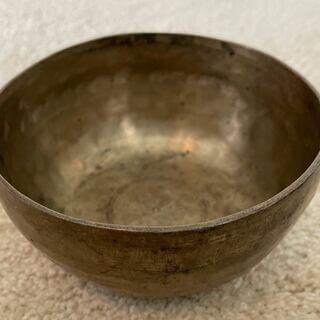
I will ring the bell,
And we'll begin our meditation,
And every few minutes I will offer you a different way in which you may turn the attention to the breath.
At this point,
You should have taken your seat.
You may sit on the floor cross-legged,
In the half or full lotus position,
Or if you're more comfortable,
Sit into a chair.
Imagine that string on the top of your head pulling upward ever so gently,
So your back is straight,
But not stiff.
Take your hands,
Rest them gently in a position which is most comfortable for you.
Take your eyes and cast them downward a few feet in front of you.
You may keep your eyes open,
Or shut them,
Whichever is most comfortable for you.
Notice your body becoming still.
At this point,
Place your attention on your breath,
Wherever you feel it most strongly.
You may recognize the breath moving across your upper lip as you breathe in and out,
Or the rise and fall of your chest or abdomen.
But for the beginning of this meditation,
Just choose where you notice your breath most strongly,
And place your attention there.
Just remember that thoughts will arise,
And when they do,
Just label them as thinking,
Without judgment,
Without bias,
And bring your attention back gently to the breath.
For the next few moments,
I want you to take the attention and place it on the pauses between breaths.
As you breathe in,
There's a slight pause,
And as you breathe out,
There's a slight pause.
Place your attention on these pauses.
Examine them.
Are they of equal length?
Is one shorter?
Is one longer?
And how does your body feel as the next cycle occurs?
So at this point,
Place your attention on those pauses between breaths.
If your mind has wandered,
That's okay.
Just label it as thinking,
And return your attention back to your breath.
Next,
I would like you to concentrate solely on the out-breath.
After a good meal,
After things that happen in your life that are good,
You sometimes breathe a sigh of relief,
An ah at the end of your breath.
So for these next few moments,
Just place your attention on the out-breath,
And notice that feeling of the out-breath.
For the next sequence of breaths,
I would like you to try counting your breaths.
As you breathe in,
Count one,
And then breathe out.
As you breathe in again,
Count two,
And breathe out.
You can count up to whatever number you're comfortable,
Five,
Nine,
Twenty-one.
If you find yourself thinking that's okay,
Just bring your attention back to the breath,
And start counting again at number one.
For this last sequence,
I would like you to try using a mantra.
As you breathe in,
Recite in your mind,
I am breathing in.
And as you breathe out,
Recite in your mind,
I am breathing out.
On the in-breath,
I am breathing in,
And on the out-breath,
I am breathing out.
Now gently bring your attention back to the space around you,
And notice how you feel.
I would like to congratulate you for making your time today to sit and meditate.
I hope that this guided meditation has offered you a glimpse into different ways in which you may place your attention on the breath.
The breath is an incredible tool that we have with us at all times.
During the day,
Be aware of your breath,
Especially in moments of anger or other emotional states.
What you may find is that simply taking your attention and placing it back on the breath for three cycles can help reduce stress,
Anger,
And anxiety throughout your day.
I look forward to sitting with you again.
Until next time,
Be happy and be well.