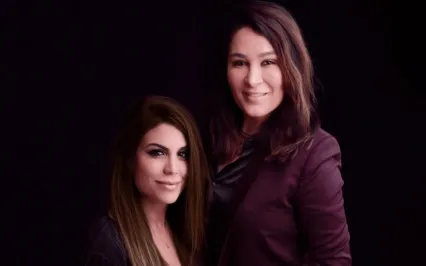
My name is Jessica London La Ed.
I am a licensed marriage and family therapist as well as an empowerment life coach.
And I am Zara Adloo.
I'm a clinical mental health counselor as well as a Kundalini and Hatha Yoga instructor.
Love all those titles.
Thank you,
Love.
You're welcome.
Love you.
Oh,
I love you.
I love that we're doing this together.
Okay,
So I was thinking the other day about how perspective is actually a love language.
Please explain.
Okay,
So like I was thinking about how a lot of relationship struggles come from a disagreement,
Right?
And typically disagreements come from a lack of a shared perspective,
Right?
Like one person is trying to argue their point and the other person is arguing against that point.
Okay.
Typically the core of that is optimism versus pessimism,
I think,
In relationships,
Right?
Something happens and the person says,
You know,
This happened,
I'm really,
Really upset about it,
Yada yada,
While the other person can take the same exact scenario and say,
I disagree with that,
I think there's a silver lining,
Why are you getting upset?
And so that creates some sort of disconnect between two people where one feels misunderstood with the other.
Right.
I'm not saying that there aren't other topics of disagreement or other kind of foundations to disagreement,
But I find that this is a pretty important one.
And I've also found that,
And this might be me going on a tangent a little bit,
But I'll tie everything back together.
I find that the typical,
Like,
Classic couple's argument is a person saying,
Oh God,
There you go again,
Always raining on my parade,
Always trying to like find a problem for every solution,
Right,
While the optimist is being met with,
You know,
The other person saying,
Oh God,
Like,
You're always just airy fairy,
Or not seeing things accurately or realistically,
Right?
I've heard this a lot in my work with couples.
Again,
There are other issues,
But I find that sharing a same common outlook and perspective as your partner can really help avoid a lot of disagreements from hindering the relationship,
And or a lot of disagreements from even the beginning.
Right,
So I think with the optimistic mindset,
You can look at the person's perspective and say,
I appreciate that,
It's a different way of thinking.
And then the other person in return can feel the same way about that person's argument and perspective,
Right?
And that is a good way to like go about having,
I don't know,
Like a positive relationship,
Right?
1000%.
And growing together,
Right?
You read my mind,
Keep going.
Yeah,
But so then what would it be like for a pessimist in our,
When they engage in an argument or disagreement with their partner?
I think the pessimist would feel misunderstood and dismissed and like the optimist is not living in reality.
And so the pessimistic person will get frustrated by this and just feel alone,
I think.
Similarly to the optimist who doesn't feel supported.
I think that the outcome is neither one feeling supported in their perspective,
Thus feeling more misunderstood.
Right,
And so like,
How do you tell a pessimist that?
I think what a pessimist,
How do they even know that they are a pessimist?
I think they need to,
People who feel lost and alone and misunderstood need to think about their own thinking errors,
The cognitive distortions,
Right?
Am I mentally filtering?
Am I externalizing the blame?
Am I being a victim?
Oh,
You're on fire,
Keep going,
On fire.
I love this,
Uh-huh.
Am I zero stadium?
What am I doing here?
Can you please elaborate a little bit on those thought distortions,
Please?
Okay,
So victimization as it kind of sounds like,
It sounds like the word,
Right?
Everything is you're the one that's being blamed for everything,
Right?
Like,
Oh,
Why is this happening to me?
Why is this happening to me?
Oh,
Everybody's out to get me.
Or this happens to me all the time.
So you're always the victim.
You're personalizing,
You're personalizing.
Exactly,
You're personalizing.
External.
Exactly,
Externalizing the blame is basically blaming everything that's happening on somebody else.
Right?
Like you have no accountability.
Exactly,
No accountability.
It's not my fault that you're looking at it this way.
And a lot of narcissists do that.
Mm,
That's true.
Unconsciously.
That's true.
Or sometimes consciously.
And then there is,
I think I mentioned,
What was the other one?
Oh,
God,
I know this.
I know this,
I know this.
Selective,
Selective seeing and hearing.
Mental filtering.
Yes,
Yes,
Yes,
Yes,
Yes.
So you're discounting all the positives and only choosing what you want to see.
Yeah,
That's really dangerous,
Actually.
So instead of going into the aftermath or the outcome of an argument,
Thinking that you're lost and you're misunderstood,
Those are times where you can reflect on your own thoughts and dig deeper into thinking why you are thinking or feeling this way.
Because in reality,
Are you really lost or misunderstood?
No,
I don't really think so.
Are you alone in life?
No,
Never.
You're never really alone.
Even if you're physically alone,
There will always be someone who gets you,
Someone who really understands your perspective.
You just have to open up about it.
And it's about talking or engaging with people who have similar outlooks as well.
And if they don't,
They can at least acknowledge and appreciate it instead of dismiss you about it.
That's not to say I don't think that someone who's an optimist versus pessimist can't be compatible.
I just think that there is going to be more tension and more areas of growth,
Which you mentioned growth,
Right?
And I think growth is vital in relationships.
I think it's really,
Really important.
But I also think there are other ways to grow instead of just arguing over perspective as well.
I agree.
I think it goes into that book,
Mindset,
That I've read,
Whether you have a fixed or a growth mindset.
If anybody wants to look into that book,
It's one of the top reads.
Really,
I need to do this.
It really will help you understand where you belong.
Are you a fixed mindset individual,
Because it defines it step by step?
Or are you growth-minded?
Right,
Open.
Are you open?
Exactly.
Yeah.
So then you can work on the things that you need to work on once you have that awareness,
Right?
Yeah,
No,
And I think that's great.
I think that growth is so important to me personally in a relationship.
I also feel that I've tried to convince myself that I can be with someone who's just fixed,
Aka set in their ways.
I feel like that's more of the realist mindset sometimes.
Not to say that all realists are not growth-oriented,
But again,
People come in packages.
And from my experience,
It's never really the realists who are more open-minded to learning and expand as much.
Or it's on a continuum.
It's just lesser.
But I found that none of my relationships as me being a growth mindset person,
And I really feel like that's almost another way of saying optimist,
Because optimists view even things that aren't necessarily pleasurable in life as a positive growing experience,
And it helps kind of guide them into being the best version of themselves.
I found that if I am not in relationship with someone who views whatever happens to them as some sort of optimistic learning experience,
I'm in a relationship with one hell of a miserable person.
I've never been with someone who is more realist or pessimistic,
You know,
And not felt like,
Man,
This feels a bit heavy.
I'm gonna go into that a little bit on a personal level.
I'm going through a divorce after 10 years.
And the one thing that I really don't like is when people look at it as like a negative thing.
I understand there's a lot of hurt and pain,
And they're basically losing a part of yourself that was there for a long time.
But then there's also that side of me that's excited about meeting someone else and learning about the things that I need to work on as an individual,
Finding my sense of autonomy again,
Finding myself,
Rebuilding who I am,
And then knowing that there's someone better that is going to be there for me.
That is like so incredibly optimistic for someone who's going through a divorce.
It doesn't mean that I'm not hurting,
But it also helps me look forward to the future.
See,
I love that.
And you said something that almost primes a lesson.
Being optimistic does not equate to dismissing your emotions.
It equates to feeling your emotions,
Validating them,
Viewing your circumstance as a learning experience,
Right,
And moving forward.
I think that's vital.
And I'll tell you something.
Back to the whole how this relates to a couple and relationships.
I also feel like there's already so much stuff and stress in day-to-day life that goes on that there's enough to argue with your partner on for a lifetime.
There's always something that you can find to argue about.
So if you're with somebody who you have fewer points of argument with,
This,
In this case,
It translating to having more shared perspective in what happens to you in life,
Then the ratio of positive to negative interaction is much higher on the positive side.
And research has actually shown,
The Gottman's who are like renowned in relationship compatibility research,
Highly evidence-based,
That for every negative interaction you need five positive interactions to just offset the negative.
And how is that possible or close to possible if you have a person who consistently sees everything that happens in life as a sort of negative victimization stance versus someone who sees it as,
Oh,
This is great,
I can learn from this,
Right?
So it becomes really difficult to balance that out and over time it erodes at the relationship.
So I think it's really important if possible to assess for an optimistic person if you're an optimist and you're trying to date and more of someone who's a pessimist,
I'm sorry,
I might get hated on for this,
But I think that's just like,
Or a realist,
Which I think is another way of saying pessimist.
Or someone that's willing to work on themselves.
Yes.
They know they're not okay,
But they're willing to put in the work.
Okay,
Then that's the exception,
Right?
And they might be struggling,
But do you see willing to work on themselves,
Growth mindset,
This is happening for,
As a catalyst to my self-improvement.
So if they're willing,
Then I think that's a nudge in the right direction.
Again,
I know I'm saying like optimist,
Pessimist as if it's like black and white.
It's obviously on a continuum.
But some people are really extreme and when you're extreme one way or the other,
I really think that you should find someone who's within your category.
Yeah.
You know?
Yeah.
Would you really agree,
You're just saying yeah?
Do you really feel,
Tell me what's on your mind.
Well,
I think it's hard for people to understand whether they're an optimistic person or a pessimistic person.
Yeah,
Absolutely right.
Some people really don't know that they're pessimists.
Then we should make a quiz.
Yeah,
We should make a quiz.
Yeah,
Yeah,
You're right,
You're right.
I think overall though,
Just to tie it back to what you were saying about balancing out the positives and negatives in a relationship.
I mean,
To take it to a spiritual level,
We always say words are like spells.
Ooh,
I love this.
And when you said that there's,
You have to kind of mention five positive things to someone versus like one negative to balance it out.
Think about how many negative statements you get from your partner versus positive ones.
And understand that that is like a spell being put on you.
That is like vibrating within your cells.
That frequency is there,
You know?
And that is just like pretty much what the outcome of the relationship will be.
All negative.
It's like you're speaking that into existence.
Exactly,
Exactly.
You know you're right,
Because like words carry vibration.
They do.
So if you don't know that your partner is a pessimistic person,
Or if you don't know if you are yourself,
Think about what kind of words you say to yourself and to your partner.
Ooh,
Oh my God.
That's a start,
Right?
That's great,
Zara,
That's brilliant.
You're absolutely right.
You know,
It's funny,
When I was in grad school,
My professors spoke,
This is brilliant that you say this.
I swear,
My favorite professor said,
I love that you find it cute and funny.
No,
But like,
You couldn't have said it better.
He literally said the words that someone chooses to use to describe a scenario will tell you if they're more of an optimist or a pessimist.
If they see somebody,
Right,
Engaging in a certain way.
Excuse me,
I need you to do this.
Excuse me,
Please sit down.
Excuse me,
Can you go grab that for me?
Thank you,
Delegating,
Right?
You have one person who might observe this and say,
Wow,
That person's so bossy,
Right?
So that tells you what about that person?
That they think it in a negative way,
They're pessimists,
Right?
And so again,
I feel like with making that statement,
Right?
Maybe they're not holistically a pessimist just by that one thing,
But that's a point.
That is a point.
That is a point.
And then you have the other person who might say,
Wow,
This person's really good at managing.
Boom,
Exactly,
Exactly.
But maybe they could verbalize it in a better way.
Yes,
But they see it as something positive and then they empathize with the other perspective as well,
But they view it holistically as a point of growth.
I agree.
You know what?
This can even go to your friendships.
If you're noticing that someone is talking about other people to you all the time,
Doesn't that give you guys like the red flag,
Oh,
This person could be talking about me too?
And so think about it with the person that you're with.
Like how often is this person putting me down?
How often are negative words coming out of this person's mind,
Of mouth?
You know?
And just kind of use that as a point of measurement.
I think that's great.
Yeah,
Because it's also like not only how they're talking about you as their partner,
But also how they're talking about others and the world around them.
It's so true.
And again,
To your point,
Language.
What words they choose to describe.
Something says a lot about their perspective.
There could be fact there about the restaurant situation,
But you can word it in a way that's positive.
Exactly.
Exactly.
Yeah.
I think it's true.
So I think ultimately,
I mean,
There's so many different factors to compatibility,
But I think perspective,
Like perspective on life in general,
That's going to kind of dictate in a way the outcome of the fulfillment and joy you'll experience in the relationship,
At least in one major facet.
Let's not get into politics though.
No,
Definitely,
No,
No,
No,
No,
For sure.
The posing views,
I don't know where you're gonna go with that.
Yeah,
No,
I'm just,
Whew.
So we're talking about the Vax,
No Vax situation recently.
Yeah.
That's a tough one.
That is,
And I think with politics,
There's always just,
There's just so many different perspectives,
And I don't even know what to say about it.
And mine just shuts off when it comes to politics.
I know,
I hope that we helped you all kind of identify what red flags to look for,
Or ways that you can grow based on like the pain points in your own personal relationships and what you experience within.
100%,
Yeah.
Thank you so much.
No,
Thank you so much.
No,
You know what,
She is a natural at being on the camera,
And that's something that I struggle with.
You don't struggle at all,
You were great.
But I'm thanking you for pushing me,
Because I didn't want to do this.
And that's what I love about you.
Despite it feeling like uncomfortable,
Or you experiencing distress about it,
You're like,
Okay,
I'm nervous,
I'm anxious,
And I'm gonna view this as a growth experience.
Absolutely.
And I'm going to embrace it and make the best of it.
Yeah.
So I love how you actually took one of our theories and applied it to in the moment.
Yeah,
So am I a bubble of optimism?
Yeah,
I mean,
In my perspective,
Yes.
Mwah,
I love you.