And welcome to this track about dealing with procrastinating behavior and I've prepared some mini-meditations with techniques which are evidence-based to deal with procrastinating behavior.
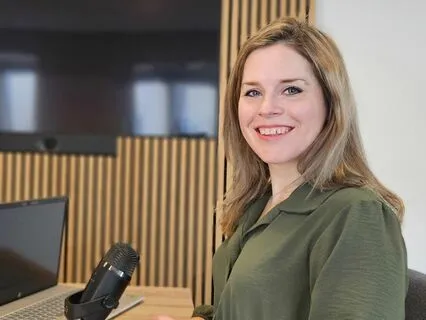
My name is Yvette,
I am a former procrastinator myself and I have learned that it has a lot to do with emotional regulation and I will dive into that later.
And what will help is of course mindfulness and meditation.
And my first tip is mindful breathing.
And I'm not going to force you to do a certain breathing technique,
I've done this in other tracks.
First of all,
I want you to focus on how you are breathing,
Whether it's from your chest or your stomach,
And if any thoughts arise.
And if thoughts happen,
Return slowly to your breath.
For me,
This is actually a very daunting exercise because my thoughts pop up constantly.
And if you are anything like me,
You constantly have to go back to your breath.
So if you're ready,
You can try that out with me.
Okay,
Let's slow down a bit,
And that was already technique number one.
Because a study by Wong and colleagues in 2017,
They found that even short periods of mindful breathing reduces perceived stress,
Which is of course closely linked to procrastination.
But it takes practice,
You don't have to do this perfectly.
Even I,
When I was just doing it,
I constantly was in thought and I had to go back to my breath.
But a great first tip to start in your body.
And the second technique is the 5-4-3-2-1 grounding exercise.
So according to the APA 2020,
In cognitive behavioral therapy,
You have this grounding exercise,
Which is called the 5-4-3-2-1 grounding exercise,
Which is a great tool to reduce anxiety and avoid those thoughts you perhaps had in the previous exercise.
And when individuals really ground themselves,
They can manage their anxious emotions.
Because like I shared before,
A lot of procrastinating behavior stems from emotional regulation problems.
I myself struggle a lot with anxiety,
Raising thoughts constantly.
And I have to admit,
This is one technique I haven't tried.
So if you want to do it with me,
You can right now.
Where I want you to name 5 things you can see.
Name 4 things you can feel.
Name 3 things you can hear.
Name 2 things you can smell.
And final one,
1 thing you can taste.
Another meditation technique you can do is a body scan.
So especially mindfulness-based stress reduction techniques like body scans,
They can help you with emotional regulation and also refocus your thoughts,
According to,
If I pronounce their names okay,
Siessa and Serretti in 2009.
Enhanced emotional regulation can make tasks seem less daunting.
So if you're ready to do a quick,
Emphasis on quick,
Body scan with me,
Where I want you to close your eyes,
Take a deep breath in through your nose and then release it through your mouth and place your feet firmly on the ground and feel your feet.
Let's focus on the left one,
On your left foot,
Press it into the ground and then press your right foot.
Excellent,
And go upwards to your legs,
Maybe they're feeling a little bit tight,
Just make a mental note out of it.
And feel how you are seated in your chair,
Where we will move upwards to our stomach.
Maybe you feel some tension here,
Or you are taking deep breaths through your belly,
Or you're taking breaths from your chest.
Let's move a little bit upwards to those shoulders,
Maybe they are feeling very tight,
Or you'll want to move them,
And let's move down to those arms.
Maybe you notice whether or not you're cold or warm,
And move down to your hands.
What do you experience there?
And let's move back to your neck and feel if there's any tension there,
Let's just breathe through that,
And move upwards to that jaw,
Maybe you have a tense jaw,
You can relax it now.
And is there a smile on your face?
And do you feel a frown on your forehead?
And move to the top of your head,
Well done.
And I would like to talk about the next technique,
The stop and reframe.
This is another one from CBT,
Cognitive reframing,
And according to Siroy and Psycol in 2013,
That this stop and reframe technique helps with procrastination,
Because it changes self-defeating thoughts and replaces them with positive ones.
And it's a productive approach to help you with tasks and manage certain emotions that can lead to procrastination.
So what will we do?
Stop stands for,
One,
Stop what you're doing,
Two,
Take a deep breath,
Do it with me,
Three,
Observe your thoughts,
Feelings and body,
So again,
Thoughts,
Feelings and body,
I will give you a couple of seconds,
And four,
Is proceed with a more mindful choice,
For example,
You can start with the task you're procrastinating on for just 5 minutes,
Or you can choose to do a body scan or a breathing technique to regulate your emotions so that you can start the task.
And what did you think of that exercise,
Where you stop,
Take a deep breath,
You observe your thoughts,
Feelings and body,
And then,
Four,
Make a mindful choice.
And then the final technique I want to share today,
And I've shared this in many other tracks,
But it's a very important one,
We all know this one from Kirsten Neff,
2003,
It's self-compassion.
And even though I know about self-compassion,
It's something I have to remind myself daily of,
If it doesn't come natural to you,
You might set timers,
For example,
And it is something so simple,
But so difficult to practice,
Where you take,
For example,
1 or 2 minutes to acknowledge your feelings,
Or stress or anxiety,
And you can do this now with me,
Where you place your hands over your heart,
And you take a deep breath in,
And you say out loud with me,
This is difficult,
But I can handle it.
Or say,
I am feeling anxious,
But that's okay.
Other people feel like this,
Say it again,
Other people feel like this,
But I am doing my best,
I am doing my best.
Now I want you to hug yourself,
And say out loud with me,
May I be kind to myself,
May I be kind to myself,
And may I forgive myself,
And may I forgive myself,
Okay.
Thank yourself for being here today,
For showing up,
Being in your body,
And set the attention to try out these techniques,
At least for another week,
Just 1 or 3,
Try them out for a week,
And you are always welcome to come back to this meditation.
Thank you.