Welcome to the official podcast of the Grammy-nominated record label Metta Mindfulness Music,
Where we discuss how the ancient wisdom and neuroscience of our sound healing music can improve your health,
Well-being,
And transform your life into an inspired,
Positive experience.
I'm your host,
Pete Soudan,
And this week we'll be beginning a brand new series focusing on our album,
Vital Harmony,
Sound Healing of the Doshas,
And also the corresponding ten-day meditation course on the topic,
Experiencing the Doshas of Ayurvedic Medicine.
You are currently listening to our music track titled,
Sun Salutation Flow,
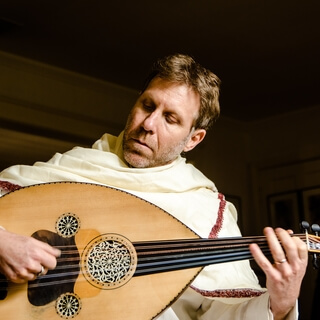
From the Vital Harmony album by Yuval Rahn,
Which incorporates the healing mantra for the Vata Dosha performed by Zhai Yutal.
Sound healing practices like the Doshas are not only beneficial for the brain through auditory stimulation,
But are also transmitted through the entire body as well,
Creating global relief from stress,
Pain,
And other imbalances by invoking the parasympathetic nervous system.
This is especially true when using our voices to chant the mantra,
OM,
While practicing the Doshas.
Now,
We'll listen to the introduction of our meditation course,
Experiencing the Doshas of Ayurvedic Medicine,
Narrated by the president and executive producer of Metta Mindfulness Music,
Dr.
Richard Gold,
Providing an overview of the structure,
History,
And benefits of this ancient practice.
Ayurveda is a Sanskrit word derived from two roots,
Ayur,
Which means life,
And veda,
Meaning knowledge.
Knowledge arranged systematically with logic becomes science.
Over time,
Ayurveda became known as the science of life.
It has its roots in the ancient Vedic literature of India and encompasses our entire life,
The body,
The mind,
And the spirit.
According to Ayurvedic philosophy,
The human body is composed of five elements,
Space,
Air,
Fire,
Water,
And earth.
These five elements combine to form three fundamental physical,
Mental,
Emotional types,
Or doshas,
That are present in everyone in varying amounts.
The three doshas are the constituents that orchestrate a person's mental and physiologic functions,
Including metabolism and their mind-body type.
The three doshas are identified as vata,
Pitta,
And kapha.
In general,
It is taught that vata governs movement,
Pitta governs transformation,
And kapha governs structure.
Learning these natural and time-honored practices from the wisdom tradition of India may help lead you to experience a deeper sense of well-being,
Improved digestion and blood circulation,
Increased vitality,
A positive mental attitude,
And a more fruitful,
Creative,
And intimate life.
Now,
We'll listen to a clip from a presentation hosted by the California Institute for Human Science with album composer and creative director of Metta Mindfulness Music,
Yuval Ron,
Discussing the sacred OM mantra and how it's used properly while chanting the vata,
Pitta,
And kapha doshas with some brief demonstrations.
So one of the projects that Dr.
Gold invited me to work on was the doshas of our Vedic medicine,
And we found in our research that a very important sacred sound of OM is used in our Vedic medicine.
The three different doshas,
The three states of energies,
Are associated with the A,
U,
And M parts of OM,
And OM is the sound of the universe,
It's the foundation of the universe according to Hindu philosophy.
So while most people chanting OM with the sound OM,
Actually the real purists and the real knowledgeable people are conserving the ancient sound that OM was not really OM,
OM is a four-part sound.
It has an A,
An U,
And an M,
And then there's a moment of silence.
That's the fourth part.
And the A,
U,
And M are associated with the three energy conditions called the doshas which are the foundations of our Vedic medicine of India and of yoga.
So vata,
Which is associated with A,
Is movement,
Pitta is the fire element,
It's associated with transformation,
Like digestion is a form of transformation of food.
Kapha is structure,
Cohesion,
Lubrication,
It's a mix of water element and earth element.
And kapha is associated with the M sound in the Aum.
These are all related to health and yoga.
So I'd like to invite you to chant along.
First we're going to chant vata,
Then we're going to chant pitta,
Then we're going to chant kapha.
The vata,
To cultivate and to balance the vata energy is,
We do a long A,
A short U,
And a short M.
So this is the music that I composed for vata,
To cultivate vata.
So we're going to take a deep breath in,
Then we're going to take the sound of the recording Aum.
Long A,
A short U,
And a short M.
Deep breath in,
Aum.
Try to take the tone from the music,
The tonal center is important for vata.
One more time,
Breathe in.
So this chanting sound cultivates the energy of vata,
Which is movement,
The energy of movement.
Then we're going to go to the music of pitta,
Which is more fiery.
And that is the fire of transformation,
Either mental or physical.
We're going to do a long U.
We start with a short A,
A long U,
And a short M,
With the tonal center of the music.
So take a deep breath.
One last time,
Breathe in.
Aum.
As you can see,
The breath of kapha,
The fire breath,
With the long U,
Creates a lot more friction inside and a lot more heat.
It's cultivating heat,
While the vata breath earlier cultivates more coolness.
Now let's go to the third and last breathing sound for kapha.
And kapha is earthy,
And it's wet earth.
And the sound is a short A,
Short U,
And a long M,
A long M sound.
Let's see what that will do.
Take a deep breath in.
Aum.
So,
As we know,
Each vibration,
Each sound vibration affects us differently and resonates differently in our body.
And this is a little demonstration of that from the doshas of our Vedic medicine.