Hello,
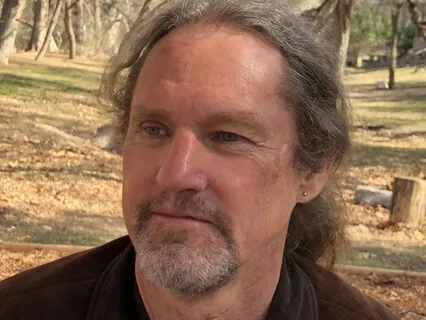
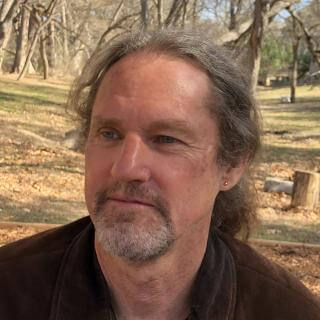
This is William Cooper.
Welcome to Awakening Together.
How are you doing?
Well,
I hope.
Well,
Let's continue our look into the anatomy of suffering.
We have thoughts,
And those thoughts are motivated,
95,
98% of them,
By an underlying hurt,
Fear,
And anger.
We saw that in the last podcast.
The hurt,
Fear,
And anger itself comes about because of separation.
We have underlying tension because we've separated from ourselves.
We've cut ourselves off from our self.
We're living a life that's no longer ours.
So underneath hurt,
Fear,
And anger is separation.
So you look for yourself as you meditate.
Just look and see what's true for you.
What are your thoughts like?
What are they motivated by?
And why are they so darn addicting?
You can't put them down.
It's hard to last five seconds without jumping into our thoughts.
Why?
Well,
What I've noticed,
You see for yourself,
But because they're motivated by hurt,
Fear,
And anger,
That's pain.
Being separated from ourselves is painful.
When I'm in pain,
That motivates me to jump into some addiction.
What are common emotions?
Well,
TV.
Why?
Because I can jump into a story and be distracted.
Hey,
What if I don't have a TV,
But I've got a vivid imagination?
What if I have thoughts?
Wow,
Those can distract me.
So I jump into my thoughts.
I become addicted to them and emotions.
I become addicted to my drama.
That's why.
Because I'm hurting underneath it all.
It's a funny loop because I have the thoughts because I'm hurting,
But now I jump into the thoughts to get away from the hurting.
That's funny.
And because I'm now distracted into my thoughts,
I'm more separated from myself than ever.
It's like watching TV instead of living my life.
So,
More underlying pain.
That's sort of how addictions work anyway,
Right?
Well,
Why would I separate from myself?
You look for yourself.
Why would you do that?
Why would you betray yourself?
What if at work they said,
Hey John,
Do this against yourself and we'll give you a raise?
You know,
Some people have been known to do it.
What about a relationship?
Hey,
Do this and I'll love you.
Some people have been known to do that.
There are external carrots,
External positive rewards that lure us to betray ourselves.
That's what movies are made of.
We've all done it,
Right?
Well,
We've done a lot of that and we've cut ourselves off.
When we're very small,
We don't have much discernment.
So,
And I'm not referring to your family,
But if a significant other,
A parent or uncle or somebody said,
Hey,
I'll love you if you have the same beliefs as me.
Maybe you would betray yourself in order to have the beliefs of your uncle or your father or your mother.
But what if your mother was mentally ill?
You have my beliefs.
In other words,
You'd be mentally ill also and I'll love you.
Or what if I believe that you're not very smart and I tell you so?
Well,
You go along with me and I'll love you.
Don't we betray ourselves so much,
So often and so many different ways through our culture?
Hey,
If you do this,
If you believe this and you act this way,
You'll be a good citizen.
Well,
Nuremberg trials,
That's all I can say.
It doesn't always work out so well when you betray yourself because when you betray yourself,
You often will betray others.
It's a big loop.
What a mess.
Stephen Walensky wrote a book called The Trances People Live.
And in that book he says,
Hey,
When somebody comes into my office as a psychologist,
I don't hypnotize them.
I de-hypnotize them because everybody's already hypnotized.
What does he mean by that?
Well,
What he means is when I betray myself,
When I take a belief in that's not true,
Really true to my core,
It's not true of my being that I'm not smart or that I'm unlovable because I'm love itself or I have mental illness or whatever.
That's just not true.
But I take it in in order to be accepted.
That's hypnosis.
When I take in a suggestion and then start acting other than I really truly am,
That's called hypnosis.
It can be done in many,
Many ways.
When you're young,
You're susceptible.
When you hear things repeatedly,
You become hypnotized.
When something's done with force,
Like a big emotional trauma,
You can become hypnotized.
So,
You know,
Maybe you've gone to a stage show and the hypnotist tells the person on the stage,
Hey,
You're a chicken.
They become a chicken.
You've seen it,
Right?
Hypnosis can be very powerful for good things.
You can take pain out of people's body.
It can be helpful to as one way to possibly heal somebody's cancer.
A number of things can happen.
It doesn't work across the board,
But when you put in a powerful suggestion,
The mind does affect the body.
So hypnosis is one of many ways to do that.
If you read my biography on my website,
Which is included in the show notes,
You'll see that I worked with 25,
000 people with hypnosis.
I'm also a licensed psychotherapist and have developed many therapies built around hypnosis.
I used to train medical students with hypnosis.
I have some experience.
I was president of my organization.
So I've seen all this.
Hypnosis can be very powerful.
And really,
We all are hypnotized.
We just haven't done it in the old cartoon fashion where we watch a gold watch going back and forth.
Hypnosis is when we take in a suggestion that cuts us off from ourselves often.
Other times it can be used to take in a suggestion to act upon.
But it's not coming from within.
It's coming from out,
From without.
That's hypnosis.
So how do we de-hypnotize ourselves?
Well,
We're going to talk about that in future podcasts.
But one very powerful way is to stop.
I'll tell you a story.
I was doing a stage show.
I mostly did not do those,
But I was contacted by a high school to do a stage show for their graduating students.
The top student in the class was one of the people I had on stage.
I had about ten students.
And they were all turning into rock and roll singers.
And they were.
.
.
One of the things I had them do was to forget the number two.
The number two did not exist for them.
So when I had them count their fingers,
It was one,
Three,
Four,
Five,
Six,
Seven,
Eight,
Nine,
Ten,
Eleven fingers.
They were freaking out.
They had eleven fingers.
Well,
The very smartest student asked me.
.
.
He counted his own fingers.
He was the best student in math at the school.
And he counted his own fingers and he had eleven.
And he was freaking out along with everybody else.
When you take in a suggestion,
It feels very real to you,
Even if it's against you.
Having eleven fingers was not making them happy.
You can tell when you're cut off from yourself and you're working against yourself when you don't feel relaxed and happy.
Because your being is relaxed and happy.
So all these other emotions are just symptoms of being cut off from ourselves.
I know it's normal in society to feel hurt,
Fear,
And anger all the time,
But it's really abnormal.
So anyway,
To break the hypnotic spell,
This kid was really smart.
He held up his hands and he said,
Put your fingers up against my fingers.
He believed he had eleven fingers because he had counted them himself.
But,
Somehow he knew to ask me to put my hands up against his.
I wouldn't do it because I knew it would break the hypnotic trance.
Well,
That's our first clue.
And meditation will help us with that.
Let's end it for now.
And we'll pick up where we left off in our next podcast.
And we'll talk about this a little deeper.
Alright.
I enjoyed talking to you and I look forward to our next podcast.
Bye.