Hello,
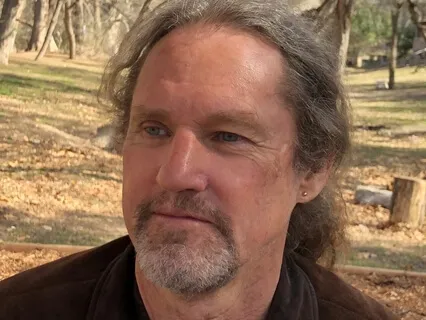
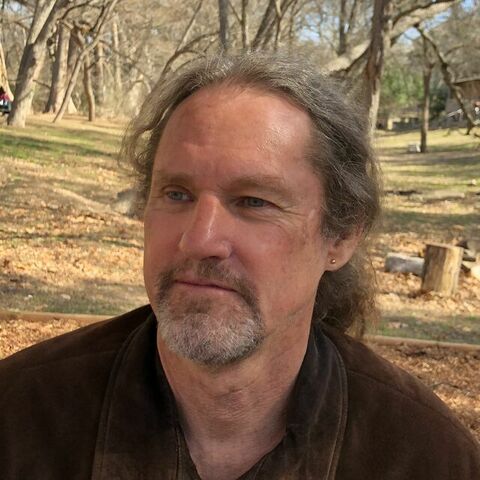
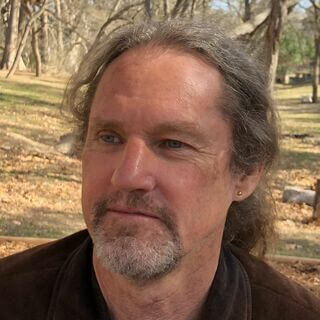
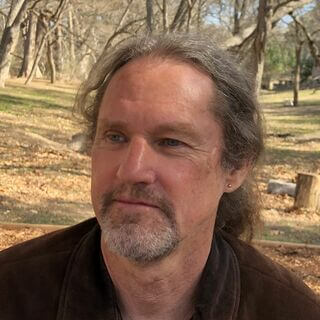
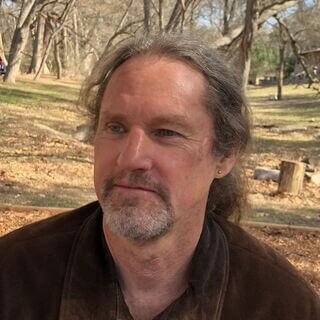
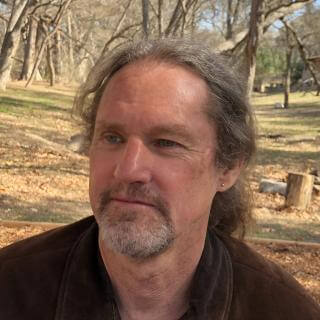
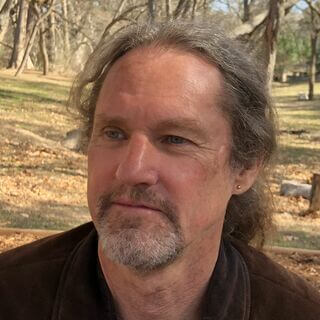
This is William Cooper.
Welcome to Awakening Together,
Relaxing into Happiness.
I'd like to continue our conversation about healing PTSD.
Often emotional,
Psychological,
And physical trauma becomes held in the body.
The body is the slowest moving part of the mind and the overflow goes into the body.
So with trauma,
Often the body bunches up or clinches up like it's in a cramp.
We could say the brain cramps up,
The nervous system cramps up,
And these cramps will stop your flow or cause a lot of pain and distract you and make your awakening and life on this earth not so pleasant.
So just like all the rest of the areas of our lives,
It's important to reestablish the flow.
One way the flow can be interrupted is through trauma.
Peter Levine,
In his work Healing Trauma,
Talks about the fight,
Flight,
And immobility response.
When an animal is under stress or being attacked,
It will either fight or take flight or just collapse and play possum,
Play dead,
And that's the immobility response.
We do the same thing.
We might actually,
In times of trauma,
Take flight,
But it might be more of an argument or an emotional flight,
Or we might actually fight or fight emotionally,
Verbally,
Or we might collapse into the immobility response.
We just can't do anything.
We're immobilized.
When any of these are interrupted,
When our fight is interrupted or overwhelmed or our flight is interrupted or overwhelmed,
We freeze up.
We become overwhelmed.
Our nervous system collapses.
We have already collapsed when we're in the immobility response.
So under any of these scenarios,
We've frozen up,
And because we've frozen up,
We've become disconnected to reality,
At least to some extent,
Maybe almost completely.
Our flow has stopped.
That interruption can turn into what I'll just call a brain cramp or nervous system cramp.
We shut down.
It can feel like a muscle cramp.
We can get a tight stomach or a frozen area inside of us where we're blocking off the trauma.
We have just shut down.
When we are shut down,
It can affect our lives severely.
It definitely can affect our awakening process.
We can meditate for years and decades,
But if we have a frozen spot inside of us and we don't approach it properly,
We will continually be watching that frozen spot.
Even if we're totally awake,
There will be a part of us that's walled off and isn't awake.
It's frozen,
Making life very uncomfortable and not really flowing.
It would be what they might call an inauspicious awakening,
A partial awakening.
So what do we do?
Well,
Connection is the antidote for all of this.
If you're going through a trauma,
Let's say you just had a severe trauma,
A car accident or you're in a war and something happens.
If you stay connected to your surroundings and if there's somebody around you and you stay connected to them,
You touch them,
You talk to them,
You don't get in your head and try to think through,
Why is this happening?
What happened?
What should I have done?
Because that disconnects you.
That's like switching scenes,
Like watching a TV,
You're watching your head,
Your thoughts,
Your emotions.
Instead of that,
Stay in touch with what's actually going on within you and continue to be connected to your surroundings and the trauma will be much less likely to coalesce into a cramp and turn into post-traumatic stress disorder.
Instead,
The trauma will slowly heal itself through that connection.
Well,
That gives us a clue as to what to do later if we were in fact disconnected during our trauma.
How do we know if we were disconnected?
Well,
Often you'll feel a frozen spot inside of you or it will feel like you're cramped up or emotions just don't process.
They just sit there and sort of glow inside of you,
Anger,
Hurt,
Fear.
They don't move.
They continue to repeat themselves because they're unprocessed,
Almost like a broken record all through your lifetime.
They just don't release.
So,
What to do?
Connection is the antidote.
We want to restore the flow.
If you just look at the stuck emotion,
The block,
Maybe it feels like a cramp or like a frozen place like an ice cube inside of you,
If you just look at it much like you might do through meditation,
It will typically stay frozen.
Just looking at something continues to keep it frozen.
The way that you release it and help it flow and move on is to restore the connection,
To restore the flow.
And you do that by stepping into it.
You let that emotion,
You let that physical sensation be fully felt.
You step into it and own it.
I am anxious.
I am afraid.
I am angry.
Whatever it is,
You step into it and you feel yourself as anger,
As anxiety.
It's not you that has a little anxiety over at the side or a lot of anxiety at the side or anger to the side.
You processing anger.
No,
You are the anger because it's nobody else's anger.
It's a part of you that has been dissociated and put into your muscle system.
So,
To unfreeze it,
That's what you have to do.
Reown it,
Reintegrate it in that way.
However,
You want to go very slowly,
Very gently.
You step into it but you do it so gently.
You don't push yourself.
Whenever you push something,
It freezes further.
If you're rough with something,
It clinches up.
You want to be gentle.
You'll feel it and it might feel very intense but gentle.
Don't push.
Just let it evolve and let your intuition guide you.
If,
For instance,
Your body is twitching or spasming or something like that,
Just go up to where it begins to spasm and then let your body take over but do it very gently and back off if it even approaches becoming overwhelming or more than what you want to handle.
Remember,
This podcast is not psychotherapy so if you find that,
Yes,
This is a trauma and it's a little more than you can handle on your own,
Call a therapist.
Ask if they're trained in post-traumatic stress disorder because not all of them are.
But the information I'm giving you might help a lot of people.
If you listen to yourself,
You likely can guide yourself through this on your own.
Again,
If you can't,
Call a therapist.
So you want to step into your body sensations.
For instance,
If your throat is tight,
Feel your tight throat.
Be your tight throat.
I am the tightness.
I am this tightness.
If your stomach is tight,
Be the tight stomach.
If your forehead is tight,
Be the tight forehead.
As you sit still and you notice a lot of different tensions,
Maybe your throat or your stomach or your shoulders,
Choose which one calls to you to work with first.
If it's your shoulders,
Focus on your shoulders.
Feel into that and just let that begin to unwind and unfold.
Let that be your point of intention.
If at another time,
The tension in your forehead calls to you,
Connection is the antidote.
So reconnect to your forehead and let it express what it's already doing under the surface,
Underneath that frozen veneer.
Let it radiate tension and feel it.
Let it radiate and as it radiates,
It will discharge that tension.
Let it and feel how good that feels in a way to just let it do what it wants to do.
Feel how bad that tension feels,
But let it radiate out.
Let it discharge.
So you want to step into your feelings.
Be gentle.
Let them unwind and let them evolve.
Sort of track with them.
It's very important to keep it somatic and experiential,
Not to go up into your head and start to think because that actually removes you from the feeling experience and the release is happening on the feeling level.
Remember earlier I said that PTSD often happens when the fight or flight response collapses.
So in order to restart the fight or flight experience where it was interrupted,
You might even just start to move a little bit.
You might start to move your legs or push up against the wall or even make sounds.
Sometimes you can let that stuck part,
That visceral,
That emotional,
Somatic body,
Muscle tension part make a sound.
Let it groan or scream or it can do whatever feels like it wants to do.
Let it do that.
Not pushing it,
It could be very quiet and gentle but just priming the pump and then just relax and let it take over.
And if it feels that it would like you to make another vibration or sound,
Go ahead and do that.
Peter Levine in his book,
He happens to like the sound vuuuu,
Vuuuu,
Vuuuuuu.
He feels that that helps vibrate and open things up.
I find that that's a helpful sound but you can also find your own sounds.
Experiment and see what works for you.
What you're looking to do is to let things reopen again and let the flow be restored.
Flow is restored with connection.
So let's say the trauma has passed and by the way,
Trauma could be a lot of small little things happening over and over and over,
Things that you typically wouldn't think of as big,
Huge traumas but just you're being put down,
You're being called names and it's happened over and over or you're in just sort of a bad situation.
Maybe somebody else wouldn't be bothered by it but you're bothered by it and that's the key and it happens over and over and over and eventually it affects you.
That's trauma and if you still feel it in your body,
Well then for sure it's trauma.
You don't measure yourself by somebody else's standard it's just does it affect you?
Does it affect me?
If so,
Then it's trauma.
You're the expert on you.
Other traumas are indeed big traumas.
Car crashes,
Wars,
People beating you up,
Robbing you,
Shooting you,
You know,
Big traumas.
Things that you would consider to be traumas.
So any of these things will shut you down and what we're looking for is to open back up.
So movement,
Sound,
But step into and feel where the clog up is.
Feel where you feel tight inside.
It might be a ball of fear that does not feel good to feel too much so go slow.
Take what you can take but step into it and own it.
Perhaps you just want to let it radiate and radiate and radiate.
Now after you step into it or as you step into it,
You might notice that it's a lot of energy and it doesn't seem to be going anywhere.
You're not trying to make it go anywhere or disappear because again if you manhandle anything,
If you force anything,
It refreezes.
Just let it do what it does.
It knows what to do.
It already knows.
The reason why it often doesn't disappear is because that energy that's balled up as pain will never disappear.
It will simply convert over to a lot of light or a lot of bliss or a lot of peace or a lot of flow.
It might start tingling.
It might start moving.
It might feel uncomfortable because it's such good energy that it overwhelms your nervous system even though it's good.
It's very large.
So don't expect it to go anywhere necessarily.
It just might convert into good energy and be a lot of it.
Connection is the antidote.
So as this energy is stuck and it wants to flow,
Even if it converts over into a lot of good energy,
It still will want to flow.
And if you don't give it a place to flow,
It will ball up in you likely.
So touch something.
Touch the wall.
Touch nature is wonderful.
Touch a tree or an animal or touch the ground.
Maybe even listen to music but let it flow.
Let your energy flow.
Let it connect because what it's looking to do is connect to the whole,
Connect to the infinite.
And there are many portals to the infinite.
There is anything in creation is a portal to the infinite.
Some are more conductive than others.
Beautiful music will conduct you or nature definitely will conduct you very quickly to the infinite and help reestablish that flow.
So once things start flowing,
Connect and let that flow go into something larger.
So all of this is about a somatic experience,
An experience in your body like a cramp or a block or a ball of stuckness.
And when you first meet it,
Maybe in your meditation or as you're walking through the day,
You'll notice that you're kind of stuck.
Maybe you'll just feel frozen inside.
It won't be painful but it's just there.
So very gently connect,
Maybe breathe,
Maybe you connect through breath.
When you let the stuck part breathe,
You don't breathe for it.
Let it breathe.
You don't tell it take a deep breath.
For instance,
If it begins to connect to the universe around it through breath,
You let it decide how deep a breath it wants.
It might be a very small breath,
A shallow breath because it's the block that's breathing.
You are the block and in that moment,
You breathe but breathe what you want to breathe,
Not what you've been told to breathe like,
You know,
Often in yoga,
We're told to breathe very deeply but in real life,
That block might only want to breathe very shallowly.
So breathe how it wants to breathe and feel how good that feels.
Let the block just take that in.
Let you,
Part of you,
That's the block.
You as the block,
Just take it in and feel how good that feels.
Even if it's a shallow breath,
Let it be pure enjoyment.
Soak it up like a dry sponge.
That's what starts to open you.
It might want to breathe slowly or it might want to breathe rapidly.
You listen to yourself and as you do,
It will begin to relax and release.
It might take minutes,
Hours or days to release.
It might be something you've held for lifetimes,
For a long time.
So it might take some time.
It could take weeks or months but you'll notice it progressively melting and let it decide its own pace.
Your only job is to stop withdrawing awareness from it.
To say it a different way is just continue to be aware of yourself and don't disconnect.
You are everything including the block.
So feel life from the block's perspective or the muscle cramps perspective.
And hopefully you've also listened to the episode before this one because it is the first part of how to work with these kind of things.
Also on my website,
Under the resource page,
You'll see a couple video clips done by Peter Levine who is the founder of this particular process and I think you'll find those very helpful.
In my next podcast,
We're going to look at another way to approach areas where we've split off from ourselves and at another point,
Another good podcast topic might be how our own linguistics separate us from ourselves and therefore our awakening.
For instance,
In this podcast I've talked about us having a block as if this block is something over here is a separate entity that's separate from me.
I have a block but really it's just me tensing up and then me relaxing.
There's no real block.
There's only me taking shallow breaths because it feels good and helps me relax an area that I've chosen to tense.
So maybe the way that we break things apart and our thoughts and perspectives is something for us to look at.
Okay,
I hope all of this has helped and I look forward to talking to you soon.
Take care.