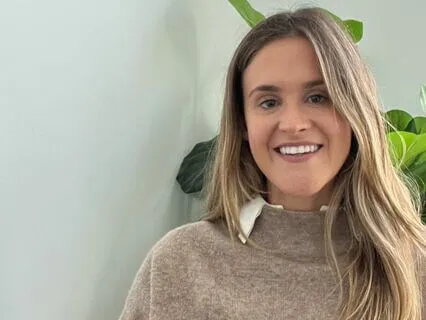
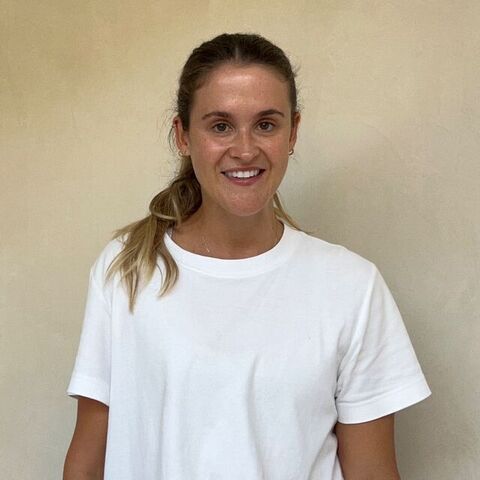
My name is Anna Grutznar and my intention is to discuss,
Embody and share my learnings in all things psychology,
The human mind,
Mental health and wellness.
This is a platform to refresh my own knowledge and stimulate conversation before I pick up further psychology studies after completing my bachelor nine years ago.
I welcome you on this journey of learning,
Unlearning and relearning psychology and what it means to be in joy.
I'm taking a slightly different approach to today's episode and I'm actually video recording myself.
I don't know how this will go or where this will go but my intention is to practice vulnerability and to do something different and to uncover another layer of myself to the world.
It feels scary,
I'm nervous but this is what I'm talking about today so I think the best way to do it is to embody it and to explain some of the sensations,
What's going on in my brain and why it's helpful or beneficial to actually experience vulnerability and how we can practice vulnerability.
So that's what we'll be talking about today.
The Oxford Dictionary defines vulnerability as the quality or state of being exposed to the possibility of being attacked or harmed either physically or emotionally.
When we experience vulnerability there are two pathways that we take.
First is the stress response and this is the one that feels awful in our bodies.
We feel challenged,
We feel threatened,
We feel like there is an attack on us from the outside world and this is why a lot of us avoid vulnerability because it's a fear response in our body.
But the second pathway is one that Brené Brown talks about and she's the queen of vulnerability and that is of connection.
Vulnerability causes or results in connection so sometimes in order to get to that place of connection we need to feel fear,
We need to feel stress,
We need to go through that experience psychologically,
Physiologically in order to come to the other side and feel that sense of connection.
So let's talk about the stress pathway.
First of all I'm feeling it right now that's that's where I'll start.
I'm feeling like jittery,
I'm feeling nervous,
My words are coming out a bit weirdly and it doesn't feel good.
It feels a bit like I'm out of control like I like I can't think or speak clearly but I know that if I push through this I will be better connected to my enjoy audience,
I'll be sharing a new part of myself and I know that that will be a really good feeling and that's what we're going for here.
So what's going on in my brain right now?
When we have a stress response there are three main things that happen.
Firstly the amygdala which is a little almond shaped region in our temporal lobes in our brain is responsible for processing fear so this region is highly active when we are stressed.
The hippocampus is another region of our brain which is also in the temporal lobe that is activated through the stress response and the hippocampus is responsible for learning and memory and this is all about when we experience a threat our mind and our bodies need to remember that and learn from it so that we can avoid it again in the future.
The last part is the prefrontal cortex so this is responsible for planning complex cognitive processes,
Our expression of our personality,
Decision-making and it's also where we moderate our social behaviors.
When we experience traumatic stress we also see an increase in cortisol which is a stress hormone and when this happens there's an increase in glucose or sugar in the blood and the brain.
It increases norepinephrine this is both a neurotransmitter and a hormone that transmit messages between nerves and when we are anxious both cortisol and norepinephrine spike.
We feel alert,
Activated,
Adrenaline rush,
We're in survival mode and this is the opposite to rest and digest.
We basically have our sympathetic nervous system which is arousal,
Fight-flight and then we have our parasympathetic nervous system which brings us back down and the way that I remember it is parasympathetic is like parachute and a parachute lands and it comes back down so the parasympathetic nervous system is all about returning our body to a state of homeostasis where things are just smooth and operating as they should.
So when we are in this sympathetic state our fight-or-flight response is activated and this is basically where your body and your mind identifies a threat in the environment and it goes through this process where it says am I going to stay and fight or am I going to run away fight-or-flight and there's also freeze which is where you literally just can't do anything can't move.
So when that response is activated your metabolism increases,
Your blood flows to your muscles,
It thickens and more sugar is released into the bloodstream.
Your temperature increases as does your heart rate so you're really just ready to go here you're in survival mode.
So that is what happens when we experience stress.
This really comes from an evolutionary perspective from as far back as caveman times if a bear comes out of the woods this all just happens automatically in our bodies and we're prepared to run to fight whatever we need to do to survive.
But in modern the modern-day world we often experience this through imagined threats like public speaking or like doing something that challenges you whether you have a big competitive sport or anything like this maybe it's social anxiety these things can all trigger that stress response and vulnerability certainly triggers that response.
So that's pathway one fear and stress.
Pathway two is the connection response so this is how we feel when we're on the other side of vulnerability and here we see a release of oxytocin,
Endorphins,
Dopamine and serotonin all of these beautiful happy hormones.
So oxytocin is the hormone for love and trust which we see in childbirth,
Breastfeeding,
Physical touch,
Close interaction,
Sharing,
Kindness and bonding or attachment.
Dopamine is associated with reward and pleasure and endorphins help relieve pain and reduce stress as well as improving your sense of well-being.
The last one serotonin controls your mood and this is responsible for happiness.
So essentially if you can get through all of those fear stress responses it enables you to connect with people on a deeper level and to experience those calming soothing responses that happen hormonally in your body through oxytocin,
Dopamine,
Endorphins and serotonin.
So really interesting dichotomy there.
That is the sort of physiological biological process that occurs when we experience vulnerability.
I wanted to talk about Brene Brown's definition of vulnerability.
I would highly recommend watching her TED talk The Power of Vulnerability because she's just incredible and she really sums it all up so well so beautifully but essentially she defines vulnerability as uncertainty,
Risk and emotional exposure.
So that is the Oxford Dictionary,
The physiological processes through various studies that I looked up and Brene Brown.
Really credible sources of vulnerability and how it shows up in our lives.
Part of my journey here is and my sort of next step in being more vulnerable is to step away from that research and to step away from what other people have to say about topics and to start to sprinkle in my own knowledge,
My own understanding.
So I wanted to share what vulnerability means to me.
Vulnerability is expressing myself through behavior or words authentically without the assurance of that being well received or reciprocated.
It is a feeling of courage where you take authentic action without knowing what the reaction will be.
It is feeling the fear but doing it regardless and it is both a process and a journey and your capacity to feel vulnerable expands each time you expose another part of yourself and when you do realizing that you are still loved,
Still here and still worthy.
It is an experience I am feeling right in this moment and every time I get here,
Get on here,
Enjoy showing up with my thoughts,
My research and my words.
And some people have said to me that what I'm doing is very brave and in some ways it is but like I said I'm on my own journey and I'm still trying to stretch that capacity.
As a kid I used to hate speaking on the phone.
I hated ordering my own meals and my family would laugh at me because I would get so shy.
We'd go out to restaurants and I'd be like hiding behind my menu trying to order a meal because I just hated speaking and I hated being seen and it took a long time to really outgrow that and I'm still working on it now.
Where it really expanded for me was doing my yoga teacher training.
Yoga teacher training is,
Well yoga teaching in general,
Puts you in this immense state of vulnerability because you have 30,
40 however many people you're teaching in the room staring at you,
All eyes on you,
Waiting for your cues,
Waiting for your direction and the whole energy of the room is dictated by what you say,
How you say it,
When you say it.
So it's a very scary and vulnerable experience to go through.
As well as that I started practicing vulnerability more with work.
You know once I started contributing more in meetings and starting to present my ideas all of that really helped me expand my capacity for vulnerability.
I kept doing that and started speaking to bigger audiences and I was lucky enough a few years ago to actually emcee our conference at my last job and there were about 300 people in the room that I was speaking to along with another co-host and it was a full day of just being so vulnerable on the stage,
All eyes on you and little moments like that have really helped me to expand my vulnerability.
And now I'm here and where I'm at right now is I'm 11 episodes in and I've really been speaking through the lens of other people's research and sprinkling in my own thoughts here and there,
Slowly expanding my capacity for vulnerability.
But for where I want to go next and for where I want to take in joy next requires a big jump.
I have ideas I want to talk about,
People I want to interview,
Stories I want to share about what I've learned mainly through my own healing and my own self-development journey.
I'm not going to dive into my story today but I have had a very close very close journey not the right word I'm getting nervous here because I'm starting to open up and starting to be vulnerable but I have basically been through a million and one different types of therapy and that includes cognitive behavioral therapy,
Counseling,
Reiki energy healing,
Kinesiology,
Traditional Chinese medicine,
Acupuncture,
Meditation,
Yoga,
Talk therapy,
Family therapy,
Art therapy and I've also researched a million other different things hypnotherapy,
EDMR,
All of these emerging things that are coming up.
Partially because I have struggled with my mental health in the past and also because I'm very fascinated with this space and sometimes you know I do like to just explore these alternative healing modalities.
So I basically want to start sharing what I know about all of these different modalities and I want to introduce you to experts in the field to share what they know.
I want to also share the tools and techniques that I have used to help me build this life that I'm so proud to have right now and that includes human design,
Goal-setting,
Journaling,
Gratitude,
Manifestation,
Visualization and affirmations and a million other things.
But I can't get there without being vulnerable because it's left of field,
It's off-kilter and I can't hide behind my uni readings,
My lecture notes,
It's my experiences and I don't think that they are particularly special or worthy of more airtime than anyone else's because everyone has their own story.
But I want to open up and I want to share parts of my story to help other people who might be experiencing something similar because I think there is something so healing about listening to someone else's journey and understanding how they got to where they got to today.
So today is a step on this journey and each episode to follow will be another step.
So that's what vulnerability means to me and I welcome you on this journey to practice vulnerability in your life alongside me and I've thought about all of the different ways that it can show up and it will be different for everyone but I have jotted down some ideas.
Public speaking,
Everyone hates it but just do it for yourself.
Practice that feeling,
That sensation of vulnerability in your body and prove to yourself that you can get through it and that you will survive.
Smile at a stranger,
Make and hold eye contact for a second longer than you normally would.
If you're someone that struggles to accept help,
Ask for support.
Talk about your mistakes in a safe place,
Grow from them,
Appreciate the lesson and can you even laugh at your mistakes?
I used to have this group of colleagues and once or twice a year whenever we would get together for a big dinner or going away or if someone was leaving or a Christmas party we would play this game called the F up game and we would basically go around in a circle,
Everyone would write out their biggest F up within their career onto a little piece of paper and you'd all throw them into a hat and then you would toss the hat around,
Everyone would pick out a piece of paper and they would read it out and you would have to guess who made that F up.
So my old boss Jess introduced this game and I am obsessed with her,
She just always had these incredible ways of bringing us together and connecting us as a team and this was one of them.
So we would go around in a circle,
Read out our biggest ever mistakes including mistakes we had made in that job,
Some of which were unearthed for the first time and we would just sit there cackling like belly laughing at these horrendous mistakes we had done and I'm talking like some very very bad mistakes were in this hat and it was such a fun game because it helps you to accept your mistakes and also to see all of these incredible capable people around you and where they've made mistakes in their life and it's very relatable,
Would totally recommend anyone does this.
If you are someone that is rehearsed and that always has notes and a plan can you strip those notes back and try to be more present than rehearsed and let those environmental cues around you dictate what you say next rather than being so planned.
This is something I'm working on myself although I am still reading notes so it's a journey like I said.
Realize that you cannot be everything to everyone or be liked by everyone and think about how your decisions today would make your younger self feel.
Would he or she be proud of you,
In awe of you,
Show up for them and for no one else and that doesn't have to be on the material plane that could be more just who you are as a person,
Your values,
Who you are as a parent or a friend.
Write down one of your flaws that you're actually kind of proud of or that thinks or that you think makes you lovable in some way or another.
For me I am a giant grub.
I am always spilling shit on myself.
I don't know if that makes me lovable,
Maybe not,
But it makes me laugh and it makes my family laugh and for that reason it's a flaw that I actually kind of love about myself.
Embrace progress over perfection.
Listen to my episode on perfectionism for more on that.
That is one of my favorite sayings.
It's all just about moving forward rather than going around in circles trying to be perfect.
Practice asking for what you want and if you're struggling with boundaries put your foot down on something,
Anything,
Just to experience what it feels like.
Say I love you,
Express your gratitude and if you're a permission seeker do something rogue without asking.
Just validate yourself.
Give yourself the green light to go ahead,
Start something,
Do something new,
Do something differently.
Validate yourself and is there something that you've always wanted to do but have been too afraid of?
Is there one baby step you can take towards it just to see how it feels or could you tell someone about it just to entertain that thought and that feeling?
Watch what unfolds,
Tell me what unfolds.
I can't wait to hear and I can't wait to see you back here next week with my very first special guest.
See you then.