We can begin.
Before the mindful eating exercise,
I'd like to start the session.
So I like to start all my sessions with a small meditation,
Just to center you and bring you into this moment.
And I request that throughout the session,
Please be completely present.
I mean,
It's a mindfulness session,
So be mindful,
Be here,
Try to avoid any distractions as much as you possibly can to get the full benefit of this experience.
I always lean back on veganism and spirituality.
These two play a very big role in my life and they have helped me through everything that I have,
Throughout all the ups and downs of life,
Through my entrepreneurship journey,
Through my health,
Through everything.
This is why I always bring those to the forefront whenever I teach.
Even if I'm doing a cooking class,
I start it with a meditation,
You know.
So,
Or if I do some other class,
I will bring in the veganism aspect to it because it does make that much of a difference in life.
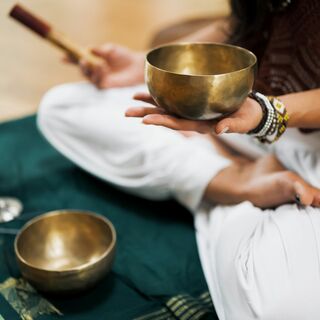
We can just start with this little meditation,
Then we'll talk a little about mindfulness and then we'll go directly into the mindful eating exercise.
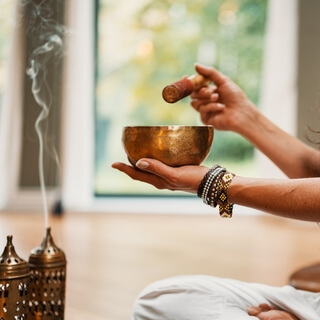
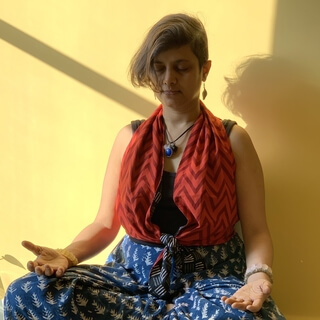
Close your eyes and sit back and relax.
Just be in a relaxed position.
Possibly if your palms can face upwards,
That would be good,
But you just chill,
Relax,
Be comfortable.
Take a deep breath and slowly exhale.
Once again,
Breathe in deeply and completely let it all out.
And one last time,
Breathe in slowly and breathe out completely.
Now allow your breath to just come to a comfortable,
Normal pace.
Don't try to control it.
Just breathe in and out.
Now bring your focus to your stomach and watch as it moves.
Up and down,
In tune with your breath.
Now bring your focus gently upwards to your chest.
Watch as it moves with your breath.
And now shift your attention to your shoulders and watch the subtle movement of the shoulders.
Just notice it with every breath you take.
Feel the deep relaxation setting in.
Feel the deep relaxation setting in.
Come into this moment and let go of everything,
All your thoughts,
Feelings,
Experiences of today from before this moment.
Just be in the now.
Now set an intention that you will be open to receive all the knowledge,
All the energy and all the good vibes from this class.
State that you'll attend the session with an open heart,
Open mind from a place of curiosity and humility.
Now visualize yourself going out into the world after the class and putting into practice and putting into practice all the good things that you've learned and how that's bringing you joy,
How that's filling your life with ease and fun.
Then picture that beautiful energy filling you,
Then going out to people around you and then out into the rest of the world,
Creating ripples of positivity.
Now get really excited for all the fun,
Great,
Amazing things that you're going to experience as a part of this session and then the rest of your life as a result of it.
Take another deep breath and slowly release.
Wiggle your fingers and your toes.
Rub your palms and place them over your eyes.
And gently as you move them away from your eyes,
Slowly,
Gently blink your eyes open.
I hope that was as joyful to you as it was for me.
All right,
So let's dive in to the class.
To begin with,
I'd like to clarify that I am not a nutritionist or a dietitian.
I don't have any background in this and I have not studied anything related to mental health.
But I have been a vegan for very,
Very long.
And I have seen that the choices I've made with the food there have really helped me be more joyful in my life,
More energetic,
Healthier,
And I feel that these things holistically also help to support being a vegan.
That coupled with meditation,
Reiki,
And other spiritual practices have really made a huge impact on my life.
Now,
Mindfulness is something that I've only become familiar with,
That I've only become aware of,
But it's something that I've been doing for a very long time.
Now,
Mindfulness is something that I've only become familiar with,
That I've only been practicing in the more recent times,
Maybe a couple of years now.
And mindfulness is not anything,
You know,
It's not some kind of a fancy thing that's like,
Oh,
Mindfulness.
It's nothing like that.
It's just about being present in the moment,
In whatever you're doing,
Being present there.
Often,
We get distracted.
We get distracted with usually the internet these days.
You know,
Messages pinging here and there,
Getting here,
Going to one app to another,
Check email,
Check Instagram,
Check Facebook.
We just get distracted by those.
But we also get distracted in life.
You know,
Multitasking can sometimes be overrated.
It's a good skill to have,
But then if you're deeply,
If you're always multitasking,
That is not very good for you because your mind is split into multiple,
The focus and the concentration gets split into multiple areas and that's not a very healthy way to experience life,
To experience whatever it is you're doing.
So even if you multitask,
It's better to divide that into batches of time.
If you can't do one thing for a whole hour,
No problem.
But at least say,
Okay,
10 minutes,
15 minutes,
I'm going to focus on this one task.
Then I'll switch to another task.
That is fine.
That way,
You are completely present in whatever it is you're doing.
When you do that,
You are able to get more in tune with your inner self and you're able to understand what reactions you're feeling,
What emotions,
What thoughts you're feeling when you're involved in a specific task or specific thing that you're doing.
And that will help you make good choices.
That will help you.
And of course,
It's important.
It's not just important to be aware,
But also to choose accordingly.
If something doesn't make you feel happy,
When you're mindfully doing it,
You will understand why it's not making you feel happy.
So then either you can change it,
You can change the way you're doing it or the way you approach it,
Or you can see if that is something that is not right for you and you can eliminate it.
You can create those boundaries and not do those things anymore,
Not be involved in those activities.
It's a very simple thing,
But there are so many benefits to being mindful.
A lot of times our distractions,
Especially,
We willfully distract ourselves while eating.
Even I do this.
It's not like I'm some mindfulness,
You know,
Pro who's always being mindful.
The idea is to remember,
OK,
It's important to be mindful and do it as much as you possibly can.
And food is an easy place to begin.
We all think,
OK,
Food,
Fine.
Let me switch on Netflix.
Let me do whatever.
Very,
Very rarely do we sit down and just connect with the food and then eat what we're eating.
Whether this is with our regular meals or whether it's with snacking and,
You know,
Or binge eating,
Whatever it is we're doing,
We are not connecting with the food.
And a lot of the problems come from there.
Because when we don't connect with the food,
Then we are allowing ourselves to be fed things which are not good for us,
Which are not beneficial to us,
Right?
This is where the mindfulness activity comes from.
You don't have to do this with your full meal.
But if you start your meal this way,
Or if you at least do one part,
You know,
5-10 minutes of this meal,
If you do it this way,
You will make better choices.
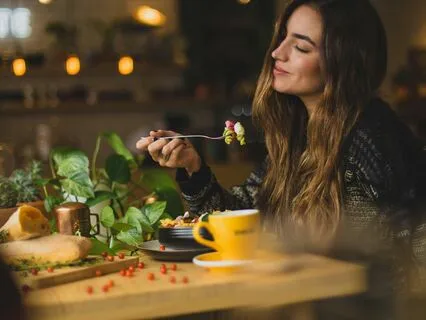
Here are the few things we do.
One is,
When you look at this food in front of you,
First of all,
Look at it.
You know,
You experience it with all your senses.
That is what an eating a meal experience should be.
Look at it.
Look at the colors.
Admire what it looks like.
So then that will ensure,
If you want to have a beautiful experience,
And by beautiful experience I don't mean professionally plating it and decorating it,
But having all the colors on your plate,
Right?
So you can see,
If you see some standard,
Some brown color,
Some gravy with nothing,
Just no color but brown in it,
Right?
You go out to a fast food restaurant,
The kind of food that is served with you.
That versus,
If you have made something with vegetables at home,
Like say a dry sabji with vegetables,
And all the colors of the vegetables are actually shining through.
Or say you have a bowl of fruits which you have cut,
Or even if you have not cut the fruit,
Just like the fruit,
If you are just eating it directly,
Right?
Like an apple,
Banana,
Guava,
Whatever it is.
Even that,
It's very very appealing when you look at it.
You can look at it and admire it and get that benefit of it.
The second thing is,
Of course,
The smell.
Many times there are things which we eat,
Which the tongue will tell you it's good and all that,
But actually if you stop a moment to smell it,
You may not like it that much.
And there are other things which smell so delicious,
So they bring you that benefit,
You know,
That added benefit.
Because when you're smelling the food,
You start salivating,
And then that also helps with the digestion and the experience of eating that food really well.
Then the third thing is,
Where did this come from?
Whatever I'm eating,
You know,
This is a very very important question.
What does it contain?
So when you think,
What does it contain,
Then what happens?
You will start looking,
If you're eating a snack,
If you're eating a home cooked meal,
It's a different thing.
Eating a snack,
You will look at the package and look at the ingredients.
You know,
You read the ingredients because you become aware.
Like,
What does this have?
You know,
Someone says potato chip,
But what does a potato chip have?
You go and look at it,
Some potato chip has milk solid also,
For some weird reason.
Or unpronounceable chemicals and things like that.
You become aware of that.
Another awareness it creates is,
You know,
When you think of where did this food come from,
Then nobody has to tell you anything.
It's between you and your food.
And then you think of what is the process that whatever went through to come here.
Right?
And this is what helps you make compassionate choices.
Compassionate towards yourself and compassionate towards others.
A lot of times,
If you're eating animal products,
Like milk,
Eggs,
Meat,
We don't want to think of where it came from.
We don't want to think of what happened to the animals in the farm.
We kind of disassociate with it.
And we just have the final cooked product.
That's what we enjoy.
Right?
But if you start thinking,
Okay,
You know,
Where did this come from?
Exactly what is the process that this went through?
You cannot bring yourself to actually enjoy something which comes from this much of pain or suffering.
Right?
Same thing with plant products.
When you're thinking of it.
Even there,
It will help you.
You make slightly better choices.
Even there,
There are choices which are good for you and,
You know,
Which are really good for you and which are not so great for you.
Even there,
You know,
By looking,
Smelling,
Tasting,
Wondering where it came from,
What is the place it came from,
You might choose,
For example,
To have and,
You know,
Support local farmers,
Local fruits,
More than some imported fruit.
Because you're thinking,
Ha,
This apple,
Golden,
Delicious,
Australian apple,
It came from there,
Then went to the ship,
Then how did it come so far?
Now,
If I cut an apple from a tree,
What happens in two days,
Three days?
It will become soft.
Then you'll start wondering,
Where did this,
How is it coming?
Then what has been added to it?
How has it been treated?
So,
Every time,
The more mindful you are about where the food came from before you even eat it,
It helps you make better and better choices for yourself,
For the planet,
For the animal,
For everything in general.
It's a holistic,
Healthy perspective of eating it.
Then,
We come to the taste.
So,
You put it in your mouth and then you don't actually immediately start chewing it.
You feel it.
You feel the texture in your mouth.
You feel the,
You know,
What is the texture like?
What is the feeling like?
And then you slowly chew it.
Then you taste it and then you swallow it.
So,
When you do it with this process,
Again,
You'll see a clear difference between what is it that's tasting good because it's fried and has masala,
And what is it that's tasting good because it is fresh?
What lasts longer in my mouth without getting soggy and boring so that I have to reach for that next crunch versus what actually tastes good no matter how long I'm chewing it,
Right?
So,
For example,
I love banana chips.
I love fresh coconut.
But then,
When I'm eating that banana chip,
There is only a certain limit.
Afterwards,
It becomes just,
You know,
It's a paste.
There's nothing tasty.
It's just that first bite,
Second bite.
After that,
It goes.
So,
Then what do you,
You crave for that next chip.
You crave for that next thing.
But then,
If you're having,
Say,
Fresh coconut piece,
You put that in your mouth and you're chewing it.
And you,
For as long as you chew it,
For a longer time,
You get that sweetness.
You get that flavor.
And then you swallow it,
Right?
So,
This also helps you chew longer.
And chewing longer,
We all know,
It's good for you.
Maximum of your food needs to be processed in your mouth and then it needs to go in.
So,
Being mindful helps with that also.
Through this whole process,
What happens is it's not about labels.
It's not about right or wrong.
It's not about political agendas.
It's a simple matter of you and your food,
The relationship you have with the food and what is this food making you feel like?
What is this food,
Where is it coming from?
What is the energy behind this food?
So,
This is the thing.
Looking at the energy behind the food is very,
Very important.
We all have energy.
That is a big part of the world,
Big part of life.
Something comes from pain,
Suffering,
Over-processing,
Whatever it is,
That doesn't make you feel good.
It may make you feel good for half a second right in that moment,
But later in the longer run,
It will not feel good.
It brings your vibrations down.
So,
This is a reason to connect with the food.
So,
Now let's try this.
We'll try this exercise with the date raisin,
Maybe a fruit,
Maybe water,
Whatever it is you have with you.
It's between you and your food.
And then we're going to do this very slowly.
I hope a lot of you did get something and you'll be able to practice this.
First,
Pick up whatever it is that is in front of you and hold it.
Just hold it.
Feel it in your hands,
Fingers,
And then look at it for a while.
Stare at your food,
Stare at whatever it is you're about to eat.
Just look at it.
Admire it.
Look at its textures,
Look at whatever color it has.
Take that moment.
Now close your eyes and think of the journey of this ingredient.
So,
For the sake of example,
Since I asked all of you to get raisins for dates,
Let me go with raisins.
You can picture this seed sprouting into vines and then getting spread all over,
Flowers blooming,
And then it's fruiting.
And while all this is happening,
Someone is taking care of this plant with love and care.
It's being nurtured.
It's being nurtured with so much love so that it will grow with love.
Now that's the beauty of plants.
If you don't show them love and nurture,
They are not going to grow and give you the food.
It's not like when it comes to animal products where they can be treated terribly and then they're turned into food.
That's not the case with plants.
Even whether it's organic farming or whether it is,
You know,
Your regular conventional farming,
Whatever it is,
There has to be some level of nurture and care given to the plant.
And then this plant,
These flowers have bloomed and then you can see the little bees buzzing from flower to flower pollinating all of them.
And slowly little fruits are forming,
Tiny little fruits.
And the flowers,
The petals,
They're drying up and falling off.
And these little fruits are there.
And they're growing bigger and bigger while somebody is watering the plant,
Nourishing it gently.
And there's sunlight on the plant.
And then there's fruits.
There are all these delicious fruits,
Juicy juicy grapes that have grown.
And then somebody is going there and harvesting them.
Gently,
Lovingly,
Cutting them and harvesting them.
And then taking it somewhere.
Then they're getting washed,
Cleaned,
Dried,
And then left out into the sun to dry.
Or maybe put even into a dehydrator to dry.
Whichever case.
And then slowly the grapes are drying up and turning into raisins.
Then they're going to get packaged,
Travel,
Come into the grocery store.
And then you,
Who was meant to have this,
Just imagine all those thousands and thousands of grapes,
They got turned into raisins and today,
Right now,
This moment you were meant to enjoy them.
So you went,
You picked this back.
Or somebody in your home,
Or even if you got it from home delivery.
Somebody picked this particular pack of raisins for you and they sent it home.
Brought it to you.
And now you have opened them and they have come in front of you.
Now this is something you can easily do when it comes to fruits,
Veggies,
Plants,
Grains,
Grains.
It's a beautiful experience to think of the journey of the food.
So always think of the journey of the food and that is a filter.
It automatically creates a natural filter for you.
Now,
After you've looked at this raisin,
Smell it.
Just gently squeeze it and smell it.
Bring it near your nose,
Gently squeeze it.
It's not a very strong smelling thing,
But a very subtle smell.
And now,
This is a difficult part,
Place it in your mouth,
But don't chew.
Just place it in your tongue.
Place it in your mouth.
Let it roll around a bit.
See the texture.
What kind of taste does it have before it's been bitten into?
What is that feeling?
And now,
Chew it.
Slowly chew it.
And don't swallow,
Just keep chewing.
Chewing,
Chewing,
Until I tell you.
What is the sweetness?
See the way your mouth,
Oh my god your teeth are so awesome,
So blessed to have this tongue that can taste it,
And your teeth that are chewing it into a paste.
Wow!
Wow!
What a blessing,
Right?
And then,
Swallow it.
What does it feel like?
Going down your throat and then it's gone.
Think of the aftertaste that's there in your mouth after you have eaten it.
It leaves a nice,
Lovely sweet aftertaste in your mouth.
Now,
Aftertaste also is so important.
What are the foods that actually leave a good aftertaste once you're done eating it,
Versus what don't taste that good,
Right?
While you're eating it's good,
But once it's done,
Not so good.
This is something I have seen in baking.
When I ran my restaurant,
Or whenever I bake at home,
I don't like to use artificial essences in my baking.
The reason for this is,
I don't know,
I feel like they're so unnatural and they don't taste that great.
That is one thing.
But also,
While I'm eating that cake,
If somebody's used essence in cake and they've sent it to me,
While I'm eating it,
It may be alright,
It may feel like,
Oh there's a kick to it,
But then,
The aftertaste is never nice.
There is always that one weird aftertaste that's left over when artificial essences are used,
Versus when you use real fruit or pure extracts when you do the baking.
So this works in many things,
Whatever it is that you're cooking,
Whatever it is you're eating.
Notice these things.
Notice them.
It's a very fun,
Like,
Take it from a childlike curiosity.
Everything that you eat,
Put in that kind of notice in it.
So that will help you with making all better and better choices for yourself.
But that being said,
If you are occasionally indulging in fried food,
Packaged food,
Packets of chips,
Don't feel guilty about it.
It's important to have a good emotional connection with the food,
Good emotional feeling with the food.
If you indulge once in a while,
It's okay.
Do it mindfully and then leave it.
When you're doing it mindfully,
You'll automatically instead of taking a whole pack of chips and eating it,
What you'll do is take a little food in a bowl and then binge on it.
Enjoy it.
No problem.
While you're doing it,
Have good feelings about the food.
No problem.
Just don't do it all the time.
That's it.
But when you're guilty about it,
What happens is the emotional eating takes a different kind of a form because the guilt doesn't make you feel good.
Again,
It brings down your emotion and then you cover it up again when you eat.
That is the unhealthy cycle,
Unhealthy spiral you get into.
Instead,
Make good choices most of the time.
Indulge once in a while.
You're good.
Right?
That's a good way to begin.
And the best part is as you keep going,
You will start making better and better choices and you will start choosing the better stuff because you're connecting with your food.
You're thinking of where does it come from?
What does it feel like?
So this is pretty much what I wanted.
The experiential activity.
And we can start with whatever questions you have,
Sujata,
And discuss.
Alright.
Thank you so much for that activity.
I'm sure we all enjoyed it.
Something that I really wanted to start off with was the emotional connection that we have with food.
Right?
And how we sometimes use food as coping and food is something which is very close to our emotions which may in turn turn into an unhealthy pattern which you mentioned.
Right?
So that is something that you did cover but if we talk a little bit about say a few tips that we can keep in mind in terms of emotional eating.
So how can we use mindfulness as a way to stop emotional eating or just regulate it?
The thing is if you are going to emotionally eat,
If you're about to reach for food,
When you become mindful,
You will always think like,
Why am I reaching for this food?
What is making me want to have this?
Right?
You can just get into that.
Take a few moments to think like,
You know,
Why is it that I feel like having chocolate right now in this moment?
You'll become more mindful.
Eating is just one instance that we did but it's something that gets deeper and deeper as you practice it.
You will also notice that throughout the month,
Throughout,
See this is connected to the moon cycles.
It's connected especially for women with the menstrual cycles also.
There are times where you feel like okay,
There is a lack of iron where your body is craving that.
At that point of time,
You may crave more chocolates.
There's that you know,
Kind of a connection that could happen there.
Or if somebody really upsets you and is feeling low and then that's when you want to grab it.
So,
Take a moment to wonder.
I'm not saying deny yourself,
Right?
But take a moment to connect and wonder why am I doing this?
And how will this make me feel?
How long is this going to make me feel better?
And how can I limit it?
How can I limit it?
Instead of having a whole bar of chocolate,
Maybe I can have a cube of chocolate,
Right?
And another tip is keep healthy snacks at home.
Keep alternatives.
You know,
Alternatives are amazing.
Now I talk about going vegan,
Choosing not to have animal products,
Not to have dairy,
You know.
I'm not saying just stop having dairy products,
Stop drinking milkshakes,
Stop drinking pure coffee.
Never,
Never,
Never.
It's never about denial.
You just find healthier,
Better alternatives for yourself.
And a lot of times,
You can make these yourself at home from scratch so you know exactly what goes into it.
So there are no packaged ingredients.
Forget the,
You know,
One aspect is where it comes from,
The cruelty,
The travel,
All these things.
Another is there are no additional ingredients.
For example,
If you're making cashew milk at home,
It's cashew and water and that's it.
There's nothing else that goes into it.
Now imagine when you do that,
So which I know this is something that is going to come in as we speak,
So I'll anyway address it right away,
Suchita,
About cooking and connecting with your food.
I always recommend that the more healthier you want your choices to be,
Where your food choice is to be,
The better it is if you learn to cook.
If you make that effort.
It doesn't have to be complicated.
It doesn't have to be like,
Oh no,
I have to be a gourmet cook.
No.
Simple,
Simple things you can do,
Simple switches that you know you're connected.
So you'll feel so proud like you just take this one handful of seeds or nuts and you ground it into a paste,
Added water,
Blended it and you got milk.
It's magic.
So when you look at that,
You feel so proud to cook with it,
To eat it,
To enjoy it.
You know,
You become a part of that system,
That ecosystem of getting it and it's just magic.
So to answer your original question when it comes to emotional eating,
One is keep alternatives,
Healthier alternatives at home.
Two is cook as much as you can,
Put together your food and snacks as much as you can,
Do things that you have made with your hands as much as possible.
And three is to limit.
If you also want to indulge in a samosa or whatever it is and binge and stuff,
See how you can limit and also take a moment before you pop it into your mouth.
Just a moment.
Do I need this?
You know,
It's difficult because it's magnet,
Right?
When you take and then it starts going with a chip or whatever.
But take a moment.
Okay,
Do I need to put this?
And how much can I stop at?
You know,
It's okay.
I'm having this but how much can I stop at?
Also,
Always notice,
Especially these are opportunities.
Whenever you feel like emotionally eating,
This is an opportunity to study yourself and your emotions.
Once you're done eating,
Notice how you feel.
How much is it helping you?
How long did it help you for?
When you're mindfully eating your meals and your snacks on a regular basis,
This is also a part of it.
Once you're done with eating,
Notice your feelings.
Is this,
You know,
After this particular meal,
Am I feeling burpy?
Am I feeling sleepy?
Am I feeling like acid-y feeling?
Or am I feeling like yes,
Energy?
Or am I feeling like a shot of energy and fresh coffee?
You know,
That kind of stuff.
Right?
So,
Notice how the food is making you feel.
You know,
As much as possible.
See,
These are things which,
It shouldn't become like a chore at all.
It should be something you enjoy and then it becomes a natural part of your day-to-day life.
Alright.
So,
Something that I was really curious about here is the part where it has become a habit in our lives to,
You know,
Watch something while eating or engage in conversation with others while eating.
So,
I was just curious and I wanted to know how many of us here do it?
Because almost every single person here,
Every single person that I know watches Netflix while eating.
So,
How many of us here on this call do it?
Can we maybe raise our hand or our virtual hand because I do it every single time.
One of the reasons why I do it is because,
You know,
When we look at the time of it,
It's again the multitasking aspect of it.
So,
Yes,
I want to watch shows but I don't get time to watch shows.
So,
I do it while I'm eating to just get both the things done.
Maybe one or two people here would tell what is your reason of you know,
Talking while eating or watching something while eating.
If we can just get two responses here.
Well,
Just to kill the boredom more than anything here sometimes and I prefer to talk while I'm eating because otherwise I'm just really busy working.
So,
That's the only time to sit and connect.
Thank you so much for sharing Ravika.
Is there anybody else who would also like to share before I pose the question?
I think adding on to what she said,
Like I stay alone so I do not like eating on my own.
So,
I rather have something to watch or I have someone on call which is like most of the time it's something that you watch so that kind of brings,
You know,
That someone is there in the room and I'm not eating alone.
So,
That is why it's always,
No matter what meal of the day it is,
I need to have either YouTube or Netflix going on in the background even if I'm not working.
So,
If I see you connect between all three of the responses that we've got here,
It all boils down to the lifestyle that we are having right now.
We are either too busy or we are looking for connection because we are feeling isolated or it's because we are bored.
When we look at our lifestyle right now,
Considering how busy we are,
How disconnected we are with each other,
What are some small ways in which we can practice mindfulness,
Especially when it comes to eating or otherwise?
Okay.
So,
By,
You know,
And Ahmed and Radhika,
Thank you for sharing even Sucheta because this,
Like,
Helps me form that response to your question very well because of what all three of you shared.
So,
We you know,
We are a culture of families,
Groups,
You know,
Especially here we have that kind of culture in India more so.
We are used to you know,
Growing up in families even if it's a nuclear family,
It's like everybody around and stuff and then when you go alone.
So,
There's a big stigma associated with eating alone.
Like,
You know what Ahmed said,
Like,
I don't want to eat alone.
It's not,
It's like,
We feel like we don't see this in our country.
Very rarely we see people going,
Like,
Just going to eat by yourself.
You know,
Go out to eat,
Not now but generally go,
Sit at a cafe,
You know,
Eat by yourself,
Enjoy a meal.
Very few of us actually do that.
You know,
We think that that's not a good experience.
The solo thing,
Eating,
Especially eating,
We feel it's not a good experience but when you try it,
When you experience it,
It gets better.
Now,
Couple of things.
One is the boring part of it.
You know,
It can be boring if I sit and eat by myself.
So,
This is why when you do the mindfulness,
The food only becomes an entertainment.
Right?
You're building these stories around it.
You're thinking about it.
You can't do this for a whole meal,
I understand.
Like I said,
Even I watch Netflix while eating quite often.
It's not that I don't do it either.
But,
What you can do is,
You start your meal,
Or a portion of the meal,
This way,
Mindfully,
By yourself,
Eating and focusing on the food without a distraction.
10 minutes,
You know,
15 minutes,
Whatever time you can extend it.
You start that way.
Then you watch Netflix,
Then you read a book,
Connect with others.
At least connecting with others,
You're still a little more in the moment because you have people around you and you're connecting with.
But especially watching TV,
Netflix,
And this is another thing I want to bring.
What is it you're watching?
While you're eating,
What is the energy of feeding yourself?
You know,
That is again very,
Very important.
If you're watching,
So the step by step of this is,
If you're watching something,
Make sure it is something positive,
Joyful,
Something that's making you laugh or something.
Don't watch the news,
Don't watch,
You know,
Like gory stuff,
Murder stuff,
You know,
All those crazy things.
Don't watch things that won't make you feel good,
That will make you feel anxious,
That will make you think too much.
Do it in a very chilled out kind of a way.
If you're watching something.
One step better than that is,
Instead of watching something,
Connect with others around.
Sit down and talk to people with the meal.
Even if it means like Emma,
You don't have people at home,
So you can maybe have a call with somebody and talk.
If you feel like okay,
I don't want to do this alone.
But before all of that,
First,
Keep consciously,
Keep a mindfulness,
Tiny little mindfulness block for yourself while you're eating.
Then you get into the other activities.
That way it will also feel like,
Oh,
I'm doing this,
But I'm going to reward myself with watching Netflix in the later part of the meal.
You'll feel that also,
Right?
It's a way of tricking yourself.
Often we need to trick ourselves into these things.
And so,
Just make it a better activity than you know,
Or rather if you want to combine an activity with your meal,
Let it be a more mindful activity than not.
So TV,
YouTube,
All these things are going to be not so mindful.
Maybe a little bit less.
Reading a book will be a little bit more mindful,
Right?
Because your focus is not that distracted.
The way you're engaging with the book is different.
Or listening to a podcast.
Then what happens?
You're listening to it.
Mine is called the feel good factor if everybody wants to listen with your next meal.
But if you want to listen to a podcast,
What happens?
This is something I've seen that helps me.
If I want to stay away from watching something,
But I'm not in a mood to eat only by myself or I'm done with the 10 minutes of mindfulness,
I play a podcast.
So what happens?
Only the hearing.
That anyway is not something you're engaging with your food so much.
Maybe a little bit,
Right?
That is the one sense which is not getting engaged with your food that much.
So that will happen.
Your mind will be listening,
But you'll still be engaging with your food.
You'll be looking at it.
You'll be smelling it.
You'll be tasting it,
Right?
So they're a little bit more mindful.
So step by step do it that way.
Choose the more mindful activities in comparison to the completely mindless ones.
All right.
Thank you so much.
A question that I have here is,
What are some food or some food practices that we must inculcate or we could avoid which has a direct connection to our mental health?
So again,
I'm not studied this,
So I wouldn't know a direct connection to the mental health,
But what I can say is,
Fruits are definitely meant for us.
So more fruits,
More greens,
More vegetables,
Make those a large part of your meal because those are things that you're meant to eat and your body is going to digest them,
Absorb the nutrition better,
And that of course is going to keep you light.
So even,
You know,
Some of them may directly help with the mental health and emotional health,
Some of them may not directly help,
But they will support it.
For sure they will not take you away in the opposite direction.
What I have heard,
Again,
Is like,
I have friends who have turned vegan,
And from their pre-vegan days to their post-vegan days,
Especially dairy.
Dairy is a big culprit in many many ways.
In all the animal products,
Dairy products,
They are addictive,
They have casomorphins in them,
They are meant to be addictive,
And this is there in all,
All mammal milks have casomorphins in varying quantities because the baby is supposed to want the milk again and again,
Get addicted to it again and again.
But then,
With the dairy,
What happens is it's meant for a calf,
The quantity of that,
Not a human baby.
And we as adults,
We're just drinking that.
So you have this addiction that is getting triggered.
So what happens with addictive things?
So avoid the addictive things.
What happens with them is,
You feel like you can't live without them,
You feel a certain you know,
Triggering that,
Like,
Oh this feels good in that moment,
And then later without it,
You feel like that effect of being weaned away from.
So particularly dairy,
Watch out for it.
So my friends who who have dealt with depression,
Anxiety,
All of them,
They have said that after quitting dairy completely,
It has supported their healing journey.
They have tried so much.
So whatever,
It's not like you stop dairy and you magically become okay.
No.
But you have your other practices,
Other you know,
Whatever it is you're taking for your mental health,
Right?
Whether you're talking to a counselor,
A psychiatrist,
Or whether you're taking medication,
Whatever it is that you're doing,
This supports it instead of working against it.
It's a holistic approach.
So definitely quit dairy products and replace.
Don't just stop.
Especially those of us who have a habit of having coffee and tea,
If you just stop it,
That's not going to feel good for a few days.
Later maybe it's a different matter.
So don't stop it.
Just replace.
Do alternates.
There are lots of recipes to make,
You know,
It's the easiest thing to replace when it comes to vegan alternatives,
Plant-based alternatives.
It's easy to make it at home.
So look for cashew milk recipes,
Look for peanut curd recipes.
I love curds.
So curds,
You know,
These are comfort foods,
Just the alternate versions of these.
Alright.
Thank you.
So before we move forward,
Maybe we take a couple of questions from our audience here.
So can we do that?
Anybody here has a question related to mindfulness,
Related to food?
Yes,
Radhika,
Go ahead.
So there is this friend I have who I'm very envious about.
She chews her food for at least 30 seconds before she gulps it.
And she counts it.
And every time I look at her,
I'm realizing that I don't do it.
And then when I focus on doing it,
I realize that I love my food too much to chew it and I just gulp it down.
How do I stop myself from doing it?
Little bit at a time,
Radhika.
Don't do it in a comparison.
Like,
Oh,
She's doing it,
Then I need to do it.
Don't do it that way.
And she's very thin and she's very,
She's probably the right weight and all of that.
And everybody keeps saying about.
.
.
There is right and wrong health.
That's it.
Please,
Please,
Everybody realize that.
Right,
Right.
No counting calories,
None of that.
You know,
Stop with the body.
Yeah.
So health,
Health is important.
So,
Yeah.
And she seems to be alright.
So do I.
But the fact still remains that I'll be happier with some more kgs of me.
And apparently chewing my food fast is contributing to it.
And I just don't seem to find a way to chew it slowly.
Would it help you if instead of looking at it in terms of 30 seconds,
You're counting the bites?
Would that help you?
Because then you're counting the numbers,
Right?
Like,
So you can take it up.
Instead of 2 bites,
You make it 10 bites first,
10 chews first,
Then slowly take it up.
15 chews,
30 chews,
That way.
You know,
Take it up a little more.
Yeah,
Which means I'm just counting my bites the whole,
For the whole meal.
Do it for the first 10 minutes of your meal,
Like I said,
Initially.
You can see these things become,
You have to habituate yourself because you have to unlearn all these habits that we cultivated.
So keep a time limit.
Don't say,
For all my meal I have to eat this way.
No.
Just first little bit,
You know.
And I got tired of it.
My mouth started hurting.
And then I was like,
Okay,
Forget it.
Again,
It's a muscle.
It's going to get,
You know,
You have to work it.
And it gets used to it,
Right?
And,
You know,
I know I said there's no right way and it's health and that I stand by,
But if you do want to lose a few kgs,
Drop the dairy and see the magic that happens.
Yeah,
I am lactose intolerant so there's very little dairy that I use anyway.
Yeah,
So little at a time.
Always baby steps.
Baby steps help you.
Don't compare.
Just baby steps.
Just compare yourself to who you are one minute ago,
Two minutes later.
That way,
You know,
Just get little better and better yourself.
Maybe I will take those baby steps and see.
Maybe with every meal I'll just try to be mindful of my choose for the first 30 seconds.
Yeah,
Okay.
30 seconds is a good way to begin.
Incremental improvement.
Okay.
Do we have any other questions here?
Yeah,
Hi.
My name is Aitasha.
Initially,
You mentioned about the connection between food and spirituality.
Can you like just brief us just a little about that?
Sure,
Sure Aitasha.
It's about the energy of the food and where it's coming from.
I always say that when something comes from pain,
Suffering,
Difficulty,
Then of course it's not going to carry great vibrations.
It's not about just looking at it from the surface level.
Especially in India,
A lot of people especially vegetarians believe that we're not killing an animal so we're all good.
But then here's the thing.
When you go deeper into looking at where the food comes from,
Dairy is a lot more cruel.
Eggs are a lot more cruel than the meat too.
The process that it goes through,
Right?
It's something I encourage you to look into.
I won't get into it deeply right now.
So what I say is when you choose things which are of a higher vibration,
In the sense of they are not going through a cruel process or difficult process,
Then of course it's going to support you increasing your vibrations.
I've practiced Reiki since I was a teenager.
I was introduced to it at a young age and I practiced it and I practiced meditation.
I don't do this every single day but it's a big part of my life.
And when I turned vegan,
When I quit animal products completely,
Pre-vegan and post-vegan,
I could see a clear difference between how quickly I'm able to connect to that energy.
If I sit down to meditate,
I'm able to get into that zone so much quicker and not just that,
I feel like I'm just more joyful,
More full of life,
More prone to be looking at the situation from a place of love as much as possible.
So it has helped me in all these ways.
So I believe that food supports your spiritual journey by making these kind of choices.
So Radhika,
How is dairy cruel?
You've asked this.
Just type it into Google.
You will find the answers because I don't want to go so deeply into this.
But simple,
Simple,
Very briefly,
What I want to say is,
Any animal,
Why does she produce milk?
She produces it for her baby.
So that means,
To produce the milk,
She needs to be pregnant and she has to give birth.
And this is something we never,
Never consider.
So every cow who is being used in the dairy industry,
Whether it is a small scale home thing or whether it is a dairy farm,
Whatever it is,
Organic,
Inorganic,
Kind,
Cruel,
Whatever it is,
She has to get impregnated again and again and again,
Give birth again and again and again and the milk is taken again and again and again.
What kind of a life is that to live?
And then on top of it,
What happens is,
The calves are not left with her.
Because there is only some,
If it's a big dairy farm,
They don't care.
Baby calves are separated from the mother like this.
If it's male calves,
Then directly to slaughter.
Female calves,
Then of course she is again put in that cycle,
Same cycle of the dairy farm.
If it's small homes where they have the cow,
One cow,
Two cows at home and even there is forced impregnation and birth and all that,
And then they cannot afford to take care of the male calves.
So whether they want to or not,
It is a part of the process to separate the mother from the baby,
Send the calf off to slaughter.
This is a common practice.
There may be some rare people where,
Who are not doing this practice of separating the mother and the baby,
But even then the impregnation and giving birth cycle,
That is it's a part of the product.
It's not,
You know,
You cannot avoid it.
Which is why India is the largest exporter of beef and leather.
Why?
Because it's a direct result of the dairy industry.
It's a direct result of the high consumption of dairy in this country.
So this is something to really think about.
So when you look at that,
Versus and I'm vegan,
So I don't even recommend meat,
Dairy,
Eggs,
Any of it.
But then still,
If you compare the two,
Which is why I say,
Because we feel,
Sometimes we think,
We do something good and then we just sit back on our laurels thinking it's okay,
I've done this much,
I'm not killing.
But then,
What is going?
So compare that to,
Say,
A cow who's been grown just for meat and the short life,
But then the instant death,
Versus again and again and again giving birth.
So which is more?
You know,
Why is dairy cruel,
Right?
Yeah,
Ahmed,
That's your question?
So,
While doing the mindfulness activity,
That was actually really good,
Because I was able to take the time and enjoy the food that I was eating.
But when it comes to actual food,
It becomes very difficult,
Even though I've tried,
Because,
Reason being I don't want my food to get cold.
So even when you go outside at a restaurant or something,
I would be the first person among the group to finish my food,
Be it hot or cold.
So even if it's desert,
I would still enjoy the first bite.
Got it.
What is the easier way to actually enjoy the food that I'm having in terms of mindfulness?
See,
This is the thing,
Ahmed,
We are not,
Actually,
Naturally speaking,
Food shouldn't be too hot or too cold,
But we enjoy all of it,
And I do understand it.
Do it with the first,
At least one bite to start with,
And then the second bite and the third,
And then you eat.
By three bites,
It's not going to get good.
Now,
See,
Activity we did,
I explained it,
So it went a little bit longer than it normally would.
This whole thing can go on in couple of two minutes,
Three minutes,
It'll get over,
Right?
So,
Try the first few bites,
And then take it forward.
And definitely do this with the food,
Like snacks,
Especially snacks,
Or whatever mid-meal,
Whatever thing,
Mid-day meals,
Or whatever we are doing.
Especially with that,
Be mindful,
Because those are usually not like,
You know,
Super hot,
Or super cold,
Or anything,
Right?
Thank you.
Alright,
Yes,
Ma'am,
Go ahead.
Okay,
I think this is a very common question that we see amongst our clients,
Because when we look at stress,
Anxiety,
Or depression,
We know that the gut is immensely involved in this process.
Sometimes,
Even our sleep is disturbed,
Because of various things.
What would you recommend to lighten and ease in the gut for someone who is experiencing anxiety constantly?
And second of all,
To improve their sleep,
Because we know that it has a very high connection.
Any recommendations on that?
So,
See,
With the gut,
There are two things.
One is,
Of course,
Helping the,
Developing good cultures in your gut,
Right?
And the other is supporting them.
So there are two things,
Prebiotics,
Probiotics.
You can easily get,
You know,
Make a probiotic-rich food right at home.
All you have to do is take cooked rice from the night,
Or,
You know,
Previous afternoon,
Wherever you've cooked rice.
Most of us cook rice almost every day,
Right?
And then,
You take a cup full of it,
And pour water over it,
Cover it completely,
And then cover it and just let it sit.
By the next day,
It would have fermented.
It would have created bacteria.
It would have created the good bacteria,
Because it's going to smell sour.
It will not go rotten.
Like,
You know,
If it spoils,
You get a different smell.
That,
You don't want those bacteria.
But then if it starts smelling pleasantly sour,
Like curds,
You know,
That kind of smell,
Then it's good for you.
So you just squeeze that up and then eat the rice and drink the water.
That's it.
Right?
That's just one simple,
Easy hack to get probiotics.
There are many other ways,
And I recommend,
You know,
I know a lot of us like curds,
So I recommend making vegan curds with plant-based,
You know,
Nuts and seeds and stuff,
Which give the added benefit of fiber,
Right?
And,
You know,
Like,
If you're making peanut curd,
It has protein,
It has fiber,
All of the good stuff in it,
Along with the probiotics.
But apart from having these probiotics,
Even if you consume zero probiotics,
What you need to do is make your gut very friendly for those bacteria to develop.
Right?
Whatever is there for it to grow and develop.
And for that you need to have prebiotics,
Which would be fiber-rich food,
Which comes,
Again,
From plants.
So you can have fiber-rich things like psyllium husks,
Oats and stuff,
Yes,
That's there,
But also,
If you're having greens,
If you're having,
You know,
There's so much fiber in vegetables and fruits,
So much of it,
You don't even have to think and additionally add it,
Just have more of those.
So those,
Again,
Go in and support the bacteria,
Support the good bacteria,
And that does help.
But,
That being said,
Fermentation is a lot of fun,
It's great to experiment at home,
So just look up some fermented vegetable recipes,
Like it could be traditional ones like kimchi or sauerkraut or something like that which you can try,
And which,
You know,
It sounds like,
Oh no,
It may be complicated,
But it can be very simple,
You just have to be very clean while you're making it.
Or you can also look at some fermented drink,
For example,
Something like tepache.
You eat pineapple and then you have all these peels and you can make a fermented drink with that,
You know?
So just look up vegetable and fruit fermentation online,
Look it up,
You can try many things,
You can have fun with it.
Thank you,
I think that's extremely helpful,
Thank you for that.
I just want to share this information with all of you.
There is a film called Game Changers on Netflix,
So whoever who wants to get a little more information about veganism,
I'm sure,
Like,
Not only about veganism,
But we've always heard like weightlifters and models eating so much of protein and eggs,
But this film has kind of covered the journey of all of these weightlifters who had turned completely vegan and then the benefits that they had after turning a vegan and the stamina and strength that they definitely,
The change that they felt.
So just wanted to share with you guys,
If you have the time,
Go and watch it,
Game Changers on Netflix.
It's really nice.
And don't watch it while eating your food.
Yeah,
Don't watch it while eating your food.
So I just wanted to ask here,
Apart from food and cooking,
What are some other ways in which we can prioritize joyfulness in our lives,
Especially considering the current scenario?
First of all,
Don't inundate yourself with the news.
Stay away from the news as much as you can.
Yeah,
You want to stay informed,
You can be a little bit informed.
That doesn't mean you have to keep the news all the time.
Who is dying?
What is happening?
No.
You stay safe,
You stay at home,
Right?
So don't keep don't expose yourself to that negative energy.
Even in social media,
Stay away from the threats.
See,
Every issue there are multiple layers to it.
First,
You have this crazy stuff happening.
People are dying or getting sick and what not.
Then you have the people who are angry because of that and then they are talking,
You know,
These are bad,
That is good,
This,
This,
This,
This and then you get into politics.
You get into so much.
Whatever your opinion,
Wherever you are leaning towards,
Don't get into that at all.
So stay away from the news,
Stay away from any social media threats where kindness is not there but,
You know,
More in terms of just the negative energy.
Cut yourself off from those negative spaces.
That helps a lot.
Turn off your notifications as much as you possibly can.
So I turn off the internet on my phone if I'm not using.
So you use the internet on your own terms.
Every time there's an email,
There's a message,
There's a WhatsApp,
There's this,
That,
Ping,
Ping,
Ping,
Ping,
Ping.
Don't let that happen because that's never going to allow you to be mindful.
You block time and say,
Okay,
I'm going to take these 10 minutes to look through my WhatsApp messages or this half an hour to look through my emails.
You do it on your own terms unless you are a doctor or a frontline worker or someone truly life or death emergency,
Right?
So unless if it's truly life or death emergency,
Don't read other emergencies as if they are life or death emergencies,
Right?
That makes a world of difference.
If you can do a digital break,
A digital detox disconnection once a week,
A 100% one,
That will be amazing.
Even if you're not able to do a complete digital one,
At least one away from all internet stuff like social media,
All that.
So if you're watching Netflix on a day,
That's fine,
But that's not internet,
Like you're not getting into the web,
Interacting with others,
Checking messages,
Respond.
Do that even once a week and I promise you it's going to be magic in your life if you're able to do that,
Right?
If this helps.
Do things,
Consciously do things for yourself.
Treat yourself with love like you would treat somebody else that you love.
So do good things for yourself,
Consciously take the time to say good things to yourself.
You know,
We never say good things to ourselves,
Right?
Think of somebody you really love and how do you speak to them?
What do you say to them?
Say those to yourself.
You know,
Address yourself by name and talk to yourself with love.
Don't judge yourself.
Instead of that,
You know,
All the good things about you.
Or if there are dark things happening or you're going through,
You treat that also as a child.
You treat that with love.
Okay,
You're feeling,
Right now you're angry or you're feeling sad.
It's okay.
You know,
Treat that with love.
And yeah,
So these are a few of the many,
Many self-care practices you can follow.
Pay attention to boundaries,
You know,
In work,
In life.
Boundaries are extremely important for entrepreneurs.
This is something that I love coaching my clients about,
You know.
I am actually doing a boundaries workshop next week about like how it's so important to establish boundaries.
So these things will help you.
Hi.
Thank you so much.
So yeah,
While we are on the topic of workshops,
Yes,
Please,
Like we all can,
You know,
Follow you on Instagram.
Maybe you could share your handle with us so that we can stay updated about all of this.
Just one thing.
It seems like Sri Lakshmi has raised her hand again.
Sure,
Sure.
Let's go for it.
Yeah,
So sorry for raising my hand so late.
So I have a question here.
So,
I mean,
All this pandemic and the lockdown,
So I have experienced it personally that during the last lockdown,
I tend to eat too much.
Like,
Daily cook yourself,
You know,
To engage myself in something so that I don't waste my time.
And I put on too much of weight during that,
Along with the medication and other stuff.
So,
I am asking,
Like,
How do you control that?
Even by saying yourself,
You say it yourself,
But the mind doesn't,
You know,
Take it.
And it will be like,
Eat a lot.
So,
I'm asking you,
How do I control that?
No,
I understand completely where you're coming from and what you're feeling.
So,
Don't look at these things as you have to control yourself.
Because when you look at it that way,
Then you're separating.
Like,
Oh,
I have to control myself.
There's this part of me which is indisciplined and then I have to,
The other part of me has to come and control it.
Don't do that separation.
Look at it more holistically.
And don't,
Like I said,
Don't get into the guilt of things.
As long as you're healthy,
That's what matters.
So,
Bring in more healthy options.
If you're going to cook all the time and eat all the time,
Just cut off the things which are unhealthy as much as possible.
Say,
A simple thing would be,
If you're going to cook all the time,
Stop using oil if you can,
Completely.
Right?
You try to look at oil.
So,
You make this fun.
You look online,
Oh,
What kind of oil-free recipes can I make?
Whole food,
Plant-based,
Like I was talking,
What dairy alternatives can I make?
So,
Choose the good,
Make the good choices in your ingredients and when that happens,
You don't have to control your portion sizes.
You don't have to control the amount of that,
Right?
Then,
It supports you.
And the other thing you can do is something which Radhika and I both are doing,
Which is intermittent fasting.
So,
You keep a certain cut-off during the day.
You say,
Okay,
I'm going to eat for these eight hours through the day.
But the remaining Yeah,
I'm been doing that.
You're doing that?
Wonderful.
Because that again helps.
Because there's only a certain limit,
Right?
There's only so much you can eat in there.
Again,
Don't look at it as control.
If say,
Okay,
Every day,
If you stop eating by 6 o'clock,
But then today you feel hungry after this class,
Oh,
We did this mindful activity that raised and triggered my hunger,
I'm going to eat it.
It's okay.
You know,
You don't have to feel guilty about it.
You can break it.
You can be flexible with yourself.
Just be kind to yourself.
The more kinder you are to yourself,
You are going to be,
You know,
Better at this.
Okay.
Thank you.
You're welcome.
So,
Everybody,
I know we've already exceeded our session timing by a bit,
But I really want everybody to spend the last one minute just maybe sending in one line on the chat box about one thing maybe which you have learned from the session which you didn't know today,
Or maybe one thing that you are going to,
You know,
Practice from now on for the rest of the days.
So just one thing,
If everybody can drop in the chat box,
That will be really helpful.
Let me see if I can open.
Otherwise,
Sujata,
Will you send me a screenshot of that once it's,
You know,
A few more messages come in?
Sure.
Meanwhile,
Maybe,
Ma'am,
You could share about your podcast,
Your Rushdie blog,
Your Instagram so that we can all go and look it up.
Sure.
So,
My website is veganosaurus.
Com v-e-g-a-n-o-s-a-u-r-u-s dot com.
That's my website.
That's my handle on Instagram also.
And those are the two places I'm at.
If you go to my website,
You will find links to my classes,
My one-to-one,
I teach one-to-one dairy alternatives.
I'm very passionate about dairy alternatives.
You know,
I'm like,
Vegan,
Whatever it is,
I've had students of a variety of people from different backgrounds learning dairy alternatives from me and incorporating that into their lives.
And the stories,
It always makes me so,
So happy.
So I teach a one-to-one private dairy alternatives class.
And if this is something you're curious about,
I do encourage you to take it because what happens is,
It's just you and me.
I would have sent you the ingredients list,
The preparation list in advance,
And then I'll be telling you,
Do this,
Do this,
And you'll be making everything with your own hands and tasting it right in that moment.
So you'll get the complete experience of it.
That's one thing.
I have a podcast called the Feel Good Factor.
It's available on,
You know,
Spotify,
Apple Podcasts,
Everywhere.
So you just have to search for the Feel Good Factor or my name,
Which is Sushmita Veganosaurus.
It'll come up.
It's also there on my website.
The link is there so you can find that.
And then I periodically do business workshops like,
You know,
What do you say,
Holistic business workshops,
Holistic entrepreneurship workshops for different people.
So the one upcoming this week,
Which is,
I mean,
Next week,
Which is Thursday,
Is one about boundaries.
It's a boundaries workshop where I will,
You know,
It's a deep dive workshop where you'll be writing,
Meditating,
Similar to what we did here.
I'll be teaching,
We'll be interacting.
And then,
You know,
It's all about setting boundaries.
It's about getting clarity,
The importance and about how to protect your time,
Energy,
And just for me,
Entrepreneurship is not just about that one aspect,
Which is just earning money,
Which is important,
Very,
Very important.
But that's not you have to be doing all of it on your own terms,
And you should be joyful.
And for me,
That is important for me.
I like to help people find joy in whatever they do or follow their joy into whatever it is they need to do with life.
So these are a few of the many things that I do.
Okay,
Thank you so much ma'am.
I for one have learned a lot and I've been going through some of these responses,
Looks like all of us did.
So thank you so much for taking the time and thank you so much everyone for participating and being a part of the session.
We hope to have more sessions with you soon so that we can learn a lot more.
Thank you so much everyone.
Thanks Sucheta and Priyanka and team as well as everybody who attended today and particularly those of you who asked questions and interacted,
I appreciate it.
So thank you.
And if you have any questions,
You are welcome to reach out to me at Veganosaurus on Instagram and particularly related to joyfulness,
Veganism.
I'd be happy to help you with that.
Bye.
Alright then.
Bye.
Good night everyone.
Bye.
Thank you.
Bye.