Hello and welcome to Life As It Is.
I'm James Shaheen,
Editor-in-Chief of Tricycle The Buddhist Review.
It can be so tempting to be pessimistic about our present moment,
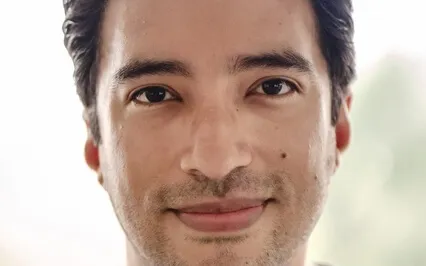
But poet Diego Perez believes that we live in an unprecedented time of global healing.
Perez publishes his poems using the pen name Young Pueblo,
Or Young People,
Because he believes that humanity as a whole is still young and has a lot of maturing to do.
In his new book,
Lighter,
Let Go of the Past,
Connect with the Present,
And Expand the Future,
Perez shares his personal path to healing from addiction and lays out practices to help us cultivate what he calls structural compassion.
In today's episode of Life As It Is,
My co-host Sharon Salzberg and I sit down with Diego to talk about the connection between personal and global transformation,
The difference between self-love and narcissism,
And what gives him hope about our present moment.
So I'm here with poet Diego Perez and my co-host Sharon Salzberg.
Hi Diego,
Hi Sharon.
It's great to be with you both.
Yeah,
Thank you both for having me.
I'm pretty excited to be speaking to you two today.
So Diego,
We're here to talk about your new book,
Lighter,
Let Go of the Past,
Connect with the Present,
And Expand the Future.
So you told us in an earlier interview that your first book,
Inward,
Was about personal transformation,
And your second,
Clarity in Connection,
Was about a,
Quote,
Bridge between inner work and outward harmony,
More social in its leaning.
What's this book about and what inspired you to write it?
This one is more so the deep dive that I've always wanted to put together since I really picked up the pen and started thinking of myself as a writer.
I knew that I wanted to ultimately have a book that just had everything that I had been learning about in regards to personal healing,
Transformation,
Relationships,
Just all the topics that I try to cover in my writing.
The first two books felt like sort of a minimalistic introductions to what I've been thinking about over the past seven or eight years as a writer.
And Lighter not only has my sort of common topics that I really go deep into,
But my story is weaved around in it as well.
So the book does contain a lot of my personal story,
Stories about how my wife and I got together,
And stories about me and dear friends.
So it really shows a part of me that often remains in the shadows because I tend to just quietly sit behind the name Young Pueblo.
So this is a more personal book.
In the introduction,
You talk about your past history of turning to drugs and alcohol to numb and escape your emotions.
Can you say more about your realization that something needed to change?
How did you begin your journey toward healing?
It was really in that moment of rock bottom when I was on the floor,
I was crying,
I felt like my heart was going to explode.
And something clicked in that moment that what had gotten me to that place was that I had been lying to myself.
And I realized that if I wanted to really pull myself out of it,
And just build a whole new life,
I needed to start telling myself the truth.
So it all really started with,
I guess,
My personal version of radical honesty.
I just totally put my foot down and said no to any more hard drugs.
But I knew that alongside that I needed to really be truly honest with myself.
And that's what got me started really just on this journey of getting to know myself of just sitting with difficult emotions and opening a new doorway to loving myself properly.
David,
When you describe your early experiences of meditation,
You write,
There was nothing perfect about this period,
No great attainment,
No sense of being fully healed or fully wise.
I was not enlightened at all,
But I did feel lighter.
Can you share more about what it meant to feel lighter?
So that moment of rock bottom,
It happened almost exactly about a year before I did my first silent 10 day meditation course.
I knew nothing about meditation.
I didn't know anything about the Buddha's teaching.
I had never really read a book about the Buddha or just anything.
So I went into it totally fresh.
That first 10 day course was so difficult.
It was so hard for me to sit with myself.
I remember barely being able to stay in the meditation hall.
But even though I struggled so much in that first 10 day course,
When it was over,
I knew that something had really shifted.
My mind literally felt lighter in a way where it just felt easier to be with myself.
I knew that I barely understood the technique.
I knew that I had gotten something really good from it.
So what I ended up doing was I signed up to do another silent 10 day course two months later.
So I did one in July of 2012 and then one in September of 2012.
I was like,
Okay,
I'm going to put myself through this process again,
Even though it's incredibly difficult.
But I want to do this because I actually felt such serious results.
So it wasn't until later when I started more so understanding the Buddha's teaching and started really embracing a path of liberation as opposed to just the path of healing.
When I started learning about the greater attainments of concentration attainments or attainments of enlightenment,
But in those first few meditation courses,
There was nothing sort of really fundamentally special or anything like that.
It all felt really mundane,
But in a beautiful way where when I came out of it,
I was like,
Wow,
This is real.
I feel so much better than before and I can make better choices now.
Well,
Just out of curiosity,
How do you relate to the word happier?
I relate to the word happier as a byproduct of equanimity.
I really think that when the mind is much more able to just observe reality as it is,
That pretty easily from that there's abundant joy that comes from being present.
I think the word lighter is perfect.
You know,
It's not the common word.
Usually we say happier,
I got happier,
I got that much happier.
I wanted to get even happier still or whatever,
But that's usually the fixation.
But I think lighter is such an interesting term.
Yeah.
And I think about it in regards to the conditioning in the mind,
Right?
It felt heavy and it felt thick.
I remember sitting in courses and just feeling how that pattern of anxiety or the pattern of fear or the pattern of craving and aversion,
They would keep consistently roaring back up to the surface of the mind,
Trying to destabilize any sort of continuity of the practice.
And over time,
Outside of courses as well,
I knew that the amount of sadness,
The amount of anxiety was decreasing.
But when I would actually sit and meditate,
I could feel the thickness of those patterns.
And that's why I use that term mental heaviness or mental lightness,
Because it does feel like that.
When I look back on my own personal emotional history,
It doesn't feel as traumatic.
It just feels more so like a series of lessons as opposed to a series of points of hurt.
Diego,
You say that when you started meditating,
Two things became clear to you,
That deep healing is possible and that humanity as a whole is young.
Can you share more about these realizations in particular?
What does it mean for humanity to be young?
As a whole,
Humanity feels like we're in a younger than teenage stage.
When I look back to what I was learning in kindergarten,
We were taught pretty simple things,
How to clean up after ourselves,
How to not hit each other,
How to tell the truth,
How to share,
How to be generally kind to one another.
And those are things that we know how to do as individuals to some degree.
But when we move up to the macro scale,
To the scale of groups or nations,
We don't know how to do these things at all.
So to me,
It seems that humanity has a lot of maturing to do.
And when I realized that through meditating,
The name Young Pueblo kind of really gained footing in my mind that I was growing up and it felt like the whole world was also growing up because while I was going through my own healing,
That was the same time where wellness kind of blew up across social media and became really popular and has become this massive field.
And it feels like now more than other times in human history,
There are just millions and millions of people who are actively healing themselves through some modality or another,
Whether it's meditation or some form of therapy.
So how do you see the relationship between personal transformation and global transformation?
How can the two mutually reinforce each other?
I think the two are bound together.
I think they have to move together.
You know,
I like to study history a lot.
And I've just been reading a lot about the French Revolution.
And there were so many people who had these beautiful ideals of liberty,
Of equality,
Of freedom of speech.
And then once they got power,
This like reign of terror occurred where there was just massacres of tens of thousands of people.
And to me,
This is something that happens repeatedly throughout history where there's a group of people that has good ideals,
But then once they get power,
Power itself functions like a magnet on the ego,
Pulling out the roughest parts of it.
And it will just show you the roughness of what's inside of your mind.
And if you don't do that inner work to help heal and alleviate that density that's sitting quietly inside the depth of your mind,
Then you're actually going to fall into a situation where you're recreating the things that you were once fighting against.
And now I feel like throughout history,
There really hasn't been a moment,
Especially in modern history,
Where so many healing modalities have become more accessible than ever before.
So I'm quite excited about this time.
I know it's a challenging time because we see more clearly than ever before how many problems are out there.
But at the same time,
We have these tools that can help us deal with our inner trauma,
Deal with the mechanisms that make us want to hurt another person so that as we transform the world,
We'll more so be able to do that peacefully and creatively,
As opposed to just taking power and then trying to put forward some form of justice that's really just punishment.
It's interesting you mentioned the French Revolution.
I mean,
This question is to how one attains power.
So if it's through violence,
Why would that violence stop once the goal is achieved?
It's unleashed in a way that we saw in the French Revolution,
But in many violent revolutions.
So that's an interesting point.
I also want to ask about the work you did as a teenager.
You were leader of the Boston Youth Organizing Project.
How has your work in community organizing informed your understanding of collective liberation through healing?
I feel really fortunate that I was able to start reclaiming my power at a very young age.
So from 15 to 18,
I was part of this group called the Boston Youth Organizing Project.
And I was one of five or six leaders of that organization that really held the space for 80 to 90 young people that would have chapters all throughout Boston and in Cambridge.
But that ability to be able to organize with other people and ask ourselves,
What is it that we want to change about our city?
Or what is it that we want to change about our schools?
And literally then act together and create a campaign so that we can put pressure on our mayor or city councilors to really give us the things that we're asking for.
And we would get results.
We would win often.
So it would show me the power of like a group coming together around a common cause.
I also saw the limits where even though we would win often,
I still felt this deep dissatisfaction and tumultuousness in my mind that all those victories couldn't really cure.
So when I started meditating and I started listening to S.
N.
Goenka and hearing his discourses,
When he would talk about liberation,
It was sort of the internal dynamic of liberation that really resonated with me because I felt like that was a piece that was missing.
You know,
If we were really going to be freer,
Happier,
Peaceful,
If we were going to create a lasting peace,
There needs to be some form of internal liberation to go alongside that.
You also mentioned not being punitive.
In other words,
Our actions should not be taken with say revenge in mind.
Often we don't acknowledge that that's a desire.
Can you say something more about that?
When we get hurt,
We seek justice.
But what we're actually looking for is revenge.
And I think that just creates a situation where the web of humanity,
We're constantly just passing along a hurt.
So if someone hurt me,
I'll end up passing that hurt upon another person and then so on,
So on.
People just keep passing along their hurt.
I think if we're really trying to build a better world and if we're really trying to live up to our ideals and it is part of our responsibility to learn how to heal ourselves so that if someone ever tries to pass their pain onto us,
We know how to heal it so that we don't spread it,
So that we know how to properly process it so that system,
That cycle of hurt doesn't continue.
I feel like that's more possible than before because people are picking up different tools.
And that's something that's really beautiful too is that,
You know,
What works for me,
Like the meditation that might work for me,
It may not work for somebody else.
You know,
They may need some sort of other technique or someone may not be interested in meditation at all,
But they would really benefit from working with a therapist or even a psychiatrist.
It's a special time we live in that is really challenging,
But there's a lot of hope.
When you started meditating,
You also began writing and sharing your poetry on Instagram under the name Young Pueblo.
How did you make the decision to share your poetry in this way?
What did you learn from how people have responded to it?
I felt intuitively like after I sat my third 10-day course,
I remember the night before we were all to go home,
I couldn't really sleep that night.
And I felt something repeatedly inside of me just saying,
You know,
It's time to write,
Just start writing.
And I was excited about the idea that healing was even possible.
No one ever told me healing was possible.
That wasn't how we grew up.
When I started seeing the results for myself,
I knew I was like,
Oh,
I should write about this.
I'm not perfectly healed.
I'm not perfectly wise.
I'm not special in any way.
But this is a topic that really interests me.
So let me see if it connects with other people.
I took a big risk to take writing seriously.
At the time,
I knew that everyone was spending a lot of time on Instagram.
Instagram was immensely popular,
Especially like that whole 2014 to 2018 era.
I saw other writers,
You know,
Like R.
M.
Drake,
Rupi Kaur,
Who were putting out fantastic work.
And I was really inspired by them.
And I thought,
Okay,
I have my own message.
Let me see if I can take to social media and see if other people would connect with it.
And then over time,
As I really kind of honed my voice and figured out what topics I actually want to write about,
It started picking up.
So one of the themes that runs through the book is your journey towards self-love.
And my first teacher was also S.
N.
Goenka.
And I will never,
Ever forget that moment of sitting in the meditation hall at the end of the retreat or right towards the end of the retreat.
And I was mesmerized.
You know,
I was just like sitting there.
And it was such a hugely important moment for me.
And it's such a tough topic really,
Because to explore genuinely what's the difference between self-love and narcissism or what we tend to confuse as self-love,
You know,
That kind of self-preoccupation and really nihilism.
I mean,
It's all these years later for me.
And I'm still exploring it.
And I still feel like there's so much to learn.
And I'll present it to you,
You know,
What does self-love mean to you,
Both in terms of what it is and what it's not?
I love this question,
Because I think it's an important one to understand,
Because it's especially critical to separate self-love from consumerism.
I think it's a really common idea that floats around where self-love is just giving yourself whatever you want.
But giving yourself whatever you want can make you really sick and healthy and unhappy.
So,
To me,
When I think about self-love in the way that I've activated self-love in my personal journey,
I define it as doing what you need to do to heal yourself and doing what you need to do to free yourself.
Because doing that sort of difficult inner work,
I feel like those were the moments where I was really loving myself deeply.
And I knew that the self-love was real,
Because it slowly started opening the door to unconditional love for all beings.
So not only was I being more compassionate with myself and learning about how my mind worked,
But I was then able to see the way that,
Oh,
I struggled this way.
And then I would see others struggling this way.
And it was easier for me to be kinder,
Softer with them,
More gentle,
Meet them at their pace.
But self-love and unconditional love,
It's not like martyrdom.
You're not allowing yourself to just be chipped away at or becoming a people pleaser or anything like that.
I think self-love has this ability to balance itself so that you're able to love someone really well and at the same time nourish yourself deeply so that you don't get lost in giving.
So this is what you mean when you use the phrase commercialization of self-love as a thing to avoid,
Basically.
Yeah,
Definitely.
And it feels like,
You know,
Obviously,
To some degree,
It's fine,
Right?
Give yourself the things that you've been wanting,
The moments of pause,
The moments of rest.
But anything taken to an extreme becomes unhelpful.
If you're just constantly 100% giving,
And you spend no time taking care of yourself,
Then you're going to end up hurt.
You're going to end up incredibly depleted.
The Buddha,
His life,
He was constantly helping people,
Constantly helping people.
But he would always set aside those few hours for the night when he would rest,
And he would meditate.
And he would take care of himself,
Even though he was constantly,
Constantly giving.
But being able to balance giving with taking care of yourself,
I think is a strong mental path that we should try to emulate.
Comes back,
Interestingly enough,
I think to the word happiness,
Because is it okay to want to be happy?
Happiness doesn't have to be seen as selfish or self-absorbed.
It can be having some energy,
You know,
Having some lightness,
Some spaciousness,
Within which we can actually pay attention to others.
You know,
Instead of feeling so martyred or so burnt out and so exhausted,
That doesn't ever seem like a bad thing.
I agree with you.
I like the expansiveness of the word happy too,
Because to me,
When I think about happiness,
I think about mental clarity,
Right?
Or I think about seeing the world through a lens of love,
That ability to be compassionate,
Because happiness,
It has this flexible idea to me and my personal view of it.
There's nothing wrong with pointing yourself in a direction where you want to build a life that can really support your happiness.
You know,
I want to stick with self-love for a moment.
You identify three pillars of self-love.
Well honesty,
Positive habit building,
And unconditional self-acceptance.
Can you walk us through each of these and how they can open us to loving ourselves and those around us you mentioned once you begin to experience real self-love,
You felt the same love for others?
For starters,
We can start from the end.
Acceptance,
It feels like a critical aspect of self-love,
Because when you start turning that lens inward and you start paying attention to the fluctuations of your emotions,
You start seeing some pretty rough stuff.
You start seeing your own history and there may even awaken new memories that you've been running away from.
But being able to engage with yourself through a medium of acceptance,
It makes deeper healing possible.
It just feels like a critical element of self-love that without acceptance,
You're just not going to be able to go very deep.
And outside of that,
It feels like self-love is an active mode of existence.
For me personally,
I knew when I hit my rock bottom,
I was incredibly unhealthy.
I did not feel good.
I was not taking care of myself.
I would run away from myself by filling myself with anything that I found pleasurable.
So that could have been smoking a lot of marijuana to the point where I was totally numb or eating a lot of food that just had no nourishment.
So one of my modes of positive habit building was like,
Hey,
Let me feed myself things that actually make me feel physically good,
That fit my body well.
And it was difficult,
Took time to build that habit and similar with going out for walks or even having that strength to start meditating two hours a day.
Probably the key most important skill or thing that I've done for myself was realizing that,
Oh,
I need to bring meditation into my daily life and I need to make time so that I have these two pillars of my day where I meditate one hour in the morning,
One hour in the evening.
And now that I've been doing that since 2015,
I've been looking back on it recently and realizing this has been a critical,
Critical part of my life that I think everything else is built around.
If it wasn't for this habit that I've been building of getting myself to meditate,
My relationship with my parents,
With my friends,
With my work,
Everything would be more worse off than it is now.
Another thing in your work is what it means to be authentic.
You write that sometimes we might feel like we're being authentic when in fact we're caught in our own cycles of reactivity.
So can you share more about what authenticity means to you?
Sure.
I think my first reaction is not authentic at all.
It's normally something that's connected to the way I was in the past.
So I've learned that whatever thought comes up first or whatever emotion comes up first,
That's not really what I'm currently resonating with or what currently feels genuine to me.
So oftentimes that's why that sort of pause and respond feels really critical because you will feel that immediate sort of reaction.
And that's just the past trying to pull you back in.
But if you're just going to allow that to be what you blurt out or the action that you make,
Then you're not living authentically.
You're just recreating your past over and over again.
And it feels to me that when we're able to give ourselves a few seconds or a few minutes,
That we're able to look through our own mind and feel that spaciousness where we can see,
Oh,
Right,
That's how I used to deal with things.
But actually I know that that's not going to be helpful right now.
And I know that if I were to actually say that,
It can make the situation worse.
So the way that I would rather show up as is something that's going to be much more skillful and much more compassionate or still honors my truth,
But at the same time is just more rooted in the person that I am becoming and the goals that I'm trying to adhere to.
Some people say first thought,
Best thought.
What you said is a good antidote to that because I find that to be untrue.
You also talk about our patterns and you say that they can obscure our ability to see ourselves and others clearly.
And to quote you,
Most people walk the earth unaware that they are not seeing with their eyes.
Instead,
They are seeing with their emotions and often these emotions are just the echoes of their past hurts.
Could you say more about these cycles of projection and distortion?
How does our fixation on past hurts warp our view of the present moment?
Yeah,
That's a great question.
And oftentimes it's not even a fixation.
It's sort of like a passive conditioning that's added up so thickly that we kind of live on top of this concrete layer,
Things that we've felt before,
Sensations that we've reacted to.
And what we don't realize,
And that's something that I think is pretty important to add to common knowledge is that whenever you react,
It gets accumulated in the mind.
It's an imprint that makes itself a thicker pathway that when a similar situation appears,
You may then just react in that manner again and again.
But it feels like our conditioning just sits in front of our eyes.
And we won't really see that until we turn our lens inward to notice the way that our past really affects our perception of anything.
And it makes it quite difficult because oftentimes when we're interacting with people that are dear to us or when we're taking in news about the world,
It's all being filtered through this lens of the past.
And it can be like a pretty big hurdle to overcome so that you can genuinely just observe reality in an objective manner.
This is why I really enjoy a lot of the writings of Jiddu Krishnamurti because he talks a lot about,
Can you just see something?
Can you see a thing without projecting onto it essentially?
Can you just look at a flower without saying anything about it and just taking it in?
I feel like in a similar manner,
That's a quality that we need to develop in ourselves so that we can more selflessly listen to each other,
More selflessly observe each other as opposed to just judging other people and really judging them according to what we have felt before.
Daishi A lot of what you're talking about is non-reactivity,
I would say,
Simply seeing things.
But so often we respond with fear and attachment and you draw a relationship between the two.
You describe fear as a craving for safety and attachment as an attempt at security.
So can you say more about the relationship between fear and attachment and why can they be so seductive and how can we find a truer sense of safety and security?
Jadakiss Something that has become pretty clear lately when I've been observing myself and just what my fellow meditators have been coming across too is that it feels like at the very core of the mind there's survival.
So it makes sense that we would rapidly try to create attachments that if we find a situation that we like,
We try to repeat that situation again and again.
And if we're not able to mold reality in that way,
Then mentally we feel tension.
Similarly,
Fear is an incredible motivator.
And I think it's an incredible motivator to keep us alive.
But that only works in a survival situation.
And a lot of us these days,
You know,
Are not in survival situations where we are living a modern life and we still have these tendencies and these patterns that try to have us control as much of reality as possible.
But that only sets us up to struggle.
So I find that we need to set ourselves apart from our survivalist tendencies and try to focus on genuinely asking ourselves,
What is it that I need to thrive?
And oftentimes what you need to thrive is enhancing your ability to let go.
Because you're not going to be able to control everything.
It's just not going to be possible.
And you're much better off learning how to accept the way reality currently is and understanding,
Okay,
These are the actions that I can make.
These actions are the things that I have control over.
But other than that,
The movement of change is going to continue flowing.
And I'm better off trying to flow with it instead of fighting against it.
Can you share a little more about how you practice letting go both in your meditation practice and your everyday life?
Definitely.
I try to really practice letting go by understanding that it's intrinsically connected with embracing impermanence.
You know,
The same way that people will have moments of gratitude,
Or they'll wake up or before they go to bed,
And they'll kind of note to themselves like,
These are things that I'm grateful for.
I think similarly,
Even if it's just at the intellectual level,
It's really helpful to remind yourself that everything is changing.
And I'm talking everything,
Like basic atomic level,
At the level of your body at the level of your mind,
At the level of the world,
Everything is constantly moving,
Even if it's apparently not moving,
Because,
You know,
Even if you don't see a stone moving,
There's still atomic changes happening within that stone.
When you are able to embrace the truth of change,
It makes it a lot easier to let go.
So personally,
For me,
I remind myself that it's important to just embrace impermanence,
That whatever the situation is that it's in front of me,
It's going to change.
So that helps me either have a little more resiliency during tough times,
Or try to be more present when I'm around loved ones or if I'm enjoying something that's happening in front of me.
Similarly,
Through meditating,
As Senguenca's meditation technique,
It's really based around impermanence.
So being able to just hone in on the truth of impermanence and observing that impermanence is happening within the framework of the body,
Builds that ability to be able to let go on a daily basis,
Because there's just so much that the mind is going to attach itself to.
And it can be as simple as,
Oh,
You know,
I really want cookie dough ice cream tonight.
And then so much has happened in a day and that it just can't come together.
And that even though you can't have that thing that you craved,
It's totally fine.
It's not really going to bother you.
And it's not going to be some thing that creates a lot of tension and tumultuousness in you.
I'm wondering about how you see letting go in relation to your writing.
I mean,
Especially since you put so much of your poetry up on social media,
How you practice non-attachment to your work once you've published it.
And so I wonder,
Do you look at the likes?
How do you let a poem go?
Lately,
I will post something and I won't really look at the likes until maybe like the next day.
I've learned over time that I cannot control how people perceive me.
And I also cannot control how people perceive something that I write.
Like,
You know,
Even something that I write with an initial intention,
Other people may see a whole different meaning in it and may find some other form of beauty or connection in this piece that I initially meant for a totally different reason.
So it's really interesting the way that I can create something and it can mean something pretty profound to me and can be really relevant to my life.
And then I put it out there,
People will connect with it in their own way because they're looking at it through their own lens.
They're looking at it through their own emotional history.
This is something also going back to Jiddu Krishnamurti because he mentioned once about how he laughed at the idea that we all think that we're different,
But we're not.
I feel sadness,
You feel sadness.
Like,
I feel tension in my mind,
You feel tension in your mind.
I have fears,
You have fears.
So when you really look at it,
Like,
Yes,
We may have these different emotions at different intensities,
But we're still working through the same format of the mind.
I just wanted to say,
You know,
You've used social media with such great success and yet at the same time you caution us against Ismar Pernicious dictates,
Not answering an email immediately,
Not feeling compelled to respond or get caught up in likes.
Can you just say something about that?
Definitely.
I feel like the speed that everything is moving at these days is a bit inhuman.
The speed of everything is very influenced by the capitalist mode of production,
Just seeing ourselves as being productive beings.
But on the other side of that is producing things is beautiful,
But it's also beautiful to take your time and to move slowly and to move gently.
And at the same time,
We don't quite realize the way that technology has just created a situation where there is so much information coming at us as individuals.
So we have these like massive algorithms that are just sending so much information to us every time we're scrolling,
Every time we're online.
And consuming all of that information is really tiring.
It takes energy to process it.
I try my best to be respectful of the people that I'm working with.
But at the same time,
If you send me an email,
I won't be able to answer it immediately because I don't even know what my response will be.
I need to think about it.
So I try to move at a pace that feels genuine to me.
And I really recommend that to other people too.
I feel like we're all just moving a bit too fast.
It's interesting I'm reading Sokhny Rinpoche's book because I'm going to be interviewing him this week and he refers to our speed limit,
The body speed limit,
The mind speed limit,
Our energetic speed limit.
So that's pretty much what I'm hearing you say.
So thank you for that.
Let's take a quick break and we'll be right back.
What makes a good life?
How can we live well even in times of crisis?
Join us October 24th to 28th for Living Well in Difficult Times,
Perspectives on Buddhism and Human Flourishing,
A donation-based virtual event series.
You'll hear from Buddhist teachers,
Psychologists and writers,
Including Kira Jewel-Lingo,
Steven Batchelor,
Sylvia Boorstein and David Nickdarn.
The series will explore what it means to live a good life and help you find practical tools for thriving under any circumstance.
Sign up now at tricycle.
Org slash events.
That's tricycle.
Org slash events.
Now let's get back to our conversation with Diego Perez.
You know,
You put so much into your poetry and you're so generous with sharing it,
And yet you say it comes second to your personal growth.
What do you mean by that?
And how do you view the relationship between your writing and your practice?
That's probably one of the key things that I stick to.
My personal growth comes first and that really means my personal meditation journey and that writing comes second to that.
I feel like meditating opened me up to this world of creativity,
Of even wanting to put together words in a manner that can hopefully be useful to other people.
But I've realized that without this sort of centerpiece of my life,
That's meditation,
I would be in a much rougher spot.
So whenever I put together my year,
What I do first is I line out what meditation courses I'm going to do that year.
So I'll set aside like,
Okay,
This is the time that I'm going to do my long retreat.
I'll either meditate 30 days or 45 days and I'll have that time period picked aside and I'll have the different courses that I'm going to serve or shorter courses that I'm going to sit and I'll have that lined out.
And then after that comes all the work stuff.
Oh,
This is,
You know,
When we're going to plan a book release or this is when events or whatnot may come.
And so far that's,
You know,
It's worked out great for me.
The fact that I make that so predominant in my life has really made the other parts of my life a lot smoother.
You know,
Sharon and I not too long ago interviewed Ocean Vuong to discuss his latest book and he mentioned the tension he experiences between being a Buddhist and being a writer.
One of the interesting things he said is that when he writes something,
He sort of puts it on a raft in the river and lets it go down river.
He's seen too many people hop on that raft in sync with it.
So it was primary for him to remain grounded,
Especially with the popularity and fame.
Do you see any tension between your Buddhist practice and I guess what could be seen by some as a challenge,
All of the attention that you get as a writer,
How do you balance that?
I balance it by trying to be aware of it.
There's definitely a tension there because the same way that,
And sorry,
It's so funny that today,
Like there's a lot of Jiddu Krishnamurti coming out,
Right?
So one more time,
He writes that the inner creates the outer and the outer molds the inner.
And lately I've been thinking a lot about how the outer molds the inner.
I think the past few years I have experienced success.
My books have gotten out there and more people are finding use in the stuff that I've been writing.
And I'm trying to be careful with that because it's very different.
The world around me also affects my conditioning.
Who I'm around,
The experiences that I'm having.
I like being around people who think I'm not special.
My old set of friends and my wife and my family,
And they all treat me as regular as can be.
They're happy for my success,
But they don't think I'm like anything super special or wise.
Being around people that helped me stay grounded has been like a very intentional thing and feel a little awkward when I meet fans and stuff.
I'm glad,
You know,
If my work has come to them in a time where they were going through some hardship or another that it was able to help,
But then I get like a little awkward because I don't want them to think in any way that I'm something other than I'm not.
Because I really feel like a pretty regular guy,
But at the same time that,
You know,
I can't control their perceptions.
So I kind of have to just let it go and be what it is.
And at the end of the day,
I can mold how I want to spend my time and where I'm around.
And it's been great.
You know,
One thing that I think has been really helpful has been now I live close to the meditation center.
I live in Western Massachusetts and the community that I regularly see and the people that come over to my house,
They're all fellow meditators.
And it's kind of simple existence that I've had lately.
And I feel like that's been really helpful for me as opposed to if I was living in LA or New York City,
But I'm really careful with that.
If I feel like my ego is growing,
Then I'm not going in the right direction.
First and foremost,
I'm here to make myself as free as possible.
And if my ego is growing,
Then I'm not free.
Yeah,
That's impressive.
I was just mentioning to you earlier that you went from 1.
3 million followers to 2.
3 million in less than a year.
And you're,
Instead of in some urban center soaking that up,
You're in Western Massachusetts practicing.
So I have to love that.
We always talk about you as plain old Diego,
You know.
We don't think you're special.
So don't worry.
I appreciate that.
So you write about healing as a gradual process that takes time and repeated in practice.
Can you share more about the role of repetition and ritual in moving toward healing?
And then I'm really curious if you view your writing as a ritual or a meditative practice.
These days I view writing as fun.
Maybe like for a while in 2020,
Writing started feeling more like work,
The pressures of the pandemic.
But I've been able to change that mindset and bring it back to the earlier days in like 2017,
2018,
When I really started getting serious,
Where it felt like I was putting a puzzle together.
This idea would pop up into my mind,
And it would come with some words.
And then I had to give it the rest of the words that it needed for it to fully make sense.
And now when I sit in front of my laptop,
I'm actually having fun.
And that feels like way more generative and way more healthy.
And it's funny,
I feel like I do process a lot of what I'm learning,
But most of that stuff is on the sort of conventional level,
Conventional level of like,
James,
Sharon,
And Diego,
Like us existing and talking and having this conversation,
But I don't spend too much time writing too deeply about the ultimate level.
That's where I'm talking like the ultimate level,
The truth of impermanence,
No self of misery.
Because when I try to write about those,
That's the stuff that I'm really learning.
Like when I'm sitting down and I'm meditating,
Those are the things I'm learning.
But when I try to write about them,
It's hard to fully encapsulate something that I'm in the middle of understanding and I don't fully know yet.
So I try to just let myself process those things quietly in my mind.
And sometimes they totally infuse my writing.
Like sometimes I'll totally write about how it's really valuable to let your identity be something that is flowing like a river as opposed to something that is static and still,
Which is essentially embracing the idea of no self.
I'm something that's changing as opposed to I'm something that is.
And I think that's been pretty helpful.
And then in terms of like repetition and the healing path,
Like repetition is everything.
I feel like there's so much healing and repetition.
Like I remember when I started meditating at home in 2015 and how difficult it felt like it felt like a Herculean effort.
It felt so hard to get myself to meditate and I would get it done.
And now I finished meditating right before we started talking and I was so happy to be able to sit.
Really fortunate to be able to sit down and there's a technique that I understand and it's giving me results and I'm getting to observe all this change that's happening in the body.
That repetition makes a world of a difference.
I know that for a lot of meditators it feels like the meditation can feel quite mundane for a while where it's constantly bring yourself back,
Bring yourself back.
You're starting again,
Starting again.
And those moments where you're sort of chipping away at that old conditioning and you're bringing yourself back to a sense of just meditating on whatever the object may be,
It adds up over time and it adds up and it slowly keeps adding up,
Adding up,
Adding up.
And then there comes a point where you like take off and you start reaching like new depths of wisdom.
Even what your mind can do will be very different from what it was able to do many years ago.
But it really is like going to a mental gym.
You're not just going to pick up and have the strongest mind immediately.
It takes a lot of time to build it.
Daigo,
You write about the ripple effect of inner transformation.
And one of the ripples you mentioned is how inner clarity can encourage creativity.
So how do you view the relationship between clarity and creativity and has your own meditation practice influenced your experience of creativity?
Definitely.
I think when the mind is sort of bogged down with its old conditioning,
It's going to be very hard for you to look at a situation in a new way.
And I found that when I started meditating very slowly,
Creativity started being infused in my daily life.
And it wasn't just in terms of creativity in the artful sense,
Right,
In terms of creating art or writing,
But creativity in the sense of even in my relationship with my wife,
We were sort of stuck in a particular holding pattern.
And then when we both started meditating,
We were able to interact with each other in new ways or in the ways that I would,
You know,
Speak to friends,
I felt like I was putting words together in different ways.
And similarly,
With writing,
It felt like a fountain had opened up that I never even knew existed.
A lot of that I attribute to the fact that meditation itself didn't change what I had gone through.
It didn't change the poverty that I experienced as a child didn't change my experience of immigration or moments of racism that I've gone through.
But it helped take the energy away from them.
So that,
Yeah,
They were still part of my story.
But the story didn't feel heavy anymore.
When that started happening,
I was just able to connect with this bubbling creativity that I feel everyone has access to.
And I think a lot of people do,
You know,
Whether they're doctors,
Or engineers,
Or writers,
Or musicians,
Whatever it is,
When you start meditating,
Or you start deeply healing yourself,
You're going to be able to produce from a space of compassion from a healed space.
And from a much more creative space.
Daishi You also mentioned how inner transformation can ripple into our communities and institutions through what you refer to as structural compassion.
Can you explain a little bit about what you mean by structural compassion?
Jon Structural compassion is like another lens with which to look through,
You know,
And see reality and what's going on.
To me,
When I look out into the world,
There's a lot of imbalance and there is a lot of structural harm.
There's a lot of wars,
A lot of people suffering,
There's a lot of inequality.
Granted,
I'd much rather live in 2022 than 1840 or 1600,
You know,
Much rather live now.
But there's a ways to go in terms of like how much more humane we can make the world.
And I think structural compassion is something that it's a lens that can help you uplift human dignity,
So that more people have access to the material things that they need to live good lives.
Putting forward that term of structural compassion,
It just feels like the opposite of structural hurt.
And that structural hurt,
I feel it's quite common,
It's not that difficult to imagine.
But,
You know,
Imagine if we were able to scale up compassion,
And take that from the level of individuals interacting compassionately to actually making our institutions embody compassion,
So that they themselves are functioning in a selfless manner,
So that they can support other people,
So that they can work in harmony with other institutions.
And so that people can have this guiding goal of uplifting human dignity as opposed to just creating more profit.
You know,
You're pretty optimistic.
I remember when Sharon first discovered the term doom scrolling and said,
Oh,
I didn't know that existed.
You know,
Everyone talks about how we're on the wrong path and how we experience unprecedented division.
But you write that we live in an unprecedented moment of global healing.
You even refer to your generation as the healing generation.
You say something about what you're seeing right now,
And what gives you so much hope about the present moment.
I think it's a quite historic thing.
And I think when we look back on this time,
We'll see the effects of that.
And we'll be able to point to this moment that we're in as a particularly special moment where people were just awakening to their needs in a much deeper way,
And not like in a selfish way,
But in a way where they're like trying to build better lives for themselves.
I do think we live in a healing generation.
I feel like we live in a time where there are just millions and millions of people who are,
And not just in the United States,
We're talking like much more globally than before,
Who are actively finding some modality or another,
Whether it's something that's Eastern or Western,
That is helping them just engage with themselves in a way that alleviates the past that they hold inside of them.
I think it's tough because,
You know,
We have this daunting challenge of climate change,
Inequality,
Racism,
Patriarchy.
There's so many issues that are going on that are massive,
But human history,
If you were to look back,
There were also massive challenges in the past.
You pick your time period,
And you can probably point out a number of massive challenges that existed in those moments.
But I think this time is different because we really just haven't had this sort of gateway,
This pathway where people were able to really get to know themselves and heal themselves deeply and allow that inner creativity that we were talking about to really spring forward from within them so that they could look at these old problems and create new solutions.
Daigo Férez,
It's been a pleasure.
For our listeners,
Be sure to pick up a copy of Daigo's new book,
Lighter,
Out October 8th and available for pre-order now.
We typically close these podcasts with a short practice,
But first,
Daigo,
Would you be willing to share a poem with us?
Sure.
This poem is from the introduction of Lighter.
So right before you open up the book to the first chapter,
There's two poems,
And I'll read the first one.
Pick the path that lights you up.
The one you know deep down is the right choice.
Stop listening to doubt.
Start connecting with courage.
Do not let the idea of normal get in the way.
It may not be the easy path,
But you know great things take effort.
Lean into your determination.
Lean into your mission.
Lean into the real you.
Thank you so much,
Daigo.
Sharon,
Would you like to take us out with the meditation?
Certainly,
And thank you so much,
James,
For having me as your co-host and everyone at Tricycle who actually makes it all happen.
And Daigo,
It's so great to hear from you again.
Keep writing.
Thank you so much.
If you want to adjust it comfortably,
You can close your eyes or not.
Let your energy kind of move into your body,
Suffuse your body.
And see if you can feel the sensations of the internet breath,
Just the normal breath.
And as much as possible,
We're going to be in receptive mode.
In my early practice,
I used to say to myself,
Let the breath come to you.
Because I was so hypervigilant and so nervous,
It was like I'd never done it before.
You know,
I had to be ready for the next 50 breaths after this one.
So relax.
Settle back.
Let the breath come to you.
I also used to say to myself,
You're breathing anyway.
All you need to do is feel it.
Because it's some performance anxiety.
It's like I'd never done it before.
Just you know how to do this.
Just relax.
Settle back.
And feel the earth as you can supporting you.
Feel space touching you.
Usually we think about touching space,
We think about picking up a finger and poking it in the air.
But space is already touching us.
So is touching us.
As you rest your attention on the feeling of the breath,
Thoughts may come and go.
Emotions may come and go,
Sensations,
Sounds,
Imagery,
Whatever it is,
It's fine.
You don't have to block anything,
You don't have to follow after it.
Just allow the arising and the passing of the breath.
Thank you both.
Thank you so much.
You've been listening to Life as it is with Diego Perez.
We'd love to hear your thoughts about the podcast.
So write us at feedback at tricycle.
Org to let us know what you think.
Life as it is and Tricycle Talks are produced by As It Should Be Productions and Sarah Fleming.
I'm James Shaheen,
Editor-in-Chief of Tricycle The Buddhist Review.
Thanks for listening.