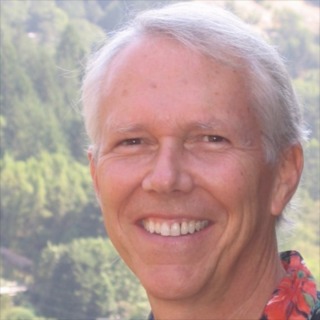
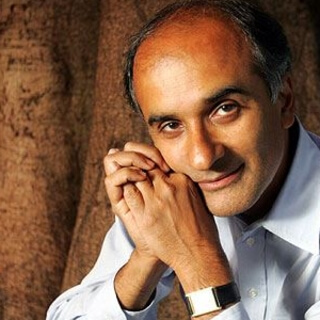
Hello and welcome to Trischool Talks.
I'm James Shaheen,
Editor-in-Chief of Trischool The Buddhist Review.
For the past 40 years,
Ken MacLeod has worked as a translator of Tibetan texts,
Practices,
And rituals.
With his new book,
The Magic of Vajrayana,
MacLeod takes a more personal approach,
Drawing from his own experience to provide readers with a taste of Vajrayana rituals and practices.
Through practice instructions,
Evocative vignettes,
And stories from his own life,
MacLeod offers a practical introduction to many of the rituals that may seem obscure to contemporary Western practitioners,
Including protector practice and guru yoga.
In this episode of Trischool Talks,
I sit down with Ken to discuss how rituals can take us to the edge of the unknown,
What we risk when we ignore the presence of gods,
And how Vajrayana helps us uncover the clear,
Empty knowing that is always present in experience.
So I'm here with writer and teacher Ken MacLeod.
Hi,
Ken.
It's great to be with you.
Very nice to be with you,
James.
So Ken,
We're here to talk about your new book,
The Magic of Vajrayana.
To start,
Could you tell us about the book and what inspired you to write it?
The seed was planted by a friend of mine shortly after Wake Up to Your Life came out in 2001.
I think.
And he pushed me quite hard on it,
But I really didn't feel capable of writing a book on Vajrayana back then.
After a few years,
He backed off,
But the seed had been planted.
About five years ago,
I realized that I needed to find a place of my own and write a couple of books.
And the first one was A Trackless Path,
And the second one was this,
The Magic of Vajrayana.
And I needed to write it because I wanted to do whatever I could to pass on what I had had the good fortune to receive in my own training.
And that is what this book is.
It's a record of my understanding and to a certain extent,
My experience of the practice of Vajrayana.
So you write that this book is intended for three groups of people,
Those currently practicing Vajrayana,
Those interested in practicing Vajrayana,
And those whose lives have cracked open.
And I would probably count myself in the third group.
Can you say more about this last group?
What does the book aim to offer to those whose lives have cracked open?
Well,
Some people,
Whether it's through force of circumstances or through natural proclivity or something completely unpredictable,
Find themselves opening to life in a very different way.
I'm put in mind of a recent posting in Barry Weiss's sub-stack written by Amanda Knox and what epiphany,
To use her words,
She came to while she was in prison in Italy for a crime that she did not do.
It's really quite profound reading and I recommend it to your readers.
Just in case people don't remember,
Amanda Knox was the young American woman living in Italy who was accused of murder and it became an international news story.
And she was finally exonerated,
If I remember correctly.
Is that right?
Exactly.
All the evidence pointed to an Italian burglar.
There was never any evidence that pointed to her.
That's a very good example of someone's life who has cracked open by force of circumstances.
And when that happens for people,
They often feel like they've experienced something very profound,
Very true,
But also something that is out of the ordinary or a perspective on the world they never expected to encounter.
And so a book such as The Magic of Vatriana,
And there are many other books in other traditions,
Of course,
May serve as a way to show them that what they experienced is not abnormal.
There's nothing wrong with them.
And it may,
Depending on their own proclivities,
Provide them with a path to enrich and deepen that experience.
So,
This book is more personal than your previous work.
I talk to you on a regular basis.
I know you well.
But frankly,
When I read it,
I was surprised at how personal it was about your own practice and your own path.
So,
How did you first come to Buddhism and to Vatriana in particular?
I did some reading while I was at university.
And after I graduated in the 60s,
I took off on a bicycle and crossed Europe and ended up in India.
By that point,
I was interested in pursuing meditation.
There was a mystical component to that.
And I ended up at Kalarimpuche's monastery in the Darjeeling district and started to study and practice under him.
And from Kalarimpuche,
I received full training in Tibetan Buddhism.
It all comes together.
I wasn't particularly seeking out Vatriana.
I didn't even know about it,
Actually.
But it is the tradition of Buddhism into which I fell,
More by chance than by design,
You might say.
And you taught for many years and you no longer teach publicly,
But you do a lot of translation.
I see a lot of your work as translating Vatriana or Tibetan Buddhism or Buddhism more generally into our own idiom.
What's that been like or is that an ongoing and never-ending project?
Well,
It is an ongoing project and it will end for me when I die,
Of course.
I've always been concerned to express the teachings,
As I said,
That I've been fortunate enough to receive in clear,
Understandable English.
And I've taken a kind of Don Quixote approach to translation,
I suppose,
Tilting against various windmills,
Because I find that the early translations which relied very heavily on a Victorian vocabulary have not changed that much,
Which I think is a great shame.
And I'm trying to demonstrate through translation how these teachings can be expressed in natural English in a way that people can just take them in.
And that's been a very challenging exploration.
It took me a long time to find the right vocabulary,
The right grammar,
And it's a process in which I continue to refine my work,
Always with the intention of making it clear and accessible without sacrificing quality or depth of these teachings.
My understanding of translation has changed over the years,
And what I see as the translator's task or the task that I've taken on myself is to write the translation in such a way that the person who reads my translation may have an experience which is similar or comparable to the experience that I have when I read the original in Tibetan.
I read a piece on,
I think it was the translation of Dr.
Zhivago,
In which the most popular translation was done very,
Very quickly.
That is,
When Dr.
Zhivago became available in the West,
I think it was in the late 50s or 60s,
The publishers were very anxious to get it out as quickly as possible,
And one person would just read a page and then write what he understood from that page in natural English.
And that has turned out to be one of the best-loved translations because it is in such natural English,
Even though it isn't,
Strictly speaking,
Word-for-word literal.
But it conveys the spirit of the book in a way that even the daughter of the author felt that it was the best translation.
I think there's something to be taken from that.
There's an old joke,
Actually,
In translation circles.
If you were to translate row row row your boat from Tibetan into English,
It would come out something like propel,
Propel,
Propel the wooden craft.
Daishi.
Right.
I remember you telling me that.
So let's take the word Vajrayana.
Some of our listeners may not know what Vajrayana means.
We might begin with the word Vajra itself.
What is Vajrayana and what is Vajra?
Vajra is the name of a weapon.
It is the thunderbolt associated with the Vedic rain god,
Indra.
And the story behind it is that at one point,
A pernicious titan who was deeply protected by magic had overthrown Indra,
And Indra called upon the other gods to help him defeat the titan.
And they saw that the only way that they could do so,
Because of the magical protection,
Was to come up with a totally new weapon.
And they prevailed upon a sage who had been born a sage for seven lives in a row to give up his life so that they could use his bones to make the weapon.
And the sage,
Understanding the situation,
Agreed.
And they fashioned a Vajra from his bones,
And with that,
Indra was able to destroy the titan and bring order back into the world.
Now that thunderbolt crops up all over the place.
It's virtually the same thunderbolt that Zeus,
A Greek god,
Holds.
And its property is that when deployed as a weapon,
It destroys whatever it is thrown at and returns to the hand of the owner unchanged.
And as such,
That is a very suitable metaphor for the clear,
Empty knowing that is at the heart of,
I think,
All Buddhist practice.
That when you touch that clear,
Empty knowing,
Then whatever afflictions,
Reactive patterns,
Confusion,
They are dispelled,
And nothing changes that clear,
Empty knowing.
So that's what a Vajra is,
And Vajra is a metaphor for that clear,
Empty knowing.
The term yana is a word that can be translated as either a vehicle or as path.
It is something that takes you from one place to another.
So this is the path or the vehicle of clear,
Empty knowing,
You might say.
The other word that is often used here is tantra.
It also is an implicit metaphor.
In weaving,
You have a thread which runs continuously through the cloth,
Goes back and forth as it is woven,
And that's the metaphor that is used.
You could translate it as continuity,
I suppose.
But this clear,
Empty knowing is present in every experience in our lives.
We aren't always aware of it or don't touch it or whatever,
But it's always there.
And so the word tantra means the path of that clear,
Empty knowing which is always present in experience.
Daishi.
So about this clear,
Empty knowing,
How does Vajrayana practice create the conditions for the shift into clear,
Empty knowing or at least the awareness of clear,
Empty knowing if it's part of all of our experience?
Well,
That clear,
Empty knowing is always present and most people have touched into it at points in their lives.
They're usually fleeting or very temporary and often don't recognize it as such.
But athletes,
When they are exerting themselves very strongly,
Sometimes have the experience of moving into a kind of timeless awareness which they call the zone where they're able to do the extraordinary things they do because for them it seems like time has either slowed down or even stopped.
Sometimes people confronted with an accident are able to move into that.
Often people,
When someone close to them has experienced a tragedy and they're just with them,
They have the experience of being with that person not as one but not as two either.
And in that clear,
Empty knowing,
The separation that we ordinarily experience between subject and object is no longer there.
You're just present in and you might even say you are the world you experience.
And as you said,
Vajrayana creates the conditions in which we can move into that kind of relationship with the world.
And we do this through a variety of practices.
In fact,
Vajrayana is known as having many,
Many different methods for precipitating,
Eliciting,
Stabilizing,
Uncovering,
Whatever word you want to use,
That clear,
Empty knowing.
Daishi.
So in Buddhist terminology,
We often hear about the three jewels of the Buddha,
Dharma,
And Sangha.
You write that the corresponding principles in Vajrayana are the three sources – guru,
Deity,
And protector.
Can you walk us through these three sources and how can we build a relationship with them?
First,
Vajrayana is a late development in Buddhism.
We don't really know how far back Vajrayana goes,
But probably to the 1 or 200 CE.
It may go earlier than that,
But we don't know.
But one has to remember that by this time,
Buddhism had been around for 600 years.
And Vajrayana really flowers,
Say,
From about 500 to 1200 CE in India.
So this is building on a tradition that's been around for a thousand years.
Vajrayana seems to have evolved out of sorcery cults or magical cults.
And in indigenous Indian traditions,
Such as Shaivism,
India is such a plethora of religions.
So you had a religion devoted to Tara,
Avalokiteshvara,
Or Chenrezig,
Shiva.
All of the tantras were basically Indian religions at one point or another that in the later medieval,
Say,
From 500 to 1000,
Just came together and practiced.
I suspect that because Buddhism had become very institutionalized,
People may have left the monasteries,
Which seemed to focus primarily on ethics,
That is the observance of the monastic code and philosophy.
And they may have left those large institutions and sought out people who are really practicing,
And that would have been people at the margins of society,
Such as the sorcerers and magicians who had all of this magical know-how,
And they brought with them their Buddhist training.
And what Vajrayana actually is,
Is the co-option or appropriation of the contemplative techniques of these sorcery cults for spiritual and mystical purposes.
And it is actually quite amazing and quite brilliant when you look at it from that perspective.
So the Buddha,
Being the epitome of the teacher,
That became your teacher,
Your guru,
The person with whom you actually studied.
And then from there it evolved very easily into the guru principle,
That is,
Of a teacher or teachers that span time and space.
The Dharma became embodied in your personal deity,
That was your Yuddha deity,
And it's a deity that you formed a very deep relationship with through practice,
Through propitiation,
Through offerings,
Through identification.
Often these were done in a ritual form,
So there's a heavy reliance on ritual.
And then the Sangha has traditionally been regarded as that which preserves and protects the teachings from one generation to another.
And the Sangha in this context is always referred to the monastic Sangha,
Not as individual groups.
We talk about different Sanghas,
But that wasn't how the word was used in India in those days.
And that role of protecting and continuity was transferred to the protectors,
Which are another class of deity which are regarded as expressions of awakened activity.
They're often very fierce and powerful forms,
A little frightening or intimidating,
But also fascinating.
And they strike something very deep in many,
Many people who encounter them.
So in one sense the three sources,
Or three roots as they're often translated,
Are simply the Vajrayana equivalent of the Buddha,
Dharma,
And Sangha.
But my own teacher,
When I took the refuge vow with him,
Had us recite a refuge prayer which was taken refuge in all six,
The Guru and the Yudhams,
The Buddha,
Dharma,
And Sangha,
And the protectors.
The function of refuge in whatever tradition you're doing,
You're defining the orientation of your life.
What are you aiming for in your life?
So the Buddha,
The Dharma,
And the Sangha,
Or the Guru,
Deity,
And protectors,
These are the principles on which you base your life.
It's equivalent to baptism in Christianity,
Say.
CB You were talking about Yudhams or deities and protector gods.
A lot of people who are not familiar with Vajrayana might turn away from that very quickly,
Thinking,
I don't believe in gods,
For instance.
How do you understand these Yudhams or these gods,
These deities?
RT You're right that a lot of people find it strange to be talking about gods and deities or gurus existing through time and space,
For that matter.
And this,
I think,
Reflects the narrowness of the Western perspective,
A narrowness which has evolved over the last few hundred years,
I would say primarily because of the rise of science as a separate discipline and the pervasiveness of materialism in our society.
And by materialism,
I don't mean acquisition.
I mean the view that the only thing that is real is the world of matter.
This is the domain of physics and chemistry and biology,
Etc.
And that anything else is a product of our imagination.
This is not how all of these things have been viewed by other cultures historically.
So in that sense,
Western culture is somewhat anomalous.
But in my own path,
I had to work out a relationship.
That was an interesting process.
In a certain sense,
I've been very,
Very fortunate in my life.
I've received a modern education in mathematics.
I hold degrees in mathematics.
And then when I ventured into Tibetan Buddhism,
I received a pretty traditional education and training in the spiritual practices of this tradition before it was impacted by modernism.
And I may have been in the last or the second last generation of people to receive that in that form.
My teacher,
For instance,
Had quite literally never heard of the Second World War.
He had heard rumors about the First World War.
He never learned how to use a telephone.
I'm talking about the old dial telephones you just held to your ear and spoke.
He didn't know how to use that,
Didn't know what to do with it.
He was from a totally different culture,
A totally different era.
It was quite remarkable reflecting back now that I had that good fortune.
And so I came to appreciate what you might call pre-modern perspectives in a very,
Very different way.
That there is a wisdom and an understanding to which I had to open and broaden my own sense of what life is.
And we have dreams,
People have visions.
A lot of people have experiences which are quotation marks,
Out of the ordinary.
But in other cultures,
Those would not be regarded as out of the ordinary,
But they might be regarded as special and indicative in some way.
And so rather than trying to categorize them as an archetype or a psychological symbolism or something that exists in its own right and has its own life,
I don't bring anything to it.
I have developed a relationship with a couple of the deities in the Tibetan tradition,
And they are present and active in a way in my life that is actually quite difficult to put into words.
And it's not succumbing to superstition or belief,
Which I think are very problematic because that's how most people think of these things.
That is not going to get you anywhere in this practice.
You have to move into a much larger framework than that.
You write,
And I'm going to quote you here,
The gods are there,
Sooner or later they demand attention.
We ignore them at our peril.
What do we risk when we ignore them?
None of us know who or what we actually are.
We may have ideas about it,
But circumstances in our life reveal that those ideas are either very narrow or very shallow or at best incomplete.
And we're forced to relate to aspects of life that we hadn't imagined or thought of.
At one point in the retreat,
We'd been given a text,
Which was a rather strange text.
It was a propitiation of a deity,
Which was one of the protectors that we worked with.
Then I had a dream saying,
You need to do this ritual,
And I didn't pay any attention to it.
I'm not describing cause and effect,
I'm just describing how these things arise in one's life.
And over the course of the next two or three years,
I moved more and more out of balance until I got very,
Very ill.
The way I put it is that my body said,
You can go and get enlightened if you want,
Ken,
I'm not coming.
And then I realized I had a very serious problem.
And towards the end of the second retreat,
I asked everybody if they would indulge me,
And so we actually did that ritual,
Better late than never.
And one of the things that I've seen is that you get indications in various ways that your life is moving out of balance.
And sometimes it's just an odd little thing which seems to have no particular significance.
But then maybe a year or two later,
You realize,
Hmm,
You know,
What I'm experiencing now,
That kind of indicated that I was going in this direction and I didn't pay any attention to it.
A friend of mine has just written a short story about exactly this,
And he's not practicing in any tradition that I know of,
About how an encounter with a man on a trail prefigured a difference between him and his wife that led to a separation.
And one of the things that you learn,
And I learned from my relationship primarily with my teacher,
Is to pay attention to these little cues,
Because often they're indicative of something in the same way that dreams can be indicative of something.
Now,
To many of your listeners,
This may sound like superstition,
But it isn't really.
It's learning how to read the world,
And it's not necessarily using or relying on rational cause and effect.
Again,
I think that's a very narrow framework.
And when you really pay attention,
You may actually feel where things are already moving out of balance.
As it said in Daoism,
If you can correct problems when they're small,
They're relatively easy.
They become much more difficult when they become large.
And I see the theme of balance as something that's extremely important,
Particularly in spiritual practice,
Where if things get out of balance,
Then you get into really serious trouble.
Let's take a quick break and we'll be right back.
Are you curious about books and authors who have influenced civilizations for millennia?
Love conversation that connects rather than divides?
Continuing the Conversation is a web and podcast series that examines the mysteries of who we are as humans.
Using 3,
000 years of great books as a guide,
The series is produced by St.
John's College,
A secular liberal arts college known for great books and great dialogue,
Offering a bachelor's degree in liberal arts and master's degrees in liberal arts and Eastern classics.
Listen to Continuing the Conversation on podcast platforms and the St.
John's College website sjc.
Edu.
That's sjc.
Edu.
Now let's get back to our conversation with Ken McLeod.
You write with regard to protector deity practice that sacrifice is involved and you write that in practicing Vajrayana,
You may have to sacrifice a part or all of your life to practice.
What do you mean by that?
What are we giving up?
Ken I'd like to take a step back here and talk about what Buddhism's about,
In my opinion.
If we look at the life of Buddha,
He grew up as a prince in a kingdom,
Encountered old age,
Illness,
And death,
Which shocked him to his core.
And he also encountered a sadhu,
A religious mendicant,
Who seemed to be at peace.
To the young man,
He couldn't imagine how can you be at peace in a world shaped by old age,
Illness,
And death.
And that so puzzled him,
That question,
That he left his wife and child and his royal position and embarked on a spiritual quest.
Well,
That was a sacrifice.
And that question,
I think,
Is the heart of Buddhism.
How do we live at peace in a world or in a life shaped by old age,
Illness,
And death?
It's actually a non-trivial question.
And I know people who have sacrificed their family or their children or other things very dear to them for material gains.
I'm thinking of one CEO that I coached whose son committed suicide basically because his father was so wrapped up in his business that he didn't pay enough attention to him.
That's tragic.
But as you say,
Whatever we pursue,
We're going to give up something.
And I think we need to take very careful stock of what do we really want in our lives and what are we prepared to give up to pursue that.
Those are very important decisions.
And for whatever reason,
And I don't have an answer to this,
Something called to me about spiritual practice,
Mystical practice.
Before I ever encountered Buddhism,
I'd read a fair amount in various mystic traditions.
So that's what I chose to pursue.
I encountered,
As many people do,
Very,
Very considerable difficulties in it.
Not everybody,
But a lot of people.
And I don't regret it because in a small way,
I feel I've come to understand how to be at peace in a life shaped by old age,
Illness,
And death.
Daishi.
Well,
Back to this idea of sacrifice also means,
You say,
To enter mystery,
Which may turn out to be a nightmare.
And you write that sometimes this nightmare is exactly what you need.
It's frightening,
But can you say more about that?
I think I'll read from the book if it's okay with you.
One of the effects of retreat practice was a serious energy imbalance that weakened me physically and mentally for many years.
But that was only part of the picture.
Stubborn,
Arrogant,
Unfeeling in ways that are embarrassing to acknowledge today.
Contemptuous of a body that I saw simply as a vehicle for mystical pursuit.
I thought I knew what I was doing and what was best for me.
The protectors did what I had charged them to do.
They created the conditions I needed to wake up.
They stripped away my health,
My sense of capability,
My pride,
My reliance on intellectual understanding,
And my self-respect.
They shut down any possibility of intensive retreat practice and cut me off from practicing almost all the methods I had learned.
And they exiled me to a small desert town in California called Los Angeles.
I was left with no choice.
I had to change.
I had to find a completely different approach to life and to spiritual practice.
What makes me think of something else that you talk about in,
More specifically,
Protector practice,
Is this idea of submission,
Which you define as living practice in whatever life brings to you.
Can you say something about submission,
Particularly with regard to protector practice?
Well,
It's not really protector practice.
It's really what life brings to you.
Again,
I want to refer to Amanda Knox.
She said it so well.
She came to the realization when she was in prison that this was her life.
It wasn't the life she wanted.
It was a sad life,
But this was her life,
And that was that.
And she had to figure out a way to make the best use of that life,
Not the life she wanted to have but didn't.
Eventually,
She was freed,
And so things took a very different turn.
But I think it was very remarkable that she submitted to it,
Not in the sense of giving up,
But accepting that this was her life.
And I think it is when we submit to what our life actually is,
Rather than always striving for it to be something different,
That we come to understand something very profound about being human and about the human condition.
In a very different way,
I was forced to accept that,
Okay,
This is your life.
You have this illness,
You have this imbalance,
You have these problems,
And they're probably never going to go away.
What do I do with that?
I think one of the most important things,
At least for me,
That it leads to is a humility that you don't control your life.
Life is what happens to you while you're preparing for another life.
And I think that humility has been very important for me.
I don't take anything in my life for granted anymore.
If good fortune comes,
I'm grateful for it,
But I don't take it as something that is my due.
And if difficulty and pain come,
Then,
Well,
That is what my life consists of.
How can I be in that experience completely?
Because it is only by being in such experiences completely that we can find the clear,
Empty knowing that I referred to earlier.
It is our resistance to what is arising in our experience that prevents us from knowing that clear,
Empty knowing.
Daishi.
So a lack of humility is a real enemy of practice,
And a lot of people resist many of the practices because they feel they're giving up too much or giving up themselves.
So another type of practice that you explore is teacher union practice.
You write that when you pray to your teacher,
You,
Quote,
Go to the edge of what I know and reach out to the unknown.
And though you're praying to your teacher,
You're reaching out to something far beyond them as a person.
So you're reaching out to what you yearn to experience to know.
Can you talk about how you understand teacher union practice and what you mean by reach out to the unknown?
The literal translation from Sanskrit is guru yoga,
And yoga basically means union.
It's the joining of things.
Now,
As you know,
In the book,
I often use music as an analogy,
And I'm going to use music here again.
When you start studying music,
You pick an instrument,
Say,
And you have a teacher.
But at some point,
If you have some calling or something,
You're going to seek out a teacher that embodies some quality of how you want to play,
But you don't know how.
So we study with a person because they embody or they have something that we want to know.
So how do you form a relationship with what you don't know?
Well,
You reach out to it.
That's how you form a relationship.
But the first step in that reaching out is to acknowledge very deeply that you don't know this.
Now,
When you're talking about spiritual knowing,
This is stuff that goes to the very,
Very core of our being.
To take what you said a few moments ago,
We are experience,
But we don't know that.
We conceive of and behave as if we were something that stands apart from experience.
So to reach out to that knowing means we have to let go of our sense of self,
And letting go of our sense of self is very different from abdicating responsibility.
The sense of self stands apart from life,
And we view life as interacting.
Existential philosophy is based on this.
So when you pray to what you don't know,
I'll put it in the first person here.
I don't know what it is to experience life without the separation of subject-object,
To use technical terms.
I don't know how to be one with life.
And so the first step in that is to acknowledge that I don't know and to express my yearning for that.
Now,
At least for me anyway,
If I touch that yearning,
It feels very raw and very deep.
And I can feel,
Even as we're just talking about it right now,
That it opens up something very,
Very deep in me.
That's what practice is about,
And that's how prayer works.
And you find,
At least I have found,
That people often talk about getting their prayers answered.
Your prayers are answered through the act of prayer,
Not from getting something,
But through the actual act of prayer,
Because that is where you begin to step out of yourself.
Daishi,
You know,
You write that being free from suffering is to,
Quote,
Practice in everything the simple dictum,
There is no enemy.
What does it mean for there to be no enemy?
That way of looking at things came to me when I experienced a very profound shift in the way I experienced the world.
And I realized that when you are utterly at peace,
Then whatever arises,
You don't have to do anything with it.
You don't have to act on it,
And you don't have to push it away.
So there I'm really talking about attraction and aversion,
Which along with indifference make up the three poisons.
Now it was a very short step from there to understanding that when I interact with another person and something in the interaction elicits in me a feeling that I can't tolerate,
I can't experience,
Then I will push that whole interaction and,
If necessary,
The other person away because I don't want to experience that feeling in me.
It may be disgust,
It may be horror,
It may be anything,
It may be desire,
But I'll push that away,
And that person now becomes an enemy because I'm pushing them away.
Why?
Because there's something in me I can't experience.
And that's why I say there is actually no enemy.
If whenever we are confronted with this inclination to push something away,
We turn our attention inward,
We're going to find something that's very difficult for us to experience.
And if we make the effort to experience that,
Then we don't have to push that person away and other possibilities open up.
I had a student who over the course of time became a friend,
A really very good friend,
And we officed together for a few years,
Which was actually quite a wonderful time in my life.
Crazy busy,
But we had a lot of fun.
When he first came to see me,
He was a Fox News Republican,
But he had one great quality.
Whatever I told him to do in practice,
He just did.
Once he understood that that was how it had to be done,
He just did it.
He didn't ask any questions.
He just did it.
And so for this reason,
He actually experienced quite a lot through his practice.
One day I came into his office,
And he was sitting with his feet up on his desk,
Arms folded,
Scowling.
I said,
What's eating you,
Dave?
He said,
It was much easier when I didn't have to experience my anger.
I just looked at him and said,
Good for you,
And left.
Ah,
Good.
You also write that the only way to do nothing is to do nothing.
Doing nothing is no mean feat.
Why don't you tell me about this advice you received from a Canadian artist?
That was quite a few years ago now.
I left LA in 2012 because the immediate circumstances that people in the apartment above me had become so noisy in the middle of the night that I couldn't live there anymore.
I was at a junction in my life anyway because I had stopped teaching,
And I wasn't really sure of what I was doing.
So I decided on the advice of a friend to take a couple of months and just travel and let things sort themselves out.
That couple of months turned into almost two years.
During that time,
I was at a party in Toronto and found myself talking with this person I subsequently found was quite a well-known artist in Canada.
He said,
Well,
Where are you from?
What are you up to?
I said,
Well,
I lived in LA and wandering around doing what to do.
He said,
Oh,
Yes,
I've been there many times myself.
There are two things you have to do.
I said,
Okay,
What are they?
First thing is you have to stop.
You have to stop everything.
I thought,
Well,
You know,
I've kind of done that.
What's the second thing?
You have to stay stopped.
You have to stay stopped long enough for something to take birth.
Your life is going to pull you back and try to get you to do what you've always been doing.
But if you do that,
You'll never find out what this next phase of your life is about.
You have to stay stopped until it becomes clear.
And I could relate to that.
It was difficult because you have no identity.
You don't know what you're doing.
I had nowhere to live,
Nothing to do.
I do not recommend this,
By the way.
And people wanted me to do this and wanted me to do that.
It was all about going back to what I had been doing.
I even got a job offer to become the HR of a creative company in Los Angeles,
But that would have meant going back to live there.
And no,
I don't think I want to do that.
And it took quite a while.
But when you stay stopped,
You're doing nothing,
Which means whatever arises,
You don't push it away,
You don't act on it,
And you just wait.
And it's a kind of limbo in a way,
I suppose.
But in that staying stopped,
The only thing you can actually rely on is this clear,
Empty knowing,
And you let everything fall away until that clear,
Empty knowing.
And you can rest in that clear,
Empty knowing.
And in that clear,
Empty knowing,
You begin to perceive a direction.
At least,
I perceived a direction.
I can't say how I perceived it.
I don't know.
It's just like a direction was indicated.
And one thing,
Go here,
Do this,
Often not knowing why.
And then eventually it became clear.
I needed to find a place of my own and write two books,
The Trackless Path,
And then the second one,
The Magic of Adriana.
And now,
I've got a few things to tidy up,
But then I enter into the unknowing again.
And I knew that that was going to happen.
And so,
Here we are.
It's not a bad way to live life,
Actually,
To keep entering into the unknowing.
I've recommended the book on that anecdote alone,
Stop and Stay Stopped.
And everyone seems to respond well to it.
So,
I've had to tell them it's on page 52 in case you get the book.
The book is worth just that page.
But you also say that doing is a way to avoid experience.
I would think of that in terms of keeping busy.
And it's often because what arises does not mirror our assumptions,
Expectations,
Our vanity,
And so forth.
The fundamental problem we have in our lives is that we always want things to be a little different from how they are.
And because of that,
We often do not experience what is actually going on in our lives right now.
We're planning something,
And that planning or striving for something separates us from what's arising right now.
And so,
If people take anything from this book,
Maybe it's just that on a regular basis,
And I would encourage on a daily basis,
You take some time and experience just what is arising in your life.
And the stories may arise,
So this is good or that's not good,
Or I'd like this and things like that.
Let all of that stuff just be like the froth on top of a stream and just be in your life.
Even if it's only for a few minutes each day,
I think it will change everything.
Kim MacLeod,
It's been a pleasure.
For our listeners,
Be sure to pick up a copy of Ken's book,
The Magic of Ashriana,
Available now.
You can order it through Amazon.
Thanks,
Ken.
You're very welcome.
Thank you.
You've been listening to Tricycle Talks with Ken MacLeod.
We'd love to hear your thoughts about the podcast,
So write us at feedback at tricycle.
Org to let us know what you think.
If you enjoyed this episode,
Please consider leaving a review on Apple Podcasts.
To keep up with the show,
You can follow Tricycle Talks wherever you listen to podcasts.
Tricycle Talks is produced by As It Should Be Productions and Sarah Fleming.
I'm James Shaheen,
Editor-in-Chief of Tricycle,
The Buddhist Review.
Thanks for listening.