Hello and welcome to Tricycle Talks.
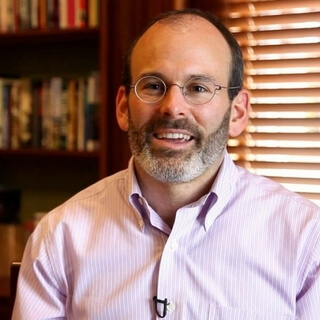
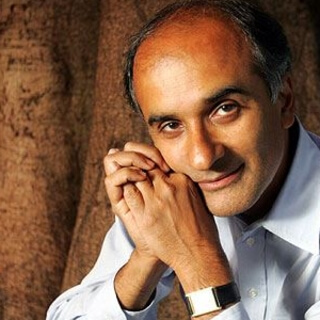
I'm James Shaheen,
Editor and publisher of Tricycle the Buddhist Review.
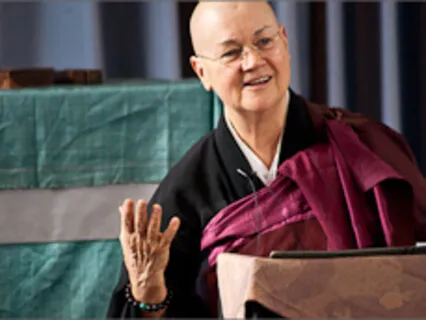
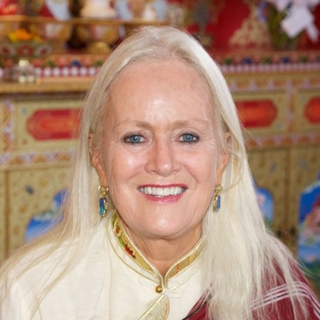
Our guest today is Roshi Pat Enkyo O'Hara,
Whose new book Most Intimate,
A Zen Approach to Life's Challenges,
Is out this month.
Enkyo Roshi is Abbot of the Village Zendo in New York City.
She is co-spiritual director of the Zen Peacemaker's Order and is known for her social activism and her teachings on sexuality,
Race,
Class,
And health.
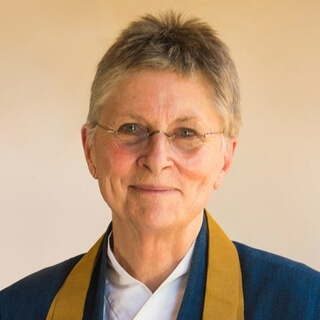
And now let's listen to contributing editor Amy Gross chat with Roshi Pat Enkyo O'Hara.
I want to start with asking you about the title,
Most Intimate,
Which I thought was a very interesting word to use about a practice that is usually seen as being all about detachment.
Well,
Yes,
It's true that we hear the translations that we have of the Buddhist sutras and so forth,
So much about the idea of not grasping at things and of being detached from them.
But in fact,
I think it's a matter of how you look at it.
When you look at what I'm talking about,
Which is being so close to yourself,
So aware of who you are and how you are and how everything is around you,
That you are at one with everything.
And the focus there is there is no way to be attached to something because nothing is separate from you.
So that's a kind of quality of intimacy that I'm talking about,
Of really being at one with the whole world that allows for a quality of compassion and openness that doesn't imply the kind of greediness that attachment does.
Intimacy also suggests a kind of responsiveness,
And I think the image of detachment is usually non-responsiveness.
Nothing ruffles my feathers.
Absolutely.
What I'm talking about in intimacy is how we are in the world,
How we experience the world in awareness of ourself.
And awareness is really key.
So I was thinking about the phrase fear of intimacy,
Which is usually applied interpersonally.
And yet there's a real fear of intimacy with the self.
And you could say that our personalities are structures to keep us from knowing ourselves,
Knowing everything about ourselves.
There's so much we don't want to know about ourselves.
That's so true,
And that's a beautiful way of putting it,
That the personality that we construct is the barrier to our real intimate knowing of ourselves.
Was it Diderot that said,
There's a statue inside of us that we've built,
And we try to always conform to this statue that's not really who we are?
There's this kind of frozen self.
And to be intimate is to be constantly changing,
Too,
Constantly in awareness that not only is everything around you impermanent,
But so are you.
So there's a way you have of talking about the self that I can follow up to a certain point,
And then you lose me.
You say,
We begin to see that everything is an opportunity for realization.
Are we so different from the breeze of the fans,
The sounds of the street,
The bustle in the room?
Asking ourselves this question may reveal a layer of our own being that we have not been in touch with.
And again,
Breathing in,
You breathe in the whole universe.
Breathing out,
You breathe out the whole universe.
Here is the self as me and you,
As the sky and the mist of yesterday,
The sun of this afternoon,
And the rain of next fall.
All are me and you.
What could be more intimate?
So that level of intimacy is the level of intimacy where we recognize that we are,
We're not separate from everything,
That we are everything.
But it's not the only way that we function in the world.
I mean,
When we hold someone's hand,
It is our own hand that is reaching out to another's hand.
But if we live only in the world of those two,
We fail to see what I think really creates compassion in our hearts,
Is when we recognize that we're not really separate.
That separateness is what we see with our eyes.
And yet,
If we use our senses of sound,
For example,
We have a much greater feeling of interiority that the interiority is everything around us,
And that includes time,
Future time,
As well as present time.
Can you say more about that?
Well,
You know,
Traditionally,
I was always very kind of resistant to all this talk about karma because it was so much about cause and effect,
I do this and then I get this back.
But as a part of the whole,
Anything we do is created by the past,
But it also affects the future.
So in effect,
We are the past and the future.
We're not separate from that.
And so often we think that we are,
That it's only us alone in this moment,
But it's actually fully all the parts.
So when you say,
You breathe in the whole universe,
Now what are you seeing,
What are you feeling when you write that?
Breathing in,
You breathe in the whole universe?
You don't leave anything out.
Everything in the universe is included in that breath in.
All things that have ever existed and that will ever exist are part of this incredible wholeness of the universe,
And that's what you're breathing in,
And you are what is breathing in.
At another point,
You say,
Our self is a function of the moment,
This exact moment and of all the moments that came before.
So the idea of the self as a function rather than a thing.
Right.
A verb,
Which is by definition something moving and changing.
So it's a function of the moment.
Now could you give me an example of like now?
I'm going to take this drink of water.
Now that's a very Zen response,
But I really did want that drink of water.
So you are the drinking,
You are the drinking Roshi.
Yes.
It's also,
Are you also talking about just this conversation is shaping who we both are at this moment and what we came from this morning and where we're going this afternoon?
Are you including,
Is that part of the two?
Exactly.
And although I used a kind of mundane example of drinking the water,
That's just what was present in that moment,
Just as what we're doing and the questions that you're asking me,
How that will affect me later today or next week,
It will because it's part of my life now.
I often hear people say things like,
Well,
I'm a very anxious person or I'm a very shy person.
These definitions.
So when you hear that in the light of this definition of intimacy,
Of the self as fluid,
Flowing,
Changing,
What sense do you make of that?
I'll use myself as an example.
You know,
If I think that I'm a shy person,
I'm stuck.
I'm fixed in some sort of fixed idea of myself,
Which will prevent me from being an extroverted person later on today when the music starts and I want to dance.
So,
Yeah,
We use words.
Words are wonderful and they're tags for momentary aspects of existence,
But we get so fixed.
It's something about the way the human mind works that we get fixed on an idea of ourselves.
And what's so tragic for many of us is we get fixed on some seven-year-old or 13-year-old idea of ourselves,
Or some portrait,
Or even worse,
An idealization of ourselves that we might think that we're not coming up to,
As I was referring to before.
So all of those are just fixed ideas.
And the reality is we're constantly changing.
We know we're aging,
But it's more than that.
It's like all the cells are falling off and new ones are being grown all of the time.
And our mind is affected by everything,
By the light in this room,
And everything affects the way that we experience ourselves.
I'm interested in the resistance to change.
On the one hand,
Why not accept,
Isn't that much more exciting to be fluid and changing and,
Okay,
I'm anxious now,
But you know,
In five minutes,
I could be calm and blissed out.
We,
I hold onto these ideas of ourselves as though they're lifesavers.
Yeah,
I think we're very afraid.
And I think that in our upbringing,
We're taught that it's safe to do what we know,
What we think we know is the correct thing to do or to be.
And we create,
You know,
Those grooves in our minds,
Those old habits,
Habits of thinking that I think actually habits of thinking is one of the most difficult areas for us because we get caught and we don't even know that we think that of ourselves.
We just habitually act and speak and think of ourselves in certain kinds of ways.
Often so negative.
And often negative.
So it's so interesting to see the grip.
I will hold onto this negative idea of myself no matter what.
Don't,
Don't try to take it from me.
Right.
How do you deal with that?
I mean,
People must come to you as their teacher and say,
You know,
Kind of confess their issues.
And how do you deal with that?
Yeah,
We just had a class yesterday.
We're doing the precepts for the year.
And the first precept we're studying is taking up the way of speaking truthfully.
And all these people are posting on this site that we have to discuss it.
And there's so much judgment.
People are so judgmental of themselves.
That was the first thing I noticed was rather than kind of playing with the idea of truth and what it means to us and how we can get in touch with our truth,
It's just kind of consistent kind of old-fashioned kind of condemning ourselves.
You know,
A lot of people would say that's a Western idea.
I don't think so.
I think it's a universal human idea that we're somehow we're not good enough.
And I think that's the liberation that the awakening is.
Is,
Wait a minute,
You know,
I am just as I am just fine.
And now I can operate in the universe freely.
How does practice get us to that point where I am just fine as I am?
I do think it's a lifelong project.
Sam is famous for Satori and instant enlightenment,
But that doesn't mean you don't slip right back down right after that.
I think it's the practice of being awake.
Or as I say in the book,
It's the practice of being intimate,
Of reminding yourself,
Oh,
What is it actually that I'm feeling right now?
And coming to value that,
To value that self intimacy.
So can you describe this practice of being intimate?
I think we'd start with the breath.
To be intimate is to actually just breathe in and as a thought comes up,
By doing this the right way,
Recognize that that thought is the barrier to where you are in that moment.
And just recognize it without going into a long conversation with yourself about how,
Oh,
I'm doing that again,
Or this and that.
But just to recognize,
Just to softly enter into the breath,
To awareness of the moment.
And the moment is you,
What you're feeling in your body.
That is the beginning of intimacy and that's how we wake up.
Now there are a lot of structures that have been put in place that are kind of helpful for that.
Like I believe strongly in sangha and community,
People practicing together in order to,
You know,
Amy,
If I'm going to promise to meet you in the afternoon to sit,
Then I will sit quietly.
And then I will be able to enter into that space and train myself so that when I'm just walking down the street,
I'm also present to the light,
To the wind,
To everything.
So intimacy,
I have a picture from your book of unguardedness,
Receptive.
It's a very defenseless place.
The normal triggers for self-protection are resting quietly,
Peacefully.
And I'm thinking about your word that when you say we sit so that we can discover in ourselves this capability for stillness,
For intimacy with ourself,
Experience what we're experiencing and recognize what we are thinking,
Then we become intimate with ourselves.
Nothing is hidden.
And then you say,
And then we begin to trust ourselves.
So this idea of trust is a beautiful thing.
And again,
In reading your book,
I realize how rare that is to trust ourselves and trust the emotions that come up.
So how does that work out in practice?
How does that trust build up?
You know,
I remember when I first began practice,
I was afraid.
And I was afraid of myself.
It was so interesting.
It was like,
Well,
I had to inquire when I went on my first retreat,
Well,
What am I so nervous about?
I'm afraid that there's some demon inside me that's going to come out.
And by the simple practice of that inquiry and the practice of sitting,
Of really maintaining a certain discipline,
I talk about that a little bit in the book in terms of restraint,
Is we do have to discipline ourselves enough to sit still because most of us,
Nowadays even more so,
When our cell phone is vibrating in our pocket at every moment,
We have to discipline ourselves and say,
No,
Now I'm just going to be quiet with myself silently.
And I say with myself,
But I just want to reiterate again,
It's so good if you're able to practice with others because that will help you to have the discipline to do it.
I mean,
I think that that's the true function of sangha,
Is simply that we'll get together and we'll do this thing.
I'm just thinking about truth,
About the awareness that we know when we're lying to ourselves.
And it's interesting when you talk in the book about a sense of wholeness,
And of course,
Sticking to the truth prevents one kind of split between the self that's trying not to look at what the other,
You know,
What some lie that is being sustained.
So this idea of intimacy changes the idea of how we see the self.
It's not a fixed target.
Right,
Right.
It also changes how we are in relationship with others.
I was amused in a heartbroken way to see you saying we learn more about suffering from relationship than from any other source.
Yes.
When you are dealing with people in your sangha who bring,
I'm sure bring to you their relationship issues,
Can you give us a sense of like what the main struggle is?
I think the main struggle is when we forget to think of the relationship as something that is a unit,
And we think of either I'm going to get what I want or she or he is going to get what he wants.
And so there is this kind of separation that occurs.
And for the most part,
Maybe it's the sample I have,
People begin to lose themselves.
They lose themselves.
They want to please the other or they are in reaction to the other.
And in fact,
They are not authentically or legitimately looking at what they really need and being able to articulate that.
And that's tragic really.
And that's why we come back to when I'm working with someone,
It's like what are you feeling right now?
Where are you right now with this?
How can you really be truthful with yourself about how you feel about this?
And then find a way to compassionately and maybe skillfully work with the other on whatever that is.
And of course,
I have for what comes to mind right now is a woman with her teenage daughter.
Well,
That's not an easy relationship ever.
And how to make that authentic and whole.
It's tricky but it's such a beautiful part of life to do that.
You write about that in the book.
And so the mother is telling the daughter how she feels.
The daughter is telling the mother how she feels.
Now there is this gap.
So what it sounds like you're saying is you believe in the healing power of self-expression.
Yes.
And so here is the self-expression.
Everybody is saying what they're feeling and yet you're allowing the gap to remain.
The gap will remain sometimes.
Sometimes you can't both have what you want.
But with the self-expression there is a completion.
There is a fullness that I've said what I had to say.
I'm acting in accord with my feelings.
You have exercises at the end of every chapter in which you start people off sitting and you say an interesting thing.
You said,
Find the place of intimacy within yourself.
Now let's say you're a newcomer to all of this and you're suggesting I find the place of intimacy within myself.
Now how would I recognize that?
Well,
If we were doing an exercise we would sit facing one another for a few moments in silence and then I would ask you,
Huh,
What are you feeling right now?
And you might say,
I'm feeling uncomfortable because you're looking at me.
And I'd say,
Okay,
And now what are you feeling right now?
And you might respond,
Well,
This is feeling silly.
And we could go on like that but after a few minutes the kind of superficial reactions begin to drop away and the continual asking of that question,
What are you feeling right now,
It's kind of layer upon layer,
Goes deeper and deeper until a person can really express,
You know,
Well,
My stomach is a little tight and it gets closer and closer to the visceral sensations of the body.
So the finding the place of intimacy is an inward turning.
Exactly,
Exactly.
And yet there is no inward and outward,
Right?
So it's an inward turning and then a bird,
You hear a bird out the window and that's also part of your continuum of consciousness.
It's not separate.
We know from a lot of brain research and biological research that connection is key to longevity.
And your world view,
The world seen through a Zen lens,
Is all about connection.
Yes.
So in a way you think those Buddhist patriarchs understood something about the benefit of connection.
You are coming down strong on that in this book.
Have you seen the power of Sangha?
Is that what's most moving to you?
Yeah,
I mean,
Of course if a person lives by themselves they're still in connection with their universe,
Whatever it is.
I live in a city,
In an urban environment and it can be so anonymous here.
I have found in my own life that the community is what helps me to practice.
And I see it in so many people who come to practice and then their life gets crazy and then they don't sit with others and they lose that connection and then they bring it back.
So I do think it's very important.
And for those people who are isolated in communities where there's no one to share that with then they need to find that connection in another kind of way.
And that would be one of the things that would be the benefits of the Internet.
And one of the things that's happened is that there's an ability for people of divergent interests all over the world to connect in that way.
Although it's not a physical way but there's that connection.
Your view of connection leads to the question,
We are so connected to everyone,
The whole world included.
We are breathing in the whole universe.
We are breathing out the whole universe.
It raises the question of what's our responsibility to the suffering of others.
And once you open that question up it's easy to go straight to overwhelm.
How do you navigate that?
Well,
That's key because once we fall into overwhelm then we absolutely have no agency whatsoever.
So how do we navigate those waters?
Yes,
We are interconnected and we are responsible right now for what's going on in the Ukraine and Syria,
In our own backyard and in this neighborhood.
So there's a responsibility.
What can I do about it?
How can I function in this?
And it's not by closing my eyes and hiding.
And I have to just be realistic.
What can I do?
How can I put my energies as one part of a large mass of people and movements?
How can I make a difference?
And then we simply have to,
It's like everything else,
We have to choose.
We have to choose where am I going to put my efforts.
I think the key is to keep our eyes and our hearts open and to really see what's possible.
And then the universe will present to us possibilities,
Things that we can do to speak up in different kinds of ways,
To offer our energies,
To offer our resources,
To work.
Again,
There's a certain amount of fearlessness in opening the heart.
Like you walk down the street in New York now and there are a lot more homeless people than there were.
And I can feel my heart closing,
Opening,
Very confused.
Yes,
Yes.
I find it really helps to stop and talk when I can to people on the street and find out what the situation is.
What might you ask?
Well,
How are you doing?
Did you have a place to sleep last night?
Is there food around?
Questions like that.
Or it might be on a more trivial level at the beginning.
I might be talking about the weather or about whether or not the snow is going to get cleaned up.
Anything to create a connection.
And then after that you see where it goes.
You might give the person a dollar.
You might say,
You know,
There is a shelter just two blocks away and they have a nice lunch.
Or whatever you can do to make that kind of connection.
And that's not all you do.
Then you go back home and you say,
What's happening in my city in terms of the homeless?
Is there some resource that I have that can be useful here?
Is it my voice?
Is it some money that I can give?
Is it my time at a shelter?
What can I do?
You quote a Zen teacher and the end of it is,
Thus we live our lives crossing,
Crossing over from suffering to compassion.
And I was wondering if this is a constant transfer of energy seeing suffering,
Moving to compassion,
Identifying with the suffering,
Getting out of that useless position to compassion.
How should I be understanding those lines?
That's a beautiful way to put that.
Yeah,
I think that's a verse that I wrote at the beginning.
Was that you?
Yeah,
That was.
So it was kind of my conception of the process that goes on all the time because we see suffering in ourselves or in our loved ones or the guy on the street and we can't stop there.
We can't go into some syndrome of denial but find a way,
Make a habit of the way,
As I said before,
Being intimate with what's happening.
I see this.
I feel this.
And then,
I mean,
It just seems automatic to me that one would want to do something in that case,
Whether it's an internal kind of suffering or external.
It's okay.
But when we deny it or don't even know it,
Then it's there.
That's when it grows into and creates a hard shell that we can't break through.
And so the compassion,
I don't know,
The heart just opens when we're aware.
Yes,
Automatic.
Automatic,
Right.
You say we are the tools of the world.
And then you say we are what will make a difference,
And in this process we are changed.
We recognize our intimacy with the world.
And there's something so beautiful about that,
Especially in terms of the isolation that a homeless person might feel and that we feel walking around the world trying to take care of ourselves in a defensive kind of way.
Yes,
Yes,
So much so.
I was on the subway the other day,
A number one train,
Sitting there,
And there was this kid sitting next to me with his mother.
The kid had a hood over his head.
You couldn't see him.
And some homeless guy came through the subway asking for money.
He had a great big bandage on his foot,
And he just looked miserable.
So the mother of this kid hands the kid a dollar and says,
Give it to him.
The kid shakes his head,
No,
Under the hood.
You couldn't see his face.
And the mother keeps pressing this dollar on this kid to give to the homeless guy.
Having had a teenage son myself,
I pulled out a dollar and gave it to him.
I said,
Give it to the guy,
Right?
And then he gave it to the guy,
And the mother looked over at me,
And she said,
You know,
We never know how we affect one another.
It was so great.
I mean,
Here we were all on the train together,
And this little connection that happened.
And I think the kid kind of,
He was shocked to have this woman on his right hand and to kind of back up his mother.
That's a good story.
Yeah,
Yeah,
That just happened last week.
I want to switch subjects radically to sex.
Good.
And again,
You're talking about restraint as what's the moral guy,
What's the moral compass,
And it has to do with,
Again,
Checking yourself.
So there's a kind of freedom.
And an interesting thing was you've trained yourself with the intimate practice of moment-to-moment awareness.
This is,
Of course,
The key to caring,
Loving sexual expression.
So in a sense,
Then,
It's good sex training.
Exactly.
Maybe we could get another book,
Meditation for Sex Training.
Of course,
Certainly.
But it is,
Absolutely,
Because you're aware,
Aware of yourself and your needs and you as the other you're aware of.
And your guide,
As you answer the questions of your Sangha about hurt and is it right and is it wrong,
Your answers have to do with,
Is anyone being hurt?
Yes.
So this is a kind of a very liberal,
Open-minded standard.
I wonder how people will be shocked that a Roshi is being so open-minded.
I hope so.
Another issue dealing with anger,
And there's a wonderful story you tell about being angry with a teacher of yours,
And you try all the ways that are so familiar to most of us to manipulate your mind so you don't have to feel it.
And then you give up.
Can you tell us about giving up?
Then I just gave up,
And I did make a couple of rules for myself,
Which is I wouldn't talk about this publicly so that I wouldn't get caught up in my rhetoric and,
As you said,
Get caught up in my mind and the mind stories that I could make.
And I would simply experience this and feel this.
And,
You know,
It took years.
It took years because it was a deep hurt and a huge anger.
And it took years,
But it has finally resolved like a wave,
And it has finally gone back into the ocean.
And the turning point,
It seems to me,
Was your investigating.
What did you want?
What was your expectation?
What was your disappointment?
What did you want from him?
Yes,
I wanted his approval.
I wanted him to see me as I wanted him to see me.
And what I finally realized was it was I who had to see myself in that way,
And it had nothing to do with him.
That's just an amazingly helpful thought that sometimes we can't get what we need from others,
And we can give it to ourselves.
And it always is about ourselves.
And anything that triggers that much rage can only be about our own insecurity and inability to reach in and find ourselves.
There's another great story that has to do with healing.
And what's great about it to me,
Not only the fierce language of Zen that I'm going to ask you about,
But it has to do with this turning toward the problem,
Turning toward the sensation,
Turning toward what is rather than away.
When all our habits of mind are to turn away.
There's a story of a Zen teacher asked how to avoid heat and cold.
And he says,
When it's hot,
Let the heat kill you.
When it's cold,
Let the cold kill you.
And what he means by that is to let that idea of heat get rid of the part of you pulling away from the circumstances of the moment.
It's that pulling away that causes the suffering.
If we're just hot,
Or maybe I should talk about cold,
Because here we are in the winter here in New York,
And if you're just cold,
You're cold.
If I stop my resistance to it,
It's just cold.
It may be uncomfortable,
But it's not a threat to my existence.
There's an idea you talk about.
I'm thinking of all the shoring up of self that we do.
And what happens to us when we lose something we're afraid of losing,
And we lose something that has defined us.
And yet you're saying that viewed through the Zen lens,
What is then exposed is the true self.
So it's not to be grateful for the loss,
But it changes the whole experience of loss,
Doesn't it?
It does.
It does indeed.
I use the example of when I was very ill and had always thought of myself as being really strong,
And then the one thing I could always count on was not there.
And then I found a much softer,
More compassionate level of myself that I hadn't recognized because I could depend on this one quality of being.
So it was a kind of loss that exposed a much greater thing.
And we hear this so much with people who have life-threatening diseases,
People who have lost their resources,
And suddenly they find that they're freed.
I have quite a few artists in my Sangha who have lost their jobs,
And it's hard.
It's hard life,
But at the same time there's an enormous freedom that they have that they've not had before,
And they see that.
This is something we're all going to have to be able to practice a lot through the years.
Yeah,
Exactly.
I'd like to close by asking you to read the last paragraph of your book,
Because again,
If we started out with the idea that Zen is often seen as detachment,
There is the idea that Buddhism is all about suffering,
And yet you end with joy.
So may I ask you to read that?
When we breathe in fully and pause,
We clear a space in our mind without judgment.
We are surprised we haven't been aware of its presence all along.
Once Dongshan was asked,
What is the deepest truth?
What is the wisdom that liberates?
His response was,
I'm always close to this.
It is the closeness itself,
The intimacy with what is here with us now,
That is the truth that liberates us.
Imagine being so close to your experience of life.
This is true joy,
To be so close to your experience of life,
So intimate with your world that you are filled with awe.
You're like a child lying in the grass staring up at the vast starry night.
Thank you so much.
Thank you for the book.
Thank you for talking with me here.
Amy,
I enjoyed it so much.
Thank you.
I'm so glad.
Thanks.
Thanks for listening to Pat Enkiyo O'Hara Roshi in conversation with Amy Gross about Most Intimate,
A Zen Approach to Life's Challenges.
Please write us at feedbackattricycle.
Com to let us know your thoughts about this talk.
From all of us here at Tricycle,
I'm James Shaheen saying thanks for listening.