39:49

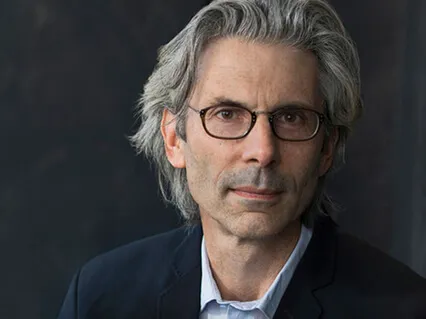
Mark Epstein: Buddhism & Psychotherapy

by Tricycle

Rated
4.8
Type
talks
Activity
Meditation
Suitable for
Everyone
Plays
8.9k

In the debut episode of Tricycle Talks, contributing editor Amy Gross speaks with practicing psychiatrist Mark Epstein on Buddhism and psychotherapy. Epstein emphasizes that there is dukkha (suffering) in every place at every time, and that psychotherapeutic practices can help alleviate this suffering. Epstein's new book, The Trauma of Everyday Life, also explores this topic.

BuddhismPsychotherapyTraumaSufferingMeditationParentingPainHealingSelf ObservationMindfulnessBlissBuddhism And PsychotherapyTrauma CopingPrimitive AgonyTherapeutic AttunementAcknowledge PainDukkhaRush To NormalSelf Judgment ReleaseBliss And PainBuddhist Perspectives On DeathGood Enough MothersNon Clinging MindTherapiesTrauma Sensitive Meditations


Transcript

Hello and welcome to the first in a new series of Tricycle Conversations.

I'm James Shaheen,

Editor and publisher of Tricycle the Buddhist Review.

In this series,

We're trying something new for Tricycle.

We're going to feature audio conversations with some of today's best thinkers about Buddhism and talk to them about how we live our everyday lives.

We welcome your feedback about what you hear.

Please send your comments to us at feedback at tricycle.

Com.

Today to start off,

Contributing editor Amy Gross,

A long-time meditator who now teaches mindfulness-based stress reduction classes,

Is talking with Dr.

Mark Epstein.

Mark is also a regular voice here at Tricycle.

He's a practicing psychotherapist in New York City and he's been writing about the connection between Buddhism and psychotherapy for much of his career.

Two of his previous books,

Going to Pieces Without Falling Apart and Thoughts Without a Thinker,

Are considered seminal works for people who are exploring the intersection between Buddhism and psychotherapy.

Mark has a new book coming out this month.

It's called The Trauma of Everyday Life.

Now let's listen to Amy Gross talk to Mark about his latest work.

I am just thrilled to be talking to you about this new book,

Which I love.

And I'm kind of stunned by the title.

It really packs a shock,

This huge word trauma in the context of everyday life.

And we think of trauma as something extraordinary,

A tsunami,

A violent accident,

The loss of a loved one.

So what were you thinking?

I was thinking Freud,

The psychopathology of everyday life.

And then I was thinking Alice Miller,

The drama of the gifted child.

Those were the two things I was thinking.

And then I was thinking dukkha,

The Buddha's word for suffering or unsatisfactoriness.

But that really may be he was talking about trauma,

Because they didn't have a concept of trauma.

In those days,

They just had the Buddha came up with dukkha,

Which means hard to face.

So what is it that's hard to face?

It's all the traumas,

Big and small,

In everyday life.

Everyone,

I say it too,

Gasps.

And I think they're connecting with it at such a real level,

Like,

Oh,

Someone has finally said the way things seem to me.

So how does this view of trauma,

That it's everything from a missed bus to loss of a loved one,

How does this,

The fact that it's an everyday life,

Shift our view of how life is supposed to be?

Well,

We understand trauma to a certain degree now,

From a psychotherapy point of view,

From treating people who have been traumatized in the way we conventionally think about trauma,

In war or through sexual abuse or whatever.

So we understand a little bit of the mechanics of trauma,

How the brain,

If you want to think about it as a brain or how the body or how the psyche,

How the personality manages trauma,

Tries to handle trauma,

Which there's a characteristic pattern to it,

Which is that the trauma sort of goes in right away,

Bypassing your thinking about it.

It just traumatizes you,

Like lodges itself inside of you.

And then you try to get away from it in whatever way you can,

Usually through some kind of defense mechanism,

We call it,

Of dissociation.

So you turn away from it,

But without really thinking.

So then it's lodged there and you're going on trying to act as if nothing really happened,

You know,

But then you wake up sweating from your dreams or you see something on the street and it sets off alarm bells.

So we understand how trauma works a little bit,

But what people don't generally acknowledge is that that's going on all the time.

And it's going on for little kids growing up who are scared by things and no one's there to hold them,

You know,

Or to explain to them what's going on.

It's going on in adult life,

You know,

When someone you care about gets hurt or when the dog dies or when your parents get old or when you see yourself getting old,

You know,

It's going on continually.

So what I realized in my own thinking is that a lot of what meditation is teaching,

A lot of what Buddhism is teaching is basically how to acknowledge all of the traumas that are around us.

That's what the Buddha was talking about with the word dukkha,

That everything is dukkha.

What did he mean?

You know,

The first noble truth,

There's dukkha everywhere,

There's trauma everywhere.

And we're all in this sort of in-between state where we know it,

But we don't want to admit it and then we're kind of stuck.

So I'm trying to address the stuckness or the pretense,

One might say.

In the book I call it the rush to normal,

You know,

That everyone feels they should be able to get over it right away and be normal.

We all want to be normal,

But we're all secretly traumatized in one way or another and pretending otherwise.

And you mention not only the rush to normal,

But this idea of the steady state,

So that anything that takes us out of steady state,

Which sounds like flat line,

Is perceived as a problem.

Yeah.

Well,

There's this big movement lately towards happiness,

You know,

Like happiness is like what all the books are about and everyone has the idea that they're supposed to be happy all the time and that the steady state should be a happy one,

So that if we're not in a happiness state,

There's something the matter with us and we better get out of it.

So I'm trying to come at all of that from the underside,

You know,

While at the same time not diminishing the potential for happiness,

But maybe trying to talk about it in a more realistic way.

How do we live with the awareness of potential chaos and uncertainty?

If we're defended,

You say that,

You know,

Unlike the missed bus,

Which we're aware of,

Trauma gets buried and it's not inevitably accessible to our memory.

So how do we realize that it's there?

How do we pull back the veil?

Well,

I think the veil is always being pulled back on us in a way by observing our own thoughts,

By observing our own feelings and by observing our own actions.

Like I tell a story in the book of finding a videotape of myself 20 years ago when my daughter was just born and I'm acting out in some kind of crazy,

Violent,

Aggressive way on the videotape that I can see 20 years later when I was in that moment,

I was vaguely aware of myself acting like I thought I was being funny,

But I wasn't really looking at myself clearly,

You know,

So that I was in a psychological language,

I was enacting something.

In therapy,

We see that all the time.

People act out in various ways.

They don't even know what they're doing.

The therapist is late and the patient gets incredibly angry.

How could you be late for a session,

You know?

Or the doorbell rings and the therapist answers the doorbell and talks for a moment to the plumber who's ringing the bell and the patient gets really upset,

You know?

So this stuff comes roaring out of us,

Catching us unawares,

But we can train ourselves.

I think that's one of the things that therapy offers and one of the things that meditation offers.

We can train ourselves to observe our own actions and reactions and thoughts and feelings in this kind of dispassionate way and we can get a glimpse in doing that of the traumas that we are made of.

And in doing that,

When we can acknowledge them,

When we can see,

Oh,

I'm really acting weird here,

Like I wonder what this is about,

That's the beginning of owning the various kinds of traumas that actually constitute our personalities.

I remember reading about trauma therapy and a lot of controversy about how much to push the victimized person into memory.

And it seems the same question plays in here.

Here's a person who comes to you as a therapist who's been traumatized.

You don't want to push that person into dealing with the trauma and yet it comes up all by itself.

Yeah.

Well,

The idea is,

And my experience as a therapist lines up with the idea,

The idea is that if you're present but not too present,

Available but not intrusive,

The model being what the British child analyst Donald Winnicott talked about as the good enough mother,

You know,

Who's in the next room making dinner while the kid is on the floor playing,

Knowing that the mother is there but she's not messing with him too much,

You know,

But she hasn't disappeared.

That's the idea of if you can create an environment for somebody,

You know,

Where you're available,

Interested,

Then the stuff will come up when it's ready.

And it could be a long time or it could be in a moment,

You know,

But the unconscious of the traumatized person will,

If given room,

Will start to create material.

And it might be in the form of dreams that someone remembers and starts bringing in.

It might be in the form of an actual memory that comes.

It might be that they start talking and suddenly there's a feeling there that they didn't know was there and then you can explore it.

But the hope and I think the truth is that if there's trauma,

If given enough of that kind of room,

It will start to present itself so that it can be digested or metabolized or worked through,

Dealt with,

You know,

Acknowledged,

Those kinds of words.

So you're talking about a similarity between the mother or the parent,

The therapy and meditation.

And meditation,

Yes.

So there's a real similarity,

If not the same thing in a way,

Of this safe holding environment.

And it's very,

In your book,

You talk about really a progression from finding that safety within the mother,

Then with the therapist and then,

Amazingly enough,

You can do it for yourself.

Yeah,

That's right.

I'm not sure it's really a progression for everyone.

I think it could be a bit here,

A bit there and eventually you cobble together a kind of mosaic.

But the idea,

I do believe,

Is that one can eventually do it for oneself and for another person and for other people and that we eventually can be doing that for each other and we need each other for that.

So can you describe,

If I were someone who had never meditated,

Could you describe what creating that safe environment for myself involves?

If you were someone who had never meditated and you weren't interested in meditating,

I don't think I would even try.

I would just,

If I had you in my office,

I would just try to be friendly but hang back a little bit so that there was a little more room than usual in a friendly conversation like we're having.

I would try to be myself and I would ask questions and I would respond but I would hang back just a bit.

So just right to the edge of you maybe being a little bit uncomfortable and then if I caught the sense that you were maybe just a little bit uncomfortable,

I would ask you to look at that.

You seem a little uncomfortable.

What might be happening?

And that,

Like sort of looking around the corner of yourself into is there a feeling there?

Are you thinking something you don't want to tell me?

Are you remembering something?

That's the beginning I think of meditation.

It's the beginning of therapy also but it's allowing,

In old-fashioned language we'd say it's allowing the unconscious to begin to percolate up into the conscious.

The unconscious has sort of gone out of fashion now but maybe it'll come back.

But I think in meditation we're doing that too,

We're kind of clearing some space around our familiar minds,

You know,

Which if you observe it long enough in meditation you start to get sort of bored with it,

You know,

Like okay I've had that thought a thousand times and so you stop being caught by it in the same way and that creates room for less formed thoughts to begin to reveal themselves and some of those carry the weight of earlier traumas.

Some of them might come from some other place,

You know,

A happier place but it's interesting and it's unknown and so you're that same sense of peeking into yourself a little bit.

So I think if you knew nothing of meditation and you came to me I would wait and try to go at it that way and then eventually I might say well,

You know,

There's another way to try to create this space for yourself and that's what we do in meditation and here's how you know you could approach it.

When you talk about the feelings that might come from an earlier time you describe in such a painful touching phrase these primitive agonies that even if you haven't lost someone,

Even if you haven't been to war or been in an accident or had any obvious violence that we all have this residue of developmental trauma.

Could you explain that?

Yeah,

I'm not sure we all have a residue of developmental trauma.

The person whose concept this was originally,

The concept of primitive agony whose words I was stealing in the book was Winnicott,

The British child analyst who coined the good enough mother phrase.

He used to say that half the people in the world carry around a feeling of having been mad and the other half don't and having been mad I think he's deliberately ambiguous.

Does he mean crazy or does he mean angry?

But I think for Winnicott he's talking about it could be either one or the same,

You know,

Because his idea of primitive agony is that there's a whole long period in a developing person's life like from around the age of six months or even earlier up until when language starts to kick in and concepts kick in.

There's a couple of years there when emotional experience is everything.

It's,

You know,

It's happening all the time.

The child is,

You know,

Angry in a split second if you're not there,

You know,

If he's hungry,

If he's tired,

If he needs his diaper changed,

If the mother is disappearing,

If the mother's too present,

If the father wears the father,

You know,

Let alone the siblings.

So there's emotional experience happening all the time.

There's no language yet or very little language yet.

So it's impossible for the child by himself or by herself to make sense out of what's going on.

It's just impossible.

They don't know what a feeling is.

They don't know what's coming up through their body.

They need the parent to hold in a bigger sense of the word than just physical holding,

Although that's part of it.

They need the parent to understand,

To be attuned to what the emotional experiences are that they're going through and to feed it back to them in some kind of simplified way.

So the mother,

If you observe like psychological researchers like to do now,

They put a mother and a baby in a room and call it a lab and they observe them,

Take movies of them and observe all the micro interactions.

But the mother will always be doing things like interpreting for the child what they're feeling,

You know,

Oh,

You must be sad.

Oh,

It's going to be okay.

You know,

Don't be so upset with me.

You know,

They take the feeling and they add a touch of irony to it.

They don't take it totally seriously.

They don't just mirror the feeling,

You know,

They take it in,

They change it a little bit,

Make it a little bit more palatable,

And then they explain to the child what's going on.

And that dance helps prevent trauma.

So the helps prevent trauma from overwhelming,

Unendurable emotional experience.

And the idea in the psychological world of developmental trauma,

Or they sometimes call it relational trauma,

Is that if enough of that doesn't go on,

Then the child,

The developing child,

The infant,

Is stuck with unbearable feelings.

And Winnicott talks about those feelings as feeling like you're being infinitely dropped,

Or feeling like you're falling forever and ever,

You know.

He says the child can handle a little bit,

But there's a point.

They can handle X amount.

They can handle Y amount.

But there's a point when it becomes Z amount that there's no going back,

You know,

And then the child loses a sense of trust and internalizes a feeling of trauma.

So what I found going on my first meditation retreats,

You know,

10 days,

2 weeks,

Silent meditation,

Was that,

Oh,

After a couple of days when the regular chatter quiets down,

A whole lot of really weird feelings can start to come up.

And the feelings are,

Like,

I don't really have words for what those feelings are,

And they're not all pleasant.

Some of them have a sense of,

Like,

When you're deeply in love with someone,

But they're not there,

You know,

Or you just feel like,

What did I do wrong,

You know,

Or what is wrong with me,

Or a sense of sort of endless,

That feeling of being infinitely dropped.

I like that phrase because it comes close to,

Like,

Oh,

I know there's just something the matter,

But I don't even know what it is,

You know,

You don't have words for it.

For some people,

Those feelings can be very strong at various times in life,

Meditation,

Silent meditation being one of them.

So I think just as in therapy,

Where the conditions of the therapy are designed to bring those feelings out if they're there,

That for those of us who are sitting on those kinds of feelings of primitive agony,

That it's useful to understand that they can start to show themselves and that it's very helpful to look at them and begin to create words,

You know,

Explanations,

Narratives,

Even if you really have no idea what happened to you when you were a baby or not,

But possibilities,

Hypotheses to explain these intense feelings that are being carried in the mind.

And a lot of the Eastern trained meditation teachers don't necessarily have that kind of language.

That's one of the things that Western psychotherapy does very well,

Hence the book.

So one of the very startling ideas in your book is that the Buddha himself was traumatized.

So what's amazing about that is you give the Buddha a psychology,

Dreams,

Personal analysis of dreams,

Humanness.

You talk about the Buddha's anxiety.

He looked at his anxiety and saw that it made no sense.

It's hard to imagine the Buddha being anxious or the Buddha having self-hatred.

So how did you come to this radical idea?

Well,

I don't think it's radical.

It's not like I gave the Buddha dreams or I gave him a personality or issues.

You know,

They're all right there in the scriptures.

You know,

It's just I was interested that the Buddha's mother died when he was a week old.

So when you go and you look at the Buddhist art,

They love to portray the Buddha's life.

There's endless evocations of the psychobiography of the Buddha.

And it always begins with the Buddha's mother delivering him from her right side,

I believe.

While she's standing and holding with one arm over her head,

She's holding the limb of a sala tree,

Whatever a sala tree is.

He's delivered from her right side after she has a dream of being impregnated by a white elephant.

And then a week later,

She dies.

So everyone knows that.

In all Buddhist cultures,

That's the story.

And then she dies,

The father marries her sister or was already married to her sister,

But her sister steps in and becomes the Buddha's mother.

And then he,

You know,

Lives for 29 years,

Gets married at some point,

Lives for 29 years within the palace walls,

Has a child,

And then goes outside the palace walls and sees old age illness,

Death,

And a wandering mendicant and splits,

Abandoning his wife and child the same way his mother abandoned him.

And then spends three years in the forest doing all kinds of austerities,

You know,

Trying to get rid of his body and to get rid of his personality in order to be enlightened.

And then has a realization and rearranges the way he's approaching all of that.

And then finally is enlightened.

So the information is there.

You know,

One of the things I love about Buddhism is that the Buddha was human.

You know,

He was no one ever claimed he was a god,

Or maybe probably some people do claim that he was divine in some way.

But the way it was presented to me was that he was a human being,

Like we're human beings.

He did it for himself.

We have to do it for ourselves.

So before he was enlightened,

He must have had a personality,

Even if after he was enlightened,

He had no self,

Whatever that means.

It's unlikely that his personality went away completely,

But maybe his greed,

Hatred,

And delusion went away,

If we believe the teachings.

But before he was enlightened,

He must have had a personality.

So I knew that his mother had died and never really thought about it.

And then one day,

It was probably 10 years ago or more,

I was teaching with Sharon Salzberg and Robert Thurman at Tibet House.

And Thurman reached for a volume of his called Essential Tibetan Buddhism that he had compiled of Buddhist texts throughout the ages.

And he started reading a poem from a Mongolian 18th century,

19th century Lama that began,

I was like a mad child,

Long lost his old mother,

Never could find her though she was with me always.

And he goes on to equate his lost mother with shinnyata or emptiness.

But he started out totally psychologically,

Like I was like a mad child,

Long lost my old mother.

And I resonated with that and then thought immediately of the Buddha losing his mother and then thought,

Oh,

I bet it would be interesting to try to write a psychobiography of the Buddha like Eric Erickson did of Gandhi or Luther or someone.

So that was the initial impetus for writing the book because I wanted to understand what the implications might have been for the mother dying when he was a week old.

Why is that there in the story?

If it's a story,

Why is it there?

If it really happened,

How did it affect him?

So that brought me to the concept of primitive agony that we were just talking about because maybe that early loss taking place before he could remember,

So early that it was,

You could pretend that it never happened.

Everyone around him pretended that it never happened.

And it's not like anyone ever talked about her.

But maybe that event could be a stand in,

Was a stand in for all of those early experiences that affect us psychologically that we have to confront the remnants of,

Even if we don't know what they are,

We have to confront the remnants in order to get enlightened.

And it seems particularly touching that what the Buddha discovered is a mind that holds the way that good enough mother would hold.

Yeah.

You know,

The mind that doesn't cling,

Which is when we start to meditate,

We start to have a feel for the real possibility of a mind that doesn't cling.

You know,

The mind that doesn't cling doesn't reject either.

And people have a hard time finding that balance.

But when you find it,

You know you're there.

It's like you're in a groove.

And there is that very great similarity to,

I think,

Or to what I know it's like to be a parent and what I imagine it's like to be a mother.

The way one has to be with an infant is not clinging,

Because if you cling too tight,

You make them nervous.

So you have to be allowing from the beginning the infant,

The child,

To be themselves,

Which requires a kind of magnanimous generosity.

At the same time,

You really have to hold them.

You can't just drop them.

You really have to be there attentively.

And I think that that mind that is hardwired in a mother that instinctively knows how to do that,

Then that was always Winnicott's point.

Like you already know how to do this.

Don't let the shrinks.

Don't let the experts take this away from you.

He was working in the 50s when that's what the experts were trying to do.

So he was like telling the mothers everywhere,

You know how to do this.

It's OK to breastfeed.

It's OK to hold your child.

That quality that's hardwired through evolution into the mother is also what is being cultivated in the male-dominated patriarchy of Buddhism.

It's that feminine quality that's being cultivated in the mind that allows the meditation to take hold and to work.

Seems to me it's the same thing.

And there's an element of kindness.

There's an element of kindness,

Yes.

You tell a story about someone who,

Sharing a shabby old pot that was left over from the teacher and he said,

You see what he was saying?

You don't have to be,

You don't have to shine.

Just have to learn to be kind to yourself.

You don't have to shine.

So that thing that we all feel that we,

You know,

Especially those of us drawn to the spiritual that there's something the matter with us.

And if we could only find that nugget of badness and get rid of unworthiness,

You know,

Eradicated in some way.

That's what the Buddha was trying to do before he had his turnaround.

And that's what the guru has left for this devotee.

You know,

Like drop all that.

You don't have to shine.

And I added the bit about kindness because I think it's implicit.

So when you describe meditation,

I'm thinking of how many times I've heard people say,

I can't meditate because I can't stop thinking.

There's such a strange idea out there of what meditation is.

It's this idea of this rigid,

Controlling the mind.

Well,

There's such a hope also for what meditation can be that it might be possible really to stop thinking because,

You know,

It's such torture and that's part of the trauma of everyday life.

You know,

We're traumatizing ourselves all the time with our very thoughts,

But they won't stop.

So you could become a very proficient meditator and maybe stop them here and there for bits of time,

But they'll come rushing back.

And it's better just to learn how to accommodate yourself to them without necessarily buying into what your mind is telling you.

So a key is to acknowledge the trauma.

Just the acknowledging can be a route to awakening.

You talk about,

Quote,

The clear-eyed comprehension of pain permits its release.

So this is the mechanism.

So how does that work?

Well,

God knows how it works.

The neuroscientists are trying to figure out how it works and they're making some progress.

But psychologically,

I think we have a sense of how it might be working.

When the Buddha taught mindfulness,

He almost always linked the word,

You know,

Mindfulness,

With clear comprehension.

Clear comprehension has something to do with what becomes the appreciation of selflessness.

So clear comprehension is some kind of beginning investigation of and insight into the idea that all this is just unfolding by itself,

You know,

And that it's possible to simultaneously be one with it,

Whatever it is,

The unfolding emotional,

The cognitive experience of being a person.

It's possible to be at one with it and simultaneously observing it.

And in that observingness of it,

There's an opportunity to be almost bedazzled by the way everything has a life of its own,

You know,

Including the past that we're carrying in the present,

You know,

That's part of our history being part of our present self.

So that we don't get rid of that in meditation.

We don't get,

When you understand emptiness,

When you understand selflessness,

You don't get rid of your individual stream.

You don't get rid of your history.

You don't get rid of all the idiosyncratic,

Maybe even neurotic ways that you are constituted.

You become able to make use of all that you are,

You know,

You're able to make use of all the qualities that constitute you.

And that seeing it unfolding by itself,

Which you would think might make you distant from who you are,

Actually has the paradoxical effect of allowing you to partake of yourself,

I think,

In a fuller way and thereby to use yourself in a more complete way,

In whatever way you choose,

Which often the most satisfying way to use yourself is to engage in one way or another with the world.

So this is really the cure,

In a way,

Just this step towards this observation,

Awareness,

Being with versus the cleaning up the act.

Yeah.

If there was a cure,

This would be the way to the cure.

It ends the struggle.

Theoretically,

It ends the struggle.

Practically speaking,

It permits a different kind of struggle,

I think.

It's less that you're split and unconsciously struggling against parts of yourself that you don't want to admit to or are afraid you won't be able to deal with.

It diminishes that kind of struggle and instead puts everything like in one pot together so that things have to work themselves out.

It's not necessarily like no struggle.

Darn.

So attunement is a word you use throughout the book.

And it's a beautiful word because being attuned is joy.

Or having someone attune to you.

So through therapy and through meditation,

The therapist is using attunement,

And does that teach attunement to the patient?

The therapist hopefully is more or less attuned.

So I see it less as that the therapist is using attunement as if attunement is something that can be taken from one place and put in the therapy room.

But the therapist hopefully more or less is practiced at empathically listening.

The therapist is more or less able to put another person before their own experience most of the time so that there's a quality of attunement that's present that comes through the therapist.

So that by itself,

That's a lot of what therapy is.

That's a lot of what a therapist does.

If they do nothing else,

At least they're there.

And that's a lot of what a parent does.

It's scary to have a child.

You have no idea.

My wife and I didn't even know how to change a diaper after she delivered our daughter.

We had to call the nurse to show us what to do.

And that kind of anxiety is present all along the way.

You don't know what to do.

How are you supposed to toilet drain them?

And how do you get them to eat?

And how do you get them to go to sleep?

Everything's a struggle.

But if you show up,

It's showing up for each moment,

For each stage.

Then you sort of figure it out.

You might have to ask for help the way we had to call the nurse.

But the willingness to simply show up every day,

Every week,

Every hour,

The middle of every night,

Whenever it is,

That allows for the attunement.

There's no choice.

It's you and the baby in the room.

You're definitely going to be attuned to the baby.

You have to figure it out.

So the attunement emerges,

And I think in meditation,

There's something similar again is going on because there you are on the cushion,

Not just for 45 minutes or 20 minutes or doing the mantra twice a day,

But there you are for a day or two days or a week or two weeks.

There's no choice after you can remember every girlfriend or boyfriend you ever had.

You can think about every meal you're going to have.

You can travel around the world,

But sooner or later,

It's just you and the cushion and your mind and your body.

There's no choice but to eventually become attuned to your experience.

So I think that's very beneficial in all these ways that people try to explain neurologically psychosomatically,

Psychodynamically.

One of the things you end up attuning yourself to is the level of trauma,

The kinds of traumas,

The particular traumas that have afflicted you and even ones that haven't yet afflicted you but that you're afraid of.

If it's not post-traumatic stress,

It's pre-traumatic stress,

Like old age,

Illness,

And death.

I want to talk about bliss,

Which is another surprising element that pops up in this book because it begins with a kind of dismal diagnosis that there's trauma everywhere,

But the other side of the underside of that,

You're saying,

I think,

That acknowledging the trauma allows for bliss,

Gets us to bliss.

Well,

I'm also saying that bliss is trauma.

Good things happening are stressful also.

The idea that you could be in pain and also in bliss,

I think that's worth pondering because that's not how we normally think.

We normally think we have to get rid of the pain in order to be happy,

But because we're humans and this world is made of change,

We're always going to lose the people we love.

Some things are always going to happen,

Unpredictable accidents are going to afflict us.

There's no way we're not going to be carrying pain.

And if we spend all of our effort trying to get rid of the pain we're carrying,

We're trying to get rid of parts of ourselves,

Then we're caught in that split.

So the idea that we could acknowledge,

Hold,

Respect the pain that we are,

And at the same time be connected to the bliss that we also are,

That is,

I think,

A radical idea,

But one that the Buddha taught.

So if I'm lucky,

I made that idea more accessible in the book.

Thank you,

Mark.

Thanks for listening to Amy Gross talking with Mark Epstein.

Mark's new book,

The Trauma of Everyday Life,

Is out this month.

We'd love to hear what you thought of this conversation.

Please send your feedback to us at feedbackattricycle.

Com.

In the coming months,

We will bring you more conversations about Buddhism and meditation and everyday life.

We hope you'll help us spread the word and let us know what you'd like to hear.

From all of us here at Tricycle,

I'm James Shaheen saying thanks for listening.

Meet your Teacher

TricycleNew York, NY, USA

4.8 (483)

Recent Reviews

Camelot

February 9, 2024

Thank you sharing this valuable and fascinating information 🙏

Carlos

February 6, 2023

I'm going to get the book. A very interesting interview.

Barry

February 5, 2023

Fabulous description of how simple and rich life is

Gisele

October 26, 2022

Great interview, learned a lot. Thank you for sharing!

Tatyana

September 13, 2022

Very interesting conversation about the meaning of trauma in everyday life . Thank you so much for explaining Buddha’ s Dukka in an a language which makes a lot of sense . Please continue bringing these talks about our mental problems and suffering in everyday life . Very inlighthening conversation . Very grateful for that .

Bruce

June 19, 2022

Remarkable interview. I'm going to buy the book now. I'm famiar with Dr. Eprstein's work but regrettably lost sight over the years of his brilliance and deeply compassionate nature. It's time to read his work more deeply. Namaste.

Patrice

April 28, 2022

5 million ⭐️ stars 10 million ⭐️ stars ✨✨✨✨✨✨✨✨✨✨✨✨✨✨✨ This is the one that put me my truth. I’m am free!!I let it go!! I no longer carry the baggage that wasn’t even mine to carry in the first place. It is over.Forever grateful to every part of insight timer, every teacher, every guide , every doctor, every bed time story, every musician, every poet, every brother and sister EVERY ONE!!! Thank you for being a part of my journey to finding my way home……

Orly

April 10, 2022

10.4.22 To: Mark Epstein, Amy (I hope I spelled your name correctly), James and the Tricycle team: You have no Idea how this dialogue was effective, helpful, useful and mind broadening. So - thank you very much. Orly Israel

Joanna

January 22, 2022

Radical acceptance not striving for constant bliss. This is a really different perception of Buddhism.

Doris

August 9, 2021

Mind blowing! Thanks for this very educational conversation . I gained so many more insights about my own situation and life as such 🌺

Gin

January 24, 2021

Mark, I really enjoyed your discussion and especially your attitude with a willingness to say, "no I don't think that was quite right". It reminded me that a good teacher can correct and still be kind. At 78 I started late to achieve much, so, I will do what I can, and prepare for my next life. Thank you. Namaste

Ghada

May 9, 2020

Mark is one of the most brilliant insightful people I've came across to try to understand Buddhism

Sam

March 7, 2020

very insightful :)

Külli

November 1, 2019

Very interesting! Thank you.

Evelyn

October 22, 2019

Fascinating— I am grateful to have listened to this. 🌺🌸

Kelly

September 4, 2019

So beautifully articulated !

Elise

August 25, 2019

Just amazing. So much to ponder. Shifts my perspective on meditation and life in a way that brings light to both.

Marian

August 23, 2019

Very interesting. Focuses on ideas in his new book about trauma in daily life. Discusses the concept of holding, for another, until they can hold for themselves.

Nicole

August 23, 2019

Awesome! Gave me lots to ponder, especially the end. Living with in the moments with pain and bliss. Will be getting the book!

KC

August 22, 2019

Brilliant. An excellent talk in Buddhist, spiritual, psycho-conceptual and mindfulness-science explanations, thoughts. Wonderfully interesting and relatable to our deepest human reality of our everyday — past and present — experiences of both “pre” and “post” trauma for which is not limited to the horrifically sudden or painfully prolonged incidents of shock/terror/harm, yet equally important to acknowledge and comprehend our individual trauma occurring since birth. And then continuing during our every day living, by thinking and existing in this world. Thank you very much!

More from Tricycle

Loading...

Related Meditations

Loading...

Related Teachers

Loading...
© 2025 Tricycle. All rights reserved. All copyright in this work remains with the original creator. No part of this material may be reproduced, distributed, or transmitted in any form or by any means, without the prior written permission of the copyright owner.

How can we help?

Sleep better
Reduce stress or anxiety
Meditation
Spirituality
Something else