Welcome to the second episode of Tricycle Talks.
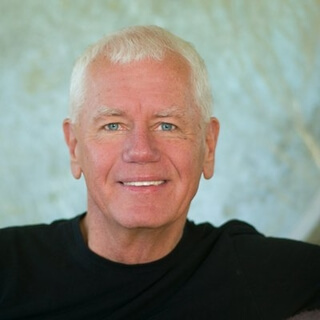
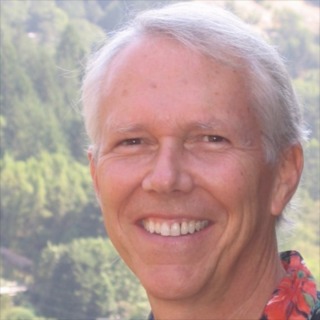
I'm James Shaheen,
Editor and publisher of Tricycle,
The Buddhist Review.
In this series,
We're featuring audio conversations with some of today's best thinkers about Buddhism and asking them about how we live our everyday lives.
Today,
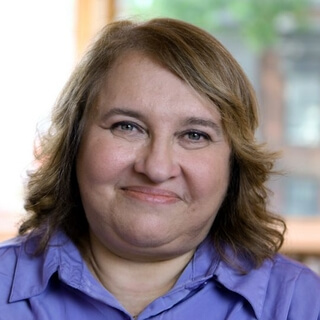
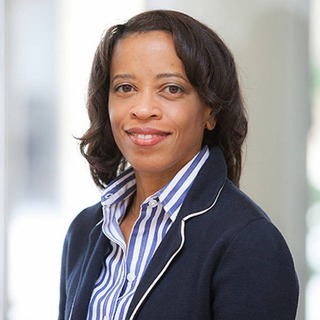
Contributing editor Amy Gross,
A long-time meditator who now teaches mindfulness-based stress reduction,
Is talking with award-winning science journalist and tricycle contributing editor Amy Gross.
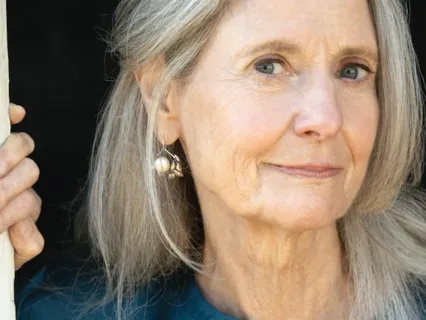
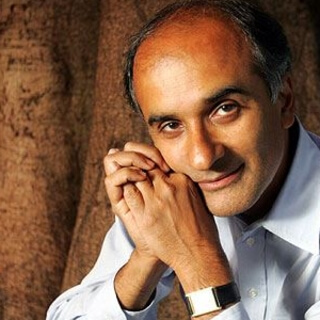
Tricycle contributing editor Katie Butler.
Katie is the author of a new and very personal exploration of end-of-life care and how we die.
The story is deeply rooted in her own experience and centers on her father's prolonged decline after a stroke at age 79.
With her vantage point as a science journalist and a practicing Buddhist,
Katie writes about the deep cultural conflict between life-extending medical care and the natural process of dying.
Katie tells her story in her bestselling book,
Knocking on Heaven's Door,
A Path to a Better Way of Death.
Now,
Let's listen to Amy Gross talk with Katie Butler.
Katie,
I'm very excited to be talking to you about your book,
Which is taking us into the territory of everything that scares everyone I know over maybe 40.
Becoming senile,
Being stranded in a nursing home or an ICU unit,
Lingering,
Diapered.
I'm thinking this is probably the first time in history that the greatest fear is of living too long rather than dying young.
So,
If you would,
I'd like you to tell us the question your mother asked you that jump-starts the book.
The question she asked me was,
Will you help me get your father's pacemaker turned off?
And we were sitting in their very serene,
Beautiful house in Connecticut,
And she,
Like me,
Has been practicing Buddhism for a long time.
It was an absolutely shocking moment.
It felt like taking a vow,
Almost like getting married,
And I said yes to her.
So,
The first precept we say in Buddhism on retreat is,
I will not harm.
So,
What went through your head?
How did you resolve that conflict?
It was very visceral.
I felt I had to almost trust my gut,
Because I couldn't trust the received wisdoms or the common consensus that was being handed down to me at that point,
Because my common sense told me that we were prolonging everyone's suffering,
And that how we define do no harm is not simply a question of extending life.
It's also taking a really close look at the suffering that is being created by our actions,
And non-actions,
And avoidance.
And in this case,
It's the suffering being brought on by what you call fast medicine,
Which is the Western medicine model of do everything,
Including entering the realm of the brutal,
The unnecessary,
What turns out to be the unnecessary.
It's quite shocking and surprising to me that doctors who work in intensive care have used the phrase medically sanctioned torture to describe what goes on in an ICU,
And that people who have survived ICU stays sometimes have hallucinations,
In essence,
That they were literally tortured.
It's one thing to go through that kind of torture when there is a reasonable chance of being restored to a meaningful life.
It's really another thing to be putting 30% of our people in their last year of life through this experience.
Tell us about your father's situation.
Well,
My dad was a very healthy,
Vigorous guy until he was 79,
At which point he had a devastating stroke.
That was the end of his happiness.
He tried valiantly for the next year and a half or so to recover from the stroke,
And then he realized that he was never going to recover,
And he actually said to my mother,
I'm living too long.
At that point,
He couldn't fasten his own belt.
He barely could finish a sentence.
Huge numbers of the pleasures of his life were robbed from him,
And more of them would be robbed with each continuing year after that.
A year after he had the stroke,
A cardiologist insisted that he get a pacemaker as a condition for clearing him for a very necessary hernia surgery.
At that point,
My mother and I had no idea that there were any other options,
And she was a very impulsive woman,
And she quite quickly kind of shrugged her shoulders and said yes without really having the chance to consider the long-term implications of this pacemaker.
No reason for her to know them.
No reason,
And this is the amazing thing is that we get to this point in our lives with no idea of what we need to know.
I'm immediately reminded of being 45 or so and living at Plum Village in southern France,
And every morning we would recite these basic nuns' remembrances like,
I am of the nature to grow old.
I am of the nature to die.
I am of the nature to lose everyone and everything that's important to me,
And that I recited all those things when I was in my 40s,
But I really didn't have a clue.
I really went completely over my head,
And then when you hit your 50s or your 60s and you see your parents and their suffering,
Then suddenly these questions that we in the West have had the luxury to postpone suddenly become very,
Very vivid.
So a Western medicine's way is to run in with what you call crash carts and defibrillators,
And you talk about the rise of what I think of as machine medicine,
And it transformed a natural death into something forbidden,
A failure.
I think our ancestors had no choice but to develop spiritual practices for the contemplation of death,
And this was not just the Tibetan Book of the Dead.
It was a very alive tradition in the West until the 1800s,
Because people died randomly throughout the lifespan.
So children died,
Babies died,
Women died in childbirth,
People died in battle,
And we have had the luxury since the 60s or 70s to postpone almost all death into the 70s,
80s,
And 90s.
And this technological medicine transformed the experience of dying.
Up until the 50s or so,
Almost everyone died at home.
They were surrounded by family,
And it was considered a spiritual ordeal.
And after the 60s,
It became medicalized,
It was moved into the hospital,
And it was turned into a technological flail.
It also transformed aging.
So reading your book,
I became occupied with the question,
We know there's a rise in,
An epidemic rise in Alzheimer's and dementia,
And I'm thinking it was caused by machine medicine.
And all these processes that,
As you say very emphatically in the book,
Treat the body without curing the mind,
Without bringing the mind along in this euthifying process.
So the body outlives the mind.
Well,
Exactly.
I mean,
It's a horrible thing to say,
But every life-extending medical advance now increases the dementia epidemic.
And I think it's a symptom of seeing medicine as kind of a fix-it process,
Like an auto repair shop where you're dealing with just one particular organ,
And you're not taking a step back and looking at the whole car.
And it's very unfortunate because clearly in the old days,
Healing was considered a soul process,
An emotional process,
And a physical process all.
And now we have fragmented the body and turned it over to a whole committee of experts,
And there's very often no single person who's capable of taking a step back and saying,
What about the health of the family?
What about the health of the entire individual?
What about the health of the soul?
You know,
You say in the book that the people who knew Jeff,
As you write about your father,
Wanted the pacemaker deactivated.
The people who didn't know him refused.
It's a horrible transformation of power and control.
And again,
If you go back to the old days when people died at home,
They may have been able to do nothing about their dying,
But they had a great deal to say about the nature and the conditions in which they died.
And now it's all been turned on its head.
So my mother and I,
Who loved my father best,
Wanted the pacemaker turned off.
The family physician who also knew him well wanted it turned off.
The cardiologist who'd met him twice was absolutely horrified that we wanted to turn it off.
But he basically had no clue who my father was and who our family was.
And what your father would have wanted.
And what my father would have wanted.
And we had no clue about his values.
And so in some ways it was just a terrible mismatch,
Because I don't think you can force or bludgeon a doctor into doing something that is a violation of his own conscience.
I think each doctor should have that freedom.
I don't want to violate the spirit of some other human being.
But we need to be in alignment with people who have power over us in these situations,
So that our values are in alignment.
And we have some say in our living and dying.
Well,
Absolutely.
And it's easy to think of deactivating the pacemaker as in some way hastening my father's death,
But I actually don't see it that way.
I see that we were removing all the artificially created barriers that were thoughtlessly created to allowing him to have a natural death.
Because there is a point where death becomes a mercy and a blessing,
And continuing to live can become a burden.
You talk about the pacemaker started as a miracle with hearts gone awry,
And then it became something for the masses to improve quality of life for people whose hearts were naturally slowing with age,
Which is a very profitable change.
Absolutely.
Out of my four grandparents,
Three died suddenly.
The two grandfathers died of heart attacks in their 70s,
And one of my grandmothers died at the age of 92 going to the bathroom in the middle of the night and falling on the floor and being found in the morning.
Those kind of deaths are more and more rare now,
Because in between the 911 system and devices like pacemakers and defibrillators,
It's almost impossible to die those type of deaths.
Tell us how Medicare solidifies the system.
It's sort of a strange and tragic thing,
Because Medicare was created to alleviate the suffering of the old and make sure that they had substantial medical care.
The pacemaker,
When it was first invented,
Was thought of as an exotic device just to help a few people over a temporary crisis.
It was what they call a bridge technology.
But in the mid-60s,
Medicare came in,
And a year later approved the pacemaker essentially for mass consumption.
Now,
It does and did improve the quality of life of many,
Many people.
I certainly hope nobody has some kind of blanket revulsion to a pacemaker as a result of this book.
It could be just the perfect thing for the right person.
But it became a way of medicalizing aging and preventing natural decline and dying.
And again,
For the right person,
This could be exactly the right thing.
But when you have someone like my dad,
Who is already suffering greatly from damage from a stroke and is now having continual mini-strokes that are plunging him into dementia,
He's going blind from macular degeneration,
You really have to question,
Where are we going?
How did we get here?
How do we stop?
You draw this picture of the pacemaker as just beating,
Beating,
Beating relentlessly.
It would go,
If for some reason he died,
Quote,
Unquote,
Naturally,
The pacemaker,
At least until its battery ran down five years later,
Would still be beating,
Beating,
Sending signals.
Yes,
It sends like a tiny little electrical pulse on a regular basis,
About 75 times a minute.
And that device will keep going no matter what.
And so even at the moment of death,
It will be continuing to send signals to the heart that is either dead or dying.
I've talked to electrophysiologists,
Which is the name of the guys who do the pacemakers,
And they say,
Oh,
At the end of life,
Who knows,
It could prolong life for a few minutes.
But if you're one of the family members who's sitting at the deathbed of someone you love,
To see their suffering prolonged even by 15 minutes or an hour is just not something you want.
You make a very strong point about Medicare will reimburse people doing procedures,
Last gap,
What you call close to futile procedures,
To keep someone going rather than taking the time,
Which is usually unreimbursed or at a very low fee,
To explain to someone why the procedure isn't necessary or should be avoided.
So there's a real thrust towards doing more.
Medicare pays for fast medicine,
Which is procedures thrown rapidly at the patient.
And it pays very poorly for slow medicine,
Which is taking time for careful discussions with a patient,
For wise decision-making.
Often less is more,
Especially with the elderly.
And I'm not just saying let's not give the elderly health care,
But people need such different things.
For example,
My dad got a pacemaker for about $12,
500 with a 15-minute discussion.
But if the family doctor had discussed it,
He would have been paid only $54 for a very,
Very serious discussion.
And around the same time,
My father needed speech therapy,
And Medicare set a limit of $1,
500 on the speech therapy.
Now,
The speech therapy really,
Really,
Truly helped my father.
It really maximized the quality of his life at a time when it really needed meaning.
While he was with the speech therapist,
He wrote sort of the first stab of an autobiography,
Which was an incredible achievement for someone who was so severely brain damaged.
So I feel like the values are kind of upside down because we pay for procedures rather than time.
We reward doctors who do maximum procedures,
And we punish financially doctors who take time.
You know,
You talk about fast medicine.
It's done with a sense of drastic urgency,
A sense of speed,
No alternatives,
Life-saving.
And how do we step back in the midst of this sudden crisis and say,
Wait a minute,
I'm going to think about this,
And I think we won't go ahead with this.
It seems antithetical to everything we're raised about how to protect people we love.
Absolutely.
I think it's like trying to turn the Queen Mary around.
You're really doing a 180-degree turn,
And it's very,
Very hard to get used to because all of our lives we've thought we want to give more to the people that we love,
Whether it's more love,
More medical care,
More cars,
Whatever it is in this culture.
And to get to the point where the best,
Wisest expression of love is to be saying to doctors,
Let's slow down on this decision,
Let's think this over,
Maybe the risks outweigh the benefits,
Maybe we've reached the law of diminishing returns.
This is a very,
Very hard psychological and moral shift to make.
I personally think if you think your parent or you are in their last five years of life,
It's time to begin these conversations.
And it reminds me of a beautiful set of phrases that the hospice doctor,
Ira Byock,
Has popularized,
And they are,
I love you,
Thank you,
Please forgive me,
I forgive you,
And goodbye.
You can begin having those kind of conversations with people you love,
Whether or not you are consciously having a discussion about whether or not they should sign a living will.
I think we need to make these conversations much more emotional and much more sacred and stop looking at them as technical,
Medical,
Legal pieces of paper.
Your mother,
After she supported your father,
Your small,
Petite mother,
Taking care of your big father,
Diapering him,
Falling down stairs with him,
She saw this and she saw the effects of fast medicine,
And then after he died,
She was dealing with her own heart issues,
And she made some very different choices.
I took her to a famous Boston hospital that was a pioneer in heart surgery for the very old.
She asked a lot of questions.
She learned that without the surgery,
She had a 50-50 chance of dying within two years,
And that with it,
She might live to be 90.
She was 84 at the time.
She went out,
She put her coat on,
She came back,
And she looked at me and she said,
I will not do it.
There were very real risks of stroke and dementia associated with open heart surgery,
And she was not willing to take the chance.
Her dying was a teaching to me.
She was a Buddhist,
But long before she was a Buddhist,
She was a realist and kind of a purist.
She was an aesthetic purist.
She was a minimalist.
In the course of that last five months of her life,
She cleaned out the basement,
She fixed a cracked window in the basement.
A landscaper came by to work on a plot that needed weeding.
She said,
Something new will be planted in the spring,
And I will not be here to see it.
She reconciled with my brother.
She was very appreciative and loving with me.
She told me to cherish Brian,
Who is my long-term partner,
That she loved him and she loved him for what he had done for me because of the unconditional love he's shown me.
So she was almost prophetic in her last five months of life.
And then she had a heart attack.
She came back from the hospital and was under hospice care.
A month later,
She had another heart attack.
She went to the inpatient hospice unit.
She took off her silver earrings and said,
I want to get rid of all the garbage,
Which I think was her way of saying,
Naked I came into this world and naked I will return.
And then she told my brother to go and call my other brother and me,
And when he came back 20 minutes later,
She was dead.
I feel almost like she chose her moment of death.
I mean,
There's an old movie,
Little Big Man,
And there's an old Indian warrior in it who says the morning when he goes out to battle,
He'll say that today is a good day to die.
And I feel she lived the end of her life that way,
That those last five months,
She basically said,
Today is a good day to die.
She was willing to die too soon rather than too late,
And that gave her and everyone in her family an amazing gift because we did have time to know what was coming.
Even though we can't time it exactly,
I was shocked by how quickly she died.
But I just feel like the way she died will teach me the rest of my life,
And I can't even really describe it except that it was a Buddhist teaching.
I mean,
She faced life on life's terms and death on death's terms.
She faced what was coming at her and she adapted to it.
She didn't make it worse by trying to avoid it.
As her dharma sister,
You've been practicing for decades,
And then you're in California,
You're a freelance writer,
And then suddenly this happens to your father,
And your life was radically changed.
You became one of the,
What do you call,
The roll-a-boards who are commuting,
You know,
Going around the country,
Flying around the country to take care of their aging parents.
How did your Buddhist practice modify or affect this process going through this for you?
I think it was a great help.
I mean,
There are 24 million,
Mostly baby boomers,
I call it the roll-a-board generation,
Flying back and forth across the country trying to cope and help.
When I first got the call that my father had this stroke,
This huge visceral,
It was like a volcano just rose up in me and propelled me back to help take care of them.
I was very surprised by that.
I was living a very independent life,
And I loved my parents,
But we'd always been a very conflictual family as well as a very loving family.
And so I was fine having my own life in California.
I was totally taken by surprise and whisked into a vow to be with them and stay with them until they died and do what I needed to do,
What they needed me to do.
I think my Buddhist practice just helped me.
I think Buddhism has taught me things like don't make a bad situation worse.
There's a wonderful parable from the Buddha that I actually heard while I was in the midst of this,
Which is this thing about the second arrow,
Which is if somebody shoots you in the foot,
Don't pick up the bow and arrow and shoot yourself in the foot a second time.
And so when we're already in the midst of suffering and then we make it worse by either condemning someone else or condemning ourself for being unhappy,
We're just making a bad situation worse.
And so I think that very basic principle really helped me.
And then literally my parents and I meditated together,
And so that really helped,
That I could go back east.
My mother had a much more monastic kind of daily routine than I have ever managed to achieve.
And so it was wonderful to go back to her house and meditate with her and my father,
And then after the meditation was over to kind of do what needed to be done,
And all of us were to some degree calmed down by the fact that we were meditating together.
There's a part where you write about the growth in your capacity to love that seems to be related to seeing through Buddhist eyes.
My mother was a perfectionist,
And I inherited a lot of that.
And I think part of what I inherited from the pain of my own childhood was a tendency to kind of stand back in the corner and judge and feel like life is a little bit too dangerous,
A little too painful,
Not being so sure that I wanted to be committed to the rough and tumble of life.
And I think Buddhism can collude with that very unhealthy tendency in Westerners to think that we're going to somehow detach and we're not going to feel bad,
And we're always going to feel calm.
And so I think what I went through with my parents really told me and taught me to love myself within my imperfections,
To love them within their imperfections,
And to love our whole family within its imperfection.
And I don't know,
I guess maybe that's Buddhist,
To love things and people as they actually are instead of having some high standard that people never meet.
But I'm a big fan of that concept of John Wellwood's of spiritual bypassing,
And I think there are among us,
In us,
Western Buddhists often that tendency to hope that we're going to behave better than other people or calmer or something.
And sometimes I was and sometimes I wasn't,
But I felt like I was really motivated by this vow of family love and this vow to do my best to alleviate the suffering that I could alleviate.
And of course sometimes I made it worse,
Sometimes I did.
I shot the second arrow.
I did things that made people more unhappy,
Not less.
But all in all,
I feel my self-confidence and my capacity to love and express it really grew.
You wrote a letter to your mother that I would love you to read.
Okay.
So this was after one of my many trips home to either hire caregivers or to help my father get more independent.
I still feel like part of me is back in Connecticut with you.
I wrote her after I got back to California.
This was a terribly important visit.
I stopped being ambivalent or resisting or fearing the change in our relationship.
I do not see helping you as a burden.
I see it as a responsibility that is based in deep love,
And therefore it brings joy and satisfaction.
It is part of my own passage to adult life.
One morning when you were in a panic and flying off the handle,
And for the first time,
Perhaps,
I saw you with the eyes of compassion.
I could see that you were afraid and overwhelmed,
And my reactive fear and anger disappeared.
Where do these gifts come from,
These final growings up?
I am honored to help you the best I can,
The way you have helped me,
Darned my socks,
Put up my hems,
And listened to me.
So generous,
So grown up.
Thank you.
And I was not always a very grown up person.
So the book is this personal story of seeing your parents through this ordeal,
Reviving old wounds between you and your parents,
Competitions between you and your brothers,
Why weren't they doing more?
It's also about the medical system.
It's also about the impingements of age,
Those messengers,
Old age,
Sickness,
And death.
And it's also,
At the end,
An encyclopedic guide to what we must know to go through the next 20,
30,
40 years of our life and how to protect ourselves and those we love from these brutalities.
What do you think are the most important things you could tell people that they must know?
First of all,
I just want to sort of say an overview thing,
Which is that in the old days,
The virtuous person,
The brave person,
Accepted the coming of death and prepared for it spiritually.
And in some ways,
They could simply give themselves over to what life was thrusting toward them.
Now we are faced with a two-pronged struggle.
We need to let go into the reality of death and to understanding that we are not going to perfectly control the timing or the manner of our dying.
But at the same time that we're involved in this deep,
Deep experience of letting go,
We have to also be proactive and assertive and practice discernment about these enormous medical choices that we face.
So I think it's an enormous spiritual task.
It's kind of a bifurcated struggle,
And it's too bad because at the very time when you need to be just simply held by a loving community,
You may also have to be very assertive.
You warn us against the tyranny of the good death.
Yeah,
I think we Westerners think that we can control everything except our experience from the time we arrive at the airport until we get off the plane at the other side.
And actually,
We don't have that much control,
And it becomes very vividly obvious during aging and dying and death.
So we can have a tyranny of the good death that it's supposed to be with our family surrounding us.
It's supposed to be,
We're going to say,
Our last blessings and our last forgivenesses.
And we can certainly try to aim for that,
But it may not happen that way,
And we're going to need a lot of help and self-forgiveness and compassion from others.
And no matter where and when it reaches us.
Every adult that I know practically who has helped shepherd their parents through this process of aging and dying has some kind of regret.
I did too much.
I did too little.
I let them do the surgery.
I didn't let them do the surgery.
I told them to take her off life support.
I told them not to take him off life support.
You're not going to do this perfectly.
The system is fragmented and broken that you're dealing with,
And you yourself,
We're all part of a broken world.
So perfection is not going to arrive on the wings of an angel here.
And again,
Let's not make a bad situation worse.
Don't tyrannize yourself with the hope that this is going to be more perfect than any other part of your life has been.
There's also going for slow medicine.
As you were writing about arrival of palliative care in hospice,
I heard the guys on the white horses riding into this arena.
So maybe it may be that the most important sentences in this book are,
I request palliative care.
Right.
Actually,
Let me tell you,
I do have a little summary here.
There are two things.
One is saying,
If I get like that,
Take me out of a field and shoot me,
Is not an end of life plan.
And if you do not have an end of life plan,
You may very well become the subject of someone else's end of life plan.
And at this point,
That may very well be maximum longevity and maximum treatment regardless of quality of life.
The second thing I would say is,
Get yourself into the palliative care or hospice systems as soon as you can.
You can get into a palliative care system two years or more before death arrives.
And perhaps the most important sentence in the book is,
May I have a consultation with palliative care?
Because you may not get that consultation unless you specifically request it,
Because the doctor you're dealing with may be supportive or not supportive of palliative care,
And he may not give you a referral unless you specifically ask for it.
Could you explain the difference between palliative care and hospice?
I'll do my best.
Hospice is a six-month benefit within Medicare and most private insurance for the last six months of your life to ease your suffering,
To give you the best possible comfort.
Palliative care has a broader mission.
All hospice is palliative care,
But all palliative care is not hospice.
Palliative care is devoted to improving quality of life for people with chronic and advanced illnesses.
It does permit life-saving and life-extending treatments,
But its emphasis is on quality of life,
Comfort,
Psychological support for the family,
A team approach,
Very pragmatic.
It's got all the benefits of hospice without the requirement that you're within six months of dying.
When palliative care arrives at your house,
You write,
Finally we were not alone.
Exactly.
And my father had what they called the dwindles toward the end of his life,
And they would not admit him to hospice because he didn't have a clear-cut terminal diagnosis.
Instead,
They let us into the palliative care program,
And when those women knocked on the door,
It really was like the cavalry or the angels had arrived,
And it was everything from the tiniest practical things like take up the rugs so he doesn't slip and fall because he was falling at night a lot at that point.
Get a baby monitor so that your mother can sleep in the other room and only get up to look after your father if she really needs to.
There was psychological help for the family,
Interpersonal relationship stuff.
So instead of looking at what organ can we fix,
The palliative care people looked at how can we help this entire family system.
You say it's putting the care in medical care.
We have a system now that is biased towards cure and fixing and against care,
And I think the slow medicine movement,
The contemplative care movement,
All of these approaches are trying to put the care back into medical care.
Reading this book,
I thought it takes such courage to be telling this story.
I wonder what the impact of your telling it has been in the world as you go around speaking about it.
I've always had a lot of faith in telling the truth,
So help me God,
In my writing.
I've been writing first-person pieces since I was in my 30s,
And I've always wanted to write in a way that other people felt that they were not alone,
And I didn't want this to be a book that pretended that my mother and I were saints or that we transcended everything just because my father was dying,
Because when someone's dying over six years,
You cannot be a saint for six years straight.
It just doesn't happen.
So I didn't want to write a book that made other people feel bad about their own experience because I looked good.
So I just kind of took the plunge,
And I just got up at 5 every morning and sat down and wrote,
And sometimes wrote longhand and sometimes wrote on the computer and sometimes cried while I was writing and sometimes was angry,
And I have a lot of faith in writing as a practice,
And I find that whatever I have left out,
Whatever dishonesty I'm still living with,
Shows up on the page,
And my first draft,
Frankly,
Was not that great,
And even my second draft was not that great,
And I could hear when I read passages aloud where I was still not being completely honest,
And I owed it to the book,
And I owed it to my brothers,
And I owed it to myself and my parents to be as absolutely honest as I could because I wanted this to be a really strong book,
And I knew it couldn't be a strong book unless it was 100% honest.
So in a way,
I guess I put myself in a cocoon,
And I didn't really think about how it was going to be received in the world during the process of writing it.
When the first New York Times piece came out,
However,
I was very nervous with how my mother and I would be perceived,
And the reaction was 100% the opposite of those fears on the whole.
My inbox just filled up with emails.
Their comment section filled up with comments,
And I would say 80%,
90% of them were wholeheartedly comments from people saying,
I've been through some version of this.
This happened in our family.
There were the occasional person who wrote and said,
If you and your brothers had taken better care of your parents,
They wouldn't have been in this terrible strait to begin with,
And those may hurt,
But I sort of feel everyone's entitled to their opinion,
And there are lots of people who have opinions about things that they don't know that much about.
So it's kind of water off a duck's back at this point,
And now it's just the opposite.
I do hear from doctors who say,
Don't discount the number of families who are not prepared to meet death,
And the doctors are the ones who are reluctant,
And the families are the ones who are insisting in horrible last-minute scenes and horrible last-minute CPR and things like that.
So I think that's a very important co-point to the book.
But on the whole,
It's opening up this enormous public conversation that needs to happen.
I mean,
I've been on radio all over the country now,
And people call in and they say,
Thank you for writing this book.
Thank you for having this radio show.
I need to talk about this.
I mean,
I was on the radio a couple days ago,
And a woman called up basically in tears because she and her brothers and sisters had just agreed to remove her mother from life support,
And she was saying,
I don't know if we did the right thing.
I'm not going to know until I die and go to heaven and see my mother and find out from her whether or not it was the right thing to let her go.
I mean,
People are agonized,
And they're agonized quietly and privately,
And this conversation needs to be public,
And it needs to be a moral conversation.
These are not moral and religious issues.
They're not simply legal,
Technical,
Medical issues,
And we're bringing our whole souls and beings to these as human beings.
I came to it as a Buddhist because I'm a Buddhist,
But I was raised as a Christian,
And I bring that background and my understanding of the Bible to this as well.
And other people have deeply,
Deeply held spiritual convictions,
And these are all in play.
These are some of the biggest moral decisions we will ever,
Ever make.
So we need to come to them as full people,
And I'm really glad that because I said things that I should have been scared to say because I was going to be overexposed.
Because I did that,
I created a larger field in which other people can speak into.
In the six years that you were going through your father's struggle with your mother,
There was really an arc towards acceptance,
Not only you accepting her,
But her really accepting you.
Did you ever imagine when you were hesitating to tell the truth what her reaction would be?
No,
I think I probably shut that out of my mind.
I was very fortunate that she sent me a postcard not long before she died saying basically,
I'm glad you're doing what you're doing.
I'm glad that your anger and your intelligence are involved in writing this article,
Which was then this article for the New York Times.
So I felt in a strange way that I had her blessing,
Even though she was a very private person,
And I'm very glad for her sake that she's not allowed to read the book because it would have been very,
Very hard on her to see so much of herself exposed that way.
I mean,
It's one thing when you're exposing yourself.
It's another thing when you're exposing members of your family.
So for her own sake,
I'm very,
Very glad that she's not here to see it.
But I do feel that she understood and supported the primary mission of this book,
Which was to relieve the suffering of other people and to illuminate a certain reality.
Her own Buddhist practice coming through there.
Yes,
And her way of dying.
I mean,
I did a piece for the Wall Street Journal that was just an excerpt about her death alone.
And I got people saying that they had cut out her photograph and put it on their bulletin board because she was such a lamp to them about the possibility of a way to die.
A couple in their 90s who'd been sort of in a tussle with their kids because they were refusing the same kinds of surgeries my mother refused sent the article to their children,
And now the children understand where they're at.
So it's amazing.
It is amazing.
It's amazing.
Kitty,
There's so much more in this book.
This is just a book to keep around and get strength from and inspiration.
So thank you for writing it and thank you for talking to us.
Thank you very much.
That was beautiful,
Amy.
I really enjoyed it.
Thank you.
Thank you.
Thanks for listening to Amy Gross talking with Katie Butler about Katie's bestselling book,
Knocking on Heaven's Door,
A Path to a Better Way of Death.
We'd love to hear what you thought of this conversation.
Please send your feedback to us at feedbackattricycle.
Com.
In the coming months,
We will bring you more conversations about Buddhism and meditation in everyday life.
We hope you'll help us spread the word and let us know what you'd like to hear.
From all of us here at Tricycle,
I'm James Shaheen saying thanks for listening.