Hello,
And welcome to Tricycle Talks.
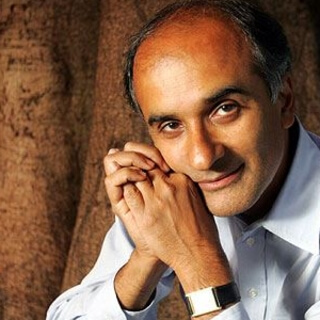
I'm James Sheheen,
Editor and publisher of Tricycle,
The Buddhist Review.
In this episode,
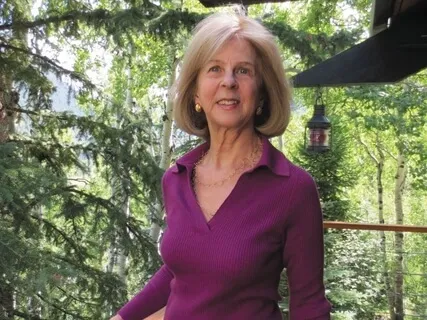
I'm joined by acclaimed religious scholar Elaine Pagels.
Pagels,
A professor of religious studies at Princeton University,
Has received an array of honors,
Including the National Book Award for her revelatory bestseller about early Christianity,
The Gnostic Gospels.
She's also the recipient of a MacArthur Fellowship.
In her new book,
Why Religion?
A Personal Story,
Pagels turns her attention to a different question.
Why is religion still around today?
But as Pagels started to explore possible answers,
She was struck by tragedy in her own life,
With the death of her young son and the sudden loss of her husband only a year later.
This led her to reexamine the lessons she had gathered from Christianity and Judaism,
As well as Buddhist and Trappist traditions.
Blending her story of faith and grief with brilliant research across various disciplines,
Why Religion sheds new light on how religions color our experiences and understanding of the world.
I think your book's title is a good place to begin.
Why religion and why that question now?
That was the question I kept asking myself as I was writing.
In fact,
It's been the reason that I study the history of religion is to find out because I was told when I was a child by my father who'd given up sort of a ferocious Presbyterianism of his family for Darwin.
He said religion is gone.
It's obsolete.
Nobody would bother with that anymore.
And so I was told that as soon as people became scientifically educated,
Religion is gone.
That hasn't happened.
And it was never obvious to me that it wouldn't happen.
But clearly the work is about that.
It's sort of what is it about these traditions that still engages us?
Right,
Because in so many ways,
We're working in a social and political climate that often dismisses religion.
I'm thinking of Steven Weinberg,
The theoretical physicist who said,
The more we study or understand the universe,
The more we realize it's meaningless.
The more we know it's pointless and meaningless is the way I remember what he says in the first three minutes.
Yeah,
Steve takes pride in being a very outspoken atheist.
And I think that's ridiculous.
My husband was a colleague of his and a friend of his.
We knew Steve Weinberg,
And he's now at the University of Texas.
Because what he doesn't see is that religion and science address very different kinds of questions and answer them in very different ways.
They're not the same kind of inquiry at all.
Right,
So obviously,
Those of us who practice a particular religion,
At least in most cases,
Are also aficionados of science.
I mean,
How do we live with two together?
To simply understand that they're answering different questions?
Well,
I think so.
And as you say,
I like your word practicing,
Because that's what it is.
So many people think of religion as a bunch of impossible things that you believe.
I don't think of it that way anymore.
I think of it as traditions,
Just whole huge collections of traditions assembled for hundreds and thousands of years,
Which people practice in ritual,
In music,
In worship,
Prayer,
And so forth.
And that's really a far more accurate way to look at it.
So this is a deeply personal book,
You talk about the loss of your very young son,
And then only a year later,
Your husband as well.
And you talk about how you move through debilitating grief.
And what I found especially moving is that you took some solace in the gospel of truth,
Which reframes suffering.
And in the gospel of truth,
Suffering is not punishment or somehow good for you,
As you say,
It's an essential element of human existence.
And I'm quoting you here,
It's an element of human existence,
And one that has potential to break us out of who we are.
How did that work in your own experience?
Yes,
That's not the only question this book addressed,
But it certainly was a central one.
One anthropologist said suffering feels like punishment.
And I think that's true cross-culturally.
You see it in ancient Greece,
You see it in Hopi culture,
You see it in various kinds of religious traditions all over the world.
So that's not particular to Christianity or Judaism.
But the story of creation,
Adam and Eve,
And the story of the death of Jesus,
I recently thought,
Are both stories of crime and punishment.
The Genesis story says we wouldn't die,
We wouldn't suffer,
We wouldn't have oppression,
We wouldn't have pain if we hadn't done something awful.
We sort of personified by Adam,
You know,
As a primordial ancestor.
And the story of the death of Jesus is that he dies because we are such irredeemably horrible sinners that unless an innocent man is tortured and killed,
God couldn't forgive us.
Those are two powerful stories with the implication that suffering is punishment.
So if something dreadful happens to you,
Or me,
Many of us say,
How could that happen to him?
Or why me?
Why that person?
She's such a good person,
As if somehow what happened corresponded to what we deserve.
Because that's what it feels like.
And we try to find moral meaning in it naturally.
But I couldn't.
Right.
When overwhelming things happened,
It would have been crushing to think anyone deserves to have their child die.
It would be impossible.
You know,
I think of what you went through,
And I it occurred to me that tragedy often diminishes our sense of agency or our sense of mastery over our world.
And it's then when we begin talking about humility and grace,
And you wrote,
I believe,
Hearts heal through what I can only call grace.
Can you say something about the idea of grace and what it had to do with your own healing?
Yes,
I mean,
As you say,
When when something overwhelming happens,
You realize that you couldn't have caused it,
Like an airplane crash or something that somebody's in.
And when things like that happen,
We often feel that there's no way you could ever survive it.
I couldn't imagine surviving the death of our only child.
That was impossible.
I didn't want to survive it at certain times.
And so it's just amazing to me.
Now it's 25 some years later.
And I feel like I'm alive and well,
And I'm happy to be alive and well.
And the children that I had to raise are well,
In spite of the fact that,
You know,
My husband was killed not long after that.
So it's astonishing to me.
How did that happen?
I mean,
I worked hard,
But that's not it,
Because a lot of people do.
It's just to me quite amazing.
So it's really just a question of grace that you got through this.
That's how it feels.
Aside from showing up.
Showing up,
Yes.
But that's how it feels.
Yeah.
Okay,
You know,
Several times in the book,
You describe experiences that seem to defy empirical truth.
I'll give you an example,
You talk about a friend of yours who died,
And you later moved into the place where he once lived.
And you felt his presence very deeply.
And he responded to that.
You conclude by saying,
It doesn't matter whether it's true in the conventional sense anyway,
Rather,
How you responded to it was important.
I was wondering if you could say more about that and what that says about religious thinking and religious imagination.
It's a good question.
I mean,
I made a decision in this book to write about experiences I can't explain.
And it happened when I was talking with a friend who's a poet.
And she had written a beautiful poem about the enunciation of the angel Gabriel to Mary,
About this young woman suddenly having a sense of a presence that felt very loving.
And I said,
Marie,
How did you write that?
And she said,
Well,
It happened to me,
But of course,
I couldn't say that.
And I said,
Why not?
And she said,
Because that's the last taboo.
I thought,
Oh,
That's interesting.
I think I'm going to write about that.
Because people have experiences they can't explain.
In fact,
I even went to a seminar in California,
With a group of people including psychiatrists and UFO people and theologians and all kinds of people who said they had experiences they couldn't explain just things that seemed impossible to know about,
Or whatever,
All kinds of different experiences.
And often people don't talk about those.
And I don't either.
But you did.
But I did.
I mean,
When we happened to move into a place where somebody I had known very well had lived,
It wasn't because we chose that it just happened.
Somebody else chose the apartment out of a huge city.
And it happened to be one that I knew very well.
And I had the sense that the person was present at a certain moment.
Was he or not?
It's not that it didn't matter.
It's just that I couldn't tell.
Right.
I would have assumed you see,
I grew up as a rationalist,
Thinking that it's my projection.
It could have been.
I really couldn't tell in that moment.
And then I thought,
What matters more than whether I'm projecting it or whether that person is somehow present is how do I react to that with fear or with some other kind of response?
And that's what I meant by that.
Right.
It was quite a coincidence that you ended up in the very place where he lived,
And it was chosen by someone else.
So those serendipitous experiences often wake us up to the possibility of another way of being really.
Or another dimension of reality.
I don't know,
But I'm not claiming that that's what it is because I don't know.
And I don't have any way to find out.
So I just thought,
Well,
I'll just say this is what happened.
And that's all I can say.
You write that religion is not a single path.
It is not a set of beliefs,
Rather an engagement of mind and heart.
Can you say something about that?
Yes.
I mean,
Usually when people ask about,
Are you religious?
They say,
Do you believe in God?
That is,
Do you have a group of concepts in your head that you would sign off on?
And I think that's because Christians,
After 300 years of the development of the Christian movement,
Wrote a creed or,
Well,
It wasn't just Christians,
It was bishops.
And they were doing it at the instruction of Emperor Constantine,
Because he wanted to set up an imperial bureaucracy of bishops who could help him govern the Roman Empire.
So it was a very simple and obvious way to create a kind of litmus test of who's a Christian and who isn't.
Do you sign the document or do you not?
But that's not what this movement was.
That's not how it started.
It didn't have a creed for 300 years.
It was about worship.
It was about shared convictions.
It was about hope.
It was about the stories they told about Jesus.
In your own practice,
You draw from a number of traditions,
Both Christian and non-Christian.
And in the book,
You write about an evangelical Christian who told you that when it comes to religion,
Quote,
Picking and choosing is self-indulgent.
We call it cafeteria Christianity.
You know,
Buddhists hear this a lot too.
There are those who are either fundamentalists or committed to orthodoxy.
And so they have no patience for this sort of approach.
Yet we live in a pluralistic society.
We're exposed to all sorts of ideas that would be disingenuous for me,
For instance,
To pretend I'm not influenced by those ideas.
So how do you see this approach to Christianity?
And how do you respond to that criticism?
Well,
I think if you and I had grown up in a traditional culture in a very isolated part of the world or a small town in the middle of Siberia or northwest Montana or something,
Which was cut off from most of the rest of the world,
We might feel that there's only one way to respond.
There's only one way to act,
One kind of culture that you share.
But as you say,
We live in a tremendous complex of cultural influences.
And there's no way you could be a Christian without having chosen to be a Catholic or a member of the Church of Jesus Christ of the Latter-day Saints or a Pentecostalist or evangelical.
And if you chose to be any of those or participate,
Then you'd have to choose,
Are you on the liberal wing of this movement?
Are you on the conservative wing?
I mean,
You make choices.
And I think in the 21st century,
Nobody that I know can avoid knowing that they make choices.
But the word choice in Greek means it's called hirasis.
And that's where the word heresy comes from.
The bishops thought it's not really good for people to have choices.
They have to do what we tell them.
So they shouldn't have choices.
So it's interesting.
I mean,
The Gnostic Gospels,
For instance,
Are an example of choices that were eliminated,
Really,
From our understanding of the religion,
Say,
If you're a Christian,
Those choices were eliminated.
By the bishops.
Right.
Certainly,
I grew up not entirely unaware of them.
What does it open up,
Though,
When we have choices?
I think it opens up questions that we ask ourselves about our own experience.
Does that feel valid to you?
Does that sound true?
Does that resonate?
So you and I have to ask questions about how you feel what you're experiencing?
Does that sound off?
And I think those are the right questions.
Because all of these traditions,
They've got lots of stuff in them,
You know,
Thousands of years worth of traditions and songs and prayers of all kinds.
So,
You know,
It's not as though any of us can imagine there's only one way to explore a spiritual dimension of reality.
Right.
The more we're exposed to,
The more difficult it is to conclude that I'm right and you're wrong.
I mean,
These competing truth claims make that pretty impossible.
But I like the approach of what rings true to me and what is meaningful in my own experience.
And at the same time,
I wonder,
Do we need a home base?
Do we need to be immersed in a particular tradition and learn a certain language with which to remain in dialogue with our tradition or to interpret others?
What is the balance there between being rooted in a particular tradition and also doing the interpretive work that we're called upon to do in a very complex world?
Well,
As you say,
When you talk about we,
I mean,
You,
I,
Each one of us is rooted in a particular culture,
A particular language,
Particular ethnicity.
And we don't have choices about that.
But I think,
You know,
There are choices we nevertheless have to make as we continue to grow up and as we grow into adulthood.
And I don't think there's a formula for that.
I like very much the book by William James called Varieties of Religious Experience.
And he talks about some people are very comfortable in a very prescriptive community,
Which tells them what to say,
When to stand up,
When to sit down,
How to act in company,
How to act culturally,
How to act politically.
They like to have somebody tell them,
Or to have a tradition that has prescriptions for all of that.
And others much prefer a very different or just feel engaged much more by a very different kind of environment.
So I think it depends.
And there's a reason that say,
Even Christianity,
Whatever that is,
Consists of traditions ranging from Russian Orthodox to Pentecostal,
Baptist,
Methodist,
Christian science.
I mean,
You name it,
It's all over the map,
And all over the world in so many different forms.
Well,
It's always been this way,
Right?
I mean,
Certain offshoots or certain interpretations have been suppressed.
So it may not be apparent until you begin to study the history,
Say,
Of the religion.
For instance,
The Nag Hammadi Library opened up whole new vistas of thought within the Christian tradition,
I would guess.
Yes,
And the bishops shut them down.
That is,
I think what they found objectionable about the texts you're talking about the Gospel of Thomas,
The Gospel of truth,
The Gospel of Mary,
Is that all of these suggest that you really don't need an institutional church.
You don't need a priest,
You don't need a prescription.
You can find your way to the divine source because you're created in that image.
And you have access through some inner awareness if you allow yourself to open up to that.
So it's a way that does not appeal to people who are trying to strengthen the importance,
The validity and the monopoly on divinity that some of these institutions claim.
You talk about something I found very interesting because in Buddhism,
This notion of upaya or skillful means is prevalent.
And there are different teachings for different temperaments.
There are different spiritual food for different people.
This is something you talk about in Christianity.
And I thought,
It's not something we normally,
Or certainly I growing up did not normally associate with Christianity.
There was one teaching.
But say a little bit about that because I found it very interesting that you mentioned that.
There are different teachings for different temperaments and different levels of understanding.
Yes,
Yes.
I mean,
I and I find myself drawn to different ones.
For example,
Even to the Cistercian monks that became friends of mine in Colorado,
These are Roman Catholics,
The monks that I knew best.
Father Thomas Keating had spent 60 years in a monastery after he came out of Yale,
Actually closer to 70.
He died when he was 94 about a month ago.
And he was completely Protestant.
His family was a financial family and lived on Park Avenue.
And he chose a way of life that was completely alien to his family and all of its traditions and everything it valued.
They thought he was totally crazy.
But it obviously was something that matched his temperament,
His perceptions,
And his capabilities because he could go very deep in that tradition.
Right.
I mean,
You did something similar.
You took up an interest in religion in a family that was quite secular.
Your father was a professor at Stanford,
I think.
Yes,
He became a biologist after he discovered Darwin.
Actually an ecologist,
But people didn't know what that was when I was growing up,
So we couldn't say that.
And my mother took us sometimes to a Methodist church,
Which was a kind of a nice place,
But it wasn't very interesting.
It was kind of flat affect,
Not much going on.
It was sort of the idea was be nice.
That's what it means to be a Christian.
Okay,
Nothing objectionable.
And I found it pretty boring.
But other aspects of that tradition spoke to me much more deeply,
Certain kinds of music,
Certain kinds of poetry,
Dance.
Even your grandparents wondered about your interest in studying religion in grad school.
Is that right?
Well,
It wasn't even a subject.
They were Dutch immigrants.
They were Protestants to the core.
And they couldn't imagine why anybody would do that.
There were anyway no jobs.
Teaching things like that,
Except in religious schools.
And I'm not a theologian.
I don't do that.
Right.
You know,
One of the ideas that I found so interesting and in some ways transformative in the book was that you talk about a discovery that in religious debate,
We're not just talking about ideas.
It's not theoretical,
Rather,
We're talking about ideas that have practical implications for how we live,
What we choose,
The societies we build,
To quote you.
Can you give me an example of an idea that we can easily mistake for something purely theoretical but in fact has very concrete ramifications in our lives?
Yes,
I mean,
I realized that when I was working on these secret texts,
Because when I was in graduate school,
I was taught that heretics are people who have the wrong ideas.
For example,
They think that there's a God who's not anthropomorphic,
A sort of a divine reality,
Which is beyond the kind of character of God that you find in the Hebrew Bible.
That God is totally masculine,
And he's not really opposed by an evil force.
I mean,
There's all kinds of beliefs,
And they say,
Well,
Heretics see it very differently.
And later,
When I was first invited to a conference discussing women and roles of women,
They said,
Well,
Tell us what you learned about that in graduate school,
About women in the early Christian movement.
I said,
Well,
I learned exactly nothing.
I mean,
We never talked about that.
Women didn't write things,
Right?
So zero.
And then I suddenly thought,
Wait a minute,
The secret texts not only talk about God as Father,
They talk about God as Divine Mother,
Because the Hebrew word for spirit,
Holy Spirit,
Is a feminine word in Hebrew,
Because Hebrew,
Like Spanish,
French,
German,
Almost any language you can think of has masculine feminine gender.
So they would think of God as Divine Father,
Divine Mother,
As Holy Spirit and the source of all things.
And then I realized that the way they perceived men and women had a lot to do with the way they imagined God was God,
Just a male God in the ancient Near East,
The God of Israel was the only one who didn't have a partner.
You know,
The Greek gods had goddesses,
Right?
The Roman gods had goddesses who are wives and lovers and all of this.
And Babylonian gods,
Mesopotamian gods,
African gods,
You name it,
They all have male and female partners.
But this particular culture is extremely focused on the power of men.
And that comes through the Hebrew Bible very clearly.
And it comes through Jewish tradition very clearly.
And it comes through Christian tradition very clearly.
It's only been questioned centuries,
In fact,
Millennia after,
Say,
The Hebrew Bible is written.
The very practical implications of this are that women occupy a certain position in society as a mirror,
Really,
Of this understanding of the cosmos or of God.
Is that right?
Yes.
And there was another one.
Well,
There's only one God,
And there's also only one bishop.
I mean,
These are correlated,
Right?
And so if there's one God and one bishop,
That means only one person.
Bishop means supervisor in Greek.
So there's only one person in charge of the church.
So that had very political implications,
So to speak,
For the structure of Christian communities.
You couldn't have,
Say,
What congregationalists have,
Which is the whole congregation.
Well,
They meant all the men make decisions,
Or what the Quakers have,
Which you have a society of friends,
And they have to agree in a meeting.
That's just not there.
Single male God authorizes a single male to be in charge.
So it's a very top-down proposition.
It's very practical.
And I realized that all of these beliefs are like that.
And that's why these debates become so heated,
Because they're really not just about an idea.
They're about how we live and how things are going to be.
Exactly.
See,
In graduate school,
We were given the option of studying the history of institutions,
Or the history of ideas.
And I thought ideas were classier,
So I chose ideas.
And then I realized when I started to look at this stuff,
That the debates with the heretics were not about ideas.
They were totally correlated ideas,
Institutions,
Completely implying each other in both cases.
So that ended my stint as a historian of ideas,
Because you can't do that anymore.
It's social history as well as intellectual history.
You're listening to Tricycle's editor and publisher,
James Shaheen,
In conversation with Elaine Pagels,
Author of Why Religion?
A Personal Story.
If you're enjoying this podcast,
Visit tricycle.
Org slash podcast for even more conversations with Buddhist writers,
Thinkers,
And teachers.
Are you new to Buddhism and interested in learning more about the Buddhist basics?
Do you want to know the answers to questions like,
What do Buddhists believe?
And is Buddhism a religion,
Philosophy,
Or way of life?
Then Tricycle's new initiative,
Buddhism for Beginners,
Was made for you.
Buddhism for Beginners is a free introductory website full of information that is authentic,
Trustworthy,
And easy to understand.
Try it out today at tricycle.
Org slash beginners.
And don't forget,
Tricycle also offers a variety of online courses to engage with timeless Buddhist wisdom in an accessible format.
Expert teachers like Sharon Salzberg,
Steven Batchelor,
Mathieu Ricard,
And more.
Sign up today at learn.
Tricycle.
Org.
Podcast listeners can get a $25 discount off any of our courses by using the code tripod25.
That's T-R-I-P-O-D-2-5.
Now let's return to James Shaheen In Conversation with Elaine Pagels.
You know,
It's interesting because I was,
I guess I shouldn't have been,
But I was a little bit taken aback that you applied to graduate school at Harvard to study religion.
And you received a note that because you were a woman,
They would rather you wait a year to really consider this because they imagined that you would run off to family life and abandon your studies.
Is that right?
Yeah,
Well,
That was,
That was,
You know,
Around the 70s when really,
They didn't accept women graduate students.
I mean,
And later in the law school,
One of my roommates was a was in the Harvard Law School.
There were then seven women admitted in Harvard Law School,
There must have been 400 men,
I don't know how many,
But lots.
So they just thought we weren't set up for that.
And God forbid,
If you looked,
You know,
Like you might be interested in men and attractive enough to find a husband.
They just figured this isn't going to work.
So boy,
Things are a bit different now,
But not completely.
They've changed a lot in different fields at different rates.
I know in my husband's field in theoretical physics,
He and the his friends used to laugh when women applied in theoretical physics.
There are a few now,
But there aren't that many.
You know,
I want to ask you about a quote just to change the topic a bit that occurs in the Gospel of Thomas.
And I don't have it in front of me,
But it's something to the effect that if you bring forth what is within you,
Dr.
Ann don't allow to emerge,
Can be very destructive.
It can be smoldering,
It can be holding us down.
So I took it psychologically.
And I think it's true on that level.
And I realized,
This is an interesting gospel.
I mean,
This is Jesus talking,
Supposedly,
Jesus says this,
You don't have to believe it.
It just happens to be true.
I mean,
It's not about believing these sayings.
It's the fact that they're wisdom sayings,
And they resonate.
And they mean something and they speak not to your concepts,
But to your experience.
Much later,
I realized it was a theological statement,
That it was really referring as well to the sense that,
That everyone is of us is created in the image of God.
And that,
That image of God is described in the Gospel of Thomas as a kind of light,
Which means a kind of energy,
A kind of energy within us,
Which can open to the awareness that we are somehow connected with each other and with God.
That's what that energy is,
Is kind of awareness,
Potential for awareness.
And so it's a theological statement about the divine energy from which we and the universe have come forth.
But I didn't understand that until years later.
Darrell Bock You know,
You say something else interesting.
And you know,
In Buddhism,
Likewise,
There's often a focus,
I feel it's misplaced,
On whether the Buddha actually said something or not.
And of course,
Like the Heart Sutra comes long after the Buddha lived.
And people think therefore it is somehow less valid,
Less Buddhist,
Because the Buddha himself did not say it.
But there's still a lot of discussion,
This is what the Buddha really said,
What the Buddha really meant.
And here you say,
Well,
We say that in the Gospel of Thomas,
This is what Jesus says,
Because it really doesn't matter whether Jesus said it or not.
What is this kind of attachment to this notion that this is what the founder said,
As opposed to this being a human endeavor that evolves over time?
Miriam Geinga Well,
I think there's a lot of reasons.
I mean,
People say to me,
You're a theologian,
Right?
And I say,
No,
No,
Theologians talk about God.
I talk about human culture.
That is,
It's not that I don't have a passionate interest in some kind of spiritual path,
Right?
But I'm looking at these religious traditions as emerging from human creativity,
Imagination,
Insight,
Wherever we come up with them.
One of my closest friends who died in April,
Actually,
Was a theologian at Union Theological Seminary,
James Cone.
And he would quote Wallace Stevens poem,
When he says,
God and the imagination are one.
He said,
Where would it come from?
We make this stuff up.
And we don't just invent it out of nothing,
We create it out of our experience,
And our conviction,
And our passion for truth.
So it's not arbitrary or frivolous,
But it doesn't descend,
You know,
You know,
In English from heaven.
At least that's not how I see it.
Darrell Bock So you're both a scholar and a practitioner.
There are plenty of people who have taught religion,
The history of religion,
And so forth,
And they have no engagement with it on a day to day basis.
How do you bring these two together,
Like your life as a practitioner,
And your life's work as a scholar?
Jody Lynn Nye Well,
You know,
I really believe that anyone who does work that they do passionately,
Whether you're studying Shakespeare,
Or whether you're writing music or making a film or whatever,
Whether you're helping people,
I mean,
Like a physician or a nurse or somebody who does that kind of work,
That comes out of some intense concern you have,
If it's work that you find fulfilling.
And so when I look at what people write,
What I write,
What anybody does,
I know it comes out of something in their life.
And as you said before,
Scholars often hide that,
Sort of pretend it's some kind of objective.
I'm just interested in the American Revolution,
Or I'm just interested in human psychology.
I don't have any personal stake in it,
Of course.
What?
You don't have a personal stake in human psychology,
Or the American Revolution or poetry?
Of course,
You would have to.
And yet,
It's kind of taboo to talk about the personal sources of your work,
Because it seems to jeopardize it.
It's not that objective.
Well,
I don't think history is entirely objective by any means.
What we choose to work on is a choice.
And the questions that engage us come out of whatever we're dealing with.
Because I'm not an antiquarian,
I'm not interested.
How did people live 2000 years ago?
That's not an abstract question.
It's how do we get these traditions?
And why is it so weird?
Or why does it sound so right?
How does it work?
Who came up with this?
Right.
You know,
Something that has been on my mind in your field,
You're a very well known scholar.
In fact,
You've written books that have been bestsellers,
So you're well known.
Was it pretty scary for a scholar like you to write such a personal book?
It was very difficult.
And I was only taken aback when a friend of mine who's the president of a college said to me,
Oh,
Well,
If you write a first person's account like that,
Nobody will ever take you seriously as a scholar.
I thought,
Well,
I've written nine books,
You know,
And I write history,
And I love to do that.
But this book emerged because I was really intensely asking myself,
All right,
So what does it add up to?
I mean,
What is it about religion that is so intensely interesting to me?
Why do I get fascinated by it?
Why do I continue to explore it?
So it was a question I asked myself.
And it felt necessary also,
At this point,
To go back to things that I hadn't been able to deal with in the past.
Those emotional traumas that were so overwhelming that I had to shut them off in order to function in order to raise two children that my late husband and I had adopted right before his death,
His sudden death in an accident.
So I just had to put one foot in front of the other and keep going.
I couldn't sit around and grieve about it.
And besides that,
It was overwhelming.
So I put it out of my mind.
And much later now that these people whom we adopted are,
You know,
28 and 30,
I have enough time and capacity to allow those things to come up and experience them in a way that I wasn't able to then.
So there was room in your life for these things to finally be done.
Yeah.
And there was an emotional possibility.
I was just looking at the New York Times today and it talked about people who suddenly,
You know,
Some catastrophe strikes and their closest family is suddenly dead.
And they immediately write something like Sheryl Sandberg.
That to me is incomprehensible.
Joan Didion did it.
Incomprehensible.
I don't get it at all.
Because those things are traumatic,
If they're sudden particularly.
And their writing,
I would think with a fraction of their capacity,
Their brain fraction of their emotional range,
I would have been I couldn't have done anything like that.
So it takes a lot of time.
And I never thought I would write about that stuff.
Why?
Because I think,
You know,
Reflecting on things that happen.
It's the same thing.
We study history,
You know,
To understand our present.
Was there a lot of healing in the writing?
I mean,
It must have been very difficult at times you describe pretty meticulously what happened and how grief stricken you were.
Was writing the book in some way cathartic?
Or did it help you get through it?
Or had it more or less resolved in your mind before you wrote?
No,
It hadn't.
This took seven years to write.
I probably wrote 1000 pages and more.
The book is about 160 in the manuscript.
So it meant re-experiencing those things.
And that was extremely painful.
But it's also necessary.
Because when things like that happen,
You know,
If somebody has a trauma and struck in the head or something,
And they don't remember what happened,
Or somebody in wartime,
They have trauma.
Then memory is obliterated of what happened,
Automobile accident,
You know,
They can just,
I don't know what happened.
Suddenly,
I woke up in the hospital,
You know,
That kind of thing.
And it may take many years for a person ever to recover the memory of those things.
But actually,
I've read a book on trauma by a really fine Dutch psychiatrist,
Called The Body Keeps the Score.
And he talks about mainly people who've been in war,
And have been fighters and seen horrible things that most of us have never seen.
And he says those veterans,
I mean,
They will have those flashbacks,
Because the brain is trying to allow them to come back to that experience.
But it's too terrifying,
You know.
So they come back to it very slowly.
And he as a psychiatrist was working with war veterans.
And his book is about the many ways that the many therapeutic processes,
Some by acting things out,
Some by drawing,
Some by talking to other veterans,
There are ways that people finally begin a process of healing.
So for me,
It was traumatic to go back to those things.
And having done it,
It feels like a considerable relief.
But I could never have done it before 25 years later.
Pete L Wow.
So for those 25 years,
This is something you lived with,
But hadn't really quite processed.
And it's just really been fun.
But also,
You know,
I thought it's helpful to be able to speak about things you think you can never talk about,
Like those veterans have been in war.
And the kinds of grief that is often never talked about is the death of a child.
Almost any other kind of loss people can talk about more easily than that.
And there I know now of many people who've had that experience and never spoken about it,
Because it's too traumatic.
It scares people.
It puts people off.
It's unthinkable until it happens.
JLF It's unthinkable.
And it frightens anyone,
Especially parents,
Because we all know that it's a possibility and it's also the worst fear.
So in the past,
If you said to me,
Well,
You know,
We had a three year old child and he died when he was three and a half,
I would have said,
Oh,
I'm so sorry.
And it backed off.
Like,
Oh,
I'm not going down that path,
But now if you said that to me,
I'd say,
Really,
What happened?
And if you had said that to me,
It would be because you wanted to communicate something.
And I would be able to listen because I've been there.
And you would understand that.
So this has opened up the possibility for a lot of people to speak about something,
Which has been literally unspeakable.
Darrell Bock You know,
This must have been a real milestone for you in your life.
I mean,
Finishing that book,
Seeing it out there.
I wonder what's next.
Do you have an idea?
Ann Marie Karpman Well,
First of all,
That was pretty scary.
And I was afraid of a couple of things.
One of them is,
You know,
People would think I was picturing myself as some kind of tragic heroine.
And I thought,
No,
If that were the story,
Everybody has grief.
No,
I don't need to hear that from somebody else.
You don't need to hear that from me.
What's amazing to me,
What's astonishing is that people recover from things that we think we can't recover from.
And people do,
You know,
And I like those stories about recovery.
And I think they're encouraging.
And so I think it's helpful.
And I'm glad of that.
And the response has been marvelous,
Actually,
To this book.
Darrell Bock Yeah,
It has been.
I mean,
We certainly love it.
Tricycle.
It's a wonderful book.
Ann Marie Karpman I'm glad,
You know,
Because and I do love a lot about the Buddhist perspectives,
Because they,
Buddhist literature,
I mean,
As you said,
Did the Buddhists say it or not,
The teachings of the Buddha,
You know,
I have this huge book of them.
They,
They're written three or 400 years after his death,
Right.
And supposedly memorized by the first Sangha and all of that,
Just like the sayings of Jesus are supposedly memorized,
You know,
By his followers,
But then they're told different ways.
So obviously,
These sayings only speak to you or me,
Thousands of years later,
If they somehow resonate with our experience,
And then we reinterpret them.
And every generation does that.
Every generation has to reinterpret them or they just be obsolete.
Darrell Bock Well,
Sometimes they can feel that way in all of their traditions,
When people are very literal about the text,
You know,
The texts are the texts and our understanding of them cannot remain fixed.
I think you're the one who talked about creative misinterpretation.
Ann Marie Karpman Oh,
Yes.
Darrell Bock Yeah,
So that really saved me in terms of looking at texts and feeling freer to understand how they resonated in my own life and what was true and what wasn't,
While at the same time remaining in dialogue with others who are practicing to kind of ground my understanding.
Ann Marie Karpman That's what I love about Buddhist teaching,
Because it's psychologically very profound.
I remember a day a long time ago,
When my husband was director of the New York Academy of Science,
And the Dalai Lama staff had called to say he'd like to come and visit and talk with some scientists.
And my husband wasn't particularly religious,
And he thought it was the Dalai Lama.
He said,
I'll do it if there's no news people.
This,
You know,
I don't want to have a show.
So they said,
Fine,
That's what we want.
So he invited 12 scientists.
The Dalai Lama went to the New York Academy of Science on 63rd Street,
And they talked.
And he said it was a marvelous conversation.
And my husband who liked to joke,
Said to the Dalai Lama,
Do you think that an artificial intelligence can be reincarnated?
The Dalai Lama looked at him and didn't speak for a while.
And then he said,
There,
You put one right here,
And then we'll talk about it.
And what I like about Buddhist tradition very much and really appreciate is that emphasis on experiential verification of the teachings and the way they resonate and the way they're taught and relived or discarded.
Well,
In your book,
It's very much that way,
Too.
What actually works and what actually has meaning for you is what survives in your understanding of the religion.
And you had said,
What difference does it make whether the Buddha said it or Jesus said it?
Well,
You know,
It's about authority.
But authority comes from the Greek word autos,
Which means oneself.
And what the secret Gospels do as Buddhist teachings is demonstrate that the authority has to come from the person accepting the teachings.
That is,
If you decide to practice that,
If you decide this is a wisdom,
Then it is your authority that accepts that claim as if it were authoritatively important,
Or discards it.
And I think that's obvious and essential.
But it's quite different from the spirit of Christianity,
Which claims that,
You know,
It all comes from outside the human realm from a transcendent reality,
And it just gets dropped,
You know.
Right.
But clearly,
There were Christian thinkers from very early on who worked against that understanding.
I mean,
Hence the Nasic Gospels and other writers.
Yes.
And I now really happen to believe,
This is just my conviction,
The Gospel of Thomas claims to be the secret teaching of Jesus,
And the Gospel of Mark,
Which is the earliest one written,
Written about 40 years after the death of Jesus,
Says that he did teach secret teaching,
But he didn't teach it in public,
Only in private.
And none of the New Testament Gospels tell you what the secret teaching was.
The Gospel of Thomas claims to be that secret teaching,
And I think it well could be.
Because actually,
I just spoke about it at Yeshiva University to a group of Orthodox Jewish scholars and said,
You know,
This text comes from the second century.
It's supposed to be the teaching of Jesus of Nazareth,
Secret teaching,
But it sounds very much like the central theme of Kabbalistic Judaism,
Which isn't written down till the 12th to 15th century from Spanish Jewish communities in Spain.
Otherwise,
It was a teaching that was oral tradition,
Because you're not supposed to give it to immature people,
And it was not written down.
But there are traces of the same themes,
2000 years,
Actually,
1200 years before it was written down in Spain.
And it's called heresy by Christians.
And it's not about Jesus being a God or being a divine being.
It's about the divine light within each one.
It sounds a lot like Buddhist teaching.
And originally,
When I first encountered it,
I thought it probably had Buddhist influence,
And it may.
It well may have Buddhist or Hindu influence,
Because it comes from second century,
The time that Taoism is arising in China.
Buddhist teaching was known in Egypt,
And was called heresy by fathers of the church.
And they also knew about Indian sadhus.
And they talk about them as heretics.
And there were Jewish teachers teaching secret teaching as well.
And it makes perfect sense that a first century rabbi would have been teaching secret teaching.
That would sound very much like Kabbalistic teaching.
And I said,
Hey,
This,
I'm not saying this is the teaching of Jesus of Nazareth,
Because there's no way to prove it.
But it was the teaching of some Jewish teacher in the second century,
At least by the second century.
It could come from the first century,
I don't know.
So I think those are possible influences.
So last question is,
How have other traditions really influenced or shaped your practice of Christianity?
For instance,
You teach a class on Jesus and the Buddha.
To what extent have other traditions really infiltrated your thinking?
Oh,
Well,
Very much so.
I mean,
I don't know enough about Buddhism.
I would never have taught that class by myself,
Because I can't.
The reason we don't do comparative religion is that,
You know,
You really need,
I think,
To know the languages.
And when I was a graduate student at Harvard,
There was a really fine scholar of Buddhism.
And I wanted to take his course.
So I sat in to his lectures.
And I realized that if I didn't understand Hindi,
Or Pali,
I really couldn't get what he was talking about very well.
The way I wanted to get what was in,
Say,
The Hebrew Bible in the New Testament,
And the Coptic text.
I was studying Greek and Hebrew and Coptic,
Which is African language.
And I couldn't take on Eastern languages,
Too.
So none of us can really deeply study those together.
So I have a colleague who is a specialist on Tibetan Buddhism,
Jonathan Gold,
Who has translated 11th century Tibetan texts,
And reads this very well,
And has been doing it for a long time.
So we taught it together.
That was a lot of fun,
Because we found so many resonances between the two traditions.
And I was stunned by the cultural difference,
Because I basically thought of Buddhism in the way that many Americans do.
Oh,
It's about meditation.
It's about compassion,
Right?
Right.
Well,
That's the abbreviated version that I heard at the Zen Center in California.
But the depth of these traditions is really quite different.
And it's culturally very different.
So I'm only beginning to learn about that.
But of course,
I find it fascinating.
Well,
Elaine Pagels,
Thank you so much for joining us.
I'm certainly looking forward to your next book.
You think maybe you'll do another personal narrative?
Or is it back to scholarship?
I don't know.
I'm going to write about the Gospel of Truth,
Because that's a beautiful text.
And it had a very different view of suffering,
As you say,
Much more like the Buddha's view that suffering is just innate to the human condition.
And I think that's true.
And the Christian and Jewish view that it's punishment is,
I think,
Overdone and obsolete.
I can agree more.
Thank you so much.
We really appreciate your coming here.
Congratulations on the book.
It's wonderful.
Thank you.
I very much enjoyed the conversation.
You've been listening to Elaine Pagels discuss her new book,
Why Religion?
A Personal Story on Tricycle Talks.
For more Buddhist wisdom for modern life,
Visit us at Tricycle.
Org,
Where you can explore our latest online and print articles,
As well as our magazine archive spanning 27 years.
You can also watch our monthly feature films,
Interact with Buddhist teachers in our Dharma Talks series,
Or download one of our ebooks on Buddhist teachings and more.
Follow Tricycle on Twitter at TricycleMag or on Facebook at Facebook.
Com slash TricycleMag.
And you can subscribe to Tricycle Talks on iTunes,
Stitcher,
SoundCloud,
IHeartRadio,
Or Google Play.
We'd love to hear your thoughts about the podcast.
Write us at feedback at Tricycle.
Org.
Tricycle Talks is produced by Paul Ruest at Argo Studios in New York City.
I'm James Shaheen,
Editor and publisher of Tricycle The Buddhist Review.
Thank you for listening.