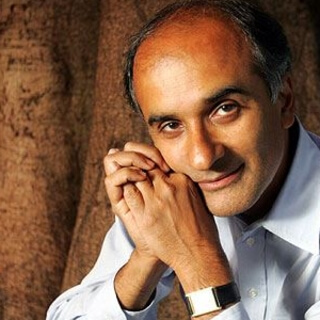
Hello and welcome to Tricycle Talks.
I'm James Shaheen,
Editor-in-chief of Tricycle,
The Buddhist Review.
According to the recently released COVID response tracking study,
Americans are the unhappiest they've been in 50 years.
Between the pandemic,
Mass shootings,
And ongoing environmental catastrophes,
It can be easy to feel like we're always in crisis and to believe that the world is coming to an end.
But journalist Emma Varveloukis believes that this pessimism can become a self-fulfilling prophecy,
And if we want to build a better future,
We have to change the way we relate to the news.
Previously an executive editor at Tricycle,
Varveloukis now serves as the executive director of the Progress Network,
A non-profit media organization dedicated to countering the negativity of the mainstream news cycle.
In this episode of Tricycle Talks,
I sit down with Emma to discuss how her Buddhist practice informs how she engages with the news,
How we can stop doom-scrolling,
And what can happen when we pay attention to what's going right.
So I'm here with Emma Varveloukis,
The former executive editor of Tricycle and current executive director of the Progress Network.
Hi,
Emma.
It's amazing to be with you since we worked together for so many years.
Hi,
James.
I know.
We're going back in time here.
You were an intern at Tricycle.
You eventually became executive editor,
And now you're executive director of the Progress Network.
Why don't you tell us a little bit about the Progress Network to start?
So the Progress Network launched in October of 2020.
So obviously that was right before the 2020 election in the United States and in the midst of the acute part of the pandemic.
And the Progress Network is all about paying more attention to what's going right.
Obviously it might seem like a really strange time to launch such an organization.
It was a very tumultuous time,
But we felt like that's exactly when the United States in particular needed something like the Progress Network.
The Progress Network is really coming from this idea that we're really locked in a zeitgeist of negativity and cynicism right now.
There are certainly lots of reasons for us to feel this cynicism and this negativity and that the world is going to hell in a handbasket.
But there are actually a lot of other evidence and arguments for the opposite,
That we could be building a world that's going to end up going in a positive direction,
That there are many positive indicators across a lot of different things going on in the world.
And a lot of people just don't know about them.
The media isn't giving them a lot of opportunity to pay attention to them.
The Progress Network,
First and foremost,
Was a network of people,
A gathering of various public intellectuals,
Business leaders,
Scholars,
Journalists,
Tech people who are approaching conversations from a more optimistic,
More constructive perspective.
We advance them in their work and their ideas.
And then on top of that,
We also are a nonprofit media organization as well.
So we have a podcast,
We have a weekly newsletter.
Both those are called What Could Go Right?
Both the newsletter and the podcast focus on good news that's going underreported,
That might be sliding under people's radars and sometimes counterintuitive,
But constructive takes on current affairs.
And we also publish original articles.
There's a lot going on that we don't know about that might make you look at the world with a little bit less of the opposite of rose-colored glasses,
Whatever those may be,
Blue-colored glasses.
You recently noted that the COVID response tracking study reports that Americans are the unhappiest they have been in 50 years.
That gloom is on the rise.
So anecdotally,
That does seem true.
Doom scrolling is a phenomenon that we can all relate to.
So how do you understand these statistics?
Politics in particular seem to be creating a situation for a lot of Americans where everything constantly feels tense.
There's been a lot of discussions in the US about polarization.
The pandemic,
Of course,
Was a situation that in and of itself led to a lot of panic because it was such an unusual situation,
But it also hit the United States while it was already in a particular mood that I think was caused a lot by politics.
And then you have a third trifecta there of the media.
They've actually done studies that headlines in the United States have gotten more negative and more negative over the last 20 years and that the United States is an anomaly with that.
News coverage in the United States with COVID was more negative than in many other countries.
I understand those statistics as three-headed dragons all coming together,
COVID,
Politics,
And the media.
And then also this general feeling that Americans have not had,
I think,
For a few generations that economically that their kids might not do as well as them.
I think millennials are the first generation and Gen Z coming after them that it's not certain that those kids are going to be economically better off than the generations before them.
That's also going on in a larger stew of the United States being on a slow decline now that you're seeing other countries starting to be on that swing.
The group of people you guys have put together and the content you're putting out is very well informed and such a relief and an antidote to all of the cynicism.
But I wonder,
The lack of trust in our institutions is kind of frightening.
From the CDC to the State Department to the Presidency,
Congress,
The courts,
How do you see that playing into everything?
If you can't believe or you can't trust the information that's coming at you,
It leads to this narrative that you can't trust anything.
That trust starts to collapse,
Not only in the institutions around us,
But our fellow Americans.
That's the erosion of trust that I find a little bit more nerve-wracking.
Those two things together lead to a situation where we're not even sure what the truth is,
What the facts are.
What we're doing is actually based on stats.
We're actually looking at research.
We're actually looking at what's going on without a partisan bent.
That's also meant in its own way to be an antidote to the lack of trust.
We're not coming at this with a particular horse in the race.
We're not coming at this with a,
We want the Democrat solution to work,
We want the Republican solution to work.
We don't really care whose it is.
We just want a solution that works.
I was listening to you on another podcast early this morning while I was making my coffee.
And you mentioned that maybe it was in a congressional bathroom that Ted Cruz gave Eric Swalwell a fist bump,
That behind the scenes,
These rancorous rivalries they play out in public aren't really so much so in private.
You're dealing with a lot of people who are very connected in our institutions.
Do you find that's more the rule than the exception?
I think so.
And I think a lot of people don't realize how connected a lot of these people really are.
A lot of them went to the same schools.
Some of them have dated one another.
You don't hear these stories,
But they are definitely going on.
That one particular story you just mentioned about Eric Swalwell,
He has such a great line about it,
Which is that politics is like pro wrestling.
The problem is that a lot of people don't realize that,
Right,
That they mistake the show,
The fakeness of the wrestling for like an actual wrestling match.
Obviously,
Anyone watching the WWE knows that it's not true.
However,
A lot of people watching politics and they see these politicians brawling out on Twitter,
They think that it really is true and it's not.
Really,
They're giving each other fist bumps in the bathroom.
At what point do they need to make that clear?
I think that they do bear responsibility for that.
But I certainly don't think that they are taking that responsibility.
There was also this really interesting thing that happened just recently when McCarthy wasn't getting enough votes to become speaker.
Part of that show is that the party that controls the house controls the C-SPAN cameras,
Where the C-SPAN cameras are pointing.
When there's no speaker,
C-SPAN can point the cameras wherever they'd like.
And there's this really interesting image of AOC interacting with Paul,
I forget his name now.
Paul Gosar.
Yeah,
That had put out that video of her getting like ax murdered as a cartoon.
And they were like leaning in next to one another chatting.
And that for me was such a great visual example of what you're saying of these people have to go to work together.
It's not quite as much of a wrestling match that we're all led to believe on Twitter.
The politicians are doing a disservice by not correcting that,
Of course.
And we are also doing ourselves a disservice by buying into that show.
Yeah,
It seems also it's a way to get votes if you fire up your base and play this game.
You write that pessimism can focus the mind,
But it can also become a self-fulfilling prophecy,
Leading people to detach and despair rather than galvanizing us.
I'm also at times highly pessimistic and I buy into this polarization almost unconsciously.
Unless I take a step back and do my Buddhist practice,
I get very sucked into it.
The pessimism that we experience and the feedback loops it creates,
Can you say something about that?
I can't take credit for that nice line that you read.
That's from Zachary Carrobel,
Who founded the Progress Network.
What he was getting at there is the same thing that Buddhists are talking about when they say that holding onto anger is like holding onto a hot coal.
You end up burning yourself.
And that's the same thing with anger inspiring activism.
At a certain point,
That's going to burn out.
Pessimism,
Again,
It can be a really strong force.
It can push people in the short term to do things.
It's not going to bring you to the end game into the future that you want to see.
Because a lot of the argument that pessimism ends up making is an us versus them argument.
We got to have victory over the bad guys because they are terrible and evil argument.
It's not an argument that's like,
Let's create a better society for ourselves and make sure that we're getting there in a healthy way and that we're not going to give up along the way.
I don't see pessimism as a long-term galvanizing force.
I see it as a very good short-term galvanizing force,
But not one that's going to take you all the way there because it's just too easy of a drop into cynicism.
It's a high price to pay.
You're in the middle of this now.
You really left this Buddhist cocoon and you're dealing with all of these movers and shakers in politics,
Economics,
The arts,
And so forth.
How did you bring your Buddhist practice with you?
Because you too must feel the pull of the culture of negativity.
I have to say that the very framework of the organization really helps.
That's a Buddhist thing.
The mindset in which you approach something completely changes how you react to something,
How you see it,
How you understand it,
How you digest it.
And for me,
It was a focusing of attention.
That's the thing that helps.
Because if you continuously focus on everything that's going wrong,
All you're going to do is gather more evidence for why that's correct.
That's going to feed into the cynicism cycle.
That's going to feed into the pessimism.
And then when you go out and see something that actually might be more neutral,
The good things don't even enter your awareness.
But if you're coming at it from a fundamentally different framework,
Then you're opening up the field of inquiry.
I am allowing reality to come to me.
I am seeing what's out there rather than having a pre-assumed story about what's going on out there.
And I do see that as a fundamentally Buddhist mindset.
It's an inquiry.
You're looking,
You're paying attention,
And you're asking.
Every day when I wake up and I look at the news and I see what's going on,
I want to prevent myself from falling into like,
Wow,
Here we go again into the same old stuff.
That Buddhist mindset of let's keep a non-reactive open awareness here definitely helps.
And it helps that it's embedded into the very framework of the organization.
Yeah,
There's a really strong confirmation bias.
You keep looking for evidence for why things are as bad as they are.
And it doesn't help that we move from crisis to crisis to crisis and that's what's emphasized.
So how does the feeling that we're constantly in crisis change how we perceive the world and relate to the people around us?
Yeah,
I think that what that does is that it makes everything seem urgent.
And some things are actually urgent and some things are not actually urgent.
But when everything seems urgent,
You can't distinguish between the things that are.
The crisis thing really does flatten the distinction between urgency and importance and everything gets mixed up because everything seems equally terrible and everything just seems like we need to deal with this now.
And what happens when you have this mentality is that it stops an actual dialogue from happening of what would be the best way to solve this.
And are we choosing a way that's going to lead to more problems down the road?
Are we choosing a way that the cure is worse than the disease?
Well,
It's just the overwhelm.
Turn on the news and I leave there thinking,
Oh,
I give up.
That's just the natural reaction to what they're feeding you and what they're feeding you is rather addictive.
I think that a common mistake that people make is that they take in what's happening on the news and they feel like it's their personal responsibility to solve all of them.
And you can't.
For most things,
You really can't do that much.
And on one of our podcasts,
Lauren Leader,
Who does a lot of advocacy work for women to join politics,
She had a really good piece of advice,
Which is just if you care about the issues and getting involved and wanting to make something better,
Choose one.
Put your energy there and just go for that.
And the rest of them,
I'm not saying you don't need to care,
But you cannot put your mental energy and your physical energy everywhere at once.
And I think that people often forget that when they're looking at the news,
That they somehow feel like,
A,
They need to solve everything and B,
They forget there are actually a lot of good faith people out there who are equipped to help solve some of these issues trying to actually do something.
It's important to remember that we're not alone and that one person isn't going to do everything and we have to think of it in terms of a collective effort.
This idea of isolation and loneliness,
Apparently we're beset with that along with pessimism.
And the Progress Network is focused not just on changing the news narrative.
You mentioned working toward a future where people have some agency or ability to make change.
But you also refer to not just material needs,
But also existential needs.
So what do you have to say about existential needs and how they can be met?
What I mean by existential needs is that at the end of the day,
We're all humans.
Humans need connection.
Humans need meaning.
Humans need purpose.
Those things cannot be forgotten.
I think what happens a lot of the time when you talk about those topics that are a little bit more material,
Like public health or politics or economics,
Is that they forget that humans are humans and that humans yearning for meaning,
Humans yearning for purpose,
All of those things are a factor.
Our society has a way of forgetting that.
I think the pandemic was a really great example of that.
The whole conversation around lockdowns,
School closures and all the things became extremely partisan.
And it became a partisan argument to say,
How can we keep people safe from this novel virus?
But as time went on,
What is the price we're paying to keep going,
For instance,
With these school closures and the lockdowns?
The dialogue got a little bit shut down around this.
But we can't forget that we're all humans at the end of the day.
Also,
The weird thing is that COVID took on a sort of mythic dimension.
And you have these people who live in absolute terror of the virus.
And then you have people who simply dismiss it altogether.
That polarization in the United States in particular was so destructive.
I really don't know how our needs were centered.
Zachary Karabell wrote that the present feels almost unbearably messy.
But these are the times to reshape the world.
That's in our mission statement.
And I think that's absolutely correct.
These are the times because if you're not going to do it now,
When are you going to do it?
I think that people sometimes are waiting around for things to be easier,
Waiting around for things to be simpler or more easy to understand or clear.
And they're probably not going to be.
We're just living in an age now where,
As you mentioned,
There's information coming at us from left,
Right and center.
We're dealing with things that we've never had to deal with before.
We're dealing with technology that we've never had to deal with before.
We've got to be willing to dive into the mess.
You can't look at the mess and be intimidated and just say,
No,
Jump in.
Because if we don't jump in,
Someone else is going to jump in for us.
We're going to end up with a future that we haven't taken a part of at all.
It kind of sounds like Adrian Rich is diving into the wreck.
Oh,
Yeah.
There you go.
So you guys are a collaborative organization and I look at the impressive list of names that you guys have brought together.
How diverse ideologically are these writers and how do they become involved with the Progress Network?
They become involved through invitation.
So it's people that have been in Zachary's radar for a long time,
The organization's radar as we launched.
So these are people who are in their various fields,
They're in their various industries,
But they're all united from a sense of they're not approaching things with outrage,
They're not approaching things with hostility or knee-jerk reactionism.
They're all approaching things from a constructive perspective.
That might not mean that they agree with one another on certain things.
For instance,
We have Thomas Chatterton Williams,
Who talks about race relations in the US,
As well as Peniel Joseph.
They would not agree with each other when it comes to how they see racial issues in the US and the progress or lack thereof around those.
So we do have lots of people in that work that disagree with each other,
Whether it be about more emotionally strife things or less emotionally strife things like economics.
We do have people from the right,
The left,
And the center.
There's probably a little bit more people on the left than on the right.
We don't have anyone,
For instance,
Who's a climate change denier on the roster,
Which just doesn't make sense.
But we do have everyone from pretty progressive,
Pretty far left,
To pretty hard right libertarians.
So the emphasis then is bringing people together rather than putting them at odds,
Which is what we're used to seeing on the nightly news.
It's people that you just might not be hearing on the nightly news because they're not saying things that are meant to get our hackles raised.
They're saying things from a constructive perspective and from a solutions-oriented perspective.
A lot of times when you see people on the news,
They come on and they're kind of just saying what everyone expects them to hear,
Which is like,
This really stinks.
And then the host goes,
Yes.
Let's take a quick break and we'll be right back.
Are you curious about books and authors who have influenced civilizations for millennia?
Love conversation that connects rather than divides?
Continuing the Conversation is a web and podcast series that examines the mysteries of who we are as humans.
Using 3,
000 years of great books as a guide,
The series is produced by St.
John's College,
A secular liberal arts college known for great books and great dialogue,
Offering a bachelor's degree in liberal arts and master's degrees in liberal arts and Eastern classics.
Listen to Continuing the Conversation on podcast platforms and the St.
John's College website,
Sjc.
Edu.
That's sjc.
Edu.
Now let's get back to our conversation with Emma Varvaluka.
One of the themes we've been focusing on recently on the podcast is loneliness,
Particularly the dangers of isolation.
Watching the news like I just described can often leave us feeling isolated,
Both in cementing divides between us and those we disagree with and contributing to an overall feeling of doom.
You go everywhere and people think the world's coming to an end.
It's millenarianism or the Kali Yuga and Buddhism,
The decline.
So how have you worked to counter this tendency toward the isolation and division that we seem to be so afflicted with?
One thing that we do is we do try to have a conversation where it's clear that we don't have a horse in the race and that we're not approaching things from like,
I'm a Democrat or I'm a Republican or I'm a Trump supporter or I'm not a Trump supporter.
We just try to have a conversation as a conversation.
Taking the politics out of it like that is really helpful.
One of our members,
Robert Talese,
He's a philosophy professor at Vanderbilt University and he talks a lot about how he thinks we've over-politicized everything so that you have to know how someone feels about Black Lives Matter before you can go bowling with them or whether or not they voted for Trump,
Whatever the hot topic is.
So I think first of all,
We need to take that out.
There is this really great article in an outlet called Reasons to be Cheerful,
Which is founded by David Byrne.
And it was about these Black women that were going around in one of the weather emergencies in California trying to help people.
And they talked about how they went up to this one Trump supporter's backyard and they were like,
Oh,
What are we getting into here?
And he was like,
Help,
We need to save the chickens and the goats.
So they all worked together to save the chickens and the goats.
The problem is a lot of us don't do that in our real lives anymore,
Just on a day-to-day level.
We only interact with people that think differently than us on the news or even as figures,
People that we see at Thanksgiving that we don't like very much.
And I think that it's because a lot of that division is existing in theory that it's getting cemented.
If you really interacted with people of different minds every day,
Some of that would slowly get leaked away because you get to know them as people and you realize they're more as people than their political beliefs.
You've been talking about the project and the newsletter,
What Could Go Right?
,
Which I get every Thursday.
And it functions as an antidote to doomscrolling for me and for most people probably.
I'm sure that's the intention.
But could you say more in a nutshell what the philosophy of that newsletter is?
Yeah.
So the philosophy is that there's a lot going on that people miss.
They're no fault of their own.
All of the progress that's being made on various fronts around the world on topics like climate change,
Like the economy,
Human rights,
Women's rights,
It gets covered by the news.
It's just that it's siloed.
So you really have to go looking for it.
And it's definitely not the kind of stories that are going to appear on your push notifications.
Definitely not the things that are going to be appearing necessarily in your Twitter feed unless you've curated it in a particular way.
So we scour the internet.
We pull all the stories about progress and things that are going well and right that we can find.
It's mostly focused on the US,
But we also do things from around the world.
And then we put that all together in one place every Thursday.
It's the opposite of doomscrolling.
Because there are a lot of just really cool and interesting things that don't reach our ears.
There's lots of success going on in various countries and around child marriages going down,
Various different sexual assault and harassment laws being changed in places like Pakistan.
It's just difficult for people to hear those stories.
It's amazing.
Even the stories we do hear get so easily drowned out.
And I noticed something very striking when reading What Could Go Right?
And that was how amazing that they came up with a vaccine that quickly.
And yet we took it for granted and it got buried in all of the gloom and doom and rancorous debate going on.
And we dismissed it in favor of a lot of negative news.
If you look at news articles from before the vaccines came out about the pandemic,
It was very much so like,
Guys,
There's no way we're going to have vaccines anytime soon.
So buckle in.
And then it was sort of like this miracle that occurred that all of a sudden,
By Thanksgiving,
There was almost seven of them that were up for trials that seemed to be efficacious.
It's not like on TV,
You saw teams going into these labs being like,
Look at what these scientists are doing.
That wasn't the storyline that we heard.
Well,
What are some of your favorite stories from the past year?
And are there any stories you wish people knew more about?
There are a lot.
One really important one for me is around climate change.
I think that it's really hard to track the progress that we have made on climate change.
Five,
10 years ago,
We were in a place where we were looking at potentially a real apocalyptic result of eight degrees of warming.
We've cut that out.
That's not going to happen anymore.
There's a lot of focus on are we going to meet the 1.
5 to 2 degrees target?
And for good reason,
We're focusing on that.
I'm not saying it's not a good reason,
But there was a future that was truly apocalyptic that we've already cut out.
A lot of people don't know that emissions have been falling in the United States for years.
They're like 20% down over the last 20 years.
Some people say they think that we've already hit peak global emissions in 2019,
2020.
Now we're seeing projections.
They're thinking it's going to be 2025.
I don't think that anyone's saying we're going to hit 1.
5 to 2 degrees as quickly as we need to,
But there's a lot more progress that's happening than is really being told.
Another one is just the drop in poverty that we've been seeing over the past 50 years.
The short-term story of child poverty and malnourishment is not so great because of COVID and the Ukrainian war.
So if you look at things in the short term,
Those numbers are not going in the right direction.
But if you zoom out a little bit,
We've cut down on child poverty in an amazing way.
There's a lot of wonderful graphs about this,
By the way,
At Our World in Data.
And it's just a steep decline.
And the story of how that happened is not one that a lot of people know.
In India,
They want to have their entire population have access to piped water by next year,
And they've already accomplished half of that.
So you're already seeing a lot of these diseases that are spread by unsanitary water start to get cut down.
There's almost immediate results.
What's really amazing to me just listening to you is how unwilling we can be to entertain the possibility that there is positive news out there or that things aren't necessarily going in the direction that we think,
That it's all going downhill.
What do you think this attachment to negativity is?
It's definitely an attachment.
And I have definitely learned through my work at the Progress Network that you have to approach it lightly.
You definitely can't just appear in front of someone and say,
Actually,
You're completely wrong about that.
And I'm going to tell you why.
You really have to validate their emotions around it first before you can say,
But actually,
You know,
If you look at this graph,
And there are a lot of things like that,
The bottom 50% of wealth in the United States finally started to grow over the last few years.
And I mention those because those are also ones that people have an emotional attachment to where they're like,
It's just not true.
I think sometimes it's stimulation for being engaged,
Though it's in a very negative way.
But it also absolves you of engaging because,
Well,
If it's all going to hell in a handbasket,
I'll just sit here.
It goes back to the conversation we were having about the double-edged sword of pessimism is that it leads into that apathy.
That's what's so tantalizing about the villain story.
We're just at the mercy of a few villains that are turning the world into chaos.
And like,
I'm just Emma.
But I think there's also something else going on that I can't put my finger on.
I think liberals in particular,
And I say this as a liberal,
I think there's sometimes an attachment against admitting that there's been progress because that somehow means that the message that liberals put out there about change you need to happen is not important.
If you tell people that things are getting better,
That that will lead other people into sitting idle and sitting on their hands and not wanting to do anything.
And I actually think that it's the opposite,
That if people are served too much despair,
That's when they're going to clock out.
But if they see this is messy,
This is hard,
But little by little,
We can do things together that they're more apt to be like,
Okay,
Well,
I'll try to do my part then.
We've become so ideologically rigid.
I see it as attachment to view,
As we would say in Buddhism.
We kind of develop this identity around a particular belief we hold,
And in the face of evidence,
We're unmoved.
We just continue looking for that evidence that confirms what we already think.
That's a hard one to get out of.
If you really are honest with yourself,
You want to be right more than you want it actually to be true that things are better.
You just want to be right.
You want to tell that idiot guy who voted for the person that you think is a terrible politician that they're stupid.
You want to be the smart one.
You want to be the informed one,
And you want to be the person who's correct.
Yeah,
You want to be right more than you want to understand or learn something new.
I certainly understand that feeling.
You probably noticed working with me all those years.
I plead the fifth.
No,
We all feel like that.
So talk a little bit about the podcast.
I know it's mostly your members,
And they're all impressive people we want to listen to.
Has anything about it surprised you?
Is there a particular episode where you were really surprised or wowed?
We've had people on the podcast where if I were to look at their body of work,
Or if I were to look at what political party they belong to,
That I particularly as a woman,
I'm like,
I don't really want to have a conversation with you,
To be honest.
This does not seem like that exciting to me,
And I kind of don't like some of the things that you've printed.
And a lot of the time,
I'm completely wrong about the conversation that ends up happening.
I'm completely wrong about how they are as a person.
Some of the people whose body of work I admire,
I get on the podcast with them,
And I'm like,
Oh,
That's not what I was expecting at all.
But I think it's just a really good lesson of the assumptions that we make around people are not always true.
And that's one thing I feel really grateful for just in my professional work that I am able to interact with people that are not like me on a daily basis.
I think that's really interesting.
I want to talk a little bit about Buddhism.
You were our executive editor.
You did a fantastic job.
You spent so many years steeped in our world,
In the Buddhist world,
That you still remain connected.
How did you first come to Buddhism?
I first came to Buddhism in college.
I was doing psychedelics with my friends in college,
And I was not a very religious person at all when I was growing up.
My father was Greek Orthodox nominally.
We would go to the United Church of Christ,
Which is a Protestant denomination.
But I really was not into Christianity or into religion really at all.
For some reason,
The psychedelics really opened me up.
And I always say that my friends kept the drugs,
Left the religion,
And I kept the religion and left the drugs.
Because I was at NYU where I was studying journalism,
I double majored in religious studies,
Got into Buddhism.
I was sort of the prototypical Western Buddhist that I was like,
Ah,
Don't give me any of that religious stuff.
Maybe Zen's the one for me.
There's no rituals.
There's no trappings.
Somehow I ended up studying Tibetan Buddhism in Nepal at Rangchen Yeshe Institute because I was dying to study Buddhism more thoroughly,
And they offered academic accreditation.
That's what got me into Tibetan Buddhism.
I was totally convinced that I had found the secret to happiness.
I was like,
I'm going to be happy forever.
That was the power of the Buddhist teachings for me.
Obviously,
I crash landed back into reality after I left Nepal,
But I applied for the internship at Tricycle from my bedroom in Nepal.
I remember I talked to Monty McKeever,
And I had to reschedule the interview because the power had gone out.
I remember being very stressed about that.
I started as an intern at Tricycle my last year of college,
And then Buddhism became both a spiritual practice for me and professional work.
How does your exposure to Buddhism and your practice shape your thinking about your work?
It seems like a pretty seamless fit.
When I heard of this job at the Progress Network,
It had been sent out to a alumni network that my friend was a part of.
She forwarded it to me,
And she was like,
This seems totally up your alley and totally up no one else's alley.
I love working at Tricycle.
I love Buddhism.
I love it being part of my professional life,
And in fact,
It still is because I do a lot of freelance work with it.
But I really wanted to be part of that engagement of it.
I wanted to see how that really worked with politics and how that really worked in the real life and what that looked like beyond the sort of navel-gazing accusations.
So I'm hoping that I'm being primarily of service to people.
That's actually why I went into Buddhism as a profession and journalism as a profession actually in the first place why I married the two because I was like,
Wow,
This is a way that I could see bringing a skill set and a search for meaning together to be helpful to people.
When I see the Progress Network in the same way that I'm hoping that all the stuff that we're putting out into the world is really helping people navigate what truly is a challenging landscape to navigate and giving them just a bit of something else to chew on that's not so poisonous.
Yeah.
You know,
When Trump won and they were televising the inauguration,
Of course,
I didn't want to watch it.
In fact,
I didn't.
But Helen Torkov,
Whom you know and who founded this magazine,
Tricycle,
Said,
I'm going to sit in front of the television and watch it and see how I relate to it and sort of watch my mind while I'm watching.
And I thought,
Well,
That's an interesting thing to do.
It's very Buddhist,
But I wasn't prepared to do it.
I just was too depressed,
Frankly,
To watch that.
I later watched clips and it was everything I thought it would be.
But you wrote something for the Progress Network called How to Read the News Without Losing Your Mind,
Five Things to Remember Before Giving Up on Everything.
Can you say more about how you've learned to engage with the news with more intention?
And do you have any tips for our listeners who might want to do the same?
And for me,
Because frankly,
I could use the tips.
Some of that was understanding how the news works.
The news is not meant to give you an accurate portrayal of the world as the world is going on around you.
The news is like man bites dog.
The news is supposed to give you the things that are going wrong because that's what it's designed to do.
It's not a news story to say,
Man woke up yesterday,
He had a cup of coffee,
He had a pretty normal day.
No one would read that.
But that's actually what's going on most of the time.
But when you read the news and all you hear about is wars and this and that,
There is a mental trick that happens where you think that that's actually the majority of what's going on when it's completely not.
It's actually the absolute minority.
There are some tricks you can learn going into the news,
For instance,
About numbers.
I covered that in that article as well.
Beware a lonely number.
When I wrote that article,
I used balanced number of examples from left-leaning media and right-leaning media.
And I used a Fox News article as an example.
It was an immigration op-ed and that we should be careful about immigrants coming here with measles.
And then she put out this eye-popping number of,
In the last year,
We've had 100,
000 measles cases globally and measles can cause death.
Those are true numbers.
It is also true that in extreme cases,
People might die.
What she didn't give us any of the context around that number.
The US has basically stamped out measles.
We had had 12 cases the previous year.
That number of 100,
000 globally was actually,
Again,
The tail end of a long decline in the last 30 years.
So the whole basis of her article to get lots of fear around immigrants bringing measles really had no basis in reality.
And I'm not saying that every article you read with a lonely number doesn't have a basis in reality.
But what I am saying is beware of big numbers on their own that are not explained without context.
I do think there's a certain portion of media literacy that's not given to people that they really should be giving to people.
There's a couple other things that I mentioned.
Even if the media says it's a crisis,
Not everything is a crisis.
I went back and looked over one week,
Everything that the media had called a crisis,
And it was everything from avocados to Canadian bacon to the actual pandemic.
And then remember that you're not alone.
A lot of these big picture items,
There are people that are actually really working to try to make them better.
You can try to make things better in your corner of the world.
Just because it's not being covered as a story,
It doesn't mean that it's not happening.
So it's just trying to give people a little bit more of a balanced picture,
Trying to help them take a step back with the news so they don't just get lost into that hole.
There's an article in The Atlantic about entertainment,
That everything has become entertainment,
That we're immersed in this world of entertainment.
I think that television news,
Not to be too cynical,
But it really does seem in so many ways like a horror show.
So I think you guys are doing great work.
People might be surprised to know that you tend to avoid headlines that focus on hope.
So why is that?
We actually try to avoid the word almost entirely.
I try to avoid it in the newsletter.
I try to avoid it when I'm talking about the Progress Network and Zachary as well.
We're actually not trying to convince you that everything is fine.
Not everything is fine.
We don't have a horse in that race either.
We're not even trying to tell you that the scales are tipped towards better and not tipped towards worse.
No one really knows,
Right?
Hope to me is a narrative-based word in the sense that things are really bad,
But here's some hope.
Everything really truly does suck,
But here's a little something to get you through the day.
I don't think that gets us very far,
And that's not what we're really trying to put out there.
What we're trying to put out there is there are facts that we're just not paying attention to.
You can decide at the end of the day if you think the scales are tipped in one direction or another.
If you really feel like you need to decide,
Maybe you don't,
But here's just a bunch of stuff that you probably haven't heard about,
You probably haven't read about.
Here's a different way of approaching things,
Not with hope that something will change because we all know that it's not going to.
No,
It's here's a bunch of problems that have actually been solved in the past.
This is the way that we did it.
Let's apply that now.
It's a stronger framework than hope that's not an emotion-driven narrative like that.
Daishi I always quote her,
But I had Joanna Macy on the podcast and I asked her about hope.
I think I might have even asked,
Do you have hope?
I said that may even be the wrong question to ask.
She surprised me.
She said,
I'm a Buddhist.
I don't do hope.
I'm in love with what is.
I thought that was a pretty interesting take on hope.
You described TPN's approach as optimistic.
What does optimism mean to you?
Or am I incorrect about that?
Daishi We do use it occasionally,
But it is actually another word that we kind of try to avoid.
Try to use constructive,
Not because there's anything really wrong with the words.
It's just that people tend to look at that as meaning a certain thing.
It's less so glass half full,
More so ditching the arrogance and the surety that you know the outcome of the future,
That you know for sure that the future is going to be bad.
It's a la Joanna Macy remaining at what is going on and not I'm absolutely positive that things are going to turn out badly because we don't know.
So it's more of a humble optimism in that way.
Daishi Do you consider your work right livelihood?
Daishi I sure hope so.
I think it's one of those professions where,
Especially here in Greece,
People have really intense opinions about journalists.
They really think that they are bad faith actors.
The media has lots of issues,
But it's a systems problem.
It's not an intentions problem.
I'm hoping at the end of the day that what I'm putting out there is helping guide people in the right direction,
Is helping guide people to constructive mindsets,
To constructive action,
To the better future that we want and less of the future that we don't want.
Daishi Were you at some point steeped like many of us or like the country in a kind of negativity?
Was there a kind of doom scrolling go on and you emerged out of it and changed your attitude over time or were you always inclined toward a more positive approach to information?
Daishi With politics,
I think just because I had been reading Jonathan Haidt's work in college,
I was always inclined towards we can't be all that bad.
There's no way that we live in a country where like half of the country's voters are terrible people.
I just refuse to believe that.
Where I was really lost in apathy part of the equation was really climate change.
I couldn't get into climate as a discussion at all.
Everything that I was hearing around me was that the world was going to literally end.
That seemed way too much to take in.
It seemed in my gut untrue,
Although I couldn't tell you why.
That's really what the science was kind of saying.
I just couldn't find any entry points for myself in that.
And so I just didn't do anything.
I really didn't find a way to get into that conversation until I started working for the Progress Network and until I started understanding that climate change wasn't this threshold of if we don't hit 1.
5 or 2,
We're all going to die.
No,
Every little tenth of a degree counts.
This for me is a better entry point.
It's not that if we don't hit the goal,
Everything's lost.
It's that we just got to keep bringing it down,
Keep bringing it down.
Here's the progress that's been made.
That for me from the Progress Network was really helpful to find some thinkers and some climate scientists that were communicating things in a different way.
In the current issue,
We have two pieces,
Renee Lertzman and Karen Armstrong.
They both point to this idea that burying people in data does not inspire them to act.
They talked about creating a narrative of why the earth is important,
Why it's worth preserving,
Because missing they felt was the sort of mythic narrative that would motivate us to engage rather than bury people in X degrees Celsius and countless data points that start to make a person feel helpless.
Yeah,
And I think also that the language is really important.
There was a really great article in Scientific American around this.
It made the point that all of the language around climate change is very negative when it could be a narrative of,
For instance,
Something that I find much more exciting of cheap abundant energy.
Your energy prices could very well drop.
It's not a narrative of lack or a narrative of we need to make sacrifices or a narrative of we're terrible people who are ruining the planet.
It's a completely different one.
It's a positive one.
So that,
Like I would love to see that change in the climate change discussion as well.
Okay,
One more question about your next project.
You're working on a podcast called Practical Buddhism.
Is that right?
Yeah.
So there's this wonderful guy,
Tanner Campbell,
Has a podcast called Practical Stoicism.
It's really popular.
And he is sort of branching out to making it a larger practical philosophy empire.
He's great with stoicism and it's really good stuff.
It's very practical.
And there's also someone does practical cynicism.
And so we're going to start with Buddhism.
I'm going to do Practical Buddhism with them starting in mid-February.
Great.
That's exciting,
Emma.
You have to alert me when the first one drops because I'll be an ardent listener,
I'm sure.
Emma Varvaloukas,
It's been a pleasure for our listeners.
Be sure to check out Emma's work at the Progress Network.
Emma,
Thank you so much.
Thank you,
James.
Thank you so much for having me on.
I really appreciate it.
You've been listening to Tricycle Talks with Emma Varvaloukas.
We'd love to hear your thoughts about the podcast.
So write us at feedback at tricycle.
Org to let us know what you think.
If you enjoyed this episode,
Please consider leaving a review on Apple Podcasts.
To keep up with the show,
You can follow Tricycle Talks wherever you listen to podcasts.
Tricycle Talks is produced by As It Should Be Productions and Sarah Fleming.
I'm James Shaheen,
Editor in Chief of Tricycle The Buddhist Review.
Thanks for listening.