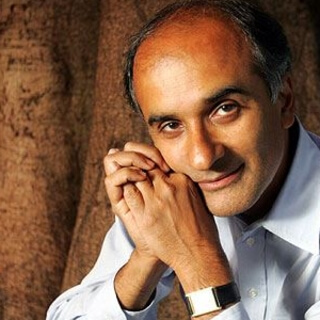
Hello and welcome to Tricycle Talks.
I'm James Shaheen,
Editor-in-Chief of Tricycle The Buddhist Review.
The Zen precepts of non-killing,
Non-stealing,
And non-lying can sometimes be presented as a list of rules and regulations.
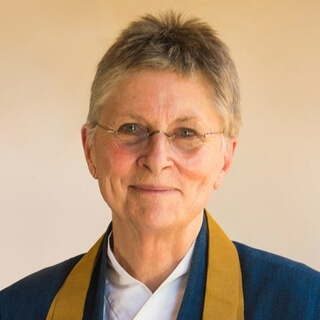
But Zen teacher Nancy Mujo Baker refers to see them as expressions of enlightened reality.
Drawing from the work of Soto Zen founder Dogen Zenji,
Baker believes that working with the precepts can be a way of revealing our inherent Buddhahood.
In her new book,
Opening to Oneness,
A Practical and Philosophical Guide to the Zen Precepts,
Baker offers practical exercises for compassionately acknowledging the liar,
Stealer,
And killer within each of us.
In today's episode of Tricycle Talks,
I sit down with Nancy to discuss Dogen's commentary on the precepts,
The importance of getting to know our anger,
And how we can cultivate compassion for the parts of ourselves we tend to reject.
So I'm here with Zen teacher Nancy Mujo Baker.
Hi Nancy,
It's great to be with you.
Thank you,
James.
So we're here to talk about your new book,
Opening to Oneness,
A Practical and Philosophical Guide to the Zen Precepts.
So I'll ask you what I always ask.
Can you say a little bit about the book and what inspired you to write it?
I am a retired academic,
And philosophy was my particular focus.
When the precepts were taught in the lineage in which I grew up,
It was sort of abstract.
There were these terms thrown around,
But nobody ever really asked what they meant.
So I think there was much to explain.
Namely,
We hear these terms suchness and emptiness and enlightenment and delusion,
But what do they really mean?
And I started in my group teaching the precepts in preparation for the Jukai ceremony,
Which is in the Soto sect,
A beautiful ritual of receiving the precepts.
Because I wasn't a preceptor,
A priest,
I couldn't actually officiate at the ceremony.
Bernie Glassman made me and two of his other lay teachers preceptors.
And so I began to do the ceremony,
Which really taught me more about the precepts.
Somehow,
One of these precept essays was transcribed on Bernie Glassman's Peacemakers website,
And somebody at Tricycle read it and called me and said,
Can we publish this?
And I said,
Sure.
And I got a call at the end of the day,
Do you have any more of these?
And I said I could if they get transcribed.
And it was an opportunity in a way to work with these what were originally Dharma talks.
At the same time,
I was undergoing a deep inquiry into Dogen,
Who's,
As everybody knows,
Very difficult to understand.
I realized that Dogen work I had been doing really was a way of completing the book.
So the precepts that come down to us from Dogen are presented not as don't steal,
Don't lie,
But as non-stealing,
Non-lying.
That was mystery.
So I realized I had a book which was to explain how the precepts get to the place of non-lying,
Non-stealing,
Where they are in a sense expressed naturally,
Spontaneously,
Without any sense of separation or an answer to the question why.
So I think that's really what the book is about,
That learning to acknowledge the killer,
The liar,
The stealer in each of us is required in order to arrive at that place of a precept being expressed naturally.
Daishi I just want to mention for our listeners who may not know,
Dogen Zenji was the 13th century founder of the Soto Zen School in which you practice and teach.
I'd also like to ask about your teacher Bernie Glassman,
Who once said to you,
There are precepts without Buddhism,
But no Buddhism without precepts.
What did he mean by this and how does it shape your own approach to the precepts?
Dogen I discovered that Dogen said,
In Zazen,
What precept is not followed?
So we think of,
Well,
Zazen,
That's something I might do every morning by sitting on a cushion,
And in heaven's name,
Does that have to do with the precepts?
So really understanding what Dogen meant by that is really what Bernie was saying,
Which is that in that state of Zazen,
Then it's a non-dual state,
Then the precepts do manifest naturally.
And I guess for me,
That ceremony of receiving the precepts has come to be treated in this country as a right of conversion to Zen Buddhism,
And I do not think that's what its purpose is at all.
And I think as a result of that,
Teachers who are not Buddhist,
And there are a number of very distinguished teachers in this country who do not consider themselves Buddhists,
Don't teach the precepts.
And I would like to see that change.
That's another thing that was behind the writing of the book.
Daishi The precepts themselves,
It's easy for us to think of them as a list of ethical norms or rules,
But you write that they are actually expressions of enlightened reality.
Can you say more about this distinction?
Dogen Let's say that I thoroughly have acknowledged and befriended,
If you will,
The stealer in me,
The one who steals.
And I'm very careful to really draw out each of the meanings of these precepts so that stealing isn't just focused on taking what's not mine or stealing money,
But rather some of us steal attention.
And even the idea that awakening or enlightenment is mine is a kind of stealing.
If you are busy answering a question and I keep butting in because I think I have a better version,
I'm stealing attention from the one who's really questioning you.
Of these ten precepts,
Each of us has one that challenges us the most.
But within that precept,
There are certain ways of taking the precept that are important to me that may not be important to you.
You may steal something else.
So there's always context here to take into account.
I have some examples of people rescuing other people in the book,
And they get called heroes,
And they always push back against that and say,
I'm not a hero,
I just did what was needed.
And in that case,
We see examples of a precept arising naturally in its non-stealing,
Non-killing form.
Those are extreme examples,
But I think that all of us can find moments where that's happened.
So your question is,
How does that affect our practice with the precepts?
Well,
Enlightenment is not a once-and-for-all state.
Dogen says there are bodhisattvas who have become Buddhas millions and millions of times.
So becoming Buddha is that moment of non-duality when the precept completely arises naturally.
But the next moment,
In a different context,
I may have to be making a choice.
I may have to be conscious.
Well,
I have a tendency to steal attention and I'm going to just bite my tongue here,
Or I'm going to practice some kind of restraint.
It may happen that it arises naturally.
But I think the more that we can really own,
Acknowledge,
Welcome,
Befriend,
Even love those parts of us that we would rather hide or deny,
The liar,
The killer,
The stealer,
The more we've undone the opposition between the stealing and the not-stealing.
They no longer are these separate clunky objects that allows for the arising of a precept naturally and spontaneously.
David The precepts are often presented as injunctions,
More or less like biblical injunctions,
Do not kill,
Do not steal.
But in your lineage,
And as you mentioned,
Dogen himself preferred non-killing,
Non-stealing,
And so on.
So how do we get from not to non?
It may seem like a trivial distinction,
But it also seems to relate to what you said earlier about a deeper point that when we sit in meditation,
We are the embodied manifestation of the precept.
Susan It's really not having a molecule of rejection of that in me.
I really come to terms in a way that's open and allowing of my own rejected whatever the aspect is.
In Zen,
Nothing's excluded.
That's a surprise.
What about my own failures,
My anger,
My ignorance,
And so on?
Don't we want to exclude delusion from enlightenment?
Dogen,
Who is in the history of Zen,
The great philosopher mystic,
He really wants to spell these things out.
So if I can feel comfortable with myself and my failings to follow,
Let's say,
A certain precept,
I no longer am treating the precept as excluding something else.
When I do that,
Then it no longer is so separate from me as something out there that I have to make an effort to follow.
As if making the effort to follow it involves making an effort to not allow the temptation to steal to even arise in me.
David You mentioned the word mystic,
And you refer to Dogen as a quote,
Mystical realist.
What does it mean to be a mystical realist,
And how does Dogen bring together the mystical with the ordinary everyday parts of our existence?
Because you do emphasize experience,
And that seems to really jibe with that latter part.
Dogen Mysticism is usually associated with the absolute,
With the experiences of the total emptiness,
Not with the relative world that we live in.
And that relative world of particular is very important in Zen.
So I think that for Dogen,
He emphasizes what he calls enlightenment in its concrete expression.
Now,
Zen students do have these experiences of becoming one with the carrot,
If you will,
In the kitchen during the work practice part of the retreat,
Or one with the bookcase across the room.
These are unusual experiences,
And so there's a particular kind of experience that one can have with a thing.
Zen is about chop wood,
Carry water,
Or the famous mountains are mountains and valleys are valleys.
Then with practice,
We actually get to the point where mountains are no longer mountains and valleys are no longer valleys,
Which might be understood as encountering the absolute.
This ordinary world is imbued,
If you will,
With the absolute.
So for Dogen,
It's being in the world of duality in a non-dual way.
Daishi How do you understand the precepts from that perspective?
Dogen Well,
On the one hand,
We can say that when the precepts are treated as something separate from us that we have to follow and adhere to and then fail to adhere to,
Etc.
,
This is dualistic.
They're separate from me.
But when they arise spontaneously out of me,
That's a non-dual way of the precepts being expressed.
Part of concrete reality,
In addition to the horse's mouth and the donkey's jaw,
Is other people and the context in which we deal with other people.
So the context in which non-stealing someone's attention given to someone else,
It can arise naturally in me.
I'm now liberated from that temptation,
Or at least it's not in my mind as an effort when I'm engaged in a conversation or engaged in listening to someone else paying attention to a third person.
This is all concrete.
You,
Me,
This context,
Etc.
I think Zen students can have the list of the ten precepts and can practice,
Well,
I'm not going to steal today,
And I'm not going to engage in sexual whatever and drink too much,
All of this.
But in concrete reality,
Robin Hood had a context in which stealing from the rich and giving to the poor was the right thing to do.
I don't even think it occurred to him.
I think he was a bodhisattva.
I don't think it occurred to him that,
Well,
Aha,
Here we have a context in which stealing is a good thing to do.
Daishi.
So in your approach to the precepts,
You draw from the three tenets that Bernie Glassman developed for the Zen Peacemaker Order,
And I remember him talking to me about these.
They are not knowing,
Bearing witness,
And loving action.
So can you walk us through the three tenets and what they have to do with how you teach the precepts?
Robin Hood Those are the three treasures,
Buddha,
Dharma,
Sangha.
So the Buddha is the absolute,
The not knowing,
The first tenet.
And to be in a state of not knowing is to be completely open,
Completely receptive to whatever.
And that means not excluding anything.
So I'm receptive even to the parts of myself that I would rather exclude.
When I see,
Quote-unquote,
Bad behavior,
I don't automatically make a judgment.
I'm free of judgments,
I'm free of what Dogen called carrying myself forward onto reality.
And then bearing witness,
It's interesting for Bernie,
This was about the external social,
Political,
Suffering world.
And for me,
It was the three tenets used inwardly.
So let's say anger is my issue.
Anger is usually acted out or stuffed.
The actual nature of anger we don't get to know because it's a bad thing.
So to be in a state of not knowing with anger is to be curious about it,
To be unafraid of it,
To inquire into it.
And then the bearing witness is when I'm really able to do that,
Reality unfolds and I bear witness.
So politically,
Socially,
Etc.
,
Can I,
Instead of going out to fix the world as we often try to fix ourselves,
Can I be completely open to what is,
As Zen likes to say,
And then see what happens.
So in the social,
Political,
Do-good world,
I need to allow the reality of the social other to reveal itself,
Which is really appreciated,
And then how it can heal begins to unfold.
And that's the bearing witness,
Which takes patience.
And then the loving action,
What is the appropriate loving action arises out of that.
Then the loving action becomes non-dual.
Daishi.
Likewise,
I tend to focus on these tenets as having to do with a lot of inner work and you already talked about the relationship between inner work and how we show up in the world in that third particular tenet,
Loving action.
Bernie used to talk about something happens to the left hand and the right hand goes to its aid without even a thought.
Susan That's right.
He had two examples,
Which I put in the book actually.
The left hand is burning and the right hand doesn't say,
Oh,
Should I,
Shouldn't I?
It's an automatic thing.
That's the non.
It's not,
Don't hesitate,
It's rather non-hesitating.
And the other one he had,
Which I loved was somebody hands you money and the left hand reaches out to take it and the right hand doesn't immediately start saying,
It's mine,
It's mine.
Daishi Right.
I want to get back to this notion of rejecting parts of ourselves in terms of the precepts.
For instance,
If I have one of those thieving moments or those killing moments,
And we can talk a little bit more about how we kill in the non-conventional sense.
I'd like to ask particularly the ways that rejecting those parts of myself can cause separation,
Isolation,
And oppression.
Can you say more about the risks of hiding these rejected parts?
Susan Well,
I think anything we hide involves cloaking ourselves in something heavy that will succeed in hiding.
So the inner work is always uncovering,
Learning to,
Bringing out of hiding.
In the book I have at the end of each of the precepts,
Exercises that people do with each other.
To bring something out of hiding just for myself isn't enough.
I have to be able to do it in the presence of others,
Which can be scary.
Daishi I actually was reading those exercises and I was thinking,
This is kind of frightening,
But I actually tried it.
Letting those parts of ourselves be known not only to ourselves but to another without having them run away is liberating.
Susan Absolutely.
The small sangha that I work with,
They have had experiences of being one with each other,
A moment of total non-separation in the middle of doing these exercises.
The person asking the questions is also in a state of not knowing.
You really start learning what it is to listen.
Zen says everything preaches the dharma,
And so we need to learn to listen to reality.
And it's interesting the love that comes from that.
All of our little efforts to hide and not know or judge,
These are all sharp edges.
And the openness,
Softness,
And freedom of discovery of love here is amazing.
Dave Let's take a quick break and we'll be right back.
Are you curious about books and authors who have influenced civilizations for millennia?
Love conversation that connects rather than divides?
Continuing the Conversation is a web and podcast series that examines the mysteries of who we are as humans.
Using 3,
000 years of great books as a guide,
The series is produced by St.
John's College,
A secular liberal arts college known for great books and great dialogue,
Offering a bachelor's degree in liberal arts and master's degrees in liberal arts and Eastern classics.
Listen to Continuing the Conversation on podcast platforms and the St.
John's College website sjc.
Edu.
That's sjc.
Edu.
Now let's get back to our conversation with Nancy Mujo-Baker.
One thing I have to say about oneness,
We hear that term so often and it's repeated so often,
So much so that I almost stopped hearing it.
But what I really liked about your description of it in the book is that once again,
It's experiential.
It's deeply experiential as opposed to this abstract concept.
And it's much easier to connect with it on an experiential level rather than this sort of abstract notion.
In the beginning of the second half of the book,
I point out that it means many things even in the Zen tradition.
So there's the oneness for Dogen of practice and enlightenment.
There's the oneness of all of reality.
There's oneness of the subject with an object,
And the object can be all of reality or it could be this particular microphone.
It all sounds very abstract to talk about oneness here.
And I used to use examples with my undergraduate students of being in the library,
Not able to get into one's homework,
Into the book.
And notice our language.
I couldn't get into it.
What that's like is here I am,
There's the book,
There's the room,
There's something on the other side of the room where I'd rather be.
And then at other moments,
And again notice our language totally absorbed in the book.
Our language reveals a lot about this.
We still can look back on those kinds of experiences and see that there is no separation between me and the book.
There is no other side of the room.
Things are not conceptually distinguished.
We all know these experiences.
And as a Zen teacher,
I think it's important to discover those experiences and to realize that at those moments I'm experiencing the non-conceptual.
I'm experiencing non-duality.
I'm experiencing oneness with something,
And I never thought of that because we race ahead into the next thing.
So the other thing that Dogen says is that in those experiences,
Things do not lose their particularity.
They no longer have names.
They're empty.
But when I go to take another sip of coffee out of my mug,
I don't pick up the pen.
Things still are what they are.
If you think about doing the dishes or brushing your teeth without being distracted,
When you're fully present to something,
You're not conceptually labeling them,
Experiencing them as separate,
Experiencing yourself as should,
Should not.
But nonetheless,
Things are still what they are.
Daishi.
Along those lines,
You write something that might startle someone,
But in the context of your discussion of the precepts,
It actually makes a lot of sense.
You write that our job in working with the precepts is to,
Quote,
Learn who we are as killers in a compassionate way.
So could you say something more about the process of exploring how we fail to live up to the precepts?
I think that is exploring it,
But it's exploring it with particulars,
Namely with particular precepts and particular contexts,
Particular people.
Let's say I have a tendency to lie and I'm aware of it.
It doesn't have to be major things.
It could be little tiny things that I lie about to protect myself maybe or to get something.
So that's where the practice of really acknowledging,
Welcoming,
Getting to know,
Lying,
And discovering.
It's not going to kill me to share that with somebody else.
It can actually be very liberating.
Plato once said,
The most miserable of men is the tyrant,
Always has to be on guard.
That's what happens to us when we hide things from ourselves and from others.
A lot of our energy goes to the hiding and not to the living.
When I was reading it,
I remember thinking,
Well,
I'm not a killer.
What do you mean the killer in me?
I haven't killed anyone,
Maybe a few insects.
Do you suggest as a way of looking at this beyond our narrow conception of,
Say,
Killing,
That self-consciousness can be a way of killing?
Can you say more about this?
How can being self-conscious kill our experience?
A term I like to use is 100%.
If you think about the world-class athlete,
The world-class athlete goes into the zone,
As it were,
Which can very much be compared to certain kinds of Zen experience.
Up in the White Mountains where I go in the summer,
There's an incredibly steep mountain.
It's almost straight up and down.
People ski down this thing.
If I take away into self-consciousness,
How am I doing?
Or I hope they're watching me because this time I really have it right.
I run the risk of breaking my leg or worse.
Self-consciousness is excluding an aspect of reality,
Sometimes 90% of reality.
Daishi I'm just looking at the other precepts and how you've described them.
The fifth precept,
Non-misusing intoxicants,
Can be interpreted narrowly to mean abstaining from alcohol,
But you encourage your students to examine the other intoxicants we turn to.
I really related to these daydreaming especially,
Analyzing,
Storytelling,
Even becoming intoxicated with the future version of ourselves,
Which is ironic as we get older.
Can you say something about that?
This idea of intoxicants being where our minds can go in full flight from reality?
Susan That is a certain payoff,
A certain kind of pleasure in hanging on to something.
It could be daydreaming.
I wouldn't be daydreaming if it weren't pleasurable in some way.
I'm getting something from it.
Let's say I'm intoxicated with a certain self-image to preserve and protect and promote and hang on to.
There's a payoff,
But there's also a cost.
Daishi I like the way you say that intoxicants in those senses are a way of looking aside,
Refusing to face what we're encountering in the present moment.
What is so painful about the present moment that we should be in constant flight from it?
Susan I think it's that there's no self when we're fully present.
We've let go of the ropes on the rope bridge.
Don't trust that somehow true nature or the great unfolding or the divine or whatever one's language is will see me through.
I'm functioning out of that place and functioning better than when I'm self-consciously trying to be in control of myself,
Of how I'm perceived,
Of what I allow into my own consciousness about myself even.
Daishi So Nancy,
For the ninth precept,
Non-being angry,
You quote the late Thich Nhat Hanh who wrote,
Treat your anger with the utmost respect and tenderness,
For it is no other than yourself.
Do not suppress it,
Simply be aware of it.
Awareness is like the sun.
When it shines on things,
They are transformed.
When you are aware that you are angry,
Your anger is transformed.
If you destroy your anger,
You destroy the Buddha,
For Buddha and Mara are of the same essence.
Mindfully dealing with anger is like taking the hand of a little brother.
So how can we get to know our anger and allow it to be transformed?
Nancy I mentioned in that precept an old friend of mine who was in analysis many years before I asked her this question and I said,
What was your analysis about?
And she said,
Anger.
And I said,
What about it?
And she said,
I was afraid I would blow up.
And notice the double meaning.
There's an existential blow up.
It's like grief and being afraid one will drown in one's tears,
One will be overwhelmed and suffocated and so on.
There's a certain existential fear that we have about getting close to something that is looked down upon everywhere,
Even by me.
How can I get to know it?
Well,
I sit with it,
I share it with others.
The Tibetan Buddha families are understood in so many ways,
But one of the languages for it is that the poison of something like anger is turned into medicine.
We say somebody has a sharp tongue,
Meaning anger,
But the medicine is having a sharp mind.
The poison,
It's been encased with our control and our chains,
And when we let it go,
We allow it to transform itself.
Daishi.
I like the way you say transform itself because we all understand and experience anger,
But we also have sometimes anger that is a lifelong gripe.
And my experience with that is that it's simply lifted at a certain point.
I didn't do anything,
I didn't approach it directly,
But engaged with the practice somehow and seemingly miraculously,
It lifted and it makes me think of what you talk about when you say the precepts express themselves or spontaneously arise.
The right hand grabbing the left and so forth.
I've never been successful at saying I don't want to be angry and fighting it.
And I think along the lines of what you're saying,
It's including it.
And it leaves on its own time,
Not on mine.
D.
L.
Exactly.
What a lot of people don't realize is that it isn't that I let go of it,
It lets go of me.
The I that would hang on to it is no longer there anyway.
I find sometimes that happens under great duress.
You're cracked.
And practice can mimic that.
It can create that pressure cooker.
So,
The 10th precept is perhaps the most opaque,
Non-abusing the three treasures,
The Buddha,
The Dharma,
And the Sangha.
Can you walk us through how you came to understand this precept?
Daishi.
Yes.
It was always a mystery to me,
But now I get it.
In a way,
The whole book is about it.
One of the things that helped was to realize what Judaism does with the word God.
It's an expression of the whole of reality.
It is maybe what Zen means by the absolute.
What's interesting is that conceptualizing it is totally understood to not be a good thing to do,
So it's written as G-D.
So,
Judaism is really careful with that word.
And I think that's what Dogen is saying about the three treasures,
Is that they're not to be conceptualized.
This is again where experience is the most important thing.
And even if one doesn't have the experience,
To have it pointed out that Buddha,
Dharma,
Sangha are about experience and not about abstract ideas or entities or aspects of reality that we conceptualize.
Dogen's way of putting it is we don't want to bind ourselves without a rope.
Daishi The way you put it in the book is that we take refuge not in the three treasures,
But as the three treasures.
Say something about that,
Because that made me stop and think.
Dogen To take refuge in is to treat them as separate from I,
From me,
From what I imagine myself to be.
But really what Buddhism is about is discovering that one is the Buddha,
The Dharma,
The Sangha.
To go back to Bernie's three tenets,
I am the not-knowing.
This is not just some precept out there of something I should do.
I am the not-knowing.
I am the bearing witness.
I am the loving action.
So I am the Buddha.
I am the Dharma.
I am the Sangha.
I don't think it occurred to me when I was doing that essay,
But it's as if Bernie's three tenets helps us understand that precept.
Daishi Being the precepts is very different from practicing the precepts.
That is a very interesting and helpful point.
You also write that the Jukai ceremony is intended to reveal the Buddhahood of the participants and that,
Quote,
It is not so much about becoming a Buddhist as it is about becoming a Buddha.
So you could say more about that distinction and how receiving the precepts is a way of becoming a Buddha?
Well,
Think about it.
Mistakes that can happen so often happen with thinking of oneself as a Buddhist or Hindu or a Christian or a Jew or whatever,
Is that it's an identity which by definition excludes other identities,
Other traditions.
So it's sort of hardening the identity.
I'm a Buddhist.
I'm this.
I'm not that.
And that's not what being a Buddhist or a Christian or a Jew is.
To become a Buddha in the ceremony,
It's the experience of oneness.
What's so interesting about the ceremony is that in the ceremony,
The officiant keeps asking the one receiving the precepts to repeat after him or her,
Being one with,
Not getting to be or anything,
But being this,
Being the Buddha,
Being the Dharma.
And yet the ceremony ends with going through each of the precepts and saying,
Will you maintain it?
So to come back to all your questions about practicing with the precepts versus having the experience of the oneness,
The precept arising naturally,
I think the,
Will you maintain it?
The question we could ask is,
Well,
What is maintaining a precept?
And I think it means being willing over and over again to examine,
To be aware of my anger,
My blaming,
My lying,
And to be willing to go back to befriend it,
To welcome it,
To take it in over and over again.
The more I do that,
The more it does become natural.
Daishi.
.
.
Here's a quote from you,
".
.
.
Becoming is the revealing of what we already are.
It's a discovery,
Not a process,
But what we already are needs to be actualized over and over again until we begin to live out of it.
" Nancy Baker Exactly.
Thank you.
Daishi Thank you for the book.
Nancy Baker,
It's been a great pleasure.
For our listeners,
Be sure to pick up a copy of Nancy's book Opening to Oneness,
A Practical and Philosophical Guide to the Zen Precepts,
Available now.
Thanks so much again,
Nancy.
Nancy Baker Thank you,
James.
And thank Tricycle for getting all this started.
You've been listening to Tricycle Talks with Nancy Bungio Baker.
We'd love to hear your thoughts about the podcast,
So write us at feedback at tricycle.
Org to let us know what you think.
If you enjoyed this episode,
Please consider leaving a review on Apple Podcasts.
To keep up with the show,
You can follow Tricycle Talks wherever you listen to podcasts.
Tricycle Talks is produced by As It Should Be Productions and Sarah Fleming.
I'm James Shaheen,
Editor in Chief of Tricycle The Buddhist Review.
Thanks for listening.