Dear friends,
Many of us will be familiar with the Rudyard Kipling poem entitled If.
You know the poem which begins with the line,
If you can keep your head when all about you are losing theirs and blaming it on you.
There is such wisdom in the 288 words which make up this poem.
It seems to have been written around 1895,
So in the 24th century we must make allowance for the fact that it is rather masculine in tone.
It's addressed to a man,
It refers to men's opinions and it refers to walking with kings.
The language is of its time but it is easily forgivable.
In the midst of all the good advice there is one particular part of the poem with which I would raise objection.
It's not the line where we are encouraged to risk our winnings on one turn of pitch and toss.
I don't imagine Rudyard Kipling was encouraging gambling.
I'll read the poem for you now and as you listen you might think is there any part of this advice that you might disagree with.
If you can keep your head when all about you are losing theirs and blaming it on you.
If you can trust yourself when all men doubt you but make allowance for their doubting too.
If you can wait and not be tired by waiting or being lied about don't deal in lies or being hated don't give way to hating and yet don't look too good nor talk too wise.
If you can dream and not make dreams your master if you can think and not make thoughts your aim.
If you can meet with triumph and disaster and treat those two imposters just the same.
If you can bear to hear the truth you've spoken twisted by knaves to make a trap for fools or watch the things you gave your life to broken and stoop and build them up and stoop and build them up with worn out tools.
If you can make one heap of all your winnings and risk it on one turn of pitch and toss and lose and start again at your beginnings and never breathe a word about your loss.
If you can force your heart and nerve and sinew to serve your turn long after they are gone and so hold on when there is nothing in you except the will which says to them hold on.
If you can talk with crowds and keep your virtue or walk with kings nor lose the common touch.
If neither foes nor loving friends can hurt you if all men count with you but none too much.
If you can fill the unforgiving minute with 60 seconds worth of distance run yours is the earth and everything that's in it and which is more you'll be a man my son.
And there you have it the well-known poem by Rudyard Kipling,
If.
Such helpful advice for life but did you find something jarring with you as I read the poem?
It would be interesting to have your comments.
For me the problem line is where we are encouraged to fill the unforgiving minute with 60 seconds worth of distance run.
I'd prefer to accept the advice that after stopping for a while we should have a little rest.
The world is moving ever more quickly and we don't allow ourselves enough time to simply be.
So how about this for a compromise?
Accepting 90% of the advice of Rudyard Kipling and turning to John Lennon for the other 10%.
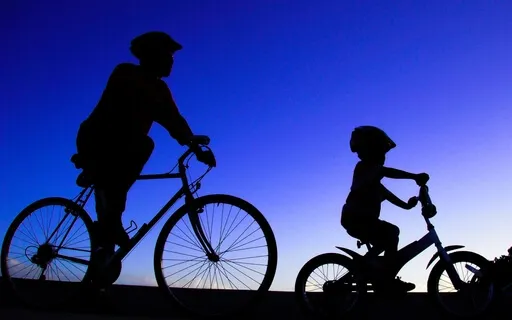
John Lennon talks about watching the wheels.
You must remember this verse from that well-known song.
I'm just sitting here watching the wheels go round and round.
I really love to watch them roll.
No longer riding on the merry-go-round I just had to let it go.
I'm just sitting here watching the wheels go round and round.
I just had to let it go.
I just had to let it go.
And if the thought of wheels going round and round makes you dizzy you might look instead for advice to the Irish singer-songwriter Mick Hanley.
He has a wonderful song called These Days which opens like this.
These days things are moving much better than they used to move.
Maybe I finally let myself say that there's much less to prove.
I used to go running round crazy trying to be more than a man but I'm doing a lot more lately doing the best that I can.
And the closing line of the song.
It's only taken a lifetime to get round to changing my ways but I'm having more fun getting more done taking it easy these days.
Words of Mick Hanley.
So to sum up we have this wonderful existence this hard to believe opportunity that came to us on the day we entered into this world.
Let each of us just do the best that we can looking out for all the advice the wise people of this world have to offer.
But remember to take a break.
Remember to stop.
Take an opportunity to do nothing.
Now this break is not intended as a means to seek further inspiration.
That would be just more work.
Inspiration might come when we take a break and it will only come in moments of quietness.
But we need to stop.
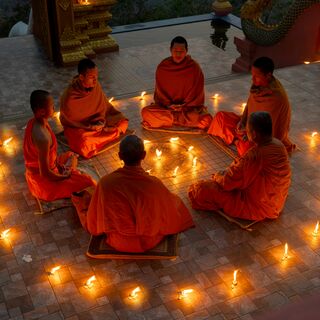
We need stopping and quietness for its own sake not as a means to an end.
We are after all human beings not human doings.
So let's remember to stop and let's be.
Let us just be and always let's be grateful.
Always grateful.
Namaste.