So,
Welcome to another edition of The Zone Show,
And I'm really,
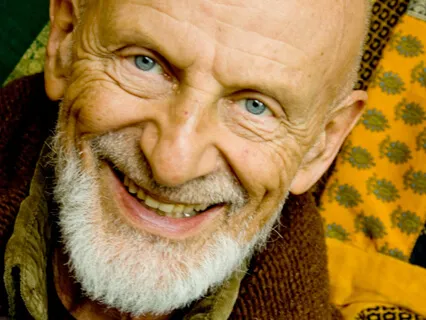
Really thrilled and delighted to be speaking with Joseph Eppert.
How are you,
Joseph?
Fine,
Thank you.
And you?
Well,
Lovely.
And I've been really,
Really thrilled to and excited to be talking to you today.
I've been reading your book,
The Buddhas Book of Meditation,
Mindfulness Practices for a Quieter Mind,
Self-Awareness and Healthy Living.
And I'm a kind of e-book guy because I like books not to be chopping down trees,
Not to be chopping down trees and things like that,
You know what I mean?
But this book,
I've got a physical copy in my hand.
And apart from liking the contents,
It just feels really nice.
The book's nice and soft.
It's got a nice soft cover.
The way it's laid out inside is it tarts your penguin that you published it with.
They've done such a good job of layout.
Easy to read,
Easy to digest.
And so I recommend everyone gets the book as opposed to downloading the Kindle version.
That's just me.
But great,
Fantastic book.
Yes,
And there are practices associated with that book.
Some of the practices are guided meditation.
Some are practice songs,
Mindfulness practice songs.
And they are on my website,
Mindfulnessmeditationcenter.
Org.
Center spelled the English way,
T-R-E.
And they're available for free download on the website.
Click on books and then on Buddhas Book of Meditation.
Yeah,
Well,
I'll put the link at the end of the podcast as well in the podcast notes.
But I've got to say that I've been meditating for years,
But I've been really,
Really enjoying getting into your meditations.
You've got a lightness of voice,
A lightness of touch,
A lightness of space.
And as they always say,
It's not the words,
It's the gaps in between that make the difference,
Which is great.
And I love the meditations and the songs.
And I'm hoping in the podcast,
Will you share a few of the songs with us?
That would be so nice.
So we're going to talk about the book and your other work.
Before we do that,
Have you always meditated or how did you,
What was the thing that got you into it in your life?
How did you switch into being a meditator and why did you do that?
Well,
I have dabbled with meditation all my life in the yoga style through yoga teachers,
Zen retreats,
Sufi retreats.
And then by coincidence,
Mostly I ran into a Thich Nhat Hanh talk while I was walking downtown.
I saw posters for it and I was very intrigued,
Partly because he looked so happy.
And I must say that's what attracted me,
First of all.
And the second thing that was singing,
There was music.
And that attracted me as well.
And so I went to visit Thich Nhat Hanh in Plum Village next summer.
And that's how I got into,
I felt right at home at Plum Village.
There's so much music,
So much singing.
The day is punctuated with music.
You wake up to chants.
There is half an hour of singing before Thich Nhat Hanh's morning talk.
There is singing in a circle before the walking meditation period.
There's singing before meals,
Singing before work periods,
Singing before sharing.
So yeah,
It gave me a big boost in this direction,
In the music direction.
And I felt right at home in this practice.
Your voice is very singy,
If you don't mind me saying.
Having read the book and at the same time I was listening to your meditations,
I could really hear your voice in the book.
It was almost like you were singing to the reader,
So that really came across,
Which is just fabulous.
And so you describe meditation in the most beautiful way,
Because a lot of people I come across say,
I'd love to meditate,
But I can't or don't have any time,
And there's no point.
But the book is just laced with points.
And if I can just quote from something right at the back of the book,
Which really drew my attention.
You say here,
Right in the acknowledgements,
I sincerely believe that if you meditate well,
You can be at peace with yourself.
If you can cultivate an open and loving heart,
Then you've got it made.
Your life is off to a good start in all its aspects,
From work to family to relationships.
So with that as a guide,
Who wouldn't want to meditate?
But how would somebody that wants to meditate start,
Apart from getting your book,
Of course,
And listening to your lovely songs and meditations?
How would they go about it?
Well,
Myself,
I had to go to a few retreats.
I had to put in a bit of concentrated time.
I think that this may be necessary for most people.
I'll give you an example.
You have a house,
You live in your house without much effort.
But when the house was being built,
Bulldozers came,
Bricklayers came,
There was a lot of effort building the house.
Living in the house is not that much,
Doesn't take that much effort,
But building the house does.
And I think this may be true for everyone.
I don't know.
I'm not sure.
But for me,
It was.
I went to a number of retreats at Plum Village with Robert Aitkenroshi and others.
I would recommend to someone who's starting out to get some guidance with an established teacher.
Otherwise,
It's like doing meditation from a book or from the web is a little bit like doing brain surgery from a book,
Except that in this case,
You are the surgeon as well as the patient.
And so I think if you think that meditation is going to be part of your life,
Might as well get a good start and get a good footing.
After that,
That's another story how to keep it going.
And I have lots of suggestions about that as well.
And it's funny you mentioned about brain surgery,
Because one of the quotes that you got in your book is that the brain is plaster and you're the sculpture and mindful meditation is the tool.
So obviously,
What we can do with this tool is to sculpt a different outcome for ourselves in life,
I guess.
Yes,
Yes,
Yes.
You know,
Like we were brought up a lot of our habits come through our parents and so on.
But now we're adults,
We're in charge,
We can revisit,
Re-engineer those habits.
We don't have to live with the habits that our parents inculcated in us.
So we could be our own parents right now and bring ourselves up the way we'd like to be brought up.
It's ours.
It's our chance to do that.
And you talk in the introduction to the book about brainfulness as opposed to mindfulness.
That's a lovely evocative phrase.
What do you mean by that?
Well,
The brain has its own agendas,
You know.
One of these has been signaled by psychologists.
It's called the negativity bias.
We sort of remember or focus on what's missing,
What's going wrong in our lives.
And like the evening news focuses on what's going wrong in the world.
So that's one thing that the brain does.
The brain also has evolution-based agendas like if you're a male,
Like we are,
You and I,
And perhaps you know what I mean.
The brain is saying compete,
Compete,
Dominate,
Get ahead,
You know,
Be this alpha male impetus is somewhere in there.
You know,
When you're driving,
It's in there,
Wants to make you pass the other guy.
Like,
We're not all as much influenced by that.
For some of us,
It sort of lies somewhere deeper in the deeper layers of the brain.
For some of us,
It's more on the surface.
I mean,
Some of our games,
Like in Canada,
We have,
You know,
Hockey a lot.
And a hockey game sometimes looks like tribal warfare,
You know,
The boxing and of course,
On the more sinister side,
All the conjugal violence,
All the bullying,
All the wars.
And it's the brain that is telling us to do these things.
So this is brainfulness,
Listening to the voice of the brain.
Sometimes it's beautiful,
But sometimes it's evolution-based and it's competitive.
It's based with survival,
On survival.
But now the issue is not so much survival for us,
But it's happiness.
And the brain's survival messages get in the way of our finding happiness.
And this is mindfulness is more conducive to happiness than brainfulness.
Brainfulness at the workplace,
Capitalism,
The competition,
It's based on competition.
I mean,
There's no getting around that.
So there are many,
Many,
Many sort of ways in which brainfulness manifests itself.
But it's kind of a magical quality that we've got,
Isn't it?
And as far as we know,
It's the,
On the earth,
We're the only animals that are self-aware and have this ability to self-talk and also then,
Perziperate our thoughts by the way that we're doing it right now in our talk.
So in some ways,
To a lot of people,
It might be,
One,
Impossible to switch that in a talk off because it kind of starts up when we wake up in the morning.
But also they might question the reason we want to do it.
And you described this in that lovely meditation listening,
Is that when the brain is thinking,
It's talking and when it's meditating,
It's listening.
So why would you want to listen as opposed to talk when we got this ability,
This amazing ability to talk?
Well,
Listening in this sense means a number of things.
One of them is listening to your body,
To the messages coming from the body,
Which are sensations,
Which are different from thoughts.
Like when you meditate and you get in touch with the body,
If you hear words like,
This is boring,
This is uncomfortable,
I'm talking about the cross-legged position.
If you hear words,
Those words are not coming from your body because our bodies,
Mine as well as yours,
Do not speak English.
The body doesn't know any words.
Words come from the brain.
So listening to the body means getting in touch with nonverbal messages.
And feelings and emotions are also nonverbal.
And the people you talk to always give you nonverbal messages also.
And I guess if you're a horse trainer or a dog trainer,
You have to listen to nonverbal messages because there are no other messages to listen to.
So yes,
That's one of the benefits of listening.
Yeah.
And you say this,
I didn't really realize how true this was.
I was multitasking.
My wife was watching Wimbledon tennis and Rafael Nadal was getting knocked out in a very early stage.
And you talk about how the face actually tells the story that's going on inside the mind and boy was his face talking about his agony at that time.
And it's really funny,
I was reading that section in your book just when this guy was going through hell back.
So our faith and all the little muscles in our face are this kind of metaphor.
And I guess that this is something that animals do share with us.
I know when our dogs are pleased,
I know when they're frightened,
I know when they're hungry and when they want to go out for a walk and they do communicate.
And I guess we do this with ourselves all the time,
But we don't give it the weighting that it really carries because we let the inner talk and the external talk take over,
I guess.
Well,
You know,
The Swiss psychologist Carl Gustav Jung has a take on intuition.
He says that intuition is not something exotic.
It's just our ability to tune into these more subtle messages.
An intuitive person perhaps reads your mind,
But not in an esoteric way.
He reads your mind by reading your face,
Reading your voice,
Reading your expression and so on.
So that's exactly what you're saying in a way,
You know.
And so I wonder whether we can listen to one of your songs at this point that kind of elucidates that.
I'm just thinking that the smile with every breath might be very appropriate at this stage.
Excellent choice.
Go for it.
Yes.
And that was completely intuitive,
By the way.
So there you go.
So let's listen to one of your lovely songs.
Here we go.
A smile with every breath,
A flower with every step,
I've already arrived,
I'm already at home.
A smile with every breath,
A flower with every step,
I've already arrived,
I'm already at home.
A smile with every breath,
A flower with every step,
I've already arrived,
I'm already at home.
A smile with every breath,
A flower with every step,
I've already arrived,
I'm already at home.
A smile with every breath,
A flower with every step,
I've already arrived,
I'm already at home.
A smile with every breath,
A flower with every step,
I've already arrived,
I'm already at home.
A smile with every breath,
A flower with every step,
I've already arrived,
I'm already at home.
A smile with every breath,
A flower with every step,
I've already arrived,
I'm already at home.
So thank you for sharing that Joseph,
It just makes you smile doesn't it?
Is it true that we got more muscles in our,
It takes more muscles in our face to frown than it does to smile,
Have you heard that?
Or is that one of these urban myths?
I really couldn't tell you,
I'm not a physiologist in that way,
But I read somewhere that we have something like 300 muscles on our face.
So I think that we can probably show many more emotions than,
I think we show more than we are able to read,
You know,
On the face.
So this meditation stuff then,
That when someone gets into it,
One of the things that many people seem to report is that they're doing it wrong.
How do you know,
Well one first,
Is there a wrong or right?
And then how do you know the difference between the two of them?
Well,
Wrong would be sitting and daydreaming,
That would be wrong.
Daydreaming is not meditation.
Sitting and ruminating would be a wrong approach to meditation.
But if you catch yourself doing that and come back to your breath,
Then that's part of the practice.
Everybody does that,
Beginners and semi-advanced,
Advanced even,
At times.
So long as you catch yourself,
That you have sort of embarked on a thought and the thought has taken you on a trip somewhere.
Those thoughts take us away from here and now,
You know.
In terms of memory,
They take us down memory lane or they take us on the thinking machine on the,
To the future.
They take us to different places.
You might start thinking about Mexico,
For example,
If you're in Canada in the winter or Cuba.
So when you recognize that you are in your thoughts and not in your body in the here and now and come back,
That is part of practice.
In that sense,
There's no right and wrong.
Some of us take a little longer to recognize it.
And with time,
You recognize,
Aha,
I'm following my thoughts and come back quicker.
So that's the difference between,
I think,
Someone who is more experienced and who is just a beginner.
I think beginners take longer to come back to their breath when they,
When they sort of follow their thoughts.
So if you're then,
Just to explain this to someone that maybe hasn't meditated,
If you're following the breath and the in and out breath and there's still points between the breath and your mind is quiet,
So you're not doing the inner chatter,
Then you're in the meditative state.
Would that be correct?
Well,
Yes,
In general,
The inner chatter,
In a way,
Continues.
But you don't focus on it like the radio.
If you have the radio while you're working,
Like some people do,
The radio continues to chatter.
But you do not focus on it so much.
You like many people who like to work,
Write something,
Go to a coffee house and there's chatter there.
But you don't focus on the chatter,
You focus on what you're doing.
And sometimes like people,
That is even a productive thing.
I seem to need a tiny bit of external distraction to focus on what I'm doing.
And that's why people put on the radio when they're working,
You know?
But they're not focusing on the radio.
Like when the radio says,
Oh,
This car is so terrific,
You must go out and buy it right now.
You don't just drop everything and rush out of the house to buy that car.
If you hear it,
You just,
You know,
The radio is doing its thing.
So you listen to the brain chatter in a similar way.
Yeah,
The brain is doing its thing.
Some people get the wrong idea that you meditate in order to stop thinking.
Well,
Unfortunately,
We're going to continue to think until the day we die.
We're going to even think while we sleep.
It's called,
I mean,
Haven't you ever woken up and realized you had a thought in your mind and some creative people do their creative work like that.
They wake up and write what's going on to them.
So the mind is continuing to think all the time.
The idea is the attitude,
Whether you are identifying with the chatter or whether you can sort of listen to it,
Observe it,
You become the observer of the thinking mind rather than the thinker.
And that is the basis of mindfulness.
Even that's the same approach to breathing.
You become the observer of the breath rather than the breather.
You become the observer of your thinking rather than the thinker.
And that's a shift in focus.
And it sounds like a very small shift,
But it makes a big difference.
Yeah.
And do you find that people find meditation through lots of different life callings?
So for example,
When it was suggested to me in my mid 40s,
I should meditate.
Someone just saw a very haggard,
Stressed looking person and was just trying to chill him out.
And I think I probably came back with the response that many people say is that one,
I can't stop my mind from chattering and two,
I haven't got time.
I'm a busy guy.
But I quickly found that the practice actually counter intuitively led me to be more productive and more creative.
So,
You know,
By spending that time,
I got more done every day.
So that's my mantra these days.
But do you find that different people approach it for different reasons and from different places?
Definitely.
You have to connect it to your life.
I think meditation can move your creativity forward.
Julia Cameron has that wonderful book called Finding Water.
By that she means like a tree finds water through its roots,
Finding water.
And I do that a lot.
The Zen idea,
The quans are questions that you have going on in your mind.
And even when you're not working on the question actively,
Consciously,
Your unconscious is aware and working on it.
And it happens to me all the time.
Like if I'm writing a song or poem and I don't know what the next line is going to be,
I just lay it aside and do something else.
Sleep if you like or wash dishes,
Walk,
Whatever.
And when I come back,
Often the problem is solved or I see the problem in a different light.
So there's no problem.
So yes,
Creativity for me is a big,
Big part of my meditation practice.
Could you share one of these Zen sayings with us to give us an example of what the questioning might be?
Well,
The Zen koan,
The first Zen koan that I studied with my teacher Robert Aitken was who is listening?
I was at the Diamond Sangha in Hawaii,
Way in the jungles.
And we meditated really early in the morning,
Like four or five in the morning we sat.
And in the jungle,
Those birds in Hawaii are just unbelievable.
Right at dawn,
They start giving this concert.
And it's just such a treat to listen to them.
And then I would four times a day,
I would go see him for interviews and he would ask me who is listening?
Who is listening?
That was my koan.
Who is listening?
What a lovely thing.
What a great question.
Who is listening?
And something you could also say is that who is listening,
Who is doing the talking?
And if someone is doing the talking,
What accent are they speaking in?
And is it the accent you speak in when you're actually talking?
Who is walking?
Or who is sitting?
Who is sitting is wonderful.
Oh,
Wonderful.
Because we identify a lot with our stories,
You know.
And as soon as I started sort of talking about who was sitting,
He would ring his bell and kick me out.
And this went on for weeks until I got the hang of it.
And the answer was just listening.
Just listening.
A lot of the Zen koans,
The questions are misleading and you only get the hang of it when you realize that there's no answer to the question the way it is put to you.
You have to go beyond the question and you sort of see beyond the question and sort of stop worrying about the question.
I guess one of the most popular ones is what's the sound of one hand clapping?
Fortunately,
I didn't have that one.
That might be slightly Buddhist or Daoist,
But it makes you smile when you listen to it,
Doesn't it?
So I feel another song coming on this time,
Joseph.
So I chose the first one and it's your turn to choose the second one.
Which one would you like to share with us now?
Just Breathe is a good one.
Just Breathe.
Is it there on your list?
It's on the list.
Let's listen to Just Breathe.
Just Breathe,
Just Breathe,
Everything will be alright.
Just Breathe,
Just breathe,
Everything will be fine.
Just breathe,
Just breathe Just breathe,
Just breathe Everything will be alright Just breathe,
Just breathe Everything will be fine Just breathe,
Just breathe Everything will be alright Just breathe,
Just breathe Everything will be fine Just breathe,
Just breathe,
Everything will be alright Just breathe,
Just breathe,
Everything will be fine Everything will be fine Everything will be fine Everything will be fine Everything will be fine Just breathe Just breathe Just breathe Just breathe Just breathe Just breathe Just breathe Just breathe Just breathe Just breathe Just breathe Just breathe Just breathe Just breathe Just breathe And this reflects the recent switch in direction for many psychologists,
Judging as positive psychology,
Which wasn't there some decades ago.
And I feel that positive psychology and Buddhism are really following a very similar path.
And I think you encapsulate that very well in the mirror mind meditation,
Because,
You know,
And if you can really describe that to us in the way that the moon might reflect off the lake in a minute.
But you know,
Some of the spiritually aware people might be familiar with the law of attraction.
And if our mind is cluttered,
If our mind is disturbed,
We attract clutter and we attract disturbances.
But that calm mind will obviously bring calmness back into us.
And then the positive mind will bring positivity back in.
I'd love it if you could share that lovely metaphor,
Because I think what's so strong about your work is how lyrical it is and how you not only speak in songs,
But you speak in word songs.
So they're kind of subtly different from song songs,
If you know what I mean.
Yes,
That's a very nice way of putting it.
Well,
I'm afraid the metaphor of the mirror mind is not an original one with me.
It has it comes from the tradition and very particularly from Thich Nhat Hanh,
Who actually has a song about it,
Visualizing the mind as a calm lake that reflects truth,
Reality and the beauty of the world.
As it is without distorting it.
And yes,
When the when the calm is calm,
The trees that are reflected in it are not dancing.
And the moon that's reflected in it is not in bits and pieces,
But is in one piece as it is in the sky.
So when the mind is calm,
Also,
We see things,
We're more apt to see things the way they actually are than through our emotional distortions.
Oh,
That's so beautiful.
And one thing I was very surprised about in your book that you alluded to before is there seems to be a gender difference when it comes to meditation.
You talk you talk about riding dragons and embracing tigers in Chapter six of the book.
What was what was what inspired you to write that chapter?
Well,
Why do you feel it was necessary in the 21st century when we're supposed to be all kind of equal in theory?
Well,
Equal does not mean the same or similar.
Equal,
I think,
Basically means so far as rights and responsibilities and abilities goes.
And I illustrate that in the book very well,
The difference between equality and sameness by saying that a woman's choir and a man's choir do not sound the same.
We're equal,
But we're not the same at all.
Whereas a man's orchestra and an all woman orchestra sound exactly the same.
You can't tell by listening alone.
So one has to do with our being.
The other one has to do with our doing.
The equality that we have so assiduously cultivated among the sexes has to do with our doing,
Our ability that we agree.
We all agree on that equality.
But our being is so different,
So different that,
As you know,
One prominent psychologist thinks that we come from different planets.
And yesterday,
Yesterday I watched the Nature Show about sexuality among animals.
And that one researcher there thought that different sexes do not come only from different planets,
But from different solar systems.
They were so different.
Like,
You know,
He was talking about those those particular kinds of species of spider where the female eats the male after they copulate.
I mean,
This is going beyond different planets.
This is going to different solar systems.
Yes,
We do have gender differences in feeling.
I think a woman's every gesture,
Every every thought is different,
Just like her every cell is different.
As you know,
That's why chromosome makes chromosome.
Every cell is actually different.
It would be surprising if that resulted in totally,
You know,
Same behavior,
Same thoughts,
Same emotions and so on.
And that's one of the wonderfully enriching aspects of a good relationship that we become enriched by by seeing and sometimes absorbing the different.
So if you say being human is sort of we know half of how to be human.
I think women know the other half.
And I think that if we in a good relationship,
We can learn from from from the other the other half.
And so far as I'm concerned,
Be more fully human.
Well,
Beautiful.
And do you think then the men and women have to approach meditation in any different way because of that?
Or is there is the same entry point for both?
Well,
I have never been a woman.
There is satisfactorily all I know is that I think the competitive,
Aggressive,
Dominating alpha male spirit is never too far below the surface.
And for for for me and for for men,
I see it in our driving habits.
You know,
I see it in the banking world.
You know,
I even you know,
The Greeks know what they're going through.
They have accused the European Monetary Fund of financial terrorism.
I think there is some kind of male tussle going on there,
Even though some of the players are female.
But the rules are sort of made by males somehow in this match.
So,
Yeah,
I think our male issues of competitiveness and is is something we have to tame with meditation.
I couldn't tell you what women have to do deal with.
So that would be the result would be different or the the end the end game would be different.
But maybe the starting point with just the breath is the same for everybody.
Yes,
Yes.
You know,
You realize that we are now getting into dangerous waters because men and women,
It's not only gender,
It's character.
I mean,
I have I have met women who are more aggressive than any man I know.
You know,
I mean,
In Great Britain,
You have you've had a certain prime minister who who was a match for any man,
I think.
So so as soon as we start talking about gender differences,
We get into very dangerous territory because it's so difficult to separate gender from personality,
From upbringing,
From culture.
But still,
I find in a woman's every gesture,
I find a certain certain element,
Which which which is different.
And then and it's as soon as I try to put it into words,
I find that I'm saying things that are not very intelligent,
You know,
But I can feel it.
What we've been talking about is how meditation can help the individual.
But it seems to me and I think a quote from your book actually brings this home from the Dalai Lama,
That this can scale up and so we can get a collective benefit from the whole world meditating.
And the Dalai Lama says,
If every eight year old in the world is taught meditation,
We will eliminate violence from the world within one generation.
And now that is not a goal in itself.
What is that?
Yes,
Yes,
They are true.
This again,
Of course,
Schools are very competitive.
The tests are very competitive.
Just this morning on BBC,
The news was that Malala,
You know,
The Nobel Prize winning Pakistani child said that we can educate every child in the entire world up to grade 12 free of charge on what we spend on military expenditures in eight days.
That's wow.
That's what it takes.
And a similar point has been made about meditation.
Goldie Hawn,
The famous actress,
Has a has a very well functioning NGO in California and now they're in eight states.
And her book is called Ten Minutes a Day.
And she shows all kinds of research.
Ten minutes a day of meditation will improve your math grades by 13 percent.
And I doubt whether 10 minutes extra time on math will have the same effect.
And of course,
It's not only in math scores,
But in alleviating bullying and alleviating all kinds of stress in school,
From teenage pregnancy to smoking to whatever.
Yes,
Meditation in school,
Not only world peace,
But kids peace,
You know,
Parents peace.
Yes,
It's one of the tragedies that we are.
We're not doing this.
This is kind of interesting,
Isn't it?
Is every meditation teacher that I've had on the zone show yourself included,
You know,
That you've got books,
You've got programs,
You've got to make a living,
You've got to pay your bills.
But your meditations are absolutely free.
If you go to my website,
My 10 minute Be Calm meditation is absolutely free.
I don't even want an email address for it because I know that collectively,
The more people we get doing this,
The better it is for everybody.
Definitely.
Yeah.
So it's not we're not even asking this.
This is not an expense that we need to do apart from some investment of time.
Yes,
Yes.
Some investment in time and the willingness,
The willingness and,
You know,
Cherishing your values,
Taking your values seriously.
I think that that is at the heart of it.
But also this time that you invest,
As I was explaining before,
When I found when I started meditating,
I got the time back in spades.
So if I didn't take that 10 minutes,
I had a worse day.
I lost the 10 minutes and more.
If I did spend the 10 minutes,
I got the 10 minutes and more back.
So it's kind of a it is a no brainer.
You know,
You can't be brain full about it.
You've got to be mindful about it.
Yes.
And I appreciate your efforts through your zone show,
To your website and so on to spread the word,
You know,
Like everything else,
Like healthy eating,
Like exercise.
They're all no brainers,
You know.
But somehow the message is not getting out to to the people who need it most,
Really.
And every little bit helps.
It does.
So listen,
Because I've only the only work of yours I've experienced is this book of meditation.
We've not spoken about the rest of your work,
But it's not your only book,
Is it?
And it's not the only work you do.
What are the activities you get involved with and what are the other creative outputs that you've unleashed on the world?
Well,
The book before this was Buddha's book of stress reduction,
Which is my take on stress reduction.
I think a lot of stress reduction courses follow John Kabat-Zinn's recipe.
A lot of them include relaxation,
Body scan,
Which are very valuable in themselves.
But I wanted to add a few more nuances in this book.
And I think if you look through the book,
You will find a different approach to stress reduction there.
Another book was this book of sleep,
Which won the cover of the award for the best self help book of the year for 19 for 20 to hell.
Wow.
Congratulations.
Thank you.
And I have a book of practice songs called Baskets of Plums,
Which are some of them are my songs,
But a lot of them are songs I found at Plum Village.
I noted that them and recorded them.
So that was published by Pal-Express.
So,
You know,
Basically those those four books are what I've been busy with.
And you obviously you teach privately and you teach in establishments and you teach groups and that kind of thing.
You're based in Canada,
Of course.
Yeah,
In Montreal,
In Quebec,
In French Canada,
French section of Canada.
Yeah,
I teach a course in usually stress reduction,
Another one on better sleep through meditation.
I teach this course for cancer patients at the Jewish General Hospital here.
And this year I will also be teaching a course called Mindfulness Practices for Finding the Blue Sky.
It's a book about finding happiness.
The title of the course refers to the fact that the blue sky is always there.
You don't have to travel very far to find the blue sky.
When the clouds go away,
The blue sky is instantly there.
So mindfulness practices to sort of not to identify with the clouds,
Not to get caught up in the clouds,
To clear the clouds.
And mindfulness practices for finding the blue sky is the name of the new course I'll be doing this year.
Now,
I must share something with you.
I'll share something with the listeners is that I never before a podcast think about what the title is,
Because I know inside the conversation,
The natural title for the podcast will emerge.
And so if you don't,
Do you mind if we entitle this podcast,
Finding the Blue Sky,
Because I think that's a lovely metaphorical and evocative way of encapsulating your work.
No,
I don't mind at all.
I think it will be a fantastic idea.
Lovely.
Well,
Listen,
It's been a real joy and a pleasure.
I look forward to having you back on The Zone Show again when the new book is available.
But I wonder whether we could just leave listening to one last song.
Before we do that,
Though,
Could you just remind people of your website,
How to find you,
Where to find the books and these lovely meditations?
Well,
The meditations are part of the book,
Buddha's Book of Meditation,
But they are available.
You don't have to buy the book to access the meditations.
Of course,
If you get the book,
You get more context and hints on how to use them.
But the meditations are on the website,
Mindfulnessmeditationcenter.
Org.
Click on books and then on Buddha's Book of Meditation.
There are 12 songs there and three guided meditations.
You can download them or listen to them on your computer.
Well,
That's fantastic,
Joseph.
Thank you for sharing that.
And if you don't mind,
My intuition has been guiding me to one last song.
And it really encapsulates this idea that with meditation we can help ourselves individually,
But with global meditation we can help ourselves collectively.
And as the Dalai Lama says,
Within one generation we might be able to eliminate war and hunger.
So I wonder whether we could listen to Island of Peace in the context of the island being Spaceship Earth.
That's such a wonderful idea.
Let's do that.
So I'm so glad our timelines have crossed,
Joseph.
And I know and I hope and I suspect it's not the last time that we'll be speaking.
Thank you for having me.
Me too.
It's a great pleasure.
Thank you so much.
Bye.
Bye.
With each breath I come back to an island of peace in my heart.
With each breath I come back.
With each breath I come back to an island of peace.
I wish you all the very best.
With each breath I come back to an Island of peace in my heart.
With each breath I come back to an Island of peace in my heart.
With each breath I come back to an island of peace.
With each breath I come back to an island of peace in my heart.
So thanks for listening to The Zone Show.
You can find loads of books and resources that will help you get in and stay in The Zone.