So hi,
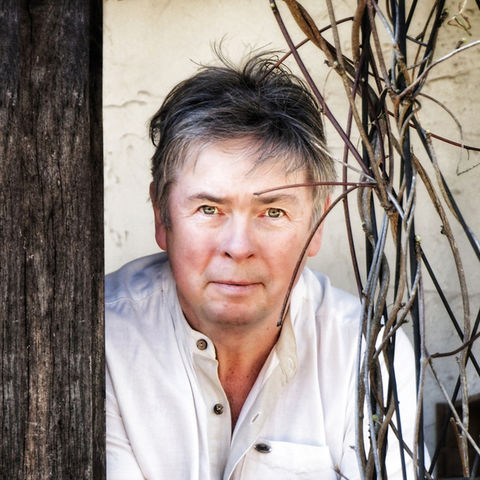
I'm Tom Evans.
It's been quite a while now since I've done what I'd call a proper podcast.
I've moved house unexpectedly,
I had some knee surgery this year,
Which we'll talk about in this podcast,
And I'm absolutely delighted to be speaking with one of life's polymaths,
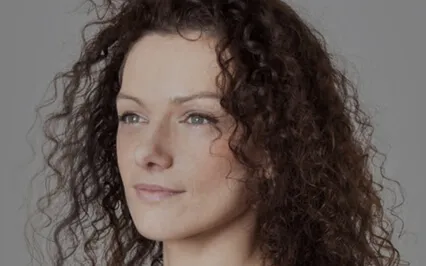
Mary Zanuto.
Hi Mary,
Welcome to the Soulways podcast.
Tom,
It's a pleasure to be here and an honor of course.
Now we've not known each other that long,
Have we?
I can tell you exactly when I met you,
Was because I went to the Swallowcliff,
The new village we live in,
The Swallowcliff Village Barbecue,
And I met this guy called Nick who saw me hobbling around and he said,
Oh you should go and see the surgeon that I had my partial knee resurfacing time.
He said,
I'm going to play cricket for the first time tomorrow,
He said.
So I got,
The next day,
Which was a Sunday,
I got in touch with Prof Barrett and they called me on the Monday to get an appointment and also got in touch with you and you got straight back in touch.
So it was something that just connected us and you've been working with,
In that environment for many,
Many years,
But you've also got many other strings to your bow and now you're also starting on a new journey.
And actually we've bonded and with a little bit of tutelage from me,
You're now flying solo and creating insight,
Time and meditations all by yourself,
Which I'm really proud of.
I've got to say that they're really,
Really entertaining.
We'll just play one at the end of this podcast.
And I don't think they're meditations,
I think they're called meditales because your storytelling capability is just second to none.
So that was,
Mary,
How would you describe yourself now?
Because you've got so many qualifications.
I don't think we've got time to fit them all into a 30 minute podcast.
Yeah,
Well,
It's been an insightful journey really.
I do love learning and I do love caring.
And so I guess my background is very much from a sort of like a clinical and a medical point of view.
And I have been working in a clinical setting for just over 25 years,
Which enabled me to learn so much about the human body and the human mind as well,
But mainly at that stage of the human body.
And my groove,
If you will,
Was working in the operating theatre or the OR,
The operating rooms,
Which enabled me to really dive in into the different fabrics,
If you will,
Of the human body,
Because I was blessed with being involved with some of the best surgeons globally.
That led me to specialize into the field of orthopaedics and joints.
And I kind of specialized in that kind of area for the past probably 15 years.
And again,
It's kind of allowed me to work with some of the best surgeons and to collaborate with one of them,
Which is,
Of course,
Professor David Barrett.
And that was really,
Really insightful.
And that led me then to wanting to explore more.
And that led me to the rehabilitation of the human body with slightly different techniques,
If you will,
That a physiotherapy would use and slightly different equipment,
Very much kind of Pilates and yoga based.
And from then I started to work with athletes,
Injured athletes,
And that gave me a really big understanding on how the mindset kind of works on the rehabilitation of things.
And so I really wanted to sort of dive into the beautiful sort of universe of the mind.
And I became,
I did a master's degree in sport psychology or high performance psychology.
And that gave me the tools,
If you will,
To explore that and to enable me to take my sort of my journey a little bit further.
So,
And that's where I'm at right now.
So it's very much about mindset and high performance and how I can help people navigate their challenges and their adversities by giving them some tools to sort of,
Well,
To get to the point where they want to be.
Wonderful.
Well,
There's two things we kind of explore on the Soul Waves podcast.
One is when we connected,
That was our Soul Waves entwining and we just instantly hit it off,
Which was just amazing.
But also we explore the Soulful Path,
What path took you.
So thank you for the last 25 years.
But what brought this girl,
I think you were born on the outskirts of Venice,
What brought that girl into the caring and the healing profession?
Was that something you've always had since you were a child?
Yes.
So there's always been a very sort of like empathic,
Compassionate,
Caring sort of soul within me since a very,
Very early age,
To be honest.
And I have early memories of me age eight,
I think it was,
Walking around with a little plastic red nurse kind of box with a white cross and a stethoscope.
And I used to walk around pretending that I was a doctor.
And I didn't make as far as a doctor,
But the caring side of me was always there.
And because I came to the UK,
I was only 18 and I couldn't really speak English.
There was an element of learning,
Obviously a new language and everything else.
And when I realised that actually my place to be was going to be the UK for a very long time,
I kind of embarked,
Or I took the right opportunities,
I guess at the right time,
And I started to work in a nursing profession.
But of course,
As I said,
I needed to learn the language first before I embarked into that kind of journey.
Well,
I guess that's two languages,
The English language,
What was that?
The English language,
But also the language of the operating theatre,
Because you did quite an unusual training,
Didn't you?
It was quite new at the time.
Absolutely.
So when you first learn the languages in the English language,
But then when you enter the medical world,
It is like learning,
Again,
A totally different language,
Because there's loads of abbreviations and sentences that you wouldn't really use on a daily basis.
So do you think then the medical world,
The aliphatic world,
Is embracing now the world of meditation and mindfulness and mindset?
Is that something which is happening or is it an early stage?
I think it's definitely happening and I think there is definitely more awareness about it.
But yes,
We are still at the early stage.
There's still an element,
A vibration of clinical overload,
If you will,
But there is definitely an understanding.
There are many studies that show,
For example,
About the placebo effect.
One of the earliest studies that many people still refer to nowadays is a study that was done regarding a funnily enough knee surgery.
This was a surgeon decided to do an arthroscopy to the patients.
So they're all presented with the same symptoms.
And he did 50% of the patients,
Actually,
He did what is called a menisectomy and that was it.
And the other 50% only did,
He actually went in with a scope but that was it.
He just had a look around and then he came out.
So no intervention as such was done apart from the scope going in.
But both patients were under general anesthesia.
So obviously the patients didn't really know what happened.
And what's interesting is that the 50% that actually had the intervention but nothing was actually clinically done,
This feel,
The outcome was exactly the same.
And they actually felt that their condition improved even though nothing was done.
So that's the placebo effect.
And that is just an understanding on how powerful the mind is actually.
And so more attention is to be paid on that.
Wow.
And I've been listening to your meditation on Insight Time.
Your first one helped me a lot.
It's called Walking Well.
And this idea that the way that we perceive ourselves is the way that our bodies are reflected into the world.
So if you think that you're a cripple,
As I was thinking before I had my surgery,
That's how I look like and a different persona gets presented to the world.
And do you think that that persona tends to stick?
So over time,
You're kind of,
It bonds and actually you can get into this position where the dis-ease roots itself in you.
Oh,
Absolutely.
And again,
Dare I say,
I'm a really good example of that myself.
So I spent a lot of years doing Pilates,
Yoga and Gyrotonic and all combined together is called Garuda.
And it's a method of movement,
Which is really interesting.
And when I first started practicing this myself,
I was very hunched forward.
So much so that my ex-boyfriend used to joke about the fact that I would need to iron my shirt with a walk underneath it because I was so hunched over.
And now I'm really upright and actually people do think I'm a dancer,
Which is extraordinary,
If you will,
Because only recently I met my ex-boyfriend,
Which is a very dear friend of mine.
And he says,
Oh my God,
You know,
What happened to you?
You're so upright and so elegant.
And I remember you when you were so hunched over,
Needing a walk to iron your shirts.
And you know,
It's until he actually said that and I thought,
Actually you're right.
I've forgotten about that.
Maybe you're leaning over too many patients on the operating table.
Well,
Exactly.
But there is an element of,
You know,
You can actually train your body to be upright and having that awareness that you are hunched over,
Having that awareness that you have some tension in your body,
Having that awareness of,
You know,
The stress that you're carrying is really,
Really important because you can do something about it by keeping yourself upright a little bit more,
By trying to walk well,
You know,
In a way that we can go by our day so deep into our thoughts that you totally forget that actually by taking your shoulders back a little bit more,
By lifting up your chest a little bit more and lifting up your chin,
You can really do so much goodness for your body and for your mind.
Well,
Listen,
Let's listen to a sample of Walking Well.
This is just a sample of Walking Well.
This is just 30 seconds or so of the meditation people can find on Insight Tire.
I was once promenading by the sea and my vision was captivated by this striking woman in front of me.
Her energy was compelling.
She walked with confidence and graciousness.
She had long gray hair which she wore with pride and sheer long linen skirt was dancing with her body and the breeze with every step she took.
She looked so tall and composed.
When she turned I realised that what I thought was a lady in her 40s was in fact a lady in her 90s.
Her secret?
Walking well every day.
So amazing.
I love the sound,
I love the lyrical nature of your storytelling but you've also got other content that is being produced right now.
You've got courses on healing and also a very exciting initiative to help women in the job.
So could you tell us a little bit about where you're going to take your career next?
What are your plans?
Yeah,
Sure.
What I would like to do is I've been experiencing this sort of like the perimenopause and menopause myself and having been dealt a very challenging experience.
I've been dealt a very challenging card if you will.
I really feel the need to share this with other women.
I mean I know that right now the menopause is being highlighted even in the press and I think it's wonderful to create again this awareness.
But I think there really is the need for a better understanding and to give women an understanding that even if they took the choice of HRT to help them with this journey,
There is fundamentally still an element of growth and evolution and there is still an element of understanding one's body,
One's feelings,
One's emotions.
And subsequently with this kind of growth there comes a lot of adversity that a woman has been faced with.
And I would like to hold this space for them if you will and actually give them some tools and techniques that I actually personally use with my elite athletes as well to give them the grit and the confidence to go ahead and move forward.
From my experience what I've found going through the perimenopause and menopause was actually quite a lot of confusion.
And yes there's been other women telling me there is light at the end of the tunnel but that doesn't really help me or it didn't really help me.
Well perhaps it would have helped me more.
It would have been a sort of like a step-by-step hiking routine that gives me a sense of actually Hergen,
A sort of characteristic in the past.
I think.
Perimenopause and menopause was actually quite a lot of confusion.
And yes,
There's been other women telling me there is light at the end of the tunnel,
But that doesn't really help me.
Or it didn't really help me.
Well,
Perhaps it would have helped me more.
It would have been a sort of like a kind of a step by step guide of it's OK not to be OK.
And,
You know,
You may experience this.
And this is OK and this is what you can do about it.
And I didn't find that with any of the help that is out there.
So for those that might be listening to this,
That don't know what the menopause is or the difference between a perimenopause and menopause,
What would you say that is?
Because you were talking earlier that we can address this in children as well,
Just by changing the state of minds of people at a very young age,
Nowhere near menopause.
Yeah.
So basically the perimenopause is where it is the sort of like is when you open the door to that journey of entering the menopause.
So you cover your body,
Opens up that door and it does vary from women to women.
But say it could happen as early as 40 or even 40,
45.
And what happens is the hormones begin to go down a little bit.
They sort of like start to fluctuate a little bit.
And then eventually you hit the menopause and,
You know,
They basically go down and down and down and down and down unless obviously you take HGRT,
Which is hormonal replacement therapy,
Which has been shown that is really helpful and is very much supported by the British Medical Association as well.
So that's what the perimenopause is.
And a lot of women find themselves,
You know,
Between the age of 40,
45 and 50,
Not really understanding why they feel a certain way.
And that is why.
And,
You know,
I wish there was more awareness of that.
Then,
Of course,
You hit the menopause when I suppose the breathing stop.
So until the breathing stop completely,
You're not called menopausal,
You're called perimenopausal.
Then the breathing stops,
You menopausal.
And then,
You know,
It hits you even a little bit harder because the hormones are having the last shout,
If you will.
They're just shouting,
I'm going,
I'm here,
I'm going,
I'm here,
I'm going,
I'm letting you go.
No,
You're not letting me go.
It's sort of like relationship of love and hate,
If you will.
And so that's what the menopause is.
And regarding the children,
I'm really passionate about the younger generation because I do work with the younger generation for a charity as well.
And there is a lot of anxiety and depression amongst themselves.
And by teaching the younger generation sort of like teenage sort of years or even as young as sort of like 10,
You know,
A sort of like a mindset to enable them to navigate their life for the future.
I think that would be very,
Very helpful.
And one of the things that I like to work with is just something as easy as,
You know,
What are you all about?
Who are you?
And the personal identity is something that could be better understood at a younger age going forward.
And even though it's something that changes all the time,
Especially when you are hitting the perimenopause and menopause,
Really,
It's not something that you want to do.
Revisiting that sort of mindset that you've been taught at a younger age can take you from A to B in a little bit more compassionate way.
Lovely.
You talk about the perimenopause and menopause.
What would a merimenopause look like?
The merimenopause,
What would look like?
It would look kind of fun.
There would be loads of curiosity in it.
And so loads of stripping the fabric layers within you,
But from a curiosity point of view.
Even though there's going to be a soulful journey,
If you will,
With that,
If you add the element of curiosity,
It would make the journey a little bit more fun.
And sort of laugh about it.
And because some minutes you will see life under a certain lens,
Through a certain lens.
But I guarantee that the next minute,
If you look at it through the lens of curiosity,
You can see the same life under a different lens.
And as long as you can laugh about it,
I think the journey will be a much more Wow.
So it strikes me that this girl and this woman would describe her of how she felt through the mirror,
Right?
And and she had the key o in these energy sheets on the wall,
Her eyes all tend to frames differently.
That's how people think about that I don't know.
Or compassionate one.
Wow.
So it strikes me that this girl that was walking around the hills of Venice with the box with the red cross on it was almost designed for doing the stuff that you're doing now.
And also all the other training you've done,
The study,
The years of graft that brought you to this wonderful place right now where you can bring this curiosity to something which is afflicting so many people.
Absolutely.
And you know,
Research does show as well,
You know,
Curiosity,
It is the antidote to anxiety and to many other things that we experience.
And it's no mistake why in the meditation world or some of the Buddhist teaching,
They always invite you to sort of sit with your thoughts and be curious about it.
So there is a great way it goes into that.
What about as men,
Do men go through a similar hormonal change?
Yeah,
With men,
It's,
I mean,
You know,
There is obviously the sort of like the reduction of testosterone that once goes through as well.
And so with that,
The man experienced many different changes as well.
And again,
Some men chooses to sort of,
To have some destrotrons,
You know,
Other oral or bio gel to actually keep them kind of more stable.
So by any means,
Of course,
The men go through the same thing.
I don't really know much about,
Sort of rather the male physiology of it.
But again,
Research does show that even though,
You know,
You men don't have a histogen or progesterone,
There are many other elements that you sort of,
You have,
And by lacking of these elements,
You go through a similar change.
The only difference,
I guess,
Is your sort of,
Your change is not so kind of emotionally driven,
Like,
You know,
The women's changes,
You know,
We have to sort of understand the difference between crying all day long or being irritable all day long,
Because that's the difference between progesterone and histogen,
If you will.
But nevertheless,
There is still an element of evolving that a man needs to go through and will go through.
Some people used to call that midlife crisis,
Which I guess,
You know,
It is true,
You know,
The man goes through the midlife crisis.
And a wise man will take that further and actually really look at his life and actually move forward in a way that he perhaps would never dream of.
Well,
Mary,
You brought certainly a lot of Mary-ness into my world over the recent months.
And I know that you're doing that on Insight and Time with many,
Many people with your Mary tales,
The many tales.
Where's the best place for people that are interested in being curious to find you and to go on this journey with you?
I guess probably the best place would be my website,
Which is maryzanuto.
Com.
And that's spelled M-E-R-Y-Z-A-M-U-T-T-O.
Com.
And you can learn a little bit more about me in the website.
And there is a story you could connect with me by email.
Yeah,
So that's probably the best place.
And then within that website,
There are links to other platforms,
Including,
You know,
The usual platforms that everyone uses.
Fantastic,
Yeah.
And Insight Time is very easy.
You just add insighttimer.
Com slash maryzanuto and you'll find your wonderful tales on there,
Which I know are expanding as we speak.
So Mary,
It's been such a delight to talk to you and thanks for helping me get back in the saddle with the Soul Waits podcast.
I've got some amazing guests lined up over the next few months.
It's just been a joy.
And I hope this is the first of many,
Many conversations.
Tom,
It was great fun and always an honor talking to you.
Thank you so much.
Be well,
Thank you.