So hi,
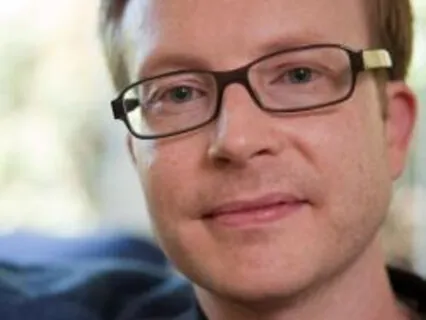
I'm Tom Evans and welcome to another Zone Show podcast.
I'm delighted today to be speaking with fellow insight timer,
Guided meditation teacher,
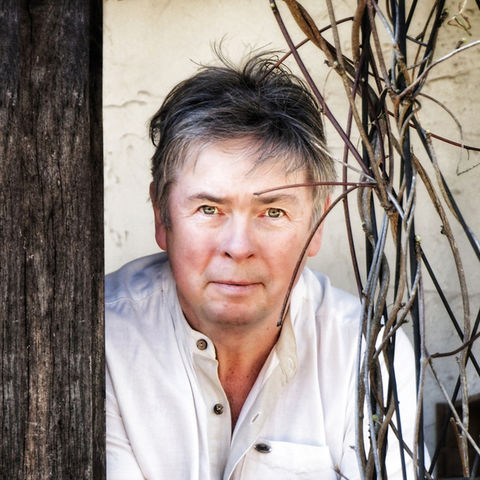
Elijah Goldstein.
Hi there.
Hey there,
Tom.
Great to be here.
Thanks for having me.
Well,
It's a real pleasure.
I'll tell you what,
People that listen to the Zone Show will know that I like a coincidence.
I sometimes get coincidences between guests.
So one guest follows another guest and there's some amazing connection between them.
But there's a lovely feature on Insight Timer now where outside the app you can go to the webpage and if you go to Insight Timer slash meditation hyphen teachers slash popular,
Scroll down a bit,
You'll find you and I right next to each other on the app,
Which I think is just amazing.
But also,
I was watching a YouTube video of you earlier about your route into mindfulness and we've got a similar route.
I'm Roman,
Ex-Roman Catholic.
You're from the Jewish persuasion.
And we both didn't find the answers there and went looking somewhere else,
Which is kind of interesting,
Isn't it?
And we both now ended up from these two different religious stanzas or upbringings to sitting next to each other on this app,
Which I know is fascinating.
So for people that don't know you,
How did you,
Well Mary can tell the story about how you ended up eating an orange in a mindfulness class.
Ah,
Okay.
Well,
You know,
It's kind of a funny story.
I mean,
You know,
I think like a lot of people,
You know,
They inevitably find mindfulness through their own suffering and confusion and various things of life that it's part of our common humanity.
And you know,
I was in the,
In the riding the high of the dot com explosion and I was at the same time just kind of,
You know,
Parting to a point of just massive abuse.
And so I just,
Something was,
Wasn't right there and actually had a family intervention and they had me go away to a,
It was actually a Jewish retreat,
A month long Jewish retreat and near outside of LA.
And it was there that I actually,
As you were saying,
Actually kind of challenged Judaism.
I was just challenged like everything I was brought up with.
I just didn't understand like what all the prayers were and what God was.
And I just didn't understand any of that.
And it wasn't until I ran to this guy there that he started kind of talking to me from more of a Kabbalistic stance of that,
Which was more of a,
You know,
A sense of universality of things.
And then he introduced me,
He was also a kind of a mindfulness teacher and he introduced me to an orange and he said,
Let's try and eat this,
This way.
I just want you,
Don't worry about what I'm saying.
Just have this experience and just see what you notice.
And I was pretty tense at the time because I was just confused and I was coming in from this place and I did,
I just,
I looked at it with a beginner's mind,
Just kind of noticing it for the first time and saw the dimples in the orange and peeled it and the zest that popped out of it and the membranes of the actual orange inside itself and then the juice splattering throughout my mouth and hitting all the different senses throughout my mouth and the best tasting orange I've ever tasted as it turned out.
And he said,
Well,
How do you feel?
I said,
My body is relaxed and this is like the best tasting orange.
And he said,
You know,
What would the days,
Weeks and months ahead be like if you had more of this in your life?
And that's when it was like a,
Just this like aha in my mind.
And so I had been reading about mindfulness before and I read it,
Reading about Eastern philosophy,
But I just hadn't really been practicing very much in that way.
And you know,
After I left there,
I left with sort of an integration sort of an awareness of mindfulness and a different appreciation of Judaism at the same time.
But it didn't take long for me to just kind of relapse into my old ways as it turned out.
A nice seed was planted for me,
You know,
While I was there.
But the environment we live in has a massive impact on,
You know,
What our brain chooses to move toward or move away from or say good,
Bad,
Right,
Wrong.
What it chooses to judge is massively impacted by our environment.
And so it was for me as well.
Going back into the same corporate environment I was in with the same people around me,
I just kind of fell back into my ways.
But I just will say that it wasn't all for naught because there was like a really wonderful seed that's planted.
And so but then slowly I started coming into more understanding and reading more about mindfulness and never really started surrounding myself around people and never really went back to a doctoral program that integrated mindfulness into its curriculum.
So my environment really shifted.
And so it allowed me to really soften into this space and integrate a greater sense of learning and experience.
And I never really came across MBSR and which your listeners may be familiar with,
Mindfulness based stress reduction,
Eight week program created by John Kabat-Zinn.
And the reason I came up around that was because I was looking for research that showed like how do you create sacred moments in life?
How do you I was deeply interested in helping people lead a more purposeful life,
More meaning and myself at the same time.
And that was the most research program out there.
And inevitably that's what kind of deepened my experience of mindfulness is more of a secular orientation from the get go.
And I think that's what allowed me to really talk about it in the way that I talk about it is because I don't really have necessarily I mean not that coming from a Buddhist background is a is a is a negative in any way.
It could be a real positive.
But to have the secular frame from the beginning allows you to understand,
You know,
How does this weave into my life and other people's lives who don't want the kind of the stuff that comes with it.
How did you end up sort of giving up the old day job,
The old stressful day job and actually making a career out of what you're doing now?
What was the segue there?
I think I knew when I went when I went away that I that wasn't for me anymore.
I just couldn't it just wasn't meaningful,
Wasn't you know.
And so I kind of knew I was leaving and I knew I was going to go back to become I wanted to become a psychologist because I wanted to felt more meaningful to me to help other people and myself at the same time and leading the lives they want to live.
And I just was what school did I want to go to?
It was really confusing at first.
My mom's a psychologist.
And so she always said there was a school called the Institute of Transpersonal Psychology in Palo Alto.
It doesn't exist anymore.
It was taken over by another company.
Now they're now it's called Sophia University.
But it it integrated mindfulness into its curriculum.
And and but my mom at the time told me don't go there.
You'll never get a job if you go to this this place.
It's not accredited by the American Psychological Association,
But just by Western Association of Schools and Colleges,
Which is an accreditation,
But not a psychological accreditation.
So I inevitably was on a sales call,
Went down there,
Talked with them and told them all my concerns.
And they just alleviated everything.
And I ended up going there.
And you know,
It ended up being an amazing opportunity because on the very first day I met my wife.
There you go.
We met on the very first day up there.
And so if it wasn't for that decision,
Then all these three boys I have in my marriage would never have been in this way that it is now.
So mums are not always right,
Then?
We love your mums,
But you're not always right.
I think she would say now that she would look back in hindsight and say,
Oh,
Yeah,
Okay.
So as mindfulness then is it to explore how it's been adopted over in the States to compare to over in the UK?
Has it become like a new pseudo religion for a lot of people?
Well,
I think actually,
This is a really good question because it's very interesting the direction it's taken.
You know,
I would say five years ago,
There was still was much more about like,
You know,
Practice,
Formal practice,
Meditation.
And then I think since the media has gotten hold of it,
It's become more informally based just in like kind of weaving it in everyday life.
And I even see,
Which is wonderful,
But in some ways,
But I haven't seen like leading teachers just saying,
Oh,
Yeah,
Just about like love,
Love in your everyday life.
And which is a wonderful message,
But it doesn't it's not sticky,
Unfortunately.
And if you look at the science,
The science shows that in order to really get the scientific benefits,
You know,
Out of this work,
You have to have a real combination of formal and informal integration,
Which means,
You know,
Sitting for a period of time,
You know,
Can be really helpful and supportive in terms in respect to the science.
But one of the things in the US,
I think that and I think actually around the world that's been is missing.
Because I wouldn't say it's become more of like a religion in some way.
It's turning into more of like a yoga type thing,
Like come in once a week or come in,
You know,
Kind of pop in,
Which is still good.
At the same time,
One thing that I've realized that's really important is that what really makes a difference for whether you're doing exercise program,
Diet program,
A program that you want to change anything is you need or what's really helpful rather than you need,
Because some people do this without it.
But for most of us,
We really need ongoing mentorship.
And that's what's been that all the if we look at like the millennia of varieties of spiritual traditions out there,
And we don't have to use the word spiritual for this,
But varieties of any kind of change program,
There's ongoing mentorship in some way,
There always has been.
And there's also a community that wraps around.
So if you were living and for most people have trouble maintaining a practice,
If you were living in a community where everyone around there was doing the things you wanted to do,
You wouldn't naturally do it.
It would make it so much easier.
And so what I've realized my aspiration in life right now is to help this world create more of those more people around us and to have more connections with people around us that want to do the things we're wanting to do.
Like,
So for example,
It's a meditation or mindfulness,
More people around us that are practicing mindfulness.
So it plays on our brains implicit biases have been naturally kind of drawn to do that kind of thing we want to do.
But to have people around us that will naturally lead us to kind of move into that.
So that was the big impetus for this for doing a longer for creating something that's a longer course than a lot of the six to eight week courses out there.
So I created this thing called A Course in Mindful Living,
Which is a six month course,
Because it gives people more opportunity to prepare the mind,
Go deeper into practice to make relational connections,
Which create social cues and environmental cues.
So that when they get as they're going through the program,
What happens is their environment and the people around them start to implicitly draw their brain to make a decision that,
Oh,
Yeah,
It's good for me to practice.
So I want to kind of do this.
So it makes it easier.
We oftentimes say in mindfulness,
Well,
It's simple,
But it's not easy.
I actually think there's a way to make it easier.
I really do.
And that's that's in creating the social environmental cues around us and in preparing the mind in a particular way.
Well,
I think that will absolutely make it easier.
People are wanting it.
I know I'm wanting it.
And if you live in L.
A.
,
You live in London,
You live in New York,
You live in certain areas,
Big cities,
You have a lot of opportunities.
And that's a key to the next evolution of me.
To me,
This big mindfulness explosion is to create better environments to trick the brain sort of work to make this easier to fall into.
So you could have,
For example,
Have a group of people that collectively said we'd like to do weight loss or we like to just slim down a bit and then they could collect they could use mindfulness techniques in that you could feel that want to perform better.
You could have artists,
You could have writers that want to be more creative and kind of which is kind of the point of my latest book on the theme,
Have practical outcomes that you're after in the real world.
And you just use mindfulness and meditation as a tool.
And I think it's worth just explaining to people that maybe have not dived into this whole field.
There's a difference between mindfulness and meditation,
Isn't there?
You can do one without the other effectively.
Sure.
But mindfulness just means awareness,
You're going to be mindful.
Yeah,
But then there's mindfulness meditation.
But then there's also some meditations that help which are formal practice.
There's also some meditations that help prepare the mind to integrate mindfulness better.
And that's what's not really being taught so much.
Those are important to kind of train yourself to actively relax your nervous system,
To train yourself how to be really have more clarity of attention,
To train yourself having better focus.
These all things prepare you to learn better,
Whatever it is,
Whether you're learning engineering or whether you're learning mindfulness,
Whether you're learning some other form of art history,
Whatever it might be,
Being able to kind of prepare your mind will actually help make things stickier.
And I will say even with the books,
Though,
What I'm suggesting is that you can use any of this to kind of facilitate greater integration in whatever you're wanting to do.
And it's our environments that actually doing things that get people around us in some way who will play on the brain's implicit decision making to naturally want to choose to do these things that actually create the change because it's only an experience that we change.
So our brain has to choose to have an experience over and over and over and over again to really create a habit,
To really create neuroplastic change,
To do any of that.
And it has to choose to.
We think we're so conscious and we're always choosing everything moment to moment,
But really like 95% of the time or whatever,
Our brain's making automatic choices constantly about whether to do something or not.
We're not totally conscious of it all the time,
But we can play on that if we understand that.
We can be smarter and more strategic about how we kind of set ourselves up to play on that implicit decision making.
And I think that's what I'm talking about is creating social and environmental cues that do that,
That play on the brain's automatic decision making power.
And would you say then that the investment you'd have to make,
People talk about doing 10 minutes a day,
Don't they,
And this sort of stuff,
In your experience,
If somebody just does a basic practice of a few minutes every day,
10 minutes,
20 minutes,
30 minutes,
Whatever they can spare,
How long does it take before they see the benefit and get that time back?
Well,
Jeez,
Well,
I mean,
It depends what you mean by benefit.
Sometimes people see a benefit like that.
And yet,
I don't think that momentary experiential benefit doesn't mean that they will automatically choose to do it again over and over again,
Or choose to,
It'll last the week or something.
I mean,
There's been studies that have shown four days,
20 minutes a day in practice has a statistically significant result on somebody's experience of physical pain,
Burn victims,
As an example.
When they have a heat rod put up to their burn,
Four days of that,
The perception of that,
The pain is drastically reduced.
So,
You know,
That's pretty impactful.
However,
I would say to really make a life transformation,
You need more time,
More consistency,
Like anything.
I mean,
Think about exercising.
If I'm going to go,
I want to really want to fine tune my body.
I have to go exercise consistently for months,
Probably,
Not just like a week or eight weeks.
Eight weeks isn't going to do it.
Eight weeks is going to give me a good experience and a good solid seed is going to have been planted and I've been watering it a little bit.
So I'm going to see a little budding root here and I can kind of notice that.
But that's not going to create ongoing,
Enduring life transformation.
So we need more time than that,
My experience.
It's not just mindfulness or meditation.
You can ask that question about anything.
And I think we can kind of apply mindfulness meditation to that.
Like exercise or having a healthy body,
Whatever it might be,
Learning something,
Creating mastery around something.
You know those days when you're in the dot com boom and I guess you must have been involved in the odd pitch to venture capitalists and that sort of thing in those times that many people get involved with and want to shape the form.
And they often say that you got like a,
If you met someone in a lift,
You had 60 seconds to do your pitch.
If you had someone in a lift right now and said,
Hey,
Just teach me some mindfulness practice.
Could I put you on the spot and give you 60 seconds on the Zone Show just to do a basic mindfulness stroke,
Meditative practice that would be useful to people listening?
Yeah.
So 60 second practice right now.
Yeah,
We'll do it right now.
We didn't plan this or rehearse this.
And I should say to everybody that's driving maybe to pull over at the moment for the next three or four minutes while we do this practice.
So first I begin by just kind of telling them that they're welcome to,
If we're in the lift,
They're welcome to kind of close their eyes.
This is an internal practice,
But if they want to keep them open,
They can keep them open.
It's kind of a gaze towards the floor is fine.
And I tell them to take a deep breath.
And then I begin also by just telling them to notice their body standing here.
And or if they're sitting down in the lift,
That's fine.
And I would begin by telling them to just gently scan their body and noticing,
Notice if there's any areas of tension or holding,
Including the face,
And see if they can allow that to soften or adjust their body for a moment.
Because we can begin this practice with a sense of kind of being relaxed because that helps us with our ability to attend and be here.
It doesn't matter whether the body is relaxed or just making a choice with this awareness to just soften the body.
That's the body softening.
Now just being aware of how this body is just naturally breathing on its own.
So without needing to manage or control anything,
Just noticing how this body just breathes itself and even being curious about where you notice the breath most prominently,
Maybe the tip of the nose or the nostrils or the chest,
Abdomen.
Just for a moment,
Practicing the sense of allowing this body to breathe itself and just being here,
Being aware of that.
And the prevailing attitude here is simply just letting be.
And so I'll leave you alone for the next 20 seconds to do that.
If your mind wanders off,
Just take note of that.
Just say thinking.
Just very gently come back,
Softening your body and coming back to this sense of naturally breathing.
And as we bring this practice to a close,
This very short practice,
Just this moment of acknowledging just the choice.
You made an active choice of just creating this space,
Taking this time for your own health and well-being.
So just some way of just acknowledging yourself for this minute of self-care.
And you're ready,
Allowing your eyes to open.
Well,
Thank you very much for this.
And just for people that are listening,
I always record these on Skype with video,
But I rarely use the video because,
You know,
People are driving,
They're listening to in the car and this sort of stuff.
So while watching you doing that,
It was amazing how your face softened as you guided people through that and your face has now remained soft afterwards.
So I'm going to cut that bit out of video,
If you don't mind,
And just put that underneath the podcast so people can just watch that one or two minutes because it's amazing.
And I don't know about you,
But I've found after meditating for many,
Many years,
It kind of keeps you young because your lines kind of don't build up as much,
You know.
So there's some real practical benefits from all of this,
Apart from just the state of mind.
Yeah.
And I could just,
I developed something strange about 10 years ago,
The ability to see the aura in people and it works over Skype as well.
And your aura was amazing over Skype too as you did that.
So thank you for sharing that moment with us.
So that was,
That's an example of quick mindfulness.
If you've only got a minute in a lift,
What happens,
I'm fascinated about what happens on this six month course,
Because a lot of these mindfulness courses,
Classically you say are eight weeks.
What are the steps that you take people,
Is it something you can do remotely anywhere in the world?
It's kind of a hybrid course.
So it's an online course,
But it starts off with me live with everybody and,
You know,
Kind of welcoming everyone to the course and kind of getting logistics and starting off with our initial practice.
Two weeks later,
Everyone is put into a local,
What I call mentorship group with a local mindfulness teacher,
You know,
In their region,
In their time zone,
More or less.
There are a couple of people currently in there that are,
You know,
In certain areas of the world that are more remote.
So they're kind of put into it in a mentorship group,
But live with a mentorship group up to about 15 people or so.
So but that's again live online.
So they get real individualized attention to support them in,
You know,
Their practice,
What's happening,
Question and answer,
Review of the material,
Obstacles that are coming up,
Insights that are arising from their peers and within themselves and getting support from that trained mindfulness teacher.
Then two weeks later,
They're with me.
Then two weeks later with the mentorship and on and on and on.
And while they do that,
They form these accountability pods,
Which is just peer based,
But they're for people that's optional,
For people who are really wanting to be supported with their practice.
So the pod checks in weekly,
Virtually,
And then they talk with each other once a month to again,
Really support each other with accountability around the practice,
Forgiveness around kind of going by the wayside,
But really deepening into understanding obstacles and how to overcome those obstacles.
And again,
Creating those environmental and social cues to help them really sustain their practice.
So the first six weeks,
So that's like the community and mentorship support,
Which is like a big part of this program to me.
That's like a big leading part of this program.
It's different than any program out there.
The curriculum is the first six weeks are teaching people to really prepare their mind again for learning.
And so what we do is we teach practices that actively relax the nervous system.
So we learn to get better and better actively relaxing our nervous system and learning how to focus and concentrate.
And then we move into mindfulness,
Which is a little bit of what we just practiced.
And then we move deeper into self compassion.
So we kind of have the mind part,
We have the heart starting to come in.
Self compassion and forgiveness really,
Because that's so critical to sustaining a practice is learning how to be easier on ourselves because then we can kind of get back on track.
Then we move into after that,
Some of the positive aspects of life,
Which is really being mindful and aware of things like joy and gratitude and going deeper into that with formal and informal practice.
Meanwhile,
Remember you're connecting with people and creating relationships along the way.
So then we go deeper into kind of deep compassion within relationships and sense of generosity and purpose and integrating that as well,
Your formal practice and informal practice.
And then the sixth month is really about learning how to settle into a great sense of inner peace,
A sense of abiding awareness,
A sense of equanimity and balance in life,
And really kind of making it all your own at the same time.
So we go through this really awesome curriculum and meanwhile,
Connecting with each other all along the way through mentorship and community.
So creating those relationships,
Which my hope is will help create those environmental and relational cues that will help make this all easier for a lot of people to integrate into.
Fantastic.
And when does that all start?
So it starts January 10th.
People have been coming in all throughout.
Registration has been open.
We have this holiday special that ends December 21st at midnight Pacific Standard Time.
So a little later out in the UK,
That bleeds into December 22nd.
After that,
If they miss that special,
Which is $96 off,
Then there's going to be a New Year's special after that.
It's going to be a little more expensive.
Then it'll be full price after that.
So if they miss it,
They're not going to miss entry into the program.
It's just going to be a little more expensive.
So if they're intrigued by this,
They can go to A Course in Mindful Living dot com.
They can get more information on it there.
And that's the space to register as well.
And now these podcasts have got a fairly long shelf life.
So if someone's listening to this six months from now or seven months from now or even the end of 2017,
Are you going to run them every year?
How often do you run them?
This is going to go over.
The vision for this program is going to continue on and on.
It's going to keep rolling.
Fantastic.
So yeah,
If you're listening to this in 2017 sometime or 2018 or whatever,
That website,
A Course in Mindful Living dot com,
Is going to continue to live there.
This program will still have registration open for the next one that's coming.
And we'll see what it evolves to at that point.
And what evolutionary steps are you planning personally for yourself in 2017?
This is a big one for me to really help facilitate a greater sense of community around this and mentorship,
Global mentorship.
For me,
I think that holds a great sense of purpose in my life.
Aside from that personally,
Personally a big focus of mine is really to also dive deep into bringing more,
Even increased amount of mindfulness into my family,
My family life,
My relationships,
Personally here.
Those are deeply meaningful to me,
My close relationships that I have in my life with my kids and my wife and my friends.
And so that's optimally important.
I'm also on a different end,
I'm also associated with some organizations that are trying to even explode this sense of dynamic mentorship,
Even on a greater level,
Which if that happens,
That'll then also be plugged into this course.
But to really make support and community easier for people to access.
Because I think relationships are really where change happens.
That's where we get supported.
That's where we get connection,
Which is the epicenter of feeling well in life.
Because that model you described,
Where global mentorship and then interspersed with local mentorship could work in any field of learning,
Couldn't it?
It'd be fantastic.
Absolutely.
I love it.
Well,
Listen,
It's been a real joy and a pleasure to speak to you.
And what's your own website?
What's the best place to find people about you with your books and other work that you do?
So there are two websites,
I would say.
The first one is a course in mindfulliving.
Com.
That's for the six month course.
And the second website is just ElishaBoltzking.
Com.
It's just my name.
Com.
E-L-I-S-H-A G-O-L-D-S-T-E-I-N.
Com.
And that has like,
Yeah,
All stuff about me.
Well,
Fantastic.
Well,
I'm absolutely overjoyed that we're rubbing virtual shoulders together.
Even though we've come through different paths.
And it's been a delight and a joy to speak to you today.
Wishing you a fantastic holiday and also a really successful 2017 as well.
And perhaps we could swap notes again at the end of this program to see how it's all gone.
That sounds great.
Sounds great,
Tom.
Thanks for having me.
Lovely to meet you.
You too.
Thanks for listening to The Zone Show.
And you can find loads of meditations and podcasts on the theme mindfulness at Insight Timer.
Com slash Tom Evans.
And you'll also find loads of books and resources on how to get in and stay in The Zone at my website www.
Tomevans.
Co.