Okay,
So we're going to turn our attention to tonight's guest,
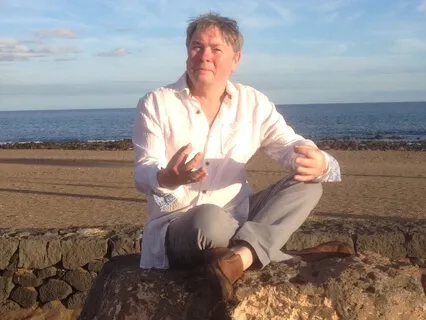
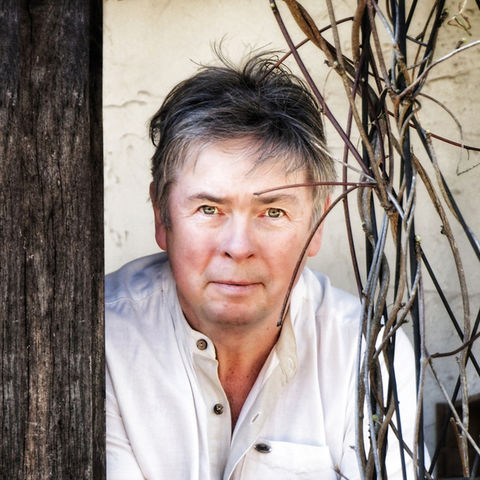
Tom Evans,
As I already mentioned.
Let me tell you a bit about Tom and then we're going to start our chat.
He's an ex-BBC TV engineer who became an author after he learned to meditate in his mid-40s.
As an engineer,
He has since discovered many practical benefits to mindfulness meditation over and above what you hear often,
Which is the benefits of stress reduction.
He teaches authors and artists how to channel and entrepreneurs how to generate light bulb moments on demand.
He has created the world's first time management program based on mindfulness called Living Timefully.
He's also the host of the popular podcast,
The Zone Show,
Which I had a wonderful time on with Tom and I'm so glad to reciprocate and have him on the show with me.
And on The Zone Show,
He explores how to get in and stay in the creative zone where that magic happens.
So,
Tom,
Welcome to the show.
Oh,
It's an honor to be here and belated happy birthday too.
Thank you so much and thank you for staying up in the middle of the night.
I forget exactly where you're calling from but I know you're across the pond over there in Europe,
Aren't you?
Yes,
Not far from London,
About 30 miles from London and about 2 p.
M.
Local time,
2 a.
M.
Local time over here.
Oh,
Wow.
Well,
Thank you.
Thank you so much.
You know,
Hopefully our conversation will keep you awake.
So,
You reinvented yourself,
Tom,
When you left your gig there with the BBC,
It seems.
Tell us a little bit about that.
What caused you to shift gears?
Well,
It was a gradual progression really.
I left the BBC actually in my 20s and I formed my own manufacturing business.
And I didn't realize at the time that what I was doing was having light bulb moments left,
Right and center.
I had several patents to my name and had a great career making widgets for broadcasters which I shipped all over the world.
And then in the early 90s,
I sold that business to another company,
Merged with another company and the Internet was coming about and I said to the MD of that company,
We need to get into the Internet and he said,
It'll never happen.
We'll never get video going over the Internet.
So I left and formed a new company to take advantage of that new technology.
And I guess in my mid 40s,
I didn't have that midlife crisis but a midlife hiccup.
And I just felt there was more to life and there's more to explore than the technology that I'd be learning for the last 20 odd years.
And so I started off in a new creative direction.
At first,
I thought it was just about authoring and helping people to write books.
I became an author's mentor and an expert at clearing writer's block and getting people into the zone.
And then my books took off and ended up with me running the podcast and actually becoming a meditation teacher.
I had no idea that's what I was good at.
So in some respects,
I don't really engineer my life nowadays.
I just allow life to come to me.
Wow.
You know,
What a gift.
We could all learn so much from you.
I think we get caught up in the rat race.
We're like the hamster on the wheel and we lose track of maybe what life is really supposed to be about.
And you sound like you've really figured it out.
Well,
I tell you,
I've really figured it out because in the back of all my books,
It says at the end of my biography,
Tom still doesn't know what he wants to do when he grows up.
And I'm bearing in mind I'm 58 now.
I found that allowing the world to come to you is a much better way.
I didn't plan to write a book.
I didn't plan to be a book coach.
I didn't plan to be a meditation teacher.
But all of those job titles,
If you like,
Seem to fit in very nicely.
And also they work very nicely with that earlier version of me,
Who's the techie guy,
You know,
Because I could find it very easy to edit my shows,
To put the videos together,
To engineer the the audio books and the meditations.
So it's almost like that early incarnation just emerged very nicely into the later incarnations.
I suspect also there's other things I'll be doing going on from here,
Too.
This won't be the end of it.
Well,
You know,
And I think there's something to seeing these opportunities,
You know,
Seeing the doors and the windows when they open,
You know,
Because sometimes we can have such a tunnel vision,
You know,
We can we can sort of miss the opportunities,
You know,
Maybe miss the clues that the universe is putting in our path that,
You know,
Might give us other options that might take us down more enjoyable roads.
I don't know,
As I'm listening to you talk,
You know,
That's kind of,
You know,
The deduction that I'm making,
You know,
That,
You know,
You had the courage to maybe take sometimes the path less traveled,
Maybe even do some things that were riskier.
But yet,
You know,
Maybe these things led to more personal satisfaction.
Absolutely.
I don't do what I consider working or because I just do what I enjoy doing.
But I think the main thing is that I've allowed people I work with to define how I can serve.
And so if someone says,
Tom,
I want you to be my author coach,
I'll be an author coach.
But if someone says,
I want you to be my mindfulness teacher or teach me meditation,
I'll do that.
Or someone says,
I want to you to help me set up a podcast because you've done it.
Will you do that as well?
And so I kind of allow the universe to define what it is that I am and what I am capable of.
I see.
I see.
That's cool.
That's cool.
I mean,
I know that's how I got back into radio.
You know,
I would I would I would do these interviews to promote my books,
Which I never really set out to to really write.
And I would have these producers say,
Well,
Do you have your own show?
And I'd say no.
And they'd say,
Well,
You should.
And by about the third time,
I really listened.
And this producer wouldn't take no for an answer.
And I don't know,
I think sometimes things just fall into our lap.
And we have to have the good sense to grab hold of them and see that maybe a gift of the universe,
You know,
Or it's the wisdom of the universe leading us in a,
You know,
In a direction.
So,
So,
Tom,
Your mindfulness meditations,
Was that I mean,
How did that even come about?
I mean,
Did you know,
Was that serendipity?
No,
I had to tell you,
It's a good example of what you're just talking about.
And I have to say that you're a natural conversationalist and presenters.
I'm glad that you took that back.
But yeah,
What happened was I,
I wrote,
When I started writing my books,
I thought it'd be useful if people could have practical tools in addition to the book.
So I,
All of my books have got like companion meditations that go with them.
Now I've never been to an ashram.
I've never studied mindfulness.
I've been on a course to teach myself meditation.
I channel in all the meditations.
And about a year ago,
In fact,
Exactly a year ago,
I got approached by this app called Insight Timer.
And they said,
Tom,
We've come across your work,
Would you upload a meditation to our app?
And I did that.
And then I found out that the things that I thought were accessories and augmentations of my books could stand up in their own right.
And I guess it was now a year since I've been on that app.
And we've had over 200,
000 listens in a year.
And people love it.
And it was the app that found me,
That then taught me that I wasn't a bad meditation teacher.
So it encouraged me to do even more.
In fact,
So much so that my next book is the first book where what I've done is I've not just put the book together and added the meditations to it.
I've actually made them an integral part of the book.
So there's 10 chapters and 10 meditations.
And each take you each chapter is accompanied by a meditation which really augments what that chapter is talking about.
And is that the authority guide to practical mindfulness?
That one of your new projects?
Yeah,
It's going to come out in October.
And it's the first book I've ever done where I'm doing the Kindle version,
The print version and the audio book version at the same time.
OK.
Or those,
You know,
These 10 practical meditations,
Are they all geared toward accomplishing different things?
Oh,
Absolutely.
Yeah.
The whole book's been a joy to put together.
In fact,
I've got to tell you,
I wasn't planning to write a book this year at all.
I was going to give my writing a year off.
And this publisher approached me and said,
Would you write it?
So I wrote the book very quickly.
One of the things I teach is how to bend time and get more things done in less time.
So there's a chapter that obviously I start out talking about the well-being aspects of meditation.
You know,
The fact that you are weller and you're healthier,
Then you get more time and productivity just from the point of view of spending less time off work,
If you know what I mean.
So it's a book aimed at business people,
But also at busy mums and stay at home dads.
And it teaches how to be lucky,
How to find your soulmate,
How to get more things done in less time,
How to be more creative,
How to get the left and right brains working together.
But also it redefines mindfulness as well,
Because a lot of mindfulness really talks about thoughts,
You know,
It talks about the processes that are in our heads.
But true mindfulness is really mindfulness of all our neurology,
Of our feelings,
Of the information that comes from our internal mind senses like our heart and our gut.
But also,
As you know,
The information that we get from outside our brain and really acknowledgement that our brain is not just a generator of thought,
But also a receiver of thought.
And when we get into that channeling space where we can receive the divine wisdom,
We kind of transcend what we're capable of as humans.
Well,
I mean,
It sounds like all the different things you're covering that book.
It's kind of like a how to really just sort of get your life in order.
I mean,
You're covering it all.
Yeah.
And the key is 10 minutes a day.
That's all it takes.
There's 10,
10 minute meditations that come with the book.
And if you just do one of those for 10 days,
That's all it takes to learn this meditative practice.
So are you reading the meditation or are you actually hearing it?
I mean,
Does it have an audio file attached?
Yeah,
Absolutely.
So in the audio book,
It's an integral part of the audio book.
So it goes chapter meditation,
Chapter meditation.
If you get the Kindle version or the print version,
Then you come to my website and you can download the meditations.
Okay.
So,
Tom,
For people who are hearing mindfulness,
How is mindfulness different from the different types of meditation that are out there?
We've heard about transcendental meditation and all of the other ways to meditate.
Is it different?
Yeah,
I think it's very important to define the term because it's really come in vogue nowadays.
Obviously,
It's got roots in Buddhism.
And I think it's really important to realize that you can be mindful without meditating and you can meditate without being mindful.
And mindfulness meditation as a term has got a different connotation as well.
So mindfulness really,
In some respects,
It's been hijacked,
You know,
And people are kind of trying to use it as a motivational carrot and stick nowadays.
So mindfulness really is it's been hijacked.
But what it means is just being thoughtful,
Being,
I guess,
Empathic,
Caring and compassionate.
And then meditation is the process of accessing the mindfulness state.
And then when you put the two things together,
Then you've got this state,
A mindful state.
Well,
I got two other terms that which I use,
Which is timefulness.
So being mindful of how you invest your time.
And also when you start to generate more time,
You can have more time to be kind to yourself and also more time to be kind to other people.
So I've also made this other term called kindfulness.
And when you're mindful,
Time full and kind full,
Then you end up in a new way to be.
And also then the world is kind of back to you.
So it goes like in a full circle.
Yeah.
Well,
You know,
Some people I know talk about the threefold law and supposedly what you put out comes back to you times three.
So,
You know,
If you're mindful,
Time full and kind full and you get that back times three,
You wouldn't be doing too bad.
A good investment nowadays when you're not getting much out of the bank.
Maybe you get one percent out of a bank,
Then how about getting 300 percent?
Absolutely.
Shoot,
I don't think we even get one percent.
You know,
Here you get a fraction,
A fraction of a percent.
So you talked about bending time,
You know,
Without asking you to give away too much.
Can you maybe just give some tips on how we can actually achieve that,
You know,
To actually bend time to have more time?
I mean,
And are we really getting more time or is it the illusion of more time or does it matter?
I'll turn it around the other way.
But first off,
I'm going to say that I don't mind giving things away because I don't know if I give things away,
Then stuff comes back in that threefold manner.
So I'm going to tell you actually how it's done.
There you go.
So I'm going to tell you how it's done.
So the way it works is this is that the neuroscientists have yet to find the clock in our body.
And time is a manmade thing.
You know,
Before we were around to observe time,
Time didn't really exist.
I've written a whole book on it called Managing Time Mindfully.
And what I do in the books in four quarters,
The first quarter,
Is where did time come from?
Where did,
How did we start to,
Not just before clocks and humans were around,
What was the clock of the universe,
You know,
And our clocks,
The only clocks that we really got which are real clocks are the rotation of the Earth,
The rotation of the moon around the Earth and the rotation of the Earth around the sun.
They are days,
Moons,
Not months,
Moons and years.
Everything else,
Seconds,
Minutes,
Hours,
Weeks and months,
They're all made up so we can run our modern day society.
And as we made them up,
We can unmake them as well.
So the first thing that happens with time is it's actually,
We perceive it in different ways.
Our left and right brain perceive it in different ways.
So our left brain sits inside space and time and our right brain sits everywhere and every when else.
Our gut mind sits five seconds ahead of time,
Which is why we should always trust it because it knows what's,
What's coming along.
So we've got different bits of our body that are sinking in different ways.
But the main clock,
The main thing that drives our speed of time and our perception is our breath.
So if we breathe slower and you don't have to breathe slow all the way through the day,
You can just do sort of seven or nine deep belly breaths really using your diaphragm.
That's enough to slow time down for you for the rest of the day.
And also if you get into a position where something annoys you and you can get angry and then start to waste time by,
You know,
Starting to create an incendiary kind of situation.
If you just breathe slowly for a while,
It has the effect of slowing time down.
And a good way of explaining how this works is that our natural lifespan is about 50 to 60 years.
It's only our sort of modern medication,
Sanitation,
Certainly in the Western world that's increased that lifespan.
But go back 200 years,
Then we were living for an average of 50,
60 years.
And our breaths,
The rate of our breath is 12 to 15 times every second.
An elephant lives for 90 years and it breathes around eight times,
Not 12 to 15 times a minute.
So we are now 2.
30 a.
M.
Over in the UK.
So sorry for getting that wrong.
So 12 to 15 times a minute.
Elephants breathe for around eight times a minute,
Live to about 90 years.
And a giant tortoise breathes for four times a minute and lives up to about 150.
So the speed of our breath is one of the main things that drives our perception of time.
Wow,
That is really interesting.
That is incredibly interesting.
I'm going to start thinking about that.
Wow,
That's so cool.
And you know,
You ever done this Karen?
You've been late,
You're driving somewhere and somehow you just get to the end destination just in time.
Yeah.
And the ways you can do that is instead of panicking,
If you just breathe slowly,
The lights go on green for you.
When you get to where you're going to get to,
There's a parking space right outside,
Parking bay right outside.
So the breath is one of the biggest drivers to our perception of time.
Interesting.
That is really incredibly interesting because,
You know,
You would think when you start to get stressed and you panic,
That's sort of when you freeze and you stop breathing.
But you're saying,
You know,
Slow down,
You know,
Breathe more intently and,
You know,
That sort of,
You know,
Makes things flow so much better.
It does.
And then you can get more specific than that.
We can integrate the way the left and right brain work together better by nostril breathing through alternate nostrils.
When you are stressed,
You tend to breathe just with what's called the intercostal muscles.
So you breathe very shallowly and you can hyperventilate.
But if you want to use the diaphragm and really let your belly expand on the in-breath and then completely contract on the out-breath,
Then that has that ability to one,
Calm you down,
Two,
Energize the neurons in a much better way as well so you can be more creative,
And three,
Slow the perception of time down so you get more things done in less time.
Well and,
You know,
You're making me think about,
I mean,
You breathe like that when you're doing Tai Chi or yoga and,
You know,
Maybe that's,
You know,
That's all part of the reason when you do some of these other modalities,
You know,
You feel so much more grounded and peaceful and maybe you don't even realize it but you're slowing down,
You're slowing things down.
Yeah,
And I'm not like inventing anything new.
These sort of things have been around for thousands and thousands of years.
All I'm doing is bringing it into a modern day context that's sort of usable for people in a kind of creative and business sense.
But something more subtle happens when you do that as well.
Not only do you change your own perception of time but external events seem to happen just in time.
So you spend less time.
For example,
With this book,
If I wanted to write this book and put it out to a publisher,
I could have sent off,
You know,
30 proposals to publishers and maybe I get sort of 20 no replies and nine coming back saying not for us right now.
But what I did with this book is I just put it out there that it'd be nice to have a book that had meditations as an integral part of the book and the publisher found me.
We saved a lot of time.
Yeah,
Yeah,
Absolutely.
I see what you're saying.
Wow,
If I could figure out how to use that for some things I want to manifest.
Well you know,
Maybe that's my next question.
You know,
One of the things you had in your,
You know,
On your checklist was,
You know,
How we can,
You know,
Use mindfulness to create abundance to manifest.
How do you,
You know,
Just by being mindful,
How do you create abundance?
How do you manifest things?
Well,
That's kind of interesting really.
One of the things with our head is that it,
You know,
When people talk about the law of attraction and stuff like that,
You might say,
Well,
If I have a vision board and I've got my Ferrari on there and my two million dollar house that overlooks the Pacific or something of that sort of nature,
Then what happens is that our head puts that thought out and we might be looking at,
We might get some of that.
We might not get a Ferrari,
We might not get a two million dollar mansion,
But we might get somewhere like it.
But at the same time we do that,
Our lower mind centers put out the fear that we might not get it.
And so we've got to be mindful that the thoughts don't just come from our head,
They come from our whole neurology.
And actually the place where we can be truly mindful is to when we,
When we set our consciousness in our heart.
So what we put out there is not the Ferrari and the mansion,
But what it will allow us to do when we achieve those things.
By the way,
I'm not advocating that everyone gets Ferraris and mansions overlooking the Pacific coast.
But if we put out to the universe and we're mindful about our purpose and how we can serve,
Then what the universe does is then delivers for us exactly what we need.
And if we have two,
Instead of having two thought forms that are out there,
One is the desire for something to happen and then also the fear that it might not happen,
They can kind of interfere with each other.
We just put out the one thought form,
Which is the,
Our intention of how we'd like to serve.
Then we end up with a completely different situation and going down new paths that we wouldn't even imagine.
Well,
You know,
What you're saying reminds me of something my husband always says,
You know,
He always feels like he can maybe manifest something if it means it's being in service or it's for someone else,
But he always feels like it's more difficult to manifest something for himself because it's like self-interest,
You know,
It's,
You know,
Maybe it's selfish.
Is that sort of thinking at,
You know,
Part of why you think your system works?
Well,
No,
Because I would actually slightly disagree with your husband.
It's lovely to be selfless and it's lovely to serve and I like to think that I do both of those things,
But also we live on a planet of abundance and there's enough for everybody,
There's enough for all 7 billion people on this planet,
If only we are collectively mindful about it.
And you know that idea that if a plane depressurizes,
They say put your oxygen mask on first so you can help other people.
So by demonstrating what abundance is all about,
You can actually help a lot more people by doing it.
I don't mean,
You know,
By making lots of money and giving it all away to charity or anything like that,
But just by showing that there is enough and that there's a nice way of living a balance,
Which is ethical,
Ecological and sensible and practical,
Then I think we can show other people the way too.
But the real trick,
The real trick is to be mindful that more than our head generates thought forms into the world and thought forms reflect back at us.
So if you've got the idea that you have a desire for something,
But also if you didn't get it,
Then the thought form that you have a lack would also go out there.
By changing that modality and moving our consciousness to our heart,
We can achieve amazing abundance.
Okay.
And explain one more time how do you,
How you shift the sort of the negative thoughts,
The fear,
The,
You know,
The part that's in your gut that has you worried you won't get it.
How do you shift that so that it doesn't block you?
Well,
What I've done is I've put a program together called Heartful Living and it's really a great example of practical mindfulness.
About two months ago,
I had my cataracts done and I was on the operating table and I said to the surgeon,
You know,
I suppose I don't need any more eyes,
He said,
No more eyes to do yet.
And he said,
No,
That's you for life now.
These new lenses will last you for the rest of your life.
And at that very moment,
I realized that we have another eye,
It's called the third eye and that can be cloudy too.
And I realized that this program that I'd already designed called Heartful Living,
Which teaches you how to become aware of these other mind centers is the key to doing this.
And what I've done is I've set up a whole philanthropic movement now based around it because I found out that for less than the price of the program,
There's a train that goes around India and a hospital boat in Bangladesh and a tented hospital in Nepal where people can have their real cataracts healed and cured for,
You know,
Just the price of a few cups of coffee basically.
So,
What I'm doing at the moment is I'm using the Heartful Living course to help people in the developed world to really get this new level of mindfulness installed inside them at the same time for everyone that buys that course somewhere in the developing world will have their cataracts cured.
So,
It's a nice sort of a good,
Really good example of how we can create spirals of abundance in an environment where we're actually,
Our economy is based on spirals of debt,
You know,
Based on selling debt.
And what we're doing here is we're actually,
People in the Western world are improving themselves and awakening at the same time someone in the developing world who could,
If they lost their sight,
They didn't just lose their sight,
They lose their livelihood,
Could get their sight back again.
And it's a good example of how we can work together on this planet,
Which is an amazingly special planet to help everybody on the planet.
Yeah,
Yeah,
I get it.
So,
In other words,
It's sort of like part of the proceeds when they purchase the program is then donated to the folks in India.
That's how they get the cataract surgery.
For sure,
Yeah.
Yeah,
And it's just done,
We've been running the program for just two months now and right now we've done 20 people.
So it's a 20-20 vision success at the moment,
Which is just fantastic.
Yeah.
And here you go again.
So you're creating something and it's reaching out,
It's like it has these tentacles,
Rather than just help the people who buy the program,
There's this extra layer to it that helps these people in this,
I don't know,
Is India considered a third world country?
I don't know.
You know,
It helps them do something they might not otherwise be able to achieve themselves with the poverty in that country.
Exactly.
Parts of India are a third world company,
Parts aren't.
And also I'm not going to restrict it to that because I've got loads of other programs as well.
So I'm just going to run this program for a few months to get it really internationally recognized.
And I've got other programs that help with ADHD,
OCD,
PTSD.
I've even got some meditations that could help with dementia as well.
And also my time for living programs are very useful for people that might have terminal illnesses to get the best out of the time that they have left.
So I want to look around,
Now I've started this program,
I want to look around for other areas where my programs can have a philanthropic output too.
Well and you know what you're making me think about Tom,
You know I think sometimes it's so quick for us to forget.
This whole idea of philanthropy,
You know,
We all know that we feel better when we give but yet we're living in this world of greed.
You know,
That seems to be the new God,
You know,
Greed.
And I don't know,
You know,
Sometimes I feel like these people that are so motivated by greed they must have a big hole inside them that they can never feel.
That it seems to me,
Maybe if they were doing the opposite,
Maybe if they were actually doing some philanthropy like what you're talking about,
You know.
I don't know,
It just feels like that's the healing balm for humanity.
You know,
If we find ways to be in partnership like I was saying,
You know,
To take care of one another.
You know,
If that were,
You know,
Sort of the idea that we're taught,
You know,
If that were the thing that was in vogue,
You know,
Rather than greed is good,
Wow,
You know,
Wouldn't this be a happier place to live?
Yeah,
And you can't take it with you and if you've got the slightest notion that reincarnation might be in operation,
You can't come back with the money you've earned in this lifetime into the next lifetime.
But the one thing you can do is leave the world a better place when you depart this mortal coil so if you do come back again it's a better world to come back into.
Yeah,
Yeah,
And if you believe in karma too,
You know.
Wow,
Yeah,
Absolutely.
So you know,
Another part of this mindfulness is the whole brain thinking,
Getting the left and the right brain working together.
Do you want to speak to that a little bit and then also the whole mind thinking?
Yeah,
And it's kind of part of this new book and also my book on Managing Time Mindfully.
You know,
Over here we have GMT which is Greenwich Mean Time and you have PST,
Specific Standard Time.
And you come up with a new acronym which is EMT and it's Extended Me Time.
And what happens is when you get the left and right brain working together,
You get into this lovely zone state and by controlling your thoughts,
That internal chatter that goes along,
You know,
The human mind can only have one thought at a time so if you think about what you're thinking about right now,
Then you lose the thought.
And so if you're worried about what you're doing tomorrow or thinking about a conversation that you had yesterday that didn't go so well,
You'll lose focus and efficiency on what you're doing right now.
So what mindfulness meditation does is allow you to not have no thoughts at all but just choose the ones that you're having.
And so if you're writing a book or you're being creative and I don't know,
Working on a sales proposal or something like that,
Then learning to be in the EMT state which is when the left and right brain are operating at the same time on the same thing,
It's a really useful thing to do.
And then you can add to that then this whole idea of the whole mind state.
So if you think something's a good idea and your heart is in love with it and your gut says yeah,
I'll give this a green light,
You are absolutely unstoppable.
So getting your head,
Your heart and your gut in alignment is really,
Really important.
And you,
How many times have,
I'm sure you've said this and I've done this,
You say,
I've said,
I wish I trusted my gut,
I wish I followed my heart.
And if we do that every single time,
We will save time.
And if you think that it's a good idea but there's something not quite right about it,
You can consult with your lower mind centers,
You can consult with your heart and say,
Okay heart,
You're not totally into this,
What would have to change?
So you would fall in love with it.
And you can consult with your gut and say,
Okay,
You're not giving me the green light here,
You're saying this is something a bit slightly wrong.
What would have to change so I could get your green light?
And these are techniques which are really easy to learn.
I've just given you how to do it.
It's just imagination.
I've got meditations that teach it in more depth.
But the principle is just talk to your heart,
Talk to your gut as if they're active mind centers and you'll get the answer back very,
Very quickly.
Well,
And I mean just in this brief conversation,
I mean I think it comes across incredibly clear what a creative guy you are.
So obviously what you're doing,
What you're trying to teach people,
It certainly works if you're an example of it.
Yeah.
I mean this latest book,
I wrote it in less than a month because I get into the EMT state when I write these things.
It's an eyes open meditative state.
And I wouldn't have the audacity to teach it if I couldn't do it myself and taught lots of other people how to do it already.
Yeah,
Yeah.
Well,
All right.
So I mean I'm sure most of my listeners,
I mean this has all been very interesting,
But the idea of finding your soulmate using mindfulness techniques,
You know,
That's kind of a different approach.
So how do you connect those dots?
Well,
Again,
It's all about putting your consciousness into your heart.
But actually a very specific technique which I teach is how to use the heart as an attractor.
And basically the way it works is this,
Is that if you don't totally love yourself,
It's pretty,
It's a hard ask to ask anyone else to love you.
If you don't love what you're doing,
Then again,
It's a hard ask to get people to love you.
If you don't love what you're saying,
Again,
It's a hard ask.
So it's all about getting yourself into a state where you love yourself,
Which is not a narcissistic way,
You know,
Taking selfies all day and putting them on Instagram and that kind of thing.
It's about loving who you are,
What you represent,
The stuff you do,
The people that you're with.
And when you're in that mode where you totally in love with what you do and who you are,
Then what happens is your soulmate just turns up out of the ether.
And I've lost count of the number of people now that I've taught this to.
And it's actually one of the,
I've got a real success on my hands.
One of my clients got married about a year ago and she's just delivered her baby.
And all as a result of learning how to love herself totally in that non narcissistic way.
So it's about being,
If you like,
Mindful about what love means to you,
Mindful about what,
How you could love and be loved.
And it's not about going out,
Kind of speed dating and all that kind of stuff and using these apps like Tinder.
It's using the power of the heart,
Which is so,
So powerful.
The HeartMath Institute now really knows that the heart is a powerful neurological center.
Once we move our consciousness to it and kind of do some neat little tricks.
So I teach everyone not to have a to do list and just to have a to love list.
And when you've got a to love list and you're doing all the things that you love to do,
It's amazing how the world around you responds to that in kind and actually delivers for you even more things that you love to do,
Including your soulmate too.
Yeah.
Well,
And you know,
You're making me think about something.
You know,
They always say,
You know,
You find someone when you're not looking.
You know,
They say,
Go out and do the things you like and Mr.
Right or Miss Right will appear.
And it's probably because of what you just said.
If you actually are out there being happy,
Feeling fulfilled,
You know,
You're putting out that different vibe,
You're putting out that different energy rather than the sort of desperation that maybe is the energy you put out at speed dating,
For instance,
You know,
Or frustration or cynicism,
You know.
But if you're out there enjoying something that floats your boat,
You know,
You seem a lot more attractive to someone else,
You know,
Because they're picking up on that positive vibe you're putting out.
Yeah,
Absolutely.
If you've got thoughts of lack of self-worth and neediness or if the speed dating thing is that,
You know,
Lack of time,
I've got to do this really quickly to otherwise I might miss out.
And so those thoughts attract people with similar thought forms.
But if you say you go and I don't know,
Get involved with a local choir or get involved with some sort of outdoor activity or even work at a charity shop and that kind of thing,
You know,
Just find that magical soulmate just walks into your life out of the blue.
It's happened so,
So many times now to people that have been listening to the Heartful Living course,
Which is just amazing.
Okay.
And if somebody wants to find your Heartful Living course,
How do they locate that?
Yeah,
Just come along to my website www.
Tomevans.
Co.
That's not.
Com or.
Co.
Uk,
Just.
Co.
And you'll pretty much find it all the way through there.
And my campaign is called the I Love campaign,
Which is lovely.
E-Y-E-L-O-V-E.
So if you go to tomevans.
Co.
I love,
You'll find out all about how you can remove cataracts in your third eye and how that helps people remove cataracts,
Real cataracts too.
And by the way,
If anyone has got any other charities where they're doing this elsewhere,
Maybe in South America or other places or in Africa,
I'm very happy to align these campaigns with other charities.
So this was just,
I just knew about this train that went around India and the charity that runs it,
Would you believe is 20 miles from my house.
So again,
It's serendipity in action.
Once you get the intention for an idea,
Then all the things that you need to deliver it just turn up out of the blue.
Yeah.
Wow.
Okay.
And I want to know more about how to channel and become an oracle too,
If you feel like you have a little bit more time for us tonight.
Yeah,
Sure.
Well,
Basically,
Again,
This is all about a cloudy third eye.
If you've got a cloudy third eye,
Then that blocks any external thought forms coming.
So our thoughts,
Our thoughts come from three places.
They come from our senses and in a mind centers from the heart,
The gut,
From the sacral and root and root minds.
But they also come from the collective mind as well.
And if you think about it,
The collective mind sits outside space and time.
And so into the collective mind is all wisdom,
Past,
Present and future.
And one of the things I teach people to do is to channel their future self.
Your future self knows the book you haven't written yet.
It knows the answers to the question that you're asking right now.
And so if you go into the future,
The near future,
A minute from now,
10 minutes from now,
Or let's say a year from now,
When this book you want to write has been published,
You can actually bring this information down really,
Really quickly.
And as it comes from outside space and time,
Then it also comes into this EMT state.
You end up in this EMT state where time takes on this ethereal,
Squidgy kind of quality.
And this information comes through your crown into your third eye and then out through whatever your art form might be,
Whether it's painting,
Writing,
Singing,
Creating musical or whatever,
Or writing that sales proposal.
So it's having an open mind,
An open crown,
Having a clear third eye,
And also using then the left and right brain together is all of those things.
And again,
All you have to do if you want to channel something is to ask the question.
But the quality of the question is really,
Really important.
So if I said,
For example,
Should I write book A or book B,
Then I'm actually kind of making things a bit unclear.
So it's best to write,
Should I write book A and then get a yes or no.
Should I write book B,
Get a yes or no.
And if you get two nos,
So don't write book A,
Don't write book B,
It's possible that you should be writing book C.
If you get a yes,
Write book A and write book B,
Then you ask another question of,
Should I write book A first,
Yes or no,
Should I write book B first,
Yes or no.
So with oracles,
The key is in asking the right question.
And there's an art in asking the right question as much as there's an art in receiving the answer.
So it sounds like,
At least the way you're phrasing the questions,
You're asking very simple direct questions rather than convoluted questions.
For sure,
Yeah.
So should I marry soulmate A,
B or C that I met at speed dating?
You're not going to get the right answer.
So you got to say very,
Very specific questions about what you're trying to achieve.
And also just break it down simply.
But when you end up in,
When you channel a lot,
When you get into the state where stuff comes in and you practice it,
It becomes second nature.
So you know,
You know when it's right.
You know when,
You know,
When we first spoke to each other about being on each other's podcasts,
Then I didn't need much convincing to invite you on as a guest to my show or when you kindly invite me back on again onto your show.
I didn't have to spend much time consulting.
You know,
After a while,
A bit like riding a bike,
You just say,
Hey,
This sounds great.
I'm going to be there.
Yeah.
Well,
I think you,
You know,
You,
You know,
It makes me think of that cliche saying,
You know,
You just trust your gut.
You do.
Yeah.
Yeah.
Well,
It's got,
It's got heart and head and then having an open mind so you can get unlimited wisdom coming in as well.
And most of my,
Most of my meditation,
Most of my books,
Most of the stuff that comes in,
It comes in from the collective mind.
You know,
It comes in through that,
That channel route.
So it was often I'd write something down and I'd go,
Oh,
I didn't know,
I didn't know that,
But it sounds good to me.
So let's put that into this book or put it into that meditation.
And that's because I,
You're open again to receive.
You're open to receive not just sort of good fortune in this world,
But also to receive good information too.
Okay.
And,
And,
You know,
I,
I hope this isn't a curve ball and please feel,
You know,
That you don't have to answer and it's,
And it's okay.
But you know,
I guess I,
I'm just curious,
Do you have a,
Do you have a spiritual belief,
You know,
Are you of a particular religion or any religion at all?
I don't know why I'm asking you that,
But suddenly it's just hearing you talk,
You sound like such a wise man.
And you know,
I'm just,
I'm curious,
I guess.
Oh,
Feel free.
It's not a curve ball at all.
Feel free to ask the question.
I was raised a Roman Catholic and I kind of lapsed in my,
My mid teens.
Um,
And I had,
I was pretty suspicious of most religions since then.
I'm not a great fan of dogma.
Um,
But I'm also a great believer in everybody has the free choice to follow whatever creed that they believe.
Personally,
I am,
I,
I might,
I'd be called probably an agnostic humanist.
So I don't,
I don't believe in a,
In any particular religion,
Religion.
I'm open to all,
But if anything,
I'm probably what you call a pantheist.
I see God in everyone and in everything.
So God is in,
In,
In the earth,
In the sea,
In the air,
Uh,
In the sun,
In the stars,
The moon and the planets,
Uh,
And in all life forms and in all,
In all beings.
So it's quite a Buddhist philosophy in a way,
But I wouldn't call myself a Buddhist either.
So,
Uh,
So I'm,
I,
If anything,
I'm freelance and fairly maverick.
Does that answer your question?
Yeah,
It does.
Sounds like you're,
You're in a,
You're a wonderful eclectic.
Um,
Well,
Tom,
That,
That,
That feels like a very positive note,
Uh,
To end this very interesting conversation on.
And,
Um,
I,
I keep getting this,
Uh,
I have to tell you,
You're probably going to laugh,
But I keep,
Uh,
Thinking,
You know,
I bet,
Uh,
Tom has an incredible following.
I bet people call him,
Uh,
Their guru,
You know,
I,
I could,
You know,
You,
Uh,
You seem to make this all,
Uh,
Seem so simple and it feels like you just,
Um,
You know,
Have the technique down and,
Uh,
I don't know,
I think I'm just going to start calling you guru Tom.
I must tell you,
You're funny as you've ever got time.
You know,
Harry Potter in Harry Potter,
There's the grand wizard Dumbledore.
Uh huh.
Yeah.
So I've got some clients that call me Dumbledore,
But by way of balance that the weekend,
My,
My lovely life partner calls me Dobby the house elf,
So,
Uh,
That kind of grounds me.
I hear you.
I hear you.
Um,
Well Tom,
Is there anything you wanted to share with listeners that I didn't think to ask you?
Not at all.
Just as,
Oh,
I will say I want to think actually because insight time with the lovely people insight timer,
Um,
Uh,
Found me,
They,
They discovered that,
Um,
That my meditation seemed to be fairly world-class and I've got loads of meditations on there.
The app is free and my meditations are free as well.
So this isn't all about,
Uh,
Is,
Is not all about moving money around the planet and that kind of abundance.
And so if anyone wants to listen to my meditations for free,
Um,
One of the aims of insight time is to get the whole world meditating one person at a time.
And I'm honored to be part of that movement.
I really am.
And,
And again,
One more time,
Do they find these free meditations at Tom Evans dot CO?
Yeah,
They can all the free meditations go to insight timer.
Com and there's an app for iPhones and app for androids.
Um,
And also I've got links to insight timer through my own site and my Twitter account on Twitter.
By the way,
I'm called the book,
Right?
Like playwright book with a book in it.
Uh,
Cause uh,
When I started out on this path,
I started helping people write books,
But now the book I work on is the book of someone's life as opposed to the,
Um,
The book books.
So I work a lot with people comically,
Uh,
Helping them get on their path and finding their place in the world and their purpose.
Okay.
Well it,
Uh,
It sounds like you have a pretty incredible life,
Tom.
Uh,
Honestly it really does.
Uh,
I,
God,
I wish,
Uh,
I,
I,
I wish you were my guardian angel,
You know,
To,
Uh,
You know,
To put my life on track.
I'm sure all of my listeners out there are shaking their head going,
Yeah,
Yeah,
Uh,
We wish we had him in our back pocket.
Um,
Well,
You know,
Thank you.
Thank you for doing what you do out there.
I mean,
You're,
You're obviously reaching so many people,
Uh,
Doing so much good work,
So much good service,
So much philanthropy.
Um,
You know,
I,
I,
I just,
Uh,
Wish you well,
Uh,
You know,
And,
And what you put out,
May it come back to you three fold.
Thank you very much.
It is a joy and a pleasure and an honor to be on the show.
Thanks for asking me.
And,
And I really do appreciate you staying up in the middle of the night,
Uh,
To talk to my listeners.
Uh,
It's been a very worthwhile conversation.
Thank you so much,
Tom.
Thank you so much.
Bye.