Hello,
And thanks for listening.
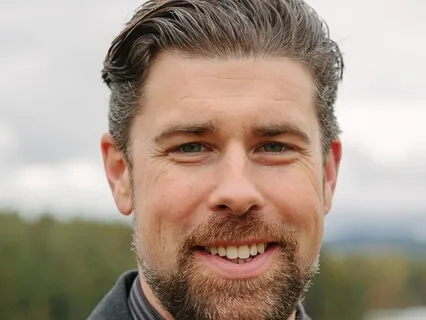
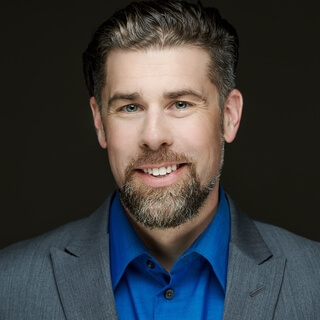
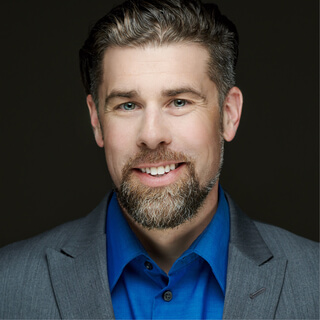
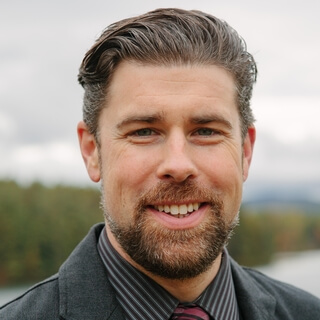
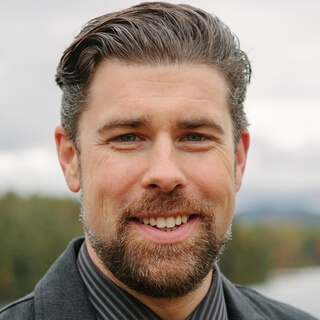
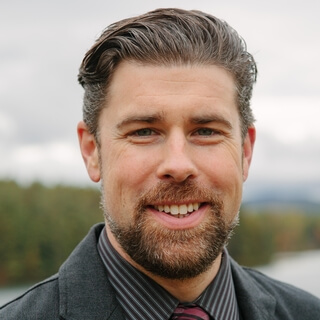
My name is Dr.
Tom Buschlak,
And I'm both a professor of theology and a commissioned presenter of the introductory workshop on Centering Prayer developed by Contemplative Outreach.
This talk is intended to introduce you to the method and theological background of Centering Prayer,
A popular form of contemplative prayer in the Christian tradition.
I have been practicing Centering Prayer for two decades after I was introduced to the practice in college from the Benedictine monks and sisters at St.
John's Abbey and St.
Benedict's monastery in Minnesota.
The practice has enriched my prayer life,
Deepened my personal relationship with God,
And has been an integral part of my ongoing healing from severe anxiety,
As well as the daily challenges of balancing family with work,
Career,
And the daily struggle for balance and peace of mind.
I hope you find this presentation both informative and to be a real support in developing your own practice,
As well as for opening to and consenting to the divine indwelling within.
In this presentation,
I will describe what Centering Prayer and Meditation is,
How to practice the method of Centering,
And I'll conclude with some practical considerations for beginning and developing your own practice.
First,
What is Centering Prayer and Meditation?
Centering Prayer and Meditation is both a relationship with God or the Divine Presence,
And a discipline to foster that relationship.
It is a method that prepares us to receive the gift of the Divine Presence,
Traditionally called Contemplative Prayer in the Christian tradition.
It consists of responding to the Spirit of God by consenting to God's presence and action within.
Centering Prayer and Meditation facilitates the movements for more active modes of prayer into a receptive,
Silent form of prayer.
It is drawn from ancient practices of the Christian contemplative heritage,
Such as the Desert Fathers and Mothers of the Third and Fourth Centuries,
The Cloud of Unknowing,
A 14th-century text from an unknown mystical writer,
And the writings of St.
John of the Cross and St.
Teresa of Avila,
Two important theologians of the Church who led a theological and spiritual renewal in 16th-century Spain.
It is also closely associated with the ancient practice of Lectio Divina,
Which literally means holy reading,
And is a contemplative manner of praying with Scripture and seeking God's presence within the Word itself.
Contemplative Prayer may be thought of as a process of interior transformation,
A conversation initiated by God and ultimately leading,
If we consent,
To divine union.
It is often said that God's first language is silence.
In silence we come to know and live from the divine mystery within us.
Just as the prophet Elijah encountered God in the cave in 1 Kings 19,
In the sound of sheer silence or the tiny whispering sound.
The fruits of contemplative prayer and meditation manifest through a growing awareness of the divine presence of the source and center of our lives and of everything that exists,
And in an increasing capacity to live our daily lives with extraordinary patience,
Acceptance,
Compassion,
And most importantly,
Love,
Both towards ourselves and to all other beings whom we encounter.
Centering Prayer and Meditation prepares us to receive the gift of grace,
And it is designed to prepare our faculties,
That is our intellect,
Our will,
And our memory to receive this gift.
It is not meant to replace other kinds of prayer or meditation,
Such as the reading of Scripture,
Liturgy or worship,
Or participation in the sacraments.
Rather,
It casts a new light and depth of meaning upon them.
Although the method of Centering Prayer and Meditation has been developed in the past 30 or 40 years,
It is not a new age meditation technique.
Rather,
It was initially developed by Fathers William Menninger,
Basil Pennington,
And Thomas Keating in order to make the contemplative tradition of Christianity more accessible to those who are not exposed to it by living in a monastery or religious life,
Or who happen to have studied theology.
Centering Prayer and Meditation was developed by these original thinkers and others and is offered as a means of cultivating a deeper awareness of and appreciation of the contemplative dimension of God's presence in the lives of everyday people,
People like you and I who seek a deeper and richer spiritual experience of prayer or meditation.
Second,
What is the method of Centering Prayer or how does one practice?
Centering Prayer should be thought of as a method rather than a technique.
In other words,
It provides a suggested set of guidelines for developing a practice of consenting to God's presence and action within.
It is not a rigid technique to be applied in rigid ways or that promises a certain set of outcomes.
Rather,
It is a method,
A flexible method,
That facilitates our process of interior transformation through opening ourselves to the actions of God's grace in our lives.
With these comments in mind,
There are four suggested guidelines for practicing Centering Prayer or Meditation.
One,
Choose a sacred word as the symbol of your consent to the divine presence and action within.
Two,
Sitting comfortably and with eyes closed,
Settle briefly and silently introduce the sacred word as the symbol of your consent to God's presence and action within.
Three,
When engaged with your thoughts,
Return ever so gently to the sacred word.
Thoughts may include bodily sensations,
Feelings,
Mental images,
Reflections or memories.
Four,
At the end of the prayer period,
Remain in silence with your eyes closed for a couple of minutes.
I want to say a few more words about each of these four guidelines.
One,
Choose a sacred word as the symbol of your intention to consent to God's presence and action within.
It's important to remember that the word is merely a symbol,
A symbol of our intention,
Our intention to consent or agree to whatever action God desires to work within,
During our practice and in other moments of our lives.
The sacred word is often chosen during a brief period of prayer or silent reflection.
It is best to choose a word of one or two syllables.
Sometimes instead of a sacred word,
A simple inward glance or gently returning to one's breath may be more suitable for some persons.
This may be more familiar for those who have practiced in a Buddhist or yoga context with a focus on the breath.
However,
Whatever is chosen,
The same guidelines apply.
The word or the breath or the glance towards the divine presence are a symbol of our intention to consent.
Also,
The sacred word is not sacred because of its inherent meaning.
The meaning of the word itself is not important,
But rather it is the meaning and the intention that we give to it that carries its power.
Finally,
Having chosen a sacred word,
We do not change it during the prayer period or the meditation period because that would be engaging in our thoughts.
The second guideline says sitting comfortable and with eyes closed,
Settle briefly and silently introduce the sacred word as the symbol of your consent to God's presence and action within.
Sitting comfortably simply means relatively comfortably so as not to encourage falling asleep.
Whatever sitting position we choose,
Whether in a chair with our feet flatly on the ground,
Sitting on the floor,
Perhaps cross legged or on a meditation cushion or a bench,
There are two simple suggestions.
Keep the back straight and find a way to be grounded or rooted.
This allows both the breath and one's energy or attention to flow freely as we keep the back straight.
Finally,
If we are to fall asleep while we're practicing,
That's okay too.
And when we wake up,
We can simply continue by reintroducing the sacred word.
The third guideline states when engaged with your thoughts,
Return ever so gently to the sacred word.
Thoughts is an umbrella term for every kind of perception that we might have while practicing,
Including bodily sensations,
Sense perceptions,
Feelings,
Images,
Memories,
Plans,
Reflections,
Concepts,
Images,
Worrying about the future,
Commentaries on our experience and even spiritual experiences.
Thoughts are an inevitable integral and normal part of Centering Prayer and Meditation.
The goal is not to stop our thoughts or to achieve a state of thoughtlessness as this is actually impossible.
The mind exists to think and to create thoughts.
However,
By returning ever so gently to the sacred word,
We exercise a minimum effort in responding to our thoughts.
This in fact is the only activity we initiate during the period of Centering Prayer or Meditation.
During the course of our practice,
The sacred word itself may become vague or disappear as we sink deeper into our own experience.
Finally,
The fourth guideline states that at the end of the prayer period,
Remain in silence with eyes closed for a couple of minutes.
This additional couple of minutes enables us to bring this atmosphere of silence into our everyday life,
To seal it up within ourselves and to bring it forth into our life and our experience.
If this prayer is done in a group,
The leader may slowly recite a prayer,
A poem,
Or a final thought as a way to close the session.
These four guidelines serve as signposts for thinking about how you might continue your practice.
As these four guidelines suggest,
The practice itself is quite simple.
Simply return to your sacred word whenever you notice yourself engaged with your thoughts.
However,
It is a practice that one can continue for the rest of your life and continue to reap the fruits and the benefits from it.
Finally,
Let me conclude with some practical comments or suggestions for thinking about a practice of Centering Prayer or Meditation.
It is suggested that you practice for 20 minutes,
Twice a day.
Once in the morning and once sometime in the evening.
With this goal in mind,
However,
Many people find that this is simply not possible given your situation in life or your daily routine.
Thus begin with whatever works for you,
But aim to practice at least 20 minutes of silence whenever you can.
Centering Prayer and Meditation should also be distinguished from a mantra form of meditation.
With a mantra,
You continually repeat the word over and over again throughout the entire practice.
With Centering Prayer or Meditation,
However,
You do not repeat the sacred word continuously,
But rather gently return to the word whenever you notice that you have become engaged in thoughts.
In this way,
The sacred word functions as a symbol of your intention to return to your center or to the very ground of your being where you can encounter the Divine Presence.
Recall again that the meaning of the word itself is not important.
Rather,
The sacred word is a symbol of your intention to consent to God's presence and action within.
It is this gentle returning over and over again that purifies our intention,
Allows us to let go of our attachments to our thoughts,
To our emotions,
To our experience,
And clears the way for the action of grace within.
It is also important to remember that there is no way to fail at Centering Prayer or Meditation nor is there a specific goal in the practice other than the intention to consent.
Often,
There's a sense that you should be able to rid the mind of thoughts or to achieve a blank mind.
However,
The mind continuously produces thoughts,
That is its job.
The practice allows us to disengage from our normal level of consciousness with those thoughts in order to experience a deeper level of reality,
The reality that in the contemplative tradition we speak of as the Divine Presence in each and every moment.
Nor is there a goal of having or achieving a certain kind of spiritual experience or sense of consolation during our practice.
Rather,
The method helps us to detect and detach and to experience God's presence amidst the full range of our human experience,
Including our experiences of pleasure,
Joy,
Our struggles,
Our sufferings,
And possibly even boredom.
And as I mentioned earlier,
If you fall asleep while practicing,
Simply return gently to your sacred word when you wake up and continue your practice.
It is also helpful to find a timer to use for your practice,
Especially if you are practicing on your own.
There's actually an app for that,
Available from ContemplativeOutreach.
Org,
Specifically designed for Centering Prayer and Meditation.
And there are many other meditation timers or apps available for both iPhone and Android systems.
You may also notice certain physical symptoms as you practice,
Such as slight pains,
An itch,
Or twitches in various parts of your body,
Or even a tingling sensation in your extremities.
These are usually due to the untying of emotional knots that have been stored in the body and are a normal part of our practice of letting go of our former attachments.
In fact,
If you explore the description of the practice developed by Thomas Keating,
He notes that there is a process,
What he calls the unloading of the unconscious,
As we let go of these thoughts and surrender them to the Divine Presence.
You may also notice a heaviness,
Warmth,
Or lightness in your extremities.
This is usually due to a deeper level of spiritual attentiveness experienced in the body.
Remember,
However,
That just like our thoughts,
Our physical symptoms and sensations,
Whether they are pleasant or unpleasant,
Tend to come and go as we practice letting go and returning to our sacred word.
Finally,
The fruits of contemplative prayer,
Of which Centering Prayer in Meditation is one form,
Are experienced primarily in daily life and not during the meditation period itself.
As you practice,
Notice how your day-to-day perception and experience change in subtle,
Yet perhaps profound ways.
Centering Prayer in Meditation is quite simple in practice,
Yet the transformation that you experience in daily life may be quite significant.
The key is to stay curious and playful in your practice and to enjoy the experience along the way.
Thanks again for listening,
And I hope you find the teachings offered here to be helpful for your own practice.
There are many excellent resources available.
If you wish to learn more,
Especially through Contemplative Outreach,
The international organization created to hand on the tradition of Centering Prayer to future generations of practitioners.
Whatever your background,
Whatever your experience,
I pray and hope for you the peace of mind to continue to consent to the divine indwelling in every moment,
Which is God's way of drawing us into deeper relationship,
Deeper transformation,
And ultimately leading to the experience of divine union.
May you and those around you experience the fruits of your practice now and into the future.
Thank you.