But I didn't have a sense of there being a community where the contemplative practice was really at the heart of the life and the worship and flowing out into all aspects of the community's life,
Particularly thinking about the Christian life as a journey of ongoing conversion or transformation and wanting to offer something where people who were interested in that deeper journey had a context where they could live that out in a regular way.
Hey there,
And welcome back to episode 17 of Contemplate This,
Conversations on contemplation and compassion.
I am your host,
Tom Buschlach,
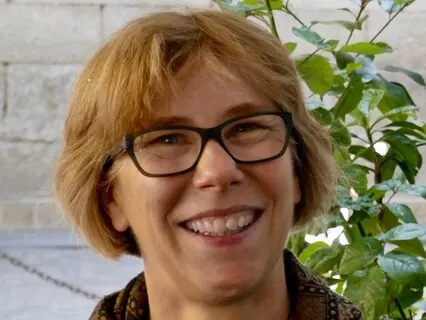
And this episode is with the Reverend Dr.
Sarah Bachelard.
I met Sarah at the New Contemplative Exchange in Snowmass,
Colorado in August 2017,
And we connected not only over our love of all things contemplative,
But she also has a background in teaching and research in both theology and ethics.
She also has a chapter in a book that emerged out of our gathering and is to be released in the fall of 2019 with Crossroads Press.
That anticipated release date is September 1st,
And I'll post info on my site once it's released.
There are some real delights waiting for you in this episode,
Especially when Sarah reflects on St.
Paul's writings about no longer thinking about or focusing on ourselves.
I found this to be such a liberating way of thinking and a distraction from the way we all tend to focus on ourselves and only wind up making our own suffering and that of others worse.
We also sort of go off script towards the end of the podcast when Sarah asked me about living in the current climate in the United States today as a committed contemplative.
I hope that you'll find some encouragement in our exchange and in Sarah's brilliant wisdom in this episode.
Sarah is an ordained Anglican priest and retreat leader based in Canberra,
Australia.
She's the founding director of Benedictus Contemplative Church,
An honorary research fellow at the Australian Catholic University,
And she was a Rhodes Scholar at Oxford University where she had the pleasure of studying theology with the former Archbishop of Canterbury,
Rowan Williams.
It's also worth noting that Sarah will be the keynote speaker at this summer's John Main Seminar in Vancouver,
Which will be this August and is hosted annually by the World Community for Christian Meditation.
I'll post info about her keynote and that gathering in the show notes as well.
As always,
I appreciate your help with sharing and promoting the podcast through social media,
And I'm especially grateful for your secure freewill donations that you can make at thomasjbushlach.
Com forward slash donate or write on the show notes.
And these are offered as you are so moved and according to your means,
So thank you.
The show notes for this episode can be found at thomasjbushlach.
Com forward slash episode 17.
That's the word episode and then one seven,
No spaces.
Okay,
With that intro,
Let's get right into my interview with the Reverend Dr.
Sarah Bachelard.
Okay,
Sarah,
Thanks for being here on Contemplate This.
It's a pleasure to have you and to see you again since I haven't seen you since 2017.
Yeah,
It's lovely to be here.
Thank you,
Tom.
Yeah,
Thanks.
So,
Why don't you start by just introducing yourself,
Where you are in the world,
And a little bit about how you got there?
Sure.
Well,
I'm talking to you from Canberra in Australia,
Where,
So it's evening for you now.
It's morning for me.
And Canberra,
For those who don't know,
Is actually the capital of Australia,
But less well known than Sydney and Melbourne.
So it's sort of a smaller city between those two.
And actually,
I was born here.
So I've lived here most of my life with a couple of stints overseas at different points.
And I guess what I do now is I lead a contemplative Christian worshiping community,
Which is called Benedictus Contemplative Church.
And I'm ordained in the Anglican tradition,
But Benedictus is an ecumenical community.
So are you still considered active as an Anglican priest?
Or how does that work?
Yeah,
Look,
It's a little complicated.
I still have a license,
And I'm a Christian,
I still have a license as an Anglican priest in the diocese that I live in.
But,
But,
And I'm asked to do things,
Particularly in other places in Australia for different Anglican diocese.
But I tend to fly under the radar a bit and,
And just that and Benedictus is is a kind of independent church.
So we're not formally affiliated with the Anglican or any other denomination.
Yeah,
That's what I thought.
And from our conversations in Colorado,
That I remembered that.
So can you tell us a little bit about how that community came about?
Well,
Um,
I guess it was a couple of things.
One is that a role that I had in the Anglican church here,
Which was teaching in the Theological College came to an end.
And so I was thinking about what,
You know,
What next.
Meditation or contemplative prayer was a key part of my own practice and my own spiritual journey.
And I felt as though there we lacked contexts where that could really be at the center of a worshipping community.
Of course,
There are meditation groups and contemplative services of different kinds attached to parishes or other congregations.
But I,
But I didn't have a sense of there being a community where the contemplative practice was really at the heart of the life and the worship and flowing out into all aspects of the community's life.
Particularly thinking about the Christian life as a journey of ongoing conversion or transformation and wanting to offer something where people who are interested in that deeper journey had a context where they could leave that out in a regular way.
Hmm.
Wow.
Sounds almost Benedictine in that idea of ongoing conversion.
Yeah.
I mean,
It's obviously,
I mean,
It's contemplative more broadly,
But that's right.
And I guess part of the inspiration for the form of service we have came from the kinds of services that I'd experienced at the end of Silent Retreats,
Particularly with the World Community for Christian Meditation,
Which is Benedictine.
But,
But I guess that sense of that meditation actually was internal to,
To the service to,
And it inflected the way scripture was,
Was read and reflected on and inflected the experience of the sacraments and thinking,
Why do we have to wait till the end of a Silent Retreat to have a service like that?
Like why can't that actually be what church looks like?
Yeah.
Yeah.
Yeah.
So what,
What would a typical worship service look like?
I mean,
In many ways it's,
It's,
It looks pretty like a normal church service.
A normal Anglican church service,
Right?
So,
Well yeah,
I guess that's,
That's true.
In fact,
There's a bit of a funny story with that.
So,
So part of,
So we have a simple liturgy.
We try to have,
We do have fewer words than the typical Anglican or United Church or whatever service.
So a simplified liturgy often drawn out of some of the real sources of places like the Iona community or Celtic sources.
We have a scripture reading,
A reflection,
A homily.
We have 15 minutes of silent meditation,
Some prayers,
We sing,
And,
And,
You know,
Just a closing blessing.
We,
We have the Eucharist every third week,
And,
But we always have the meditation.
So in many ways,
It has a liturgical,
A liturgical,
Recognisable,
Liturgical shape.
And yeah,
There is a,
That you have this sense that maybe you're doing something a little bit new or you're not as Anglican as you were.
And I had this interesting experience of two or three years into Benedictus.
We have this Catholic couple who come to Benedictus who said to me one night,
Oh,
We love,
What we love about Benedictus is how informal it is and how,
You know,
How free and all of that kind of thing.
About a week later,
I had a couple from who were from a Uniting Church or Methodist background who said,
Oh,
Benedictus is really quite high church,
Isn't it?
I thought,
Okay,
So it all depends on your perspective,
Right?
Yeah.
Wow.
That's pretty funny.
Yeah.
So,
So at what point,
Because you have an interesting background,
Having been,
Right,
I think it's moral philosophy,
And that's what you were doing as a professor teaching theology and morality ethics,
Right?
Which I know we,
We share that background.
But then there's also the,
You were ordained an Anglican,
So went to seminary at some point.
And then at some point got engaged with the world community for Christian meditation.
So how did all of those strands sort of come together?
And of course,
I'm interested in,
You know,
How you got connected with the world community and your practice.
Yeah,
Yeah.
Well,
I guess,
I'll give you just the potted version,
But I grew up in the Anglican church,
Though we weren't a particularly religious family.
But that was the kind of background.
And I always felt myself drawn to it.
But I also had a sense of struggle to make it real for me.
I really wanted,
I wanted faith,
I wanted to be on the inside of it.
But I always had this sense of not quite getting there,
Not quite understanding,
Or having it be alive.
And so in my early 20s,
My solution to that was to study.
So I thought,
Right,
Okay,
If I just know more,
If I just understand it more,
I can relate.
Yeah,
Exactly.
In a nerdy kind of way,
Yes.
Yeah,
Exactly.
Exactly.
So I did that.
And that's when I went to Oxford,
And I studied theology there.
And it was a wonderful experience in all kinds of ways.
But it didn't help on the faith question.
It didn't actually get me there.
And in fact,
While I was there,
I left the church,
I thought,
This just doesn't,
I can't make this real.
This just doesn't seem,
And I was pretty disappointed and even angry.
It's like,
Well,
I'd gone to all this effort to try to work this out.
And God just didn't show up,
You know.
So I sort of gave up on it and thought,
Look,
It sounds nice,
But there's nothing there.
So then fast forward a bit.
And a few years later,
I was started my PhD in moral philosophy.
And that was really partly because I guess I've always been interested in the question of meaning,
The question of how to live truthfully and well.
And if you can't,
If theology doesn't get you there,
Then ethics might.
So.
Well,
That's really interesting because you're probably familiar with that.
There's like a famous line from C.
S.
Lewis,
And I can't quote it verbatim,
But he basically says that the morality is like the fundamental question that leads to the question of God.
That either there's a moral universe that makes sense,
And if there is,
That has to have some kind of transcendent foundation or it doesn't,
And it's all sort of Nietzsche and power all the way down.
And so that's interesting that you were kind of like,
Well,
Theology isn't quite doing it,
So let's try ethics.
Yeah,
Exactly.
Maybe that's where that kind of life found.
And that was a really rich experience.
And I did find moral philosophers,
People like Iris Murdoch and Raymond Gaeta,
Who's an Australian Vic and Shainian philosopher,
Cora Diamond in the US.
I don't know if you've come across her.
No,
I actually haven't.
I've been in the US for a while now.
I've been in the US for a while now.
No,
I actually haven't.
Cora Diamond.
Cora Diamond.
Okay.
I'll have to write that down.
Wonderful philosopher.
None of them explicitly religious,
But have a sensibility that just straightforward naturalism by itself isn't going to get you there,
But wanting to find a way of engaging this domain without explicit theological commitment.
And that was kind of where I was.
So that was a really fruitful time.
But even so,
Towards the end of that time,
The end of my doctorate,
Which has no doubt you know,
Is a pretty difficult experience often and quite anxiety provoking.
And I found myself really yearning for,
You know,
For some deeper connectedness or,
But I also felt that I couldn't just go back to church because that just felt like it had no integrity or was just because I was lost,
You know,
But I still didn't think it was true.
So I was in that kind of a space.
And that was when I was introduced to a couple of the Buddhist teachers of meditation,
People like Thich Nhat Hanh and Pema Chodron.
So the usual Western route.
Yep.
Those are two that I was introduced to.
Yep.
Yeah.
And so that was introduced me to a practice of meditation,
Which I loved,
And which helped really profoundly helped me to be where I was,
Which was anxious,
Vulnerable,
You know,
On the brink of a breakdown,
And to kind of look to learn how to embrace those difficult feelings and experiences and not just run away from them.
And so they were profoundly helpful.
But then,
And I'm sure that that's part of what in a sense led me back in towards being able to see something living in the Christian tradition,
Because through the practice,
Then,
Then it sometimes pieces of Scripture would come to mind and I think,
Oh,
Maybe that's what that means or,
You know,
Get open them up in a different way.
And eventually,
A couple of years later,
More stuff happened.
And I underwent a real experience of actually just of love as in experience,
Not being in love,
But an experience of being loved,
Being able to love myself,
Being able to accept myself.
And that had a really profound impact on the way I saw others,
My sense of compassion,
Or that we're all kind of struggling,
We're all struggling to accept ourselves.
A very deep experience of loving others,
Which for the first time wasn't something I needed to try to do or,
You know,
A good person would do that,
But was just,
Just there.
And that made me think,
Made me see,
You know,
For all the ways it betrays this,
For all the ways it fails to live this out.
The church and the Christian tradition is a place that exists to say,
That's what it's about,
You know,
And it exists as a public institution in the world to say,
At the bottom of reality,
That's what's there.
And that just struck me as weird.
It's like,
Wow.
Cognitive dissonance,
It sounds like.
Yeah,
This is kind of weird.
A bit of discovering like on an experiential level,
What the true heart of the gospel is,
What Jesus really taught,
The confliction between that and what the church needs to live up to that,
You know,
Still proclaims at the same time.
That's right.
Somehow keeps,
You know,
Hanging on to that.
So,
So that kind of,
It was that sense of the weirdness of it in that,
By which I mean,
Like,
Wow,
That it's extraordinary that that exists in the world.
And that sense of strangeness,
I guess,
Was what enabled me to poke my nose back in the church and say,
Look,
I still,
There's a whole bunch of stuff I still don't understand.
I don't know if I believe.
But I know the love bit's true.
So now I can be here,
Not impatient to understand,
But just allowing myself to be here.
And then I started to follow this turning into a long version.
Are you still hearing me?
I lost you there for one second.
Okay.
So,
I'm going to go back to the long version.
Are you still hearing me?
I lost you there for one second.
Okay.
Sorry.
That's okay.
So something about and then I started this journey.
Yeah.
Journey back in.
And now we get to the point you asked.
Well,
Actually,
So before you go there,
Can I ask a question?
You were,
So you were introduced to sort of Buddhist practices.
Yeah.
Was that a basic kind of breath mindfulness practice that you were doing at this time?
Yes.
And what's interesting to me,
Just to that strikes me is that,
Obviously,
You were open to whatever that experience led to.
But just by following that,
That led naturally to this sort of sense of a transcendent loving kindness that you experienced toward yourself,
But then also you experience going out.
So I just note that as I hear your story that that's interesting that you were,
You weren't like seeking to,
Hey,
Maybe I'll come back in this way or,
You know,
It was like trying that and it just sort of naturally unfolded.
Yes.
Yeah,
That's right.
And,
You know,
It wasn't just the practice.
I mean,
Part of what led to that experience of love was also doing some work in terms of personal awareness and,
You know,
That kind of thing.
But I'm sure it was all part of the same dynamic.
Yes.
Yeah.
Well,
That's just interesting.
Yeah,
It is.
Because I and a couple of my teachers have emphasized that,
You know,
The surrendering of control within the practice,
That then there is sort of a,
There's a natural energy and a progression as one gives,
As you give yourself over to a regular practice.
And regardless of tradition,
History,
Gender,
You know,
All those other things,
It seems like,
And even though it's unique to each person and to each time and place,
There is a sort of natural unfolding in a direction.
So I'm always just fascinated when people are able to recount that even almost despite themselves,
Like,
Here I am,
You know.
Yeah,
Yeah.
Yeah.
And in fact,
I certainly wasn't actively looking to,
You know,
Go back to the church as this was starting to happen.
It was a,
You know,
It would be like,
Oh God,
Don't make me be a Christian.
Yeah,
Exactly.
Like,
Oh,
It couldn't be any worse.
Everyone will think I'm a conservative.
Right.
Yeah,
Exactly.
Yeah.
So,
And I guess,
But having begun to go back in and hear it differently and and hear it differently and just be in a kind of a very,
It felt like quite a wandering,
Tender kind of space.
And I was,
But I was continuing to meditate with the breath as,
As,
You know,
I had been.
And what was so helpful to me about that was that it gave me a way of prayer,
Which I could practice before I knew if or what I believed about anything.
Or even if you thought of it as prayer.
Even if I thought of it as prayer,
Exactly.
I know,
Again,
This is a very common story,
But it's that sense of.
Still remarkable though.
Yeah.
It gives you a way to keep seeking to be open to whatever it is without having to confine that by,
I believe this one,
You know,
I'm asking for these when I don't even know what it's legitimate to pray for or,
You know,
All of those kinds of things.
So I was really clear that,
That I wasn't going to give that up just because I was,
You know,
Perhaps going to church.
But then,
And I guess this also is a bit of a personality thing and reflects this desire to integrate and understand.
I did after a couple of years,
Maybe it was a bit less than that,
But want to be able to make the connection between the practice and the kind of Christian framework and be able to articulate,
You know,
To understand.
Yeah.
And I don't want to put words in your mouth,
But was it almost kind of like a question of,
Does this even connect or did you have a sense that it did and you just needed to explore how?
Yeah,
I don't remember it explicitly being a question of,
Does it connect?
And I'm not even sure that I was particularly interested in understanding more of the theology of the practice say,
But I guess I was looking theologically to understand what was going on in the whole journey.
And this,
And I did start to,
I did read a little bit more of the Tibetan Buddhist tradition.
Again,
I never went into it deeply and I never joined the Buddhist community or met a teacher or anything like that.
But,
You know,
I read a couple of things,
Including the So Gal Rinpoche,
Tibetan book of living and dying.
And I guess,
You know,
It just comes out of a very different conceptual metaphysical framework.
And it wasn't that I was thinking,
Oh,
This is bad or wrong,
Or I disagree.
It was just,
Again,
It was just kind of very foreign.
And I remember having the thought,
You know,
There's plenty of weird stuff I could believe in my own tradition.
I don't need to go into the woods.
And so I kind of thought,
Look,
I don't think that's going to be the way of being able to keep deepening this for me.
Again,
Not that I thought that it was wrong,
But just,
It was,
You know,
Not my tradition.
And I think it was probably,
Timelines get a little hazy,
But I think it was probably not long after that,
That actually Rowan Williams was in Australia in the year 2000,
Giving,
2001,
Giving the John Mayne seminar on the desert mothers and fathers.
I actually didn't know about that then.
So I missed it.
But a little bit later,
It was replayed on public radio.
And a friend of mine heard it and said,
Oh,
You might be interested in this.
And I looked it up.
And that was when I first discovered that there was such a thing as the world community for Christian meditation.
And I was so excited about it.
To know that there was this such a,
You know,
Thing,
Such a thing.
And so I mean,
I didn't know that there was a Christian contemplative tradition.
I knew about the mystics and that kind of thing.
But I don't think I'd ever really encountered that as a practice.
Yeah.
So that was really exciting.
But also what was exciting was that the Christian meditation community was so clearly at ease with and friends with the Buddhist tradition,
You know,
The Dalai Lama.
And so part of what had made me allergic to Christianity in the past was the sense of the exclusivism,
The kind of the sureness that we have the right path and kind of thing.
So it was really important to me that it was non-defensive,
Non-threatened,
Hospitable to the wisdom of other traditions.
And yet,
Also was connected to my tradition.
Right.
And so that was kind of the beginning of my connection with the world community.
Okay.
So how did that unfold?
Did you go on a retreat?
Did you start?
Because I know,
I mean,
I know now you're connected with Father Lawrence Freeman.
And others from the world community.
So how did you get a little more entrenched or involved?
Yeah,
Yeah.
Well,
To begin with,
It was just using the website and even and to begin with,
I wasn't even actually,
I was still meditating using the breath and I resisted for a good couple of years the transition to meditating using a prayer word or mantra.
Yeah.
And just for those who might be listening that aren't as familiar,
The practice that's taught through the world community for Christian meditation is a mantra or mantra based meditation form.
Yes,
That's right.
The continued repetition of a single word in this case.
Yeah.
And usually maranatha,
Right?
Yeah,
That's the word recommended.
Yes.
Yeah.
Yeah.
So,
Yeah.
And I resisted that because I felt I've always got so many words in my head.
I don't,
I don't need another word.
There was this sense of what I,
The breath seemed more natural and well,
It's more embodied and less cerebral.
And I think the contemplative practice is a way of thinking about it.
And I think that's practices and it doesn't exclude the intellect,
But it's,
It does sort of transcend it.
And the connection to the body can be really powerful.
I've had some interesting conversations with,
With Matthew Wright about the use of a sacred word,
Which is also in centering prayer,
Though it's not,
Not a mantra.
There's a similar use of a word,
Although there,
Again,
There are variations.
But he,
I think I've heard him say several times that it's easy to get caught in the intellectual part of the brain when you're using a word.
So what that experience has been like for you or the,
You know,
At what point that felt more natural.
Yeah.
Well,
I think what,
What finally kind of,
I felt drawn to begin using the word was that I realized that with the breath alone,
It was,
It was quite easy for me to kid myself about actually how present I was and how much in fact I had let go of thoughts because I could be breathing and concentrating on that at one level and at another level,
Just thinking.
And it felt to me a little bit,
Of course I can still do that using the mantra.
We're all quite capable of using all the minds tricks.
Exactly.
But I did sort of feel as though it was,
It was a bit less easy to kid myself.
It was more obvious when,
At least when coming back to the mantra that I'd been away from it,
Than it was with the breath.
And so as a,
As a kind of a way of intensifying the practice or something that seemed,
Anyway,
That,
That seemed where I was drawn.
And I guess I've never,
It's interesting you say,
You know,
The mantra can,
Can be,
Be more intellectual or cerebral.
I don't,
Yeah.
Well that may very well just reflect the practitioner more than the actual word.
I mean,
It's true.
And I,
As,
As,
You know,
Lawrence,
Father Lawrence often recommends,
I mean,
John Mayne didn't make a big thing about how to use the breath or whether the breath had to be used in conjunction with the mantra.
He,
He,
He focused on the mantra and then you sort of find your own rhythm with your breathing.
So there was not a specific instruction about that,
But there are,
I think at least a couple of places where he says,
Look,
People often find it easier to coordinate with their breathing.
And that's certainly true for me.
And so I do have a breath pattern that goes along with the repetition of the mantra.
And I think probably most people do which,
Which,
You know,
Helps that integration.
And yeah,
So,
And I guess maybe part of my decision to,
To move to the mantra was that was the sense,
Look,
I think this is going to be an important community for me.
This is going to be,
A community with whom I can make this journey.
So again,
Not in a spirit of,
I think this is the right way,
But just in the spirit of,
Okay,
Look,
I'm just going to throw my lot in with this.
And,
And in a sense,
Not,
Not make minor amendments,
Which,
You know,
You start to think how much of that is my egoic kind of,
You know,
My,
My,
My,
My,
My,
I'll just make a few special amendments for me.
And there was,
There's something about the humility of,
You know what,
I'm just gonna,
I don't know if this is the best or this is going to work,
But I'm just going to throw my lot in here.
I'm going to trust these and,
And,
And let it,
Let it unfold.
That's interesting.
It I've done now that I've,
You know,
This is episode 17.
So not all the guests on the podcast have been from the Christian tradition,
But those that have,
And there's almost this recurring theme of this struggle with what the church has been or care at its not so good points,
But then the,
Also that sense of like,
Yet I,
I need a community to be human in and be imperfect myself and be accountable.
And that,
That,
That becomes an important container for the experience of faith that's fostered through one's practice.
So I,
I,
It's just interesting to note that there's this almost like despite myself,
I'm here.
I am in this tradition,
Which I also can relate to,
Like I have my moments of like,
Wow,
This,
You know,
I don't know if you've experienced,
My guess is that many of the people who are part of your community probably have similar experiences as you've worked with them as pastor.
And yeah,
Yeah,
Look,
I think a lot of people who come that they've either they've,
They've hung,
Hung on by the skin of their teeth to,
To Christian communities or church,
Some,
Some had left,
And this has been a way that feels that they can be part of a community and feel that it's authentic,
But they're mature maturing.
There are others who are still part of their,
Whatever their different existing denominational communities and Benedictus is a kind of a something,
You know,
They're dual citizens.
Interesting.
Yeah.
So it's a variety.
Yeah.
Yeah.
But I think that's right.
I think,
And I do think,
I mean,
There's sort of obvious things that people say,
And obviously are important about that.
Like there's the obvious failures of the church,
Particularly with the sexual abuse scandals and those kinds of things,
Which really rock people's sense of their capacity to continue belonging.
But I think even beyond that,
It's this sense of wanting to be part of a community that's really serious about the journey of transformation and,
And the,
And the kind of the growth and finding often churches,
Not to be places that are particularly enabling of that,
Or,
Or even really know what that is or,
Or welcome that and,
And feel kind of just want people to stay in their box.
And replicate a certain kind of,
You know,
So-called Christian values without that coming out of that deeper rootedness.
And I think people just think,
Look,
I don't have time for that.
And I think that's really,
There's a delicate balance there because there is something about the human being that's there is something about the humility of continuing to be part of something that's imperfect,
Recognising you're imperfect,
You know,
Blah,
Blah,
Blah.
But I,
I do think there's a sense in which the church,
It's too generic a thing to say,
But I'll say it anyway,
The church can let itself off the hook with that kind of way of thinking and doesn't hold itself sufficiently accountable for the maturation of Christian life.
So that over and over again,
You're,
You see people who've been to church their whole lives,
You know,
They've been there for 60,
70 years and nothing much seems to have shifted.
The deeper work hasn't happened.
Yeah.
What's that about?
Did you want me to answer that?
I don't know if I can,
But I definitely agree with what you're pointing to,
Which is it's easy to stay,
I don't know what the right word is,
In a kind of external observance mode and miss the deeper transformations that are being called forth.
And again,
I think the contemplative path,
The commitment to practice,
The experience of sort of ongoing conversion,
It just,
It calls forth that deeper challenge of,
You know,
Where,
Where is grace at work?
How are you responding?
How are you being transformed?
And then how are you living that,
That it isn't just about,
I don't know what you do during your,
Your silence,
But it's then what happens to the rest of your time.
Yeah.
Yeah.
And I would say the people who come say to something like Benedictus,
That that's what they're looking for.
That's what they're hungry for.
That's what they want to,
The journey they want to be on and want to be part of supporting others on.
And often they're not finding that in the kind of parish or whatever context.
Yeah.
I get,
This is something I've been thinking about,
I'll bounce it off of you.
And in part,
It's been motivated by political moments in the United States.
And I don't know how much you're following,
But there've been a couple pretty severe sets of laws passed,
Particularly around abortion at the state level.
And there's almost a way,
And I actually don't want to make this about that particular issue.
My comment is more about,
There's a way in which the grasping and the rigidity,
I think that's the word I'm grasping for is rigidity of the kind of external form of what Christianity is supposed to look like becomes a form of violence.
And it becomes a way to put up barriers and to say,
Like you were talking about before,
Like I'm in,
You're out,
You're doing it wrong,
We're doing it right.
But the contemplative path just kind of cuts through all that bullshit.
It's like,
You don't get to stand behind that wall of the ego,
But it gets really into the heart of how are you living out this response to what Jesus said and did and who he was in the gospels.
Yeah,
That's right.
So Christian identity in the context that you were speaking about basically gets weaponized,
Which is exactly the opposite of the gospel.
Well,
In fact,
I always think that it's precisely the people in his time,
The Pharisees and the Sadducees and the people who weaponized Judaism at that time that Jesus was most critical of.
And then the people who were the outcasts and the sexual deviants and the poor and those are the ones that he was just going to them,
But not with condemnation.
Yes,
Yeah,
That's right.
I guess it's one of the great ironies of history.
Yeah,
Well,
It's that whole way that religiosity just becomes a part of human and social group identity formation.
And rather than allowing faith and discipleship to subvert those tendencies in all of us to secure our identities in those kinds of ways,
It kind of just gets co-opted.
Yeah.
Okay,
So something you said there just sparked a thought about the attempt to secure our identities.
And I guess part of my own experience and reading and talking with lots of people in different traditions is that there's a sort of de-centering of the self or even a deconstructing,
Deconditioning of the self that happens.
And then we're talking about the self that happens.
And then one learns to become a little more comfortable with ambiguity about who I am.
Can you speak to that in your own experience?
Yeah,
Yeah,
I think that's right.
That sense of who I am,
But also whether I'm good or not.
Like,
Yeah,
Man.
Okay,
You just opened my personal can of worms.
Yeah,
Sorry.
Side note.
What's your do you know your Enneagram type?
Yes.
One?
No.
No.
Okay.
Sorry.
Five.
Five.
Oh,
Okay.
Okay.
That that also makes sense.
Okay.
The question of whether I'm good or not as a one is front and center.
Okay.
Keep going with that thought though,
Because it's a good one.
Yeah,
Well,
Just that sense.
I mean,
I'm struggling to bring the quote to mind.
But you know,
Paul talks about that I do not judge others.
I do not even judge myself.
You know,
For I have died,
And my life is hidden with Christ.
And for me,
That's been a really significant passage about I can't even be assured of my righteousness.
Oh,
Wow.
Where does he say that?
I don't know that I've ever picked up on that line before.
It's possible.
It's also an amalgam of two lines.
But for you have died is Colossians three.
And yeah,
I'd have to double check.
But that definitely also says,
You know,
I do not even judge myself.
Yeah.
And it's in the context of I can't be sure.
I'm good.
And I think Paul's point and the experience that you're talking about that he's pointing to is that that question is sort of irrelevant.
Yeah,
That's exactly right.
Which is really liberating.
Yeah.
Yeah.
Like really,
Really liberating if you actually let it sink in.
Yeah.
And a little frightening at the same time.
Yeah.
It's all of a sudden like,
Oh,
My kind of foundation has just got shifted a bit.
Yeah.
Which is the whole point of it.
Yeah.
Which is the whole point,
You know,
That your foundation isn't in you anymore.
It is in being loved.
It is in Christ.
Like that is justification by grace.
Yeah.
And there's nothing behind that.
There's nothing other than that.
Yeah,
There's no trick.
There's no gimmick.
It's not like,
Yeah.
And it's not like,
Oh,
Yeah,
Yeah,
I know that.
But really,
I've got to be good as well.
It's like,
No.
That's what my ego says over and over again.
You know?
Yeah.
And for me,
I guess an important or two things have been really important with that one is I was in a situation and this perhaps goes back to why I'm in this slightly ambiguous situation with the Anglican church.
Which is that I was deemed to be not good.
So,
You know,
My partner,
My current partner,
My only partner was married before we got together.
And even though,
You know,
We sought to do all the right things and,
You know,
Didn't misbehave and all of that,
Even so,
People,
Like there was this sense that I was a bad girl.
Like I was implicated in,
You know,
A marriage failing.
And I myself was like,
Shit,
Oh,
Sorry,
I shouldn't say that.
I saw it earlier.
It's okay.
When I upload it to iTunes,
There's a little box I can check for explicit links.
I can't even be assured of my own righteousness.
I've sought to live this world.
I've sought to be honest.
I've sought to discern this.
I've sought to follow where I think as best I can discern it,
I'm being called.
But maybe I'm wrong.
And lots of people around me think that I'm wrong.
And I got nothing.
I have to cast myself on this,
Your life is hidden with Christ.
I can't be sure of my own judgment about my rightness.
Wow.
And that was a really painful,
Difficult experience.
But it really,
And the other thing that was really helpful in that is reading Dietrich Bonhoeffer,
Who grapples with exactly this question in his context of having to be responsible for actions,
Which you're not sure you're,
Which by conventional standards,
Don't look right.
And by all that you've been brought up and all you ever thought you would do or be involved with,
Don't look right.
Somehow you find yourself led into something.
And you have to give up the assurance of your own righteousness.
Wow.
Where does Bonhoeffer write about that?
It's in Ethics.
Okay.
Well,
It's like that big,
Right?
Well,
Which is a series,
But it's a series of,
It's not a systematic work.
Right,
It's a collection,
Right?
It's a collection.
I could send you one of the bits.
And it's also a bit in the prison letters,
I think.
But I think where I got it mostly was out of reading the Ethics,
Where he's grappling with this question of,
Yeah.
Wow.
Of really what it means,
What it really means at that kind of existential felt self to think that it's my only righteousness is by grace.
Yeah.
Yeah.
An insight that only a Lutheran German could have at that level,
Right?
Well,
Yeah,
Maybe.
That's not to brush it off.
It's just.
.
.
No,
No,
Yeah,
That's right.
Obviously it comes out of that,
But it shows that even for a Lutheran German,
It's one thing to say that and believe that,
And it's another thing really,
Actually,
To give up your own righteousness.
Yeah.
Early,
Earlier in the interview,
You were talking about that experience of like,
Almost coming back at the Christian tradition and the scriptures as if it were this radically new thing.
And what's interesting as I'm moving through this interview is that you've actually now done that to me because I feel like for a Catholic,
I know scriptures pretty well.
I've read a lot of Paul and that line has never hit me before.
And it's one of those moments of like,
Wow,
It's like another layer of insight that is just,
I don't know,
It's hitting me really profoundly right now.
So that's going to provide some food for my own practice and contemplation to chew on for a while.
So thank you for that.
Yeah,
You're welcome.
Yeah.
It feels different,
Doesn't it?
Like you can feel like even,
And for me too,
In this conversation as getting present to it again,
You feel how radical it is.
Yeah,
Yeah.
And that's what gets lost,
I think,
Often.
And your word of being decentered,
It's like no longer am I the center of my own life,
My own goodness,
My own identity.
It's the felt sense of the center shifting.
Yeah.
Huh.
I don't know where to go after that one.
Okay.
Well,
Let's maybe,
I want to ask you a little bit about your upcoming,
I don't know if they call it the keynote or the main speaker for the John Main seminar coming up in Vancouver in August,
Right?
Yeah.
Yeah.
So I know you told me right beforehand that the theme is going to be a contemplative Christianity for our time.
So I don't know,
Do you want to give us a little teaser and then if people want more then they have to go to Vancouver.
That's exactly right,
Yes.
Well,
I guess the theme came out of some thinking that I'd been doing some conversations with Father Lawrence and some conversations with people on retreat.
I guess,
And this is where I begin the seminar by saying,
Look,
When the World Community for Christian Meditation first began to emerge and the same with contemplative outreach,
Centering prayer,
And before that people like Merton and Bede Griffiths and so on.
The main,
A lot of the writing and a main task was both recovering a sense of what this contemplative practice or tradition actually is.
And also then persuading Christians that actually this was a legitimate form of tradition.
Actually,
This was a legitimate form of prayer.
It was kind of kosher and not just an Eastern import and that kind of thing.
So a lot of the focus of that early part of this,
The contemplative renewal,
If you want to call it that in the Christian tradition,
Was with that.
And now I think we're at a stage where not only,
Of course,
There are churches that still struggle with it,
But by and large,
The mainstream churches,
I think,
Have come to realize that this is a legitimate form of Christian prayer.
Not only that,
But the whole culture,
The culture at large has kind of discovered contemplation or meditation or mindfulness and everyone agrees it's a good thing one way or another.
Especially for your health,
Right?
Yeah,
And so there's different levels of,
You know,
Different depths at which it's apprehended,
But there's no kind of need to persuade people generally that meditation of some sort is a good thing.
But now it seems to me that we're in the situation,
Say in the Christian meditation community,
And I don't know if it's the same in contemplative outreach,
Where people have no problem with learning to meditate,
That their issue is with the Christianity piece.
And what on earth does Christianity add to our contemplative practice?
Why can't we just meditate?
Yeah.
And obviously that's a question that's been asked for a long time in this secularizing culture.
But I think it's a question that even within something like the Christian meditation community,
People can struggle to answer or to feel like they can really respond to.
They can give an account of how meditation is important,
But what is the Christian piece of that?
And how do you respond to that,
Not by reverting to a tribalism,
We're right,
You're wrong,
Christian meditation is qualitatively different to Buddhist or Hindu and,
You know,
So not that kind of a response,
But trying to,
In a sense,
Give an account of what is the gift,
The particular gift that we are to receive and to be in the world as we meditate out of this tradition.
Wow.
So that's what I'm trying to have a go at.
I was going to say,
Come on,
Don't leave us hanging.
What is it?
Yeah,
Well.
Yeah,
So,
And I am like,
It's a question for me,
Like it's a live question.
So that's what makes it scary,
Because it's not like I've got the answer on the back of the envelope,
Which I'm just going to trot out,
You know,
It's the working.
I guess it's me and inviting those who are there,
Hopefully,
To kind of work this,
Work it through together.
And in that sense,
I guess,
Last year's John Mayne seminar was called a contemplative response to the crisis of change,
And it involved a number of speakers who are meditators within the community,
But who are also,
You know,
Kind of people who have roles in different fields,
Like to do with science,
Environment,
Finance,
Economics,
Health.
And so,
From their perspective as contemplatives working in these kind of areas in the world,
What is the contemplative response to the various crises of the world?
Yeah,
So Dr.
Barry White was my last guest.
Ah,
Right.
Which Father Lawrence connected us,
Yeah.
But anyway,
Sorry,
But keep going with your thought.
Yeah,
So that kind of really significant engagement with,
You know,
The needs of the world.
And I guess I was conscious with this theme this year that it could feel a bit like,
Oh,
So last year we were actually daring to believe we had something to offer the world.
We were,
You know,
We were kind of engaged with what everyone thinks matters,
And what now we're reverting to think about Christianity,
The church,
It feels like potentially an inward move.
Yeah.
And I guess what I'm trying to say,
The way I'm seeking to approach this is,
This question that we're trying to deal with or engage this year,
It only matters if it's connected to last year's question.
Yeah.
It only matters if we can see how this actually is about the gift we are called to be.
Yeah.
It's not about the future of the church or the,
You know,
The survival of the institution or where all the young people are.
Right.
Well,
I mean,
In some ways asking this question kind of points out the ways in which those other questions can be maybe a bit of a distraction.
As in the future of the church kind of question.
Yeah.
Yeah.
Maybe,
Maybe that's not so much our job to worry about.
Yeah.
But our job to worry about is what are we being in the world and are we being authentic to the call that comes from the gospel encounter?
Yeah.
Yeah.
And then let that shape things like our common life and how we go about deepening our responsiveness to that call and all of that.
Yeah.
Yeah.
And to me,
That's still a deeply energizing question.
Whereas the question about what are we going to do about the institution or where all the young people,
Like,
I just feel tired immediately.
Same here.
Yeah.
Yeah.
So that's a bit of a sign that that's not the right question.
It seems to me.
Well,
I mean,
In my professor days,
I always emphasized that asking the right question is actually probably the most important part of any inquiry.
The answers are secondary to the actual because if we keep asking the same questions,
We keep finding the same answers.
Yes.
And some of those answers don't even have an answer.
So yeah.
Yeah.
Yeah,
That's right.
Well,
We keep ending up in the same kind of colder sex.
Yeah.
It's a good metaphor.
Yeah.
So you also did a chapter in this book that's coming out in September.
Contemplation and Community.
I forgot the subtitle now,
But that's coming.
It's all people who were at that snow mass gathering contributing.
Do you talk about this?
I think I can't remember exactly.
I think I read parts of your chapter,
But.
Yeah,
No,
I don't talk about that.
There's so much in that chapter.
That chapter,
I was asked to write something about the shape of contemplative community.
Oh,
That's right.
Yeah.
And I guess,
And I think how I approach that,
Although I have to say,
I haven't reread it recently,
But I was partly talking about the way in which the teaching of meditation has been radically democratized.
So earlier there was a sense in which you had to be a certain level of maturity to in your spiritual journey to be introduced to content.
Yeah.
And just kind of reflecting to begin with a little bit about that,
You know,
How much of that was about clerical control.
But conversely,
How much,
You know,
What does that might,
What might that induce in your mind that intuition that there's some maturity called for here have to say to us about how we live out in contemplative community.
Oh,
Yeah.
So do you,
How do you deal with that with the Benedictus community?
Yeah,
Well,
So the Benedictus community is an example of a completely open,
There's no pre-conditions and I guess part of what I want,
I say,
And this reflects my own journey that whereas perhaps for someone like the author of the Cloud of Unknowing,
Contemplation is a later stage in the spiritual life in our age,
For many,
It's the only possible starting point.
Hmm.
Now that's interesting.
Huh.
I never thought of it that way,
But as you said it,
It seems really true.
Yeah.
And it's the only possible starting point for many of us because we've already given up on,
You know,
The existing forms or the,
You know,
We said,
So we have to start apophatically,
I guess.
And then I maybe,
And maybe in a way,
I'm quite put it this way,
But maybe even this John Main seminar that I'm doing is like something of my own journey,
Which is to start apophatically,
But then have to come back to the cataphatic and come back to,
Okay,
What is,
What is particular about this tradition that,
You know,
In its language and its,
Its,
Its metaphors and symbols that actually is,
That matters.
Yeah.
Yeah.
The mystics,
A sort of classical path and the mystical tradition,
Christian mystical tradition is the illuminative,
Then the purgative,
And then the unitive way.
And I've,
I've had this thought frequently that perhaps we are in some kind of a purgative age.
So what,
Like the philosopher,
Charles Taylor calls it the secular age from a contemplative,
You might call it the apophatic age,
But that there's a positive side to that.
And maybe that's why some of those questions that you talked about before that are a little bit more hand-wringing questions seem less important than kind of discerning what kind of purification for the good might actually be happening in this moment.
Oh,
And I totally think that.
And in fact,
That's the second talk.
I can tell you what to the second talk Tom.
You haven't resolved the really difficult question,
But you know where you want it to go.
Yeah,
That's right.
But part of what I'm saying,
Yeah,
Absolutely.
It's a kind of purification of idolatry and to the extent that Christendom was actually just caught up with a whole bunch of that stuff.
It doesn't matter that it's going out of existence.
Yeah.
Now I really see why you're in trouble with the Anglican church.
Yeah,
In a good way though.
Yeah.
So,
Yeah.
So,
But yeah,
With the question Benedict.
So,
Yeah,
So I think meditation is for many people as it was for me,
The kind of starting point and access point.
And then other things come around that including the question of the necessity for discipline or the necessity for commitment.
Again,
I think this is a really delicate matter in our age because people are so allergic to any sense that their freedom has been constrained.
And some of that's for kind of probably egoic,
Hedonistic cultural kinds of consumerist kinds of reasons.
And some of it is a reaction to bad religion and to the fact that people have been wrongly constrained.
And so I think in this something like Benedictus,
This question of freedom,
I've felt is just really key.
Like people,
It's got to be,
There's got to be a spirit of freedom in it.
And part of what that,
Part of what that means is trusting people's own journey and pace and whether they're there or not.
That's such a delicate flower.
Yeah.
Well,
I like that way of putting it.
Yeah.
That notion of the freedom at the heart of it is a delicate flower.
Yes.
Because you don't,
It can't just be freedom of the consumer.
Right.
But you don't,
It doesn't get realized if you react to the freedom of the consumer by some heavy handed,
Guilt inducing kind of expectation.
Yeah.
It's the freedom to not need to consume constantly.
Yeah.
And that's a radically different kind of freedom.
It's hard to explain.
Yeah.
Without some kind of experience of it.
Yeah.
I mean,
I read that book,
The Benedict Option.
Oh,
I haven't read it.
I'm familiar with it.
Yeah.
Yeah.
I read it because,
I don't know,
People,
Some people seem to be reading it who I thought,
Oh,
Well,
It can't be as bad as I think it is.
Anyway,
It was pretty much as bad as I thought it was.
I mean,
He's trying to navigate this question,
I think.
In part,
He's navigating this question.
But for me,
It seems like I'm going to comment on something I haven't read,
Which my wife will laugh about because she's like,
That's what academics do.
You just had conversations with different people about it.
Oh,
I just lost my train of thought.
It was something you said about,
Oh,
It seems like it's an attempt to navigate that question.
But in a way,
When you were talking before about a contemplative Christianity that opens up to others,
It seems like The Benedict Option is more of a seeking of freedom,
But it's doing so by sort of closing down and closing off from the evil secular world.
And the contemplative movement is both in and radically out at the same time to all without distinction.
And so it seems like there's,
Again,
To me,
It's a subtle form of violence,
Of a cutting off from the full belonging to the human community,
The bad and the ugly.
Yeah,
That's right.
And it's a kind of a retreat mentality.
We just bunker down and in that sense it's,
You know,
To attribute that to Benedict seems not fair.
As a Benedictine oblate,
I would agree.
Yeah,
Yeah.
Yeah.
Yeah.
But I guess these are some of the questions because I guess what he is looking for is something radical.
But it's a bit too sectarian.
Yeah.
So what we're after is radical in a different sense.
Yeah,
Yeah,
That's a good way of putting it.
Maybe radically unthreatened.
I think you just named the title of your next book.
And I will want a signed copy.
Well,
I'm sort of recognizing the time.
I don't know if you have to be anywhere.
I don't know.
Do you have any final thoughts or questions that you wish I would have asked?
I don't think anything's particularly coming to mind,
Tom.
I mean,
I guess I'd be interested to hear more from you.
But,
You know,
Just your sense of this kind of unfolding contemplative thing in your context,
You know,
In the context of the US.
I mean,
I know there's probably huge number of ways in which you could respond to that.
Yeah,
I don't know if there's anything that's there for you.
That's a great question.
Yeah.
And like you said,
There's so many,
There are so many different ways.
But I do think that we are in a moment,
Not just in the church.
In fact,
In some ways,
The church is just reacting to what I think is a broader cultural movement.
That is this kind of a reactionary desire to kind of hunker down into a sectarian or tribal comfort zone that has all of these pitfalls,
But that's not a powerful enough word to capture just how spiritually and morally dangerous that kind of position is.
So I fluctuate between moments of kind of radical hope that this is a final gasp of an old way that's dying,
And then a more radical fear that it could actually go the way,
Say,
Europe went in the early 20th century,
Where people just keep hunkering down until those little violences explode socially and culturally.
And so then that's like a political observation,
A social.
.
.
It's not just politics,
It's a social,
Cultural observation.
But then I find myself coming back to,
Kind of like you said before,
So then what is the stance of.
.
.
What is my stance individually,
But what is the stance of the contemplative in a situation like that?
And then of course,
I start thinking about the Bonhoeffer's and there has to.
.
.
How do I put this?
Any pretensions of quietism and withdrawal in a contemplative life are shattered because it calls forth for a kind of radical commitment to love.
But love,
Not in like a mushy general kind of way,
But in concrete commitments to immigrants,
To whoever's being scapegoated in the latest tweet.
And how do you do that in a way that's really concrete and tangible and palpable and powerful?
I don't know.
But there's a lot of pressure towards fear coming from the culture.
And fear narrows and love opens.
And so the commitment has to be to constantly stay open while refusing to disengage.
And I don't think there's anything harder to do.
No,
No,
I agree.
But yet there's probably nothing more important right now.
Yeah,
Yeah.
And I think for me,
This is where the Christ dimension does really speak,
Is to do that,
To be in that space,
To consent,
To keep remaining in that space,
Is to be a pain bearer.
And I think that's.
.
.
I certainly feel for myself,
But I wonder if part of what a contemplative community is about is building our muscle to bear it.
Wow.
Yeah,
I mean,
I found myself getting a little teary eyed just talking about it because it is painful.
But then you just named it.
But that is,
I think,
The stance.
And then there's a trust that holding that space is just important to do.
And I don't know.
I don't know.
We don't know what the ultimate outcome of that is.
And it might get worse before it gets better.
And then there's just more pain to hold.
Wow.
Thanks for asking the question.
Well,
Maybe to be continued.
Well,
I hope at some point I will see you again and we will regather.
I don't think I'll be able to join you in Vancouver.
But I will watch the video because I know they take high quality videos and put them on the web.
That's one thing the world community does well.
Yeah.
Yeah.
Well,
Thanks to Leonardo,
Who you'll remember also.
Yeah.
He was my roommate in Colorado.
Yeah.
Great.
Yeah.
Look,
Thanks,
Tom.
I really enjoyed talking and sharing.
Yeah.
You as well.
Thanks.
We'll be in touch again soon.
Okay.
Great.
Thanks,
Tom.
Bye for now.
Bye.
Thanks again,
Everybody,
For listening.
You can find more information about Sarah,
Her books and her upcoming keynote address at the John Main Seminar and lots of other fun stuff at thomasjbushlack.
Com forward slash episode 17.
That's the word episode 17 with no spaces.
Please continue to help spread your love for the podcast as you are moved and able either by sharing on social media,
Leaving reviews wherever you download your podcast or making a free will donation on the show notes page or at thomasjbushlack.
Com forward slash donate.
Finally,
As we reflected there at the end of our interview,
I hope you find this episode and the Contemplate This podcast series to be a source of encouragement,
Not to narrow down in fear,
But rather to open up in love toward the God of your understanding,
Inwardly towards yourself and outwardly towards others and the world.
Thank you so much for listening and until next time,
Peace.