Like shit's effed up.
Let's just say that right?
It's a good way to put it Look around and I think people are doing that deconstruction work much sooner because the poverty of our existing constructs is just nakedly visible for anybody who's got their eyes open.
Once you see the kind of the reality of what it takes to live a life of commitment to Solidarity with suffering of other human beings if you keep asking those questions all the way,
You know That's inevitably where you end up if you have integrity to those questions And so I think that's part of why there's this search for the wisdom stream,
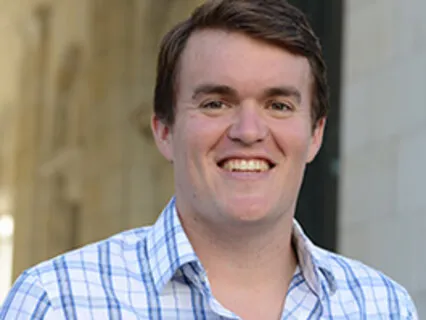
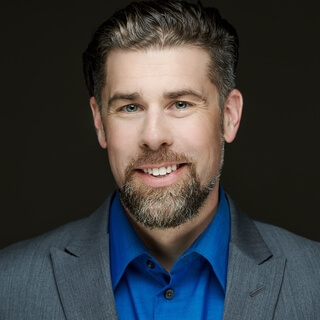
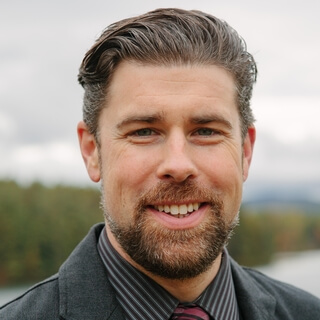
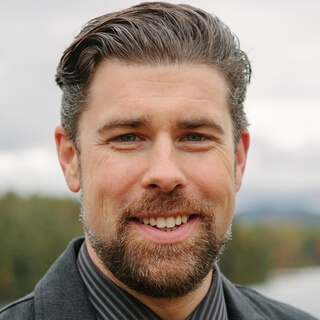
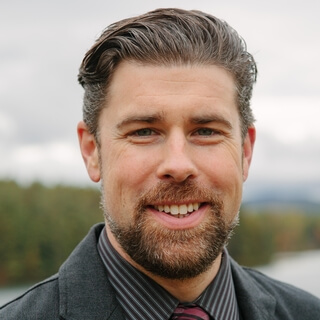
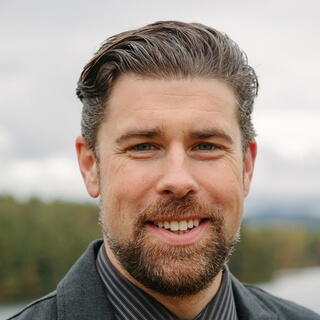
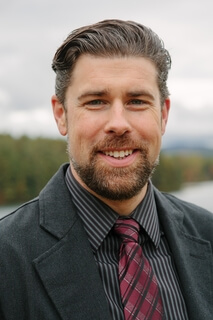
You know exists within the contemplative tradition I think it's why we see younger and younger folks beginning to take interest in this work Hello everybody and welcome back to episode 20 of contemplate this conversations on contemplation and compassion I'm your host Tom Bushlach and this interview is with Michael Poffenberger He is the executive director of the Center for Action and Contemplation in Albuquerque,
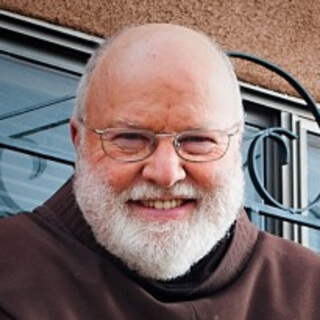
New Mexico Now if the Center for Action and Contemplation or the CAC sounds familiar to you That's because it was founded by Father Richard Rohr who was also my very first guest on episode 1 Michael joined the CAC five years ago and is part of a younger generation of leaders Seeking to integrate contemplative practices with compassionate social action Michael was inspired in college by spending time with Saint Mother Teresa and her sisters of charity in Kolkata,
India and then by learning more about the work of Dorothy Day and the Catholic Worker movement as Well as the writings of the Trappist monk Thomas Merton on contemplation and social action Prior to arriving as the executive director of the CAC Michael Poffenberger helped to found What was then called the Uganda conflict action network,
Which is now simply called Resolve At Resolve Michael led bipartisan coalitions and developed international campaigns to advance Policy change for war affected communities in Africa He helped author and win passage of legislation Focused on the prevention of violent atrocities and testified before both the US Congress and the United Nations Security Council Michael has an impressive background and he understands how important it is to ground our works of love and justice in the world In a spiritual practice that keeps us centered and humble on a somewhat related note I want to let you know about a new book that has just been released called Contemplation and Community A Gathering of Fresh Voices was just published and released by Crossroads Publishing Company Some of you might recall that my first episode with Father Richard Rohr came after I met him at a gathering of Younger teachers of contemplative Christian practice at Snowmass Colorado in 2017 Well about 17 of us each contributed a chapter to this book and we're pretty excited to share it with you In fact several contributors besides Father Richard Rohr have already been on the podcast Including Tilden Edwards in episode 3 Filina Huertz in episodes 4 and 15 Matthew Wright in episode 8 Stuart Hergenbotham in episode 10 Father Lawrence Freeman in episode 14 And Sarah Bachelard from episode 17 And I also contributed an early chapter to this book Where I provide a working definition of what contemplative practice is regardless of tradition or background And I conclude by suggesting some core ideas that I believe are essential for the integrity of the Christian contemplative tradition and practice into the 21st century So if you are enjoying this podcast I think you'll want to check out this book I'll definitely put a link to it in the show notes page Speaking of which you can find more information about Michael Poffenberger,
The Center for Action and Contemplation,
And Resolve on the show notes page Which you can find at thomasjbushlach.
Com forward slash episode 20 That's episode 2-0 with no spaces I continue to be overwhelmed and grateful for all the love and support from listeners who are enjoying the podcast And I appreciate if you are able to provide reviews on Apple podcasts or wherever you download your episodes And of course if you are so moved to support the podcast with a free will offering you can do that right on the show notes page or at thomasjbushlach.
Com forward slash donate Now let's get right into my interview with Michael Poffenberger Okay I'm here with Michael Poffenberger thanks for coming on the show My pleasure So you are in Albuquerque,
New Mexico at the Center for Action and Contemplation,
Correct?
Yep So tell us a little bit about who you are and what goes on there,
What you're doing,
And then we'll go back from there Alrighty,
Well I'll give my best shot I moved to Albuquerque five years ago to assume the role of Executive Director of the Center for Action and Contemplation My background,
My personal story,
I grew up Irish Catholic but in a kind of an interfaith or ecumenical family And was always drawn to spirituality and the spiritual life Really was first exposed to this contemplative tradition of Christianity during my college years at Notre Dame Working within a Catholic Worker community,
I got to spend a spring break visiting the monastery in Gethsemane Just had those like profound early experiences that even though I didn't necessarily have the greatest grasp of the Holy Spirit It left a mark on me that kind of never left And I spent about 10 years doing human rights work to actually focus on atrocity prevention in Central Africa And it still seems in some ways like this radical leap from working with local civil society leaders in these communities That are devastated by the effects of violence and conflict in Congo and Uganda and Central African Republic To helping lead an organization that's about teaching this contemplative path But the longer I've been here the more it feels like everything kind of comes back full circle And a lot of what I was needing and seeking in those days in terms of how to approach that work from this deeper ground Is really just a kind of a Creative opportunity for people to really understand how people think,
And no one knows what the big worry is And thedescribed so WHAT am I looking forward to in this.
The whole young life that's been before me.
So that's kind of a tough challenge.
I'm thinking of me going tovers chain to bless so many of those products from people that were suffering through this… And I'm thinking about PR fist few Get T masters from these idea myself.
CAC develop an offer for others.
So our work here at the center is,
Yeah,
Should I start talking about that or?
Yeah,
Let's do it.
I mean,
I'm gonna wanna go back and ask you about the activism and all of that,
But yeah,
Talk about the center.
Sure,
So our founder is Father Richard Rohr,
This delightful Franciscan friar who started as a kind of charismatic priest who would teach about scripture and then really became kind of one of our time's foremost proponents of this contemplative stream within Christianity.
So after many years of his own kind of activist path,
He founded the CAC to guide people into a contemplative kind of formation experiences and to,
You know,
He was really,
In the early days of the CAC,
He was really,
I think,
Responding to what he experienced as that kind of reactivity of so many folks who are engaged in social change work and the superficiality of sometimes of where those efforts come from in terms of inner motive and capacities.
So the CAC from the beginning had this very activist bent as an organization,
But as we've grown,
It's become just a much bigger access point for a lot of folks who may not be familiar with this contemplative stream of Christianity to get introduced and to be exposed to some of the wisdom that it has to offer the needs of our world today.
Yeah,
Yeah,
And Father Richard was my very first guest,
Episode one.
Nice.
Yeah,
So folks can go back and hear his story as well.
In what year did he found the CAC again?
I forget.
1987 was our kind of incorporate.
Okay,
Cool.
What did Richard teach about?
Because I'll need to make sure that I contradict him at least once in this.
Oh,
I'm sure you,
Yeah,
Hopefully you already have.
Then I'll send him a little snippet to make sure that he knows that he's left the center in poor hands.
Please do that for me,
Thank you.
So you came in as the executive director five years ago,
And I think he even mentioned at the time when I interviewed him and when I met him in Colorado that part of the reason they hired you was because you have kind of this mix of contemplative and activist background,
And that that's part of the mission of the CAC is to sort of provide some depth for people who are engaged in that hard work of social justice.
So what are some of the big initiatives or,
I mean,
That's such an organizational question,
But what are you excited about or what's going on right now at the CAC?
Whew,
Where do you begin?
Yeah,
I think we're in the birth pangs still of what I anticipate or hope will be the kind of contemplative turn for Christianity in the West as part of this broader shift within multiple spiritual traditions.
And I think Richard's work,
We've had a couple generations now,
Two generations perhaps of kind of modern contemplative teachers within our tradition.
You can really look back to Thomas Merton as being the early popularizer of the deeper stream of contemplation within Christianity.
In those early generations,
There are a lot of looking to the East,
A lot of looking to how Christianity in relationship to the wisdom of Eastern traditions really helps us see our own tradition in a new light.
And there's been now two generations,
I think,
Building on Merton's work of teachers and communities that have been formed in that kind of post-Vatican II deep contemplative resurgence.
And what we're about here at CAC is continuing to feed that.
And I think we're on the precipice of kind of the breaking open of this little underground stream as a source of real hope for the future of our mother tradition of Christianity as part of the great canon of kind of spiritual traditions in our world.
And so my work as the executive director has been really how do we orient to what's happening in this moment in our broader landscape.
And then here at CAC,
Take what has been for the most part kind of a mom and pop shop,
Really just a platform for Father Richard's brilliant teaching and begin to build a broader platform with a greater diversity of voices who are articulating,
Everybody has their hand on one part of the elephant,
So to speak,
Of what this stream of wisdom has to offer for us today and what it can look like as it comes into being,
Into its own maturity in our time.
So that sounds very kind of big and vague and abstract.
Concretely it means building partnerships with new teachers who have different emphases or nuances or audiences that they connect with most impactfully.
And it means offering that wisdom in ways that really addresses the kind of the deep hunger that I think people have for real,
Real hopeful spirituality in our times through a variety of mediums and sources of engagement.
So everything from our daily email meditations that go out to about 350,
000 people now to online courses,
To major events and conferences and retreats to kind of our flagship program,
What we call the Living School,
Which is a two year formation program with some of our master teachers.
We've just started a couple new things.
We've launched our kind of inaugural podcast ourselves.
So we're now officially in the podcast universe and we'll be getting that with now a few of our teachers.
Which we really like.
Yeah.
That's really cool.
I like the kind of the brief history of post-Vatican II Catholic world.
So 1965 and a Vatican II for those who aren't familiar with that history and how that's really breaking open this stream to a wider audience.
And in this second generation,
A lot of that is that used to be contained primarily to monasteries and religious life.
So like Thomas Keating and Father Richard coming out of religious life and kind of the formal structures.
But not as any rejection of that,
But just as like a growth.
Now you have a lot more people,
Probably the majority of people coming at it as outside of the structures of religious life kind of seeking to integrate this into the struggles of daily living.
And then also,
I think it's Father Richard,
Right?
Who talks about the first half and second half of life that often the contemplative dimension would open more in the second half.
But you've got people like you and I and others coming at that much earlier.
And so it's just a different avenue of kind of getting that message out there.
And it seems like the CAC is really working hard to help make that happen.
Yeah,
That's right.
I mean,
I think first and second half of life in Richard's paradigm doesn't necessarily equate with years lived,
Right?
But the basic idea is that,
And so many mystics,
But also developmental psychologists have written about this,
That in the process of a healthy human maturation,
You have early stage development focused on how do you build a stable sense of your own identity?
And then later stage development,
Which is really how do you recognize that there's something deeper than this individual identity to protect and maintain,
That actually it's about giving away that identity in service to others.
And the contemplative stream is really where that pivot happens,
I think,
A lot of times.
And people might not call it that.
It might be other experiences.
But in our work,
What we talk about,
We talk about disruption and the value of disruption.
So almost to the T,
The people who come into our programs are coming in through something in their life falling apart.
The only exception to that is the occasional rare case where somebody has had this profound,
Mountaintop mystical experience that just totally inverted their way of understanding their world.
You know,
The Paul to Saul kind of,
Or Saul to Paul moment,
If you will.
But for the most part,
It's like somebody died,
Their job loss.
It's their faith container just fell apart.
Their old certitudes no longer made sense and they felt in the dark.
And the contemplative tradition is really all about how do you hold the wisdom in that unknowing long enough?
How do you settle into the reality that our lives are mystery?
And allow that to guide you into this deeper interiority that you discover there's these deeper dimensions of yourself than just your public egoic self functioning in the world that has a job and a title and an upward climb of sorts.
Yeah.
So first you build it,
Then you deconstruct it.
Then you deconstruct it.
You let it be deconstructed is probably more accurate.
There you go.
So,
Okay.
And I think for us,
With what's going on right now,
Like our world is,
I don't know if I'm allowed to swear on your podcast.
Plenty of people have,
Myself included.
Like shit's effed up,
Let's just say that,
Right?
That's a good way to put it.
You look around and I think people are doing that deconstruction work much sooner.
Because the poverty of our existing constructs is just nakedly visible for anybody who's got their eyes open,
Right?
And so I think that's part of why there's this search for the wisdom stream that exists within the contemplative tradition.
I think it's why we see younger and younger folks beginning to take interest in this work.
Yeah.
In some ways it's maybe a bit almost a gift to have that.
It doesn't feel like it in the moment,
But even having gone through some crises myself,
In retrospect,
They were essential.
And I kind of think about that on a cultural level right now that the only way we're gonna let go of some of these old ways is if we were really faced with how violent and destructive they can be.
Yeah.
Yep.
How violent and destructive certainties of any kind can be in our world.
Right,
Yeah.
Yeah,
Richard's way of saying it is that our stupidity evolves us forward,
You know?
Like where we change at the pace of the suffering that we experience because of our stupidity,
You know?
Yeah.
And that's not to say to celebrate stupidity,
Right?
But ultimately it's that what he calls in that book falling upward,
You know?
Like you gotta fall in order to realize that you need to learn sometimes.
I mean,
Lou Harris has that song,
Stumble Into Grace.
There might be an album title,
But I love that line.
Yeah.
It's how most of us get there.
We get hit in the face with a mud puddle of grace.
So I'm interested to go back kind of in your own personal story.
And I know you said you were introduced to,
It sounds like a mix of both the contemplative and the sort of compassionate social action side of things through the Center for Social Concerns.
We probably had some similar teachers that I was working with in grad school.
You were at Notre Dame.
Did I know that?
Yeah.
I did know that.
You may have,
But yeah.
So Margie File and Mike Baxter,
I mean,
You were talking about all the people at the Catholic Worker.
Yeah.
So what was that experience like for you?
And because it sounded to me in your story that that was a pivotal moment that maybe opened up something deeper.
So what were you exposed to both,
I guess,
On the activist,
But also on the spiritual side of things?
Yeah,
I think I always just had this strong sense of commitment to kind of right and wrong and really want to thank my family and my early faith formation for kind of planting those seeds.
And when I got to Notre Dame,
When you come into contact,
Like so Margie File and Mike Baxter,
For those who don't know their work,
Are these kind of radical Catholic theologians and social activists who are those rare sorts that take the gospel seriously and take Jesus's model of how to be in the world seriously.
And I think there's a certain degree to which when you come into contact with people like that,
And in the CAC,
It's what we call the role of the wisdom teacher,
Where there's something that's not about the ideas that they communicate,
But it's about the way that they move in the world,
It's the energy that they embody in their interactions,
It's the ways that they show up in the face of suffering and injustice that is by far the greatest teacher,
Right?
And so Margie,
Mike and others in that community,
In a sense,
Once you see the kind of the reality of what it takes to live a life of commitment to solidarity with suffering of other human beings,
If you keep asking those questions all the way,
That's inevitably where you end up if you have integrity to those questions.
And yeah,
That just had a huge impact on me.
And I think when I went into the world of DC and kind of very transactional politics,
It's why I couldn't quite settle into that world and just become a professional human rights advocate or activist,
But was constantly searching for that deeper ground.
So what would you say your spiritual practice was like in that time,
Like in college,
And then I know there was a transition period after college where you founded an international organization now called Resolve,
Right?
Formerly the Uganda Conflict Action Network,
Is that right?
Yeah.
Yeah.
So what was kind of grounding you through that period?
Yeah,
It was,
I was struggling with my own faith during that time.
So it was a combination of raging against what I,
In my very late teenage and young 20 years,
Saw as the hypocrisy of institutional religion,
Flipping back and forth between that and attending this thing that we had on campus called Milkshake Mass with- Oh yeah.
And tell her that.
I remember that.
Yeah,
Like beautiful,
Deep liturgy and appreciation of silence and doing mass at the Catholic Worker House.
Like where you're not in this big fancy basilica on campus as much as I love the gospel choir as much as the next person.
But when you're sitting there next to a homeless person breaking bread and hearing Jesus' words about being incarnate in the material reality,
It takes on a very different meaning.
So I wanted it,
But also was in a lot of rebellion and struggling against it at the same time.
Yeah.
Well,
I think a lot of people can relate to that,
Especially at that stage of development or age.
And there's sort of two ways you can go with that.
You can be like,
Screw it,
Throw it and just kind of move on.
And I feel like then the other,
Like you talked about is following the question all the way down,
Just pulling that thread and seeing where it goes.
But that's a difficult,
That's really hard to do because it's anxiety producing and you're constantly holding the unknown.
But something was pulling you there.
So you had the milkshake mass and time with the Catholic worker,
Any kind of like daily regular contemplative practice at that point?
No,
I really didn't.
When I look back,
I think my first real exposure to contemplative practice.
So I did my freshman year of college,
I did a week at the Gethsemane Monastery.
And to be frank,
I read New Seeds of Contemplation and Dorothy Day's Long Loneliness while I was there.
And otherwise I just didn't know what to do with myself.
Like what do people do all day?
Like are the monks really doing anything?
That was my capacity to think about it at that point.
But I did a summer working in Calcutta with the missionaries of charity.
And I had the gift of this program,
The Notre Dame sends students around the world to kind of learn and experience different contexts of poverty and injustice.
And so I was in Calcutta.
And so in the mornings we would go and you do mass with the sisters and you go out and I was working in a hospice center,
Very basic medical care type stuff.
But every evening they would come back for Eucharistic adoration,
Which is like the most fundamentally Catholic of all Catholic things.
Oh yeah.
Sit there in front of the like transubstantiated host and it's in the like fancy tabernacle.
Preferably on your knees.
Yeah,
Exactly.
In vain.
Like so Catholic.
But again,
Like when you're sitting there next to these nuns who've dedicated themselves to serving the poor and you're hearing the sounds of,
You know,
The busy city life all around you.
And you just come off of a day of,
You know,
Working with folks who are in these situations of just extraordinary suffering.
The sitting in silence for one hour,
Pondering that there's still somehow is this community of believers that there is something beneath it all that holds it together,
You know.
Like I think that really planted the seed in me.
Like that's the first time that I experienced this like sense of bodily ground in the silence that I touch back into hopefully still to this day.
Wow.
It sounds like you were exposed to,
Whether it was the Catholic Worker or the Sisters of Charity,
People who were like radically committed that you respected and who also then grounded that in silence and liturgy and worship.
And that sort of sends a message without saying anything,
Right?
Just by action.
That's right,
Yeah.
Yeah.
So then at some point,
How did you end up in Africa and getting involved and then maybe take us into how that network came about and talk a little bit about the advocacy work that you did?
Yeah,
So I also had the privilege of,
I studied,
I was a peace studies undergraduate student and I studied in Kampala,
Uganda as an undergraduate,
As a junior.
And at the conclusion of my program,
I spent some time getting to know these faith leaders primarily,
Archbishop John Baptist of Dahmer was the early influence who in Northern Uganda at the time were suffering this violent conflict where millions of people were displaced and these kids were walking into town centers every night to sleep on the floors and gymnasiums and churches to escape kind of being the violence and abduction that was being perpetrated by this armed group called the Lord Resistance Army.
So when I first started studying this issue,
It was then called the kind of world's most neglected humanitarian crisis.
And through my connections through the university got to meet some of these faith leaders and was just so inspired by their witness.
And so together with a couple of classmates started this little website that was then called the Uganda Conflict Action Network and started to just track news related to the conflict and really analyze the international policy dimensions of what was happening.
It's one of those situations where inaction is action in a sense that there's this whole architecture of international policy that was not touching this issue,
A variety of kind of geopolitical reasons.
And in that context,
The violence was allowed to kind of grow and fester to the point where it was causing that level of harm.
So it started out as this kind of sleeping on couches,
Living off my credit card project.
It was taken under this organization called the Africa Faith and Justice Network founded by some Catholic religious orders in Washington,
DC for about a year.
And then we spun out and really spent,
I spent almost a decade of my life kind of back and forth on research trips and then really working with US,
UN and other kind of international bodies to design and mobilize support for kind of policy interventions to help protect people from violence.
So that was,
Yeah,
That's how it came to be.
Yeah.
A couple questions.
It sounds,
I mean,
If you were visiting there and the Lord's Resistance Army,
I mean,
A lot of these kinds of situations that you find people coming into,
Like you're risking your life.
I mean,
Were there people being martyred or were there threats against you and the work that you were doing?
Yeah,
The LRA is not a highly sophisticated armed group in that sense.
So they're not like tracking who's coming after them.
I mean,
We do have evidence that the leader of the group,
Joseph Kony and his commanders were very aware of some of the things that our organization was doing.
Yeah.
But for the most part,
They go where they are least likely to provoke a response.
So their strategy over the three decades now of existence,
They're a fraction of their former selves,
But they are still at large,
Is really to victimize or target communities that are where it's least likely that anybody's gonna care.
So,
There was precautions that we of course had to take in terms of when we travel,
Where we travel,
How we understand the security situation.
Sometimes having to use convoys of peacekeepers or national military officials to improve security for our movements.
But no,
For the most part,
I really don't wanna pretend there was some gamble for our own lives.
We took a lot of precautions and there was one episode where my colleague was out in the field and it was like a game of telephone and there's about 24 hours where we thought he had been abducted and likely killed by the LRA,
Which was probably the darkest 24 hours of my life.
But no,
For the most part,
It was really the local leaders who are the ones who are always at risk.
A lot of the times we're doing things that they willingly accept increased risk in being a part of in service to protecting their own communities.
And that's where the witness really was and the danger really was.
And it was a really humbling experience.
Here we are thinking that we're all these like courageous humanitarians.
And when you meet and actually hear the stories of some of these local civil society or religious leaders,
It's truly mind blowing.
Archbishop O'Dama himself would go out into the bush,
Once was bombed by the Ugandan government,
Who was trying to disrupt peace negotiations,
Almost lost his life there.
Others,
There were religious leaders when their communities were attacked,
They became just refugees with their communities.
They had all sorts of resources that they could have used from within the church to protect themselves or live a more comfortable life.
But instead there they were in the refugee camp with everybody.
I have dozens of stories like that of just these incredible leaders out there that I still to this day am trying my best to find little ways to support.
Yeah,
And it sounds like a lot of that network now called Resolve is,
At least some of what you were doing was helping conscripted child soldiers to get out of that situation and resettled.
Was that a large focus of it?
Huge,
Yeah.
Ultimately,
It was not only a humanitarian purpose,
But it was the number one way to prevent further violence because the way that the LRA built its own capacity to perpetrate violence was through these abductions.
So we had a whole variety and have still,
My colleagues are still doing this work,
Have a whole variety of interventions that were helping protect people,
Prevent abductions,
But also campaigns to actively facilitate the surrender or escape of folks who had been abducted by the LRA.
Yeah.
So as you were going through that process,
You were traveling there,
Doing work on the ground with local leaders,
And I know you were doing advocacy work back here in DC.
How did you stay grounded doing that kind of work?
Was there a spiritual practice at that point?
And if no,
That's fine.
It's not a trick question.
What would I really call my spiritual practice at that point?
It was frustration,
It was the path of angst,
You know?
There's inspiration in seeing the folks that we got to meet,
But also just,
Yeah,
No.
I think that's what I really struggled with.
At that time of life,
Through our 20s,
It's like all the extroverted energy,
Like all the masculine getting shit done energy,
And that kind of heroic impulse.
We were deeply critical of the whole NGO industrial complex and the kind of the mentalities that existed there,
And just trying to be radical in our work.
Eventually the limitations of that approach were what did me in.
It seems very cliche to say that,
But no,
I burned out hard at a certain point.
So was that around the same time that the CAC was looking for an executive director?
Yeah,
It's very convenient,
Right?
Yeah,
That would be,
Yeah.
No,
It started with in 2009.
I took a month off and happened,
Still don't know how exactly it happened,
But somebody had emailed me with an invitation to this Tizay style retreat that was being hosted in West Virginia about an hour and a half outside DC.
Can you explain Tizay for folks who might not know what that means?
Yeah,
Also Tizay is this beautiful ecumenical community of monks in Tizay,
France that began in the ashes of World War II.
And so it has monks from multiple different Christians traditions and a real focus on reconciliation,
But they have this monastic practice and they invite people to participate in it from all over the world,
But it involves a lot of sung chant.
It's a very particular style of sung chant.
Yeah,
It's really cool for folks listening.
You can look it up on probably YouTube,
I would imagine,
And hear some of it.
I've done a few sessions of it.
It's really powerful.
Yeah,
Definitely one of the contemplative treasures of our current era in our tradition.
So you went on a retreat somehow.
Yeah,
Yeah.
Found your way.
Somehow landed,
Rode my motorcycle out to West Virginia,
Didn't know a soul,
And here I was on this little retreat property doing a month-long Tizay style kind of daily rhythm.
And met this man who I'm convinced is a saint.
His name is Bob Sabbath.
And he became kind of a mentor figure in my life.
And among other things,
Encouraged me to do this men's initiation retreat called the Men's Rights of Passage that Father Richard,
The founder of the CAC,
As we're coming full circle,
Had helped start and lead for a number of years.
So that was kind of my entry point back into a committed spiritual path and community was actually through the men's spirituality work that Richard helped start.
Hmm,
Interesting.
So it was another five years before I eventually made my way out to New Mexico,
But that's really where it began.
So then were you still working for Resolve for that whole time?
Yep.
Okay.
Yep,
Working for Resolve and then on the side,
We were hosting these kind of wilderness-based retreats for folks,
Both this big five-day kind of initiation experience and then occasional weekend retreats topically,
Or sometimes just you do a weekend out in the woods where you meet together,
Set an intention,
You fast and then you're quiet for 24 hours of wandering around the woods,
You come back together and have a little blessing and go home.
And we like to do that.
We call that weekend wilderness wanders,
Which for somebody who's like,
My day job is wearing a suit and lobbying members of Congress and officially administration to just get out in the woods and walk around was a real gift.
Yeah,
I can imagine.
Wow.
So I'm guessing that put you into more of a regular practice of some kind and you looked like you were gonna say something there,
But.
No,
Yeah.
I would say of some kind,
Yeah.
Yeah.
I started doing a centering prayer practice,
But it's.
Okay.
And that's part of the men's rites of passage that Richard introduces everybody to contemplative practice.
But my practice even now is far from the prescribed kind of level of discipline that I think,
That we teach everybody else to adopt and I'm still working my way there,
But yeah.
Yeah,
Well,
It's still working out the karma of action,
I guess.
Yeah,
Exactly.
Well,
Yeah,
And I get it in so many different ways now.
I'm a seven on the Enneagram and I think partly I'm just,
I am constitutionally opposed to routine,
You know?
So it's like,
I've gotta change it up and keep doing different things.
Well,
Then the wandering in the woods would probably be really good for a seven.
Yeah,
Exactly.
That was perfect as far as spiritual practices go.
Yeah,
Yeah,
That's fun.
So that was another five years.
So how did it come about to end up at the CAC?
Well,
I was on the board for a short period of time and they had just started the Living School and it was this moment of promise,
But there was a transition in leadership and the organization kind of was in a thin time of not a lot of stability behind these really promising new initiatives that had just gotten started.
And so I had reached a point in my work in DC where I was handing off the reins to my very capable colleague and was planning at the time on kind of riding my bike across the country.
But CAC called and asked if I could just stop in Albuquerque and help out for a few months while they kind of sorted things out.
So I did a consulting project with them and they just asked me to kind of help assess the current state,
Where's the organization's current risks and opportunities for growth and development.
And so I wrote up this big report and shared it with the board and they're like,
Great,
You should just implement a bunch of these recommendations.
This is the problem with coming up with good ideas,
Right?
It's like,
Somebody's gonna ask you to do it.
Yes,
So then here I am.
Wow,
Okay,
And so you've been there five years?
Yeah.
Okay,
Now is there,
I think I remember talking to Richard about this when we did the interview,
But there's sort of a monastic routine that grounds the life there.
Do you live right on the campus or do you,
I've never been there,
So I don't know exactly what the layout is,
But.
Yeah,
When Richard moved here,
And so Franciscans,
Part of their rule is you always live amongst the poor.
And so Richard,
There's a Franciscan parish here in a neighborhood of Albuquerque called the South Valley.
And to paint the picture,
It's this kind of very historic agricultural community that has become more of a kind of poor and lower middle class Mexican American predominantly community,
Still some farming but not as much as it used to be,
But just a gorgeous community right on the outskirts of Albuquerque on the other side of the Rio Grande,
Rio Grande River.
So our offices are what used to be one of our office buildings.
We have three little kind of office buildings that all used to be kind of residential properties.
One was a vineyard and the last user was a wine operation.
It's a little two acre plot of land that has one building on it.
Then we have another building that's the Damien Brothers former AIDS Hospice Center.
Before hospitals were taking AIDS patients,
This Irish order of brothers had moved here to help hospice AIDS patients,
And that's one of our buildings.
And then the third one was the Franciscan kind of provincial novitiate,
So the place where the Franciscans would form their young men.
So over time we've acquired all these buildings and we used to have an internship program and people would stay on site,
But these days our staff is at a capacity where we need all the land for our own day to day use.
So I live across the river right there in downtown Albuquerque.
Okay,
Cool.
So you may never have thought about this before,
But this will be fun to put you on your toes.
So you talked about being a seven on the Enneagram.
Sevens like to have fun,
You know,
Spontaneous kind of buck routine.
My best friend is a seven as well,
And I'm a one.
So when I'm healthy,
I take on the good qualities of the seven and become a little more.
What's that?
When I'm unhealthy I take on your bad qualities.
That's right,
Yeah,
So really,
Yep.
Which actually there's a funny story about my best friend using that during his best man speech at our wedding about how when I'm at my best I'm basically like him.
Which we still have on video.
But it was,
So you talked about centering prayer being kind of a foundation of practice,
But routine.
So it strikes me that I think some people,
Or a lot of people can relate to that.
Like,
Oh,
Here's this discipline,
Centering prayer.
You know,
We teach 20 to 30 minutes twice a day.
That kind of discipline side of things.
But I wonder if you've learned anything in your own journey over the last,
I don't know how long ago that was you went to that Taisei retreat,
10 years maybe,
Of what have you found that kind of sustains you,
Maybe even outside of a routine,
To stay grounded in that as you go through these different stages in life and career and all of that?
Yeah,
Stay grounded I feel like is a misnomer,
Right?
We're always looking for our own ground and our capacity to find it is always a moving target.
So in my continuing search for my own ground.
Yes,
And that's kind of what I'm trying to say.
You said it better than.
Oh yeah,
No,
I'm sure.
I'm correcting myself.
I think I always am like,
I gotta stay grounded.
And it's like,
Well,
What does that even mean really?
Yeah,
No,
I would say we do have a rhythm here at the CAC.
So we start every workday with a 20 minute sit at 8.
30.
And it's really helpful.
Like when I can make it on time and join the sit.
I mean,
I know,
It sounds like a joke.
I take my daughter to school many days.
Other days I'd pretend I take her to daughter when Richard looks at me when I walk in to sit 10 minutes late and just don't tell him exactly which days that is.
Yeah,
That's okay.
Okay,
We just found the clip that I'm gonna send to him.
That's what we talked about at the beginning.
Yeah,
So I think Jim Finley,
One of our faculty,
He talks about this.
You gotta find your teacher,
Find your practice,
Find your community and there's no one size fits all solution.
So having these intensive experiences where I'm immersed for a period of time,
I'm gonna be doing a 10 day retreat later this fall that I'm just thrilled about.
Where's that gonna be?
At Snowmass in Colorado.
Oh,
Cool.
Yeah,
I've never done a 10 day silent retreat and there's a certain experience there where you touch into this kind of physical nervous system memory of finding that ground,
If you will,
And that inner place that helps.
But otherwise,
For me,
It's like I try to do that practice in the morning when I come.
And other times it's just simple breathing.
I have a therapist who's a somatic experiencing practitioner which is like a somatic kind of modality of therapy and she's been working with me on seven times throughout the day,
How do I pay attention to what's happening with my nervous system and even then just through a series of,
Through a breath practice.
It can be less than a minute even,
Come back down to my own ground of being and recognize where I'm functioning out of.
I tend to function out of almost a manic state of hyper productivity and stimulation.
That's very common,
I think,
For seven.
But it puts me at the edges of myself,
Especially the end of the work day,
I'm just fried.
Yeah.
So she,
You said seven times.
Is that part of this somatic tradition?
Where does that come from?
That's a great question,
I have no idea.
Well the reason I,
Here's why I caught my interest or piqued my ear is because as an oblate of St.
Benedict,
In the rule of St.
Benedict,
The literal observance is to pause for prayer seven times a day and that comes straight from the Psalms that I can't remember which Psalm it is off the top of my head,
But basically,
You know,
Seven times a day,
Pause and praise the Lord.
And then that became sort of the backbone of the Benedictine and Cistercian rhythm of prayer to come together as a community.
The offices.
Yeah,
The divine office,
Yep.
So then when I hear somebody coming out of like a psychological,
More secular kind of tradition,
You know,
Offering the number seven,
It's like hmm.
Yeah.
Yeah.
So she's never kind of explained where that comes from,
Huh?
No,
But next time I'm in there I'll ask her.
You should,
Yeah.
I'm just curious.
I mean,
It's like,
You know,
You could say like two times a day is not enough because the power of your default operating system takes over so immediately.
Oh yeah.
Especially in our culture,
Because that default anxious operating system is what's reinforced everywhere you turn.
Yeah,
That's right.
Email,
Phone,
All of that stuff.
Yeah.
It's interesting too,
It strikes me that there's some,
Maybe some wisdom or insight in that recognition that we all kind of think that we're,
Oh,
There's this ground that I have to find and someday I'm gonna find it.
But really,
The truth is,
Especially like you listen to some of the great teachers,
It's like,
Well,
The discipline actually opens up into this sense of like,
Well,
There is no ground,
Right?
What does it even mean to be centered?
And maybe the practice is really becoming okay with that instead of the constant grasping of like,
Well,
Someday I'm gonna center down and become enlightened or grounded.
But maybe part of the struggle that we're all working on is,
Well,
How do I become okay with that?
How do I find little points to surrender in the midst of the chaos?
The ground of no ground.
Yeah.
Yeah.
Tom,
You should start a podcast or something.
Oh,
That's a great idea.
If only I were recording this and we could save it.
But also that,
To go back to that touch point of like,
Just taking a minute to breathe,
Come back into the bodily presence.
I think for a lot of people in the Centering Prayer Contemplative Outreach community,
You hear a lot of people find support in addition to their sit in the Welcoming Prayer,
If you're familiar with that.
There's a somatic component of like coming back to the present moment,
What am I experiencing?
Accepting it,
Surrendering it.
And that becomes like a touchstone to come back to when you're not gonna sit for 20 minutes.
Yep.
So it seems like.
Yeah,
I think that's great.
I think Welcoming Prayer,
I rarely find that I have the time.
I've talked to Cynthia Burgeau,
One of our teachers about this.
I really find that I have the time in the moment when I find myself caught by an emotion.
But her point was like,
If you do the practice enough,
It's like your body builds that memory of how to notice that you're caught and go through that presencing yourself to your own bodily sensation and letting it go and then being able to show up from that place of greater resourcefulness or freedom.
Yeah,
It's one that I've definitely tried to work with.
I mean,
Even good leadership development schools,
A lot of it,
It's about noticing your triggers and how do you actually be present to what's actually happening.
Yeah.
We've all done,
Right?
But I think that part of the tradition,
It's great practice of self-surrender because in those moments,
Your small self has just completely taken over your way of functioning.
I'm kinda glad to hear you say that because there was a time where I tried really hard to do,
There's like a kind of a bit of a set routine to the Welcoming Prayer.
And I too found like it was a little cumbersome for being in the moment going through my day.
But then I was like,
That's okay.
And I come back to like you said,
Like just a bodily presence or breath,
Or even to use the sacred word I use in Centering Prayer,
Just in the moment and kind of have a quick check in and let go.
Do you ever share about what your sacred word is?
I love like,
It's like sacred word.
It's like,
I love asking people that question and then either they're very comfortable,
They get caught off guard and it kind of feels too intimate.
It's like.
I've used Shalom.
Yeah.
That's lovely.
I don't know if there's any rule on whether or not you're supposed to share that publicly or not,
But I just did so.
There it is.
Yeah.
But you know,
I do teach the intro workshop too.
And you know,
The teaching from Keating and Cynthia and others is like the word itself doesn't matter.
It's the intention that you attach to it,
That intention to be present,
To consent to the divine presence and action.
Yeah,
My word is the very obvious trust.
Because it really is like for me,
Everything comes down,
Like letting go of my own reactivity in that moment comes down to,
It's always fear that is driving me,
You know?
Like at the lowest,
At the deepest level somehow,
It's always,
I've got to be in control of this moment.
I can't let this happen.
It's,
You know,
Whatever.
And so for me,
That's the intention that's been,
I would say the most helpful,
But I don't know how much it's working yet.
So we'll see.
Well,
It's always doing its thing,
Right?
And it manifests in its own time,
The fruits,
I think.
Yeah.
Well,
I know you got to run.
Couple,
Can I,
Do we have time for a couple of quick questions?
Sure,
Yeah.
All right.
I like to throw these at people at the end and just ask you to fill in the following phrase with whatever pops into your head.
And since you're a seven,
You'll go with it because you won't self-censor as much.
I will self-censor zero.
Yeah,
I love it.
All right,
So contemplation is.
Ooh,
I have to just use what I love,
What Richard's line is,
A long,
Loving look at the real.
And where does that come from?
I've heard that somewhere else.
Maybe it came from him.
He stole it from someone.
Yeah,
I think it might be David Benner.
Is it?
Yeah,
Yeah.
We'll send him this clip too.
The purpose of contemplation is all about.
Awakening connection to our true identity.
Is there a word or a phrase that captures the heart of your contemplative experience?
I'll offer that right now it's grief,
Which may seem odd,
But coming out of the work,
The violence prevention work,
What I've discovered is that I have just a reservoir of grief to work through that often arises in my contemplative practice.
And it's not just that work.
I mean,
I think it's the grief of the whole first half of my project as well that goes along with that.
A grief of recognizing my own compromised motives at times.
So these days lately it's been grief that is the kind of signature emotion that arises in my practice.
I found too that grief or sadness has a kind of purifying or cleansing quality to it as well.
Somehow enables letting go at a deeper level.
Yeah,
It feels like the right feeling for me.
Like it feels like my path right now.
That's actually been a little bit of a theme in my guess that I've noticed.
Really?
Yeah,
I don't think I would have ever said that out loud or consciously until right now in this moment.
But I do think that that has been a theme that's come up for people.
If you're paying attention and you really see what's going on in the suffering within yourself and around you,
It's kind of the only human response.
Yeah,
Yeah.
And maybe the right one.
Yeah,
It certainly is a way to detach from our addiction to the status quo,
Right?
When you actually touch into the ways that the status quo is dehumanizing us.
Yeah.
Okay,
Two more.
What is your hope for the next generation of contemplative practitioners?
Yeah,
I would consider myself in that category and I would say that we find the permission to have our own experience.
And what I mean by that is in the context of this massive generational shift in attitudes towards religious traditions,
There's a way that the tradition oftentimes tells you how you're supposed to be experiencing things.
And I think,
You know,
For,
I'm a millennial,
Technically I'm an old millennial,
But for many of us,
There's this kind of like,
The matrix has gotten so flawed that we're throwing out the whole thing,
Right?
And the danger in that is that we lack a language now to name the deeper dimensions of our own experience.
So to find the languages and the avenues to being,
You know,
If we actually are in connection with the reality of our own experience,
Everything else happens from there,
You know?
So that would be my hope.
Wow.
Oh,
Wow.
What is your hope for maybe the future of the church or the Christian tradition,
Or we might say maybe the activist and the contemplative together?
To save the world?
Mic drop.
Yeah.
No,
I mean,
Yeah,
To me,
This is it.
Like on the one hand,
This is the only thing that to me bears promise.
And on the other hand,
It's the tradition that says at the end of the day,
We're not in control and suffering is inevitable.
And so I'm struggling with that paradox all the time,
Because I tend to be very much,
No,
No,
We're gonna fix this,
You know?
Like that's my whole orientation towards the world.
And so,
You know,
Very practically,
I think we need to develop an inter-spiritual Christianity.
I think,
You know,
To do what Richard has been doing and this has been a big part of his project,
It's really to claim that the beauty in our tradition in a way that isn't burdened by parochial frameworks and language and mentalities.
And if we can do that,
You know,
The spiritual traditions historically are the seedbed of unleashing revolutionary action in the world,
Nonviolent,
Like positive revolutionary action in the world.
I think you'd be hard pressed to find an honest to God,
Nonviolent social movement that led the transformation that didn't,
You know,
Have its roots firmly within a tradition.
And I think we've been in this period of deconstruction,
Like you had some of that in the 60s,
Those institutions and traditions have,
You know,
We've been in this kind of mass social deconstruction phase.
So how can we put the pieces back together of something that's newly workable and allow it to be the seedbed in which that kind of radical and revolutionary action that is called for in our world today can arise in that spirit of creative love.
Arise in a spirit of creative love.
I think that's the perfect place to end.
Well,
Thank you so much,
Tom.
It's been a pleasure to be with you and look forward to being co-conspirators in this work.
Absolutely.
Thanks.
We'll be in touch soon.
All right.
Bye-bye.
All right.
Thanks,
Michael.
Thanks again,
Everybody,
For listening to Contemplate This.
You can learn more about Michael Poffenberger and his work with Resolve and the Center for Action and Contemplation on the show notes page at thomasjbushlach.
Com forward slash episode 20.
You can also link to our new collection of essays in the book Contemplation and Community,
A gathering of fresh voices just released from Crossroads Publishing Company.
I hope you find yourself inspired by Michael's witness to the integration of contemplation and compassionate social action.
Not all of us can or even need to go to India or Africa to participate in radical witnesses to love and justice.
There is plenty of suffering for us to encounter in our daily lives and our local communities.
And our daily spiritual practice can help us to open to those opportunities to serve with love and justice.
Until next time,
May you find in the heart of your daily contemplative practice the grounding and the centering you need to be peace in the world.