What is your hope for the next generation of contemplative practitioners?
Ah,
Trust.
Trust that this is the way,
That they would have the courage to truly live it and invest themselves in it.
And that when the world is running amok and when there's so much chaos on the outside,
That they would ground themselves and find this to be their place of grounding.
And not compromise.
Just not compromise.
Hey there everybody,
Welcome to episode 13 of Contemplate This.
I'm your host,
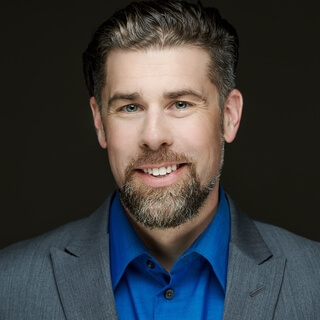
Tom Buschlach,
And this interview is with Maria Gullo.
Maria is a fellow teacher on Insight Timer.
She reached out to me after we realized we had a shared interest in both Centering Prayer and Christian Contemplative Practice.
Maria is the creator of TheDeeperConnection.
Org,
A trained and experienced spiritual director,
An ordained minister,
A small business owner,
And a mother of two.
She wears a lot of hats,
And for her contemplation is the common thread that keeps her life united together.
On a personal note,
She shared a perspective that I had been looking for,
Not only for the podcast,
But for my own professional development.
You see,
Several years ago I created the Centering for Wisdom assessment tool,
Or CWA for short.
The CWA helps leaders to integrate contemplative practice with improved decision making.
I like to think of Centering for Wisdom kind of like increasing the RAM on the hard drive of your brain.
The assessment shows you where you're most likely to become triggered,
Which can lead to poor decisions.
Now we already know from other research that a daily contemplative practice,
Like mindfulness,
Meditation,
Or contemplative prayer,
Enhances your ability to focus and remain present.
But I had a further intuition that this should also support a person in making good decisions and to leading with integrity.
So I got really fired up when Maria responded to my questions about how she integrates her contemplative practice with being a business owner.
She demonstrates how developing present-minded awareness supports the success and happiness both of her employees and her customers.
Maria also offers insight into what she calls the imposter self.
In contemplation,
God works to deconstruct your imposter self so that your true self,
Or we might say the image of God or divine image within,
Can shine through.
If you feel like you're struggling to connect your contemplative practice with the practical ups and downs of daily life,
Whether that's in work or business,
Any kind of leadership or parenting or coaching,
Or just in relationships,
You're going to find Maria's wisdom inspiring.
You can find the show notes for today's episode at thomasjbushlack.
Com forward slash episode 13.
That's the word episode followed by one three no spaces.
I'm also happy to announce that Contemplate This is now available on Spotify so you can listen there.
Finally,
If you're loving this podcast,
I'd like to ask you to support the show in one of two ways.
You can help by writing a review wherever you get your podcast,
Or you can make a free will offering to support the show.
You can click the donate button on the show notes page or go straight to thomasjbushlack.
Com forward slash donate.
Everything is fully secured site there.
Thanks to all of you who already support the show and for those of you who are about to become more official supporters.
Now let's get right to my interview with Maria Gullo.
All right,
Maria,
Welcome.
Thanks for being on Contemplate This.
Good to have you here.
It's great to be here.
Thank you for inviting me.
Yeah,
Thanks for initially reaching out through insight timer,
I think,
And finding our mutual teaching there and then making that connection.
So I'll ask you just to introduce yourself a little bit for folks who might not be as familiar with you or your work,
And then we'll go from there.
Sure.
Well,
I'm Maria Gullo.
I am a spiritual director,
Pastoral counselor,
Ordained minister and a business owner.
And I do it all at the same time.
My well,
Not at the exact same time.
That's pretty much impossible,
Especially if I'm on this contemplative journey.
Well,
You talk about being present,
Right?
Yeah,
Exactly.
And I have a ministry,
It's called the Deeper Connection.
That ministry started a number of years ago,
Almost 20 years ago now.
Where I teach centering prayer and I would say centering prayer,
Spiritual direction,
The contemplative way.
That's the foundation of the ministry.
Okay.
And that's a website at thedeeperconnection.
Org.
.
Org,
Yeah.
So folks can check that out.
So how did you get introduced then to contemplative practice,
Centering prayer,
All of that?
What's your kind of,
You can go as far back as you want to,
You know,
Oh good,
Because I think that's always interesting,
You know,
What people were exposed to growing up and how they've then integrated that or not into adult life.
So kind of give us a sense for how you came into that contemplative path.
Sure,
Sure.
Well,
I'm going to take you back to when I was a little girl,
Because as I have kind of reflected on my life,
I realized that there was a few real important points as a young one that were really instrumental for me.
I was in Catholic school and I had an incredible experience that was really very positive.
And my teachers,
They were nuns and they were very loving,
Very caring.
I think I was around eight or nine,
Probably around nine.
And I distinctly remember was it Lent and we were taught the Stations of the Cross and we were each given little booklets.
And I went home and I was praying with my little booklet.
Well,
Earlier that day,
Or maybe a couple days in a row,
I had fallen on the playground and scraped up my knees.
And so I was trying to kneel on my hardwood floor in the bedroom and I couldn't kneel and it was hurting.
So I'm sitting and I'm going through my stations and I got to the station that talked about Jesus being scourged.
Right,
That station.
And I remember reading that,
However it was put for little children,
For a little one.
And I remember actually having this thought and perhaps even saying this,
Wow,
My knees hurt so bad.
This must have really hurt you so badly.
Right?
Like there was this little,
I don't know.
That point of coming to Christ,
So to speak.
And then at that moment,
I literally just felt this warmth.
And I'm not going to say that I saw Christ or anything like that,
But as a little one,
It was like I sensed this presence.
And from then on,
No one could change my mind about who Jesus was or that there was a Jesus or that this God person is real.
Like it was as if no one had to teach me anything or could change my mind.
It was just that profound.
Yeah.
And then you'll get a kick out of this,
I think.
I remember the nuns speaking,
Talking about some convent where they didn't speak.
Where all of the people that lived there,
They didn't speak.
They only spoke like certain times.
And I remember thinking,
How could you,
How did people do that?
Remain in so silent.
And I thought,
Wow,
Like that really was very perplexing,
But as a little one,
Like that stuck with me,
Which is unusual.
I wonder if it was like the Carmelites or one of the really hardcore religious leaders in the Catholic world.
Yeah,
Exactly.
It was.
And then I think maybe a little while after that,
I was still in grade school.
I just had this other experience.
I was in class this time.
And I guess they had given us something and I was reading Who is God?
Maybe it was,
I don't know if it was a Baltimore catechism or what.
But I remember reading,
I'm sitting there,
You know,
Real good little girl.
And I remember reading Who is God?
God is love.
And when I read God is love,
I just,
Again,
I had that sensation of warmth come over me.
And I looked around to see if anyone in the class,
Who else is feeling this?
I'm like,
Wow.
Because I was so young,
I remember this.
And I didn't see anyone else looking around,
So I just stayed put.
And those experiences really just gave me this understanding that,
Like I said a minute ago,
There is this person named Jesus,
You know,
At that time.
That's how I was understanding.
And that he's real and he's in my life and that's that.
And it's interesting because I didn't really have any place to go with that.
Yeah,
Maybe not a language for it or a place where that felt like a normal part of the Christian tradition.
Exactly.
So I kind of tucked it away.
Yeah.
That's interesting.
I feel like a lot of people I've spoken with,
Whether it's on the podcast or just people I've connected with,
Have had experiences as a younger person that they didn't know what to do with,
Didn't feel safe even necessarily talking about.
And that whole idea of like tucking it away and then pulling it out later in life where it makes sense.
Yeah,
I would imagine so.
And I didn't know how to talk about it.
I just kind of let it be.
But there was always this piece of me,
This part of me,
You know.
When I was in high school,
It was the Jesus movement.
And I always felt connected to it.
Even through college,
I moved to New York City.
Like there was always this piece of me.
And there was an unusual moment that happened as I'm speaking now,
I'm recalling it.
I went to New York to study acting.
And I went to Sanford Meisner School,
Which was an excellent school.
It's still there,
Neighborhood Playhouse School of the Theatre.
And I believe it was the first day of acting class.
And the teacher told us the definition of acting,
Which was to live truthfully moment by moment under imaginary circumstances.
And that I went,
Really?
And that deepened my spiritual journey.
Again,
One of those distinct moments that I went living truthfully moment by moment under imaginary circumstances.
Wow.
Wow,
It just cracked me open.
And I think what it did was it tapped into,
I call her the imposter self,
You know.
But it tapped into the false self.
Like I became aware now that there is this self.
I don't want to put words in your mouth,
But would you say like a constructed self,
A persona,
Which even comes from theater?
Absolutely.
Yeah.
And that they were breaking that down.
They didn't want the persona.
True acting isn't the persona.
True acting is living truthfully under the imaginary circumstances.
So for me,
It drew me deeper into my spiritual journey.
Well,
And again,
Tell me if I'm off the mark here,
But it's in listening to you tell that story,
It seems like there was also something about being radically present to the moment that opened that up.
Could very well be,
Because I,
Yes,
I mean,
I was present.
I was there.
I was fully embracing having been able to get into this school.
I was accepted.
I was there.
I wanted to understand.
And I was there because,
You know,
Where God had brought me in my journey.
You know,
I always say God's timing isn't too late,
Too soon.
It's just absolutely to the millisecond perfect.
So I was in that moment.
Open.
Yeah.
Ready.
Now at the time,
Would you have connected that to your experiences earlier as a child that you talked about?
I started to,
As the unpacking of the acting experience continued.
I started to directly recognize the connection with the spiritual journey.
Like at first,
It was more of a psychological,
Emotional experience.
And then I thought,
Oh my goodness,
If I get to the truth of who I am,
Might I find God?
Like,
Whoa,
Wow.
You know,
And that was very profound.
I mean,
It's interesting to retell it now because I haven't told that story in a very,
Very long time.
Well,
It's interesting that I sometimes use the metaphor of peeling the layers of an onion.
As long as we're in this life,
The onion skin layers never run out.
But it makes sense to me that there's maybe initially more of a psychological kind of approach.
But then as you work through some of that junk that we all carry around,
You start to hit those deeper spiritual levels.
Yes.
And then if we have,
I think at some point we all also,
In God's timing,
Encounter teachers that help us sort of make those connections and then keep peeling even deeper.
So,
Like this theater teacher and program was part of that.
And I'm so glad that you brought that up because I also remember,
You know,
As my spiritual development continued,
I remember hearing someone say,
You know,
Well,
And this is also from the Buddhist tradition,
You know,
When the student is ready,
The teacher will show up.
Right.
And also that the teacher really lies within.
And then so when we're ready to hear and we're ready to open up to the teacher within,
Then the teacher from without will appear.
And that was the experience.
That's what happened that my,
You know,
My teacher,
Mr.
Phil Gushy was his name,
That he appeared at that time.
And he said it just the way I needed to hear it.
Yeah.
So,
So if we keep peeling that onion.
Yes.
I know at some point you were introduced to centering prayer and contemplative outreach.
Yes.
And I don't want to push you.
So we're going to fast forward.
No,
No,
We're going to fast forward a couple decades.
Okay.
Well,
Wait a minute.
Not quite.
Was it quite?
No,
No,
No.
Maybe like 15 years.
Okay.
But I,
When I came to centering prayer,
It was an aha,
It was like,
Oh,
That's what I've been doing.
I can remember,
Because I had gone through this evolution in my prayer life.
I had always felt drawn to prayer and then drawn to silence because it was like,
Ah,
I could just hear my words echoing,
Echoing in my head.
And that didn't resonate with me.
So I was just drawn into the silence.
And,
And I would picture a barge on a river.
In my meditation,
It was picturing a barge on a river with my junk on it.
And,
And I just kept piling up my junk on this barge and,
And letting it go by.
And then as I would think,
I would just keep thinking of junk and keep putting it on the barge and let it go by.
So that was how I kind of was,
I started the contemplative,
My own way.
I didn't know what I was doing.
Yeah.
And then I was,
I actually had had surgery and I was recovering from surgery and I was laying on my sofa recovering from surgery.
And,
And this just this sense of,
Of how profound and how important and how I was just drawn deeper.
I couldn't get up.
I couldn't do anything.
So I,
And I couldn't write,
I couldn't do anything that would distract me.
And that's when I really,
I went back to when I was a little girl.
None would tell me,
Would say,
Said to us,
Just say the name of Jesus.
You know,
I'm sure a lot of people that were raised in Catholic tradition or Catholic school maybe experienced the same thing.
But just say the name,
Like if you're scared or whenever you need,
Whatever it was,
We were very young.
So as an adult now,
I went back to that and laying on the sofa recovering from surgery.
I went back to just repeating the name of Jesus.
And then that kind of became my sacred word.
And then a couple of years later,
I was just researching online.
I've got to do something.
There's got to be something more.
And I found a retreat house near me.
And that was,
I don't know,
Like 98 or something.
And went to the retreat house and ended up going,
I read,
I'm like,
Oh,
This centering prayer meeting.
That sounds pretty cool.
I think I'll go see what that is.
And I sat in it and I'm like,
Oh,
I was just home.
Yeah.
I was home.
That's funny because I have a very similar memory of the first time I was introduced to centering prayer.
It was in a college course actually taught by a Benedictine sister who had one of her fellow community members come in and teach us centering prayer.
We sat there for 20 minutes.
And I just remember being like,
Wow,
This is it.
And I've practiced ever since.
Yes.
When you know,
When you know you're home,
You know you're there.
You know you're in the presence.
I don't mean arrived.
I don't mean that at all.
It's just you're moving there.
So I always call it like a wooing.
You know how God woos us.
Just draw the sin.
So I could not give any explanation to anybody.
Why do you go?
Why do you go?
I don't know.
I know that I know that God is wooing me in.
And then after I did that for a couple of years,
Then I could explain why.
Yeah.
After you get a little training,
A little like theological language or spiritual language.
Yes.
Something I find really interesting in your story,
Too,
Is there's a tradition in kind of the Christian mystical tradition of what they call the spiritual senses.
Yes.
That there that we going back to that idea that we are made in the divine image that originates in the opening chapter of Genesis.
So there's something in us that already is divine and connected with the divine.
And that we have the capacity to tune in to the divine presence within and around us.
That's just as real as,
You know,
Our five senses that we learn about in biology.
But that maybe for a lot of historical and cultural reasons,
If we're not in tune with that.
But it strikes me that you were very in tune with that,
Maybe without even intending it.
But that is part of your gift that even that sense of warmth that you talked about.
Yes.
In my little way,
Whatever I was open.
And that's,
You know.
Yeah.
God finds the small little windows where we're actually open.
Small little windows.
Where the persona and the mask is not paying enough attention to be defensive.
Exactly.
Exactly.
I love it.
I love it.
I love how you do that.
And I will say that even in my 20s,
Like I had left the Catholic Church.
I ventured out into other church experiences,
Denominations,
Reading some on Buddhism.
But I never left my Christian tradition.
I just kind of went out because I kept saying,
I know there's more.
I know there's something else that I'm not,
I'm not exactly getting it.
Where?
And so I just went out seeking and then came upon the retreat house.
And that was it.
I was reminded of that T.
S.
Eliot poem about after all our searching,
We wind up right where we started.
Exactly.
A poorly paraphrased translation,
But the same idea.
But that's exactly it.
So that retreat was,
Well,
I guess what happened after the retreat?
How did it move from that really deepening what was already kind of your intuitive practice?
And then at what point did you start moving into teaching and integrating that into other parts of your life?
Good question.
You know,
As I started to intentionally invest myself,
It became such a part of my life that it's like,
Okay,
I can't,
I couldn't,
How do I put it?
Wow,
This is great to give voice to this.
To put words around this.
That it's almost like I couldn't separate myself from it.
You know,
Before,
Before my,
My real intentional contemplative work,
My contemplative Christian path,
It's almost like there was,
I was able to compartmentalize at times as life called for it.
Yes.
I think a lot of people feel that today.
Even people who still in the tradition,
But struggling with where they fit.
Yes.
So keep,
Keep going.
So I could compartmentalize and I could say,
Okay,
Well,
This is this work and this is what I do at work,
Or this is what,
And I go to church and this is what I do.
And I have a ministry or,
You know,
I had a teaching ministry or,
Or I went to Bible studies because I went into the Protestant tradition and I went into,
You know,
Different denomination experiences.
And Bible study was a big deal.
So I would go into Bible study and I had,
And so I had,
I felt like I was compartmentalized.
You know,
That part of me that loved acting or that loved dance,
You know,
The love,
The performing arts and the part of me that was an English teacher at the time.
I mean,
Like there was just all compartments.
And then when I came to centering prayer,
When I came to the contemplative way,
I went,
It was like emerging and didn't happen all at once.
But it was like,
Well,
Wait a minute.
You know,
I heard,
I heard the words again,
Follow me.
And I said,
Oh,
Wow.
When I follow you,
I'm following you with all that I am,
Not just my religious self,
Not just my,
This persona that I,
You know,
The good Christian self.
Oh yeah.
You know,
Whatever that is.
A false one.
Yeah.
Exactly.
A false one.
Yeah,
Really,
Really conjured up a good one.
Yeah.
But,
But that there was this,
This call to authenticity.
And,
And at the time I was in,
I was a business owner.
And here,
You'll,
I think you'll find this interesting how I discovered spiritual direction,
My ministry of spiritual direction.
Was because it was,
We had a decent sized company in that we had like about eight or nine,
I don't know,
Eight to 10 managers.
And I was really in charge of management development.
Or my,
I was staff development,
But management training and,
You know,
Training leaders,
So to speak.
Right.
And I would always find myself in relationship with,
With these women.
And it was always going deeper.
It was deeper than just that this is how you act at work or here's some good leadership tools.
It was always going beneath it.
And I started to discover the desire for spiritual direction,
But it came from my work in,
In,
In the business,
The managers.
So you found that people just sort of intuitively felt like it was safe to open that part,
Even in a business context where.
Exactly.
You would normally probably have extra walls up,
Right?
Again,
Something like that.
And that was a clue for you to pursue that for yourself,
The spiritual direction.
Exactly.
It's pretty amazing how,
You know,
God leads us.
That,
That,
That was the leading.
It's like I could be grasping and looking and searching and the whole time I'm grasping,
Looking and searching.
Well,
What should I do?
Just do what's right in front of you.
And then it evolved.
That,
That's how it,
Does that make sense?
It totally makes sense.
Yeah.
Yeah.
And it all,
I mean,
It helped that,
It helped that I was partners in the ownership of the business.
You know what I mean?
Like that I,
That I wasn't under someone else's domain,
That I was breaching some kind of boundary by speaking to individuals.
But on the flip side,
That is to me sort of all the more remarkable because you did have,
You were in a position of authority where people again might be more guarded and not as willing to be vulnerable,
But the fact that they were.
And that you ended up sort of coaching them at both the level of personnel development and management and at the spiritual level.
So I want to pull on that thread a little bit.
Sure.
That connection,
I'm sort of living into that connection myself as I'm developing my own business and working more with other business leaders.
Good for you.
So that might be another area where,
You know,
You talked before about being fragmented.
Yes.
And that you started living into and discovering this wholeness.
So talk a little bit about your experience of integrating that in like the work that you've done with people you've managed or as a business owner.
And whether that,
Maybe that could be for the people that you've worked with,
But it could also be for you.
I mean,
How,
How do you bring that contemplative piece into the nuts and bolts and the stress of running a business?
You know,
That,
That's a great question.
You're so good at this.
It's such a pleasure sitting with you.
Well,
It's a pleasure to hear people's answers.
So,
You're so close to hearing your answers.
Yes.
Must be fun.
Yeah,
It is.
So let's see,
You know,
I came from trying to figure out how to be a business owner that was going to allow her caring for people to come through how I led people.
And,
But yet not be such a mush that they could get over on me and not really hold them accountable to what they would,
How they needed to perform or,
Or,
Or the systems of the business.
And,
And as my contemplative journey deepened,
So it deepened in me at,
At,
At my work so that now I can say that I don't know how I could own a business without being a contemplative.
In the world.
I mean,
I know it can be done.
I just don't know that I,
I could do it.
Because,
You know,
Well,
You know,
With your own life,
It's that transformation that's happening in you and through you is then dictating who you are in the world,
So to speak,
Right?
It's,
It's how you show up in the world.
So if you're a man of integrity,
It's not because,
Oh,
I'm,
Well,
It can be because I'm going to choose the right thing,
You know,
I'm,
I'm going to,
But it's a lot harder to be faced with all of these challenges and ways of handling things and say,
Okay,
Now what,
What would be the right way to do this?
Integrity wise,
Like,
How do I,
How do I make this right?
Because perhaps if I,
If I twisted a bit,
Like as a business owner,
Maybe I can get away with this,
I can hide this or I could do this,
You know,
So it's just harder to me to live that life of wholeness and integrity by trying to force it upon oneself.
Right?
And the same,
So that kind of using primarily the,
The intellectual,
The rational,
Even the strategic,
Primarily as opposed to,
You're not actually getting rid of that,
Right?
You're adding to intelligence by tapping into something deeper.
Exactly.
And for me,
That connection just made the leadership go smoother.
It,
It,
It was like more,
I mean,
I use this term lightly because it makes it sound almost easy,
But it wasn't and it isn't.
So it's almost a no brainer,
But by that,
I mean,
I simple,
But not easy.
Yeah.
So it makes it a simpler way of doing business,
Of being a leader,
Of training others,
Of,
Of,
Of helping others,
Of listening to others in the business framework.
Right.
Not always easy.
No.
Well,
And I think what maybe a lot of business people might struggle with is,
Because you talked about how it was important to keep the,
The professional goals and even the professional boundaries in place.
And to remember,
Like,
You know,
We're part of a team that is running a business here and that's still,
So I think a lot of people would think,
Well,
If,
If you bring the contemplative or prayer into that,
Then,
You know,
You're not going to be competitive.
You're not gonna,
You're gonna have cashflow issues.
Right.
Right.
I'll tell you what it does.
Oh,
I'm sorry.
I'm interrupting.
No,
Go ahead.
I think you might be going where I want to go.
But what it does is that when you have the cashflow issues,
You may not freak out as much.
Yes.
Yes.
Yes.
Because,
Because I've realized that there's ebb and flow.
There's ups and downs.
There's,
Okay,
So there's exciting times and there's down times.
And my,
My contemplative life allows me to not hold on to,
To the up times and,
You know,
To not,
Not grasp hard to them and to be able to release,
You know,
To,
And to release those down times and not to get so attached.
Oh my goodness.
You know,
It's that time of year again.
What are we going to do?
You know,
And go into that mode.
So that one,
What I'm interested in too,
I mean,
This is hitting right at the heart of what I've been doing more and more work around myself is great.
Yeah.
I mean,
This is fascinating because you're like talking about all the examples that I'm using in my workshops and with my centering for wisdom assessment and all this stuff.
But something that you were just talking about that,
Like when the downturn comes or that you freak out and it strikes me,
And maybe you have an example that if you do give into that,
That it paradoxically,
You feel like,
Oh,
I've got to do something.
I've got to do it quick.
I've got to,
You know,
Fix this,
Right?
It's the mentality.
That's right.
But what ends up happening is you might end up making a choice that makes it worse in the long run.
That maybe fixes,
And I'm doing the fix in air quotes,
Fixes a temporary problem,
But creates some bigger problems down the line.
Whereas if you stay in tune with that deeper wisdom that's embodied,
That's in the present moment,
That's not driven by fear and anxiety,
That you still have to worry about the bottom line,
But you can make better decisions for the long run.
Yes.
Can you give me examples?
Yeah,
Well,
First of all,
As you're saying that,
I'm thinking of Ignatius and his rules of discernment and how that teaching is that when you're in desolation,
Don't make any decisions.
Oh,
Yeah.
Yes.
Don't make no moves,
Change nothing,
Just stay focused and stay ahead.
So,
See,
And I learned that.
That was very,
That was helpful for me.
That is a helpful reminder.
And if I'm remembering Ignatius' spirituality correctly here,
The converse of that is that one should only make decisions when you feel like you're being drawn towards a good.
Yes.
And there's a sense of what he would call consolation.
What you described is that warmth,
Right?
That sense of knowing at a deep level,
Like this is the right thing to do.
Even if everybody else around you is like,
What the hell are you doing?
Exactly.
Exactly.
Have you lost your mind?
Like when I went to graduate school for pastoral counseling,
Spiritual direction,
It was like,
What?
You're running a business.
What are you doing that for?
You know,
That's just what I was to do.
And I was in graduate school for four years and still running a business.
So are there any other examples or stories that come to mind of the effects that you saw of leading this way?
Like maybe in an employees that you worked with or,
I don't know,
A situation where things looked really dire and all the pressure was on you to freak out?
Well.
Something stupid.
Oh my gosh,
There's so many.
Like comedy in one day,
Right?
Well.
You know.
I see it all the time,
Tom.
I see it all the time when I work with women that maybe are single moms or second wage earner in their homes and I will see them be upset about something or something happened.
Okay.
One of my assistant managers,
Terrible accident.
Her son was hit.
He was riding a bike and he was hit by a car.
Goes into,
They didn't think he was going to live.
Serious brain trauma.
And now she had like her community surrounded her,
But she knew that we surrounded her.
I surrounded her.
I could,
I really just held her in prayer in her family and prayer that that was very specific about a crisis.
Yeah.
Okay.
So that has happened more times than not.
But on a day to day,
It's like someone can come in there.
They're in helping them deal with the ordinary stuff of life and helping them not freak out.
It also helps how they do business,
How they operate in the business.
We're a service driven business.
So,
You know how when they touch people,
They're working with people.
How I approach them and how I'm able to help them dismantle their anxiety.
That then goes out to how they handle the client.
But this other thing is what really comes to my mind.
And that is that,
A little bit of a sad note,
But it's reality.
Okay.
A manager who had worked for me,
She worked for me,
I guess for about 12 or 14 years.
I had gone through a divorce and through the divorce,
The company was split up.
Okay.
And some people stayed and worked for my ex-husband and others stayed and worked for me.
And just as an aside,
We kept it as positive and amicable as possible.
And so we were pretty successful at that.
But anyway,
So this manager who we were very close,
She stayed working for my ex-husband.
Anyway,
We had lost touch over the years.
She had stopped working for him,
Got involved in another career.
But anyway,
I was at a restaurant within this past two years and I saw her and we reconnected.
And she just shared with me how much working for me and all that had meant to her,
Which was a very positive experience.
So then this New Year's day,
She passed away.
A young woman passed away from emergency surgery and literally in two days.
So I go to the memorial service and there I see all these people that used to work for me,
10,
12 people at least.
And her sister.
There was a time when we had like six,
Seven,
Eight sister teams working for us.
And so it was the gal that passed away,
Her sister was there.
And she said,
You know,
That was like the best time of our lives.
She was speaking about her and her sister.
That was so important to us.
That time was so important.
And her husband was there.
And he said,
Yeah,
It was.
And it was just the reality that I always said,
Who you are,
Speak so loudly,
I can't hear what you're saying.
Right?
You've heard that saying.
No,
But I'm going to use it.
Oh,
Okay.
And that's what the spirit just brought me to.
It was these years later,
This is what I have done.
Just put one foot in front of the other.
Continue coming,
Continue connecting,
Continue reaching out.
And that's how it has gone.
And I'm just going to repeat this that I don't know.
I mean,
I could do business.
Okay.
I'm a bright enough woman,
Let's say.
Okay.
I've had enough education.
I can read enough.
I can learn what I don't know.
You know,
My personality type doesn't necessarily lend to it.
So I've got to stretch myself a bit.
I'm a four on the Enneagram.
You're going to love that.
Right?
I would have guessed,
Yeah.
Of course.
So I have to draw from my three wing.
Yeah.
And she has served me well in my business life.
However,
To be authentically me,
I could not do it without the contemplative way.
What strikes me too is that we've been talking about this for,
I don't know,
20,
At least 20 minutes.
And you've been talking about the impact,
The sisters,
That it was the most important time of their life.
I know just because we've talked before that this business has supported you and a good number of employees.
So it's successful for several decades.
And you haven't once mentioned what the product is.
Because it doesn't matter.
I know.
Isn't that great?
Yeah.
Isn't that amazing?
Yeah.
So it's so true.
So I run a hair salon.
I run a hair salon and a barber shop and a little retail store.
And at one time we had four locations and a salon spa and a higher end salon.
And there was just a number of different locations.
And I've never been in that business at all.
In fact,
You're going to love this.
I've said that a few times.
My kids were little.
I was home with my kids.
I was nowhere near looking at this business,
At this possibility for a business.
I remember seeing ads for these hair salons thinking,
Oh,
I would never do that.
That's what I said.
I'd never do that.
And then I end up for 35 years.
I'm sorry,
Not 35 years,
30 years.
Actually doing it.
And I have to say this to my spiritual director who happens to be a sister who is the director of that retreat house that I had gone to years ago.
She ended up being my spiritual director for these 20 years.
And I have gone into her a number of times and I've said to her,
You know what?
Here I am this business owner.
What kind of work am I doing in the world?
I mean,
I'm not out giving food to the homeless on the corners.
I'm not like I go through this list of ways that I could be.
I mean,
I'm inundated with running a business.
All the ways that,
I mean,
This is me maybe projecting,
All the ways I'm not good enough and I'm not being a good enough person or a good enough person,
Right?
Not being that good enough Christian,
The Dorothy Day of the world,
Whatever,
Right?
Don't shud all over yourself.
That's one of your lines.
And then,
But I always,
But she said to me,
And it was so important and it was very insightful for her at the moment she said,
But Maria,
You are feeding the hungry.
You are clothing the naked.
You are keeping a roof over the poor.
And she made me realize how valuable it is to be running a business and employing all of these people,
Knowing that their children are eating,
That they're able to go on vacation,
That they're able to purchase vehicles,
That they're able to be comfortable and confident in knowing that their owner is treating them well,
Is taking care of them.
And she just like caused me to go,
Oh,
Like,
Oh,
Okay,
I'll stop that.
Okay,
I'll stop that nonsense.
Oh,
Sorry,
Go ahead.
I'm going to kick off.
Yeah.
And then just one more quick thing.
I think that it's probably one of the reasons,
Like I've been in this ministry and this prayer ministry and I've created the prayer tracks and taught centering prayer and have done all that.
And I've had individuals asking me,
Well,
Is this a nonprofit or why don't you become a 501c3 or whatever?
And that sounds like that's not my language.
I'm like,
But why can't it be a business?
For me,
Business is a good thing.
It's a very good thing.
I'm a small business in a community.
Other people know it.
They come,
We serve them.
We serve one another.
Like,
To me,
Business is not a bad word.
Business is a really good thing.
And anyway,
I just thought you'd find that interesting.
No,
I do,
Especially because I've,
You know,
I think some folks,
Not everybody,
But some people maybe who are more drawn to the contemplative dimension of the Christian tradition,
Maybe also come with certain,
Let me stop talking about other people,
My own background.
You know,
I've had biases against economics and business,
But my own,
It's partly been through a process of deeper integration that you talked about for me personally.
But I also in my work,
You know,
I study and teach and try to practice Catholic social thought.
But if you get into that,
Like Pope Francis talks about an economy that builds up life and an economy that kills.
Yes.
And so it's not economics that's bad.
It's not business that's bad.
It's how people show up to that and do it in a way where you were talking about,
Like,
Being attentive to the balance sheet while also being attentive to the person that that balance sheet is supporting.
That's the ultimate kind of contemplative integration.
Yes.
And I will say,
And being attentive to the person that's working for me,
Working with me,
Working on my team.
It's also holding them accountable,
Like,
Okay.
All right.
Give you an example.
Somebody that's very simple has a lateness problem.
Right?
Always late,
Always late,
Always late.
So I can say,
Oh,
Well,
Yeah,
But look,
She has these issues.
She's having this problem.
She has this.
So put it aside,
Put it aside.
Let her be late,
Let her be late.
Or I could do the opposite.
Well,
If you're late two more times,
That's it,
You're fired.
Yeah.
Or I can say,
Okay,
I understand that this is a challenge.
So let's look at this and arrive at not compromising to the point that not holding her accountable,
Because it's important for her.
It's important for her to rise to this.
And it's amazing over the years,
Even with this simple issue,
Which is not really a simple issue.
Yeah.
There are no simple issues in personnel.
Yes.
Exactly.
That it really causes people,
Once they get into the groove and understand how important time is and being on time,
This is their issue.
And when they get there,
They develop more confidence,
Like,
Oh,
Wow,
I can do this.
Then I can do this.
And then you see them kind of grow.
Right?
So holding them to a level of accountability for their highest good or for their good.
I don't know their highest good.
I do not know their highest good.
But for what I perceive their good to be.
Yeah.
Yeah.
Well,
I'm taking notes personally here,
Too,
Because I'm,
As I told you the last time we spoke,
I'm about to step into a new role where I will be.
Yeah.
More management and working directly with people.
And the way you told that story was interesting about the,
You know,
The two maybe most immediately obvious options,
Which are to be lackadaisical and overly forgiving.
Right.
And then on the flip side,
That tendency to want to be kind of a hard ass and hold people accountable.
But then when you when you kind of flipped into how you actually approach that situation,
It was like,
I'm on your team here and we were on the same team.
And we have we have this issue of time.
Right.
And so how are we going to work on this together?
Yes.
And then resolve that together.
Yes.
And they may or may not come along.
Right.
And then there's the rest of the team that's saying,
Well,
If she or he can be late all the time,
Then I can be late all,
You know,
That whole domino effect.
So something like the leader,
The manager.
So has to address it.
But again,
You know,
Through through this way where we as we're being transformed.
Right.
Right.
Thomas,
As God is working in us and through us and doing whatever God is doing on this imposter self of mine,
You know,
This persona that I sometimes want to,
You know,
She she not sometimes.
Well,
Who knows?
Right.
But that as as we show up as leaders seeking the the contemplative way and the contemplative dimension to bring that where we are.
I believe transformation happens and we don't even we we don't even see.
Yeah.
Yeah.
We get those little graced glimpses of what's happening.
Yes.
What's happening.
But it's there's so much beyond that that we don't see.
I think you're right.
Yeah.
It'd be interesting to gather up all the people that have worked for you and interview them.
Oh,
I don't know about that.
They won't they wouldn't all be singing my praise.
Yeah.
Yeah,
That's probably true.
Yeah.
You know.
Yeah,
I I'm sure I would rub some pretty strong eights the wrong way.
So we've kind of burrowed in on that piece,
But I know you have,
You know,
Other projects that you're working on spiritual direction.
You have a course on centering prayer,
On insight,
Timer and meditations.
I don't know.
Is there anything else that you feel like you want to shine a spotlight on humbly?
Yes.
Yes.
I have to say I love my work as a spiritual director.
Absolutely love it.
When I get a new client or from anywhere around the world,
I do,
You know,
Virtual spiritual direction as well as here.
I live in the greater Philadelphia area and I have an office here.
And I've also become an ordained minister.
And at first I thought,
Oh,
How could I possibly do that?
The interesting thing is my kids,
As they were growing up and they're now 33 and 30.
But as when they were growing up,
They would say to me,
Mom,
Like,
Maybe you should be a pastor or something.
I was probably getting on their nerves,
You know,
With a right ear.
They're like,
You know,
Maybe you should go be praying over somebody else.
Yeah,
Go bug somebody else.
You know,
But and I would say,
No,
That's silly.
That's silly.
And then the past couple of years I actually became an ordained minister and I love that work.
I did some hospice work and some weddings and just being with people at those times,
I find that they're the most present and the most open.
So that's always amazing to me.
And I just love creating the meditation tracks,
You know,
The prayer tracks.
One of my projects that is in the wings is Alexia Divina,
A series of Alexia Divina recordings.
And that will just probably continue until,
Who knows,
Forever and ever.
But I find that to be an important project.
Yeah.
Yeah,
It's interesting how the contemplative path,
You know,
We talked earlier about early life experiences,
Peeling the onion from the psychological to the emotional and the spiritual.
That there's an inward movement that I don't want to say it eventually moves toward the external because I think it happens simultaneously,
Right?
As you go in,
You're also touching things further out.
Again,
Maybe in ways you don't see,
But how your own story has moved towards embracing the role of minister or pastor or ordained person,
Of sharing your teaching,
Of putting it out there.
So it just naturally happens that it sort of overflows.
Yeah.
Well,
What happened to me was it was like,
Whoa,
We need to be teaching.
Like if I had a channel,
You know,
Perhaps if there was a place,
A lane for me to unpack this part of me,
You know,
Someone noticed and invited me,
Whatever,
That perhaps it wouldn't have taken,
Who knows how long.
I'm not certain if it would have been any different,
But I realized that I just got this desire to want to share and teach centering prayer and teach contemplative spirituality.
And the first place I went was a 12 step recovery center and taught it within the recovery environment.
Yes.
Thank you.
And then we'd teach workshops in churches,
But it was like,
I wanted to share what was given to me because it feels like it's not just for me.
Like I'm not just supposed to be hoarding this.
Yeah.
I have to,
It's like,
Where did I find bread?
And now I've got to share where others can find that bread,
So to speak.
Yeah.
And for those that know the 12 step language,
I mean,
That is the 12th step,
Right?
Is to practice these principles in our lives and share it with others.
Yes.
Yes.
And that makes perfect sense.
Otherwise we'd probably just sit.
I'd be stuck in my room.
You'd be navel gazing while you're with family.
Exactly.
Morbid self-introspection might be more like it.
Yeah.
But that's an interesting point is that maybe there might be some perception that contemplative practice or meditation is more self-absorbed in that way.
But really it's sort of the opposite itself.
It's deconstructing the persona.
What's the word you use?
It's not the false self.
It's the.
.
.
The imposter.
The imposter.
Yeah.
I like that.
I've heard false self.
I've heard persona.
What are some of the other ones that are out there that people use?
The imposter,
The constructed self.
Constructed self.
Tara Brach calls it the spacesuit self.
Okay.
It creates a layer between us and everyone else.
That's good.
The imposter just came to me one day because I was reflecting maybe journal writing or whatever,
And I'm like,
She imposes herself as me.
Yeah.
And guess what?
She isn't.
Yeah.
No.
I don't have to identify with her.
Yeah.
She's imposing as me.
So that's where that came from.
Cool.
Very cool.
Well,
This has been so rich.
I like to end with some kind of rapid fire questions to pick your brain a little bit.
Okay.
And so I kind of do these at the end of each.
So this is more.
.
.
This is almost like a Rorschach block test here.
All right.
Okay.
Fill in the blank.
Uh-oh.
All right.
Contemplation is?
Freedom.
The purpose of contemplation is all about?
Relationship.
Is there a word or a phrase that captures the heart of your contemplative experience?
Silence.
Yeah.
There you go.
Is there a word or phrase that captures?
The heart of your contemplative experience.
Oh,
Wow.
Maybe we have to come back to that.
I just hear this follow me.
It's just the constant.
.
.
It's just the constant invitation of the follow me.
What is your hope for the next generation of contemplative practitioners?
That they,
As well as us,
But that they would trust,
Trust that this is the way.
That they would have the courage to truly live it and invest themselves in it.
And that when the world is running amok and when there's so much chaos on the outside,
That they would ground themselves and find this to be their place of grounding and not compromise.
Just not compromise.
Yeah.
That first,
That question was sort of intentionally open ended in terms of tradition,
But what is your hope for the future of the Christian tradition or contemplative Christianity?
Oh,
Goodness.
That.
.
.
Where to start.
That it could just become.
.
.
What's that?
I said where to start.
Where?
Exactly.
Thank you.
But that it would become.
.
.
I hate to use this word because.
.
.
Well,
For whatever reason,
But that it would become more mainstream.
Like in other words,
That it's not the fray.
That it's not just,
This is just what some do,
But that it would be recognized and honored and taught as a foundational piece to our Christianity.
That without it,
Does our Christianity even make sense?
I'm reminded of the famous line,
And I've used it frequently in my writing from Karl Rahner,
The Jesuit theologian.
That the Christian of the future will either be a mystic,
Someone who has experienced something,
Or he or she will cease to exist at all.
Yes.
And that's how.
.
.
That was 50 years ago that he said that.
Right.
Right.
And I guess,
Yes,
I guess that's it.
I mean,
He would certainly put it so much better than I would.
But yes,
That it is part of the foundation,
That we recognize that it is our foundation.
That it is what we can stand on.
It is what creates.
.
.
We hear on Christ the solid rock,
Or not standing on the sand,
But that this is the rock,
That it is what creates that place to stand.
Wow.
Thank you so much for setting aside this time and sharing your wisdom.
Oh,
It's such a blessing.
You are so fun.
I always end these with,
Okay,
Well,
We'll have to do this again because there's so much more to cover.
I know,
We are.
We're going to do this again,
Tom.
Yeah,
We will.
To be continued.
To be continued.
Peace be with you.
Peace.
Thanks.
Thanks again,
Everybody,
For listening.
And you can find the show notes at thomasjbushlack.
Com forward slash episode 13.
That's the word episode and the number 13,
No spaces.
While you're there,
You can check out all the practical resources to support your daily contemplative practice.
I invite you again to support Contemplate This podcast,
Either by writing a review,
Wherever you download your podcast,
Or by making a free will donation.
Until next time,
May you find freedom and peace in your contemplative practice,
Especially in the middle of the daily joys and challenges of life.
Peace.