Explorers,
And peaceful revolutionaries.
Hello everybody,
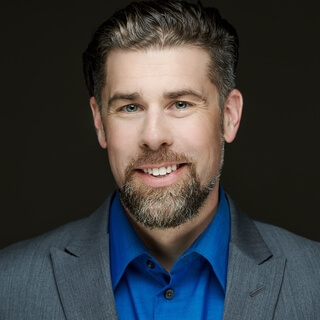
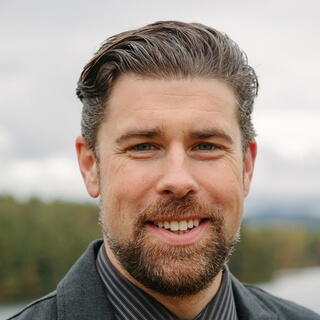
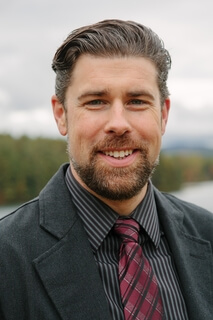
This is Tom Bushlach,
And welcome to episode 14 of Contemplate This,
Conversations on Contemplation and Compassion.
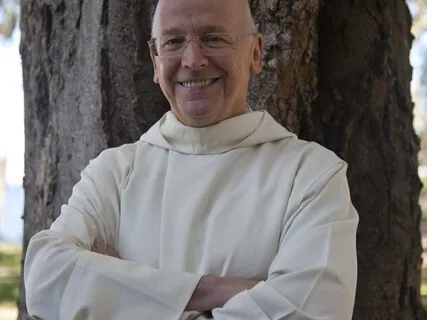
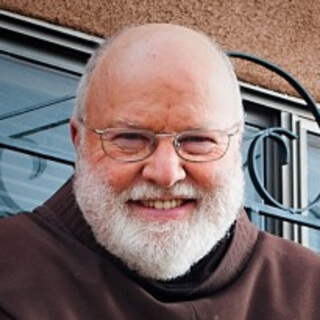
This interview is with Father Lawrence Freeman.
I first met Father Lawrence at the New Contemplative Exchange in Snowmass,
Colorado in August of 2017.
He was there as one of the representatives of what we affectionately call the Big Four,
The Big Four networks and leaders of Christian contemplative practice on the globe right now.
In fact,
My original goal for this podcast was to start by interviewing all of the Big Four.
First,
Father Richard Rohr from the Center for Action and Contemplation was my first guest on episode one.
The Reverend Dr.
Tilden Edwards of the Shalem Institute was my guest for episode three.
Father Thomas Keating was the representative from contemplative outreach.
Unfortunately,
His health declined rapidly and he passed away in October.
So Father Lawrence sort of rounds out the series.
Lawrence is a Benedictine monk of the monastery of Santa Maria de Pilastrello and the director of the World Community for Christian Meditation.
The World Community or WCCM as it's known by its acronym is in over 100 countries.
Pretty impressive.
It's the largest international network for handing on the teachings and practices of Christian contemplation,
Especially in the tradition handed down from Father John Main,
Also a Benedictine monk.
In fact,
Father John Main mentored Father Lawrence.
And one of the more fascinating parts of this interview for me was listening to Father Lawrence tell Father John's story and his own relationship with this important teacher in the tradition.
One of my favorite memories of meeting Father Lawrence at the New Contemplative Exchange was a pithy comment that he made that has stuck with me.
And he said,
It turns out that being Christian is about more than just going to church and judging people.
It was a comical moment,
But it's a statement that's both kind of funny and a little bit sad at the same time.
It captures how this emerging renewal of Christian contemplation and practice represents a way of faith that is deeply grounded in faith in Jesus Christ as followers and radically open to others at the same time.
It's something that many of us feel is both needed and hopeful both in the church and in theology and in our broader society at this time in history.
If you're interested in following up on anything,
You can find the show notes at thomasjbushlack.
Com forward slash episode 14.
So that's the word episode 14 with no spaces.
There you'll find links to some of Father Lawrence's books,
As well as some of the writings of Father John Main,
Links to the World Community for Christian Meditation and their Meditatio project and a link to the new center that Father Lawrence discusses in this podcast in Bonneville,
France.
If you are able and you feel so moved,
I am in fact very grateful for any support that you can provide.
And you can do this in one of two ways,
Either by making a free will donation to offset the cost for creating and hosting the podcast,
Which you can do at a fully secure site at thomasjbushlack.
Com forward slash donate,
Or by writing reviews wherever you download your podcasts.
Both of those are incredibly helpful and I'm incredibly grateful.
All right,
With that intro,
Let's get right into my interview with Father Lawrence Freeman.
Okay,
Father Lawrence Freeman,
Thank you for being here on Contemplate This.
Welcome to the show.
Thank you.
It's good to be with you.
Yeah.
So why don't you introduce yourself?
Tell us a little bit about your background and maybe the world community for Christian meditation and we'll just kind of go from there.
Okay,
I'll give you the potted version.
Well,
We might unpack it a little bit.
Well,
I'm a Benedictine monk.
I have three passports,
Irish,
British and Canadian.
I was born and brought up in London and went to a Benedictine school and studied English literature at Oxford.
Worked for a while in the United Nations and in banking and had a rather inglorious career in banking,
But I just wanted to know what made the world go around financially and in journalism.
And I made a long retreat at the monastery of John Main,
Who was my spiritual teacher.
And at the end of that long retreat,
I discovered that I no longer had the kind of ambition I had before.
So I was rather in a more worldly point of view anyway,
And I was rather caught in a double bind,
But resolved it by saying,
Well,
I'll try and be a monk and see if it works.
And as soon as I made my decision to do that,
I felt peace.
And I think I've been at peace ever since really with that decision,
Although,
You know,
There have been ups and downs,
Of course.
So I had a physical monastery,
Of course,
But my other monastery in a sense is the monastery without walls,
Which is the world community for Christian meditation,
Which has grown up over the last 30 or 40 years as a contemplative community based on the teaching and the sharing of the practice of meditation in the Christian tradition.
And it's been wonderful to see it grow and develop and reach a point now where we have an outreach into the secular world.
We can take this way of prayer into the secular world and share it with people who are very often desperate for what meditation has to offer them in terms of spiritual reconnection and depth.
And I'm on the point of moving my base to our new home in France,
Bonnevaux.
And I will be moving there at Easter,
Where we'll be celebrating our first Easter there.
And that will be my base from then on.
My teacher,
John Mayne,
Of course,
Had a great impact on me.
And he was the one who introduced me to meditation.
When I least expected it,
Really,
I was in my first year at university and I went to see him over some issues and problems that I had and some losses in my life.
And to my surprise,
At the end of one of our conversations,
He introduced me to meditation in a very few words,
In a very light touch.
And I wasn't expecting it.
And yet it had a powerful impact on me,
Really.
A double impact because intellectually,
The way he described meditation made no sense to me intellectually.
Maybe on purpose.
What's that?
Maybe on purpose.
Maybe.
I was on a very monocular search for truth and God and wisdom in an intellectual dimension.
And suddenly to be told that in meditation you let go of your thoughts was a bit surprising.
Seemed like pulling the plug out of a computer and expecting the computer to work.
I like that metaphor,
Actually.
Yeah.
But then he,
At the same time,
It touched my heart and maybe it awakened my heart in a way.
And I knew that what he said was totally authentic.
And it awakened in me a real desire for this experience and this knowledge.
But desire itself wasn't enough because I struggled at that age.
There was no support structure,
No meditation groups that I could find really helpful.
And so I made rather a bad attempt to make meditation part of my life.
And that's what led me to make that long retreat.
And it came together.
So now this was after university that you encountered?
Or when was this that you encountered John Mayne?
Well I met John Mayne much earlier in my life when I was a boy at school.
Although I wouldn't say he had that kind of spiritual impact on me at the time.
But so I kept in touch with him over the years.
And as I said,
It was in my first year at university and my sister had died and I was facing a lot of questions and difficulties.
And he invited me out to Washington,
Actually,
Washington DC,
Where he was headmaster of a benediction school here at the time.
And I came out and spent Easter in the monastery.
And it was then that that was my first introduction to meditation.
Okay.
So John Mayne plays an interesting role in the kind of rebirth of,
Or maybe rebirth isn't the right word,
Rediscovery of Christian contemplative practice.
So can you fill listeners in on a little bit of that history and then whatever you would want to say,
You know,
Not being in the context of official teaching,
But about the practice that he taught you?
Yes.
Well,
Maybe just a brief background to his journey,
Because his journey is part of a lot of stories.
Yeah,
But it's an interesting one and an important one in the tradition that you're carrying on now.
And we're all part of somebody else's story as well,
Aren't we?
Nobody has a totally autonomous story.
So that's what tradition is passing on,
I suppose.
Well anyway,
John Mayne was an Irishman.
He became a,
Well,
He went out in the 1950s.
He went out to Malaya,
As it then was Malaysia as it is now,
As part of the British Foreign Service.
And one day he was asked to go and visit an Indian monk who had become a justice of the peace under the British authority and had started a center for reconciliation and peace.
Malaya was in a turmoil of ethnic and religious violence at the time.
And this monk had started a center and also an orphanage for the children who were the victims of the war.
So John Mayne was sent out to visit him and thank him for his good work.
And when he'd done that,
The conversation turned to spiritual matters and he realized he was in the presence of a very holy man,
A man of deep interiority as well as great action.
So John Mayne was a religious man,
A practicing Catholic and took his faith very seriously.
So they turned to prayer and the monk asked him if he prayed and he explained how he prayed.
And the monk said,
Well,
It's a wonderful thing to find a man of the world who takes prayers as seriously as you do.
And then he went on to speak about meditation as central to his idea of prayer.
And something in what he said touched John Mayne as it touched me when he told me.
In a way it resonated with John Mayne when he heard that a phrase,
Particularly of the Upanishads that the monk used,
The spirit of the one who creates the universe dwells within the human heart and in silence is loving to all.
And it wasn't only the words,
But the way in which they were uttered by this monk.
And also it resonated with his own Christian belief in the indwelling of the Holy Spirit and when he was told that about this way,
And he asked the monk about meditation,
When he was told about how he meditated,
Again,
This intrigued him and resonated with a lot of his own basic ideas about prayer,
But clarified them in a way.
So the monk said,
When you pray,
We leave aside thoughts,
Words and images.
In order to do that,
We take a word,
A mantra,
And we repeat this word or phrase continuously during the time of the meditation.
And we remain focused on that.
And it's a regular practice.
So again,
This resonated not exactly with what John Mayne knew,
Of course,
Because meditation in this way was something new to him at least,
But at the same time,
It resonated with aspects of prayer that he was familiar with.
And so he said to the monk,
Well,
I'm a Christian,
As you know,
But I wonder whether you could teach me to meditate.
So the monk said,
Well,
Of course,
You know,
You'll be a better Christian if you do.
So he took a Christian word,
A Christian mantra,
And the monk said to him,
He said to the monk,
You know,
Could I,
Could you teach me,
Could you teach me?
And he said,
Well,
I can teach you,
But only if you're serious.
And he said,
What does that mean?
And he said,
Well,
It means that you do it and do it every morning and every evening.
Do it for half an hour in the morning,
Half an hour in the evening.
If you want to do that,
He said,
I'll make time.
You can come and see me once a week.
We'll meditate together and ask,
We'll discuss any questions you have.
So that happened.
He was serious about it.
He went back and meditated for about two years with this monk,
And it became an integral part of his own spiritual life.
So then he came back to Europe.
He became a professor of law.
A few years later in Ireland,
A few years later,
He became a Benedictine monk in London.
And when he spoke again,
This was in the late 50s,
So long time before anyone knew much about meditation.
And before Vatican II.
Before Vatican II,
Before the Beatles.
So when he spoke to his novice master about meditation,
About this way of prayer that he had learned for him,
It was a way of prayer.
The novice master said,
Well,
He said,
I don't think that's really a Christian way of prayer.
So I think you should give it up and start again.
So in those days,
Monks were obedient,
You see.
Well,
Technically you still take a vow of obedience.
Now you live it.
Open to interpretation.
So,
You know,
I suppose he reckoned,
Well,
I've given up everything.
I can't be a monk.
I've opened myself to God's will and direction in this form of life.
So he gave up meditation,
Although he said it was like going into a spiritual desert.
But of course,
He was nourished by other forms of prayer and he loved the monastic life.
But it was some years later,
Actually,
He was in the States.
He was in Washington,
Headmaster of the school here in the late sixties,
Social revolution,
Collapse of the church,
Students,
Monks leaving to get married,
Students taking pots and debuts.
Well,
They don't do that anymore.
No,
No.
Not sophisticated enough.
So,
A young American student came to see him just before I came actually,
Well,
About a year before I came to see him.
And he said,
I've just been all around Asia.
I was born up as a Catholic and I wanted to find out about meditation in the Asian traditions.
And I have,
I've been all around India and Japan and everywhere else.
And so I'm back here now and I just wanted to know,
Is there anything like this in Christianity?
So it was a challenging question.
And this,
John Lane worked with him and they went back to the teachings of the desert fathers,
The early Christian monks.
And it was there in the conferences of John Cassian,
The teacher of St Benedict,
Especially two conferences on prayer that he found recognized,
I think is a better word.
He recognized the method of prayer,
The prayer of the heart that Cassian taught,
Which essentially is the same as the Jesus prayer or the hesychastic prayer of the Orthodox church.
And he just recognized it.
Cassian said,
Take your formula,
That was the Latin word,
Take your phrase,
Take your word and repeat it continuously,
Turning it over and over in your heart,
Abandoning all the riches of thought and imagination until molded by the constant repetition of the single verse,
You come with ready ease to the first of the Beatitudes,
Poverty of spirit.
Then he has a long description of various states of mind that you will pass through as you undertake this practice.
And he says,
There will be times of prosperity and times of adversity.
And in each state of mind that you go through,
Just leave aside the thoughts and return to the word.
So that was John Maynes journey.
And when he recognized it and associated it with what he'd learned as a young man in the far East,
It came together for him now in his own tradition.
And he devoted really the rest of his life to teaching it because he felt this was a great lacuna,
A great gap in Christian spirituality and in the Western church especially.
And so I joined him and learned from him.
And when he died in 1982,
I was still a young monk,
But I carried on as best I could.
I asked him before he died what he thought I should do.
He said,
You'll do what you've got to do.
It wasn't very helpful at the time.
It's always the dying words of a monk that are so cryptic.
So I don't know if that gives you a little sense.
No,
It does.
So I was curious about,
I mean,
I've heard his story before,
But I haven't heard it told quite that way.
The choice of the word Maranatha,
Was that something that came to him when he was in India?
Was that something he came back to later when he was reading John Cashin?
Where does that,
And how important is that in your mind to the actual practice,
The choice of the word?
Well,
I think it is,
It's important to choose a word that is,
If you have a tradition,
There are many different ways to take a word that is sacred in your own tradition.
I was just talking to a Japanese student here in Georgetown,
Where I am at the moment,
In a class we have in the business school,
Meditation and leadership.
And he told me that he was practicing the method we teach,
But he was using a Japanese phrase and mantra that he had learned as a child.
So I think it's important to choose a word that's sacred in your own tradition.
It's helpful if it's not in your own language,
But it doesn't stimulate thought and imagination.
And the sound and the length of the word is also important.
It helps to calm the mind and to be able to say it rhythmically.
So those are important.
In the Christian tradition,
You could take the name Jesus or the word Abba,
For example.
We recommend Maranatha because for these reasons,
It's a sacred word,
The oldest prayer,
One of the oldest prayers in the Christian canon and in Aramaic,
The language that Jesus spoke.
St.
Paul ends the first letter to the Corinthians with it.
When John Mayne began meditating again,
He reread the New Testament.
I don't know if it was in one sitting,
But he reread it with new eyes and with real freshness.
And he said to me that as he read it,
One of the words that came out for him was,
Of course,
The word Maranatha,
Which St.
Paul keeps in Aramaic,
Although he's writing in Greek.
So it was already a sacred word,
Excuse me,
In the tradition.
So that's the word he recommended.
He didn't say it was the only word,
Of course,
But it's a beautiful Christian sacred word or mantra.
And it's one that,
In fact,
We offer to people if they had no tradition,
And as many people do today,
They come to it from a very secular background.
We would offer them that word if they wish.
The important thing is then,
Of course,
Is to stay with the same word so that you don't chop and change.
So this allows the word then to sink more deeply into the heart and into your consciousness.
And for those listening that might not be familiar with the text that you're talking about,
The Maranatha translates as come Holy Spirit.
Is that how you would do it?
Come Lord.
Come Lord.
Oh,
Right.
Yeah.
Literally it means come Lord,
Understood to mean come Lord Jesus.
Yeah.
In that context.
Yeah.
Okay.
So something you touched upon there was that,
You were talking about John Main,
But probably in your experience as well,
That when introduced to meditation and contemplative practice,
That it sort of changes one's relationship with your home tradition.
So he went back and read scripture with new eyes.
Have you had similar re-encounters with your tradition through the practice or ways in which you've seen that play out for people that you've taught or worked with?
Yes.
I mean,
Cassian back in the fifth century,
In the 10th conference describes how he and his friend Germanus started to meditate in this way,
The way they were taught by Abba Isaac of one of the fathers of the desert.
And they said at first they thought this would be a really easy way of prayer.
It was attractive because it seemed to address the problem of distractions,
The wandering mind,
The need for focus.
And they were really concerned.
Here they were sitting out in the middle of the desert,
Devoting themselves to seeking God with a single mind.
And what do they do?
They find themselves daydreaming.
They find themselves thinking about what's going on in the city.
Damascus.
Yeah.
Remembering their past sins and so on.
So they were very worried about the wandering mind,
Just as we today.
I was talking to his MBA students today and they were all very concerned about their levels of stress and anxiety and behind that,
Their awareness of how difficult it is to pay attention.
So Cassian says,
When he began to meditate in this way,
He found it wasn't as simple,
It wasn't as easy as it sounded.
Yeah.
Simple,
Not easy.
But the first thing that he found it did was help him as a man of scripture who lived and fed on scripture every day.
It was that it brought him to a new depth of perception and understanding of the meaning of scripture as if he had written it himself,
He says.
Now for myself,
I would say I was brought up as a Catholic when I reached adolescence.
I didn't reject the church angrily,
But I drifted away because it didn't seem to have much relevance to the questions and the issues that I was dealing with.
And it was meditation that brought me back.
And I'm grateful for that early training and the induction into the symbolism and the stories and the scriptures.
But without meditation,
I think,
I don't know,
I think it would have been very difficult for me to regain a sense of their depth and significance.
So I think that's true for a great many people in different ways.
Returning to the experience that meditation opens up for us then allows the scriptures and the rituals and the symbols of faith to glow again,
You know,
And to be attractive and to be,
You know,
Instructive.
And that's continued to be the case.
I mean,
At the same time,
What I would say I found is that as it centered me more specifically and deeply,
Richly in the Christian identity,
It also has opened me to the truth that you find in other traditions.
You'll be frightened of that,
You know.
If we find truth in Buddhism or in Hinduism or in any other tradition,
We should treat that truth as sacred.
Because for us,
It cannot be incompatible with Christ.
And this is what Clement of Alexandria said in the second century,
You know,
Nothing that is not against nature can be against Christ.
So I think meditation experientially brings you to that point of both specific identity at the same time as it not being a restrictive or defensive identity.
Yeah.
Well,
There's two interesting things that you touched upon there.
I think one is the way in which the practice itself kind of,
On the one hand,
It solidifies a particular identity as belonging to this Christian tradition,
While at the same time opens oneself to other traditions,
To experiencing and appreciating truth in other traditions,
Which I think is maybe difficult for some people to fathom.
And the other thing that you touched upon is that question of relevance,
That for a lot of people today,
I think finding a practice,
A meditation practice,
Contemplative practice,
Is the thing that kind of saves the tradition and links it to daily life,
To professional life,
To relationships,
To having an encounter with God or with Christ of some kind.
So I don't know if either of those two things sparks more thoughts in terms of the current interest for you in meditation.
Yes,
I think there's something essential about the mystery of Christ in all of that.
In Christ,
We believe in the incarnation.
That's what happens in Jesus of Nazareth and in his life for those years.
I'm going to the Holy Land in a few days.
What happened to him in those few years of his life and in that particular small part of the world,
Which he didn't seem to stray too far away from.
So that's the specificity.
But he's not just a wise teacher who lived 2000 years ago.
We believe and sense that that's the wonder of Christian faith and it amazingly transcends expectations.
There's a universality about that,
That touches every human being forwards and backwards in time.
This means that it's the word of God present from the beginning of time made flesh.
I'm very struck by this question that somebody posed once.
What is the sacred language of the Hindus?
What's the sacred language of the Jews?
Hebrew.
What's the sacred language of the Muslims?
Arabic.
And what's the sacred language of Christians?
Greek,
But I'm not sure most people would say that or I guess they'd say Latin if you're Catholic.
But we don't know Aramaic.
Well we only have a few words of Aramaic.
We don't know the exact words of Jesus,
Do we?
Except in translation.
So the sacred language of Christians,
Of Christianity,
Is the body.
God took a body or entered into,
Transformed a body.
What did that do?
It transformed our relation and understanding of the material world.
So what we,
You know,
A lot of religious people complain today about the secularization of the world.
But actually this is the fault of Christianity.
Is Christianity the secularized the world?
Because when you take this doctrine or this revelation of the incarnation to its logical conclusion,
There is no separate sacred zone or sacred language.
It's the human condition itself that is being penetrated by the divine inclusively.
So I think meditation brings us to this common ground,
The sense of personal and universal unity.
And that's the next era of Christianity.
I think we're evolving from a hierarchical medieval form of Christianity into a new form.
We've gone through many different forms of it already,
But the new form,
It seems to me that we're moving into is a contemplative Christianity,
Which brings us closer to the essence of the Christian mystery.
And it's what Karl Rahner said,
The Christian of the future will be mystic or there won't be any Christians.
Yeah.
He said that,
I don't know,
It was about 40.
I think it was in the 50s or 60s somewhere in there.
A long time ago.
Yeah.
It was very prophetic.
And I think we can see that happening today.
So you're touching upon something that I've thought about a good amount recently is this,
The bemoaning among some of a kind of growing secularism.
But the flip side of that is almost that the God who's being encountered or not encountered,
If you want to be paradoxical,
Is that hidden God that,
Say,
John of the Cross and some of the other apophatic mystics talk about.
Is that your read on the broader secular trend right now or disaffection with Christianity or because I agree with you that there is kind of something new emerging that's exciting.
And there's,
I don't know where you see that if you want to be prophetic for a minute.
Well,
Being prophetic doesn't mean predicting the future.
No,
I know.
But what's happening right now,
Right?
Or where is God?
Well,
I mean,
What's happening right now,
For example,
In August in Vancouver,
We'll be having the John Main Seminar hosted in different country every year.
And in August of 2019,
It will be hosted in Canada and Vancouver.
And it will be led by a young Anglican priest,
Sarah Batchlage,
Who's a very remarkable theologian.
The theme is contemplative Christianity.
And following that,
For a smaller group,
There will be of younger contemplative teachers,
There will be a gathering,
Which is called contemplative exchange,
Which first happened actually when Thomas Keating summoned Richard Rohr,
Myself and Tilden Edwards to Snowmass and wanted to talk before he died of the future of contemplative life in the church,
And how our different communities and networks could collaborate.
And out of that came a meeting,
As you well know,
Because you were there.
You said that's how we met.
A meeting of young contemplative teachers from different traditions or different Christian traditions.
And it was fantastic.
I mean,
It was something new.
It opened up horizons for me,
Which showed that we shouldn't just look at the negativities or the failures or the decline of Christian forms and congregations and lack of PR success.
And the negativity with which many people respond to the word Christian.
That's there.
That's part of the culture.
It's part of the evolution we're going through.
But there's something else opening up.
And we don't know what it is.
We don't know what form it will take.
It will be much more pluralistic,
Much less monolithic.
I think there'll still be a wonderful celebration of different Christian traditions and denominations,
But it will be a non-denominational,
Post-denominational Christianity as well.
And I think the contemplative dimension or the contemplative dimension of the gospel is waiting to be released.
And it has been largely repressed,
Ignored,
Or forgotten.
All of the above in some form,
Right?
And once a contemplative practice,
I'm not saying this way of meditation is the only way to do it,
But once a contemplative practice,
A serious contemplative discipline awakens you personally to this interior dimension of reality and,
If you like,
As the brain scientists would say,
The right hemisphere of the brain.
But once it opens you to this other dimension of consciousness,
Then when you go back to read the scriptures,
You see what they're talking about,
What the parables mean,
Or depths of meaning,
And you suddenly realize,
You know,
Christianity isn't this heavy,
Moralistic,
Condemnatory religiosity.
It's a mystical religion of transformation and of social transformation,
Because the two go together.
You know,
The Kingdom of Heaven bridges the interior and the exterior dimensions of reality.
Jesus said,
The Kingdom of Heaven is within you and among you.
It's unobservable,
But it is real,
And it changes everything that comes into contact with it.
So we don't know exactly what's going on,
But I must say I felt in recent years,
I mean,
When we first started teaching meditation,
There was a lot of resistance among Christians,
And a lot of charismatics at that time would feel that this was really dangerous.
You can still find that thread,
But yeah.
And now I think you can be charismatic and meditate.
Well,
That's true.
Yeah,
No,
I mean,
Just that I've definitely encountered a little bit of that strand of skepticism,
But on the whole,
It's been more receptive recently,
I think you're right.
It's declined.
I mean,
That we have to recognize,
Along with this contemplative awakening,
There's also a resurgence of fundamentalism.
Wouldn't you agree with that?
I would.
Yeah.
Yeah.
But it's almost like,
I don't know,
I kind of I don't want to be dismissive.
That strikes me as a kind of last gasp for the old kind of certainties,
A kind of medieval certainty that people look back to,
And while something else is being opened up,
I don't know.
The thing is,
It works,
This all works out on such a scale that we can't.
I know.
But I think you're right.
There's definitely a historical process underway.
Well,
I appreciated what you said earlier,
Too,
Because I think when I'm in a better space and rooted in my practice,
I can recognize those things,
Say the more fundamentalist movements,
Recognize them,
But not get so caught up in them emotionally.
But rather say,
Well,
My path here is to commit to the contemplative dimension,
To my practice,
To teach,
To live out of that and witness to that and even sort of be a midwife to that as part of a broader community.
And then remember that there is that bigger process happening that is not mine to control,
But to participate in.
Yes,
Exactly.
And I agree.
I think there are incremental,
I mean,
This question of progress is an interesting one,
Isn't it?
We've seen progress as being linear,
And then we get really disappointed when you get a period like the 20th century,
Which it looks technical economic progress,
But in many ways,
You know,
The most violent century ever,
And to collapse back into barbarism from some of the most civilized nations on the earth.
So progress isn't quite as certain or predictable.
And even now,
I mean,
There are really dangerous signs of relapse,
Of regression.
I just read today that Russia is looking at ways of cutting itself off from the internet.
Oh,
Interesting.
Hi.
You know,
This obsession,
This lust for complete control and domination.
And that,
You know,
Those dark forces can be very irresistible for a while and do huge amount of damage.
Eventually,
They implode and explode.
But in the meantime,
So I think we face a challenge today about recognizing the,
The severity of the crisis.
But realizing maybe we can change direction.
Or even plant the seeds for a future change.
Yes.
There's a Chinese proverb,
If you keep going in the same direction,
You will get to the place where you are going.
In other words,
If you want to change,
If you can see yourself going over the edge of a cliff,
Well,
Change direction.
So that's one approach.
The other approach is,
If there isn't a critical mass of people to change direction.
And it says in the Book of Wisdom,
The hope for the salvation of the world lies in the greatest number of wise people.
But if there isn't a critical mass or sufficient number of wise people,
Then there may be collapses.
I mean,
We already have the means of avoiding all the knowledge and all the resources to be able to solve world poverty much more effectively and justly than we are at the moment.
Then we have the means of correcting the environmental imbalance.
It's not rocket science anymore.
We can't have the common mind,
The collaboration to do it.
So if we fail to bring about that unity of purpose,
That sense of being one race,
Human race,
Human,
We will have to rely upon maybe an infrastructure of a secret,
I mean,
A hidden infrastructure of contemplative consciousness that will help to rebuild afterwards.
We don't know which of those will happen or whether it will be total or partial.
But we have to,
We had a wonderful seminar last year,
John May's seminar,
Called a Contemplative Approach to the Crisis of Change.
And we had speakers from politics and science and medicine,
Social action,
Philosophy,
Business and economics.
And Charles Taylor,
The philosopher was speaking and also helping us to put these different strands together.
He's probably more than anybody else helped us to understand the meaning of a secular age in his book.
So somebody asked him at the end of the conference,
Do you feel hopeful about the future?
So he paused for quite a few moments and everybody was waiting,
Hanging on his words.
And he said,
Well,
There is an optimism,
Sorry,
There is a pessimism of the intellect,
But an optimism of the will.
And I think that probably touched it quite neatly how we have to approach it.
Yeah,
Well,
It's interesting because you mentioned before meditation sort of opening up what new dimensions of awareness that in neuroscientists would link to the right hemisphere and the deeper levels of consciousness that kind of reside there.
And then you've,
So you mentioned that earlier,
And then you've been talking about that we have sort of the,
We have a lot of the left brain knowledge we need to solve some of our problems,
But we don't,
We haven't necessarily figured out how to connect that collectively.
So and you talked about the social dimension of this movement.
So yeah,
Where do you see meditation and contemplation helping to link that?
Well I don't think meditation magically solves all your problems,
You know,
If you have a problem in your marriage or you have a.
.
.
Oh,
Come on.
How are we supposed to sell it if we can't just.
.
.
Wait,
Wait till I finish.
Oh,
Okay.
Okay.
Take us there.
So,
Okay,
You've got a problem,
You've got an overdraft,
You've got a health problem,
You've got a relational problem.
Before you meditate,
After you get up from meditation,
The problem is still there.
You haven't solved the problem magically by meditation,
By meditating.
So,
You can see,
Understand and relate to that problem very differently with detachment and clarity and a lower level of anxiety or fear.
So you're in a much better place to deal with it and solve it.
So that's the first thing.
You have to be realistic about how meditation could lead to social transformation.
It leads,
It will,
Of course it will lead to social transformation if there are enough people who have allowed themselves to be personally transformed by it.
How do you do that?
Well,
Who do you think are the most difficult people to teach meditation to?
People who are sure of the truth?
Yes,
Getting close.
A particular professional group.
Oh man,
A clergy?
Pretty good guess.
Who do you think are the easiest,
Most receptive group of human beings to teach meditation to?
Children.
Exactly.
Yeah,
I wanted to ask you about this because I know in the world community you've done probably more with teaching this practice to children than Sake and Template of Outreach or some of the other organizations that I'm familiar with.
Well,
We have and it began a long time ago.
It became in a more informal way.
But then about 15 years ago,
A Catholic diocese in Australia decided to introduce it systematically and confidently to all its schools.
And it did that professionally and very effectively.
And so I was just there recently and it's just entered into the culture of Catholic education.
Now,
You know,
Catholic schools doesn't mean that every child goes to Mass every Sunday or continues to practice Catholic faith.
It may not have any quite likely they don't have much practice at all.
But this is an element of that of the Catholic Christian culture of the meaning of the school that that meditation is taught as part of it.
And it has been deeply accepted and enjoyed.
I mean,
Children and teenagers like meditation.
I mean,
It's not difficult.
It's not difficult.
You make it difficult.
Yeah.
Well,
The difficult people to convince,
You know,
Obviously are the teachers.
Because they say,
You know,
I got so many other things I've got to teach and I've got to teach meditation as well.
So the art really is to introduce it to the teachers and let them see how the children respond.
And then this wonderful change is the sort of alchemy,
Spiritual alchemy begins to happen in the collective consciousness of the school and of the relationships between the children.
The teachers will say the children are nicer to each other.
They don't bully each other.
A little girl said to me the other day,
And she said,
I know to say that home as well.
Most children,
We don't tell them to meditate twice a day.
I would just say meditate whenever you like.
And most of them will say that they do meditate at home.
And I asked her,
So when do you meditate at home?
You know what she said?
She said,
Whenever I have a fight with my sister.
Oh,
Man.
I mean,
What a beautiful insight.
So yeah,
I mean,
I think if there's one,
I mean,
You know,
When I visit schools,
Usually if I go somewhere,
They often take me to the school and meditate with the children and speak to the teachers.
And,
You know,
I could have a very happy life just going from one school to another because you feel you're with these little human beings who are so close to the kingdom of God.
And you meditate with them,
You're giving them a little gift that they immediately understand.
And they never forget,
They never forget.
If you go back two years later,
They would remember.
Yeah,
Because it's a tangible,
Physical experience they've had and encounter.
Yes.
Yeah.
And I think it provides a kind of a glue or experiential texture for them to absorb and remember everything that they learn at a religious level.
Yeah.
Otherwise,
That just today,
Especially with the way their minds are affected by the media and their devices,
A lot of it just slides off,
I think very quickly.
It doesn't take root there.
Meditation gives them a way of absorbing it.
So yeah,
I think teaching meditation is a very effective way of.
.
.
And I wrote to a few months,
A couple of months ago,
I wrote to an archbishop,
Because I've had a few letters from people saying,
I hear that there are schools,
Christian schools and Catholic schools,
Introducing mindfulness into the school.
Yeah,
Our kids do that at the Catholic school here.
Yeah.
Well,
I have nothing against mindfulness.
But I think as a Buddhist friend of mine,
I was talking to the other day,
I asked him,
I said,
What do you think about mindfulness?
Well,
He had very strong reservations about it from a Buddhist perspective,
That mindfulness as it's taught,
Had kind of taken these practices out of their context.
They become ends on themselves.
And the danger,
Of course,
Then is that they become self-centered rather than creating compassion and wisdom,
Where you could teach mindfulness to a sniper in the military.
You could have a mindful sniper in that sense.
Now,
My mindfulness teacher friends will take this on board and I think they're concerned about it as well.
Anyway,
But it certainly has helped a lot of people.
And I think it's a helpful first step for many people to get to meditation.
And then they will often say,
Well,
What's the next step?
But in a Christian school or a Catholic environment like these,
I think it's a very reasonable question if they say,
Doesn't this show some kind of spiritual bankruptcy in the Christian world that we have to pay and bring in these secularized forms of mindfulness meditation practices and in apparent complete unawareness of our own tradition.
And so I wrote to this archbishop and he responded very quickly and put me in touch with his auxiliary who's in charge of education.
And we're working on a program now to bring it into schools.
And this isn't compare.
No,
It sounds that might sound competitive.
It's not competitive.
Right.
No,
It's more about linking the practices that are offered as kind of this free floating thing back to the actual tradition out of which they've emerged.
So I think,
Again,
As I was saying,
When we met with the younger generation of contemplative teachers,
The future looks a bit more bright and hopeful with children.
The future looks very bright,
Very hopeful,
As long as we can help them to avoid the dark forces.
And they are dark forces,
I think,
Of mental and psychological,
Just the word,
I mean,
Corruption really.
Going down is the image that comes to my mind.
Yeah.
I mean,
Those forces are there waiting around them.
And if we can give them a simple contemplative practice that is not self-centered,
But allows them to really find the joy and the peace of God within themselves.
And they just celebrate it.
They just like it.
Yeah.
And they don't question it.
Yeah.
Yeah.
I wanted to give you a chance to say a little bit about what's going on with the world community for Christian meditation and the new movement.
And I'm going to say it wrong.
Bon vous,
Bon vous.
Bon vous.
Bon vous.
Bon vous.
Yeah.
Well,
Thank you.
So the world community,
As I said,
You know,
John Mayne planted the seed and it grew over a number of years.
Has been growing ever since then.
In 1991,
We had a seminar with Bea Griffiths,
Which was our Pentecost moment really.
And that's when the world community was named and given a structure.
And over the last few years,
We've been thinking,
Of course,
About the future and succession and planning.
And one of the questions we consulted with our national communities about was,
Should we have a physical center?
This was a monastery without walls,
But was this the time for us to have a physical center of our own?
And the feedback was very much that,
Yes,
This would be a good idea.
So we joined forces with our French national community,
Which was already looking for a national center.
And we started looking in France and we were led to Bonnevaux,
Which is about an hour and a half south of Paris near Poitiers.
And when I first went to look at it,
It was a bit like falling in love,
I must say.
And very,
Very struck by the energy and the force there,
Really the beauty of the place,
The stillness,
The quality of energy there.
Then I discovered that there was a monastery started,
The Benedictine monastery had started there in 1199,
Which is interestingly 900 years to the year.
It had been a monastery until 1792 when the French Revolution happened and it became a private property.
But it retains many features of the original monastic identity.
So we took a leap of faith and with the support of friends,
We've never done anything on this scale before.
And financially it was a big undertaking risk in the same week,
Somebody gave us a million euro to be able to buy it.
And the same week I got a message from a group of women prisoners in Sydney,
Australia,
Who I go to visit when I'm there.
And they said they'd read about Bonnevaux and they didn't think they'd be able to come to visit for a few years,
But they felt they connected with it and they wanted to contribute.
So they said it will take us a bit of time,
But we'd like to raise a hundred dollars and send it to you.
So because of that kind of support at both ends of the spectrum,
We're now at the point where this Easter in April,
I'll be moving there and that will be my base.
The main house,
The abbey will be for a residential community living in a lay community,
Living in the spirit of the rule of St Benedict.
And we'll be celebrating Easter there and we'll be having a retreat for young adult meditators in July.
So we're doing a few events this year,
But at the end of the year,
Beginning of next year,
The guest house should be ready.
And then we'll be open for larger groups to come.
And we also have a barn,
Which is being turned into a conference center,
A place where we can have larger groups and speakers and concerts and yoga and body work and other things.
So Bonnevaux is the major new development really,
But it facilitates what's been happening in the community worldwide over the year.
It won't sort of suck the energy in,
I think it helps to push it out.
And over the years,
We've realized that we can share this gift of meditation with the secular world,
Finding a language that we can use.
We don't hide where we're coming from,
What our own roots are,
But we can share it with anyone who is interested and open to it.
So Bonnevaux will also be a place where this outreach to the business world or to the medical world or to the educational world and so on,
Where that can happen,
As well as being a place where we can form the new generation of teachers in our community.
Well I hope to visit someday.
Well,
You'll be very welcome.
Thank you.
All the people listening to this,
If they've stayed awake.
That's right.
Yeah.
Well,
I have a few questions that I like to ask people at the end.
One of rapid fire Rorschach block tests here.
So I'm glad this isn't live.
No,
It's not live.
I'll edit this before I send it out.
But so far there's nothing to edit out.
So how would you fill in the phrase,
Contemplation is?
For everyone.
The purpose of contemplation is all about?
Love.
Is there a word or a phrase that captures the heart of your contemplative experience?
First be,
And then you are ready for all doing.
What's your hope for the next generation of contemplative practitioners?
That they will be explorers and peaceful revolutions.
And that one was kind of general,
But then a specific question.
What's your hope for the next,
For the future of Christian contemplative tradition?
That it will be recognized as the soul and the heart of Christian faith.
Those are my questions.
Thank you so much.
It's been a pleasure to be with you,
Tom.
Thank you for the good work you're doing in this podcast.
Yeah.
Thank you for being here.
Thanks again,
Everybody for listening.
You can check out the main podcast page at thomasjbushlack.
Com forward slash contemplate dash this,
Or the show notes for this episode at thomasjbushlack.
Com forward slash episode 14.
That's the word episode followed by one,
Four,
No spaces.
Thanks again to all of you who have offered support or who are about to do so either by donating to offset the cost to produce and host the show,
Which you can do by going to thomasjbushlack.
Com forward slash donate,
Or by writing reviews wherever you download your podcasts.
I do hope that as this podcast continues to grow,
That you find it helpful for deepening your own contemplative practice,
Whatever your background or spiritual tradition or practice might be.
Most importantly,
My prayer and hope is that contemplate this provides a sense of community and shared support on the contemplative journey,
Which as we all know,
Can sometimes be somewhat difficult or lonely.
Knowing that others are entering into this transformative divine silence of God's presence,
And that others have gone before us can provide a powerful yet gentle reminder of why we continue on this path seeking God in all things.
So may you find some encouragement,
Peace and joy in the podcast and especially as you share the fruits of your own contemplative practice with others and with the world.
Until next time,
Peace.